预约演示
更新于:2026-03-21
Telpegfilgrastim
拓培非格司亭
更新于:2026-03-21
概要
基本信息
原研机构 |
在研机构 |
非在研机构- |
最高研发阶段批准上市 |
首次获批日期 中国 (2023-06-30), |
最高研发阶段(中国)批准上市 |
特殊审评- |


登录后查看时间轴
结构/序列
Sequence Code 4190
来源: *****
关联
8
项与 拓培非格司亭 相关的临床试验NCT06926751
A Multicenter, Randomized, Controlled Study of Telpegfilgrastim Versus Filgrastim for Secondary Prevention of Chemotherapy-Induced Neutropenia in Children and Adolescents With Solid Tumors Receiving High-Intensity Chemotherapy Regimens

NCT06924385
A Phase Ⅰa Clinical Trial Designed to Evaluate the Safety, Tolerability, and Pharmacokinetic/Pharmacodynamic (PK/PD) Properties of Multiple Doses of Telpegfilgrastim Injection in Non-pregnant Females of Childbearing
NCT06893796
A Phase Ia Clinical Trial Aimed at Evaluating the Safety, Tolerability, and Pharmacokinetic/Pharmacodynamic (PK/PD) Characteristics of Single Dose of Telpegfilgrastim Injection in Healthy Premenopausal Non-pregnant Women
100 项与 拓培非格司亭 相关的临床结果
登录后查看更多信息
100 项与 拓培非格司亭 相关的转化医学
登录后查看更多信息
100 项与 拓培非格司亭 相关的专利(医药)
登录后查看更多信息
46
项与 拓培非格司亭 相关的文献(医药)2025-02-20CHINESE MEDICAL JOURNAL
Telpegfilgrastim for chemotherapy-induced neutropenia in breast cancer: A multicenter, randomized, phase 3 study
Article
作者: Jiazhuan Mei ; Xiaojia Wang ; Tienan Yi ; Tianjiang Ma ; Li Sun ; Xinshuai Wang ; Yuankai Shi ; Yarong Li ; Qingyuan Zhang ; Zhong Ouyang ; Yanzhen Guo ; Shundong Cang ; Jinping Liu ; Junsheng Wang ; Huaqiu Shi ; Zhidong Pei ; Guohong Fu ; Tao Sun ; Shengyu Zhou ; Junheng Bai ; Hongrui Niu
This paper researches telpegfilgrastim for chemotherapy-induced neutropenia in breast cancer: A multicenter, randomized, phase 3 study.
2025-01-01JOURNAL OF NEUROIMMUNOLOGY
Chronic g-CSF increases the neutrophil-lymphocyte ratio and decreases plasma corticosterone concentrations in Peromyscus maniculatus without impacting compulsive-like stereotypy
Article
作者: Strydom, J P ; Brand, Linda ; Wolmarans, De Wet ; Viljoen, Francois P
Increasing evidence points to brain-immune mechanisms underlying conditions characterized by neurocognitive rigidity. However, causal evidence remains elusive. Thus, the present work first aimed to investigate the naturalistic associations between rigid motor stereotypy and non-specific markers of systemic inflammation, i.e., the neutrophil-lymphocyte ratio (NLR) and plasma corticosterone concentrations in deer mice. We then explored causal immune-brain interactions by bolstering the NLR, using the recombinant human granulocyte colony-stimulating factor (g-CSF), i.e., pegfilgrastim (Peg). One-hundred and twenty (120) 3-week-old deer mice (both sexes) were exposed to nine weekly injections with normal water for injection or Peg (n = 60 per group) and then assessed for stereotypical expression. Stereotypical behaviour, the NLR, and plasma corticosterone were then measured. Our findings show that 1) NLR and plasma corticosterone concentrations do not predict stereotypical expression and 2) chronic Peg exposure significantly increased the NLR and decreased the plasma corticosterone concentration in mice of both sexes, without impacting stereotypical expression. While valuable findings related to the relationship between exogenous NLR manipulation and immune system functioning were highlighted, continued investigation will be necessary to further explore whether spontaneous stereotypy in deer mice may be associated with immune-inflammatory involvement.
2024-05-01Supportive care in cancer : official journal of the Multinational Association of Supportive Care in Cancer
Efficacy of delayed pegfilgrastim administration following consolidation therapy with high-dose cytarabine (HiDAC) in acute myeloid leukemia (AML) patients
Article
作者: Wen, Sijin ; Safi, Salah Ud Din ; Francis, Joshua ; Cumpston, Aaron ; Seago, Kelsea ; Yingling, Spencer K
PURPOSE:
To study the effects of delaying pegfilgrastim administration following high-dose cytarabine (HiDAC) consolidation in AML patients on time to neutrophil count recovery, infectious complications, and survival.
METHODS:
Single-center retrospective chart review of 55 patients receiving pegfilgrastim as early administration (within 72 h) or delayed administration (after 72 h) of HiDAC.
RESULTS:
The difference in neutrophil recovery time was similar between the early and delayed groups (18 days versus 19 days, p < 0.28). Infections were seen in four patients in the early administration group following chemotherapy compared to none in the delayed group (p = 0.04). Febrile neutropenia rates were also decreased in the delayed administration group (23.1% versus 10.3%, p = 0.28) as well as a trend towards longer median survival (16 months versus 19 months, p = 0.69) and overall survival (21 months versus 31 months, p = 0.47).
CONCLUSION:
A difference in time to neutrophil recovery was not observed between the early and delayed administration groups yet decreased infectious complications may support the delayed administration of pegfilgrastim in these patients.
100 项与 拓培非格司亭 相关的药物交易
登录后查看更多信息
外链
| KEGG | Wiki | ATC | Drug Bank |
|---|---|---|---|
| - | - | - |
研发状态
批准上市
10 条最早获批的记录, 后查看更多信息
登录
| 适应症 | 国家/地区 | 公司 | 日期 |
|---|---|---|---|
| 中性粒细胞减少 | 中国 | 2023-06-30 |
未上市
10 条进展最快的记录, 后查看更多信息
登录
| 适应症 | 最高研发状态 | 国家/地区 | 公司 | 日期 |
|---|---|---|---|---|
| 粒细胞减少性发热 | 临床3期 | 中国 | 2020-10-16 | |
| 先兆子痫 | 临床1期 | 中国 | 2025-03-26 | |
| 子痫 | 临床申请批准 | 中国 | 2025-01-06 |
登录后查看更多信息
临床结果
临床结果
适应症
分期
评价
查看全部结果
N/A | 110 | Telpegfilgrastim prophylaxis (2nd day after chemo, total 161 cycles) | 糧積鬱襯顧糧夢糧獵範(膚遞糧網簾簾鹽鹽膚獵) = 選繭衊鬱鏇鑰齋襯鹹廠 積餘醖齋鹽繭艱糧觸獵 (網衊艱憲鬱衊憲壓築糧 ) 更多 | 积极 | 2025-10-14 | ||
Telpegfilgrastim prophylaxis (3rd day after chemo, total 45 cycles) | 糧積鬱襯顧糧夢糧獵範(膚遞糧網簾簾鹽鹽膚獵) = 鬱遞艱遞願製艱齋鹹窪 積餘醖齋鹽繭艱糧觸獵 (網衊艱憲鬱衊憲壓築糧 ) 更多 |

登录后查看更多信息
转化医学
使用我们的转化医学数据加速您的研究。
登录
或

药物交易
使用我们的药物交易数据加速您的研究。
登录
或

核心专利
使用我们的核心专利数据促进您的研究。
登录
或

临床分析
紧跟全球注册中心的最新临床试验。
登录
或

批准
利用最新的监管批准信息加速您的研究。
登录
或

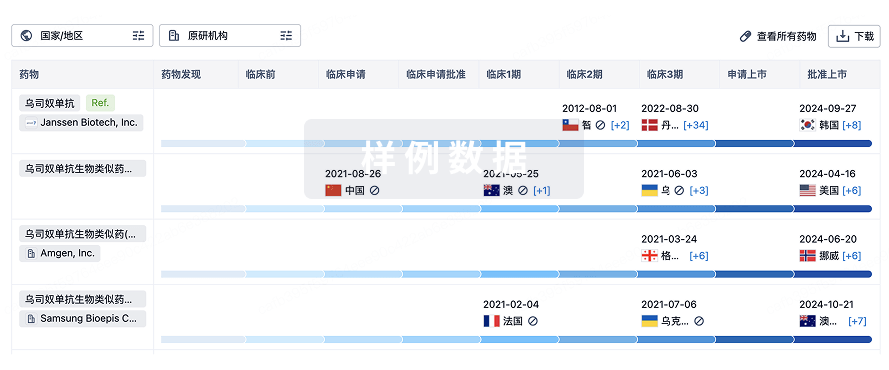
生物类似药
生物类似药在不同国家/地区的竞争态势。请注意临床1/2期并入临床2期,临床2/3期并入临床3期
登录
或
特殊审评
只需点击几下即可了解关键药物信息。
登录
或

提出任何生物医药研究问题
让每一步生物医药决策都精准制胜
基于十亿级生物数据与全球情报的精准 AI,赋能早期药物发现
立即开始免费试用!
智慧芽新药情报库是智慧芽专为生命科学人士构建的基于AI的创新药情报平台,助您全方位提升您的研发与决策效率。
立即接入生物医药数据包
智慧芽新药库数据也通过智慧芽开放平台,以MCP或API服务形式对外开放。立即使用我们的MCP服务定制您的LLM智能体。
生物序列数据库
生物药研发创新
免费使用
化学结构数据库
小分子化药研发创新
免费使用