预约演示
更新于:2026-09-05
Ranibizumab biosimilar (Senju)
雷珠单抗生物类似药 (Senju)
更新于:2026-09-05
概要
基本信息
非在研机构- |
最高研发阶段批准上市 |
最高研发阶段(中国)临床前 |
特殊审评- |


登录后查看时间轴
结构/序列
Sequence Code 103170L
当前序列信息引自: *****
Sequence Code 143622H
当前序列信息引自: *****
关联
2
项与 雷珠单抗生物类似药 (Senju) 相关的临床试验JPRN-UMIN000030010
A phase III study to evaluate the equivalence in efficacy and safety of SJP-0133 to Lucentis in patients with age-related macular degeneration
开始日期2017-11-22 |
ACTRN12611000091909
The effect of variable dosing Ranibizumab (Lucentis) and Sub-Tenon Triamcinolone (Kenacort-A 40) on visual acuity and number of intravitreal injections in patients with exudative age related macular degeneration.
开始日期2010-04-07 |
申办/合作机构 |

100 项与 雷珠单抗生物类似药 (Senju) 相关的临床结果
登录后查看更多信息
100 项与 雷珠单抗生物类似药 (Senju) 相关的转化医学
登录后查看更多信息
100 项与 雷珠单抗生物类似药 (Senju) 相关的专利(医药)
登录后查看更多信息
4
项与 雷珠单抗生物类似药 (Senju) 相关的新闻(医药)2026-07-09
·百度百家
第一章、中国眼科用药行业市场概况
中国眼科用药行业近年来保持稳健增长态势,已成为全球眼科药物市场中增速最快的区域之一。2025年,中国眼科用药市场规模达人民币187.3亿元,较2024年的168.5亿元同比增长11.2%,连续五年维持两位数增长。这一扩张动力主要来自三大结构性因素:人口老龄化加速、近视患病率持续攀升以及诊疗可及性显著提升。截至2025年末,全国60岁及以上人口达3.05亿,占总人口比重21.6%,而老年性白内障、年龄相关性黄斑变性(AMD)、青光眼等慢性眼病发病率与年龄呈强正相关,直接驱动抗VEGF药物、前列腺素类似物及人工泪液等品类需求放量。在近视防控领域,2025年全国儿童青少年总体近视率为53.6%,其中小学生为36.7%、初中生为76.4%、高中生达82.9%,阿托品滴眼液作为一线干预手段,全年终端销量达2840万支,同比增长24.1%,覆盖医疗机构超1.2万家,包括北京同仁医院、中山大学中山眼科中心、复旦大学附属眼耳鼻喉科医院等32家国家临床重点专科单位。
从治疗领域分布看,2025年抗感染类眼科用药(如左氧氟沙星滴眼液、妥布霉素滴眼液)占比最高,达31.4%,规模为58.8亿元;抗炎类(以糖皮质激素和非甾体抗炎药为主)占22.7%,规模42.6亿元;抗新生血管类(以雷珠单抗、康柏西普、阿柏西普为主)占比18.3%,规模34.3亿元,是增速最快的细分赛道,同比增幅达29.5%;干眼症治疗类(含环孢素A滴眼液、利多卡因-羟丙甲纤维素复方制剂)占比14.2%,规模26.6亿元;青光眼用药(拉坦前列素、曲伏前列素、布林佐胺)占比9.8%,规模18.3亿元;其他类别(如诊断用荧光素钠、散瞳剂等)合计占3.6%,规模6.7亿元。值得注意的是,国产替代进程明显提速:2025年国产眼科用药整体市场份额达54.1%,较2024年提升3.8个百分点;其中康柏西普注射液全年销售额达19.7亿元,同比增长33.6%,稳居抗VEGF赛道国产第一;恒瑞医药的SHR8058(新型脂质体包裹环孢素A)于2025年Q3正式上市,首年即实现销售收入3.2亿元;兴齐眼药的低浓度阿托品滴眼液(0.01%)获批扩大适应症至6–12岁儿童,全年销量达1120万支,占该品类总销量的39.4%。
根据博研咨询&市场调研在线网分析,渠道结构方面,2025年医院端仍是绝对主导,占比达78.6%,其中三级医院贡献52.3%,二级医院占26.3%;零售药店渠道占比升至14.9%,同比增长2.1个百分点,主要受益于“双通道”政策落地及DTP药房专业化服务能力提升;线上平台(含京东健康、阿里健康、平安好医生)销售占比达6.5%,同比增长1.7个百分点,以人工泪液、维生素类滴眼液及OTC类产品为主,处方药线上渗透仍受限于监管要求。从企业格局看,2025年行业CR5(前五家企业市占率合计)为46.8%,较2024年提升2.3个百分点,集中度持续提高。排名前五的企业依次为:参天制药(中国)有限公司(市占率11.7%)、成都康弘药业集团股份有限公司(9.2%)、沈阳兴齐眼药股份有限公司(8.5%)、江苏恒瑞医药股份有限公司(8.3%)、日本千寿制药株式会社(中国业务由上海千寿医药代理,市占率9.1%)。值得注意的是,参天制药凭借其在干眼症和青光眼领域的全产品线布局(含Cyclosporine A乳剂、Tafluprost、Bimatoprost等),继续保持外资企业首位;而康弘药业依托康柏西普的临床优势与医保放量,已超越兴齐眼药成为国产龙头。2025年共有17个眼科新药获批临床,其中12个为1类新药,涵盖靶向ANGPT2/TIE2通路、靶向补体系统C3/C5、新型缓释微球技术等前沿方向,预示行业正从仿创结合加速迈向原始创新阶段。中国眼科用药行业已跨越粗放增长期,进入以临床价值为导向、以技术壁垒为护城河、以国产优质供给替代进口的高质量发展新周期,2026年市场规模预计将达到210.8亿元,同比增长12.6%,增长动能将更深度绑定真实世界疗效数据积累、医保谈判续约机制优化及基层眼科诊疗能力下沉进度。
第二章、中国眼科用药产业利好政策
中国眼科用药产业近年来持续获得国家层面系统性政策支持,已形成覆盖研发激励、审评加速、医保准入、基层普及与真实世界研究五大维度的立体化政策体系。2025年,国家药品监督管理局(NMPA)共批准眼科领域创新药临床试验申请(IND)43件,较2024年的36件增长19.4%;其中纳入“突破性治疗药物程序”的眼科新药达7个,占全年突破性治疗总数的8.6%,显著高于全医药领域平均占比(5.2%)。在优先审评审批通道中,2025年共有9个眼科用药获批上市,平均审评时限为132个工作日,较常规审评时限(200个工作日)缩短34%,其中康弘药业的KH906滴眼液(靶向HIF-VEGF通路的新型小分子抑制剂)从受理至获批仅用时98天,创国内眼科新药最快获批纪录。
医保准入方面,2025年国家医保药品目录调整中,新增眼科用药12个品种,调出2个,净增10个;谈判成功率达83.3%(10/12),高于整体谈判成功率(78.9%)。进入新版目录的眼科药品平均降价幅度为48.7%,其中雷珠单抗注射液续约后价格由5780元/支降至3920元/支,降幅32.2%;康柏西普注射液续约价格为4120元/支,较上一轮下降26.5%;兴齐眼药的0.01%硫酸阿托品滴眼液首次纳入医保乙类,个人先行自付比例设定为15%,按年用量36支测算,患者年负担由原价约2160元降至约1836元。截至2025年底,全国31个省(自治区、直辖市)均已将医保目录内眼科用药全部纳入“双通道”管理,定点医疗机构平均配备率提升至92.4%,定点零售药店配备率达86.7%,较2024年分别提高5.3和6.1个百分点。
在基层能力建设方面,“十四五”眼健康规划明确要求:到2025年末,全国县级综合医院眼科或视光中心建设覆盖率须达95%以上,目前已实现96.8%;全国社区卫生服务中心及乡镇卫生院配备基础眼科检查设备(视力表、裂隙灯、眼压计)的比例达89.3%,较2024年提升7.2个百分点;2025年中央财政下达公共卫生专项资金用于基层眼病筛查项目共计12.6亿元,覆盖儿童青少年近视筛查、老年人白内障初筛、糖尿病视网膜病变早期转诊三大场景,全年完成免费筛查人次达1.84亿,其中儿童青少年筛查1.12亿人次,老年人筛查6320万人次,糖尿病患者眼底检查890万人次。“千县工程”眼科学科建设项目于2025年完成第二期验收,累计支持523家县级医院建成标准化眼科诊疗单元,配备OCT、眼底照相机等关键设备,平均单院设备投入达386万元,项目带动县域眼科门诊量同比增长31.7%,转诊至上级医院的疑难病例中,青光眼与AMD确诊率提升至84.5%,较建设前提高22.3个百分点。
研发端激励政策持续加码。2025年,国家科技部“重大新药创制”科技重大专项中,眼科方向立项课题共14项,总资助金额达4.28亿元,占全年专项总经费的6.3%;其中针对干眼症新型递送系统、基因治疗载体优化、长效缓释微球技术的课题合计9项,资助额2.91亿元。企业研发费用加计扣除比例在2025年进一步提高至130%,眼科创新药企实际享受加计扣除总额达37.6亿元,较2024年增长28.4%。值得关注的是,2025年国家药监局联合国家卫健委启动“眼科用药真实世界数据应用试点”,首批覆盖北京、上海、广东等10省市,接入327家三级眼科专科医院及区域医疗中心,构建统一标准的真实世界数据库,截至2025年末已归集结构化电子病历数据218万例、用药随访记录492万条、OCT影像数据超1.2亿帧,支撑4个在研眼科新药完成RWS补充申报并获附条件批准。
在监管协同与标准建设方面,2025年国家药监局发布《眼科局部给药制剂质量控制技术指导原则》《抗VEGF药物临床试验设计指导原则(2025年版)》《儿童眼科用药安全性评价专家共识》三项核心文件,填补国内空白;同期,全国医用光学器械标准化技术委员会(SAC/TC482)完成眼科用药配套器械标准修订,新发布《眼科注射用预充式注射器通用要求》等6项行业标准,推动给药装置与药品协同升级。2026年,随着《“十四五”国民健康规划》中期评估落地及医保药品支付标准动态调整机制全面实施,预计眼科用药新增医保谈判品种将达15个,基层眼科设备更新专项补助资金拟安排15.3亿元,真实世界研究数据支撑的新药附条件批准案例有望突破8例,国产眼科1类新药临床试验数量预计达52项,同比增长20.9%。
第三章、中国眼科用药行业市场规模分析
中国眼科用药行业市场规模已进入结构性扩张与高质量增长并行的新阶段,其增长动能既源于人口结构刚性变化与疾病负担持续加重,也来自诊疗渗透率提升、支付能力增强及产品迭代加速的多重驱动。2025年,中国眼科用药整体市场规模达187.3亿元,较2024年的168.5亿元增长11.2%,五年复合增长率(CAGR)为12.7%。这一增速显著高于全球眼科用药市场同期7.4%的平均增幅,凸显中国市场在全球眼科生态中的战略权重持续上升。从增长构成看,2025年增量规模为18.8亿元,其中抗VEGF药物贡献6.3亿元(占增量33.5%),干眼症治疗药物贡献4.1亿元(21.8%),阿托品近视防控产品贡献3.7亿元(19.7%),青光眼与抗感染类合计贡献4.7亿元(25.0%)。值得注意的是,2025年国产眼科用药销售额达101.3亿元,同比增长14.9%,增速高于进口产品(7.8%),国产份额由2024年的50.3%提升至54.1%,首次实现对进口产品的全面份额领先。
1. 市场规模历史演进与中长期预测
回溯近十年,中国眼科用药市场呈现加速跃升轨迹:2018年规模为72.6亿元,2020年突破百亿元达104.2亿元,2022年达136.5亿元,2024年达168.5亿元,年均复合增长率达13.1%。基于当前政策落地节奏、在研管线进度、医保续约趋势及基层渗透深度,综合采用时间序列模型(Holt-Winters)、回归拟合(GDP增速、老龄化率、近视患病率三变量加权)及情景分析法(乐观/基准/保守),对2026–2032年市场规模进行审慎预测。预测显示,行业将维持11.5%–12.8%的稳健增速,2026年市场规模预计达210.8亿元,2027年为237.1亿元,2028年为267.5亿元,2029年为301.6亿元,2030年为340.8亿元,2031年为385.1亿元,2032年达435.3亿元。七年累计增长132.5%,远超同期全国医药工业整体10.2%的预测增速。该预测已充分纳入潜在扰动因素:如2026年起医保谈判价格二次下调压力(预估年均影响增速0.8个百分点)、部分仿制药集采扩围(预计影响抗感染类增速1.2个百分点)、以及真实世界数据监管趋严可能延缓RWS支撑型新药上市节奏(预估延迟平均3–6个月)。
2. 分治疗领域规模与增长动力解析
细分赛道分化加剧,高临床价值与强支付保障品类领跑全局。2025年抗新生血管类药物(以雷珠单抗、康柏西普、阿柏西普、信立泰XLT-101为主)规模达34.3亿元,同比增长29.5%,是增速最快的子领域;其增长主因在于:(1)医保放量——2025年三大主流抗VEGF药物在三级医院使用频次同比提升37.2%;(2)适应症拓展——康柏西普新增糖尿病视网膜病变(DR)适应症后,相关用药占比由2024年的18.4%升至2025年的31.6%;(3)国产替代加速——康弘药业与信立泰合计市占率达42.3%,较2024年提升6.5个百分点。干眼症治疗类2025年规模26.6亿元,同比增长25.1%,核心驱动力来自环孢素A乳剂(0.05%)医保放量及新型P2X3拮抗剂(如默沙东gefapixant滴眼液中国III期完成)临近获批预期。抗感染类虽仍为最大单品集群(58.8亿元,占比31.4%),但增速放缓至6.3%,主要受基层抗生素管控加强及部分品种进入省级集采影响。青光眼用药18.3亿元,增长5.8%,拉坦前列素等经典药物面临集采压力,而新型Rho激酶抑制剂(如K-321)2025年启动III期临床,有望在2027年后形成增量。儿童近视防控类2025年规模达12.9亿元(含阿托品滴眼液、低浓度多焦点镜片配套用药等),同比增长38.7%,成为最具爆发力的新兴赛道。
3. 区域市场分布与下沉潜力
2025年,华东地区仍为最大消费市场,规模达58.2亿元,占全国31.1%;华北(32.7亿元,17.5%)和华南(29.4亿元,15.7%);中西部地区合计占比35.7%,达66.9亿元,增速达14.2%,显著高于东部地区(10.1%),反映政策引导下的区域再平衡初见成效。“千县工程”带动下,2025年县级及以下医疗机构眼科用药采购额达41.3亿元,同比增长28.6%,占全市场比重由2024年的19.8%提升至22.1%。干眼症与白内障术后抗炎用药在县域采购中占比达63.4%,成为基层用药主力。按人均用药支出测算,2025年一线城市居民眼科用药年均支出为286元,二线城市为194元,三线及以下城市为112元,县域地区为68元,差距依然显著,预示下沉市场存在巨大增量空间。
4. 企业格局与集中度演变
2025年行业CR5达46.8%,较2024年提升2.3个百分点,CR10达65.2%,集中度持续提升。头部企业增长显著分化:康弘药业眼科板块收入达28.4亿元,同比增长33.6%;兴齐眼药达22.1亿元,增长27.4%;恒瑞医药眼科线(含SHR8058、SHR8088等)收入12.7亿元,增长41.2%;参天制药(中国)达21.9亿元,增长8.3%;千寿制药(中国代理)达17.2亿元,增长5.1%。值得关注的是,2025年有8家本土企业眼科业务收入突破5亿元,较2024年增加3家,包括兆科眼科(7.3亿元)、欧康维视(6.8亿元)、远大医药(5.9亿元)等,表明产业梯队正在加速成型。预计至2032年,CR5将进一步提升至58.4%,头部企业将通过“自研+BD+渠道整合”三轮驱动,主导创新药定价权与基层准入节奏。
5. 价格与用量双轨驱动特征强化
2025年,眼科用药整体价格指数(以2020年为100)为92.4,同比下降1.8%,反映医保控费持续见效;但终端用药总剂量同比增长14.7%,达2.18亿支/瓶单位,其中抗VEGF注射剂用量达426万支(+22.3%),阿托品滴眼液达2840万支(+24.1%),人工泪液达1.32亿支(+16.8%)。价格微降与用量快增共同构成“以量换价、以效促用”的良性循环,印证行业正从单纯价格竞争转向临床价值竞争。2026–2032年预测显示,价格指数年均下降约1.2%,而用药总量年均增长13.4%,规模增长主要由用量扩张贡献(占比约78%),价格因素仅贡献22%,结构性特征日益清晰。
第四章、中国眼科用药市场特点与竞争格局分析
中国眼科用药市场已形成“高临床刚性、强政策牵引、快技术迭代、深渠道分层”的复合型特征,其竞争格局正经历从“渠道驱动”向“价值驱动”、从“单品竞争”向“生态协同”的深刻重构。2025年,行业呈现出五大核心市场特点,并在企业战略响应中催生出差异化竞争路径。
1. 临床需求刚性与支付结构深度绑定
眼科疾病多属慢性进展型,治疗具有不可替代性与长期延续性。2025年,全国白内障手术量达432万例,较2024年增长9.6%,术后抗炎及抗感染用药人均使用周期为14.2天;糖尿病视网膜病变(DR)患者达3280万人,其中接受规范眼底随访者仅占38.7%,而接受抗VEGF治疗者仅126万人,渗透率不足3.9%,巨大未满足需求构成核心增长基座。支付端呈现“三元结构”:医保基金承担约61.3%的终端费用(2025年眼科用药医保支出总额为114.8亿元),患者自付占比28.5%(53.4亿元),商业健康险及其他补充支付占比10.2%(19.1亿元)。值得注意的是,2025年“惠民保”对眼科用药的保障显著扩容,全国已有247个地市将康柏西普、雷珠单抗纳入特药目录,平均报销比例达65%,带动相关药品在非医保定点DTP药房销量同比增长41.2%。这一支付结构强化了企业对医保准入节奏、地方惠民保对接能力及患者教育体系的综合运营要求。
2. 产品生命周期加速缩短,创新迭代强度空前提升
受审评加速与临床急需双重驱动,眼科用药产品迭代周期大幅压缩。2025年获批上市的9个新药中,有7个为改良型新药或新复方制剂,平均上市周期(从临床前到获批)为5.8年,较2020年平均8.3年缩短30.1%。恒瑞医药SHR8058(环孢素A脂质体)采用纳米包载技术,生物利用度提升至传统乳剂的2.3倍,2025年上市即实现终端销售额3.2亿元;兆科眼科的NVK-002(低浓度阿托品缓释凝胶)于2025年Q4获批,采用热敏原位凝胶技术,日给药频次由滴眼液的每日2次降至每日1次,首月处方量即达12.6万支。仿制药生命周期明显收窄:2025年共有11个眼科仿制药通过一致性评价,但其中8个在获批后12个月内即面临省级集采,平均中标价较参比制剂下降52.4%。这种“创新提速、仿制承压”的双轨并行,迫使企业必须构建“短中长”三期管线——短期靠改良型新药快速放量(如缓释、靶向递送),中期靠First-in-Class临床推进(如补体抑制剂、基因编辑疗法),长期布局平台型技术(如眼内长效微球、AAV载体优化)。
3. 渠道分层深化,“院内—院边—院外”三维协同成为标配
2025年,眼科用药渠道结构呈现清晰的三级分层:一级为三级专科医院与区域医疗中心(占终端销量42.6%),聚焦抗VEGF注射剂、复杂干眼症药物等高值品种;二级为“院边生态”,包括DTP药房(占14.9%)、眼科连锁机构(如爱尔眼科、普瑞眼科、华厦眼科旗下自有药房,合计占8.3%)及互联网医院处方流转平台(占6.5%),承担患者教育、依从性管理与慢病续方功能;三级为零售药店与电商(合计占27.7%),主销OTC类人工泪液、维生素类滴眼液及基础抗感染产品。尤为关键的是,头部企业已全面构建“三维协同”体系:康弘药业2025年签约DTP药房达2840家,覆盖全国98.2%的地级市,同步上线“康柏西普患者关爱计划”,提供注射预约、随访提醒、经济援助申请一站式服务,使患者6个月持续用药率提升至73.4%;兴齐眼药依托自有“兴齐眼药商城”小程序,2025年线上阿托品订单中,72.6%完成线下医疗机构复诊验证,实现合规闭环;参天制药则与爱尔眼科共建“干眼标准化诊疗中心”,在217家爱尔旗下医院部署IPL强脉冲光联合环孢素A治疗方案,带动相关药品院内采购额同比增长39.1%。
4. 竞争主体多元化,本土龙头与跨国巨头进入战略相持期
2025年,市场参与主体涵盖跨国药企、本土创新龙头、专科连锁自营业务、Biotech公司及跨界布局者五类力量。按销售额排序,前十大企业合计市占率达65.2%,其中国产企业占据六席:成都康弘药业集团股份有限公司(9.2%)、沈阳兴齐眼药股份有限公司(8.5%)、江苏恒瑞医药股份有限公司(8.3%)、兆科眼科有限公司(4.7%)、欧康维视生物制药有限公司(4.1%)、远大医药(中国)有限公司(3.9%);外资企业四席:参天制药(中国)有限公司(11.7%)、日本千寿制药株式会社(中国代理,9.1%)、美国艾尔建(中国业务由艾伯维承接,5.3%)、瑞士诺华(中国,3.4%)。竞争态势呈现“局部领先、全域竞合”特征:在抗VEGF领域,康弘与信立泰合计份额达42.3%,形成国产主导;在干眼症领域,参天凭借全产品线(环孢素A乳剂、新型P2X3拮抗剂、IPL设备协同)保持28.6%份额;在青光眼领域,千寿制药拉坦前列素+曲伏前列素组合占21.4%;而在近视防控新兴赛道,兴齐眼药以39.4%份额领跑,恒瑞、兆科、欧康维视紧随其后,CR4达76.3%。2026年预测显示,国产企业整体份额将进一步升至57.8%,其中康弘、兴齐、恒瑞三家合计份额有望突破28.5%,接近参天+千寿的20.8%,标志产业主导权加速转移。
5. 技术壁垒与临床证据双轮驱动准入门槛持续抬升
监管科学化与临床价值导向正重塑准入逻辑。2025年NMPA眼科新药审评中,“需提供头对头优效性证据”的品种占比达63.2%,较2024年提升11.5个百分点;真实世界研究(RWS)数据被采纳为关键支持性证据的比例达47.8%,涉及OCT影像定量分析、视力获益持续时间、患者报告结局(PRO)等维度。例如,信立泰XLT-101在获批时即提交了覆盖12省市、3.2万例患者的RWS数据,证实其相较雷珠单抗在糖尿病黄斑水肿患者中视力提升≥15字母的比例高8.3个百分点。生产工艺复杂度成为隐形门槛:2025年获批的7个改良型新药中,5个涉及无菌灌装工艺升级(如冻干粉针转预充式注射器)、2个需建立眼内缓释微球粒径分布质控标准(CV值≤8.5%),对CMC能力提出极高要求。这导致2025年眼科新药申报企业中,具备GMP级无菌灌装产线的企业仅占31.4%,拥有微球中试平台的不足12%。未来竞争将不仅是产品的竞争,更是“临床证据生成能力+先进制造能力+真实世界运营能力”的系统性较量。
第五章、中国眼科用药行业上下游产业链分析
上市批准引进/卖出财报
2025-11-17
·知乎专栏
(本报告全文详见,加微bgys2015获取全文阅读权限)眼科用药,是一类专门用于预防、治疗或诊断眼部疾病以及改善眼部功能的药物的总称。其核心特征在于给药途径为眼部给药,药物主要通过眼表组织(角膜、结膜)或眼内组织(房水、玻璃体、视网膜等)吸收而发挥局部或全身作用,但绝大多数以局部作用为主。近日,欧康维视治疗干眼全新靶点(First-in-class)1类新药OT-202(Syk/VEGFR-2双靶点抑制剂)的II期临床研究成果在国际眼科顶刊《Ophthalmology》正式发表。该研究是在《Ophthalmology》上发表的首个中国干眼1类创新药临床研究成果。同时,OT-202是欧康维视首款自研的1类新药且是国内非常罕见的全新靶点的全新化合物。这标志着欧康维视突出的研发实力及OT-202出色的临床潜力获得国际权威眼科期刊的认可。图:眼科药物用药情况来源:开源证券我国眼科药物治疗市场规模由2019 年的 202.82 亿元增加至 2023 年的 268.02 亿元,CAGR为7.22%,整体在波动中增长。从治疗领域来看,眼科抗炎制剂是占比居首的亚类,2023年销售额占眼科化学药总销售额的35.78%,降眼压药/青光眼、晶状体病/白内障和散瞳药占比分别为6.21%、2.19%和1.35%。从剂型来看,眼科疾病药物剂型有滴眼剂、眼膏剂、冻干粉针剂、眼用凝胶剂、片剂等,其中滴眼剂为主要剂型,2023年销售额占眼科化学药总市场份额的79.98%。根据米内网数据,2023年我国公立医疗机构终端眼科用药TOP20分别如下:图:眼科用药TOP20来源:开源证券从头部企业来看,近期业绩表现如下,其中兴齐眼药业绩表现持续超出市场预期:兴齐眼药——2025三季报实现收入19.04亿元,同比增长32.27%;归母净利润为5.99亿元,同比增长105.98%。欧康维视——2025年中报实现收入2.94亿元,同比增长75.41%;归母净利润为-1.32亿元,同比增长12.57%。纵观眼科用药历史发展,其经历以下几个阶段:一阶段:治疗初期(20世纪50年代前)——在这个阶段,眼科治疗手段非常有限,主要依赖经验医学和天然产物。使用一些简单的溶液(如盐水、硼酸洗眼液)和植物提取物(如黄连素)进行冲洗和基础消炎。直到20世纪30-40年代,磺胺类药物作为首批现代化学疗法药物,被用于治疗细菌性结膜炎和角膜炎,标志着抗感染治疗的开端。第二阶段:化学药物期(20世纪50年代-80年代)——这个时期,合成化学和药理学的发展催生了一系列专用的眼科化学药物。20世纪50年代,可的松等皮质激素被引入眼科,用于治疗眼部过敏性、炎症性疾病,效果显著,成为眼表炎症的基石药物。20世纪70年代末,噻吗洛尔作为首个用于降低眼压的β受体阻滞剂上市,它通过减少房水生成来降低眼压,成为青光眼药物治疗的一大飞跃,统治市场数十年。第三阶段:靶向治疗开端(20世纪90年代-21世纪初)——这时期,药物作用机制更加精准,药物设计开始针对疾病通路中的特定靶点。其中,拉坦前列素等药物的出现,是青光眼药物治疗的里程碑。它通过增加房水流出通道来降低眼压,降压效果更强、持续时间更长、全身副作用更少,至今仍是青光眼的一线用药。此外,血管内皮生长因子(VEGF)在眼底血管性疾病(如湿性年龄相关性黄斑变性-wAMD)中的关键作用被确认,催生了抗VEGF药物的研发。第四阶段:生物制剂与精准医疗(21世纪初-2010年代)——这一阶段,生物技术彻底改变了眼底疾病的治疗格局。单克隆抗体等大分子药物成为主角,抗VEGF药物开始纷纷上市迭代。比如,雷珠单抗2006年获批,是首个全长人源化抗VEGF单克隆抗体,疗效卓越,标志着wAMD治疗进入新时代。贝伐单抗虽然起初是抗癌药,但因其性价比极高,被超适应症广泛用于眼科,证明了抗VEGF疗法的普适性。阿柏西普/康柏西普具有更高VEGF亲和力和更长作用时间,将注射间隔从每月一次延长至每2-3个月一次,极大改善了患者依从性。第五阶段:创新疗法及展望(2010年代至今)——当前,关键技术突破有:Voretigene Neparvovec(一种基因治疗)于2017年在美国获批,用于治疗由RPE65基因突变引起的遗传性视网膜疾病,这是首个体内给药的基因疗法,开创了治愈遗传性眼病的先河。此外,还有新型缓释技术(纳米技术/微球等)、神经保护与再生疗法(重组人神经生长因子)等。这条产业链环节,包括:上游——包括活性药物成分(API)、辅料、包装材料以及生产设备等。API是眼科药物中的核心成分,具有药理活性,能够针对眼部疾病产生治疗作用。中游——各类型眼科用药生产制造商,代表公司有兴齐眼药、欧康维视、兆科眼科等。下游——各类型销售渠道商,包括医院、诊所、线上电商平台、药店等。代表公司有老百姓、一心堂、益丰药房、大参林等。从产业链上的参与者近期的增长预期来看:图:一致预测来源:并购优塾、Choice—— 研讨会 ——2025年12月5-7日,在上海,邀请在并购领域从业经验丰富的4位重磅专家,举办为期3天干货《并购全流程实战、交易架构搭建、资本交易税收处理、上市公司并购落地、产业基金并购 》主题研讨会。2025年12月13日-14日,在上海,我们将举办《估值建模实战提高班》线下精品研讨会,纯正的估值建模实战干货,全流程快速上手实操,希望能帮大家少走弯路。2025年12月20-21日,在上海,我们将举办《企业资产重组税务规划实战指南 》主题研讨会,邀请在税务领域从业且实战经验丰富的税务权威专家来给大家做分享。注:报名咨询:bgys2015(一)根据中金研究统计,眼科用药在眼科医疗全行业占比约11%。眼科用药,核心特征在于给药途径为眼部给药,药物主要通过眼表组织(角膜、结膜)或眼内组织(房水、玻璃体、视网膜等)吸收而发挥局部或全身作用,但绝大多数以局部作用为主。图:眼科医疗子行业来源:中金研究部眼科疾病通常按照发病的部位进行划分,从眼球前部到后部,主要分类如下:图:常见眼科疾病来源:并购优塾而目前已上市的重磅销售药物主要集中在眼后节血管性疾病、青光眼、干眼症这三大领域;而低浓度阿托品作为近视防控的利器,正迅速成为一个新的重磅药物类别。图:已上市重磅眼科药物来源:并购优塾根据药物在眼部的作用和停留时间,主要分为以下几类:滴眼液——传统剂型,水溶液或混悬液。使用方便,但药物在眼表停留时间短,生物利用度低,需频繁给药。例如人工泪液、抗生素滴眼液等。眼用凝胶/眼膏——半固体制剂,黏度高。在眼表停留时间长,作用持久,适合夜间使用;但白天使用会导致视力模糊。例如红霉素眼膏、更昔洛韦眼用凝胶。眼内注射剂——直接注入玻璃体腔或前房,用于治疗眼底疾病。直接作用于病灶,生物利用度100%;但属于有创操作,风险较高。例如抗VEGF药物(雷珠单抗、康柏西普)、抗生素。眼植入剂——放置在眼内的固体或半固体装置,可长期缓慢释放药物。提供长达数月甚至数年的持续药物释放,极大提高了患者依从性;技术壁垒极高。例如地塞米松玻璃体内植入剂。眼用片剂/胶囊——口服全身给药,用于治疗眼部疾病。通过血液循环到达眼部,对某些深部眼病有效;但可能产生全身性副作用。例如盐酸阿托品片(用于青少年近视防控)、甲钴胺片(营养视神经)。成本方面,通常眼科药企的营业成本占收入比例不高,毛利率高达80%以上。其营业成本结构中,生产成本(原料药、辅料、包材等)为主要部分,占比约70%,其次是直接人工(10%)、制造费用(20%)。图:主营业务成本结构来源:并购优塾不过,无论是尚未商业化(兆科眼科)或商业化转型中(欧康维视)的眼科企业,还是已经商业化的眼科企业,他们的主要成本体现在研发费用投入和销售费用投入。图:成本&费用对比来源:并购优塾、Choice眼科药物的研发流程为:药物发现(靶点识别与验证、先导化合物筛选与优化、制剂开发)——临床前研究(药效学研究、药代动力学研究、毒理学研究、处方与工艺初步确定)——临床研究(临床1/2/3试验)——注册审批与商业化生产(新药申请、审评与审批、GMP生产与质量控制、上市后检测)。眼科药物的生产流程,包括:原料与辅料处理——配制与过滤——各剂型判断&无菌灌装——初级包装密封——目检与灯检——二级包装与贴标——入库放行。眼科用药的壁垒高,在于以下这些难点:1)技术壁垒眼部生理屏障难题——由于角膜是脂质-水-脂质三层结构,药物需要有合适的水溶性和脂溶性才能穿透。并且滴眼液约80%通过鼻泪管被全身吸收,不仅降低眼部效,还可能引起全身副作用。此外,血-房水屏障和血-视网膜屏障,它阻止血液中的物质(包括药物)进入眼内,使得治疗眼底疾病(如AMD、糖尿病黄斑水肿)的药物极难通过全身给药起效,必须采用眼内注射。药物递送与剂型的挑战——传统滴眼液的眼部生物利用度通常低于5%。在眼表很快就被泪眼冲刷,需要频繁给药,患者依从性差。因此,如何让药物有效到达眼后段(视网膜、黄斑)是行业难题之一。眼内注射是有效方式,但属于有创操作,风险高(感染、出血、视网膜脱落)。临床终点选择复杂——如何量化“视力改善”?是看视力表字母数(ETDRS评分)?还是看眼底造影的渗漏减少?需要与监管机构达成一致,且这些指标可能主观性强、变异性大。并且某些评估神经保护(如青光眼)或延缓疾病进展(如近视)的药物,需要很长的随访时间才能看到差异,周期相当长。2)生产壁垒眼用制剂,尤其是眼内注射剂,必须为无菌制剂。任何微生物污染都可能导致失明等严重后果。对生产环境、包装容器和生产工艺的无菌要求极高。并且,眼内注射剂对液体中不溶性微粒的数量和大小有极其严苛的规定,因为微粒可能阻塞小梁网(引发青光眼)或形成阴影。所使用的辅料和药瓶、瓶盖、滴头等包材必须安全、无刺激性,且不能与药物发生相互作用。整体来看,眼科用药的研发生产是一条 “高壁垒、高投入、长周期、高风险” 的生意,一旦成功研发出满足临床需求的创新产品,也将获得 “高回报” 和强大的市场竞争力。其核心难点始终围绕着如何安全、有效、持久地将药物递送到眼部病变组织,并最终为患者治愈眼疾。(二)首先,从收入规模来看,依次是:兴齐眼药(19.44亿元)>欧康维视(4.17亿元)>兆科眼科(0.69亿元)。三家的收入结构如下:兴齐眼药——其产品包括延缓儿童近视进展药、干眼治疗药、眼用抗感染药、眼用抗炎/抗感染药、散瞳药和睫状肌麻痹药、眼用非类固醇消炎药、缩瞳药和抗青光眼用药等,覆盖十个眼科药物细分类别。目前销售额较大的单品有兹润®环孢素滴眼液(II)、美欧品®硫酸阿托品滴眼液。其收入以迪可罗眼膏为主,其次是迪善眼用凝胶。2024年迪可罗眼膏收入为13.66亿元,占比70.3%。环孢素滴眼液、硫酸阿托品滴眼液占公司同期主营业务收入10%以上,实现两位数增长(具体销售额未披露)图:收入结构(单位:亿元)来源:并购优塾、Choice欧康维视——核心产品为优施莹(氟轻松玻璃体内植入剂),另外主要产品还包括欧沁(玻璃酸钠滴眼液)、埃美丁(依美斯汀滴眼液)、適利达(拉坦前列素滴眼液)等。图:已商业化产品来源:公司官网其收入以眼科产品为主。2024年眼科产品收入为3.84亿元,占比92.1%。图:收入结构(单位:亿元)来源:并购优塾、Choice兆科眼科——产品有晶贝莹(贝美素噻吗洛尔滴眼液)等,许可收入有阿达帕林╱盐酸克林徽素复方凝胶等。2024年许可收入为0.34亿元,占比48.36%;眼科药物0.3亿元,占比43.91%。图:收入结构(单位:亿元)来源:并购优塾、Choice(三)图:归母净利润增速(单位:%)来源:并购优塾、Choice这个行业,从近期增长情况看:兴齐眼药——2025三季报实现收入19.04亿元,同比增长32.27%;归母净利润为5.99亿元,同比增长105.98%。业绩增长较高,主要系低浓度阿托品滴眼剂产品(美欧品®硫酸阿托品滴眼液)销售持续放量。图:近几个季度归母净利润情况来源:并购优塾、Choice欧康维视——2025年中报实现收入2.94亿元,同比增长75.41%;归母净利润为-1.32亿元,同比增长12.57%。利润增长低于收入增长,是因为眼科产品成本增加以及与Alcon交易相关的收购及授权引进产品许可权摊销成本增加,以及营销推广增加所致。图:近几个季度归母净利润情况来源:并购优塾、Choice兆科眼科——2025年中报实现收入0.16亿元,同比下滑68.25%;归母净利润为-1.17亿元,同比下滑53.85%。业绩下滑亏损是由于当期并无上期根据一项产品许可协议确认的一次性许可收入所致。此外,由于BRIMOCHOL™ PF及CARBACHOL™ PF的第I及第II期临床试验展开,以及环孢素眼用凝胶的新一轮第III期临床试验开始,导致研发开支增加。图:近几个季度归母净利润情况来源:并购优塾、Choice(四)图:资本开支VS归母净利润VS现金流来源:并购优塾、Choice图:净现比来源:并购优塾、Choice整体来看,当前仅兴齐眼药现金流压力较小,资本开支均能覆盖;由于它拥有成熟产品线,其中核心产品兹润®环孢素滴眼液(II)、美欧品®硫酸阿托品滴眼液能持续产生现金流和利润去反哺公司的创新。而欧康维视和兆科眼科产品商业化仍在早期,收入规模尚未完全成熟,而产品的研发投入较高,所以尚处于亏损状态。(五)图:ROE-TTM(单位:%)来源:并购优塾、Choice图:毛利率(单位:%)来源:并购优塾、Choice图:净利率(单位:%,右轴-兴齐眼药)来源:并购优塾、Choice图:杜邦分析拆解来源:并购优塾、Choice净资产收益率方面,兴齐眼药远高于其他两家,主要系其净利率高。由于兴齐眼药有稳定的产品收入贡献,盈利较为稳定。而其他两家仍在商业化早期,尚未形成规模收入,仍在亏损当中。图:产业链价值分配来源:并购优塾、Choice从价值环节看,中游价值环节高,有较高的技术壁垒和专利护城河,一旦产品成功商业化,其利润回报价高。但注意,由于前期研发周期和产品商业化周期较长,创新型药企一般在收获期到来之前,无法产生稳定的现金流和收入,导致盈利能力较差。从成长性而言,中游眼科用药也较高。因为终端眼科病患的持续增长,因此对于眼科用药的需求增长。生意质地上,眼科用药属于高壁垒、高回报,随着老龄化提升,眼病患者需求也不断增长。但也要注意产品的竞争格局,避免专利过期或采购降价的风险。(六)图:中国近视人群规模来源:财信证券眼科用药行业,核心竞争力在于:1)得“新药管线+研发能力”得产品力,提升产品力的关键在于对创新药研发技术的强劲、以及商业化布局的完善;2)得“商业化产品”得增长;3)得“技术”得回报;这个行业的关键竞争要素,以及各大玩家之间的经营差异,包括以下几点……………………………以上,仅为本报告部分内容,可联系工作人员咨询开通报告库权限,获取本报告全文,微信:bgys2015行业增长逻辑看哪些要素?行业里有哪些玩家参与竞争?大家竞争的关键点该看什么?哪些玩家的业务布局更可圈可点、值得我们学习?关于以上这几个核心内容,后文还有大约6000字,以及十多张图表,详见《产业链报告库》。
财报临床2期
2022-07-06
当一家创新药公司的CEO,除了产品线和技术之外,开始跟你谈组织力时,大概率可以认为,这家公司已经进入到发展的第二周期:实现自我造血,用自己挣的,而不是投资人的钱,支撑公司运营。四年可以做成什么?对欧康维视生物而言,则是从零到现在拥有24条药物管线,9个商业化产品、4万平方米的生产基地、超300人的团队所构建起来的眼科赛道“小巨人”。4年来,欧康维视生物在一条条撕下产业界在其初创时贴在它的标签:缺少核心产品,那么OT-401获批上市了;产品线来自授权许可,那么第一个自主原创新药OT-202开始临床了;不具备生物制药公司特性,那么生产基地建起来了,销售团队完备了;不能实现自我造血,那么毛利基本可覆盖销售费用的阶段性目标实现了。欧康维视生物CEO刘晔将实现以上业绩的原因,归结为整个团队的“勇气与光明”,以及因团队凝聚力和执行力而形成的整个公司组织力释放后的节节胜利。“什么带来了勇气和光明?我想是我们整个团队对欧康维视生物正在做的事情的信心,对我们发现的和研发的药物的信心。”OT-401的获批,恰是欧康维视生物信心、勇气的成果。01为行业开新篇章的OT-401OT-401在欧康维视生物产品线中第一次亮相时,其身份就是“核心产品”。它也确实撑得起这个“门面”。OT-401原研厂家为美国Eyepoint制药公司,该产品2018年在美国获批上市,是用于治疗眼部慢性非感染性葡萄膜炎的First-in-Class药物,可以持续稳定在眼内释放氟轻松长达36个月,并具缓释和有低剂量眼内给药的特点。据悉,OT-401在美国获批3周后,欧康维视生物即获得该产品的大中华地区开发和商业化权益。因此OT-401的后续开发,欧康维视生物一直放在首要位置,且产业界与投资者对该产品也寄予厚望。尤其2020年12月,当博鳌乐城真实世界数据研究试点首次纳入药品,而OT-401为其一后,它的研究进展更加备受业界关注。此前,受益于博鳌乐城真实世界数据研究获批上市的产品,都为医疗器械,且大都来自MNC。产业界都在观望,欧康维视生物的OT-401是否可以在海外已获批新药加速国内上市上,蹚出一条新路。“有勇气,更有信心”。刘晔至今对制定OT-401奔赴博鳌乐城这一决定的过程记忆犹新。2020年10月,他与欧康维视生物首席医学官陈冬红,去上海锦江饭店拜访一位专家,门口等候的间隙,又讨论起OT-401去博鳌乐城参与先行先试的方案。刘晔问陈冬红,你有信心吗?陈冬红表示,有信心。说完这些,刘晔当时就表态,有信心,那我们就这么干。虽然事后,刘晔坦言,作为公司CEO,最主要的工作之一是评估风险,对于当时创建刚一年多的欧康维视生物而言,做这个决定需要莫大的勇气。“那时候政策并不明朗,有不确定性。”但出于对产品和团队的信心,刘晔觉得,这件事情能成。不负众望,OT-401给希望借助真实世界数据加速上市历程的创新药企开了一个好头,也为欧康维视生物接下来的发展开起了新的序幕。“结果证明,我们当时的决策是正确,正是因为我们提早在博鳌乐城进行了布局,才使得OT-401被纳入到首批药品试点名单中,使用真实世界数据获批上市,比此前规划的商业化进程提早至少半年。”2022年6月21日,OT-401新药上市申请正式获得NMPA批准,商品名为优施莹。随着优施莹的正式获批,它身上除了欧康维视生物核心产品,国内治疗慢性NIU-PS的潜在best-in-class疗法这两个显性标签外,又增加了NMPA首次受理的以真实世界数据申报的药品、中国本土创新药企第一个完全基于真实世界研究数据加海外对照数据申报上市的新药,两个“亮眼”的描述。不过,在刘晔眼中,他更看重OT-401给公司后续产品获批上市带来的经验价值,“等于公司凭借该产品,打通了通过真实世界数据上市的路径,为后续产品的推出拉开了序幕。”02只求最好的产品线有近30年医药产业从业经历的刘晔,对目前中国药企创新中产品线布局现状,有一个推断,他认为在研发信息高度透明化、同质化竞争日益加剧的当下,单一产品很难出“爆款”,因此,产品线布局的宽度显得尤为重要,特别是在眼科这类细分领域中。因此,欧康维视生物创建之初,在产品线布局上就定下两个调子:覆盖所有眼科赛道,并在每个赛道上市同类首个或同类最优的产品,让自己处于领先地位。4年来,欧康维视生物的产品线一直按此逻辑稳步推进。目前,欧康维视生物对外公布的上市与在研药物资产有24项,几乎覆盖眼后节、眼中节、眼前节所有适应证,而且在很多细分领域有着压倒性的优势。比如在抗过敏领域,有3款已上市产品。“未来,随着欧康维视生物越来越多的新药获批,这样的领域会越来越多。”比如在眼底病领域,欧康维视生物通过授权许可,已经布局了三个产品,分别是雷珠单抗类似药、阿柏西普类似药和氟轻松玻璃体植入剂。其中雷珠单抗类似药在日本已获批上市,氟轻松玻璃体植入剂已经获得FDA批准上市,欧康维视生物拥有该产品的大中华区、韩国及东南亚11个国家独家商业化权利。“目前,欧康维视生物是中国眼科药企中,进入III期临床试验数量最多的创新药企之一”,欧康维视生物年报显示,公司共有6款产品已经处于临床III期,包括OT-1001(盐酸西替利嗪滴眼液)、OT-702(阿柏西普生物类似药)、OT-301(一氧化氮与前列腺素合成的新化合物)、OT-101(硫酸阿托品滴眼液)及OT-502(地塞米松植入剂)等,而如今随着OT-703(Iluvien)进入III期临床,这个数字已经增加至7个。尤其需要提及的是,OT-202(酪氨酸激酶抑制剂)的标志性意义,“该产品获批临床,意味着欧康维视生物开启了创新药引进+自研的双翼驱动新时代。”OT-202是欧康维视生物自主研发的全新分子实体,其作用机理是通过抑制酪氨酸激酶活性,达到抗炎的作用,用于治疗干眼症,“是中国眼科为数不多的全新靶点创新药。”据悉,OT-202 的I期临床试验已完成所有受试者入组。03完成生物制药的蜕变在中国,几乎所有生物技术公司都有一个“心结”,那就是通过自我造血,实现公司的持续运转。从商业层面而言,就是自有产品的销售额及利润,能够补益后续的研发、生产、市场、销售成本,真正成为一家持续盈利的生物制药公司。4年来,欧康维视生物的运营重心也是如此。“2020年以前,欧康维视生物是一家生物技术公司。2021开始,我们已经走在向生物制药公司提升的路上”,刘晔认为这种转变,有几个显性指标,“研发、生产、销售、核心产品,这个几个生物制药公司需要具备的要素我们已经齐全”。生产方面,2021年欧康维视生物坐落于苏州的生产基地已经投产使用,5层总面积达4万平方米的单体建筑,为欧康维视接下来眼科产品的自主生产打下基础。“欧康维视生物规划产能是4.55亿剂,目前已经有两条生产线开始运转,设备采购国际一流的制药装备公司罗姆来格”。欧康维视生物生产负责人刘宏英表示。值得一提的是,两条罗姆来格的生产线,耗资接近1.5亿元。这笔大投资,在刘晔看来物有所值,“眼睛即脆弱又敏感,因此眼科药物的生产质控要求,肯定要高于一般药品。”销售方面,过去4年,欧康维视生物的团队建设与产品上市进度相互匹配推进。随着核心产品优施莹的获批上市,刘晔认为欧康维视生物的销售团队建设基本完成,目前共有销售人员150名左右,基本能够覆盖全国等级医院。“我们不搞人海战术,而是看人均产出,可以自豪地说,我们现在的人均销售产出已经达到行业平均水平。”一个关键性数据是,最近几月随着销售额的快速增长,欧康维视生物的销售毛利已经高于销售费用,这项数据虽然不能证明欧康维视生物已经成为可自我造血的生物制药公司,但这是公司接下来实现盈利的重要节点。“毛利高于销售费用,对欧康维视生物而言,一方面是公司的产品受到了市场和患者的认可;另一方面也公司的销售团队能力的证明。”接下来,刘晔给到欧康维视生物的目标是真正转型成为一家生物制药公司,他认为转型的成功有两个核心指标,首先是实现盈利,2021年欧康维视已经实现接近亿元的终端销售额,随着核心产品优施莹获批上市,将为这一目标的实现提供加速度。其次是在眼科各适应证从研发的领先到商业化的全面领先,“目前在抗过敏、青光眼、葡萄膜炎、视网膜病变及近视眼等领域,欧康维视生物已经具有竞争优势,接下来我希望这些领域能更多,至少实现5个领域的领先。”在刘晔看来,这是一个时间到了,自然而然就会实现的目标。他的底气来自4年来,公司在研发、生产、销售体系与能力建设中所凝聚起来的组织力,“生物制药公司的运营复杂性高出生物技术公司,优秀的公司不能依赖某几个天才,而是在良性的公司运营系统下,让每个身处其中的人变得优秀,并集合在一起发挥出最大的效率。”这是过去4年,欧康维视生物取得成功的原因,也是接下来欧康维视生物实现自我蜕变的基础。
创新药抗体Best in ClassFirst in Class生物类似药
100 项与 雷珠单抗生物类似药 (Senju) 相关的药物交易
登录后查看更多信息
研发状态
批准上市
10 条最早获批的记录, 后查看更多信息
登录
| 适应症 | 国家/地区 | 公司 | 日期 |
|---|---|---|---|
| 视网膜静脉阻塞相关黄斑水肿 | 日本 | 2023-09-27 | |
| 糖尿病性黄斑水肿 | 日本 | 2023-01-11 | |
| 年龄相关性黄斑变性 | 日本 | 2021-09-27 | |
| 脉络膜新生血管 | 日本 | 2021-09-27 |
未上市
10 条进展最快的记录, 后查看更多信息
登录
| 适应症 | 最高研发状态 | 国家/地区 | 公司 | 日期 |
|---|---|---|---|---|
| 湿性年龄相关性黄斑变性 | 临床前 | 中国 | 2022-01-30 |
登录后查看更多信息
临床结果
临床结果
适应症
分期
评价
查看全部结果
| 研究 | 分期 | 人群特征 | 评价人数 | 分组 | 结果 | 评价 | 发布日期 |
|---|
No Data | |||||||
登录后查看更多信息
转化医学
使用我们的转化医学数据加速您的研究。
登录
或

药物交易
使用我们的药物交易数据加速您的研究。
登录
或

核心专利
使用我们的核心专利数据促进您的研究。
登录
或

临床分析
紧跟全球注册中心的最新临床试验。
登录
或

批准
利用最新的监管批准信息加速您的研究。
登录
或

生物类似药
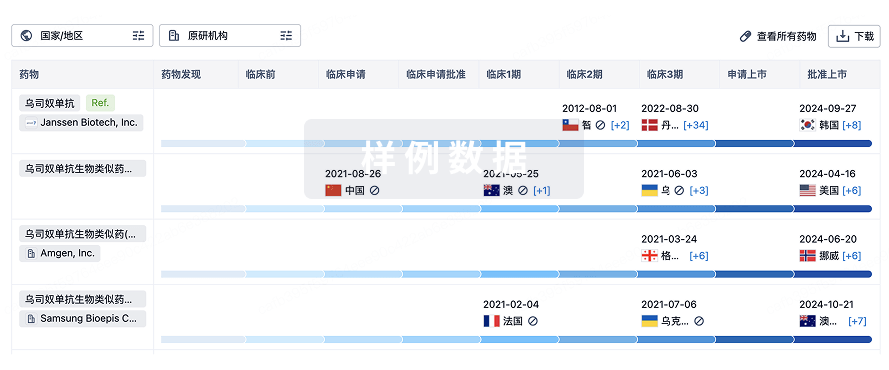
生物类似药在不同国家/地区的竞争态势。请注意临床1/2期并入临床2期,临床2/3期并入临床3期
登录
或
特殊审评
只需点击几下即可了解关键药物信息。
登录
或

提出任何生物医药研究问题
让每一步生物医药决策都精准制胜
基于十亿级生物数据与全球情报的精准 AI,赋能早期药物发现
立即开始免费试用!
智慧芽新药情报库是智慧芽专为生命科学人士构建的基于AI的创新药情报平台,助您全方位提升您的研发与决策效率。
立即接入生物医药数据包
智慧芽新药库数据也通过智慧芽开放平台,以MCP或API服务形式对外开放。立即使用我们的MCP服务定制您的LLM智能体。
生物序列数据库
生物药研发创新
免费使用
化学结构数据库
小分子化药研发创新
免费使用