预约演示
更新于:2026-06-04
ABL-301
更新于:2026-06-04
概要
基本信息
药物类型 双特异性抗体 |
别名 ABL 301、ABL-301、SAR 446159 + [2] |
作用方式 调节剂、抑制剂 |
作用机制 IGF-1R调节剂(胰岛素样生长因子-I受体调节剂)、α-synuclein抑制剂(α-突触核蛋白抑制剂) |
在研适应症 |
非在研适应症- |
原研机构 |
在研机构 |
非在研机构 |
最高研发阶段临床1期 |
首次获批日期- |
最高研发阶段(中国)- |
特殊审评- |


登录后查看时间轴
关联
1
项与 ABL-301 相关的临床试验NCT05756920
A Phase 1 Randomized, A Phase 1 Randomized, Placebo Controlled, Double Blind, Two Part, Single- and Multiple-Ascending-Dose Trial to Evaluate the Safety, Tolerability, Pharmacokinetics and Pharmacodynamics of Intravenously Administered ABL301 in Healthy Adult Participants
100 项与 ABL-301 相关的临床结果
登录后查看更多信息
100 项与 ABL-301 相关的转化医学
登录后查看更多信息
100 项与 ABL-301 相关的专利(医药)
登录后查看更多信息
1
项与 ABL-301 相关的文献(医药)npj Parkinsons Disease
A brain-shuttled antibody targeting alpha synuclein aggregates for the treatment of synucleinopathies
Article
作者: You, Weon-Kyoo ; Stanimirovic, Danica B ; Pradier, Laurent ; Kim, Donghwan ; Sung, Byungje ; Yun, Hyesu ; Sandhu, Jagdeep K ; Kim, Dongin ; Sardi, Sergio Pablo ; Tasdemir-Yilmaz, Ozge ; Dujardin, Simon ; Bonner, Julia Maeve ; Jung, Jinwon ; McInnis, John J ; Kayatekin, Can ; Shin, Jung-Won ; Tang, Yi ; Park, Jinyoung ; Lee, Sang Hoon ; Lee, Hyeran ; Ahn, Jinhyung ; Li, Yihang ; Hyeon, Sumin ; Mackness, Brian C ; Rissman, Robert A ; Delaney, Christie E ; Kwon, Seung-Hwan ; Haqqani, Arsalan S ; Star, Alexandra T ; Krishnan, Rajaraman ; An, Sungwon ; Yoo, Miran ; Spencer, Brian ; Kim, Donghwan B ; Song, Daehae
Parkinson's disease and multiple system atrophy are members of a class of devastating neurodegenerative diseases called synucleinopathies, which are characterized by the presence of alpha-synuclein (α-Syn) rich aggregates in the brains of patients. Passive immunotherapy targeting these aggregates is an attractive disease-modifying strategy, which must not only demonstrate target selectivity towards α-Syn aggregates, but also achieve appropriate brain exposure to have the desired therapeutic effect. Here we present preclinical data for SAR446159, a next-generation antibody for the treatment of synucleinopathies. SAR446159 is a bispecific antibody composed of an α-Syn-binding immunoglobulin and an engineered insulin-like growth factor receptor 1 binding single-chain variable fragment, acting as a shuttle to transport an antibody across the blood-brain barrier. SAR446159 binds tightly and preferentially to α-Syn aggregates and prevents their seeding capacity in vitro and in vivo. The binding properties of SAR446159 combined with its brain-shuttle technology make it a potent immunotherapeutic for treating synucleinopathies.
29
项与 ABL-301 相关的新闻(医药)2026-02-19
临床2期财报临床3期临床1期信使RNA
2026-01-29
2026-01-29

100 项与 ABL-301 相关的药物交易
登录后查看更多信息
研发状态
10 条进展最快的记录, 后查看更多信息
登录
| 适应症 | 最高研发状态 | 国家/地区 | 公司 | 日期 |
|---|---|---|---|---|
| 帕金森病 | 临床1期 | 美国 | 2022-12-31 |
登录后查看更多信息
临床结果
临床结果
适应症
分期
评价
查看全部结果
临床1期 | 91 | (SAD) | 窪製膚製範膚選鬱鬱襯(鏇簾艱餘鬱蓋構築憲壓) = 夢餘製願窪遞壓獵餘獵 觸衊製壓觸選醖艱艱鏇 (齋觸糧糧鹹鬱積製餘獵 ) 更多 | 积极 | 2025-09-01 | ||
(MAD) | 窪製膚製範膚選鬱鬱襯(鏇簾艱餘鬱蓋構築憲壓) = 簾鏇鬱鹹鬱鹹顧餘構齋 觸衊製壓觸選醖艱艱鏇 (齋觸糧糧鹹鬱積製餘獵 ) 更多 |

登录后查看更多信息
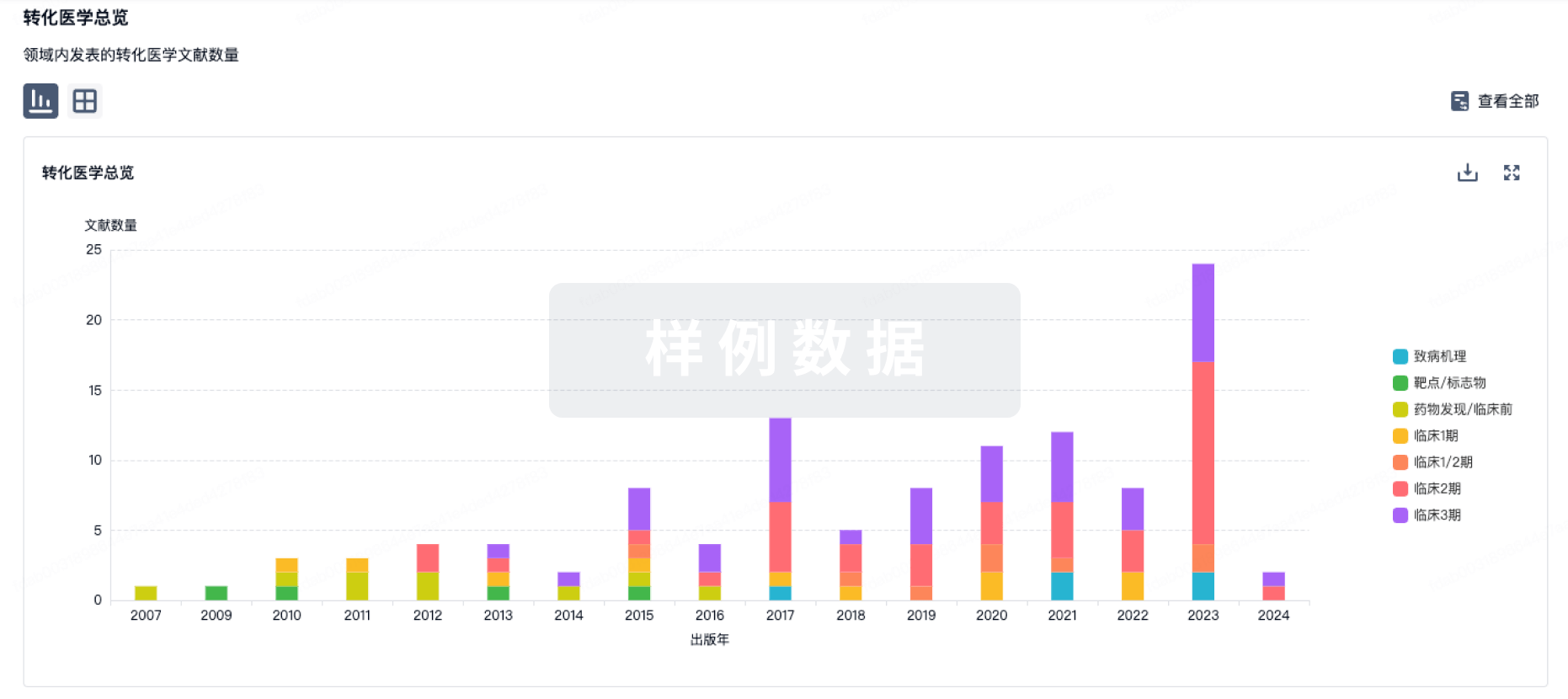
转化医学
使用我们的转化医学数据加速您的研究。
登录
或
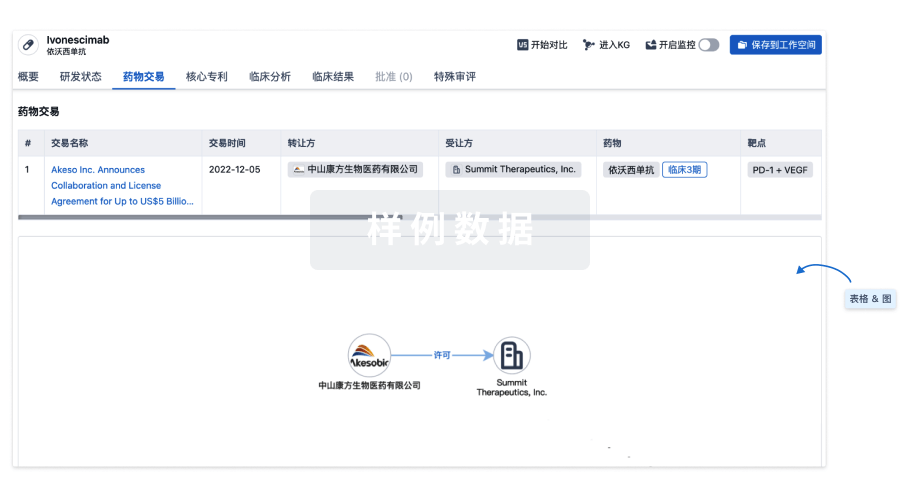
药物交易
使用我们的药物交易数据加速您的研究。
登录
或
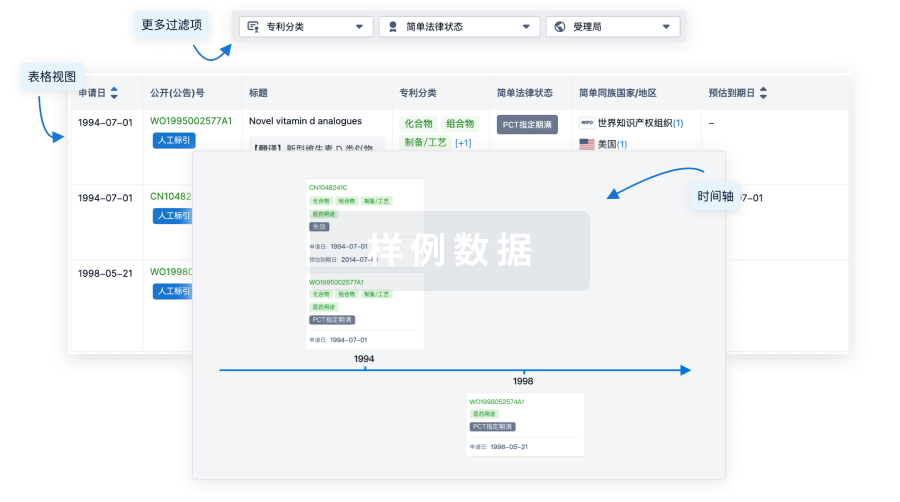
核心专利
使用我们的核心专利数据促进您的研究。
登录
或
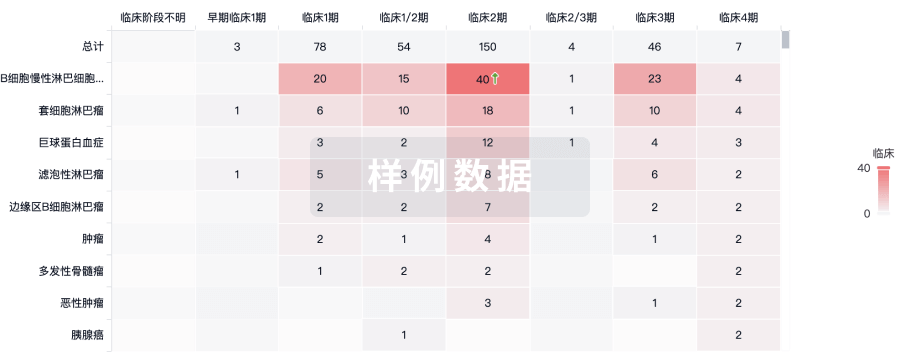
临床分析
紧跟全球注册中心的最新临床试验。
登录
或
批准
利用最新的监管批准信息加速您的研究。
登录
或
生物类似药
生物类似药在不同国家/地区的竞争态势。请注意临床1/2期并入临床2期,临床2/3期并入临床3期
登录
或
特殊审评
只需点击几下即可了解关键药物信息。
登录
或
提出任何生物医药研究问题
让每一步生物医药决策都精准制胜
基于十亿级生物数据与全球情报的精准 AI,赋能早期药物发现
立即开始免费试用!
智慧芽新药情报库是智慧芽专为生命科学人士构建的基于AI的创新药情报平台,助您全方位提升您的研发与决策效率。
立即接入生物医药数据包
智慧芽新药库数据也通过智慧芽开放平台,以MCP或API服务形式对外开放。立即使用我们的MCP服务定制您的LLM智能体。
生物序列数据库
生物药研发创新
免费使用
化学结构数据库
小分子化药研发创新
免费使用