预约演示
更新于:2026-09-26
Pegylated recombinant human endostatin(Tsinghua University)
聚乙二醇重组人血管内皮抑制素 (清华大学)
更新于:2026-09-26
概要
基本信息



关联
9
项与 聚乙二醇重组人血管内皮抑制素 (清华大学) 相关的临床试验CTR20211023
聚乙二醇重组人血管内皮抑制素(CRB0401)注射液联合培美曲塞二钠、卡铂在驱动基因阴性晚期非鳞非小细胞肺癌受试者中的I期临床研究
ChiCTR1900024164
Phase Ic clinical study for PEGylated Recombinant Human Endostatin Solution for Injection(M2ES) combined with pemetrexed disodium and carboplatin in patients with advanced non-squamous non-small cell lung cancer

NCT01219192
Phase I Study of M2ES in Patients With Advanced Pancreatic Cancer After Gemcitabine Treatment Failure
100 项与 聚乙二醇重组人血管内皮抑制素 (清华大学) 相关的临床结果
登录后查看更多信息
100 项与 聚乙二醇重组人血管内皮抑制素 (清华大学) 相关的转化医学
登录后查看更多信息
100 项与 聚乙二醇重组人血管内皮抑制素 (清华大学) 相关的专利(医药)
登录后查看更多信息
1,124
项与 聚乙二醇重组人血管内皮抑制素 (清华大学) 相关的文献(医药)2026-07-21PROCEEDINGS OF THE NATIONAL ACADEMY OF SCIENCES OF THE UNITED STATES OF AMERICA
Correction for Sudhakar et al., Human tumstatin and human endostatin exhibit distinct antiangiogenic activities mediated by αvβ3 and α5β1 integrins
Article
2026-07-01PROTEIN EXPRESSION AND PURIFICATION
Development and partial characterization of fused human endostatin
Article
作者: Prasad, Yenisetti Rajendra ; Chakka, Sanjay ; Chaurasia, Shyam S ; Anakha, J ; Pande, Abhay H
BACKGROUND AND OBJECTIVES:
Angiogenesis plays a central role in the progression of numerous pathological conditions, making its modulation an important therapeutic strategy. Endostatin, a naturally occurring endogenous inhibitor of angiogenesis, exhibits potent anti-angiogenic activity however, its broader clinical application has been constrained by reported limitations such as structural instability and rapid systemic clearance. Fusion protein engineering represents a rational strategy to potentially enhance the therapeutic applicability of bioactive proteins. In this study, we aimed to design, produce, and partially characterize the fused human endostatin (FHE) molecule through in vitro and in vivo studies.
METHODS:
FHE was engineered by fusing recombinant human endostatin (rhEs) with a fragment of human transferrin through a flexible peptide linker and expressed using the Pichia pastoris expression system. The purified protein was evaluated for its biological activity using in vitro proliferation assays with primary human retinal microvascular endothelial cells (HRMECs) and A549 human lung carcinoma cells. In vivo anti-angiogenic efficacy was further assessed using the chick chorioallantoic membrane (CAM) assay.
RESULTS:
FHE demonstrated potent, dose- and time-dependent inhibition of HRMEC proliferation, indicating strong endothelial-specific anti-proliferative activity. Notably, no anti-proliferative effect was observed in A549 non-endothelial tumor cells, confirming its target specificity. In vivo assessment using the chick chorioallantoic membrane (CAM) assay confirmed significant, dose-dependent anti-angiogenic activity, comparable to native rhEs.
CONCLUSION:
The FHE fusion protein retains the biological activity of endostatin while maintaining specificity for angiogenic processes, highlighting its potential as a candidate for further preclinical and therapeutic development as an anti-angiogenic agent.
2026-06-01European Journal of Applied Physiology
Impact of exercise and vitamin D on cardiac tissue morphology and pathological changes in rats: role of endostatin regulation in VEGF and lipid profile improvement
Article
作者: Hoseini, Rastegar ; Faraji, Mahtab ; Babaei, Parvin
This study investigated the combined effects of aerobic training (AT) and vitamin D (Vit D) supplementation on metabolic, angiogenic, and cardiac structural parameters in a rat model of coronary artery disease (CAD). Forty male Wistar rats were randomly assigned to five groups: Healthy Control; CAD+Control; CAD + Vit D; CAD + AT, and CAD + AT+Vit D. The AT protocol consisted of 8 weeks of treadmill running (3 days/week, progressing from 15 to 25 m/min for 20–60 min/session). Vit D groups received weekly intraperitoneal injections of 5000 IU cholecalciferol. At study end, serum levels of VEGF, endostatin, lipid profiles, cardiac troponin I (cTnI), and 25-hydroxyvitamin D were assessed via ELISA, and cardiac histopathology was evaluated using H&E staining. The CAD + AT+Vit D group demonstrated the most favorable profile: significantly reduced total cholesterol, triglycerides, LDL, and cTnI, alongside elevated HDL and 25-hydroxyvitamin D (all P < 0.05). VEGF increased, and endostatin decreased significantly in all intervention groups versus CAD+Control (P < 0.05), with AT alone restoring VEGF to near-normal levels. Histopathology revealed attenuated cardiomyocyte hypertrophy and interstitial fibrosis in treated groups, especially CAD + AT+Vit D. Statistical comparison of delta changes (post-pre intervention) revealed that the reductions in LDL (P = 0.011) and cTnI (P = 0.023), and the increase in HDL (P = 0.008), were significantly greater in the CAD + AT+Vit D group compared to the CAD + AT and CAD + Vit D groups, supporting a synergistic interaction. These findings indicate that AT enhances angiogenesis via VEGF upregulation, while Vit D co-administration amplifies metabolic and cardioprotective benefits. The observed synergistic interaction in key cardiovascular risk markers supports non-pharmacological strategies for CAD management, though translational studies in humans are warranted.
100 项与 聚乙二醇重组人血管内皮抑制素 (清华大学) 相关的药物交易
登录后查看更多信息
研发状态
10 条进展最快的记录, 后查看更多信息
登录
| 适应症 | 最高研发状态 | 国家/地区 | 公司 | 日期 |
|---|---|---|---|---|
| 非小细胞肺癌 | 临床1期 | 中国 | 2019-07-29 | |
| 非鳞状非小细胞肺癌 | 临床1期 | 中国 | 2019-07-29 | |
| 非鳞状非小细胞肺癌 | 临床1期 | 中国 | 2019-07-29 | |
| 胰腺腺癌 | 临床1期 | 中国 | 2010-06-01 | |
| 晚期恶性实体瘤 | 临床1期 | 中国 | 2009-09-01 | |
| 肿瘤 | 临床1期 | - | 2009-05-01 | |
| 胰腺癌 | 临床申请 | 中国 | 2008-10-07 |
登录后查看更多信息
临床结果
临床结果
适应症
分期
评价
查看全部结果
登录后查看更多信息
转化医学
使用我们的转化医学数据加速您的研究。
登录
或

药物交易
使用我们的药物交易数据加速您的研究。
登录
或

核心专利
使用我们的核心专利数据促进您的研究。
登录
或

临床分析
紧跟全球注册中心的最新临床试验。
登录
或

批准
利用最新的监管批准信息加速您的研究。
登录
或

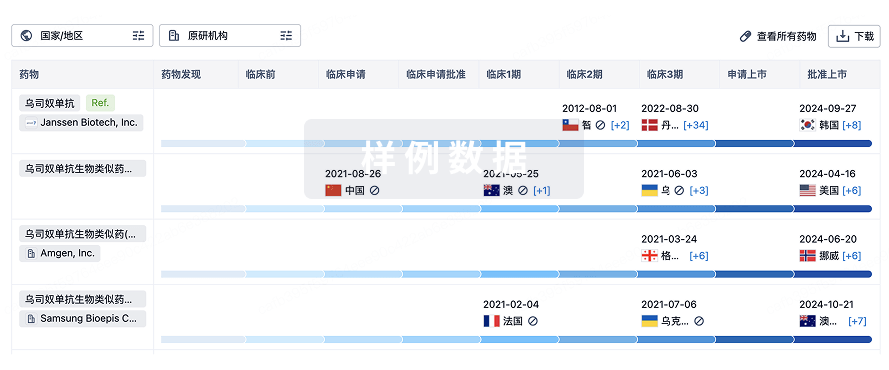
生物类似药
生物类似药在不同国家/地区的竞争态势。请注意临床1/2期并入临床2期,临床2/3期并入临床3期
登录
或
特殊审评
只需点击几下即可了解关键药物信息。
登录
或

提出任何生物医药研究问题
让每一步生物医药决策都精准制胜
基于十亿级生物数据与全球情报的精准 AI,赋能早期药物发现
立即开始免费试用!
智慧芽新药情报库是智慧芽专为生命科学人士构建的基于AI的创新药情报平台,助您全方位提升您的研发与决策效率。
立即接入生物医药数据包
智慧芽新药库数据也通过智慧芽开放平台,以MCP或API服务形式对外开放。立即使用我们的MCP服务定制您的LLM智能体。
生物序列数据库
生物药研发创新
免费使用
化学结构数据库
小分子化药研发创新
免费使用