预约演示
更新于:2026-10-10
Sym-024
更新于:2026-10-10
概要
基本信息
非在研机构- |
权益机构- |
最高研发阶段临床1/2期 |
首次获批日期- |
最高研发阶段(中国)- |
特殊审评- |


登录后查看时间轴
关联
2
项与 Sym-024 相关的临床试验NCT06162572
A Phase 1b/2, Multicenter, Open-label Platform Study of Select Immunotherapy Combinations in Adult Participants With Previously Untreated Advanced Non-small Cell Lung Cancer (NSCLC) With High PD-L1 Expression
NCT04672434
A Phase 1, Open-Label, Multicenter Trial Investigating the Safety, Tolerability, and Preliminary Antineoplastic Activity of Sym024 (Anti-CD73) as Monotherapy and in Combination With Sym021 (Anti-PD-1) in Patients With Advanced Solid Tumor Malignancies
100 项与 Sym-024 相关的临床结果
登录后查看更多信息
100 项与 Sym-024 相关的转化医学
登录后查看更多信息
100 项与 Sym-024 相关的专利(医药)
登录后查看更多信息
1
项与 Sym-024 相关的文献(医药)2026-03-16CLINICAL CANCER RESEARCH
Sym024 Interacts with a Unique Epitope on the CD73 Homodimer, Favoring Effective Bivalent Binding to Improve Anti–PD-1 Therapy
Article
作者: Bansia, Harsh ; Fröhlich, Camilla ; Theret, Isabelle ; Vuillard, Laurent ; Worsaae, Anne ; Armbruster, Emily ; Reckzeh, Kristian ; des Georges, Amedee ; Grandal, Michael M. ; Riva, Matteo ; Lantto, Johan ; Melander, Maria C. ; Hald, Rikke ; Hansen, Randi W. ; Skartved, Niels Jørgen Ø. ; Jakobsen, Janus S.
Abstract:
Purpose::
Adenosine signaling may be a central immunosuppressive mechanism in several cancers, and blockade of the rate-limiting CD73 adenosine monophosphate (AMP)–to–adenosine enzyme has been demonstrated to improve the clinical efficacy of programmed cell death protein (ligand) 1 [PD-(L)1] immune therapy. However, deep inhibition of CD73 activity could prove difficult in tumor environments with a constant AMP supply and high CD73 levels. In this study, we sought to identify, characterize, and benchmark a novel antagonistic anti-CD73 antibody, Sym024 (S95024), and to structurally decode its mode of action.
Experimental Design::
Sym024, selected via functional antibody repertoire screening, was tested against benchmark anti-CD73 antibodies in primary cell, cell line in vitro binding, CD73 enzymatic activity, and T-cell activation assays. Its in vivo tumor growth inhibition was examined in transplanted human or mouse tumors in immunocompetent or immunodeficient mice, and intratumoral enzymatic inhibition and immune cell recruitment were assessed. We investigated the Sym024–CD73 interaction using surface plasmon resonance, cryogenic electron microscopy, site-directed mutagenesis, and population-level complex formation through size-exclusion chromatography with light scatter mass detection. Preclinical safety and pharmacokinetics (PK) were assessed in monkeys.
Results::
Sym024 effectively blocked CD73 across a large range of enzyme expression levels, comparing favorably with benchmark anti-CD73 antibodies; it improved the efficacy of PD-1 blockade in vitro as well as in vivo. Our structural data indicate that a unique one-to-one Sym024–CD73 interaction engenders this comprehensive inhibition. No preclinical safety flags were observed, and the PK profile of Sym024 supported a standard clinical dosing regimen.
Conclusions::
The comprehensive CD73 inhibition exhibited by Sym024 may improve the efficacy of anti–PD-(L)1/anti-CD73 combination treatment.

100 项与 Sym-024 相关的药物交易
登录后查看更多信息
研发状态
10 条进展最快的记录, 后查看更多信息
登录
| 适应症 | 最高研发状态 | 国家/地区 | 公司 | 日期 |
|---|---|---|---|---|
| 转移性非小细胞肺癌 | 临床2期 | 美国 | 2024-08-07 | |
| 转移性非小细胞肺癌 | 临床2期 | 澳大利亚 | 2024-08-07 | |
| 转移性非小细胞肺癌 | 临床2期 | 奥地利 | 2024-08-07 | |
| 转移性非小细胞肺癌 | 临床2期 | 比利时 | 2024-08-07 | |
| 转移性非小细胞肺癌 | 临床2期 | 巴西 | 2024-08-07 | |
| 转移性非小细胞肺癌 | 临床2期 | 法国 | 2024-08-07 | |
| 转移性非小细胞肺癌 | 临床2期 | 中国香港 | 2024-08-07 | |
| 转移性非小细胞肺癌 | 临床2期 | 匈牙利 | 2024-08-07 | |
| 转移性非小细胞肺癌 | 临床2期 | 意大利 | 2024-08-07 | |
| 转移性非小细胞肺癌 | 临床2期 | 罗马尼亚 | 2024-08-07 |
登录后查看更多信息
临床结果
临床结果
适应症
分期
评价
查看全部结果
登录后查看更多信息
转化医学
使用我们的转化医学数据加速您的研究。
登录
或

药物交易
使用我们的药物交易数据加速您的研究。
登录
或

核心专利
使用我们的核心专利数据促进您的研究。
登录
或

临床分析
紧跟全球注册中心的最新临床试验。
登录
或

批准
利用最新的监管批准信息加速您的研究。
登录
或

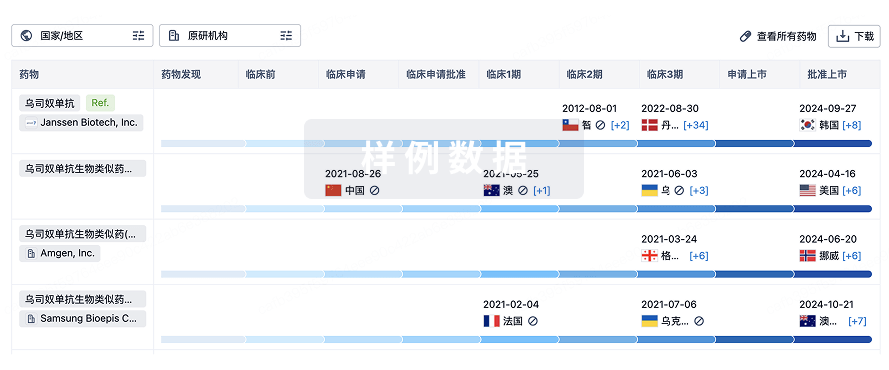
生物类似药
生物类似药在不同国家/地区的竞争态势。请注意临床1/2期并入临床2期,临床2/3期并入临床3期
登录
或
特殊审评
只需点击几下即可了解关键药物信息。
登录
或

提出任何生物医药研究问题
让每一步生物医药决策都精准制胜
基于十亿级生物数据与全球情报的精准 AI,赋能早期药物发现
立即开始免费试用!
智慧芽新药情报库是智慧芽专为生命科学人士构建的基于AI的创新药情报平台,助您全方位提升您的研发与决策效率。
立即接入生物医药数据包
智慧芽新药库数据也通过智慧芽开放平台,以MCP或API服务形式对外开放。立即使用我们的MCP服务定制您的LLM智能体。
生物序列数据库
生物药研发创新
免费使用
化学结构数据库
小分子化药研发创新
免费使用