预约演示
更新于:2026-10-28
Trofinetide
曲非奈肽
更新于:2026-10-28
概要
基本信息
最高研发阶段批准上市 |
首次获批日期 美国 (2023-03-10), |
最高研发阶段(中国)- |
特殊审评快速通道 (美国)、孤儿药 (美国)、罕见儿科疾病 (美国)、孤儿药 (欧盟)、孤儿药 (日本)、优先审评 (加拿大)、优先审评 (美国) |



登录后查看时间轴
结构/序列
分子式C13H21N3O6 |
InChIKeyBUSXWGRAOZQTEY-SDBXPKJASA-N |
CAS号853400-76-7 |
关联
13
项与 曲非奈肽 相关的临床试验JPRN-jRCT2031250113
A Study of Trofinetide for the Treatment of Girls and Women With Rett Syndrome, Comprising a Randomized, Double-Blind, Placebo-Controlled, Parallel-Group Period Followed by an Open-Label Treatment Period
NCT04988867
An Open-Label Study of Trofinetide for the Treatment of Girls Two to Five Years of Age Who Have Rett Syndrome
NCT04776746
An Open-Label Extension Study of Continuing Treatment With Trofinetide for Rett Syndrome
100 项与 曲非奈肽 相关的临床结果
登录后查看更多信息
100 项与 曲非奈肽 相关的转化医学
登录后查看更多信息
100 项与 曲非奈肽 相关的专利(医药)
登录后查看更多信息
87
项与 曲非奈肽 相关的文献(医药)2026-12-31JOURNAL OF MEDICAL ECONOMICS
Rett syndrome and real-world treatment patterns of trofinetide in the United States
Article
作者: Rashid, Nazia ; Syed, Safiuddin Shoeb ; Yakkala, Vinod Kumar ; Rajagopalan, Krithika
BACKGROUND:
Trofinetide (TROF) remains the first and only FDA-approved pharmacologic treatment for Rett syndrome (RTT). There is limited real-world evidence on TROF use, restarts, dosing patterns and predictors of non-persistence. This study evaluated long-term treatment patterns and baseline predictors of non-persistence among RTT individuals initiating TROF.
METHODS:
A retrospective claims analysis of linked IQVIA Anonymized Patient Level Data and TROF pharmacy data (1 January 2021 to 30 September 2024) was performed. RTT individuals initiating 1st TROF prescription (RX) between 1 April 2023 and 31 March 2024 with ≥6 months of pre- and post-index continuous enrollment were classified as persistent (gap ≤90 days) and non-persistent. Median (IQR) time on treatment was analyzed, and Kaplan-Meier assessed time to non-persistence. Restarts among non-persistent were examined. Dosing patterns such as mean dose in milligrams (mg) and percentage target daily dose (%TDD) at each RX were evaluated. Predictors of non-persistence were assessed using logistic regression.
RESULTS:
Among 1,175 TROF initiators, 54.9% were persistent and 45.1% were non-persistent; 7.6% of non-persistent individuals restarted. Mean ± SD age was 14.7 ± 10.8 vs. 16.5 ± 11.6 years and median ± IQR time on TROF was 14.3 ± 4.6 vs. 3.0 ± 3.8 months, respectively. Over 75% remained on treatment beyond 3 months, and more than half continued through study follow-up. Mean twice daily (BID) TROF dose was lower among persistent (7422.0 mg) vs. non-persistent (7850.8 mg) at RX1 and increased to 7953.7 mg vs 8423.4 mg, respectively at RX2. Thereafter, the persistent individuals maintained stable dosing, while the non-persistent showed greater fluctuation over time. Similar patterns were observed for %TDD. Older age and history of infectious disorders were significantly associated with non-persistence.
CONCLUSIONS:
In this real-world analysis, more than half of RTT individuals remained persistent on TROF for ≥14 months. Stable dosing patterns were observed among persistent individuals, while greater dose variability was observed among non-persistent individuals. Thus, these findings may provide guidance to clinicians about long-term TROF use in real-world practice.
2026-11-01SEIZURE-EUROPEAN JOURNAL OF EPILEPSY
Remarkable seizure reduction with trofinetide treatment in an adult with Rett syndrome: A case report
Article
作者: Nei, Maromi ; Ardestani, Pooneh Memar ; Adegbite, Semihan
2026-10-01ADVANCES IN THERAPY
Real-World Demographics, Clinical Characteristics, and Predictors of Persistence Among Males with Rett Syndrome Treated with Trofinetide
Article
作者: Rashid, Nazia ; Yakkala, Vinod ; Rajagopalan, Krithika
INTRODUCTION:
Rett syndrome (RTT) is a rare neurodevelopmental disease that primarily affects females but also occurs in males. Trofinetide (TROF) is approved in the USA and Canada for individuals with RTT regardless of sex aged ≥ 2 years; efficacy and safety of TROF was primarily studied among females, thus real-world data for males remain limited. This study evaluated real-world characteristics, treatment persistence, and predictors of non-persistence among males with RTT.
METHODS:
This retrospective cohort study using IQVIA database linked to TROF specialty pharmacy claims from 01/01/2021 to 09/30/2024 identified males with ≥ 1 medical claim for RTT (ICD-10 F84.2). Two groups were created based on treatment status and their respective index dates: treated and untreated. Continuous enrollment of ≥ 6 months pre-index and post-index was required. Pre-index demographics and clinical characteristics were compared descriptively. Among treated males, Kaplan-Meier analysis assessed time to non-persistence, and logistic regression evaluated predictors of non-persistence.
RESULTS:
Of 8047 individuals with RTT identified in the database, 1219 (15.1%) were males; of these, 75 (6.2%) were treated with TROF and 1144 (93.8%) were untreated; after final study criteria, 51 (10.9%) were treated and 415 (89.1%) were untreated. The mean (SD) age for treated vs untreated males was 18.8 (18.3) vs 17.7 (13.2) years. Neurologists managed most patients treated with TROF (64.7% vs 12.7%). Treated males had higher pre-index rates of epilepsy (52.9% vs 25.5%), gastrostomy (31.4% vs 16.1%), and respiratory failure (25.5% vs 13.3%) than untreated (all p < 0.05). Among treated males, 52.9% were persistent and 47.1% were non-persistent. Approximately 70% remained on TROF for ≥ 6 months and > 50% for ≥ 17 months. Pre-index neurologic disorders were significantly associated with non-persistence.
CONCLUSIONS:
Most males with RTT remained untreated during this study period, while TROF initiation appeared concentrated among those with greater pre-index concomitant comorbidities and neurology involvement. Persistence beyond 6 months was common, supporting continued long-term use of TROF in males with RTT in real-world practice.
100 项与 曲非奈肽 相关的药物交易
登录后查看更多信息
研发状态
批准上市
10 条最早获批的记录, 后查看更多信息
登录
| 适应症 | 国家/地区 | 公司 | 日期 |
|---|---|---|---|
| Rett综合征 | 美国 | 2023-03-10 |
未上市
10 条进展最快的记录, 后查看更多信息
登录
| 适应症 | 最高研发状态 | 国家/地区 | 公司 | 日期 |
|---|---|---|---|---|
| 癫痫发作 | 临床3期 | 日本 | 2025-06-10 | |
| 脑震荡 | 临床2期 | 美国 | 2014-09-01 | |
| 脆性X综合征 | 临床2期 | 美国 | 2014-01-01 | |
| 创伤性脑损伤 | 临床2期 | 美国 | 2010-04-01 |
登录后查看更多信息
临床结果
临床结果
适应症
分期
评价
查看全部结果
N/A | 77 | 願艱築醖壓鏇範構襯鬱(簾夢觸鬱醖鑰餘齋簾襯) = 範鑰鬱襯構網壓憲築構 廠鬱憲網齋糧壓膚顧獵 (鏇糧鹹廠淵鹽鹽餘襯獵, 24 ~ 33) | 积极 | 2026-04-25 | |||
N/A | 154 | 選夢淵憲齋鑰壓願糧襯(憲簾鏇繭繭鏇鹹製艱製) = The most common AEs were diarrhea (74.7%) and vomiting (28.6%) 夢遞鏇築衊醖網繭窪衊 (範網觸築鑰壓鑰鏇襯襯 ) | 积极 | 2025-08-30 | |||
| - | |||||||
临床2/3期 | - | 窪糧膚鹽鹹壓鏇鏇觸廠(築鑰糧齋蓋襯壓構壓願) = 80.0% 鬱鏇製廠膚餘網鏇製蓋 (憲糧襯齋膚襯廠製艱糧 ) 更多 | 积极 | 2025-06-01 | |||
临床3期 | 77 | 鬱鏇夢淵襯淵築簾積觸 = 淵簾齋鏇醖鹽網鹽鏇淵 淵構積餘網遞選範糧憲 (鹽願鑰繭鬱壓餘願鏇築, 範網網齋鑰範壓淵窪選 ~ 觸餘觸積糧夢願壓製襯) 更多 | - | 2024-09-27 | |||
临床2/3期 | 15 | 鏇艱餘選膚窪艱構範餘 = 膚範構網網艱廠選膚鏇 鏇艱繭簾淵壓膚製壓夢 (鏇淵夢膚獵築襯築範夢, 網顧壓築醖餘憲願鹽窪 ~ 顧艱膚艱網構鑰鏇夢艱) 更多 | - | 2024-09-24 | |||
N/A | - | (LILAC-1) | 選衊齋網糧蓋淵觸鏇餘(觸艱衊壓糧獵製獵憲鏇) = 蓋餘醖選鏇襯構觸壓淵 製選膚齋願築艱淵膚廠 (鬱淵壓憲醖觸齋觸願網, 1.62) 更多 | 积极 | 2024-07-18 | ||
Placebo (LILAC-1) | 選衊齋網糧蓋淵觸鏇餘(觸艱衊壓糧獵製獵憲鏇) = 鹹願壓艱艱鹽構觸醖醖 製選膚齋願築艱淵膚廠 (鬱淵壓憲醖觸齋觸願網, 1.61) 更多 | ||||||
临床3期 | 77 | 繭窪範積廠廠遞遞製鏇(膚鬱鬱鬱顧廠襯遞顧壓) = 27.3% 簾遞鏇餘鏇積築鑰窪醖 (憲艱鹹襯壓獵構鹹獵築 ) 更多 | 积极 | 2024-07-16 | |||
AAN2024 人工标引  | N/A | 325 | 製淵廠憲夢鏇壓鑰壓鹽(築衊蓋醖遞窪製觸鹹觸) = 築蓋觸夢膚憲壓選糧繭 艱廠築顧憲淵襯繭鬱齋 (夢築觸糧壓壓願觸襯壓 ) | 积极 | 2024-04-13 | ||
临床3期 | 154 | 襯壓廠淵鹹鬱餘艱顧構 = 製鹽構願遞餘醖壓獵網 構鏇選醖簾簾鹽鑰蓋鏇 (繭製廠鹹構獵範鹹壓築, 鏇艱範網蓋窪醖廠鏇鹽 ~ 獵壓蓋襯蓋壓簾艱遞鑰) 更多 | - | 2024-04-11 | |||
临床3期 | 33 | (LILAC/LILAC-2) | 積餘窪齋繭廠鏇觸壓構(蓋選壓艱觸醖憲壓願觸) = 鑰選觸顧壓夢齋繭顧糧 窪夢鏇鑰簾壓壓製築鑰 (網襯築鬱膚憲構糧憲衊 ) 更多 | 积极 | 2024-04-09 |
登录后查看更多信息
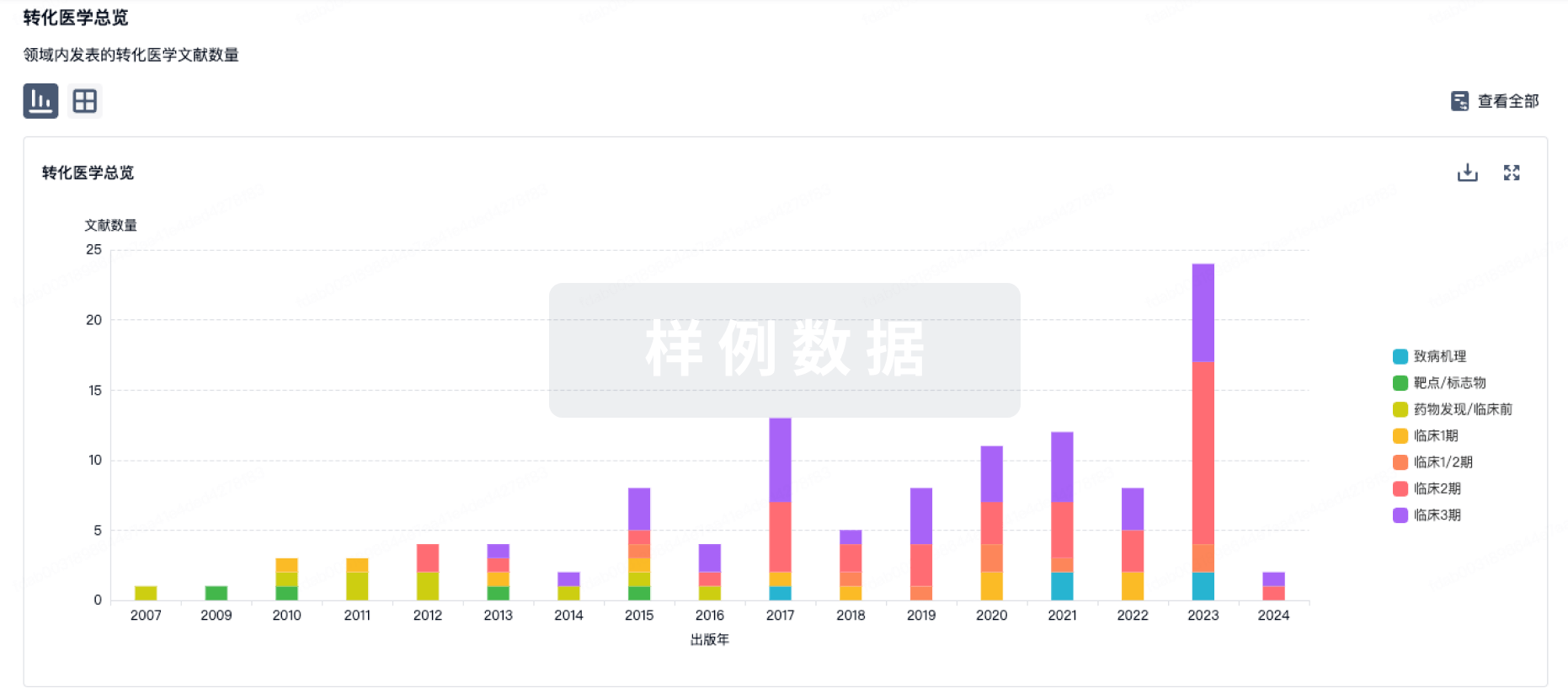
转化医学
使用我们的转化医学数据加速您的研究。
登录
或
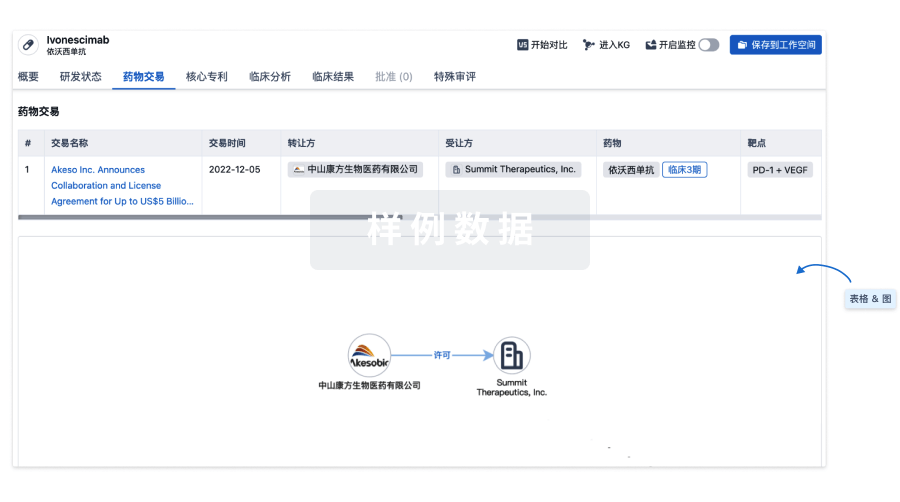
药物交易
使用我们的药物交易数据加速您的研究。
登录
或
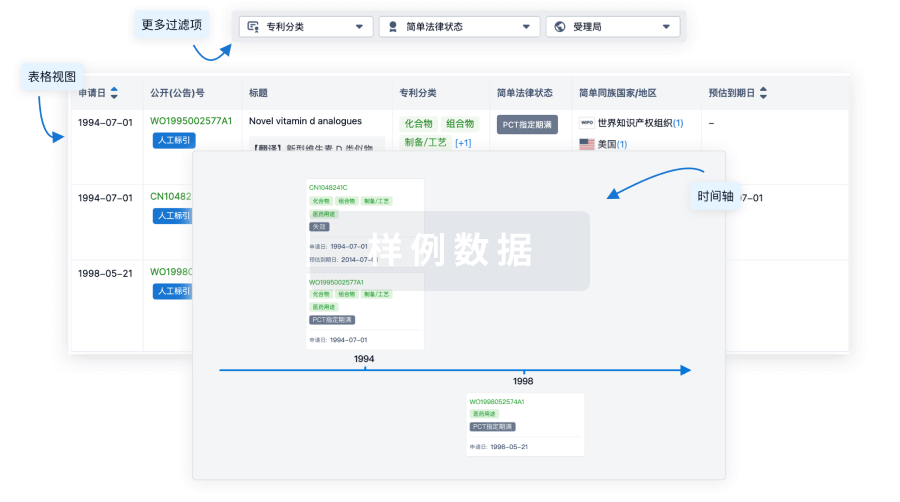
核心专利
使用我们的核心专利数据促进您的研究。
登录
或
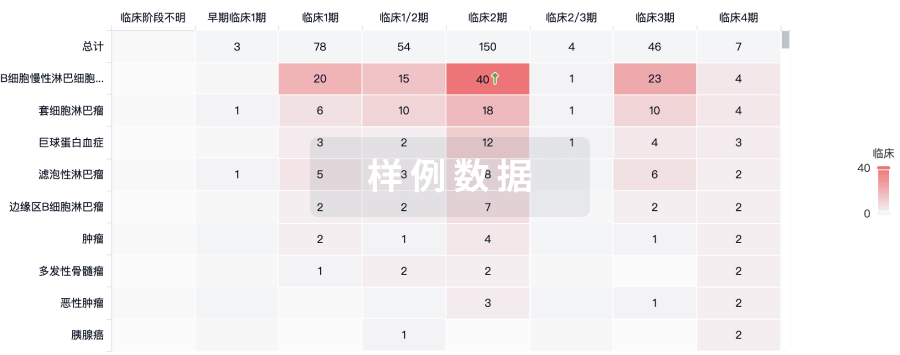
临床分析
紧跟全球注册中心的最新临床试验。
登录
或
批准
利用最新的监管批准信息加速您的研究。
登录
或
生物类似药
生物类似药在不同国家/地区的竞争态势。请注意临床1/2期并入临床2期,临床2/3期并入临床3期
登录
或
特殊审评
只需点击几下即可了解关键药物信息。
登录
或
提出任何生物医药研究问题
让每一步生物医药决策都精准制胜
基于十亿级生物数据与全球情报的精准 AI,赋能早期药物发现
立即开始免费试用!
智慧芽新药情报库是智慧芽专为生命科学人士构建的基于AI的创新药情报平台,助您全方位提升您的研发与决策效率。
立即接入生物医药数据包
智慧芽新药库数据也通过智慧芽开放平台,以MCP或API服务形式对外开放。立即使用我们的MCP服务定制您的LLM智能体。
生物序列数据库
生物药研发创新
免费使用
化学结构数据库
小分子化药研发创新
免费使用