预约演示
更新于:2026-09-18

ACADIA Pharmaceuticals, Inc.
更新于:2026-09-18
概览
标签
神经系统疾病
其他疾病
遗传病与畸形
小分子化药
化学药
合成多肽
疾病领域得分
一眼洞穿机构专注的疾病领域

技术平台
公司药物应用最多的技术
靶点
公司最常开发的靶点
关联
靶点 |
作用机制 |
在研机构 |
原研机构 |
在研适应症 |
非在研适应症 |
最高研发阶段 |
首次获批国家/地区 |
首次获批日期 |
靶点 |
作用机制 |
在研机构 |
原研机构 |
在研适应症 |
非在研适应症 |
最高研发阶段 |
首次获批国家/地区 |
首次获批日期 |
靶点 |
作用机制 |
在研机构 |
原研机构 |
在研适应症 |
非在研适应症 |
最高研发阶段 |
首次获批国家/地区 |
首次获批日期 |
NCT07095465
52-Week, Phase 3, Open-Label Extension Study of ACP-204 in Adults With Lewy Body Dementia Psychosis (LBDP)
NCT07284667
A Double-Blind, Placebo-Controlled, Parallel Group, Efficacy and Safety Study of ACP-211 Monotherapy in Adults With Major Depressive Disorder and Inadequate Response to Antidepressant Treatment
NCT05999240
A Target Engagement Study of Pimavanserin for Behavioral Inflexibility With Open Label Trial for Rigid Rigid-compulsive Behavior in Adolescents and Adults With Autism

100 项与 ACADIA Pharmaceuticals, Inc. 相关的临床结果
登录后查看更多信息
登录后查看更多信息
2026-06-01JOURNAL OF PHARMACOLOGY AND EXPERIMENTAL THERAPEUTICS
Nonclinical Characterization of ACP-204, a Novel Selective 5-HT2A Receptor Inverse Agonist
Article
作者: Rabiner, Eugenii A ; Skold, Niklas ; Sandiego, Christine ; Dey, P Markus ; Jansen, Karl Erik ; Ridler, Khanum ; Rhodes, Gerry ; Pathak, Sanjeev ; Olsson, Roger ; Burstein, Ethan S ; Azar, Marc
Pimavanserin was the first US Food and Drug Administration approved antipsychotic drug that does not block D2 dopamine receptors at therapeutic doses. Pimavanserin is a selective 5-HT2A receptor inverse agonist that reduces the frequency of hallucinations and delusions associated with Parkinson disease. Despite these attributes, pimavanserin prolongs the QT interval at therapeutic doses, limiting the dose to 34 mg. In addition, pimavanserin has a 57-hour half-life, and reaches steady state in approximately 12 days. ACP-204 was identified as a compound with subnanomolar affinity in radioligand binding assays, and subnanomolar inverse agonist and antagonist potency at 5-HT2A receptors in cell-based functional assays. ACP-204 had 13-fold less affinity for 5-HT2C receptors in radioligand binding, and 30- to 100-fold less potency at 5-HT2C in the functional assays, and was over 1000-fold selective against over 70 other targets. ACP-204 had 9-fold lower potency inhibiting human ether-à-go-go-related gene than pimavanserin, and lower potency at Cav1.2 L-type calcium and Nav1.5 sodium channels, all channels associated with cardiovascular function. ACP-204 was active in 3 rodent models of schizophrenia, was orally active, and potently engaged with central 5-HT2A receptors in nonhuman primates. Long-term toxicity studies demonstrated wide safety margins, and pharmacokinetic modeling predicted a 14.7 to 21.7 hours half-life in humans. It is anticipated that reducing the potential for QT prolongation will allow greater dosing flexibility with ACP-204 compared with pimavanserin; additionally, a shorter half-life may provide faster onset of action because of plasma concentrations reaching steady state sooner. ACP-204 is currently being evaluated for efficacy and safety in Alzheimer disease psychosis and Lewy body dementia psychosis. SIGNIFICANCE STATEMENT: Psychotic disorders remain a major source of burden and disability worldwide, with current treatments limited by inadequate efficacy or significant side effects. ACP-204 is a novel 5-HT2A receptor inverse agonist/antagonist being evaluated clinically for its potential to treat Alzheimer disease psychosis and Lewy body dementia psychosis. Comprehensive nonclinical evaluations shown herein demonstrate that ACP-204 has optimized pharmacodynamic properties resulting in a favorable safety/tolerability profile, a broad therapeutic index, and promising effectiveness.
2026-01-16SCHIZOPHRENIA BULLETIN
A Phase 3, Randomized, Double-Blind, Placebo-Controlled Study to Evaluate the Efficacy and Safety of Pimavanserin as an Adjunctive Treatment for the Negative Symptoms of Schizophrenia (ADVANCE-2) in Patients With Predominant Negative Symptoms
Article
作者: Liu, I-Yuan ; Bugarski-Kirola, Dragana ; Marder, Stephen R ; Arango, Celso
Abstract:
Background and Hypotheses:
Negative symptoms of schizophrenia (NSS) carry a substantial burden, and there are no treatments currently approved for NSS. The efficacy of pimavanserin, a selective 5-HT2A inverse agonist and antagonist, in treating NSS was assessed.
Study Design:
ADVANCE-2 was a phase 3, randomized, double-blind, placebo-controlled study of pimavanserin in patients with schizophrenia and predominantly negative symptoms. Patients were randomized (1:1) to receive pimavanserin (34 mg/day) or placebo alongside ongoing background antipsychotic medication. Eligible adults were aged 18–55 years and had access to a caregiver. The primary and key secondary endpoints were the change from baseline to week 26 in the Negative Symptom Assessment–16 (NSA-16) total score and Clinical Global Impression–Schizophrenia Scale-Severity (CGI-SCH-S) negative symptom score, respectively.
Study Results:
Of the 454 randomized patients, 71 (39 placebo; 32 pimavanserin) discontinued and 383 (188 placebo; 195 pimavanserin) completed the study. The safety and full analysis sets comprised 453 and 446 patients, respectively. The NSA-16 change from baseline to week 26 was not significantly different between groups (least squares mean difference: −0.67; SE, 0.95; [95% CI: −2.54, 1.20]; P = .48; Cohen’s d effect size: 0.07). Treatment-emergent adverse events occurred in 30.4% with pimavanserin and 40.3% with placebo.
Conclusions:
In this study, pimavanserin was well tolerated, and although it demonstrated a similar treatment effect as in the prior phase 2 study favoring pimavanserin, treatment with pimavanserin vs placebo did not result in significant differences for primary or other endpoints.
2025-12-01Alzheimers & Dementia
Pharmacokinetics in Healthy Adult and Elderly Patients of ACP‐204, a Novel 5‐HT
2A
Receptor Selective Antagonist/Inverse Agonist
Article
作者: Darwish, Mona ; Pathak, Sanjeev S ; Feng, Xiaoshu ; Raether, Brian ; Dirks, Bryan
Abstract:
Background:
ACP‐204, a potent inverse agonist/antagonist of 5‐HT
2A
receptors, is under investigation for the treatment of Alzheimer’s disease psychosis (ADP). Frail elderly patients with ADP are vulnerable to adverse effects of antipsychotics and potential age‐related differences in drug pharmacokinetics (PK) and pharmacodynamics. We investigated the PK, safety, and tolerability of ACP‐204 in healthy elderly and adult participants at the proposed clinical dose (60 mg).
Method:
In this single‐center, phase 1, double‐blind, multiple ascending dose study, healthy elderly and adult participants were randomized to receive ACP‐204 oral doses up to 60 mg and 120 mg, respectively. Steady‐state plasma samples were collected daily up to 10 days of dosing. The maximum observed drug concentration at steady state (C
max‐ss
) and the area under the concentration‐time curve over the 24‐h dosing interval at steady state (AUC
τ
) were compared. Due to demonstrated linearity data, the 60‐mg dose was selected as a representative of the PK parameters for the comparison. Safety was evaluated at each visit and during follow‐ups.
Result:
Seven healthy adult participants in 1 cohort and 17 elderly participants in 3 cohorts received 60 mg of ACP‐204. Data from the elderly were pooled for steady‐state PK evaluation. Median T
max‐ss
was ∼5‐6 h in elderly and ∼4‐6 h in adult cohorts. Decline from peak was monophasic, with mean t
1/2
of 19.8 and 17.8 h, respectively. In elderly participants, C
max‐ss
and AUC
τ
were higher than those of the adults by 1.14‐fold and 1.20‐fold, respectively. The geometric least squares mean of the AUC
τ
for elderly vs adult participants was 1892 h*ng/mL vs 1575 h*ng/mL at 60 mg. The geometric mean ratio (elderly/adults) of the AUC
τ
was 120.17% (90% CI, 86.31%, 167.32%) (Table 1). Plasma ACP‐204 concentrations are shown in Figure 1. Safety profiles were similar between age groups (Table 2).
Conclusion:
The PK profiles were qualitatively similar over the studied dose ranges in healthy elderly and adult participants with minimal difference in exposure parameters 14% and 20% for C
max,ss
and AUC
τ
, respectively. ACP‐204 was generally safe and well tolerated across age groups, with no unexpected safety findings.
2026-09-07
·大Ro姐
临床3期
100 项与 ACADIA Pharmaceuticals, Inc. 相关的药物交易
登录后查看更多信息
100 项与 ACADIA Pharmaceuticals, Inc. 相关的转化医学
登录后查看更多信息
组织架构
使用我们的机构树数据加速您的研究。
登录
或
管线布局
2026年10月23日管线快照
管线布局中药物为当前组织机构及其子机构作为药物机构进行统计,早期临床1期并入临床1期,临床1/2期并入临床2期,临床2/3期并入临床3期
药物发现
4
7
临床前
临床1期
2
1
临床2期
临床3期
1
2
批准上市
其他
23
登录后查看更多信息
当前项目
登录后查看更多信息
药物交易
使用我们的药物交易数据加速您的研究。
登录
或
转化医学
使用我们的转化医学数据加速您的研究。
登录
或
营收
使用 Synapse 探索超过 36 万个组织的财务状况。
登录
或
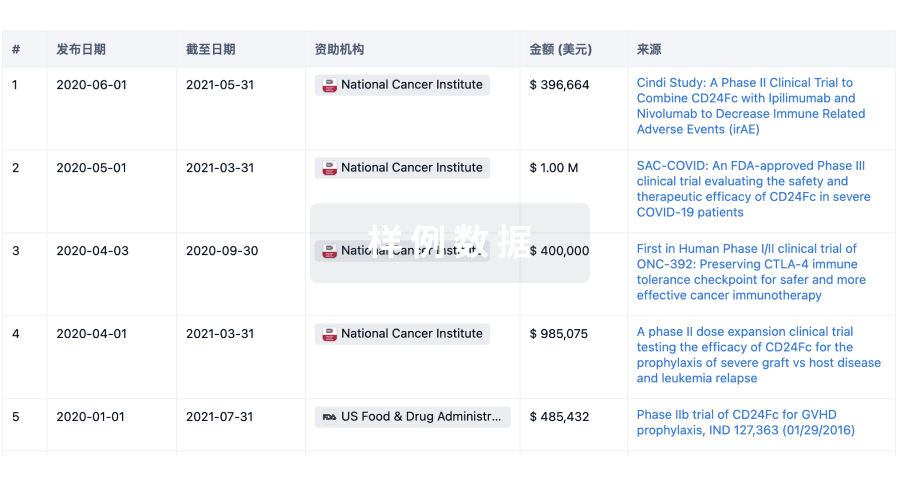
科研基金(NIH)
访问超过 200 万项资助和基金信息,以提升您的研究之旅。
登录
或
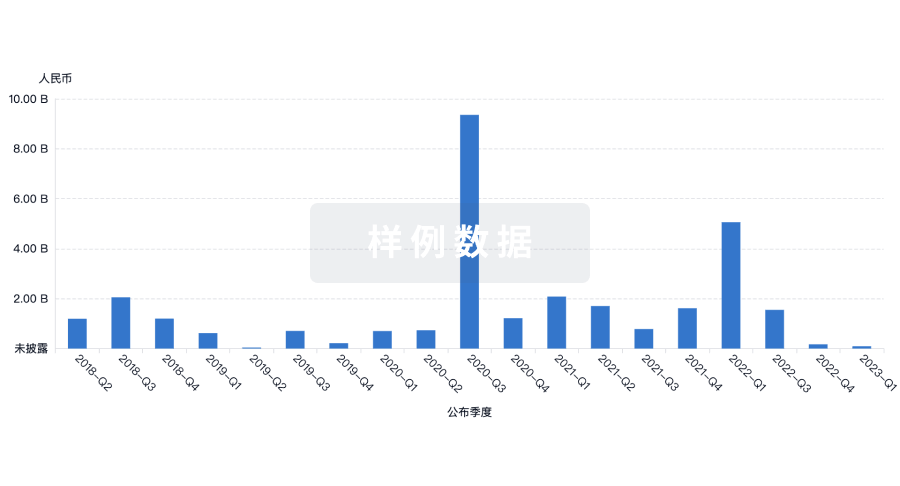
投资
深入了解从初创企业到成熟企业的最新公司投资动态。
登录
或
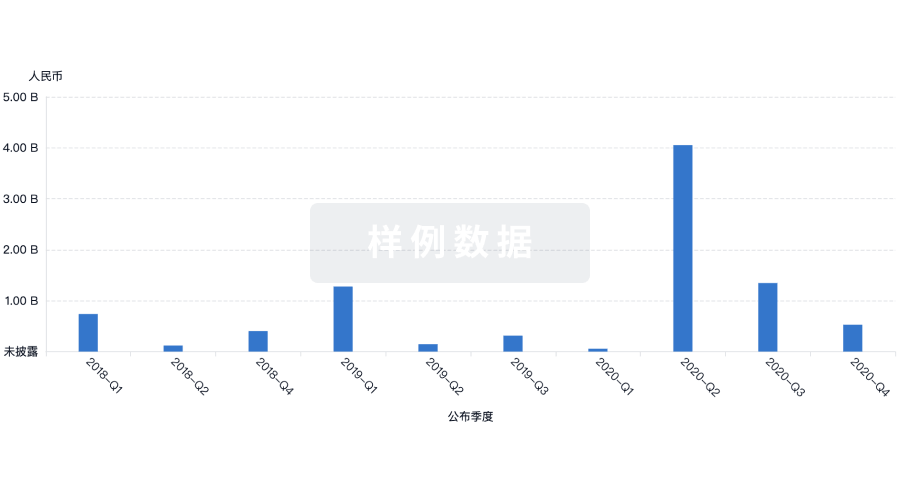
融资
发掘融资趋势以验证和推进您的投资机会。
登录
或
提出任何生物医药研究问题
让每一步生物医药决策都精准制胜
基于十亿级生物数据与全球情报的精准 AI,赋能早期药物发现
立即开始免费试用!
智慧芽新药情报库是智慧芽专为生命科学人士构建的基于AI的创新药情报平台,助您全方位提升您的研发与决策效率。
立即接入生物医药数据包
智慧芽新药库数据也通过智慧芽开放平台,以MCP或API服务形式对外开放。立即使用我们的MCP服务定制您的LLM智能体。
生物序列数据库
生物药研发创新
免费使用
化学结构数据库
小分子化药研发创新
免费使用