预约演示
更新于:2026-09-30
B-013
更新于:2026-09-30
概要
基本信息
原研机构 |
非在研机构- |
最高研发阶段临床2/3期 |
首次获批日期- |
最高研发阶段(中国)临床2期 |
特殊审评- |


登录后查看时间轴
关联
2
项与 B-013 相关的临床试验NCT06434610
A Multicenter, Randomized, Double-blind, Parallel-controlled Phase II Clinical Trial to Evaluate the Efficacy and Safety of B013 Combined With Paclitaxel in the Treatment of Platinum-resistant Recurrent Ovarian Cancer, Fallopian Tube Cancer, or Primary Peritoneal Cancer.
To evaluate the efficacy and safety of B013 in patients with platinum-resistant recurrent ovarian cancer.
开始日期2024-07-11 |
申办/合作机构 上海上药交联医药科技有限公司 [+1] |
NCT05555706
A Phase II/III Study to Evaluate the Efficacy and Safety of B013 in Combination With Nab-Paclitaxel in First-line Treatment for Patients With Previously Untreated Locally Advanced or Metastatic Triple Negative Breast Cancer
This Phase II/III study assessed the efficacy, safety, pharmacokinetics, and immunogenicity of B013 administered with nab-paclitaxel in participants with locally advanced or metastatic triple negative breast cancer (TNBC) who have not received prior systemic therapy for metastatic breast cancer (mBC).
开始日期2022-12-06 |
申办/合作机构 上海上药交联医药科技有限公司 [+1] |
100 项与 B-013 相关的临床结果
登录后查看更多信息
100 项与 B-013 相关的转化医学
登录后查看更多信息
100 项与 B-013 相关的专利(医药)
登录后查看更多信息
80
项与 B-013 相关的文献(医药)2026-09-01·BIOORGANIC CHEMISTRY
Design, synthesis and biological evaluation of novel imidazo[1,2-a]pyrazine derivatives as potent SYK inhibitors for solid tumor therapy
Article
作者: Liu, Xu ; Shao, Pei ; Liu, Jiawen ; Wu, Jie ; Liu, Jiaqi ; Liu, Yuzhen ; Huang, Xing
Spleen tyrosine kinase (SYK) has emerged as a promising therapeutic target for cancer treatment. In this study, based on the lead compound Lanraplenib, a series of novel imidazo[1,2-a]pyrazine derivatives were designed and synthesized through structure-based optimization focusing on modifications at the solvent-exposed C-8 position. The synthesized compounds were evaluated for their in vitro SYK inhibitory activity, and most of them exhibited improved potency. Among them, compound B13 showed the highest activity with an IC50 value of 10.9 nM, comparable to Lanraplenib. In vitro studies demonstrated that B13 displayed significant anti-proliferative effects against SKOV3, MDA-MB-231 and HepG2 cells, and effectively inhibited colony formation. Mechanistic studies revealed that B13 induced S phase cell cycle arrest and promoted apoptosis in a dose-dependent manner. Molecular docking suggested that the enhanced activity of B13 may be attributed to enhanced hydrophobic interactions and additional hydrogen bonding within the SYK binding pocket. Furthermore, B13 exhibited moderate metabolic stability in liver microsomes. In vivo studies using a SKOV3 xenograft model demonstrated that B13 significantly inhibited tumor growth in a dose-dependent manner, with tumor inhibition rates of 58.62% and 66.97% at 30 and 60 mg/kg, respectively, better than Lanraplenib, while showing no obvious toxicity. Collectively, these findings identify B13 as a promising SYK inhibitor and provide valuable insights for the further development of SYK targeted therapeutics for solid tumors.
2026-06-22·Anti-Cancer Agents in Medicinal Chemistry
Targeting Ceramide Metabolism to Overcome Osimertinib Resistance in
EGFR-mutant Non-Small Cell Lung Cancer: An In Vitro, Network Pharmacology,
and In Silico Study
Article
作者: Aztopal, Nazlıhan ; Sezer, Canan Vejselova ; Kutlu, Hatice Mehtap ; Cengiz, Mustafa ; Selvi, Oğuzhan
Introduction::
Osimertinib, an irreversible epidermal growth factor receptor inhibitor, is recognized
for use in non-small cell lung cancer patients with the T790M resistance mutation. Though osimertinib offers a
valuable advantage in survival of the patients, the occurrence of acquired resistance mechanisms confines the
long-term efficacy of the therapy. Subsequently, evaluating the resistance mechanisms and generating alternative
cure approaches are vital for improving therapeutic efficacy in advanced NSCLC. Herein, the aim was to
research the effectiveness of inhibitors of acid ceramidases as promising alternative agents on targeting resistance-
related cellular susceptibilities in osimertinib-sensitive (H1975/OS) and osimertinib-resistant
(H1975/OR) NSCLC cells maintained under long-term exposure to osimertinib.
Materials and Methods::
The cells were exposed to carmofur and B13 for 24, 48, and 72 hours. Antiproliferative
and cytotoxic effects were investigated using the sulforhodamine B assay, and half-maximal growth inhibition
(GI50), Total Growth Inhibition (TGI), and half-maximal Lethal Concentration (LC50) concentrations were detected.
Proapoptotic activity was investigated using annexin V and caspase 3/7 techniques on a cell analyzer.
The morphological alterations were investigated using confocal microscopy.
Results::
The analysis results indicated a proapoptotic effect in both cell lines for carmofur and B13. Carmofur
exerted moderate cytotoxicity at all concentrations, while B13 showed weak efficacy at the tested high agent
concentrations. Remarkably, the resistant cells remained sensitive to carmofur and B13, indicating that ceramide
metabolism may be effective in a therapeutic setting in resistant NSCLC.
Discussion::
The results offer strong support for further mechanistic and translational investigation.
Conclusion::
The results suggest that carmofur and B13 are promising alternatives for therapeutic targets in
drug-resistant lung cancer cells.
2026-06-01·METHODS
Broad Screening of 2-Styrylchromones Identifies dual inhibitors of the COX-2 pathway
Article
作者: Lucas, Mariana ; Ribeiro, Daniela ; Fernandes, Eduarda ; Freitas, Marisa ; Silva, Artur M S
Modulation of the cyclooxygenase (COX) pathway, particularly the regulation of COX-2 activity and expression, is central to anti-inflammatory therapy. In this study, the COX-2 inhibitory potential and COX-2/COX-1 selectivity of a panel of 43 structurally related 2-styrylchromones (2-SC), a family of oxygen-containing heterocyclic compounds and vinylogues of flavones (2-arylchromones) were evaluated. COX-2 and COX-1 activities were assessed using in vitro enzymatic and ex vivo human whole blood assays, complemented by the analysis of COX-2 expression in lipopolysaccharide (LPS)-stimulated human leukocytes. Structure-activity relationships were established whenever possible. In the enzymatic assay, 2-SC B12 and B13 were the most active compounds, with IC50 values ≤ 1 μM. These results suggest that the presence of catechol groups at C-7 and C-8 on the A-ring, as well as at C-3' and C-4' on the B-ring, plays a key role in the inhibition of COX-2 enzymatic activity. Both compounds were selective for COX-2, though B12 showed the highest selectivity index. In the complex matrix of human whole blood, B1 was the only 2-SC that consistently displayed inhibitory activity in both enzymatic and whole blood assays. At the cellular level, several 2-SC significantly downregulated LPS-induced COX-2 expression in human leukocytes. Notably, 2-SC B6, B7 and B9 inhibited both COX-2 activity and expression, and also reduced prostaglandin E2 production, suggesting a dual modulatory effect on this inflammatory pathway. Overall, these findings identify the 2-SC scaffold as a promising and underexplored chemical platform for the rational design of selective COX-2 modulators and innovative anti-inflammatory agents.
9
项与 B-013 相关的新闻(医药)2026-05-12
·药时空
国家药品监督管理局药品审评中心(CDE)官网最新公示显示,上海上药交联医药科技有限公司(以下简称“上药交联”)申报的注射用B024临床试验申请,已于2026年5月12日正式获得CDE受理,受理号为CXSL2600499。该产品为治疗用生物制品1类,此举标志着上海医药集团在创新生物药领域的管线布局再添关键筹码,进一步完善其在生物药领域的战略布局。
上药交联:上海医药抗体创新核心平台,筑牢研发根基
公开信息显示,上药交联作为上海医药集团股份有限公司的全资子公司,前身为上海交联药物研发有限公司,成立于2012年,核心聚焦单克隆抗体、抗体偶联药物(ADC)等前沿生物药的研发与产业化。公司坐落于上海张江生物医药基地这一产业高地,2024年成功入选省级重点实验室,曾承担国家新药创制重大专项等重点科研项目,在抗体药物开发、工艺优化等领域积累了深厚的技术沉淀与丰富的实践经验。
作为上海医药内部核心的抗体创新承载平台,上药交联已构建起覆盖肿瘤、自身免疫性疾病等重大疾病领域的多元化管线矩阵。截至目前,公司已有多个1类生物新药顺利进入临床阶段,核心管线包括:
B013注射液:一款First-in-class(全球首创)单克隆抗体药物,2018年上海医药斩获其大中华区域独家权益,目前已获批开展针对三阴性乳腺癌、铂耐药复发卵巢癌等多个适应症的临床试验,有望为晚期肿瘤患者提供全新治疗选择;
重组抗CD20人源化单克隆抗体皮下注射液:2024年正式获批临床,聚焦天疱疮治疗,填补公司在自身免疫性疾病领域的重要管线空白;
早期管线布局同样亮眼,涵盖B001、B002、B003等多个抗体及ADC项目,重点覆盖HER2等肿瘤领域热门靶点,为后续管线迭代储备充足动力。上海医药加速创新转型,生物药成核心增长引擎
近年来,上海医药持续加大创新研发投入,明确确立“自研+引进+合作”三位一体的创新战略,将生物药作为重点布局方向,全力推动企业从“仿创结合”向“原始创新”转型。据公司2025年年报数据显示,研发投入占工业销售收入比重已提升至15%以上,其中生物药研发投入占比超60%,彰显其深耕生物药领域的决心。
在自主研发之外,上海医药通过股权投资、授权引进等多元化方式快速扩充创新管线版图,先后与多家国内外领先生物科技企业达成深度合作,成功引进ADC、双特异性抗体、基因治疗等前沿技术平台及核心产品,实现“自主研发+外部引进”双轮驱动,加速创新成果落地。
此次注射用B024临床试验申请获得CDE受理,正是上海医药在生物药领域持续深耕的重要成果。截至目前,上海医药已有超过20个创新药处于不同临床阶段,其中生物药占比超一半,全面覆盖肿瘤、自身免疫、感染等多个高需求治疗领域,为企业长期发展注入强劲动力。行业观察:国产1类生物新药申报升温,本土创新进入快车道
2026年以来,国内生物药创新热度持续攀升,CDE受理的1类治疗用生物制品临床试验申请数量稳步增长,反映出国内生物医药产业创新活力持续释放。随着政策支持力度加大、研发技术不断突破,越来越多本土企业聚焦抗体药物、ADC、双抗、基因治疗等前沿领域,逐步打破国外技术垄断,实现从“跟跑”向“并跑”“领跑”的跨越,推动国产生物药产业高质量发展。
目前,注射用B024的具体靶点及适应症尚未公开。作为1类创新生物药,其背后承载着全新的治疗思路与潜在的临床价值,有望填补相关治疗领域的空白。后续,我们将持续跟踪该产品的CDE审评进展,以及临床试验阶段的核心数据,第一时间为药时空读者带来最新报道。
识别微信二维码,可添加药时空小编
请注明:姓名+研究方向!
抗体药物偶联物申请上市引进/卖出
2025-12-29
·米内网
精彩内容
近日,CDE官网显示,上海医药下属公司正大青春宝药业的中药1.1类新药七味防己黄芪颗粒获批临床,拟用于慢性心力衰竭。米内网数据显示,2024年中国三大终端六大市场心脑血管疾病中成药销售额超900亿元。
来源:CDE官网
七味防己黄芪颗粒是由上海医药下属公司正大青春宝药业开发的中药1.1类新药,功能主治益气活血、健脾利水,拟用于慢性心力衰竭中医辨证属气虚血瘀兼水饮内停证,症见气短、喘息、乏力、胸闷(痛)、面浮、肢肿等。
米内网数据显示,七味防己黄芪颗粒的临床申请(CXZL2500097)于2025年10月获得承办,随后于今年12月获得临床试验默示许可。
在中国三大终端六大市场(统计范围详见本文末),心脑血管疾病中成药2021-2024年销售额均在900亿元以上;2025Q1~Q3稍有下滑至约660亿元,从渠道格局上看,城市公立医院以38.26%的份额领跑市场,从亚类格局上看,心血管疾病用药稳守第一,市占比达55.63%。
2025Q1~Q3中国三大终端六大市场心脑血管疾病中成药亚类格局
来源:米内网格局数据库
2025Q1~Q3中国三大终端六大市场心脑血管疾病中成药产品TOP10中,安宫牛黄丸、复方丹参滴丸、麝香保心丸、脑心通胶囊、稳心颗粒依次位列前五,销售额均超过20亿元;3个产品销售额增速达两位数,分别为麝香保心丸、丹红注射液和迈之灵片。TOP10产品市场份额合计达30%以上。
2025Q1~Q3中国三大终端六大市场心脑血管疾病中成药TOP10产品
来源:米内网格局数据库
注:增长率不足3%用*表示
上海医药坚持创新发展,持续加大研发创新投入,2025年前三季度研发投入达17.29亿元,占医药工业销售收入的9.52%,创新药管线稳步推进。
米内网数据显示,2018年以来,上海医药已有至少24款1类新药获批临床/上市(按一级集团统计),包括12款化药、7款生物药和5款中成药。
上海医药1类新药研发情况
来源:米内网综合数据库
24款1类新药覆盖心脑血管、骨骼肌肉、肿瘤、神经、消化、血液和造血等疾病领域。其中,苹果酸司妥吉仑片于近日获批上市,用于原发性高血压;重组抗CD20人源化单克隆抗体注射液(视神经脊髓炎)、SHPL-49注射液(缺血性脑卒中)、参芪麝蓉丸(脊髓型颈椎病)、藿苓生肌颗粒(肌萎缩侧索硬化症)均已步入Ⅲ期临床,SPH4336片(乳腺癌)、B013注射液(乳腺癌)均处于Ⅱ/Ⅲ期临床阶段,上市可期。
资料来源:米内网数据库、CDE官网
注:米内网《中国三大终端六大市场药品竞争格局》,统计范围:城市公立医院和县级公立医院、城市社区中心和乡镇卫生院、城市实体药店和网上药店,不含民营医院、私人诊所、村卫生室,不含县乡村药店;上述销售额以产品在终端的平均零售价计算。数据统计截至12月29日,如有疏漏,欢迎指正!
免责声明:本文仅作医药信息传播分享,并不构成投资或决策建议。本文为原创稿件,转载文章或引用数据请注明来源和作者,否则将追究侵权责任。投稿及报料请发邮件到872470254@qq.com稿件要求详询米内微信首页菜单栏商务及内容合作可联系QQ:412539092
【分享、点赞、在看】点一点不失联哦
申请上市临床3期临床申请
2022-12-16
·米内网
精彩内容近日,上海医药枸橼酸托法替布片获批上市,旗下10款中成药获推荐“抗疫”。目前上海医药有23款创新药(17款1类新药)处于获批临床及以上阶段,4款处于III期临床阶段,上市可期;60个品种过评(16个首家),16个品种中标国家集采;中医药底蕴深厚,超10款中成药获推荐“抗疫”。拿下6大重磅品种!60个过评品种亮眼12月15日,上海医药发布公告称,控股子公司上海上药中西制药的枸橼酸托法替布片获批上市,并视同通过一致性评价。枸橼酸托法替布片是全球首个治疗类风湿关节炎的小分子靶向JAK激酶抑制剂,米内网数据显示,2021年中国三大终端6大市场(统计范围详见本文末)枸橼酸托法替布片销售额超过5亿元,同比增长58.92%。今年以来,上海医药已有6个新分类报产品种获批上市,包括枸橼酸托法替布片、拉考沙胺片、阿立哌唑口服溶液、替格瑞洛片、阿哌沙班片、盐酸胺碘酮注射液。米内网数据显示,2021年中国三大终端6大市场阿立哌唑销售额超过14亿元、替格瑞洛销售额超过10亿元、胺碘酮销售额超过4亿元。2022年至今上海医药获批品种来源:米内网中国申报进度(MED)数据库一致性评价方面,目前上海医药已有60个品种通过/视同通过一致性评价。其中,16个品种为国内首家过评,阿普唑仑片、阿立哌唑胶囊、盐酸度洛西汀肠溶片、硫酸羟氯喹片等4个品种为独家过评。上海医药通过/视同通过一致性评价品种从治疗领域上看,60个品种涵盖11个治疗大类,主要集中在心脑血管系统药物(17个)、神经系统药物(15个)。米内网数据显示,2021年中国三大终端6大市场心脑血管系统药物、神经系统药物销售规模均超过1000亿元。自国家第三批化药集采开始,上海医药便陆续有产品中标,累计16个品种中选国家集采。随着集采常态化推进,仿制药以价换量,药企更加注重院外市场的开发,同时也逐步向壁垒较高、竞争格局较好的品种倾斜,加速向创新转型。17款1类新药在研!4款创新药上市可期以科技创新为驱动,近年来上海医药加速创新转型,持续加大研发投入。2022年前三季度公司研发投入16.92亿元,其中费用化的研发投入13.89亿元,同比增长1.63%。公司已有安柯瑞(重组人5型腺病毒)、凯力康(尤瑞克林)、培菲康(双歧杆菌三联活菌)3款1类新药上市。目前上海医药主要有23款创新药处于获批临床及以上阶段,主要聚焦肿瘤及自身免疫领域,其中1类创新药有17个。从药品类型来看,小分子1类创新药有11个、大分子创新药有9个、中药创新药有2个。上海医药主要在研创新药来源:米内网中国药品临床试验公示库23款创新药中,SPH3127片、X842、Prolgolimab注射液、Netakimab注射液均已有适应症处于Ⅲ期临床阶段,上市可期;注射用百纳培南、藿苓生肌颗粒、B013注射液、羟基雷公藤内酯醇片、TK216注射液、注射用重组抗HER2人源化单克隆抗体-MCC-DM1偶联剂等处于Ⅱ期临床阶段。1类创新药SPH3127片是新一代口服非肽类小分子肾素抑制剂,先后获批开展原发性高血压、糖尿病肾病、炎症性肠炎等适应症的临床试验。米内网数据显示,2021年中国三大终端6大市场高血压用药销售额超过720亿元。作为新作用机制的降压药物,SPH3127片有望为广大的原发性轻、中度高血压患者提供一种有效的治疗途径和更丰富的治疗手段。X842是新一代钾离子竞争性酸阻断剂(P-CAB)口服药物,从机理上讲在起效时间、个体差异、服用顺应性方面皆好于PPI药物,且市场竞争格局较好。其针对反流性食管炎的Ⅲ期临床试验已达到主要终点指标且显示了良好的安全性,预计于今年年底递交NDA,有望于2023Q4-2024Q1获批上市。疫情防控新阶段!10余款中成药“抗疫”作为国内大型医药产业集团,上海医药在中医药领域也有深厚的积淀。上海医药中药产品资源丰富,旗下拥有7家中药重点企业、9个广受认可的核心品牌以及八宝丹、六神丸等多项保密配方和胃复春等独家品种,中药销售收入约为工业板块总体收入的三分之一,其中14种产品于2021年的销售收入逾1亿元。12月8日,国务院联防联控机制发布了《新冠病毒感染者居家治疗常用药参考表》,8款中成药获得推荐,上海雷允上的六神丸入选。12月10日,国家中医药局发布了《新冠病毒感染者居家中医药干预指引》(《指引》),60款中成药获得推荐。上海医药旗下10款产品六神丸、通宣理肺颗粒、桑菊感冒片、感冒退热颗粒、银翘解毒颗粒、小柴胡颗粒、通宣理肺丸、藿香正气丸、防风通圣丸、小儿止咳糖浆等入选。上海医药旗下入选《指引》产品除了入选常用药参考表或《指引》,上海医药旗下产品小儿肺热咳喘颗粒及独家产品八宝丹、苦甘颗粒等也被列为多地新型冠状病毒防治推荐用药。资料来源:米内网数据库、公司公告等注:米内网《中国三大终端6大市场药品竞争格局》,统计范围是:城市公立医院和县级公立医院、城市社区中心和乡镇卫生院、城市实体药店和网上药店,不含民营医院、私人诊所、村卫生室,不含县乡村药店;上述销售额以产品在终端的平均零售价计算。数据统计如有疏漏,欢迎指正!本文为原创稿件,转载请注明来源和作者,否则将追究侵权责任。投稿及报料请发邮件到872470254@qq.com稿件要求详询米内微信首页菜单栏商务及内容合作可联系QQ:412539092●温馨提示●因为微信公众号修改了推送规则,最近很多读者反映没有及时看到推文。把米内网设为“星标”,就能每天与我们不见不散啦,具体操作如下:【分享、点赞、在看】点一点不失联哦
一致性评价上市批准
100 项与 B-013 相关的药物交易
登录后查看更多信息
研发状态
10 条进展最快的记录, 后查看更多信息
登录
| 适应症 | 最高研发状态 | 国家/地区 | 公司 | 日期 |
|---|---|---|---|---|
| 三阴性乳腺癌 | 临床3期 | - | 2022-08-23 | |
| 输卵管癌 | 临床2期 | 中国 | 2024-07-11 | |
| 铂类耐药性原发性腹膜癌 | 临床2期 | 中国 | 2024-07-11 | |
| 复发性铂耐药性卵巢癌 | 临床2期 | 中国 | 2024-07-11 | |
| 铂耐药性输卵管癌 | 临床2期 | 中国 | 2024-06-20 | |
| 铂耐药性卵巢癌 | 临床2期 | 中国 | 2024-06-20 | |
| 肿瘤 | 临床2期 | 美国 | 2022-07-21 | |
| 复发性铂耐药性输卵管癌 | 临床申请批准 | 中国 | 2024-01-30 | |
| 复发性铂耐药性原发性腹膜癌 | 临床申请批准 | 中国 | 2024-01-30 |
登录后查看更多信息
临床结果
临床结果
适应症
分期
评价
查看全部结果
| 研究 | 分期 | 人群特征 | 评价人数 | 分组 | 结果 | 评价 | 发布日期 |
|---|
No Data | |||||||
登录后查看更多信息
转化医学
使用我们的转化医学数据加速您的研究。
登录
或

药物交易
使用我们的药物交易数据加速您的研究。
登录
或

核心专利
使用我们的核心专利数据促进您的研究。
登录
或

临床分析
紧跟全球注册中心的最新临床试验。
登录
或

批准
利用最新的监管批准信息加速您的研究。
登录
或

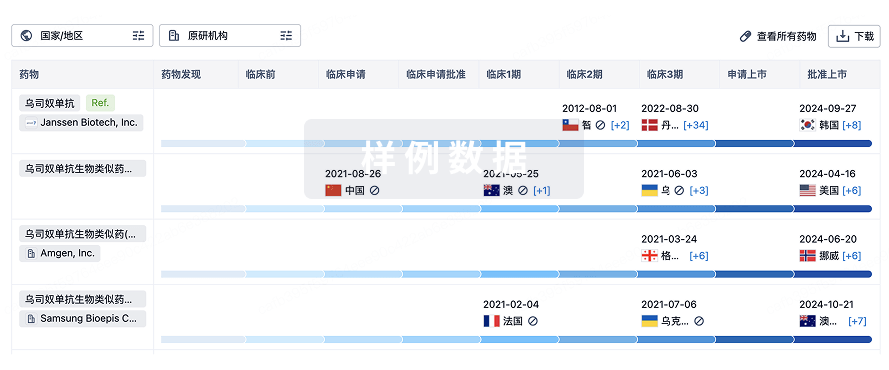
生物类似药
生物类似药在不同国家/地区的竞争态势。请注意临床1/2期并入临床2期,临床2/3期并入临床3期
登录
或
特殊审评
只需点击几下即可了解关键药物信息。
登录
或

提出任何生物医药研究问题
让每一步生物医药决策都精准制胜
基于十亿级生物数据与全球情报的精准 AI,赋能早期药物发现
立即开始免费试用!
智慧芽新药情报库是智慧芽专为生命科学人士构建的基于AI的创新药情报平台,助您全方位提升您的研发与决策效率。
立即接入生物医药数据包
智慧芽新药库数据也通过智慧芽开放平台,以MCP或API服务形式对外开放。立即使用我们的MCP服务定制您的LLM智能体。
生物序列数据库
生物药研发创新
免费使用
化学结构数据库
小分子化药研发创新
免费使用