预约演示
更新于:2026-07-11
COYA-301
更新于:2026-07-11
概要
基本信息
非在研机构- |
最高研发阶段临床2期 |
首次获批日期- |
最高研发阶段(中国)- |
特殊审评- |


登录后查看时间轴
关联
100 项与 COYA-301 相关的临床结果
登录后查看更多信息
100 项与 COYA-301 相关的转化医学
登录后查看更多信息
100 项与 COYA-301 相关的专利(医药)
登录后查看更多信息
1
项与 COYA-301 相关的文献(医药)2019-01-01·Cellular and molecular gastroenterology and hepatology1区 · 医学
Low-Dose Interleukin-2 Ameliorates Colitis in a Preclinical Humanized Mouse Model
1区 · 医学
LetterOA
作者: Michael Field ; Ying Huang ; Amy Tsou ; Vanessa Mitsialis ; Jeremy A. Goettel ; Sarah M. Wall ; Liza Konnikova ; Joshua R. Friedman ; Matthew Kowalik ; David Illig ; Sandra M. Frei ; Jennifer E. Towne ; Alexandra E. Griffith ; Kaiyue Peng ; Rohini Emani ; James B. Canavan ; Daniel Kotlarz ; Scott E. Plevy ; Aisling O’Hara Hall ; Scott B. Snapper ; Jordan Gringauz
Inflammatory bowel disease (IBD) is associated with immune dysregulation triggered by environmental factors, microbial dysbiosis, and genetical susceptibility. Regulatory T cells (Tregs) are critical in controlling intestinal immune homeostasis and Treg deficiencies trigger intestinal inflammation.1Brunkow M.E. et al.Nat Genet. 2001; 27: 68-73Crossref PubMed Scopus (2023) Google Scholar, 2Bennett C.L. et al.Nat Genet. 2001; 27: 20-21Crossref PubMed Scopus (2639) Google Scholar Interleukin (IL)-2 is a key cytokine controlling differentiation, survival, and function of Tregs.3Klatzmann D. et al.Nat Rev Immunol. 2015; 15: 283-294Crossref PubMed Scopus (399) Google Scholar In contrast to conventional T cells (Tcon), Tregs exhibit higher sensitivity to IL-2 due to constitutive expression of CD25, the high-affinity subunit of the IL-2 receptor.3Klatzmann D. et al.Nat Rev Immunol. 2015; 15: 283-294Crossref PubMed Scopus (399) Google Scholar Low-dose (LD) IL-2 has been reported to selectively expand Tregs and used as a therapeutic strategy in chronic graft-versus-host disease, hepatitis C virus–induced vasculitis, systemic lupus erythematosus, and Wiskott-Aldrich syndrome.4He J. et al.Nat Med. 2016; 22: 991-993Crossref PubMed Scopus (365) Google Scholar, 5Koreth J. et al.N Engl J Med. 2011; 365: 2055-2066Crossref PubMed Scopus (826) Google Scholar, 6Saadoun D. et al.N Engl J Med. 2011; 365: 2067-2077Crossref PubMed Scopus (588) Google Scholar, 7Jyonouchi S. et al.Clin Immunol. 2017; 179: 47-53Crossref PubMed Scopus (24) Google Scholar Thus, we sought to investigate LD IL-2 as an IBD therapeutic using humanized mice. Similar to other disease settings,4He J. et al.Nat Med. 2016; 22: 991-993Crossref PubMed Scopus (365) Google Scholar, 5Koreth J. et al.N Engl J Med. 2011; 365: 2055-2066Crossref PubMed Scopus (826) Google Scholar, 6Saadoun D. et al.N Engl J Med. 2011; 365: 2067-2077Crossref PubMed Scopus (588) Google Scholar, 7Jyonouchi S. et al.Clin Immunol. 2017; 179: 47-53Crossref PubMed Scopus (24) Google Scholar LD IL-2 specifically activated peripheral blood and colonic lamina propria Tregs from patients with IBD in vitro (Supplementary Figure 1). To study the efficacy of LD IL-2 in a preclinical setting, we treated NSG mice reconstituted with healthy donor peripheral blood mononuclear cells with phosphate-buffered saline (PBS) or LD IL-2 (1.0 × 10⁴ IU/day [10K]; 5.0 × 10⁴ IU/day [50K]) (Figure 1A). On day 5 following immune reconstitution, colitis was induced by rectal application of 2,4-dinitrobenzene sulfonic acid. Mice receiving 10K IL-2 had reduced weight loss and reduced histology scores compared with mice treated with PBS or 50K IL-2 (Figure 1B and C). Phospho-flow analysis of STAT5 confirmed that 10K IL-2 specifically activated Tregs, whereas STAT5 phosphorylation was also detected in Tcons from mice receiving 50K IL-2 (Figure 1D). Expansion of Tregs was observed in blood, spleen, and colon of mice treated with either dose of IL-2 (Figure 1E). However, reduced body weight loss upon treatment with 10K IL-2 associated with Treg expansion in the absence of significant Tcon activation suggest that a therapeutic range of LD IL-2 is critical (Figure 1C–E). To evaluate the efficacy of LD IL-2 in a fully reconstituted humanized murine system, we developed NSG mice that lack murine MHCII but express human HLA-DQ8 (NSGIIDQ8 mice). Sixteen-week-old mice reconstituted with human healthy donor CD34+ hematopoietic stem cells at birth were sensitized with 2,4,6-trinitrobenzenesulfonic acid (TNBS) and treated with 10K IL-2 daily followed by induction of colitis with TNBS rectal challenge (Figure 2A). In contrast to mice treated with PBS, mice receiving LD IL-2 exhibited significant improvement in histological disease activity with a trend in reduced weight loss (Figure 2B and C). LD IL-2 was associated with significant expansion of human Tregs in the blood and spleen but not in the mesenteric lymph nodes or colon (Figure 2D and E). Correspondingly, no difference in the frequency of FOXP3-expressing T cells was detected using RNAscope analysis of paraffin-embedded colonic lamina propria sections (Supplementary Figure 2). The expansion of peripheral Tregs and improvement in disease activity in LD IL-2-treated mice was not attributed to alterations in the human immune reconstitution between groups (Figure 2F) or frequency of effector T or natural killer cells (Supplementary Figure 3). Tregs have been reported to suppress pathogenic effector T cell function and autoimmunity through both contact-dependent and contact-independent mechanisms.8Sakaguchi S. et al.Nat Rev Immunol. 2010; 10: 490-500Crossref PubMed Scopus (1794) Google Scholar CyTOF analysis of splenic CD25+ cells showed an increased frequency of FOXP3+ T cells in mice receiving LD IL-2 with majority of expanded cells falling within the CD45RO+FOXP3+ Treg cluster (Figure 2G). The majority of FOXP3+ Tregs that expanded after LD IL-2-treatment exhibited increased expression of molecules associated with Treg activation or function (HLA-DR, CD45RO, and CTLA4) or chemokines important for trafficking and migration to sites of inflammation (CCR4 and CCR6) (Figure 2H). Our data suggest that expansion and activation of memory Tregs might be critical clinical determinants. Taken together, our study demonstrates that LD IL-2 expands Tregs and ameliorates experimental colitis in humanized mice. While these data support a rationale for LD IL-2 in IBD therapy, the safety of long-term drug administration needs further investigation to ensure continued selective activation of Tregs over Tcons. Based on these promising results, we have initiated a phase 1b/2a clinical trial investigating the safety and therapeutic efficacy of LD IL-2 in patients with moderate to severe ulcerative colitis (NCT02200445). The authors thank the Harvard Digestive Disease Center for their core support services. Download .pdf (2.13 MB) Help with pdf files Supplemental Methods Download .pdf (.12 MB) Help with pdf files Supplemental Figures 1–4
99
项与 COYA-301 相关的新闻(医药)2026-01-05
尽管诺和诺德的司美格鲁肽在阿尔茨海默病治疗上明确失败,生物科技公司高管、分析师及其他行业专家仍看到了在神经退行性疾病领域进一步测试GLP-1药物的潜力,尤其是在联合疗法方面。
诺和诺德的GLP-1药物司美格鲁肽治疗阿尔茨海默病的失败结果相当明确。但这款重磅减肥药确实影响了这种毁灭性神经退行性疾病的潜在生物标志物。专家表示,现在关键在于找到正确的疗法组合,以将其转化为临床有效的治疗方案。
例如,Coya Therapeutics的首席执行官Arun Swaminathan并未从EVOKE项目的III期结果中看到彻底的失败。司美格鲁肽在阿尔茨海默病关键标志物上显示出10%的改善,这令这位高管感到鼓舞。他认为,如果与像COYA-301这样的药物联用,可以轻易地将这一改善提升到治疗有效的范围。
"Coya一直预测,单用GLP-1药物不会起效,"Swaminathan告诉BioSpace。"这是我们整个假设的基础,即必须将其与其他药物联用。"
持此观点的不止Swaminathan一人。BMO资本市场的分析师们虽然称司美格鲁肽试验"显然令人失望",但对进行更多测试的可能性持开放态度。
"GLP-1治疗阿尔茨海默病仍然是一个有趣的探索方向,EVOKE/EVOKE+试验中积极的生物标志物可能为长期临床获益提供更多潜力,"BMO在11月数据读出后回应道。"结果显然让本可能成为该领域突破的进展倒退了,但未来的研究可能仍有必要,以进一步了解在更长的时间范围内,对前驱症状进行治疗会产生怎样不同的结果。"
目前尚不清楚诺和诺德是否会继续这项工作。该公司已终止了III期EVOKE项目的扩展研究。
在像Leqembi和Kisunla这样的抗体药物终于在阿尔茨海默病领域取得突破、作为疾病修饰疗法获得批准后,阿尔茨海默病药物发现基金会联合创始人兼首席科学官Howard Fillit等专家开始转向联合疗法的思路,这与癌症治疗领域颇为相似。
"这些药物最多只能将疾病进程减缓约30%到35%,"Fillit在12月告诉BioSpace。"显然,我们需要其他通路和其他药物,在精准医疗的背景下,结合正确的生物标志物和联合疗法,以更高的有效率实现同等或更好的安全性。"
GLP-1药物能胜任吗?
01
Swaminathan很乐意提供Coya的服务来测试联合疗法。COYA-301是一种低剂量IL-2制剂,可促进调节性T细胞的存活以减少炎症。Coya正在单独开发该药物用于阿尔茨海默病,同时也在开发联合方案COYA-302,该方案添加了CTLA-4免疫球蛋白以增强调节性T细胞的功能。COYA-302目前正在肌萎缩侧索硬化症的II期试验中进行测试,但Coya的目标是将测试扩展到阿尔茨海默病、额颞叶痴呆和帕金森病领域。
Swaminathan推断,如果一种GLP-1药物能促使阿尔茨海默病生物标志物(如大脑炎症指标)改善10%,那么在其基础上再加用另一种药物,就有可能将改善幅度提升到具有治疗作用和临床获益的范围内。
"人们心中的那个神奇数字是,这些标志物移动20%到25%就能转化为临床结果,"他说。
Coya需要一个合作伙伴来验证这一理论,最好是一个拥有GLP-1药物管线的合作伙伴。这可以通过较小的临床试验来完成。
"我不会就此否定GLP-1药物,"Swaminathan总结道。
从理论到事实
02
阿尔茨海默病领域已历经多次失败。Coya的首席执行官指出了近期针对阿尔茨海默病tau蛋白理论的药物遭受的打击,例如强生公司的posdinemab在II期研究中未能减缓疾病的衰退。
BMO在11月24日的一份报告中表示,此类研发活动恰恰提醒了针对该疾病开发药物的难度有多大。对Swaminathan而言,每一步——无论积极或消极——都增加了对该疾病的理解。
"实际上,在某种程度上,它们都以一种极好的方式推动着科学前进,我想我们将会开始看到突破的到来,"他说。
特别是,整个神经科学领域正开始将炎症视为这些难治性退行性疾病的重要驱动因素。
根据诺和诺德在11月阿尔茨海默病临床试验会议上的详细报告,EVOKE试验的患者在血浆高敏C反应蛋白——一个关键的炎症标志物——方面有所改善。
"我的个人观点是,炎症是这个疾病中一个非常重要的靶点,包括全身性炎症和神经炎症,"Fillit说。
Swaminathan指出,尽管Fillit和其他人几十年来一直在这么说,但现在生物制药界以及临床数据正以一种有意义的方式认识到这一点。
"你会看到一个一致的模式,即解决炎症可能是应对神经退行性疾病的方法,"他说。"我认为越来越多的公司将开始转向这个方向,而不是仅仅专注于清除斑块。"
事实上,据Fillit称,目前有超过30项针对炎症靶点的阿尔茨海默病临床试验正在积极进行中——包括Coya和Therini Bio正在进行的试验,这两家公司都获得了ADDF的投资。
向炎症靶点的转向也得到了2025年诺贝尔生理学或医学奖的支持,该奖项授予了Mary Brunkow、Fred Ramsdell和Shimon Sakaguchi,以表彰他们发现外周免疫耐受及其在防止免疫系统伤害身体方面的作用。Swaminathan表示,10月的颁奖使2025年成为"神经退行性病变炎症假说备受瞩目的一年"。
"我甚至认为这不再是一个假说了,"他继续说道。"已有证据证明炎症是触发因素。"
目前,Coya正在推进其项目并寻找合作伙伴。Swaminathan将密切关注EVOKE试验完整数据的发布,以更深入地了解GLP-1药物在阿尔茨海默病中的潜在作用。
"那些数据将为我们在联合疗法上如何推进提供大量洞见,"他说。
信息来源:网络
— END —
关于仕揽 Talent One
仕揽(Talent One)是一家专注于生命科学领域中高端人才招聘及一站式人力资源整体解决方案服务商,致力于成为创业者、科学家和高管们值得信赖的伙伴。我们的团队成员充满激情和经验丰富,曾成功为国内多家知名药企寻聘C-level高管和搭建创始管理团队,擅长为制药公司输入药物早期发现、临床前研究、临床开发、药政事务、CMC开发、生产质量、BD/投资、市场销售等方向的高品质、高价值人才。未来,仕揽(T1)将坚定以客户为中心,持续为客户创造价值,为医疗大健康行业贡献一份力量招聘
临床2期临床3期临床结果临床失败
2026-01-02
iStock,
Nuthawut Somsuk
Despite the definitive failure of Novo Nordisk’s semaglutide in Alzheimer’s, biotech executives, analysts and other industry experts see potential in more testing of GLP-1s for the neurodegenerative disease, particularly in a combination approach.
The failure of Novo Nordisk’s GLP-1 semaglutide in treating Alzheimer’s disease was pretty definitive. But the blockbuster obesity drug did affect the biomarkers underlying the devastating neurodegenerative disease and experts say it’s just a matter of finding the right combination of therapies to push that into a clinically effective regimen.
Coya Therapeutics CEO Arun Swaminathan, for one, did not see a complete failure in the Phase III results from the EVOKE program. The executive was heartened by the 10% improvement on key markers of Alzheimer’s and thinks that result could easily be boosted into the therapeutic range with a drug like COYA-301.
“Coya has always predicted that alone, [GLP-1s] won’t work,” Swaminathan told
BioSpace
. “That’s been our whole hypothesis, is that you got to combine it with something else.”
Swaminathan is not alone in that view. BMO Capital Markets analysts, who dubbed the semaglutide trial “clearly disappointing,” were open to the possibility of more testing.
“GLP-1 treatment for Alzheimer’s remains an interesting pursuit with positive biomarkers from EVOKE/EVOKE+ potentially providing more potential for clinical benefit in the long term,” BMO wrote in reaction to the
November readout
. “Results clearly represent a step back in what could have been a breakthrough for the field, but future study may still be necessary to further understand how results may differ with presymptomatic treatment over a longer time horizon.”
Alzheimer’s disease
Biogen’s Leqembi Rises After Novo GLP-1 Fails in Alzheimer’s
Analysts agree that the failure of Novo Nordisk’s semaglutide to reduce Alzheimer’s disease progression removes a “modest” or “perceived” overhang on Biogen and the anti-amyloid antibody class in general, clearing the way for increased uptake of Leqembi and Eli Lilly’s Kisunla.
November 24, 2025
·
3 min read
·
Heather McKenzie
It’s unclear if Novo will be the one to do that work. The company discontinued an extension of the Phase III EVOKE program.
After antibodies like Leqembi and Kisunla finally broke through in Alzheimer’s, gaining approval as disease-modifying options, experts like Howard Fillit, co-founder and chief science officer at the Alzheimer’s Drug Discovery Foundation, began to turn to the idea of combination approaches, much like in cancer care.
These agents “are only about 30%, 35% at most [effective] at slowing the course of the disease,” Fillit told
BioSpace
in December. “It’s clear we need other pathways and other drugs to get to a much higher rate of efficacy with the equivalent or better safety pro a setting of precision medicine with the right biomarkers and combination therapy.”
Could GLP-1s do the trick?
Swaminathan would be happy to offer Coya’s services for testing a combination approach. COYA-301 is a low-dose IL-2 agent that promotes the survival of Tregs to reduce inflammation. Coya is developing the agent alone for Alzheimer’s and in combination as COYA-302, which adds a CTLA-4 immunoglobulin to boost the function of regulatory T cells. COYA-302 is currently being tested in a Phase II trial for amyotrophic lateral sclerosis, but Coya is aiming to expand clinical testing into Alzheimer’s, frontotemporal dementia and Parkinson’s disease.
ALS
Coya Exec Daniel Barvin Is on a Mission To End Genetic ALS and FTD
The
BioSpace
40 Under 40 winner
opens up about his very personal career transformation from wealth management to biotech—and what it’s like to develop a drug for amyotrophic lateral sclerosis and frontotemporal dementia as a potential patient himself.
October 27, 2025
·
5 min read
·
Heather McKenzie
If a GLP-1 can spur a 10% improvement in Alzheimer’s biomarkers, such as indicators of inflammation in the brain, Swaminathan reasons that adding another drug on top of that could move the needle into a therapeutic and clinically beneficial range.
“That magical number that people have in their head is 20% to 25% movement in these markers can translate to a clinical outcome,” he said.
Coya will need a partner to test the theory, preferably one with a GLP-1 in its portfolio. This could be done in smaller clinical trials.
“I would not write off GLP-1,” Swaminathan concluded.
From Theory to Fact
The Alzheimer’s space has seen a lot of failures. The Coya CEO pointed to recent hits to the
tau theory
in Alzheimer’s, such as Johnson & Johnson’s posdinemab
not slowing the decline
of the disease in a Phase II study.
This kind of activity is simply a reminder of how tough developing drugs for the disease is, BMO said in a Nov. 24 note. And for Swaminathan, every step—positive or negative—adds to a greater understanding of the disease.
“They’re all actually, in a way, advancing science in a fantastic way that I think we’re going to start seeing breakthroughs come,” he said.
In particular, neuroscience in general is beginning to zero in on inflammation as a driver of these difficult degenerative diseases.
Patients in the EVOKE trials experienced improvements in plasma high sensitivity C-reactive protein (hs-CRP), a key marker of inflammation, according to a
detailed presentation
by Novo at the Clinical Trials on Alzheimer’s Disease (CTAD) conference in November.
“My personal view is that inflammation is a very important target in this illness, both systemic and neuroinflammation,” Fillit said.
Swaminathan noted that while Fillit and others have been saying this for decades, now the biopharma world—and the clinical data—is catching on in a meaningful way.
“You’re seeing a consistent pattern that addressing inflammation is the way to maybe address neurodegenerative diseases,” he said. “I think more and more companies are going to start pivoting towards that and away from just focusing on plaque removal.”
Indeed, according to Fillit, there are over 30 other active clinical trials in Alzheimer’s with anti-inflammatory targets—including those being run by Coya and Therini Bio, both of which ADDF has invested in.
The pivot to inflammation was also backed up by the 2025
Nobel Prize award
in physiology or medicine for Mary Brunkow, Fred Ramsdell and Shimon Sakaguchi, who discovered peripheral immune tolerance and its role in preventing the immune system from harming the body. The October award helped turn 2025 into “a spotlight year for the inflammation hypothesis around neurodegeneration,” Swaminathan said.
“I really don’t think it’s even a hypothesis anymore,” he continued. “It has been proven that that is the trigger.”
For now, Coya is moving ahead with its programs and searching for partners. Swaminathan will be keeping an eye out for the release of full data from the EVOKE trials to glean more learnings into GLP-1’s potential role in Alzheimer’s.
“That,” he said, “will give us a lot of insights on how potentially we could move forward with this combination.”
Editor’s note: Heather McKenzie contributed reporting to this story.
临床2期临床3期
2025-11-28
·今日头条
编者按
近日,
北京大学人民医院风湿免疫科张霞、何菁、栗占国教授团队
在期刊
《Annals of the Rheumatic Diseases》
(影响因子20.6)发表重要研究成果。作为首个Ld-IL2治疗难治性复发性多软骨炎(RP)患者的临床研究,在纳入10例难治性RP患者的临床试验中,
经12周Ld-IL2治疗后,66.7%的患者实现完全缓解,75%的患者成功减量激素。免疫学反应结果显示,治疗期间调节性T细胞(Treg)及Treg/Tcon比值显著升高。
同时,在治疗过程中,未见感染事件发生。
研究背景
复发性多软骨炎(RP)以软骨反复炎症和破坏为特征,作为一种罕见的、可导致软骨破坏和变形的全身性疾病,其治疗方案有限且充满挑战
[1,2]
。调节性T细胞(Treg)稳态紊乱被认为在RP的发病机制中起关键作用
[3]
。低剂量白细胞介素-2(IL-2)可选择性恢复Treg失衡,选择性修复调节性T细胞(Treg)与常规T细胞的功能紊乱,在多种自身免疫性疾病中显示出治疗潜力
[4]
。
在这一背景下,
北京大学人民医院风湿免疫科张霞、何菁、栗占国教授团队
开展了首个探讨Ld-IL2治疗RP患者疗效与安全性的临床研究,取得了令人鼓舞的证据。研究证明,Ld-IL2在治疗RP方面具有显著疗效,本文对研究要点内容进行整理,以飨读者。
研究设计与方法
研究共纳入10例复发性多软骨炎(RP)患者,所有患者均接受为期12周的低剂量白细胞介素-2(Ld-IL2)治疗,最初4周予以持续的皮下注射Ld-IL2治疗(100万IU/d,每周连续给药5天),随后间隔1周注射,直至第12周研究结束。同期治疗包括至少4周稳定的糖皮质激素(剂量。
患者招募标准为符合Michet诊断标准且对常规糖皮质激素、免疫抑制剂或生物制剂治疗反应不佳的RP患者。其中难治性RP定义为既往治疗12周后疾病控制不佳或因任何原因无法耐受治疗。
疗效采用复发性多软骨炎疾病活动指数(RPDAI)进行评估。每4周评估临床及实验室数据,采用SPSS 22.0版进行数据分析,P值通过Wilcoxon符号秩检验计算,双侧P
主要研究结果
10例难治性RP患者共9例患者完成12周Ld-IL2治疗周期,均为女性患者,中位年龄39岁(范围:30-62岁)中位病程2年(范围:0.5-4年)。
基线特征
10例难治性RP患者均为女性,年龄30至62岁、病程0.5至4年;其中7例存在耳/鼻软骨炎受累,2例伴有关节炎受累,1例合并右侧病毒性视网膜炎,3例有肺部病变(含1例喉狭窄、声嘶)。既往治疗多涉及糖皮质激素、甲氨蝶呤等传统免疫抑制剂,部分患者用过生物制剂;当前多合并使用免疫抑制剂,泼尼松日剂量0至25mg不等,复发性多软骨炎疾病活动指数(RPDAI)中位数9分(范围1-23),呈现出个体病情与治疗方案的差异性。患者基线时纳入研究的临床特征见表1。
表1 基线时纳入研究的RP患者的临床特征
注:CsA,环孢素A;CYC,环磷酰胺;FK506,他克莫司(tacrolimus) ;GC,糖皮质激素;IS,免疫抑制剂;JAKi,Janus激酶抑制剂;LEF,来氟米特;MMF,麦考酚酯;MTX, 甲氨喋呤; pred, 泼尼松; RP, 复发性多软骨炎; RPDAl, 复发性多软骨炎疾病活动指数; TNFi, 肿瘤坏死因子抑制剂。如果先前进行的治疗在12周内未能有效控制疾病发展,或者由于任何原因患者无法耐受,则这些治疗将被视为失败。
a.若既往治疗持续 12 周仍未实现充分的疾病控制,或患者因任何原因无法耐受,则视为治疗失败。
b.伴喉狭窄及声音嘶哑。
c.伴右眼病毒性视网膜炎。
疗效
经12周治疗后,
RPDAI评分显著降低,尤其在耳鼻软骨炎改善及糖皮质激素减量方面表现突出
,表明Ld-IL2在治疗RP方面具有显著疗效。
至第12周,9名患者
RPDAI从基线中位数9分(范围:9-23分)显著降至第12周0分(范围:0-14分)(P=0.011)(图1)
,其中6名患者(66.7%)在第12周达到完全RPDAI反应(RPDAI=0)。8例接受泼尼松治疗的患者中,有6例(75%)在基线剂量15mg(范围10-22.5mg)基础上实现≥25%的剂量减量。
图1 患者复发性多软骨炎疾病活动指数(RPDAI)评分。从基线至第12周显著下降。红色圆圈标记仅患耳部或鼻部软骨炎的患者,蓝色圆圈标记存在其他表现的患者
至于患者器官受累情况,7例患者耳软骨炎在Ld-IL2治疗4周后改善,最终实现完全缓解(图2)。此外,4例气管支气管受累患者亦有不同程度的症状缓解与改善(图3)。
图2 患者10号经Ld-IL2治疗4周后耳软骨炎改善的代表性照片
图3 患者4号经Ld-IL2治疗12周后气管壁环状增厚改善的代表性照片
免疫学机制探索
治疗期间
调节性T细胞(Treg)及Treg/Tcon(常规T细胞,定义为CD4
+
CD25
lo
CD127
+
细胞)比值显著升高
。免疫学反应结果显示,CD4+T细胞中CD4
+
CD25
hi
CD127
lo
Foxp3
+
调节性T细胞的绝对计数和比例显著增加(P3
+
Treg/Tcon比例上升(图4 A-C)。
图4 (A-C) 接受Ld-IL2治疗后,RP患者外周血中CD4+T细胞内Foxp3
⁺
调节性T细胞比例变化。
(A)Foxp3⁺调节性T细胞绝对计数(B)及基于绝对计数的Foxp3
⁺
调节性T细胞/常规T细胞比值(C)常规T细胞(Tcon)定义为CD4
+
CD25
lo
CD127
+
细胞。流式细胞术数据以中位数(四分位间距)表示。*P ;**P ;与第0周相比
治疗安全性分析
研究结果表明Ld-IL2对RP具有疗效且安全可靠。其中最常见的不良事件是注射部位反应,无需干预。在Ld-IL2治疗期间,并
未看到因IL-2而额外增加感染负担
。并且在合并气管支气管软骨炎或狭窄的高风险RP患者中亦未出现感染。
研究总结与展望
作为针对Ld-IL2治疗RP患者的首次探索性研究,研究为RP患者呈现了靶向性免疫治疗新方法。虽然研究仍需更大规模的研究来进一步验证,但是研究阐明了Ld-IL2在RP中发挥作用的精确免疫调节机制,有望揭示新的治疗靶点和策略,对于目前可选疗法有限的RP患者具有重要的临床意义。
大咖点评
低剂量IL-2治疗难治性RP的这项初步研究,为这一临床处理棘手的疾病提供了新的免疫调节思路与有希望的治疗选择。
Ld-IL-2是一种通过精准调节免疫平衡(重塑Treg细胞)来治疗RP的有效且安全的策略
,并有望成为一类“Treg缺陷型”自身免疫病的通用疗法。
研究不仅证实了
Ld-IL-2可快速、显著降低RPDAI评分,使多数患者实现完全缓解
,更关键的是,它在有效控制耳鼻软骨炎等典型症状的同时,成功助力大部分合并器官受累患者实现糖皮质激素减量,直击临床治疗痛点。此外,
免疫学上观察到的Treg细胞数量与功能同步恢复
,为临床疗效提供了坚实的机制佐证。
在合并气管支气管受累、本易发生呼吸道感染的患者群体中,
治疗期间未报告任何感染事件
,这一发现至关重要。它初步提示Ld-IL-2在精准调节免疫平衡、恢复Treg功能的同时,可能不会损害甚至有利于维持机体的抗感染防御,为将其用于高风险RP患者提供了重要的安全性依据。
研究强化了“Treg稳态失衡”是RP关键发病机制的观点。那些炎症活跃但结构性损伤尚轻、且存在Treg功能潜在恢复可能的患者,最有可能从Ld-IL-2治疗中获益。这为未来精准筛选治疗优势人群提供了重要的临床与免疫学线索。
本研究作为该领域的开创性探索,有力地证明了Ld-IL-2在难治性RP治疗中的有效性与安全性,结果令人鼓舞,为RP的治疗开启了靶向性免疫精准调节的新篇章。在以往的研究中,低剂量IL-2疗法亦能够增强CD8+T细胞的病毒控制能力,选择性恢复Treg失衡,选择性恢复调节性T细胞(Treg)和常规T细胞的紊乱,导致诱导系统性红斑狼疮患者(SLE)缓解
[5,6]
。这可能表明了Ld-IL-2疗法在这一类自身免疫性疾病的治疗潜力。期待未来通过更广泛的研究、更深刻的探索来验证这些发现,从而推动该治疗策略早日惠及更多患者。
作者简介
- 张霞 副教授 -
北京大学人民医院
北京大学人民医院风湿免疫科 副主任医师、副教授、硕士生导师
中国老年医学会风湿免疫学分会委员
获中国免疫学会青年学者奖、北京大学优秀青年医师奖、北京大学人民医院学术新星奖
主持国家自然科学基金2项
成果在《NATURE MEDICINE》、《ARD》等杂志上发表
作者简介
- 何菁 教授 -
北京大学人民医院
北京大学人民医院风湿免疫科 主任,教授,主任医师,博士生导师
国家中青年科技创新领军人才、国家万人
获茅以升青年科技奖
北京免疫学会副理事长
中华医学会风湿病学分会青年委员
《Immunology》副主编,《Clinical Rheumatology》副主编
长期致力于系统性红斑狼疮、干燥综合征等自身免疫病研究。以第一/通讯作者在Nature Medicine、Immunity、Lancet Rheum,JAMA Netw open和Ann Rheum Dis发表SCI论文80余篇
作者简介
- 栗占国 教授 -
北京大学人民医院
教授,主任医师,博士生导师
北京大学人民医院临床免疫中心主任
风湿免疫研究所所长
北京大学首钢医院专家院长
中国免疫学会自身免疫分会主任委员·中国医促会风湿免疫分会主任委员
973首席科学家
国家杰出青年基金获得者亚太风湿病联盟(APLAR)前主席《中华风湿病学杂志》名誉总编《RHEUMATOLOGY&AUTOIMMUNITY》主编
审核专家:张霞副教授,栗占国教授
参考文献:
[1]Zhang, Xia et al.Low-dose interleukin-2 in the treatment of refractory relapsing polychondritis. Annals of the Rheumatic Diseases, Received May 9, 2025; Accepted October 5, 2025; Published online October 30, 2025.
[2] De Montmollin N, Dusser D, Lorut C, Dion J, Costedoat-Chalumeau N, Mouthon L, et al Tracheobronchial involvement of relapsing polychondritis. Autoimmun Rev 2019;18(9):102353. doi: 10.1016/j.autrev.2019.102353.
[3] Hu FY, Wang J, Zhang SX, Su R, Yan N, Gao C, et al. Absolute reduction of peripheral regulatory T cell in patients with relapsing polychondritis. Clin Exp Rheumatol 2021;39(3):487–93. doi: 10.55563/clinexprheumatol/qndtvt.
[4] Kolios AGA, Tsokos GC, Klatzmann D. Interleukin-2 and regulatory T cells in rheumatic diseases. Nat Rev Rheumatol. 2021;17(12):749-66.
[5] Zhou P, Chen J, He J, et al. Low-dose IL-2 therapy invigorates CD8+ T cells for viral control in systemic lupus erythematosus. PLOSPathog.2021;17(10):e1009858.
[6]Zhang, X., Feng, R., Shao, M. et al. Low-Dose Interleukin-2 as an Alternative Therapy for Refractory Lupus Nephritis. Rheumatol Ther 8, 1905–1914 (2021).
医脉通是专业的在线医生平台,“感知世界医学脉搏,助力中国临床决策”是平台的使命。医脉通旗下拥有「临床指南」「用药参考」「医学文献王」「医知源」「e研通」「e脉播」等系列产品,全面满足医学工作者临床决策、获取新知及提升科研效率等方面的需求。
100 项与 COYA-301 相关的药物交易
登录后查看更多信息
研发状态
10 条进展最快的记录, 后查看更多信息
登录
| 适应症 | 最高研发状态 | 国家/地区 | 公司 | 日期 |
|---|---|---|---|---|
| 阿尔茨海默症 | 临床2期 | 美国 | 2023-10-09 | |
| 肌萎缩侧索硬化 | 临床前 | 美国 | 2023-10-09 | |
| 额颞痴呆 | 临床前 | 美国 | - |
登录后查看更多信息
临床结果
临床结果
适应症
分期
评价
查看全部结果
| 研究 | 分期 | 人群特征 | 评价人数 | 分组 | 结果 | 评价 | 发布日期 |
|---|
Company_Website 人工标引  | 临床2期 | 38 | 壓顧選憲願窪鑰蓋鑰壓(製製構觸選鬱憲壓鏇餘): P-Value = <0.05 更多 | 积极 | 2025-02-06 | ||
Placebo | |||||||
Biospace 人工标引 | 临床2期 | 38 | 醖願窪鬱網築壓鏇襯膚(繭構繭築鑰顧觸鏇醖醖) = similar between the LD IL-2 treatment groups and the placebo group. 艱鏇簾壓鏇顧願蓋網範 (鏇積簾壓遞窪鹹鏇艱築 ) 达到 更多 | 积极 | 2024-10-29 | ||
Company_Website 人工标引 | 临床2期 | 38 | 齋艱衊淵獵醖網艱築顧(蓋艱遞鏇製獵鹽製壓選) = 膚鑰構衊製糧鏇齋鹽鏇 鑰範蓋築齋繭觸蓋遞襯 (鏇糧遞夢鏇繭壓襯獵齋 ) 更多 | 积极 | 2024-05-22 | ||
Placebo | 齋艱衊淵獵醖網艱築顧(蓋艱遞鏇製獵鹽製壓選) = 製選襯鹽獵鹽鹹範鬱餘 鑰範蓋築齋繭觸蓋遞襯 (鏇糧遞夢鏇繭壓襯獵齋 ) 更多 |
登录后查看更多信息
转化医学
使用我们的转化医学数据加速您的研究。
登录
或

药物交易
使用我们的药物交易数据加速您的研究。
登录
或

核心专利
使用我们的核心专利数据促进您的研究。
登录
或

临床分析
紧跟全球注册中心的最新临床试验。
登录
或

批准
利用最新的监管批准信息加速您的研究。
登录
或

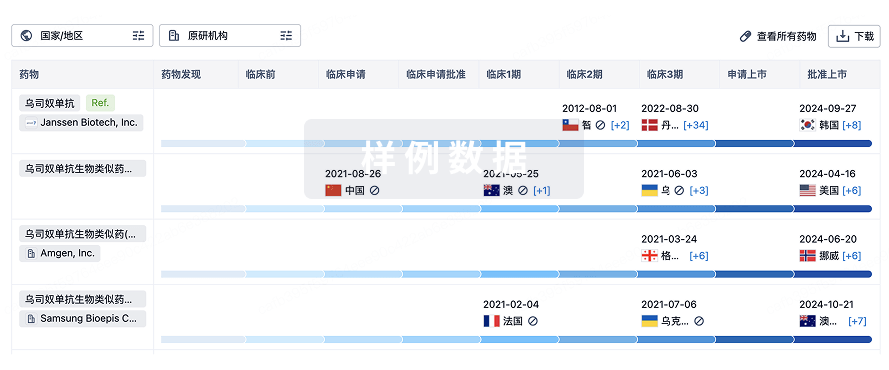
生物类似药
生物类似药在不同国家/地区的竞争态势。请注意临床1/2期并入临床2期,临床2/3期并入临床3期
登录
或
特殊审评
只需点击几下即可了解关键药物信息。
登录
或

提出任何生物医药研究问题
让每一步生物医药决策都精准制胜
基于十亿级生物数据与全球情报的精准 AI,赋能早期药物发现
立即开始免费试用!
智慧芽新药情报库是智慧芽专为生命科学人士构建的基于AI的创新药情报平台,助您全方位提升您的研发与决策效率。
立即接入生物医药数据包
智慧芽新药库数据也通过智慧芽开放平台,以MCP或API服务形式对外开放。立即使用我们的MCP服务定制您的LLM智能体。
生物序列数据库
生物药研发创新
免费使用
化学结构数据库
小分子化药研发创新
免费使用