预约演示
更新于:2026-08-15
Interleukin-12(National Institutes of Health)
更新于:2026-08-15
概要
基本信息
在研机构- |
权益机构- |
最高研发阶段终止临床2期 |
首次获批日期- |
最高研发阶段(中国)- |
特殊审评- |

登录后查看时间轴
关联
100 项与 Interleukin-12(National Institutes of Health) 相关的临床结果
登录后查看更多信息
100 项与 Interleukin-12(National Institutes of Health) 相关的转化医学
登录后查看更多信息
100 项与 Interleukin-12(National Institutes of Health) 相关的专利(医药)
登录后查看更多信息
379
项与 Interleukin-12(National Institutes of Health) 相关的文献(医药)2026-07-01·IN VIVO
Exploring the Contribution of Interleukin-12A Genetic Polymorphisms to Pterygium Risk
Article
作者: Tsai, Chia-Wen ; Hsia, Te-Chun ; Bau, DA-Tian ; Yang, Ya-Chen ; Chang, Wen-Shin ; Hu, Pei-Shin ; Hsia, Ning-Yi
BACKGROUND/AIM:
Pterygium is a common ocular surface disorder with multifactorial etiology involving environmental exposure and immune dysregulation. Interleukin-12 (IL-12), a key immunomodulatory cytokine, has been implicated in inflammation and tumor-related processes, yet its genetic contribution to pterygium remains unclear. This study aimed to evaluate the association between IL-12A polymorphisms and pterygium susceptibility.
MATERIALS AND METHODS:
A hospital-based case-control study was conducted, including 160 pterygium patients and 320 age- and sex-matched controls. Genotyping of IL-12A rs568408 and rs2243115 was performed via restriction fragment length polymorphism methods.
RESULTS:
Both polymorphisms were in Hardy-Weinberg equilibrium among controls (p=0.2165 and p=0.5533). No significant differences in genotype distributions were observed between cases and controls for rs568408 (p for trend=0.5727) or rs2243115 (p for trend=0.5471). The rs568408 AG and AA genotypes showed non-significant associations with pterygium risk (OR=1.14, 95%CI=0.72-1.78, p=0.6603; OR=1.63, 95% CI=0.59-4.49, p=0.4950). Similarly, allelic analyses revealed no significant associations (as for rs568408, OR=1.21, 95%CI=0.84-1.76, p=0.3527; as for rs2243115, OR=1.27, 95%CI=0.81-2.01, p=0.3581).
CONCLUSION:
Despite the tumor-like and inflammatory characteristics of pterygium, IL-12A polymorphisms were not significantly associated with disease susceptibility. However, IL-12-mediated immune pathways may still contribute to disease pathogenesis through functional regulation rather than genetic variation. Further large-scale and mechanistic studies are warranted.
2026-06-01·Molecular therapy. Oncology
Induced pluripotent stem cell-derived dendritic cells potentiate the efficacy of interleukin-12-expressing oncolytic HSV-1
Article
作者: Takeshima, Yuta ; Kume, Haruki ; Todo, Tomoki ; Fukuhara, Hiroshi ; Kakutani, Shigenori ; Naito, Akihiro ; Li, Xiao-Kang ; Taguchi, Satoru ; Cai, Songjie ; Miyakawa, Jimpei
Oncolytic herpes simplex virus type 1 (HSV-1), including marketing-approved G47Δ, elicits antitumor immunity via facilitating antigen presentation during immune-mediated clearance of infected tumor cells. Dendritic cell (DC) therapy should therefore enhance oncolytic HSV-1 efficacy, but its clinical application is hindered by the need to generate autologous DCs. Induced pluripotent stem cell (iPSC) technologies offer a scalable and standardized source of DCs. Here, we investigate the therapeutic potential of combining iPSC-derived DCs (iPSDCs) with an interleukin-12-expressing oncolytic HSV-1, T-mfIL12. iPSDCs, generated from a murine embryonic fibroblast-derived iPSC line, possess characteristics and functions comparable to bone marrow-derived DCs (BMDCs), including costimulatory molecule expression, antigen uptake capacity, and the ability to stimulate CD8+ and CD4+ T cells isolated from ovalbumin-specific transgenic mice both in vitro and in vivo. In a syngeneic murine bladder cancer model, iPSDCs markedly enhanced the efficacy of intratumorally inoculated T-mfIL12, eliciting augmented immune responses including intratumoral T cell infiltration, tumor-responsive T cell activation, and in situ maturation of DCs, similarly to BMDCs. The results indicate that iPSDCs can serve as an effective and practical alternative to conventional DCs in oncolytic virus immunotherapy. The combination of T-mfIL12 with iPSDCs offers a promising and clinically applicable cancer treatment strategy.
2026-01-01·MOLECULAR NEUROBIOLOGY
IL-12 ameliorates diabetic retinal neurodegeneration by activating microglial phagocytosis via the TREM2/DAP12 pathway
Article
作者: Chen, Ting ; Wu, Yifei ; Liu, Shanshan ; Lu, Xiaohe ; Chen, Hui ; Fang, Wanyi
Abstract:
Diabetic retinopathy (DR) is a common neurovascular complication of diabetes and a leading cause of vision loss in the advanced stages. Identifying therapeutic targets to prevent early progression of DR is critical for preserving visual function. Interleukin-12 (IL-12) has emerged as a potential therapeutic agent for early-stage diabetic retinal neurodegeneration. In this study, diabetic mouse models were established, followed by intravitreal injection of IL-12 to evaluate its effects using hematoxylin and eosin staining and RNA sequencing. IL-12 treatment partially prevented the thinning of the nerve fiber layer, ganglion cell layer, and total retina. Bioinformatics analysis of RNA sequencing data revealed enrichment of microglial signatures and enhanced phagocytic function. Western blotting analysis showed that IL-12 promoted the phosphorylation of signal transducer and activator of transcription 4 (STAT4) in microglia. Bioinformatics and quantitative reverse transcription polymerase chain reaction analyses demonstrated that STAT4 activation upregulated the transcription of phagocytosis-related genes, including triggering receptor expressed on myeloid cells 2 (TREM2) and DNAX-activating protein of 12 kDa (DAP12). In vitro and in vivo experiments confirmed that IL-12 upregulates the TREM2/DAP12 signaling pathway on the microglial membrane, enhancing microglial proliferation and phagocytic activity under high-glucose conditions. These findings indicated that IL-12 mitigates early neural injury in DR by promoting microglial phagocytosis through the upregulation of TREM2/DAP12.
1
项与 Interleukin-12(National Institutes of Health) 相关的新闻(医药)2024-06-01
Ankyra Therapeutics will provide an update on the status of the ANK-101 Phase 1 ANCHOR clinical trial at ASCO 2024 and has received approval by FDA and Health Canada to amend the Phase I study to include patients with solid tumors in visceral organs
CAMBRIDGE, Mass.--(BUSINESS WIRE)-- Ankyra Therapeutics, a clinical-stage oncology company developing anchored immunotherapies to improve the therapeutic window for immuno-oncology drugs, announced today that it is presenting a Trial in Progress poster for the phase 1 ANCHOR clinical trial at the 2024 American Society of Clinical Oncology (ASCO) Annual Meeting being held May 31 – June 4, 2024 in Chicago, IL.
Ankyra Therapeutics has developed an anchored drug-delivery platform based on linking immunotherapy drugs to aluminum hydroxide. The linked compounds are delivered locally to the tumor, where they are retained for several weeks promoting anti-tumor activity without systemic toxicity. Ankyra’s lead asset, ANK-101, is comprised of interleukin-12 with an alum-binding peptide that enables direct linkage with aluminum hydroxide. The ANCHOR study is a multi-institution, first-in-human, phase I clinical trial of ANK-101 in patients with superficially accessible solid tumors who have progressed after standard therapy was initiated in February 2024. The primary objectives of the study are to determine the safety, tolerability, and recommended dose of ANK-101 for further studies. The trial is active at five clinical study sites: Massachusetts General Hospital in Boston, MA; Providence Cancer Institute in Portland, OR; University of Pittsburgh in Pittsburgh, PA; Princess Margaret Hospital in Toronto, ON; and the National Cancer Institute (NCI), part of the National Institutes of Health, in Bethesda, MD. The poster presentation will include the rationale for the trial, study objectives, clinical trial design, and an update on accrual. The study will also evaluate pharmacokinetics, immune biomarkers, and quality of life.
In addition, Ankyra has received clearance from both the U.S. Food and Drug Administration (FDA) and Health Canada to amend the phase I clinical trial to include a second dose-escalation and expansion part to evaluate ANK-101 for injection into solid tumors located in visceral organs. This part will run concurrently with the current Phase I study with dosing to begin once patients in the superficial part have cleared a 21-day dose-limiting toxicity (DLT) observation period.
“We are delighted with the progress in the current phase I study which will help establish the initial safety pro dosing selection for ANK-101,” stated Howard L. Kaufman, MD, CEO of Ankyra Therapeutics. Dr. Kaufman also stated that “this study is the first step to realize the potential for anchored immunotherapy to deliver high doses of immunotherapy without systemic toxicity, which could represent an important advance in how we deliver effective cancer treatment in a safer manner.” Joe Elassal, MD, Chief Medical Officer at Ankyra added “the recent approval to extend ANK-101 to visceral tumors is especially exciting as we can now study a broader patient population that could extend the potential indications for ANK-101 treatment”.
For patients interested in enrolling in this clinical trial at NCI, please call NCI’s toll-free number: 1-800-4-Cancer (1-800-422-6237) (TTY: 1-800-332-8615); visit the website: ; and/or email: NCIMO_referrals@mail.nih.gov.
Title: A phase 1, open-label, dose escalation study on the safety and tolerability of ANK-101 in advanced solid tumors
Session Type: Poster Session
Session Title: Developmental Therapeutics – Immunotherapy
Track: Developmental Therapeutics – Immunotherapy
Sub Track: New Targets and New Technologies (IO)
Session Date and Time: Saturday June 1, 2024 9:00 AM CDT
Location: Hall A
Poster Board Number: 158a
Published Abstract Number: TPS2689
Citation: J Clin Oncol. 42, 2024 (suppl 16; abstr TPS2689)
The poster will be available on the publications section of Ankyra’s website after the meeting at .
About ANK-101
ANK-101 is an anchored drug complex composed of interleukin-12 (IL-12) linked to aluminum hydroxide. ANK-101 enables local delivery of functional IL-12 to the tumor microenvironment where it remains biologically active for several weeks but does not diffuse into the systemic circulation, thereby avoiding systemic toxicity. Treatment with ANK-101 in animal models has been associated with recruitment and retention of CD8+ T cells, NK cells and M1 macrophages activating innate and adaptive anti-tumor immunity. ANK-101 is being evaluated for the treatment of advanced solid tumors alone and in combination with anti-PD-1 agents. The Phase 1 first-in-human, open-label clinical trial of ANK-101 as a monotherapy (NCT:06171750) consists of a dose escalation portion that will evaluate the safety and tolerability of ANK-101, followed by dose expansion cohorts.
About Ankyra Therapeutics
Ankyra Therapeutics is a biotechnology company that has developed a highly differentiated technology platform that expands the therapeutic window of cytokine drugs by forming a stable depot in the tumor after local administration leading to prolonged immune activation and potent local and systemic immunity with reduced systemic toxicity. Ankyra was founded in 2019 and is headquartered in Cambridge, Massachusetts. For more information, please visit
View source version on businesswire.com:
Contacts
For Investor and Media Inquiries:
Howard L. Kaufman, MD
President and CEO
info@ankyratx.com
Source: Ankyra Therapeutics
View this news release online at:
临床1期免疫疗法ASCO会议
100 项与 Interleukin-12(National Institutes of Health) 相关的药物交易
登录后查看更多信息
研发状态
10 条进展最快的记录, 后查看更多信息
登录
| 适应症 | 最高研发状态 | 国家/地区 | 公司 | 日期 |
|---|---|---|---|---|
| 多发性骨髓瘤 | 临床2期 | - | - | |
| 血吸虫病 | 临床2期 | - | - |
登录后查看更多信息
临床结果
临床结果
适应症
分期
评价
查看全部结果
| 研究 | 分期 | 人群特征 | 评价人数 | 分组 | 结果 | 评价 | 发布日期 |
|---|
No Data | |||||||
登录后查看更多信息
转化医学
使用我们的转化医学数据加速您的研究。
登录
或

药物交易
使用我们的药物交易数据加速您的研究。
登录
或

核心专利
使用我们的核心专利数据促进您的研究。
登录
或

临床分析
紧跟全球注册中心的最新临床试验。
登录
或

批准
利用最新的监管批准信息加速您的研究。
登录
或

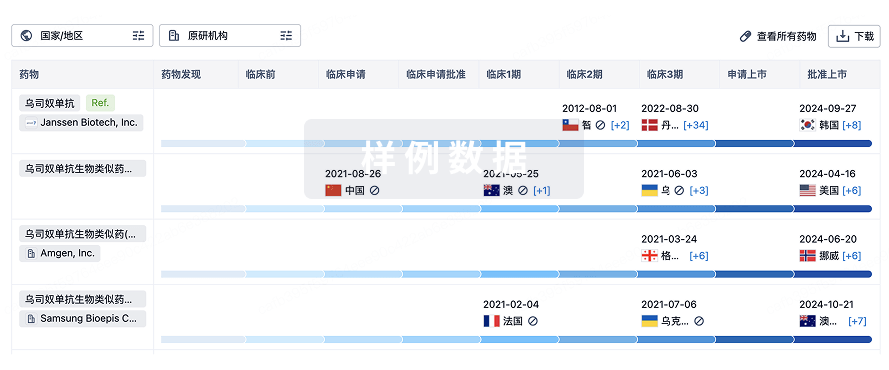
生物类似药
生物类似药在不同国家/地区的竞争态势。请注意临床1/2期并入临床2期,临床2/3期并入临床3期
登录
或
特殊审评
只需点击几下即可了解关键药物信息。
登录
或

提出任何生物医药研究问题
让每一步生物医药决策都精准制胜
基于十亿级生物数据与全球情报的精准 AI,赋能早期药物发现
立即开始免费试用!
智慧芽新药情报库是智慧芽专为生命科学人士构建的基于AI的创新药情报平台,助您全方位提升您的研发与决策效率。
立即接入生物医药数据包
智慧芽新药库数据也通过智慧芽开放平台,以MCP或API服务形式对外开放。立即使用我们的MCP服务定制您的LLM智能体。
生物序列数据库
生物药研发创新
免费使用
化学结构数据库
小分子化药研发创新
免费使用