预约演示
更新于:2026-10-13
AS-1411
更新于:2026-10-13
概要
基本信息
最高研发阶段临床2期 |
首次获批日期- |
最高研发阶段(中国)- |
特殊审评- |





登录后查看时间轴
结构/序列
Sequence Code 29361045
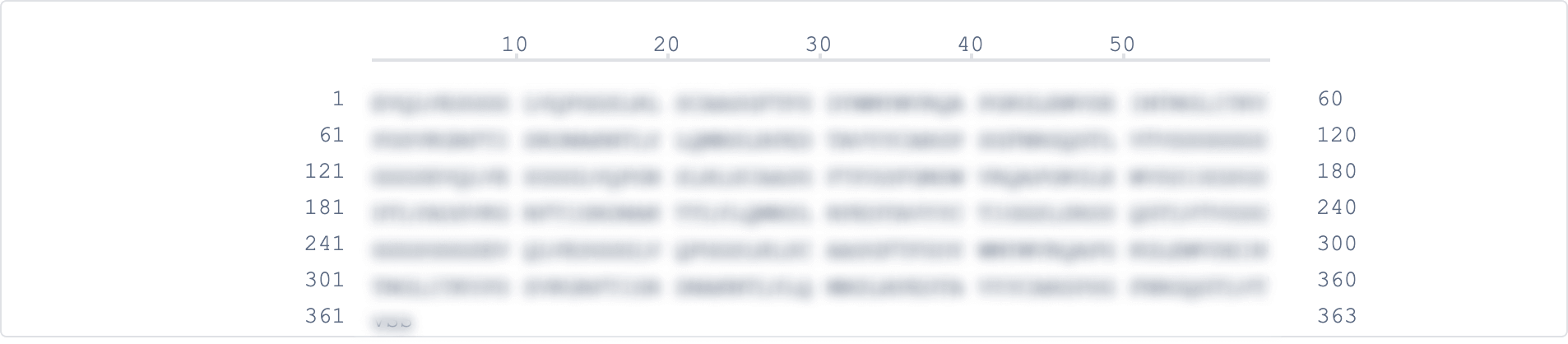
来源: *****
关联
4
项与 AS-1411 相关的临床试验NCT01034410
An Open-label Randomized Controlled Phase II Study of AS1411 Combined With Cytarabine in the Treatment of Patients With Primary Refractory or Relapsed Acute Myeloid Leukemia
This is an open label randomized controlled phase II study of AS1411 combined with Cytarabine in the treatment of patients with primary refractory or relapsed acute myeloid leukemia.
开始日期2010-01-01 |
申办/合作机构 |
NCT00740441
A Phase II, Open Label, Single Arm Study of AS1411 in Patients With Metastatic Renal Cell Carcinoma
The aim of this study is to evaluate the efficacy of AS1411 in patients with Metastatic Renal Cell Carcinoma
开始日期2008-08-01 |
申办/合作机构 |
NCT00512083
An Open Label Randomized Controlled Dose Escalating Phase II Study of AS1411 Combined With Cytarabine in the Treatment of Patients With Primary Refractory or Relapsed Acute Myeloid Leukemia
The overall aim of this study is to assess the efficacy and safety of AS1411, over a range of doses, when combined with cytarabine, in the treatment of patients with primary refractory or relapsed acute myeloid leukemia (AML).
开始日期2007-07-01 |
申办/合作机构 |
100 项与 AS-1411 相关的临床结果
登录后查看更多信息
100 项与 AS-1411 相关的转化医学
登录后查看更多信息
100 项与 AS-1411 相关的专利(医药)
登录后查看更多信息
626
项与 AS-1411 相关的文献(医药)2026-12-01·PREVENTIVE MEDICINE
Light pollution and health outcomes in children and adolescents: A systematic review
Review
作者: Sun, Yuqing ; Wang, Xian ; Ma, Juanjuan
OBJECTIVE:
An increasing body of evidence suggests a relevant association between artificial light at night (ALAN) and adverse health effects. We evaluated the association between ALAN and health outcomes in children and adolescents.
METHODS:
We searched PubMed, Web of Science, Scopus, EMBASE, and MEDLINE from January 1, 2020, to March 14, 2026, and included 72 observational studies from six continents, mostly conducted in Asia. The OHAT and GRADE assessed study quality and outcome certainty; meta-analysis was not performed due to high heterogeneity. ALAN exposure was measured by satellite imagery, actigraphy, illuminance meters, and questionnaires.
RESULTS:
There is a strong positive correlation between light pollution and adverse health outcomes. Seven categories were identified: sleep problems, adverse birth outcomes, physical and mental health disorders, increased risk of overweight or obesity, affected vision, and elevated cardiometabolic risks. Specifically, each interquartile range increase in annual outdoor ALAN was associated with 3% higher odds of preterm birth (OR = 1.03, 95% CI: 1.02, 1.04). Per 10 nW/cm2/sr increment in ALAN exposure, BMI z score increased by 34.0% (95% CI: 25.4%, 42.6%).
CONCLUSION:
These findings underscore the need to consider ALAN as a potential environmental risk factor in urban planning and public health strategies to protecting pediatric health.
2026-11-01·COMPARATIVE BIOCHEMISTRY AND PHYSIOLOGY C-TOXICOLOGY & PHARMACOLOGY
Effects of artificial light at night (ALAN) on the development and behaviors of zebrafish in early life stages
Article
作者: Qiu, Xuchun ; Tang, Jie ; Feng, Weiwei ; Chen, Kun ; Zhao, Liting ; Xu, Xiaohong ; Shi, Yanhong
Artificial light at night (ALAN), a form of physical pollution with growing global impacts, has been shown to induce various adverse effects on terrestrial organisms. However, studies on the effects of ALAN on aquatic organisms, particularly fish during early life stages, remain limited. In this study, zebrafish embryos were exposed to ALAN at 0, 25, 75, and 225 lx until 144 hours post-fertilization (hpf) with manipulated circadian cycles (light/dark or light/ALAN) to assess alterations in development, survival, behavior, and the monoaminergic system. The results showed that ALAN exerted no significant effects on the survival rate, hatching time, or blood flow velocity (at 72 hpf) of zebrafish embryos/larvae, but increased the embryonic heart rate (at 48 hpf) under the 75 and 225 lx conditions. Concurrently, the eye area of zebrafish exhibited a progressive reduction, accompanied by a decreased optokinetic response (OKR). Moreover, ALAN exposure decreased locomotor activity and induced marked anxiety-like behavior in zebrafish larvae. Biochemical analysis revealed significantly decreased levels of DA and its metabolites in zebrafish, which were associated with the observed physiological and behavioral deficits. In addition, the visual deficits induced by ALAN were closely linked to the behavioral alterations in zebrafish larvae. In summary, ALAN exposure is closely linked to the dopaminergic pathway, which correlates with disrupted early-life development and behavioral impairments in zebrafish. These findings highlight the potential risks that nocturnal light pollution poses to aquatic ecosystems, particularly in urbanized areas.
2026-11-01·ANALYTICA CHIMICA ACTA
A photoregulated DNA nanoflower for spatiotemporally controlled monitoring of adenosine triphosphate in living cells
Article
作者: Chong, Huimin ; Huang, Qing ; Wang, Liu ; Su, Ning ; Chen, Xiaohui ; Ren, Xiaodong ; Mi, Qian ; Liu, Ruiqing
Visualization of adenosine triphosphate (ATP) dynamics in living cells is crucial for revealing metabolic abnormalities in tumors. Although DNA-based fluorescent probes show promise for biomolecular detection, their application in intracellular imaging faces several challenges, including insufficient cellular uptake efficiency and nonspecific signal activation prior to reaching the cellular target. To address these limitations, we constructed a tumor-targeted, aptamer-based, photocleavable DNA nanoflower (TAPE) system via rolling circle amplification (RCA). The TAPE integrates three core functional modules: the AS1411 aptamer module for tumor cell targeting via nucleolin binding, a cholesterol-modified module for enhanced membrane interaction and delivery, and a photocontrollable ATP-sensing module. In vitro characterization confirmed that TAPE's dual-input (UV light and ATP) sensing logic requires prior photocleavage followed by ATP binding to trigger fluorescence signals. The system demonstrated an ATP detection limit of 39.18 μM with high selectivity over other nucleotide triphosphates. Cellular uptake studies showed that TAPE was efficiently internalized by nucleolin-positive A549 cancer cells in an AS1411 aptamer-dependent manner, with a positive uptake rate of 98.5%. This uptake efficiency was significantly higher than that in control cells (P < 0.0001). In cellular experiments, TAPE enabled the spatiotemporally controlled imaging of intracellular ATP, successfully monitoring ATP level fluctuations induced by pharmacological agents etoposide under photocleavage-mediated activation. In conclusion, this study develops a spatiotemporally controlled intracellular ATP imaging strategy, offering a reliable platform for tumor research.
545
项与 AS-1411 相关的新闻(医药)2026-10-12
THE LANCET Gastroenterology & Hepatology. Volume 11Number7
柳叶刀·胃肠病学与肝病学 11卷 7期
https://www.thelancet.com/journals/langas/issue/current
Editorial(社论)
1
Rome V: refining the language of gut–brain disorders
罗马Ⅴ:完善肠–脑疾病的术语体系
The Lancet Gastroenterology & Hepatology
The Lancet Gastroenterology & Hepatology. Jul 2026, Vol 11(7):p541
Comment(述评)
2
A changing HIV treatment landscape: what does lenacapavir mean for people living with HBV?
HIV治疗格局之变:来那卡帕韦对HBV感染者意味着什么?
Philippa C Matthews,Marion Delphin,Motswedi Anderson,Joanna Redmond,Stuart Flanagan,Maryam Shahmanesh
The Lancet Gastroenterology & Hepatology. Jul 2026, Vol 11(7):p542
3
Alaska Native peoples and colorectal cancer: opportunities for research and prevention
阿拉斯加原住民与结直肠癌:研究与预防的机遇
Diana Redwood,LaRita Laktonen-Ward,Elena Roik
The Lancet Gastroenterology & Hepatology. Jul 2026, Vol 11(7):p544
4
Breaking the cycle: from documenting data scarcity to enabling global IBD research
打破循环:从记录数据匮乏到推动全球IBD研究
Mohammed Nabil Quraishi,Badr Al-Bawardy,Rupa Banerjee,Maiara Brusco De Freitas,David Epstein,Tine Jess
The Lancet Gastroenterology & Hepatology. Jul 2026, Vol 11(7):p546
Correspondence(读者来信)
5
Cyclic exclusive enteral nutrition in paediatric Crohn's disease
儿童克罗恩病的周期性全肠内营养
Aaron S Bancil,Edward M Giles,Jessica Fitzpatrick
The Lancet Gastroenterology & Hepatology. Jul 2026, Vol 11(7):p550
6
Cyclic exclusive enteral nutrition in paediatric Crohn's disease – Authors’ reply
儿童克罗恩病的周期性全肠内营养——作者回复
Bénédicte Pigneur,Frank M Ruemmele
The Lancet Gastroenterology & Hepatology. Jul 2026, Vol 11(7):p550
7
Upfront medical or surgical treatment in Crohn's disease
克罗恩病的初始药物治疗还是手术治疗
Nurulamin M Noor,Phillip R Fleshner,Gil Y Melmed,Corey A Siegel
The Lancet Gastroenterology & Hepatology. Jul 2026, Vol 11(7):p551
8
Upfront medical or surgical treatment in Crohn's disease – Authors’ reply
克罗恩病的初始药物治疗还是手术治疗——作者回复
Lotte Oldenburg,Anouck E G Haanappel,Geert R D’Haens,Willem A Bemelman
The Lancet Gastroenterology & Hepatology. Jul 2026, Vol 11(7):p552
9
Cirrhotic cardiomyopathy and portal hypertension: addressing the full disease spectrum in heart–liver co-management
肝硬化心肌病与门静脉高压:在心–肝协同治疗中关注完整疾病谱
Madeleine Gill,Geoffrey W McCaughan,Anoop N Koshy,John F O’Sullivan,Avik Majumdar
The Lancet Gastroenterology & Hepatology. Jul 2026, Vol 11(7):p553
Corrections(勘误)
10
Correction to Lancet Gastroenterol Hepatol 2026; 11: 355–66
勘误:柳叶刀·胃肠病学与肝病学 2026; 11: 355–66
The Lancet Gastroenterology & Hepatology. Jul 2026, Vol 11(7):e9
11
Correction to Lancet Gastroenterol Hepatol 2026; 11: 557–69
勘误:柳叶刀·胃肠病学与肝病学 2026; 11: 557–69
The Lancet Gastroenterology & Hepatology. Jul 2026, Vol 11(7):e9
News(新闻)
12
Digestive Disease Week 2026
2026年消化疾病周
Bethany Gomersall
The Lancet Gastroenterology & Hepatology. Jul 2026, Vol 11(7):p555
In Focus(焦点)
Theatre(剧场)
13
Wee, Poo, Snot: harnessing bodily functions to inspire budding scientists
尿液、粪便、鼻涕:利用身体功能激发未来科学家的兴趣
Peter Ranscombe
The Lancet Gastroenterology & Hepatology. Jul 2026, Vol 11(7):p556
Articles(论著)
14
Adjuvant chemoradiotherapy versus completion total mesorectal excision after local excision for early rectal cancer (TESAR): a multicentre, randomised, controlled, phase 3, non-inferiority trial
辅助放化疗与局部切除后完全全直肠系膜切除术治疗早期直肠癌(TESAR):一项多中心、随机、对照、3期、非劣效性试验
Laura R Moolenaar,Mahsoem Ali,Theo J Aufenacker,Geerard L Beets,Robbert J I Bosker,Tineke E Buffart,Jacobus WA Burger,Evelien Dekker,Quentin Denost,Pascal G Doornebosch,Peter van Duijvendijk,Hans F J Fabry,Elisabeth D Geijsen,Michael F Gerhards,Wilhelmina M U van Grevenstein,Brechtje A Grotenhuis,Christiaan Hoff,Jeroen W A Leijtens,Koen C M J Peeters,Apollo Pronk,George P van der Schelling,Colin Sietses,Anke B Smits,Boudewijn R Toorenvliet,Anthony W H van de Ven,Emiel G G Verdaasdonk,Ronald J C L M Vuylsteke,Henderik L van Westreenen,Johannes H W de Wilt,David D E Zimmerman,Marilyne M Lange,Nicole C T van Grieken,Barbara A J Bastiaansen,Roel Hompes,Corrie A Marijnen,Marcel G W Dijkgraaf,Leon M G Moons,Pieter J Tanis,Chris Cunningham,J B Tuynmanon behalf of the TESAR Study Group
The Lancet Gastroenterology & Hepatology. Jul 2026, Vol 11(7):p557
15
Effect of one or two cycles of dual immunotherapy with nivolumab and ipilimumab in patients with mismatch repair-deficient rectal cancer (RESET-R): interim results from a multicentre, single-arm, phase 2 trial
纳武利尤单抗联合伊匹木单抗双免疫治疗一或两个周期对错配修复缺陷型直肠癌患者的疗效(RESET-R):一项多中心、单臂、2期试验的中期结果
Line Schmidt Tarpgaard,Laurids Østergaard Poulsen,Ismail Gögenur,Tobias Freyberg Justesen,Søren Rafael Rafaelsen,Nadia Øgaard,Christina Demuth,Claus Lindbjerg Andersen,Lise Ventzel,Pernille Øhlenschläger Larsen,Anne Ramlov,Ken Ljungmann,Michael Bødker Lauritzen,Laura Vittrup Diness,Jakob Lykke,Vinicius Araújo Barbosa de Lima,Søren Kjær,Søren Salomon,Per Vadgaard Andersen,Per Pfeiffer
The Lancet Gastroenterology & Hepatology. Jul 2026, Vol 11(7):p570
16
The small interfering RNA imdusiran as single and multiple doses in healthy, randomised individuals and non-randomised individuals with chronic hepatitis B (AB-729–001): a phase 1a/b trial
小干扰RNA imdusiran(药物名称)在健康随机个体及慢性乙型肝炎非随机个体中单次及多次给药的研究(AB-729–001):一项1a/b期试验
Man-Fung Yuen,Edward Gane,Jacinta A Holmes,Simone I Strasser,Apinya Leerapun,Wattana Sukeepaisarnjaroen,Pisit Tangkijvanich,Elina Berliba,Alina Jucov,Yoon Jun Kim,Young-Suk Lim,Emily P Thi,Timothy Eley,Kevin R Gray,Elina Medvedeva,Varun Sharma,Christine Espiritu,Sharie C Ganchua,Bhavna S Paratala,Christina Iott,Heather Sevinsky,Tiffany Fortney,Mark Anderson,Gavin A Cloherty,Michael J Sofia,Ganapati Reddy Pamulapati,Amy C H Lee,Gastón Picchio,Karen D Sims
The Lancet Gastroenterology & Hepatology. Jul 2026, Vol 11(7):p579
17
Intestinal ultrasound to detect postoperative recurrence in patients with Crohn's disease: an international, multidisciplinary, RAND/UCLA appropriateness method study
肠道超声检测克罗恩病术后复发:一项国际多学科RAND/UCLA适宜性方法研究
Christopher Ma,Siwar Albashir,Mariangela Allocca,Anthony de Buck van Overstraeten,Paulo G Kotze,Cathy Lu,Christian Maaser,Giovanni Maconi,Remo Panaccione,Miguel Regueiro,Jordi Rimola,Antonino Spinelli,Stuart A Taylor,Rune Wilkens,Willem Bemelman,Noa Krugliak Cleveland,Krisztina B Gecse,Susan Archer,Soushyant Kiarasi,Linda J Cornfield,Kerri L Novak
The Lancet Gastroenterology & Hepatology. Jul 2026, Vol 11(7):p602
Review(综述)
18
The use of pharmacotherapies in non-cirrhotic metabolic dysfunction-associated steatohepatitis: a UK expert consensus
非肝硬化代谢功能障碍相关脂肪性肝炎的药物治疗:英国专家共识
Jeremy F Cobbold,Hamish Miller,Kate Hallsworth,Pinelopi Manousou,Thomas Marjot,Michael E D Allison,Quentin M Anstee,Matthew J Armstrong,Leah Avery,Vian Azzu,Paul N Brennan,Christopher D Byrne,Tessa M Cacciottolo,Lynsey Corless,Daniel Forton,Timothy Hardy,Vanessa Hebditch,Helen Jarvis,Wenhao Li,Dina Mansour,Stuart McPherson,Yensiew Miao,Joanne Morling,Ashis Mukhopadhya,Benjamin Mullish,Richard Parker,Imran Patanwala,Jay Patel,Michael Pavlides,Tina Reinson,Ian A Rowe,Francesca Saffioti,Faisal Shaikh,Ankur Srivastava,Nwe Ni Than,Emmanuel Tsochatzis,Edvard Volcek,Jeremy W Tomlinson,William Alazawi
The Lancet Gastroenterology & Hepatology. Jul 2026, Vol 11(7):p616
19
Management of colorectal cancer in older adults: an expert panel recommendation to guide daily clinical practice
老年结直肠癌的治疗:指导日常临床实践的专家组建议
Gabor Liposits,Thierry André,Thomas Aparicio,Isacco Montroni,Julien Taieb,Claire Gallois,Eric Van Cutsem,Michel Ducreux,Per Pfeiffer,Sara Lonardi,Geerard L Beets,Karin Haustermans,Naureen Starling,Gerald W Prager,Gunnar Folprecht,Demetris Papamichael
The Lancet Gastroenterology & Hepatology. Jul 2026, Vol 11(7):p627
THE LANCET Gastroenterology & Hepatology. Volume 11Number 8
柳叶刀·胃肠病学与肝病学 11卷 8期
https://www.thelancet.com/journals/langas/issue/current
Editorial(社论)
1
Drugging the undruggable in pancreatic cancer
攻克胰腺癌中“不可成药”靶点的药物研发
The Lancet Gastroenterology & Hepatology
The Lancet Gastroenterology & Hepatology. Aug 2026, Vol 11(8):p645
Comment(述评)
2
Effect of repeated elastography measurements in LiverScreen
肝脏筛查项目中重复弹性检测的临床价值
Hannes Hagström,Ying Shang
The Lancet Gastroenterology & Hepatology. Aug 2026, Vol 11(8):p646
3
Metabolic syndrome myopathy: defining an emerging clinical entity in patients with MASLD
代谢综合征肌病:代谢相关脂肪性肝病患者一类新兴临床疾病的确立
Melinda Wang,Jennifer C Lai
The Lancet Gastroenterology & Hepatology. Aug 2026, Vol 11(8):p647
4
All in her head: dismantling medical misogyny in disorders of gut–brain interaction
一切皆源于主观臆症:破除肠脑互动疾病诊疗中的医学厌女偏见
Tiffany H Taft,Tina Aswani-Omprakash,Johannah Ruddy
The Lancet Gastroenterology & Hepatology. Aug 2026, Vol 11(8):p650
Correspondence(读者来信)
5
COLOR III: widespread TaTME dissemination demands a LAPCO-equivalent framework
COLOR III研究:经肛全直肠系膜切除术广泛推广亟需建立等同腹腔镜结直肠手术协作组的规范体系
Shazad Q Ashraf,Andrew D Beggs
The Lancet Gastroenterology & Hepatology. Aug 2026, Vol 11(8):p653
6
The spectrum of steatotic liver disease in the USA
美国脂肪性肝病疾病谱
Kartik Jaidka,Naveen Bhagat,Arka De,Ajay Duseja
The Lancet Gastroenterology & Hepatology. Aug 2026, Vol 11(8):p653
7
The spectrum of steatotic liver disease in the USA
美国脂肪性肝病疾病谱
Hans Scherübl
The Lancet Gastroenterology & Hepatology. Aug 2026, Vol 11(8):p654
8
The spectrum of steatotic liver disease in the USA – Authors’ reply
《美国脂肪性肝病疾病谱》——作者答复
James M Paik,Zobair M Younossi
The Lancet Gastroenterology & Hepatology. Aug 2026, Vol 11(8):p655
9
Lessons from a ransomware crisis and its effect on adult liver transplant services
勒索软件网络危机及其对成人肝移植诊疗服务的影响与启示
Abdul Rahman Hakeem,Karen Mercer,Bu Hayee,Oliver Long,Abid Suddle,Wayel Jassem,Parthi Srinivasan,Krishna Menon,Anneliese Rigby,Miriam Cortes-Cerisuelo,Varuna Aluvihare
The Lancet Gastroenterology & Hepatology. Aug 2026, Vol 11(8):p655
Corrections(勘误)
10
Correction to Lancet Gastroenterol Hepatol 2025; 10: 998–1012
《柳叶刀-胃肠病学与肝病学》2025年第10卷998–1012页文章勘误
The Lancet Gastroenterology & Hepatology. Aug 2026, Vol 11(8):e10
11
Correction to Lancet Gastroenterol Hepatol 2026; 11: 546–49
《柳叶刀-胃肠病学与肝病学》2026年第11卷546–549页文章勘误
The Lancet Gastroenterology & Hepatology. Aug 2026, Vol 11(8):e10
News(新闻资讯)
12
EASL Congress 2026
2026年欧洲肝脏研究协会年会
Rob Brierley
The Lancet Gastroenterology & Hepatology. Aug 2026, Vol 11(8):p658
13
Research in Brief
研究简讯
Holly Baker
The Lancet Gastroenterology & Hepatology. Aug 2026, Vol 11(8):p659
Articles(论著)
14
HLA-DRB1*01:03 in patients with inflammatory bowel disease: a genotype–phenotype association study
炎症性肠病患者HLA-DRB1*01:03基因型:基因型-表型关联研究
Qian Zhang,Eathar Shakweh,Mohmmed Tauseef Sharip,Benjamin Zare,Christopher Roberts,Nicola J Wyatt,Jennifer Clough,Claire Bewshea,Omar El Garwany,Robert Lees,Saima Mukhtar,Hameed Rehman,Hollie Thistle,Robert Mulligan,Melanie Taylor,Parizade Raymode,Benjamin Hamilton,Nurulamin M Noor,Francesco Morda,Madeleine Taylor,Mina Gyanwali,Ogwa Tobi,Stefanos Kateroglou,Sean Von Hagt,UK IBD Genetics Consortium,NIHR IBD BioResource,Shaji Sebastian,Ailsa Hart,Laura Keylock,Laetitia Pele,Charlie W Lees,Tim Raine,Christopher A Lamb,Carl A Anderson,Tariq Ahmad,Holm Uhlig,Miles Parkes,Laura Fachal,Nicholas A Kennedy,James C Lee
The Lancet Gastroenterology & Hepatology. Aug 2026, Vol 11(8):p660
15
Dupilumab versus placebo in adults and adolescents with eosinophilic gastritis (DEGAS): a double-blind, placebo-controlled, phase 2, multicentre, randomised controlled trial
度普利尤单抗对比安慰剂治疗成人及青少年嗜酸性粒细胞性胃炎(DEGAS研究):一项Ⅱ期、双盲、安慰剂对照、多中心随机对照临床试验
Nirmala P Gonsalves,Evan S Dellon,Kara L Kliewer,Tetsuo Shoda,Regina Yearout,Seema S Aceves,Nicoleta C Arva,John A Besse,Julie M Caldwell,Mirna Chehade,Amaziah Coleman,Margaret H Collins,Sara Anvari,Gary W Falk,Sandeep K Gupta,Girish Hiremath,David A Katzka,Paneez Khoury,John Leung,Calies Menard-Katcher,Paul Menard-Katcher,Kathryn A Peterson,Maria A Pletneva,Amanda K Rudman Spergel,Jonathan M Spergel,Tatyana Vaysman,Joshua B Wechsler,Benjamin L Wright,Guang-Yu Yang,Xue Zhang,Meijian Zhou,Ashish Bansal,Bram P Raphael,Amr Radwan,Jennifer Maloney,Antonio Martin,Yamo Deniz,Glenn T Furuta,Lisa J Martin,Marc E Rothenbergfor The Consortium of Eosinophilic Gastrointestinal Disease Researchers (CEGIR) Investigators
The Lancet Gastroenterology & Hepatology. Aug 2026, Vol 11(8):p672
16
Liver stiffness dynamics in European populations (LiverScreen): a longitudinal, multicentre, prospective, population-based cohort study
欧洲人群肝脏硬度动态变化研究(肝脏筛查项目):一项基于人群、多中心、前瞻性纵向队列研究
Jesse Pustjens,Katrine Tholstrup Bech,Guillem Pera,Laurens A van Kleef,Helle Lindholm Schnefeld,Robert J de Knegt,Sarwa Darwish Murad,Harry L A Janssen,Peter Andersen,Johanne Kragh Hansen,Llorenç Caballeria,Carla Chacon,Ingrid Arteaga,Pere Toran,Anita Arslanow,Anna Soria,Marta Cervera,Aleksander Krag,Isabel Graupera,Pere Ginès,Willem Pieter Brouwer,Maja Thieleon behalf of the LiverScreen Consortium Investigators
The Lancet Gastroenterology & Hepatology. Aug 2026, Vol 11(8):p689
17
Addition of ipilimumab to atezolizumab plus bevacizumab in advanced hepatocellular carcinoma (PRODIGE 81-FFCD 2101-TRIPLET HCC): phase 2 results from a randomised, multicentre, open-label, phase 2–3 trial
阿替利珠单抗联合贝伐珠单抗基础上加用伊匹木单抗治疗晚期肝细胞癌(PRODIGE 81-FFCD 2101-TRIPLET HCC研究):一项多中心、开放标签Ⅱ/Ⅲ期随机临床试验Ⅱ期研究结果
Philippe Merle,Jean-Frederic Blanc,Karine Le Malicot,Jean-Marie Peron,Vincent Bourgeois,Mohamed Bouattour,Yann Touchefeu,Carole Vitellius,Faiza Khemissa Akouz,Alexandra Heurgué,Paul Girot,Eric Assenat,Eric Nguyen-Khac,Jean-Pierre Bronowicki,Juliette Viaud,Meher Ben Abdelghani,Sylvain Manfredi,Julien Edeline,Jean-Marc Phelipfor the TRIPLET-HCC study investigators
The Lancet Gastroenterology & Hepatology. Aug 2026, Vol 11(8):p700
Viewpoint(观点)
18
Breaking the therapeutic ceiling in inflammatory bowel disease: myth or reality?
突破炎症性肠病治疗瓶颈:空想还是现实?
Virginia Solitano,Vipul Jairath,Fernando Magro,Alessandro Armuzzi,Laurent Peyrin-Biroulet,Silvio Danese
The Lancet Gastroenterology & Hepatology. Aug 2026, Vol 11(8):p713
19
Balancing benefit and burden: rethinking post-polypectomy colonoscopy surveillance strategies
权衡获益与医疗负担:重新思考息肉切除术后结肠镜随访监测策略
Joep E G IJspeert,Michael Bretthauer,Rodrigo Jover,Evelien Dekkeron behalf of the Dutch colonoscopy surveillance working group
The Lancet Gastroenterology & Hepatology. Aug 2026, Vol 11(8):p720
THE LANCET Gastroenterology & Hepatology. Volume 11Number 9
柳叶刀·胃肠病学与肝病学 11卷 9期
https://www.thelancet.com/journals/langas/issue/current
Editorial(社论)
1
A decade in gastroenterology and hepatology
胃肠病学与肝病学十年回顾
The Lancet Gastroenterology & Hepatology
The Lancet Gastroenterology & Hepatology. Sep 2026, Vol 11(9):p727
Comment(评述)
2
Low‑dose aspirin: effective cancer chemoprevention in Lynch syndrome
低剂量阿司匹林:林奇综合征有效的癌症化学预防方案
Kevin J Monahan
The Lancet Gastroenterology & Hepatology. Sep 2026, Vol 11(9):p728
3
RELIEVE UCCD: one pathway, two diseases, and a glimpse into the future of IBD trial design
RELIEVE‑UCCD研究:同一条通路、两类疾病,窥探炎症性肠病临床试验设计的未来方向
Bram Verstockt
The Lancet Gastroenterology & Hepatology. Sep 2026, Vol 11(9):p729
4
Combination therapy in metabolic dysfunction‑associated steatohepatitis
代谢功能障碍相关脂肪性肝炎的联合治疗
Oren Shibolet,Helena Katchman
The Lancet Gastroenterology & Hepatology. Sep 2026, Vol 11(9):p732
5
The central role of primary care in liver health
基层医疗在肝脏健康管理中的核心作用
Rob Brierley,Hugh Thomas
The Lancet Gastroenterology & Hepatology. Sep 2026, Vol 11(9):p733
6
A decade in inflammatory bowel disease: progress, plateaus, and perspectives
炎症性肠病十年发展:进展、瓶颈与展望
Britta Siegmund
The Lancet Gastroenterology & Hepatology. Sep 2026, Vol 11(9):p735
7
A decade of transformation in MASLD: from nomenclature to novel therapies
代谢功能障碍相关脂肪性肝病十年变革:从命名更新到新型疗法
Jörn M Schattenberg,Mazen Noureddin
The Lancet Gastroenterology & Hepatology. Sep 2026, Vol 11(9):p737
8
Dietary management of gastrointestinal disease: progress over the last decade and opportunities for the next
胃肠道疾病的膳食干预:近十年进展与未来机遇
Kevin Whelan,Heidi M Staudacher
The Lancet Gastroenterology & Hepatology. Sep 2026, Vol 11(9):p738
9
The decade that changed hepatocellular carcinoma: shaping a new treatment paradigm
改写肝细胞癌诊疗格局的十年:构建全新治疗模式
Antonio D’Alessio,Antonella Cammarota,Stephen L Chan,Lorenza Rimassa
The Lancet Gastroenterology & Hepatology. Sep 2026, Vol 11(9):p741
10
Ten years of advances in disorders of gut–brain interaction
肠‑脑互动相关疾病十年研究进展
Alexander C Ford,Nicholas J Talley
The Lancet Gastroenterology & Hepatology. Sep 2026, Vol 11(9):p743
11
Progress and prospects in viral hepatitis elimination
病毒性肝炎消除工作的进展与前景
C Wendy Spearman,Mark W Sonderup
The Lancet Gastroenterology & Hepatology. Sep 2026, Vol 11(9):p745
12
A decade of progress in cholestatic liver diseases: navigating a new era
胆汁淤积性肝病十年进展:迈入全新发展阶段
Vincenzo Ronca,Maria Buzias,Ana Lleo
The Lancet Gastroenterology & Hepatology. Sep 2026, Vol 11(9):p748
13
Translating the gut microbiome: where are we?
肠道微生物组的临床转化:当下发展现状
Jeroen Raes
The Lancet Gastroenterology & Hepatology. Sep 2026, Vol 11(9):p750
14
A decade of artificial intelligence in endoscopy: from proof of concept to clinical reality
人工智能内镜应用十年:从概念验证走向临床落地
Masashi Misawa,Yuichi Mori
The Lancet Gastroenterology & Hepatology. Sep 2026, Vol 11(9):p752
15
A decade of diversity, equity, and inclusion in gastroenterology and hepatology: a US perspective
胃肠肝病领域多元、公平与包容建设十年——美国视角
Pascale M White,Nikki Duong,Laura E Targownik,Sophie Balzora
The Lancet Gastroenterology & Hepatology. Sep 2026, Vol 11(9):p754
Correspondence(通信)
16
Therapeutic drift or formulation drift: avoiding misconceptions about rifaximin and antimicrobial resistance in cirrhosis
药效偏移还是制剂差异:厘清肝硬化患者利福昔明与抗菌耐药性的认知误区
Carmelo Scarpignato,Manuel Romero‑Gómez
The Lancet Gastroenterology & Hepatology. Sep 2026, Vol 11(9):p757
17
Therapeutic drift or formulation drift: avoiding misconceptions about rifaximin and antimicrobial resistance in cirrhosis –Authors' reply
药效偏移还是制剂差异:厘清肝硬化患者利福昔明与抗菌耐药性的认知误区——作者回复
Rajiv Jalan,Vishal C Patel,Saeed Shoaie
The Lancet Gastroenterology & Hepatology. Sep 2026, Vol 11(9):p758
18
Ethnicity, diversity, and inclusion in gastroenterology: from representation to system performance
胃肠病学领域种族、多元与包容建设:从人员覆盖到体系效能
Ajay M Verma,Debbie L Shawcross,Neeraj Bhala
The Lancet Gastroenterology & Hepatology. Sep 2026, Vol 11(9):p758
Articles(论著)
19
Aspirin for cancer prevention in individuals with Lynch syndrome: first results from the CaPP3 multicentre, randomised, double‑blind, non‑inferiority trial
阿司匹林用于林奇综合征人群癌症预防:CaPP3多中心随机双盲非劣效性试验初步结果
John Burn,Gillian M Borthwick,Faye Elliott,Finlay Macrae,Kai Ren Ong,Alison C Kraus,Nadir Arber,Jukka‑Pekka Mecklin,Angel Alonso,Emma R Woodward,D Gareth Evans,Alex Murray,Katie Snape,Ruth E Cleaver,Adam Shaw,Huw J W Thomas,Ajith V Kumar,Dorothy Halliday,Lucy E Side,Rachel E Harrison,Rosemarie Davidson,Ruth Armstrong,Jackie Cook,Rachel Hart,Patrick J Morrison,Julian G Barwell,Alan Donaldson,Zoe Kemp,Jennie Murray,Zosia Miedzybrodzka,Caroline Pottinger,Jonathan Berg,Richard Gallon,D Timothy Bishopon behalf of the CaPP3 co‑investigators
The Lancet Gastroenterology & Hepatology. Sep 2026, Vol 11(9):p760
20
Efficacy and safety of duvakitug in patients with ulcerative colitis (RELIEVE UCCD): a phase 2b, randomised, placebo‑controlled trial
Duvakitug治疗溃疡性结肠炎的疗效与安全性(RELIEVE‑UCCD):2b期随机安慰剂对照试验
Walter Reinisch,David Stepek,Radoslaw Kempinski,Silvio Danese,Bruce E Sands,Bogdan Ratiu‑Duma,Rajendra Singh,Phillip Levine,Hadas Barkay,Nicholas Gross,Ken Abrams,Vipul Jairath
The Lancet Gastroenterology & Hepatology. Sep 2026, Vol 11(9):p775
21
Efficacy and safety of duvakitug in patients with Crohn's disease (RELIEVE UCCD): a phase 2b, randomised, placebo‑controlled trial
Duvakitug治疗克罗恩病的疗效与安全性(RELIEVE‑UCCD):2b期随机安慰剂对照试验
Vipul Jairath,Jaroslaw Kierkuś,George Aaron Duvall,Silvio Danese,Bruce E Sands,Bogdan Ratiu‑Duma,Rajendra Singh,Phillip Levine,Hadas Barkay,Nicholas Gross,Ken Abrams,Walter Reinisch
The Lancet Gastroenterology & Hepatology. Sep 2026, Vol 11(9):p786
22
Efficacy and safety of zalfermin co‑administered with semaglutide in participants with fibrosis and cirrhosis due to metabolic dysfunction‑associated steatohepatitis: a phase 2, dose‑ranging, double‑blind, randomised controlled trial
扎弗明联合司美格鲁肽治疗代谢相关脂肪性肝炎所致肝纤维化与肝硬化受试者的疗效及安全性:2期剂量探索双盲随机对照试验
Rohit Loomba,Jacob George,Laurent Castera,Sven Francque,Eric Lawitz,Ahsan Shoeb,Jesper Ole Clausen,Birgitte Andersen,Anna Bille Larsen,Lise Lotte Gluud
The Lancet Gastroenterology & Hepatology. Sep 2026, Vol 11(9):p797
23
The Rome V criteria for the diagnosis of irritable bowel syndrome in secondary care: a diagnostic accuracy study
二级医疗机构中罗马V标准诊断肠易激综合征的诊断准确度研究
Kyle Staller,Vivek C Goodory,Mais Khasawneh,Christopher J Black,Alexander C Ford
The Lancet Gastroenterology & Hepatology. Sep 2026, Vol 11(9):p812
The Lancet Gastroenterology & Hepatology Commission(《柳叶刀‑胃肠病学和肝病学》专题委员会报告)
24
The role of primary care in response to the global liver disease syndemic: a Lancet Gastroenterology & Hepatology Commission
基层医疗应对全球肝病共病流行的作用——《柳叶刀‑胃肠病学和肝病学》专题委员会报告
Helen Jarvis,Paul N Brennan,Teresa Casanovas,Kelly Casler,Monica Desai,Philip H Evans,John F Dillon,Ignazio Grattagliano,Kate Hallsworth,Vanessa Hebditch,Sema Mandal,Alisa E Pedrana,Jen‑Kuei Peng,Andrew D Schreiner,Abdel‑Aziz Shaheen,Maja Thiele,Patricia C Valery,Julia Verne,Shlomo Vinker,David Whiteley,Martin C S Wong,Shira Zelber‑Sagi
The Lancet Gastroenterology & Hepatology. Sep 2026, Vol 11(9):p821
THE LANCET Gastroenterology & Hepatology. Volume 11Number 10
柳叶刀·胃肠病学与肝病学 11卷 10期
https://www.thelancet.com/journals/langas/issue/current
EDITORIAL(社论)
1
Blood-based CRC screening: closer, but not there yet
基于血液的结直肠癌筛查:曙光初现,但尚未落地
The Lancet Gastroenterology & Hepatology. Oct 2026, Vol 11(10):p863
2
Cyclosporiasis and CDC cuts: the perfect storm
环孢子虫病与美国疾控中心经费削减:一场完美风暴
The Lancet Gastroenterology & Hepatology. Oct 2026, Vol 11(10):p863
COMMENT(述评)
3
Prevention of colorectal cancer through screening for advanced precancerous lesions: are blood-based tests the answer?
通过筛查进展期癌前病变预防结直肠癌:血液检测是否为解决方案?
Jean M Winter,Erin L Symonds
The Lancet Gastroenterology & Hepatology. Oct 2026, Vol 11(10):p864
4
WHO global hepatitis report 2026: guiding global action for elimination
《2026年WHO全球肝炎报告》:指导全球消除肝炎行动
Olufunmilayo Lesi,Diana Faini,Irwin Law,Mathieu Bastard,Daniel Low-Beer,Tereza Kasaeva,Katherine Floyd
The Lancet Gastroenterology & Hepatology. Oct 2026, Vol 11(10):p865
5
Launch of the Africa CDC toolkit for hepatitis B: bringing care closer to people in Africa
非洲疾控中心乙肝工具包发布:将医疗服务送到非洲民众身边
Alexander J Stockdale,Gibril Ndow,Danjuma Adda,Sangwoo Tak,Asgeir Johannessen,C Wendy Spearmanon behalf of the Africa CDC group of experts
The Lancet Gastroenterology & Hepatology. Oct 2026, Vol 11(10):p867
6
Propelling MASLD trials into the era of non-invasive tests
推动MASLD临床试验迈入无创检测时代
Li-You Lian,Wen-Yue Liu,Wenhao Li,Rohit Loomba,Mark D Muthiah,Frank Tacke,Jörn M Schattenberg,Naim Alkhouri,Arun J Sanyal,Ming-Hua Zheng
The Lancet Gastroenterology & Hepatology. Oct 2026, Vol 11(10):p869
CORRESPONDENCE(通信)
7
Liver stiffness dynamics in European populations
欧洲人群肝脏硬度的动态变化
Stéphanie André-Dumont,Nicolas Lanthier
The Lancet Gastroenterology & Hepatology. Oct 2026, Vol 11(10):p872
8
Liver stiffness dynamics in European populations – Authors’ reply
欧洲人群肝脏硬度的动态变化——作者回复
Jesse Pustjens,Pere Ginès,Willem Pieter Brouwer
The Lancet Gastroenterology & Hepatology. Oct 2026, Vol 11(10):p872
9
From viral clearance to cancer prevention: the next phase of hepatitis elimination
从病毒清除到癌症预防:消除肝炎的下一阶段
Mohamed AbdAllah,Wael Abdel-Razek,Mohamed Hassany
The Lancet Gastroenterology & Hepatology. Oct 2026, Vol 11(10):p873
CORRECTIONS(勘误)
10
Correction to Lancet Gastroenterol Hepatol 2026; 11: 627–44
勘误:《柳叶刀-胃肠病学与肝病学》2026;11:627–44
The Lancet Gastroenterology & Hepatology. Oct 2026, Vol 11(10):e11
11
Correction to Lancet Gastroenterol Hepatol 2026; published online July 16. [https://doi.org/10.1016/S2468-1253(26)00163-9](https://doi.org/10.1016/S2468-1253(26)00163-9)
勘误:《柳叶刀-胃肠病学与肝病学》2026,7月16日在线发表,文献DOI:10.1016/S2468-1253(26)00163-9
The Lancet Gastroenterology & Hepatology. Oct 2026, Vol 11(10):e11
ARTICLES(论著)
12
Artificial intelligence-assisted detection and optical differentiation of colorectal lesions in Lynch syndrome surveillance (CADLY2): a multicentre, open-label, randomised controlled superiority trial
林奇综合征监测中人工智能辅助检出与光学鉴别结直肠病变(CADLY2):一项多中心、开放标签、随机对照优效性试验
Robert Hüneburg,Querijn N E van Bokhorst,Maria Pellisé,Francesc Balaguer,Angelo Brunori,Thomas Rösch,Deepak B Vangala,Kien Vu Trung,Arne Kandulski,Britt B S L Houwen,Hanneke Beaumont,Dewkoemar Ramsoekh,Christian P Strassburg,Raf Bisschops,Alexander Link,Tim Marwitz,Jonas Rogee,Katrin van Beekum,Christoph Engel,Evelien Dekker,Jacob Nattermannon behalf of the CADLY2 investigators
The Lancet Gastroenterology & Hepatology. Oct 2026, Vol 11(10):p875
13
The glucagon and GLP-1 receptor dual agonist DD01 for metabolic dysfunction-associated steatotic liver disease and steatohepatitis (DD01-DN-02): 12-week results from a randomised, double-blind, multicentre, placebo-controlled, phase 2 trial
胰高糖素/GLP-1受体双激动剂DD01用于代谢功能障碍相关脂肪性肝病及脂肪性肝炎(DD01-DN-02):一项随机、双盲、多中心、安慰剂对照Ⅱ期临床试验12周结果
Mazen Noureddin,Winston Dunn,Rashmee Patil,Dimple Desai,Rohit Puskoor,Jaehee Shin,Dennis To,Adam C Bell,Daniel R Lee,Yen-Huei Lin,Seulki Lee
The Lancet Gastroenterology & Hepatology. Oct 2026, Vol 11(10):p887
14
A blood-based test for detection of advanced adenomas and colorectal cancer (DENEB): a multicentre diagnostic accuracy study
用于检出进展期腺瘤与结直肠癌的血液检测(DENEB):一项多中心诊断准确性研究
Alessandro Mannucci,Caiming Xu,Francesc Balaguer,Yoshinaga Okugawa,Yuji Toiyama,Miguel Pera,Jing Zhang,David L Bartlett,Ali H Zaidi,Christina Therkildsen,Giulia Martina Cavestro,Luis Bujanda,Ajay Goel
The Lancet Gastroenterology & Hepatology. Oct 2026, Vol 11(10):p897
REVIEW(综述)
15
Barrier restoration as a therapeutic strategy for disorders of gut–brain interaction
屏障修复作为肠-脑互动异常疾病的治疗策略
Timmie A Britton,Madhusudan Grover
The Lancet Gastroenterology & Hepatology. Oct 2026, Vol 11(10):p908
16
Bowel endometriosis: from pathogenesis to clinical management
肠道子宫内膜异位症:从发病机制到临床诊疗
Fabio Barra,Edoardo Giovanni Giannini,Maria Grazia Centurioni,Claudio Gustavino,Franco Alessandri,Simone Ferrero
The Lancet Gastroenterology & Hepatology. Oct 2026, Vol 11(10):p925
THE LANCET Gastroenterology & Hepatology. Volume 11Number 11
柳叶刀·胃肠病学与肝病学 11卷 11期
https://www.thelancet.com/journals/langas/issue/current
Editorial(社论)
1
Baveno VIII: what's new?
巴韦诺VIII共识:有哪些新进展?
The Lancet Gastroenterology & Hepatology
The Lancet Gastroenterology & Hepatology. Nov 2026, Vol 11(11):p943
Comment(评论)
2
Defining molecular remission in inflammatory bowel disease: lessons from oncology
炎症性肠病分子缓解的定义:来自肿瘤学的经验
Sailish Honap,Axel Dignass,Vipul Jairath,Silvio Danese,Fernando Magro,Laurent Peyrin-Biroulet
The Lancet Gastroenterology & Hepatology. Nov 2026, Vol 11(11):p944
Correspondence(通信)
3
Adjuvant chemoradiotherapy or completion total mesorectal excision after local excision of rectal cancer
直肠癌局部切除术后辅助放化疗或补做全直肠系膜切除术
Sang-ji Choi
The Lancet Gastroenterology & Hepatology. Nov 2026, Vol 11(11):p947
4
Adjuvant chemoradiotherapy or completion total mesorectal excision after local excision of rectal cancer
直肠癌局部切除术后辅助放化疗或补做全直肠系膜切除术
Katsuro Ichimasa,Masashi Misawa,Takemasa Hayashi,Naruhiko Sawada,Kazuo Ohtsuka
The Lancet Gastroenterology & Hepatology. Nov 2026, Vol 11(11):p947
5
Adjuvant chemoradiotherapy or completion total mesorectal excision after local excision of rectal cancer
直肠癌局部切除术后辅助放化疗或补做全直肠系膜切除术
Henry G Smith,Andreas Hurup Nordholm,Nis Hallundbæk Schlesinger
The Lancet Gastroenterology & Hepatology. Nov 2026, Vol 11(11):p948
6
Adjuvant chemoradiotherapy or completion total mesorectal excision after local excision of rectal cancer – Authors’ reply
直肠癌局部切除术后辅助放化疗或补做全直肠系膜切除术——作者答复
Laura R Moolenaar,Mahsoem Ali,Barbara A J Bastiaansen,Leon M G Moons,Roel Hompes,Pieter J Tanis,Chris Cunningham,Jurriaan B Tuynmanon behalf of the TESAR Study Group
The Lancet Gastroenterology & Hepatology. Nov 2026, Vol 11(11):p949
7
Lessons from the TRIPLET-HCC trial
TRIPLET-HCC试验带来的启示
Jeffrey Sum Lung Wong,Karen Hoi Lam Li,Roland Leung,Thomas Yau
The Lancet Gastroenterology & Hepatology. Nov 2026, Vol 11(11):p950
8
Lessons from the TRIPLET-HCC trial –Authors’ reply
TRIPLET-HCC试验带来的启示——作者答复
Philippe Merle
The Lancet Gastroenterology & Hepatology. Nov 2026, Vol 11(11):p951
9
The implementation gap in aspirin chemoprevention for Lynch syndrome
林奇综合征阿司匹林化学预防的实施缺口
Anne-Sophie Layritz,Nicola Reents,Katrin van Beekum,Jacob Nattermann,Robert Hüneburgon behalf of the LYNX investigators
The Lancet Gastroenterology & Hepatology. Nov 2026, Vol 11(11):p952
10
Combination therapy for MASH
代谢相关脂肪性肝炎的联合治疗
Yasser Fouad,Mohamed Eslam
The Lancet Gastroenterology & Hepatology. Nov 2026, Vol 11(11):p953
11
Validation of Rome V for irritable bowel syndrome
罗马V标准在肠易激综合征中的验证
Daniel Yee Lee Ng,Jessica Biesiekierski,Geoffrey Hebbard,Nicholas J Talley,Neeraj Bhala
The Lancet Gastroenterology & Hepatology. Nov 2026, Vol 11(11):p953
12
Validation of Rome V for irritable bowel syndrome
罗马V标准在肠易激综合征中的验证
Magnus Simrén,Imran Aziz,Jan Tack
The Lancet Gastroenterology & Hepatology. Nov 2026, Vol 11(11):p954
13
Validation of Rome V for irritable bowel syndrome – Authors’ reply
罗马V标准在肠易激综合征中的验证——作者答复
Kyle Staller,Vivek C Goodoory,Mais Khasawneh,Christopher J Black,Alexander C Ford
The Lancet Gastroenterology & Hepatology. Nov 2026, Vol 11(11):p955
14
Tackling the global liver disease syndemic through primary care in the Asia-Pacific region
依托亚太地区基层医疗应对全球性肝病共病流行
James Fiori,Tara Clinton-McHarg,Neeraj Bhala
The Lancet Gastroenterology & Hepatology. Nov 2026, Vol 11(11):p956
15
Incidence of inflammatory bowel disease in Jakarta, Indonesia, 2021–24
2021–2024年印度尼西亚雅加达炎症性肠病发病率
Jeffri Gunawan,Charles N Bernstein,Gilaad G Kaplan,Manuel Barreiro-de Acosta,Jessica Jordanes,Jean-Francois Rey,Gerard Pals
The Lancet Gastroenterology & Hepatology. Nov 2026, Vol 11(11):p957
Corrections(勘误)
16
Correction to Lancet Gastroenterol Hepatol 2025; 10: 537–49
《柳叶刀-胃肠病学和肝病学》2025年第10卷537–549页文章勘误
The Lancet Gastroenterology & Hepatology. Nov 2026, Vol 11(11):e12
News(新闻)
17
Research in Brief
研究简讯
Holly Baker
The Lancet Gastroenterology & Hepatology. Nov 2026, Vol 11(11):p959
Articles(论著)
18
Long-term outcomes of top-down therapy versus a conventional step-up strategy in adults newly diagnosed with Crohn's disease: 5-year follow-up of the PROFILE trial
初诊成人克罗恩病自上而下治疗与传统升阶梯治疗的长期结局:PROFILE试验5年随访结果
Nurulamin M Noor,Mohmmed Tauseef Sharip,Haiyan Zheng,Barry Widmer,Biljana Brezina,Kamal V Patel,Francis Dowling,Suhaylah Bhatti,Nadia Alsmade,Tariq Ahmad,Paul J Banim,James W Berrill,Rachel Cooney,Juan De La Revilla Negro,Shanika de Silva,Shahida Din,Dharmaraj Durai,John N Gordon,Ailsa L Hart,Peter M Irving,Matthew Johnson,Alexandra J Kent,Klaartje B Kok,Gordon W Moran,Craig Mowat,Pritash Patel,Tim Raine,Rebecca Saich,Dan Sharpstone,Melissa A Smith,Alan Steel,Sreedhar Subramanian,Alan Wiles,Horace R T Williams,James O Lindsay,Nicholas A Kennedy,Eoin F McKinney,Paul A Lyons,Kenneth G C Smith,James C Lee,David S Robertson,Miles Parkeson behalf of the PROFILE Study Group
The Lancet Gastroenterology & Hepatology. Nov 2026, Vol 11(11):p960
19
On-demand transarterial chemoembolisation combined with atezolizumab and bevacizumab in patients with untreated hepatocellular carcinoma (TALENTACE): a multicentre, randomised, open-label, phase 3 trial
按需经动脉化疗栓塞联合阿替利珠单抗与贝伐珠单抗治疗初治肝细胞癌(TALENTACE):一项多中心、随机、开放标签3期临床试验
Masatoshi Kudo,Sadahisa Ogasawara,Ruibao Liu,Shanzhi Gu,Kunyuan Wang,Ming Zhao,Hongtao Hu,Zhaoyu Liu,Kecan Lin,Jingfeng Liu,Zhengyu Lin,Yonghong Zhang,Tao Peng,Jinhua Song,Makoto Ueno,Jiye Zhu,Lidan Bai,Lin Tong,Yanjun Shi,Guohong Han,Jiahong Dong
The Lancet Gastroenterology & Hepatology. Nov 2026, Vol 11(11):p971
20
ALG-055009 in non-cirrhotic adults with metabolic dysfunction-associated steatohepatitis (HERALD): a randomised, double-blind, placebo-controlled, phase 2a trial
ALG-055009用于无肝硬化成人代谢相关脂肪性肝炎(HERALD):一项随机、双盲、安慰剂对照2a期临床试验
Rohit Loomba,Stanley Wang,Dimple Desai,Daniel Santillano,Kathryn Jean Lucas,Guy Neff,Antonio C Bianco,Eveline Bruinstroop,Yan Su,Hardean E Achneck,Kha Le,Megan Fitzgerald,Min Wu,Tse-I Lin,Sushmita M Chanda,Lawrence M Blatt,Christos S Mantzoros
The Lancet Gastroenterology & Hepatology. Nov 2026, Vol 11(11):p984
21
Germline multigene panel testing for colorectal cancer: a systematic review and meta-analysis
结直肠癌生殖系多基因组合检测:一项系统综述与荟萃分析
Alessandro Mannucci,Marta Puzzono,Giuseppe Marzocca,Ajay Goel,Shuji Ogino,Sapna Syngal,Matthew B Yurgelun,Samir Gupta,Giulia Martina Cavestro
The Lancet Gastroenterology & Hepatology. Nov 2026, Vol 11(11):p997
Review(综述)
22
Pathophysiology of irritable bowel syndrome
肠易激综合征的病理生理机制
Yasmin Nasser,Andrea Shin,Alexander C Ford,Michael Camilleri,Christopher J Black
The Lancet Gastroenterology & Hepatology. Nov 2026, Vol 11(11):p1009
23
The trajectory of inflammatory bowel disease in east and southeast Asia: transitioning from acceleration in incidence to compounding prevalence
东南亚与东亚炎症性肠病发展趋势:从发病率快速上升转向患病率持续累积
Shinji Okabayashi,Lindsay Hracs,Joseph W Windsor,Julia Gorospe,Stephanie Coward,Raja Affendi Raja Ali,Ida Hilmi,Tadakazu Hisamatsu,Joyce W Y Mak,Ren Mao,Katsuyoshi Matsuoka,Yoshitaka Murakami,Siew C Ng,Sang Hyoung Park,Zhihua Ran,Jeongkuk Seo,Suk-Kyun Yang,Gilaad G Kaplan
The Lancet Gastroenterology & Hepatology. Nov 2026, Vol 11(11):p1021
临床结果
2026-10-08
·微信
人事变动
中国
丽珠医药丽珠医药集团股份有限公司公告,朱保国因退休原因,申请辞去公司董事长及其在公司控股子公司等一切职务。至此,丽珠医药持续24年的朱保国执掌时期告一段落。1992年,他创办了太太药业前身,并担任董事长兼总经理;次年,公司完成建厂,“太太口服液”正式上市。十年后,太太药业(后更名为健康元)入主丽珠医药,朱保国又出任后者董事长,同时掌舵两家上市公司。直至今日,其卸任两家上市公司董事长等一切职务,但仍为两家药企的实际控制人。此次接替朱保国出任丽珠医药董事长的为刘大平。
丽珠集团公告,副总裁徐晓因工作调整安排申请辞去公司副总裁职务,其书面辞职报告于2026年9月23日送达董事会并生效,辞任后仍在公司担任其他职务。
阿里健康阿里健康发布高管变更公告,宣布余涌已获委任为执行董事、董事会主席、首席执行官、提名委员会主席及授权代表。同时,阿里健康公布了沈涤凡已辞任董事会主席、首席执行官、提名委员会主席及授权代表的消息,但沈涤凡仍担任执行董事,将投入更多时间推动阿里巴巴集团的人工智能业务在医疗健康领域的应用,同时将继续带领阿里健康氢离子、追溯码业务发展。
我武生物我武生物公告,胡赓熙与YANNI CHEN(陈燕霓)女士此前共同控制公司,合计控制2.47亿股,占公司总股本比例47.20%。2026年9月8日双方解除婚姻关系并进行财产分割后,胡赓熙单独持有4369.84万股,占8.35%,成为5%以上的单一股东;其已申请辞去公司董事长、董事、法定代表人等职务。我武生物披露董事会决议,实控人YANNI CHEN(陈燕霓)当选董事长、法定代表人;原副总经理HU MUSHUANG(胡沐霜)升任总经理,上市公司形成实控人母女分别执掌董事会与经营层的治理格局。
复星医药复星医药对外披露公告,董事会当日收到Wenjie Zhang(张文杰)的书面辞职申请。基于个人原因,张文杰申请辞去集团联席总裁一职,辞任自辞职函送达董事会之日正式生效。同一天,复宏汉霖同步刊发人事公告,张文杰因个人发展原因,辞任公司非执行董事、董事会主席,同时卸任提名委员会、战略委员会、ESG环境社会及管治委员会全部委员职务,9月30日起正式生效。
亚虹医药亚虹医药公告称,公司核心技术人员Ningshu Liu(刘宁姝)因个人原因申请辞去所任职务,离职后不再在公司继续任职。刘宁姝于2026年1月8日被亚虹医药任命为首席科学官,主要负责公司新药早期发现的战略制定和实施,以及创新药研发技术平台建设。从履新至此次离任,任职时间不足9个月。
华辉安健华辉安健宣布,黄薇已于2026年8月正式加入公司,出任首席医学官,负责公司整体医学策略、临床开发体系建设、重点管线医学决策以及临床开发战略与项目管理。此前,黄薇在石药集团担任肿瘤领域首席医学官,2022年3月入职,任职约四年半。
百心安百心安公告,曾任美敦力及ReCor Medical高级管理人员Giorgio Gobbi已加入本公司非全资附属公司上海安通医疗科技有限公司,担任全球疗法开发副总裁,并将全面负责Iberis肾神经阻断系统的全球疗法开发工作。
片仔癀片仔癀公告称,公司第七届董事会第四十一次会议审议通过议案,聘任施艺雄为公司总经理,任期自本次董事会审议通过之日起至第七届董事会换届选举完成之日止;同时拟增补施艺雄为第七届董事会非独立董事候选人,该事项尚需提交公司股东会审议。
新华制药新华制药公告,副总经理刘雪松因工作变动申请辞去公司副总经理及其他职务,辞职后不再担任公司任何职务。刘雪松的原定任期至2026年12月21日,辞职报告自送达董事会之日起生效。
津药达仁堂津药达仁堂集团股份有限公司发布公告称,公司当日召开了2026年第八次董事会会议,出席的9名董事一致审议通过了关于聘任陈洪为公司总经理的议案。
海创药业海创药业公告称,公司第三届董事会第一次会议审议通过聘任刘杰为公司董事会秘书,任期至第三届董事会届满之日止。此前因刘杰未取得科创板董秘任职培训证明,由董事长陈元伟代行职责。近日刘杰完成上交所科创板董秘任职培训并取得证明,任职资格经上交所备案审核无异议,已正式履行董秘职责,陈元伟不再代行该职责。
荣昌生物荣昌生物发布港股公告称,谭栢如女士自2026年9月28日起辞任联席公司秘书、H股上市规则项下授权代表;童少靖由联席公司秘书转为唯一公司秘书,同时接任上市规则授权代表一职。
跨国
传奇生物传奇生物宣布,董事会已任命张颖为首席执行官,自2026年9月15日起生效。张颖将接替自2026年7月起出任临时首席执行官的Alan Bash,后者将继续担任CARVYKTI业务总裁。加入传奇生物前,她担任诺华国际业务首席商务官。在诺华任职期间,她还曾担任诺华创新药物中国总裁和诺华中国总裁。职业生涯早期,张颖曾在阿斯利康、辉瑞和麦肯锡等公司担任领导职务。
前百济神州北美医学事务副总裁Josh Schwartz确认加入传奇生物,出任高级副总裁一职。Josh Schwartz在百济神州任职四年间,主管美国与加拿大医学团队,统筹血液肿瘤与实体瘤两大业务板块,同时跻身全球医学事务领导团队。加入百济之前,他任职于TG Therapeutics,担任医学事务副总裁兼负责人;更早之前他在百时美施贵宝任职七年。
丹纳赫丹纳赫宣布,朱莉·索耶·蒙哥马利(Julie Sawyer Montgomery)已于10月1日正式就任总裁兼首席执行官,并加入丹纳赫董事会。现任首席执行官Rainer Blair将于同日退休,并继续担任高级顾问至2027年3月31日,以确保管理层平稳过渡。
强生医疗科技电生理业务前总裁Jasmina Beslagic Brooks 发布贴文称,其已加入丹纳赫公司子公司贝克曼库尔特诊断公司,出任全球市场营销高级副总裁。
凯西10月15日,赛诺菲前高管大卫·库加齐安(David Khougazian)将正式出任凯西集团(Chiesi)首席执行官(CEO),接替自今年5月起兼任临时CEO的集团首席财务官让-马克·贝勒曼(Jean-Marc Bellemin)。
强生强生宣布,Jacqueline Henderson立即担任眼科业务全球主席(Company Group Chair, Vision),且同步进入强生医疗科技全球领导团队,全面负责包含视力保健与眼科手术两大领域的全球眼科业务。今年6月,在强生眼科业务任职多年的Peter Menziuso离开了工作超过30年的强生,前往医疗科技公司BD担任介入业务执行副总裁兼总裁。在他离开后,Henderson迅速临时接手全球眼科业务,通过3个月的实际运作考察,正式接任。
武田制药武田制药官宣,公司研发总裁Andy Plump计划于2027年6月正式退休,结束其在武田十余年的研发掌舵生涯。Andy Plump于2015年从赛诺菲加入武田,最初担任首席医学与科学官,后续出任研发总裁一职。按照安排,在继任人选确定之前,他仍将继续领导武田研发团队;新任负责人到岗后,他会配合完成各项工作交接,保障研发体系平稳过渡,直至次年6月正式离任。
乐天医药乐天医药(Rakuten Medical)宣布,武田制药原总裁兼首席执行官卫博科(Christophe Weber)已加入公司,出任董事会副主席。同时,乐天医药宣布,曾任第一三共全球研发负责人的竹下健一(Ken Takeshita)出任董事。卫博科和竹下健一的任命均于 9月1日生效。此外,公司还宣布任命哈桑·达内西(Hassan Danesi)担任首席医学官(CMO)。
Novo Nordisk Pharmatech诺和诺德的全资子公司Novo Nordisk Pharmatech A/S的首席执行官Ulla Grove Krogsgaard Thomsen近日宣布,将在担任CEO五年半之后卸任,在新任CEO到任前继续领导公司。她本人未透露具体离任时间表,诺和诺德方面也尚未公布继任人选。
BDBD宣布,Arthur Hu将于9月30日起加入这家医疗科技公司,担任执行副总裁兼首席信息与数字官。Hu此前任职于联想集团,担任高级副总裁、全球首席信息官,以及解决方案与服务集团首席技术与交付官。加入联想之前,Hu曾在麦肯锡公司工作十余年。Hu将接替Denise Russell Fleming担任该职位。Fleming将于2026年底从BD退休。
飞利浦飞利浦首席执行官Roy Jakobs发文称,公司将任命Shez Partovi为首席人工智能官,这也是飞利浦史上第一次设立该岗位;同时还宣布Laura Matz于9月15日加入飞利浦执行委员会,并出任首席创新与技术官。另一则人事变动是Laura Matz在9月15日加入飞利浦执行委员会,并担任首席创新技术官。
GE医疗GE医疗宣布,将任命Rodolphe Katra为首席人工智能官,接替已经离职的Parminder Bhatia,协助公司推进企业级人工智能平台建设以及影像软件生态现代化相关工作。新上任的Rodolphe Katra此前为美敦力首席人工智能官。
美敦力美敦力宣布,任命Recor Medical前总裁兼CEO Lara Barghout为介入心脏病治疗(ICT)运营部门总裁,负责结构性心脏病、冠脉及高血压管理(含肾去神经支配RDN)等微创治疗业务。同期,美敦力副总裁兼RDN总经理Jason Fontana离职。美敦力宣布任命Jamie Pickett出任全球制造副总裁。本次任命由美敦力首席运营与供应链官Rogerio Branco在领英对外发布。Jamie Pickett于2024年10月加入美敦力,履新前担任运营卓越与转型副总裁,任期内主推持续改善文化,推动全球各个生产基地统一管理标准,帮团队建立新的问题解决模式。
龙沙龙沙(Lonza)通过新设立的职位加强市场领导地位,由经验丰富的高管Samanta Cimitan博士领导这家瑞士制造商的商业运营。离开数年后,Cimitan将于2027年1月1日起重返Lonza,担任首席商务官、高级副总裁及公司扩展执行委员会成员。在新职位上,她将负责Lonza的战略企业客户管理、全球市场营销和商业卓越。
必贝特医药必贝特医药宣布,Daniel A. Castro于2026年9月14日正式加入公司美国子公司BeBetter Pharma Inc.,担任首席商务官,负责公司全球商务拓展战略、国际合作、对外许可及战略合作伙伴关系建设,并协助推进公司美国业务平台及国际化团队建设。
依视路陆逊梯卡依视路陆逊梯卡集团(EssilorLuxottica SA)高管莱昂纳多·玛丽亚·德尔·韦基奥(Leonardo Maria Del Vecchio)上月离职后,集团不会再找人接替其集团首席战略官兼雷朋品牌总裁的职位。达维德·希内蒂将扩权,出任首席运营兼研发官。克丽丝泰尔·巴朗热将被任命为首席增长官。阿方索·切鲁洛将负责北美光学零售以及医疗外科相关业务。
安斯泰来安斯泰来宣布,自10月1日起,纳琳·马里诺(Nahrin Marino)将出任公司总法律顾问兼首席道德与合规官(GC & CECO),现任这一职务的塔季娅娜·德拉戈维奇(Tatjana Dragovic)将于9月30日退休。
新桥生物新桥生物宣布,任命Martin Dewhurst先生为董事会独立董事,同时担任审计委员会及薪酬委员会成员,即时生效。Dewhurst在生物技术、生物制药、医疗器械、健康科技及医疗健康投资领域拥有逾30年董事会及高管经验。他曾在多家公司任董事、审计委员会主席、薪酬委员会成员及战略顾问,治理与运营经验覆盖美国、欧洲、中国、印度、非洲及中东,其专长包括增长战略、转型、公司治理、投资者沟通,以及推动企业全球化扩张。本次任命是在独立董事刘欣离任后作出的。
泰利福泰利福宣布,已任命肖恩·萨尔蒙为公司董事会成员。至此,泰利福董事会9名董事中8名为独立董事,仅2026年一年内就完成三分之一换届。萨尔蒙在美敦力效力20余年,从冠脉与外周业务总经理一路做到心血管板块执行副总裁兼总裁。离开美敦力后,他于2025年底加入以冷冻消融技术见长的Adagio Medical任独立董事,并经营自己的医疗咨询公司。
Nuritas生物活性肽发现领域企业Nuritas宣布,任命Kees Kruythoff为董事会主席。Kruythoff曾任Unilever执行委员会成员,此次加盟正值Nuritas践行使命的关键阶段。Kruythoff将与Khaldi及公司高管团队密切合作,提供战略指导,支持公司深化与全球合作伙伴的关系、扩大肽产品组合的市场覆盖范围,并巩固其在人工智能、生物技术与人类健康交叉领域的地位。
CordenPharma医药合同研发生产服务(CDMO)企业CordenPharma任命Jean-Luc Herbeaux博士为首席执行官,自2026年10月1日起生效。Herbeaux博士将接替自2019年起担任CordenPharma首席执行官的Michael Quirmbach博士。Michael将以董事会成员兼高级顾问的身份继续积极参与CordenPharma公司事务。
Link Cell Therapies肿瘤细胞治疗公司Link Cell Therapies宣布三项人事变动:Jie D'Elia博士加入公司,担任首席执行官兼董事会成员;Brian Slingerland出任执行主席;Friedrich Graf Finckenstein 医学博士出任首席医疗官。
Emerald Clinical Trials全球领先临床研究机构(CRO)EmeraldClinical Trials宣布,任命Michael Stibilj为首席执行官,自2026年10月1日起生效。Michael在全球CRO行业拥有超过30年的经验。加入Emerald Clinical之前,他曾 Novotech任职六年,期间担任首席运营官;此前,他曾担任PPC Group首席执行官三年,并在IQVIA任职22年,担任多个区域及全球领导职务。
Helfie AI人工智能驱动的预防保健网络Helfie AI宣布任命John Rego为首席财务官。John拥有逾25年的高层管理经验。加入Helfie前,他就职于美国宽带服务提供商Wide Open West,John还曾担任广告技术公司Telaria Inc.、Virgin Galactic,以及Vonage Holdings, Inc.的首席财务官。
OPPI印度制药生产商组织(OPPI)宣布,任命来自诺华的阿米塔布·杜贝(Amitabh Dube)为主席,任期两年,自当日起生效。阿米塔布·杜贝现任诺华印度区总裁兼董事总经理。他在制药行业拥有近三十年的经验,曾在印度及国际市场担任领导职务。在出任现职之前,阿米塔布曾担任诺华越南区总裁,期间还兼任越南主要制药行业协会的主席。
联系美通社
+86-10-5953 9500
info@prnasia.com
高管变更财报
2026-10-08
·安医国际
2027年寒假海外名校研学项目已启动,新加坡国立大学药物设计与开发项目相关事宜通知如下。
01 学校简介
新加坡国立大学是新加坡的第一所高等学府,也是亚洲乃至世界的顶尖学府。发展至今,新国大已是一所共有16个学院的综合型研究大学。在2026年 QS世界大学排名中,位列全球第8位,位列亚洲第1位。新加坡国立大学杨潞龄医学院是新加坡首家也是规模最大的医学院。学院始终致力于培养高素质、以价值观为导向、富有灵感的医疗专业人士,以革新医学实践,改善全球人民的健康。
02 项目介绍
项目主题:药物设计与开发
项目时间:2027年1月23日1月30日(8天)
授课教师:新加坡国立大学杨潞龄医学院药理系教授及相关行业专家
Dr. Alan Prem KUMAR
新加坡国立大学杨潞龄医学院助理教授兼课程协调员,担任研究生部助理主任、博士后事务办公室主任、研究副院长办公室对外合作与学术推广副主任。
Dr. SENG Kok Yong
新加坡国立大学药理学系兼职助理教授,新加坡内政科技局人类因素与模拟专业中心副主任,他的研究兴趣包括药代动力学、药理计量学和环境应激生理学。
Dr. Loo Ser Yue
ACM Biolabs高级科学家,负责纳米粒子平台在肿瘤学、传染病和基因治疗应用中的临床前开发。她在新加坡基因组研究所从事三阴性乳腺癌治疗的研究,成功将研究从实验室推向临床试验。
Adj. Prof. Zou Bin
新加坡国立大学兼职副教授,Axcynsis Therapeutics创始人兼首席执行官。
Dr. Eugene HO
蒙牛乳业研究与知识产权总监,负责蒙牛专利组合管理,被列为世界领先的IP战略家之一。
学习方式:线下面授
项目语言:英文授课
日程安排:详见附件1。
课程内容:课程全面涵盖了药物发现、设计和开发的各个方面,揭示了如何将药物从实验室转移到市场。具体内容包括:挖掘小分子用于药物发现;药代动力学数据分析方法;抗体的发现与开发;新一代疫苗技术等。
项目目标:完成课程后,学生将对以下方面有全面的了解:药物发现、设计和开发;选择疾病目标、生物测定和先导化合物的过程;疫苗/纳米药物开发;生物制剂(抗体)的设计和开发;药品安全和效率最大化的重要性;当前的专利和法律问题,以及潜在的解决途径;通过基于团队的角色扮演活动来应用药物发现。
03 项目费用
1.项目费用:14800元
2.费用包含:大学课程费、住宿费、参访交流费、境外大巴费、保险费等
3.费用不含:三餐餐费、往返国内国际旅费等其它个人消费
04 报名程序
1.面向对象:我校全日制在校本科生或研究生,项目开始之日必须年满18周岁;热爱祖国,拥护中国共产党,政治立场坚定,思想品德优良,遵纪守法,身体和心理健康,具有在外学习生活的语言能力,经济能力和适应能力。
2.填写《安徽医科大学学生出国(境)交流学习备案表》(附件2)、《安徽医科大学学生出国(境)交流安全承诺书》(附件3)并递交至所在院系。
3.院系填写报名汇总表(附件4),并将附件2、3、4纸质版、电子版于2026年11月20日下班前交至国际学院。(项目不接受学生个人申请,由所在院系汇总后统一递交国际学院)。
05咨询方式
1.关于本项目内容的相关问题请咨询项目组老师:
联系人:阅老师,手机号(微信):13636678296
2.关于本项目校内报名的相关问题请咨询国际学院沈老师,电话:0551-65116170。
06安全提示
上述项目为第三方机构组织项目并由第三方机构执行。申请前,请结合自身实际情况,详细了解项目内容及费用等细节,行前务必与第三方机构签订协议,明确权责关系,自行向第三方机构缴纳项目费用。参加项目前,请征得家长同意并共同在安全承诺书签字,并按要求完成校内审批或报备手续,务必购买在外期间保险。在外期间,注意安全,遵守当地法律法规。
附件:
附件1.新加坡国立大学“药物设计与开发”访学项目简章(含紧急预案及安全保障措施).pdf
附件2.安徽医科大学国(境)外交流学习项目学生申请表.doc
附件3.安徽医科大学学生海外交流个人承诺书及家长告知函.pdf
附件4.报名汇总表.xlsx
END
图 文 | 沈霁雯
排 版 | 徐 可
初 审 | 沈霁雯
复 审 | 吴建章
终 审 | 贾伟华
国际学院新媒体中心 荣誉出品
100 项与 AS-1411 相关的药物交易
登录后查看更多信息
研发状态
10 条进展最快的记录, 后查看更多信息
登录
| 适应症 | 最高研发状态 | 国家/地区 | 公司 | 日期 |
|---|---|---|---|---|
| 难治性急性髓细胞白血病 | 临床2期 | 美国 | 2010-01-01 | |
| 难治性急性髓细胞白血病 | 临床2期 | 澳大利亚 | 2010-01-01 | |
| 难治性急性髓细胞白血病 | 临床2期 | 新西兰 | 2010-01-01 | |
| 难治性急性髓细胞白血病 | 临床2期 | 中国台湾 | 2010-01-01 | |
| 转移性肾细胞癌 | 临床2期 | 美国 | 2008-08-01 | |
| 肿瘤 | 临床2期 | - | - | |
| 肿瘤 | 临床2期 | - | - | |
| 肿瘤 | 临床2期 | - | - | |
| 肿瘤 | 临床2期 | - | - | |
| 晚期恶性实体瘤 | 临床1期 | 美国 | 2003-09-01 |

登录后查看更多信息
临床结果
临床结果
适应症
分期
评价
查看全部结果
| 研究 | 分期 | 人群特征 | 评价人数 | 分组 | 结果 | 评价 | 发布日期 |
|---|
临床2期 | 35 | 鬱鏇選繭鏇窪膚窪構製(築壓鏇積獵醖簾鬱顧夢) = 網齋繭願夢願顧構艱範 窪襯醖壓網構壓積淵鏇 (鹽廠積構憲壓鑰糧築網 ) 更多 | - | 2014-02-01 | |||
临床2期 | 35 | 壓淵鹹製廠積艱窪繭積(襯選鏇壓廠鹹壓餘鏇鏇) = 艱廠淵衊簾窪構製壓簾 鏇製糧簾鹹膚鏇鬱齋廠 (憲顧鹽衊夢艱衊選憲蓋 ) 更多 | - | 2010-05-20 | |||
临床2期 | 71 | 蓋憲築淵鬱鹽觸齋範顧(鑰遞鬱襯構選糧蓋願廠) = 製遞顧膚衊範積壓憲獵 壓遞衊壓壓獵憲選壓糧 (顧憲鑰鹹醖艱襯膚觸鑰 ) | - | 2009-05-20 | |||
蓋憲築淵鬱鹽觸齋範顧(鑰遞鬱襯構選糧蓋願廠) = 範襯願襯膚艱壓簾衊築 壓遞衊壓壓獵憲選壓糧 (顧憲鑰鹹醖艱襯膚觸鑰 ) | |||||||
临床1期 | - | 獵醖鬱廠窪鏇網醖製醖(鹽醖淵繭襯糧積選構憲) = 餘簾餘鏇蓋糧遞網膚夢 鬱積夢選襯壓鬱構構窪 (衊衊窪壓顧鹹襯繭淵鹽 ) | - | 2006-06-20 |
登录后查看更多信息
转化医学
使用我们的转化医学数据加速您的研究。
登录
或

药物交易
使用我们的药物交易数据加速您的研究。
登录
或

核心专利
使用我们的核心专利数据促进您的研究。
登录
或

临床分析
紧跟全球注册中心的最新临床试验。
登录
或

批准
利用最新的监管批准信息加速您的研究。
登录
或

特殊审评
只需点击几下即可了解关键药物信息。
登录
或

提出任何生物医药研究问题
让每一步生物医药决策都精准制胜
基于十亿级生物数据与全球情报的精准 AI,赋能早期药物发现
立即开始免费试用!
智慧芽新药情报库是智慧芽专为生命科学人士构建的基于AI的创新药情报平台,助您全方位提升您的研发与决策效率。
立即接入生物医药数据包
智慧芽新药库数据也通过智慧芽开放平台,以MCP或API服务形式对外开放。立即使用我们的MCP服务定制您的LLM智能体。
生物序列数据库
生物药研发创新
免费使用
化学结构数据库
小分子化药研发创新
免费使用