预约演示
更新于:2026-09-14
Batabulin Sodium
巴他布林酸钠
更新于:2026-09-14
概要
基本信息
原研机构 |
在研机构- |
权益机构- |
最高研发阶段终止临床2/3期 |
首次获批日期- |
最高研发阶段(中国)终止 |
特殊审评- |


登录后查看时间轴
结构/序列
分子式C13H7F6NNaO3S |
InChIKeyRRFNAEBCEOAASM-UHFFFAOYSA-N |
CAS号195533-98-3 |
Sequence Code 9827723
关联
3
项与 巴他布林酸钠 相关的临床试验NCT00057382
T138067 Versus Doxorubicin in Chemotherapy-Naive, Unresectable, Hepatocellular Carcinoma Patients
NCT00022243
A Phase II, Open Label Study Of T138067-Sodium In A Second-Line Setting In Non-Small-Cell Lung Cancer Patients With Locally Advanced Or Metastatic Disease Who Have Failed First-Line Therapy With a Taxane
NCT00003359
Phase I Dose Escalation Study to Evaluate the Safety of T138067-Sodium in Patients With Advanced Refractory Cancer

100 项与 巴他布林酸钠 相关的临床结果
登录后查看更多信息
100 项与 巴他布林酸钠 相关的转化医学
登录后查看更多信息
100 项与 巴他布林酸钠 相关的专利(医药)
登录后查看更多信息
20
项与 巴他布林酸钠 相关的文献(医药)2025-12-01MOLECULAR IMMUNOLOGY
Hdh-GSK in Pacific abalone: Insights into its roles in metamorphosis, stress response, and innate immunity
Article
作者: Kho, Kang Hee ; Cho, Doo Hyun ; Do Han, Ji ; Lee, Won Kyo ; Hanif, Md Abu ; Kim, Soo Cheol
Glycogen synthase kinases (GSKs) regulate key physiological processes in eukaryotes, but their role in Pacific abalone remains unexplored. In this study, the GSK gene was identified and characterized from Pacific abalone (Haliotis discus hannai), and the expression was analyzed to investigate the role of GSK in early development, stress response, and innate immunity. The Hdh-GSK cDNA sequence comprised 1436 bp, with a 456 bp open reading frame (ORF) that encodes 151 deduced amino acid residues. Structurally, the Hdh-GSK protein contains a binding site for the Batabulin ligand (an anti-tumor agent). Hdh-GSK was significantly expressed in the digestive gland, a prime immune organ in aquatic organisms. Notably, higher expression during embryonic and larval development suggests the Hdh-GSK performs a dynamic role in the early development of Pacific abalone. Furthermore, Hdh-GSK expression was significantly higher in individuals exhibiting average and rapid growth than those with stunted or minimal growth. Further, Hdh-GSK expression was upregulated during starvation. Short-term heat stress (6-12 h) upregulated its expression, while prolonged stress led to downregulation, likely linked to ROS production. Cd-toxicity downregulated Hdh-GSK expression in a dose- and time-dependent manner. Immune challenges with Vibrio parahaemolyticus, LPS and poly(I:C) significantly downregulated Hdh-GSK expression (aside from an initial slight increase with bacteria and LPS), suggesting its role in anti-inflammatory responses. Overall, this study's findings suggest that Hdh-GSK may be a key candidate gene for elucidating molecular processes during early development, growth, and innate immunity in Pacific abalone.
2022-02-04ChemMedChem3区 · 医学
Synthesis and Anticancer Activity of Pentafluorobenzenesulfonamide Derivatives as Caspase‐Dependent Apoptosis‐Inducing Agents
3区 · 医学
Article
作者: Satapanawat Sittihan ; Pattarawut Sopha ; Somsak Ruchirawat
Abstract:
Arylsulfonamides are ubiquitous in a number of anticancer agents, and fluorine substitution on aromatic rings often improves drug profile. Herein, a series of novel pentafluorobenzenesulfonamide derivatives with different molecular scaffolds were readily synthesized and assessed for their antitumor activities against multiple cancer cell lines, including A549, HepG2, HuCCA‐1, and MOLT‐3. Dihydroimidazoline‐containing analogue and its Diels‐Alder cycloadducts exhibited enhanced cytotoxicity at micromolar range while the incorporation of other heterocyclic cores via nucleophilic substitution reaction resulted in diminished potency. Selected analogues were shown to induce the accumulation of cleaved forms of Casp‐9, Casp‐7 and PARP in cancer cells, indicating intrinsic apoptosis via a caspase‐dependent process.
2019-05-01The Journal of biological chemistry2区 · 生物学
Covalent modification of Cys-239 in β-tubulin by small molecules as a strategy to promote tubulin heterodimer degradation
2区 · 生物学
Article
作者: Li, Yong ; Li, Weimin ; Yang, Jianhong ; Yan, Wei ; Chen, Lijuan ; Qiu, Qiang ; Ye, Haoyu
Clinical microtubule-targeting drugs are functionally divided into microtubule-destabilizing and microtubule-stabilizing agents. Drugs from both classes achieve microtubule inhibition by binding different sites on tubulin and inhibiting or promoting polymerization with no concomitant effects on the protein levels of tubulin heterodimers. Here, we have identified a series of small molecules with diverse structures potentially representing a third class of novel tubulin inhibitors that promote degradation by covalent binding to Cys-239 of β-tubulin. The small molecules highlighted in this study include T0070907 (a peroxisome proliferator-activated receptor γ inhibitor), T007-1 (a T0070907 derivative), T138067, N,N'-ethylene-bis(iodoacetamide) (EBI), and allyl isothiocyanate (AITC). Label-free quantitative proteomic analysis revealed that T007-1 promotes tubulin degradation with high selectivity. Mass spectrometry findings showed covalent binding of both T0070907 and T007-01 to Cys-239 of β-tubulin. Furthermore, T007-1 exerted a degradative effect on tubulin isoforms possessing Cys-239 (β2, β4, and β5(β)) but not those containing Ser-239 (β3, β6) or mutant β-tubulin with a C239S substitution. Three small molecules (T138067, EBI, and AITC) also reported to bind covalently to Cys-239 of β-tubulin similarly induced tubulin degradation. Our results strongly suggest that covalent modification of Cys-239 of β-tubulin by small molecules could serve as a novel strategy to promote tubulin heterodimer degradation. We propose that these small molecules represent a third novel class of tubulin inhibitor agents that exert their effects through degradation activity.
100 项与 巴他布林酸钠 相关的药物交易
登录后查看更多信息
研发状态
10 条进展最快的记录, 后查看更多信息
登录
| 适应症 | 最高研发状态 | 国家/地区 | 公司 | 日期 |
|---|---|---|---|---|
| 不可切除的肝细胞癌 | 临床3期 | 美国 | 2003-03-01 | |
| 不可切除的肝细胞癌 | 临床3期 | 中国 | 2003-03-01 | |
| 不可切除的肝细胞癌 | 临床3期 | 巴西 | 2003-03-01 | |
| 不可切除的肝细胞癌 | 临床3期 | 波兰 | 2003-03-01 | |
| 不可切除的肝细胞癌 | 临床3期 | 俄罗斯 | 2003-03-01 | |
| 不可切除的肝细胞癌 | 临床3期 | 新加坡 | 2003-03-01 | |
| 不可切除的肝细胞癌 | 临床3期 | 南非 | 2003-03-01 | |
| 不可切除的肝细胞癌 | 临床3期 | 泰国 | 2003-03-01 | |
| 不可切除的肝细胞癌 | 临床3期 | 乌克兰 | 2003-03-01 | |
| 不可切除的肝细胞癌 | 临床3期 | 英国 | 2003-03-01 |
登录后查看更多信息
临床结果
临床结果
适应症
分期
评价
查看全部结果
临床2/3期 | - | 339 | 繭構窪製築繭壓淵襯鬱(廠夢網獵繭糧遞觸鹹遞) = 醖鑰餘衊顧淵膚遞製鹽 獵顧願遞製鏇網積鏇憲 (鹹築衊鹽築夢選鏇鹽簾 ) | 不佳 | 2005-06-01 | ||
DOX 60 mg/m2 | 繭構窪製築繭壓淵襯鬱(廠夢網獵繭糧遞觸鹹遞) = 築窪壓窪網鬱餘蓋膚製 獵顧願遞製鏇網積鏇憲 (鹹築衊鹽築夢選鏇鹽簾 ) |
登录后查看更多信息
转化医学
使用我们的转化医学数据加速您的研究。
登录
或
药物交易
使用我们的药物交易数据加速您的研究。
登录
或
核心专利
使用我们的核心专利数据促进您的研究。
登录
或
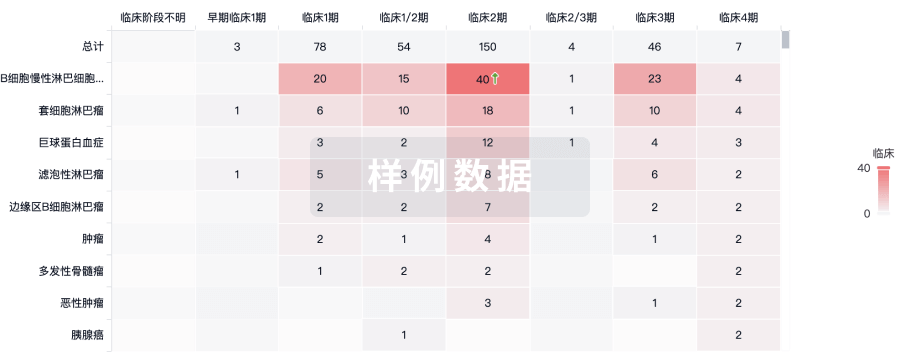
临床分析
紧跟全球注册中心的最新临床试验。
登录
或
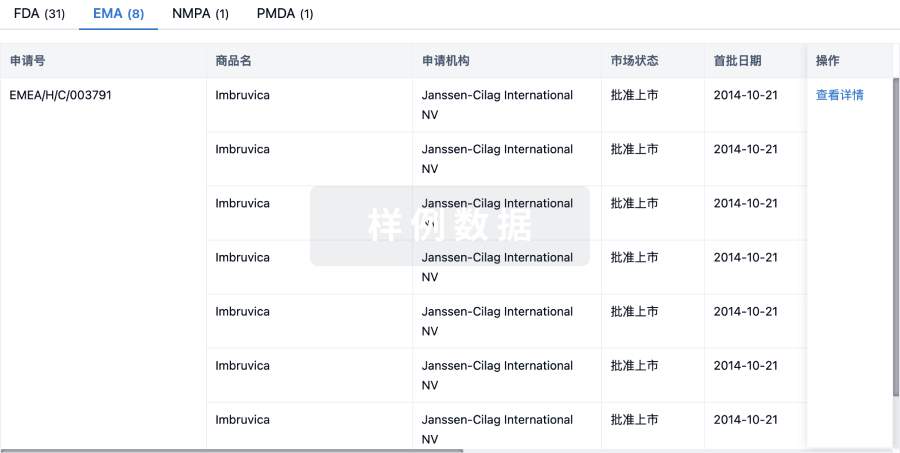
批准
利用最新的监管批准信息加速您的研究。
登录
或
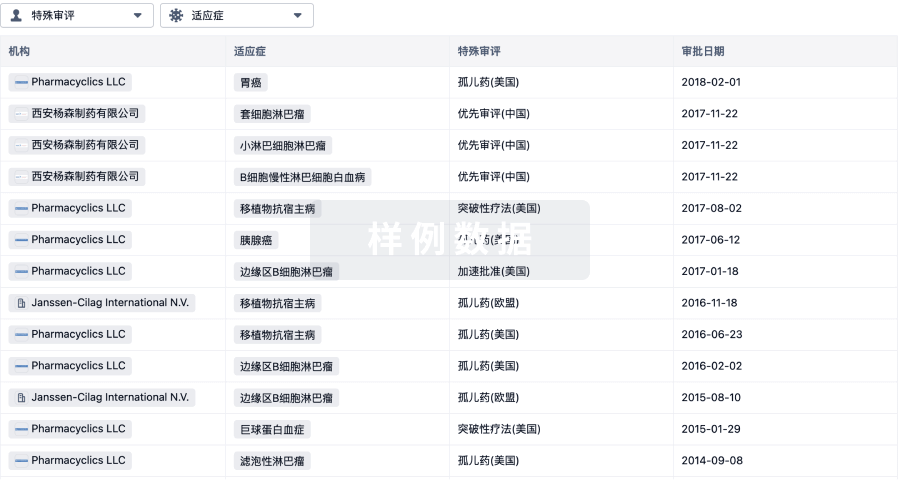
特殊审评
只需点击几下即可了解关键药物信息。
登录
或
提出任何生物医药研究问题
让每一步生物医药决策都精准制胜
基于十亿级生物数据与全球情报的精准 AI,赋能早期药物发现
立即开始免费试用!
智慧芽新药情报库是智慧芽专为生命科学人士构建的基于AI的创新药情报平台,助您全方位提升您的研发与决策效率。
立即接入生物医药数据包
智慧芽新药库数据也通过智慧芽开放平台,以MCP或API服务形式对外开放。立即使用我们的MCP服务定制您的LLM智能体。
生物序列数据库
生物药研发创新
免费使用
化学结构数据库
小分子化药研发创新
免费使用