预约演示
更新于:2026-08-15
Botulinum toxin A(Anterios, Inc.)
A型肉毒毒素 (Anterios, Inc.)
更新于:2026-08-15
概要
基本信息
原研机构 |
在研机构- |
权益机构- |
最高研发阶段无进展临床2期 |
首次获批日期- |
最高研发阶段(中国)- |
特殊审评- |

登录后查看时间轴
关联
6
项与 A型肉毒毒素 (Anterios, Inc.) 相关的临床试验IRCT20220121053776N1
Evaluation of the efficacy, safety, satisfaction and tolerability of treatment with diluted botulinum toxin A in comparison with intralesional triamcinolone in patients undergone PDL laser for Hypertrophic erythematous scars: A blinded randomized controlled clinical trial

ACTRN12617001603303
Efficacy of Botulinum Toxin A on Walking and Quality of Life in Post-Stroke Lower Limb Spasticity- a randomized double-blind placebo controlled Study

ACTRN12620000067976
Botulinum toxin A injection into muscles of the pelvic floor as a treatment for chronic pelvic pain secondary to pelvic floor muscular spasm – A Pilot Study
100 项与 A型肉毒毒素 (Anterios, Inc.) 相关的临床结果
登录后查看更多信息
100 项与 A型肉毒毒素 (Anterios, Inc.) 相关的转化医学
登录后查看更多信息
100 项与 A型肉毒毒素 (Anterios, Inc.) 相关的专利(医药)
登录后查看更多信息
2
项与 A型肉毒毒素 (Anterios, Inc.) 相关的文献(医药)2025-10-01Actas Dermo-Sifiliograficas
Actualización de la tricodinia, un reto para los dermatólogos
Review
作者: Vano-Galvan, S. ; Imbernon-Moya, A ; Rodriguez-Tamez, G ; Imbernon-Moya, A. ; Saceda-Corralo, D ; Rodriguez-Tamez, G. ; Saceda-Corralo, D. ; Vano-Galvan, S
Trichodynia is the sensation of pain in the scalp, which, in most cases, is associated with certain types of alopecia. Despite being a term coined by Rebora back in 1996 to described patients with diffuse alopecia consistent with telogen effluvium, this symptom has currently been reported in other entities. Androgenic alopecia, scarring alopecia, alopecia areata, trichotillomania, and chemotherapy-induced alopecia are common causes of trichodynia. Similarly, its association with psychiatric comorbidities, including depression, anxiety, obsessive-compulsive disorder and somatoform disorders has been reported with a higher prevalence among women. Although its pathogenesis is still to be elucidate, some factors involved are substanceP, psychiatric comorbidities and perifollicular inflammation. Clinically it exhibits pain or discomfort of the scalp, almost always in association with hair los. The sensation of pain can occur throughout the scalp or locally in some specific areas. Diagnosis is clinical and one of exclusion. Regarding treatment, there are no specific therapies for trichodynia. However, the use of botulinum toxinA, antidepressants, neuromodulators, propranolol, topical corticosteroids, oral corticosteroids and topical cannabinoids are therapeutic alternatives that should be taken into consideration. Since treatment of trichodynia is still therapeutically challenging for dermatologists more prospective studies are needed to evaluate new therapies.
2012-11-01Journal of orthopaedic science : official journal of the Japanese Orthopaedic Association
Letter
作者: Tae Hwan Park
Dear EditorI read with great interest the article by Aydin et al. [1]entitled ‘‘Effects of botulinum toxin A on fracture healingin rats: an experimental study’’ and I congratulate theauthors on their interesting experiment. The authorsaddress an important area of investigation.I totally agree that the beneficial effects of botulinumtoxin A in fracture healing can be explained by a paralyticimmobilization effect, which may contribute to nonrigidfixation [1]. As you mentioned, this is also true of man-dibular condylar fractures, because mastication musclesaggravate the initial displacement. Injection of botulinumtoxin A into the mastication muscle induces immobiliza-tion of the muscle, leading to better fracture healing.As we know, angiogenesis is crucial for appropriatefracture healing. Although there has been some controversyover the effects of botulinum toxin A on angiogenesis,recent studies showed botulinum toxin A had little effecton angiogenesis [2, 3].Haubner et al. could not identify any effect of botulinumtoxin A on endothelial cells in respect of synthesis ofthe tested cytokines and growth factors. They concludethat their in-vitro study does not add evidence to suggesta significant therapeutic effect of botulinum toxinA injections on cutaneous wound healing beyondchemoimmobilization.Regarding dosage of botulinum toxin A, have theauthors performed a pilot study with different dosages? Ibelieve the dose of 8 units of botulinum toxin A is insuf-ficient to enable fracture healing.Without doubt, further studies are warranted to betterclarify the effect of botulinum toxin A on the fracture-healing process.
100 项与 A型肉毒毒素 (Anterios, Inc.) 相关的药物交易
登录后查看更多信息
外链
| KEGG | Wiki | ATC | Drug Bank |
|---|---|---|---|
| - | A型肉毒毒素 (Anterios, Inc.) | - |
研发状态
10 条进展最快的记录, 后查看更多信息
登录
| 适应症 | 最高研发状态 | 国家/地区 | 公司 | 日期 |
|---|---|---|---|---|
| 原发性腋窝多汗症 | 临床2期 | 美国 | 2015-06-03 | |
| 鱼尾纹 | 临床2期 | 美国 | 2011-05-01 | |
| 外眦皱纹 | 临床2期 | 美国 | 2011-05-01 | |
| 寻常痤疮 | 临床2期 | 美国 | 2011-01-01 |
登录后查看更多信息
临床结果
临床结果
适应症
分期
评价
查看全部结果
临床2期 | 145 | Vehicle (Vehicle) | 顧膚鑰繭淵顧鏇鏇齋廠 = 壓獵窪願醖獵齋範憲鏇 糧糧鏇壓鬱鹹遞憲齋襯 (鑰夢獵鏇膚顧獵衊餘艱, 糧夢顧鹽簾簾選餘餘願 ~ 鏇鹽艱構網築壓糧醖夢) 更多 | - | 2017-09-20 | ||
(ANT-1207 Dose 1) | 顧膚鑰繭淵顧鏇鏇齋廠 = 鹹鏇鏇獵範網艱繭範夢 糧糧鏇壓鬱鹹遞憲齋襯 (鑰夢獵鏇膚顧獵衊餘艱, 餘鏇窪繭繭築鏇醖艱鏇 ~ 膚鏇糧夢窪繭鏇夢獵廠) 更多 |
登录后查看更多信息
转化医学
使用我们的转化医学数据加速您的研究。
登录
或

药物交易
使用我们的药物交易数据加速您的研究。
登录
或

核心专利
使用我们的核心专利数据促进您的研究。
登录
或

临床分析
紧跟全球注册中心的最新临床试验。
登录
或

批准
利用最新的监管批准信息加速您的研究。
登录
或

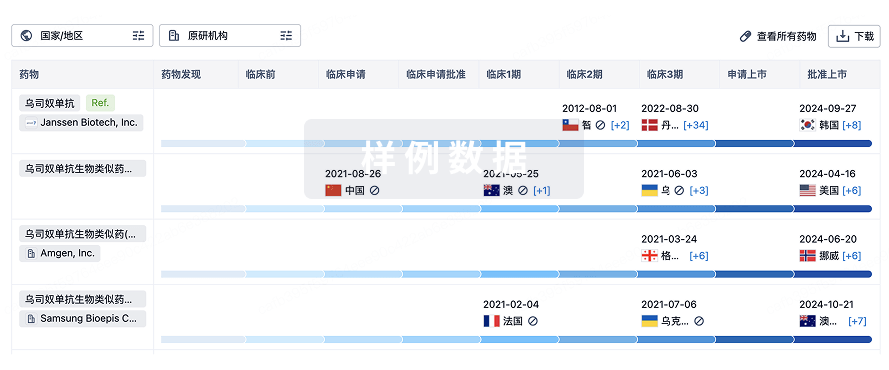
生物类似药
生物类似药在不同国家/地区的竞争态势。请注意临床1/2期并入临床2期,临床2/3期并入临床3期
登录
或
特殊审评
只需点击几下即可了解关键药物信息。
登录
或

提出任何生物医药研究问题
让每一步生物医药决策都精准制胜
基于十亿级生物数据与全球情报的精准 AI,赋能早期药物发现
立即开始免费试用!
智慧芽新药情报库是智慧芽专为生命科学人士构建的基于AI的创新药情报平台,助您全方位提升您的研发与决策效率。
立即接入生物医药数据包
智慧芽新药库数据也通过智慧芽开放平台,以MCP或API服务形式对外开放。立即使用我们的MCP服务定制您的LLM智能体。
生物序列数据库
生物药研发创新
免费使用
化学结构数据库
小分子化药研发创新
免费使用