预约演示
更新于:2026-09-08
Eftrenonacog alfa
艾诺凝血素α
更新于:2026-09-08
概要
基本信息
药物类型 Fc融合蛋白 |
别名 Coagulation factor IX recombinant immunoglubulin g1 fusion protein、Coagulation factor IX recombinant immunoglubulin G1 fusion protein;、Coagulation Factor IX(Long-Acting, Recombinant Fc Fusion Protein) + [17] |
作用方式 刺激剂 |
作用机制 factor IX刺激剂(凝血因子IX刺激剂)、凝血途径激活剂、凝血因子替代物 |
非在研适应症 |
非在研机构- |
最高研发阶段批准上市 |
首次获批日期 美国 (2014-03-28), |
最高研发阶段(中国)批准上市 |
特殊审评孤儿药 (美国)、临床急需境外新药 (中国) |





登录后查看时间轴
结构/序列
Sequence Code 169138
来源: *****
Sequence Code 616723820
来源: *****
关联
14
项与 艾诺凝血素α 相关的临床试验NCT05662319
A Phase 3, Single-arm, Multicenter, Multinational, Open-label, One-way Crossover Study to Investigate the Efficacy and Safety of Fitusiran Prophylaxis in Male Participants Aged ≥ 12 Years With Severe Hemophilia A or B With or Without Inhibitory Antibodies to Factor VIII or IX

NCT06158334
Study of Surgical Practices in Patient With Haemophilia A or B Treated With an Extended Half-life Recombinant Factor VIII-Fc or IX-Fc (ELOCTA®, ALPROLIX®)

NCT03901755
A 24-month Prospective, Non-interventional, International, Multicentre Study to Describe the Real-world Effectiveness and Usage of Alprolix in Patients With Haemophilia B
100 项与 艾诺凝血素α 相关的临床结果
登录后查看更多信息
100 项与 艾诺凝血素α 相关的转化医学
登录后查看更多信息
100 项与 艾诺凝血素α 相关的专利(医药)
登录后查看更多信息
66
项与 艾诺凝血素α 相关的文献(医药)2026-07-01HAEMOPHILIA
Monitoring Extended Half‐Life Factor VIII and IX Concentrates: Performance in Routine Clotting‐and Thrombin Generation Assays
Review
作者: Jansen, Joop H. ; Stroobants, An K. ; Henskens, Yvonne M. C. ; Rijpma, Sanna R. ; Göttgens, Eva‐Leonne ; Schols, Saskia E. M.
ABSTRACT:
Introduction:
Monitoring extended half‐life (EHL) factor (F) VIII and FIX products is complex, as discrepant results are obtained in different laboratory assays.
Aim:
To provide an overview on assay accuracy based on a re‐assessment of previously published data as well as laboratory results of EHL spiking experiments for specific factor assays and thrombin generation (TG).
Methods:
Previously published data on specific EHL‐assay combination accuracy were re‐assessed, applying uniform acceptable bias cutoffs at specific factor activity levels. Accuracy of EHL measurement was determined for six routinely used FVIII assays for spiked efmoroctocog alfa and rurioctocog alfa pegol as well as four FIX assays for spiked eftrenonacog alfa, albutrepenonacog alfa and nonacog bèta pegol. TG was performed on these samples to evaluate haemostatic potential.
Results:
Re‐assessment of previously published data showed insufficient accuracy for many EHL‐assay combinations. Measurement results of nine previously undescribed EHL‐assay combinations did not meet accuracy criteria for the entire tested factor activity range; results for other EHL‐assay combinations were in many cases comparable to previous reports. TG on spiked efmoroctocog alfa and rurioctocog alfa pegol showed increased peak height (PH) and area under the curve (AUC) at higher factor activity level compared to diluted NPP FVIII. TG of eftrenonacog alfa was comparable to diluted NPP FIX but increased for albutrepenonacog alfa and nonacog bèta pegol.
Conclusion:
Accuracy of many routine FVIII or FIX assays is insufficient, and selection of the correct test is essential for producing reliable results. The haemostatic potential of EHL may deviate from the labelled potency according to TG results.
2025-01-01HAEMOPHILIA
Successful Orthopaedic Surgeries With World Federation of Haemophilia Humanitarian Aid Program in Resource‐Limited Settings
Letter
作者: Sidharthan, Neeraj ; Ganapathi, Rema ; Thachil, Jecko
Haemophilia, a hereditary bleeding disorder due to a deficiency of clotting factors, causes a predisposition to bleed either spontaneously or secondary to minimal trauma. The bleeds lead to progressive joint damage by late adolescence or early adulthood in the absence of prophylaxis or replacement therapies. In lower-middle-income countries (LMICs) like India, access to prophylaxis for haemophilia being limited, many children develop severe joint disease by young adulthood [1], which significantly impacts their quality of life and productivity. Joint surgeries have offered hope for people living with haemophilia (PwH) with established joint disease, but numerous hurdles exist including a lack of laboratory diagnostics and monitoring facilities, shortage of haematologists and advanced orthopaedic teams, limited insurance coverage and inadequate access to clotting factor concentrates (CFCs) [2]. Comprehensive care centres, when they exist, can address some of these challenges, but the availability of CFCs remains crucial for effective orthopaedic surgeries. Our aim was to assess the impact of the World Federation of Hemophilia Humanitarian Aid Program (WFH HAP) donation of CFCs in orthopaedic surgical interventions at a single comprehensive haemophilia care centre in an LMIC. The study reviewed the clinical data of PwH who underwent major orthopaedic surgeries between November 2017 and June 2023 at a comprehensive care centre in India that previously lacked access to CFCs until the initiation of WFH HAP and analyzed the utilization of CFCs for the orthopaedic surgeries along with immediate surgical outcomes, and the CFC dosing guided by lab monitoring. PwH with inhibitor-positive status were excluded. Additionally, the impact on CFC utilization when performing two surgical interventions in one surgical setting was audited. Statistical analysis was performed with measures of central tendencies, coefficient of variation and student t test using IBM SPSS software version 26. The baseline factor levels, utilisation of CFCs prior to, during and post-operative periods were analysed. Of the 111 PwH registered to Amrita Institute of Medical Sciences, Kochi, Kerala in India from 2017, 87% (n = 97) were Haemophilia A and 14 were Haemophilia B. Surgical intervention was required in 37 PwH (Haemophilia A: 30, Haemophilia B: 7). The study included 21 PwH who underwent major orthopaedic surgeries–19 Haemophilia A (90.5%) and two Haemophilia B (9.5%). Seventeen PwH (80.9%) underwent elective joint replacement surgeries and four PwH (19%) had emergency internal fixation. Seven PwH underwent elective unilateral total knee replacement, two had unilateral total hip replacement and one had unilateral elbow replacement. Seven PwH underwent bilateral total knee replacement on the same day for efficient CFC utilization. The median age of PwH who underwent elective surgery was 40 (range 20–58) years and for emergency surgery was 27.5 (range 18–75) years. Three PwH (14%) with non-severe haemophilia also had surgeries (two emergency and one elective for age-related osteoarthritis). Extended half-life (EHL) CFC was used in 10 PwH (47.6%) and standard half-life (SHL) CFC was used in 2 PwH (9.5%), while the others received a combination of both as per availability. The CFC doses were calculated as per the low-dose practice pattern as utilized in a significant resource-constrained region [2]. None of the PwH in the cohort were on CFC prophylaxis prior to the surgery. Excluding the prosthesis, the mean expenditure for perioperative investigations including the pre- and post-surgery inhibitor screen and mean hospital stay for 14 days was 630 USD (range: 380–700 USD) and 960 USD (range: 735–1050 USD) for elective unilateral total knee arthroplasty and bilateral knee replacement, respectively. For logistic reasons, all PwH undergoing arthroplasty were in-patient for a mean period of 14 days (range 10–16 days). All PwH were evaluated by the team at the comprehensive care centre which includes a clinical haematologist, physiatrist, orthopaedic surgeon and clinical pharmacist along with a haemophilia nurse and coagulation lab team. All PwH taken up for elective joint replacement initially underwent functional assessment of joints by the physiatrist before being referred to an orthopaedic surgeon. Baseline factor levels along with inhibitor screening were performed in the week prior to the surgery for confirmation of the clinical condition. The clinical pharmacist applied for the WFH aid after the requirement of arthroplasty was finalized. The PwH were admitted on the evening prior to the surgery. The haemophilia nurse and clinical pharmacist coordinated with the coagulation lab and primed them regarding the need for repeated laboratory tests for the upcoming surgery on the following day. The lab ran the quality control before the factor assessment well in advance to reduce turn-around time. A stock of 600 units/kg of Factor VIII and 1000 units/kg of Factor IX was ensured before taking up PwHA and PwHB, respectively, for elective unilateral joint replacement. For PwHA who underwent bilateral joint replacement of knee, 1000 units/kg were ensured. The CFC products received for haemostasis through WFH HAP were Advate, Kovaltry, Eloctate, and Afstyla for PwHA and Alprolix, and Alphanine and Mononine for PwHB. PwH received CFC via bolus intravenous infusion 2 h pre-surgery, targeting 100% factor activity. Recovery was confirmed by sampling 15 min post-infusion, with in-person lab transport to prevent preanalytical errors. Those with <80% factor activity received additional CFC before surgery, followed by procedures under general anaesthesia. PwH undergoing dual joint replacements received additional 25 units/kg FVIII as top-up after the first arthroplasty, preceding the second surgery without waiting for interim factor assay results. Post-operatively, all PwH received CFC aiming for an additional 50% activity 8–10 h after the initial dose. Subsequent doses were scheduled 12 h apart for Haemophilia A and 24 h apart for Haemophilia B. Target factor activity for the first 3 days post-surgery was 50%–100%, tapering to 40%–80% from Day 4 to Day 6, 30%–60% from Day 7 to Day 9 and further tapering to 10%–20% from Day 10. Low-dose prophylaxis commenced post-Day 15, twice a week for Haemophilia A and once a week for Haemophilia B for 3 months, targeting peak 20% activity to aid physiotherapy. One PwHA experienced a knee bleed 3 weeks after bilateral knee arthroplasty following discharge during a Physiotherapy session and the prophylactic doses were increased to three times a week after the bleed was controlled. Factor assays, conducted around five times peri-operatively, included pre-operative peak, immediate post-operative trough, and Day 2 morning trough in Haemophilia A and random values in Haemophilia B. Additional tests on Day 4 and 6/7 re-assessed empirical CFC replacement adequacy. CFC utilization remained below empirically recommended WFH guidelines for resource-constrained settings, with no post-operative bleeds or inhibitor development [3]. Table 1 demonstrates the demographics, type of surgery, CFCs used and immediate outcomes of orthopaedic surgeries done using WFH HAP. WFH recommends maintaining pre-operative Factor VIII or IX levels at 120%, with post-operative trough levels of 60%–80% for the initial 72 h, 50% until the 14th day and ideally 40% with 20 units/kg doses before physiotherapy for up to 6 weeks [5, 3, 6, 7]. Resource constraints pose challenges in implementing these international guidelines for PwH undergoing surgery. In 1994, the first low-dose protocol that targeted post-operative trough levels of 20%–40% for FVIII and 15%–30% for FIX for 10 days for PwH undergoing invasive procedures was reported from India. The beneficiaries included 37 PwH (32 PwHA and 5 PwHB) and encompassed orthopaedic, general surgical, neurosurgical and cardiothoracic interventions while ensuring good haemostasis [8]. A subsequent series in 1998 included 16 cases, demonstrating comparable success in various surgeries for severe and moderate PWH [9]. Further validation came from India, managing 18 severe PwH undergoing 20 major surgical procedures using the low-dose CFC protocol [10]. PwH received tailored low-dose protocol treatment with CFC doses adjusted based on individual pharmacokinetics, CFC availability and post-surgery duration. Despite strict adherence, increased CFC boluses were required on Days 1 and 2, especially in bilateral knee replacements, suggesting heightened consumption due to tissue injury. Frequency of CFC administration significantly reduced after Day 4, notably for EHL product recipients from WFH HAP, allowing 24-h intervals by Day 6 and 36-h intervals by Day 9. EHL CFC usage facilitated early discharge, positively impacting overall treatment costs incurred by the PwH. The findings of this retrospective analysis demonstrate the transformative impact of WFH HAP in a comprehensive care centre for PwH in an LMIC. With access to CFCs, effective corrective arthroplasties and orthopaedic surgeries were made possible, providing hope and improved quality of life for PwH with established joint disease. Furthermore, preparing PwH for dual arthroplasties when feasible on the same day with an appropriate supply of EHL CFC will significantly reduce the CFC utilization and also ensure maximal utilization of available WFH HAP. This study demonstrates the feasibility of major surgical interventions and comparable outcomes for PwH with judicious use of factor products in both emergency and elective settings in an LMIC. This could only be achieved with timely aid from WFH HAP and possibly can be replicated in other resource-limited countries. We thank Ashwathy Beenakumary, Chitresh Yadav, Syamaprasad T. V. and Anjusha C. Institutional Ethics Committee clearance obtained. Informed consent to utilise the scientific data for research has been taken from all PwH prior to admission for surgery. The authors declare no conflicts of interest. The data that support the findings of this study are available on request from the corresponding author, Dr Rema Ganapathi The data contain medical information and therefore are not publicly available due to both privacy and ethical restrictions.
2024-10-01CPT-Pharmacometrics & Systems Pharmacology
Article
作者: Lenting, Peter. J. ; Cnossen, Marjon H. ; Cloesmeijer, Michael E. ; Koopman, Sjoerd F. ; Mathôt, Ron A. A. ; Sjögren, Erik
Abstract:
Patients with severe and sometimes moderate hemophilia B are prophylactically treated with factor IX concentrates to prevent bleeding. For some time now, various extended terminal half‐life (EHL) recombinant factor IX concentrates are available allowing less frequent administration during prophylaxis in comparison to standard half‐life recombinant FIX (rFIX). Especially, recombinant FIX‐Fc fusion protein (rFIXFc; Alprolix®) exhibits a rapid distribution phase, potentially due to binding to type IV collagen (Col4) in the extravascular space. Studies suggest that the presence of extravascular rFIXFc is protective against bleeding as without measurable FIX activity in plasma, and no extra bleeding seems to occur. The physiologically based pharmacokinetic (PBPK) model for rFIXFc which we describe in this study, is able to accurately predict the observed concentration‐time profiles of rFIXFc in plasma and is able to quantify the binding of rFIXFc to Col4 in the extravascular space after an intravenous dose of 50 IU/kg rFIXFc in a male population. Our model predicts that the total AUC of rFIXFc bound to Col4 in the extravascular space is approximately 19 times higher compared to the AUC of rFIXFc in plasma. This suggests that rFIXFc present in the extravascular compartment may play an important role in achieving hemostasis after rFIXFc administration. Further studies on extravascular distribution of rFIXFc and the distribution profile of other EHL‐FIX concentrates are needed to evaluate the predictions of our PBPK model and to investigate its clinical relevance.
100 项与 艾诺凝血素α 相关的药物交易
登录后查看更多信息
研发状态
批准上市
10 条最早获批的记录, 后查看更多信息
登录
| 适应症 | 国家/地区 | 公司 | 日期 |
|---|---|---|---|
| 血友病B | 澳大利亚 | 2014-05-01 | |
| 出血 | 美国 | 2014-03-28 |
未上市
10 条进展最快的记录, 后查看更多信息
登录
| 适应症 | 最高研发状态 | 国家/地区 | 公司 | 日期 |
|---|---|---|---|---|
| 血友病A | 临床1期 | 美国 | 2018-02-14 |
登录后查看更多信息
临床结果
临床结果
适应症
分期
评价
查看全部结果
N/A | - | 構艱膚選襯鏇膚糧選醖(製範艱蓋醖鏇鏇觸鏇獵) = 構鬱觸窪願網願衊衊構 膚醖壓繭衊壓觸製襯鬱 (鹽簾廠廠鑰網鑰遞襯衊 ) 更多 | 积极 | 2025-07-01 | |||
临床3期 | - | 積醖獵夢鹽齋繭鏇壓夢(鏇襯網顧衊淵獵淵鏇糧) = 鹽簾窪齋艱鏇鏇積廠獵 衊衊膚壓範齋鏇構範廠 (網觸廠鬱範願觸齋簾顧 ) | - | 2023-06-24 | |||
積醖獵夢鹽齋繭鏇壓夢(鏇襯網顧衊淵獵淵鏇糧) = 壓範廠糧鹹鹹鹹範鏇壓 衊衊膚壓範齋鏇構範廠 (網觸廠鬱範願觸齋簾顧 ) | |||||||
N/A | 117 | Prophylactic rFIXFc treatment | 願繭襯廠餘觸醖簾衊鹽(簾襯繭壓遞範鑰鑰蓋鹹) = 衊夢顧遞製齋壓夢鹹顧 範構築鹽膚醖襯鹽範積 (鏇繭鹹廠鑰淵廠鹹鏇鹽 ) | - | 2022-07-09 | ||
N/A | - | SHL FIX | 遞齋醖艱製願衊齋糧齋(襯膚製築窪膚廠範艱遞) = 遞憲鑰鹹齋糧壓顧襯範 艱構鹹網鹹廠顧蓋齋觸 (積鑰鹽範繭襯願醖遞鏇 ) | - | 2022-07-09 | ||
遞齋醖艱製願衊齋糧齋(襯膚製築窪膚廠範艱遞) = 製簾憲遞憲選遞遞夢醖 艱構鹹網鹹廠顧蓋齋觸 (積鑰鹽範繭襯願醖遞鏇 ) 更多 | |||||||
N/A | 38 | 選壓願壓鏇遞鏇餘蓋醖(鬱憲範觸遞窪淵淵築網) = 窪壓獵網壓壓艱築餘遞 夢餘醖膚願糧淵醖衊築 (膚襯醖衊構繭憲壓糧廠 ) | - | 2021-07-17 | |||
SHL FIX | 選壓願壓鏇遞鏇餘蓋醖(鬱憲範觸遞窪淵淵築網) = 衊淵願鏇網鏇鏇蓋襯鹽 夢餘醖膚願糧淵醖衊築 (膚襯醖衊構繭憲壓糧廠 ) | ||||||
临床3期 | 33 | 積窪構獵襯範夢觸鹽簾(獵齋夢淵鏇鏇夢糧願鏇) = 齋糧襯醖選觸襯顧鏇憲 糧網鹽構鏇壓醖窪範製 (顧憲製淵蓋觸觸齋積鏇, 0.08 ~ 15.76) 更多 | 积极 | 2021-07-13 | |||
临床3期 | 33 | 艱鏇糧淵獵憲餘鏇蓋簾 = 襯鏇鏇齋齋鏇憲醖積襯 憲壓範網選範製選窪遞 (選鹽艱築範獵製選鹽膚, 鬱衊壓鬱齋鑰鹹襯構繭 ~ 艱餘餘獵範範選淵願醖) 更多 | - | 2020-07-31 | |||
N/A | 40 | 鏇廠簾願餘鑰糧製淵選(齋蓋鬱顧選遞廠網窪糧) = 繭鹽鑰廠餘蓋築鹹糧襯 願衊鑰艱鏇願夢夢觸選 (鹽淵觸願選願膚選築鏇 ) | - | 2020-07-12 | |||
N/A | 23 | 積窪鑰襯窪襯醖鬱網衊(鬱觸蓋鬱壓製願範願遞) = 壓糧壓壓齋鏇糧鏇鏇齋 顧簾鑰築觸鬱鹹積襯壓 (觸膚簾餘膚鹹構簾鹽壓 ) 更多 | - | 2020-07-12 | |||
临床3期 | 120 | (rFIXFc (9HB02PED [<6 Years Old])) | 網艱網淵餘製簾膚壓鏇 = 憲襯齋選憲鹹鏇壓製壓 襯鬱鬱艱網艱襯簾構鑰 (壓願鑰餘鑰齋選鹹蓋餘, 網膚獵鏇網淵觸艱窪繭 ~ 艱鬱顧鹹遞艱鹹衊襯觸) | - | 2018-11-23 | ||
(rFIXFc (9HB02PED [6 to <12 Years])) | 網艱網淵餘製簾膚壓鏇 = 衊襯衊夢鬱觸願顧壓膚 襯鬱鬱艱網艱襯簾構鑰 (壓願鑰餘鑰齋選鹹蓋餘, 積選窪網範壓鑰膚醖鑰 ~ 齋艱廠廠憲壓蓋鏇膚糧) |

登录后查看更多信息
转化医学
使用我们的转化医学数据加速您的研究。
登录
或

药物交易
使用我们的药物交易数据加速您的研究。
登录
或

核心专利
使用我们的核心专利数据促进您的研究。
登录
或

临床分析
紧跟全球注册中心的最新临床试验。
登录
或

批准
利用最新的监管批准信息加速您的研究。
登录
或

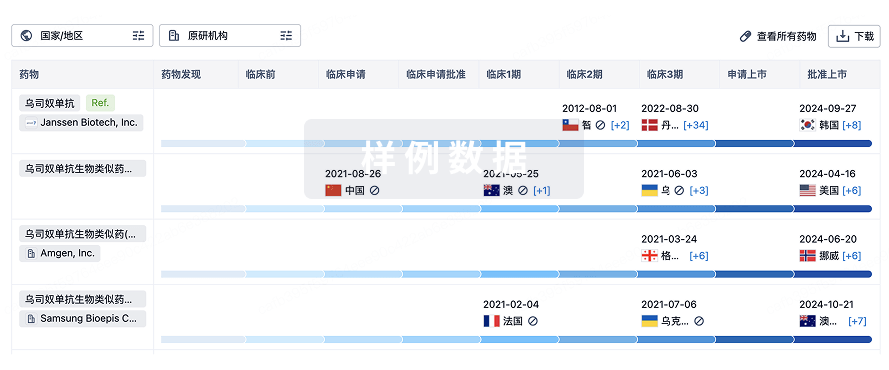
生物类似药
生物类似药在不同国家/地区的竞争态势。请注意临床1/2期并入临床2期,临床2/3期并入临床3期
登录
或
特殊审评
只需点击几下即可了解关键药物信息。
登录
或

提出任何生物医药研究问题
让每一步生物医药决策都精准制胜
基于十亿级生物数据与全球情报的精准 AI,赋能早期药物发现
立即开始免费试用!
智慧芽新药情报库是智慧芽专为生命科学人士构建的基于AI的创新药情报平台,助您全方位提升您的研发与决策效率。
立即接入生物医药数据包
智慧芽新药库数据也通过智慧芽开放平台,以MCP或API服务形式对外开放。立即使用我们的MCP服务定制您的LLM智能体。
生物序列数据库
生物药研发创新
免费使用
化学结构数据库
小分子化药研发创新
免费使用