预约演示
更新于:2026-09-05
Recombinat FGF21-Fc fusion Protein(Ampsource Biopharma)
注射用重组人FGF21-Fc融合蛋白(安源医药)
更新于:2026-09-05
概要
基本信息
原研机构 |
非在研机构- |
最高研发阶段临床2期 |
首次获批日期- |
最高研发阶段(中国)临床2期 |
特殊审评- |


登录后查看时间轴
关联
5
项与 注射用重组人FGF21-Fc融合蛋白(安源医药) 相关的临床试验ChiCTR2300076468
A randomized, double-blind phase I clinical study to evaluate the safety, tolerability, pharmacokinetics, and immunogenicity of recombinant human FGF21-Fc fusion protein for injection (AP025) 50mg once weekly for 12 weeks in Chinese adult subjects with dyslipidemia
NCT06569524
A Double-blind, Placebo Randomized,Phase II Study to Evaluate the Efficacy and Safety of TQA2225/AP025 in Adults With Nonalcoholic Steatohepatitis (NASH)
CTR20232434
评估注射用重组人FGF21-Fc融合蛋白(AP025)50mg 每周一次在中国成人血脂异常受试者中连续给药12周的安全性、耐受性、药代动力学特征及免疫原性特征的随机、双盲I期临床研究
100 项与 注射用重组人FGF21-Fc融合蛋白(安源医药) 相关的临床结果
登录后查看更多信息
100 项与 注射用重组人FGF21-Fc融合蛋白(安源医药) 相关的转化医学
登录后查看更多信息
100 项与 注射用重组人FGF21-Fc融合蛋白(安源医药) 相关的专利(医药)
登录后查看更多信息
11
项与 注射用重组人FGF21-Fc融合蛋白(安源医药) 相关的文献(医药)2025-12-08Sheng wu gong cheng xue bao = Chinese journal of biotechnology
[Preparation of bacterial outer membrane vesicles modified with anti-angiogenic peptide AP25 on the surface and evaluation of their anti-tumor effects].
Article
作者: Wang, Huilin ; Wang, Qing ; Li, Xiaorui ; Zhao, Shuo ; Ren, Weihong
Bacterial outer membrane vesicles (OMVs) have attracted widespread attention in the field of drug delivery due to their excellent biocompatibility, tumor penetration, and loading capacity. The anti-angiogenic peptide AP25 can block malignant tumor angiogenesis and has broad-spectrum anti-cancer activity. To achieve efficient delivery of AP25, we modified AP25 on the surface of OMVs through genetic engineering and explored their inhibitory effects on breast cancer and gastric cancer in vitro. The results indicated that the engineered OMVs had typical morphological characteristics of OMVs, and the particle size distribution conformed to the theoretical. Proteinase K digestion combined with Western blotting confirmed that AP25 was modified on the membrane surface of OMVs. Cell experiments showed that WAP25 OMVs significantly inhibited the proliferation, migration, and invasion of MDA-MB-231 and HGC-27 cells, promoted the cell apoptosis, and downregulated the expression of tumor migration and angiogenesis-related proteins: integrin beta 1 (integrin β1), Homo sapiens inhibitor of DNA binding 1 (ID1), nuclear factor kappa-B (NF-κB), and vascular endothelial growth factor (VEGF). This study achieves effective delivery of protein drugs based on OMVs for the first time, providing new ideas for the anti-angiogenesis therapy for tumors and the functional development of bacterial OMVs.
2022-12-01BMC microbiology
Antibacterial efficacy of lytic phages against multidrug-resistant Pseudomonas aeruginosa infections in bacteraemia mice models
Article
作者: Sadagopan, Sathish ; Arumugam, Shri Natrajan ; Manohar, Prasanth ; Nachimuthu, Ramesh ; Leptihn, Sebastian ; Sukumaran, Sunilkumar ; Loh, Belinda
Abstract:
Background:
Pseudomonas aeruginosa is an opportunistic pathogen that can cause a variety of infections in humans, such as burn wound infections and infections of the lungs, the bloodstream and surgical site infections. Nosocomial spread is often concurrent with high degrees of antibiotic resistance. Such resistant strains are difficult to treat, and in some cases, even reserved antibiotics are ineffective. A particularly promising therapy to combat infections of resistant bacteria is the deployment of bacteriophages, known as phage therapy. In this work, we evaluated the in vivo efficacy of two Pseudomonas phages in bacteremia mice models. For this study, non-neutropenic mice (BalB/C) were infected with P. aeruginosa AB030 strain and treated using two bacteriophages, AP025 and AP006.
Results:
The results showed that a single dose of phages at higher concentrations, bacteria: phage at 1:10 and 1:100 were effective in eliminating the bloodstream infection and achieving 100% mice survival.
Conclusion:
This study highlights the efficacy of using a single dose of phages to restore mice from bacteremia.
2020-11-01Bioresource technology1区 · 工程技术
Understanding mechanisms of sludge in situ reduction in anaerobic side-stream reactor coupled membrane bioreactors packed with carriers at different filling fractions
1区 · 工程技术
Article
作者: Wang, Zhiwei ; Jiang, Lu-Man ; Jiang, Lingyan ; Zhou, Zhen ; Qiang, Jiaxin ; Jiang, Jie ; An, Ying ; Zheng, Yue ; Wang, Kaichong ; Huang, Jing
An anoxic/oxic membrane bioreactor (AO) and three pilot-scale anaerobic side stream reactors (ASSR) coupled MBRs (ASSR-MBRs), packed with 0%, 25% and 50% carriers in ASSRs, were continuously operated to study the mechanisms for sludge reduction. Four systems showed efficient COD and NH4+-N removal, while packing carriers significantly enhanced nitrogen removal. 25% filling fraction (AP25) achieved the highest sludge reduction efficiency of 50.5% compared to 0% (21.7%) and 50% (39.7%). Compared to ASSR-MBR, carriers enhanced the release of dissolved organic matters, and accelerated the secretion of enzyme for cell lysis and hydrolysis. In AP25, the presence of carriers prompted the formation of environment propitious to sludge reduction in bulk sludge. AP25 tended to enrich hydrolytic, fermentative and denitrifying bacteria to accelerate hydrolysis process, while excessive carriers had negative effect on biomass stability and movement of carriers.
100 项与 注射用重组人FGF21-Fc融合蛋白(安源医药) 相关的药物交易
登录后查看更多信息
研发状态
10 条进展最快的记录, 后查看更多信息
登录
| 适应症 | 最高研发状态 | 国家/地区 | 公司 | 日期 |
|---|---|---|---|---|
| 代谢功能障碍相关脂肪性肝炎 | 临床2期 | 中国 | 2023-08-22 | |
| 血脂障碍 | 临床1期 | 中国 | 2023-09-05 | |
| 高甘油三酯血症 | 临床申请批准 | 中国 | 2023-11-30 |
登录后查看更多信息
临床结果
临床结果
适应症
分期
评价
查看全部结果
登录后查看更多信息
转化医学
使用我们的转化医学数据加速您的研究。
登录
或

药物交易
使用我们的药物交易数据加速您的研究。
登录
或

核心专利
使用我们的核心专利数据促进您的研究。
登录
或

临床分析
紧跟全球注册中心的最新临床试验。
登录
或

批准
利用最新的监管批准信息加速您的研究。
登录
或

生物类似药
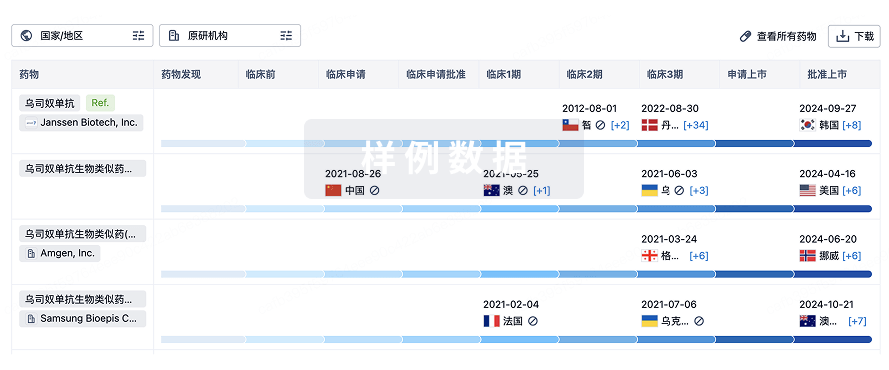
生物类似药在不同国家/地区的竞争态势。请注意临床1/2期并入临床2期,临床2/3期并入临床3期
登录
或
特殊审评
只需点击几下即可了解关键药物信息。
登录
或

提出任何生物医药研究问题
让每一步生物医药决策都精准制胜
基于十亿级生物数据与全球情报的精准 AI,赋能早期药物发现
立即开始免费试用!
智慧芽新药情报库是智慧芽专为生命科学人士构建的基于AI的创新药情报平台,助您全方位提升您的研发与决策效率。
立即接入生物医药数据包
智慧芽新药库数据也通过智慧芽开放平台,以MCP或API服务形式对外开放。立即使用我们的MCP服务定制您的LLM智能体。
生物序列数据库
生物药研发创新
免费使用
化学结构数据库
小分子化药研发创新
免费使用