预约演示
更新于:2026-07-09

Sichuan Credit Pharmaceutical Co., Ltd.
更新于:2026-07-09
概览
标签
神经系统疾病
其他疾病
小分子化药
疾病领域得分
一眼洞穿机构专注的疾病领域

技术平台
公司药物应用最多的技术
靶点
公司最常开发的靶点
关联
靶点 |
作用机制 |
在研机构 |
原研机构 |
在研适应症 |
非在研适应症 |
最高研发阶段 |
首次获批国家/地区 |
首次获批日期 |

靶点 |
作用机制 |
在研机构 |
原研机构 |
在研适应症 |
非在研适应症 |
最高研发阶段 |
首次获批国家/地区 |
首次获批日期 |


NCT07645807
An Investigator-Initiated, Randomized, Double-Blind, Double-Dummy Study to Evaluate the Adjunctive Effect of CreNeuroS™ CNS Fish Oil Plus Softgels in Patients With Major Depressive Disorder Receiving Escitalopram.
NCT07664657
An Open-Label, Randomized, Single Dose Study, to Assess Dose Proportionality and Pharmacokinetic Linearity of Saninova Tablets Manufactured by Sichuan Credit Pharmaceutical Co., Ltd, China In Healthy Participants Under Fasting Conditions.
NCT07461649
An Open-Label, Balanced, Randomized, Single Ascending Dose Study, To Evaluate The Pharmacokinetic Dose Linearity of Eicosapentaenoic Acid (EPA) and Calcium L-S-Methyltetrahydrofolate (L-S-MTHF) Following Oral Administration Of Different Dose Levels of CreNeuroS® CNS Fish Oil Plus Softgels Supplied By Sichuan Credit Pharmaceutical Co., Ltd, China in Healthy Subjects Under Fasting Conditions
100 项与 四川科瑞德制药股份有限公司 相关的临床结果
登录后查看更多信息
登录后查看更多信息
2026-05-01INTERNATIONAL JOURNAL OF BIOLOGICAL MACROMOLECULES
Discovery and mechanistic exploration of natural butyrylcholinesterase inhibitors via integrated virtual screening and multidisciplinary approaches
Article
作者: Liu, Yan ; Liu, Zerong ; Li, Lizi ; Chen, Gang ; Xu, Haiqi ; Yang, Can ; Du, Jiana ; Yu, Dehong ; Li, Yanfang ; Wang, Na ; Liu, Yi ; Tu, Yanbei
The development of selective butyrylcholinesterase (BChE) inhibitors from natural sources represents a strategic frontier in discovering novel therapeutics for Alzheimer's disease (AD). Employing a rigorous hierarchical virtual screening protocol encompassing high-throughput screening, ensemble molecular docking, and MM/GBSA binding affinity refinement, we systematically interrogated a natural product library containing 60,580 phytochemicals. This computational cascade identified three alkaloid candidates (hirsutine, picrasidine I, and picrasidine T) exhibiting potent BChE inhibition (IC50 < 10 μM) validated through enzymatic assays. Detailed kinetic characterization further established hirsutine and picrasidine I as reversible, mixed-type inhibitors, targeting both the catalytic active site and the peripheral aromatic site (PAS) of BChE. To elucidate the mechanism of interaction, picrasidine I was selected for comprehensive spectroscopic analysis, including molecular fluorescence, time-resolved fluorescence, three-dimensional fluorescence, circular dichroism (CD), and isothermal titration calorimetry (ITC). ITC analysis confirmed a strong affinity between picrasidine I and BChE, yielding a dissociation constant (Kd = 2.97 μM), while fluorescence studies indicated a static quenching mechanism. Molecular dynamics (MD) simulations (50 ns) substantiated the stability of the ligand-protein complex, demonstrated by a backbone RMSD <0.3 nm. Furthermore, ADME predictions suggested favorable blood-brain barrier (BBB) permeability and minimal cytotoxicity in PC-12 neurons. This synergistic computational-experimental paradigm not only successfully identifies new chemotypes as potent BChE inhibitors and unveils their precise molecular mechanism of action, but also provides a practical and highly effective strategy for the rational discovery and development of natural anti-AD agents.
2025-11-01TRENDS IN PHARMACOLOGICAL SCIENCES
Discovering next-generation dopamine transporter drugs with lower abuse potential
Review
作者: Xue, Weiwei ; Luo, Ding ; Liu, Zerong
Many traditional psychostimulants used to treat neuropsychiatric disorders by targeting the dopamine transporter (DAT) exhibit a high potential of abuse. This necessitates the development of next-generation drugs with improved safety. Discovering atypical DAT inhibitors represent a promising strategy that may be facilitated by integration of structural pharmacology and artificial intelligence.
2025-11-01JOURNAL OF CONTROLLED RELEASE
Synergistic enhancement of anti-migraine efficacy through supramolecular self-assembly of tizanidine with meloxicam
Article
作者: Fu, Lin ; Chen, Wei ; Chen, Chen ; Hao, Hongxun ; Chen, Gang ; Wang, Ting ; Huang, Xin ; Wu, Di ; Wang, Na
Migraine, a debilitating medical condition that affects a significant portion of the population, presents a complex challenge in therapeutic management. Drug-drug cocrystallization based on supramolecular self-assembly offers a promising strategy, as it not only improves the physicochemical properties of active pharmaceutical ingredients, but also unlocks their synergistic clinical potential. In this study, supramolecular self-assemblies of tizanidine and meloxicam were designed through crystal engineering to explore their combined clinical value in anti-migraine therapy. The resulting multicomponent crystal, tizanidine-meloxicam, was thoroughly characterized by crystallography, spectroscopy, and thermal analysis. It forms a stable charge-assisted hydrogen bond supramolecular network, exhibiting ∼60 % improved solubility over tizanidine and ∼ 10-fold enhancement over meloxicam. In a rat migraine model, it achieved 100 % complete remission, with sustained analgesia 1.3 times greater than the physical mixture (P < 0.05). Furthermore, solution chemistry results indicate that the enhanced therapeutic performance of tizanidine-meloxicam salt can be attributed to its sustained release rate, higher equilibrium solubility, distinct molecular conformation, and stronger interactions between the two compounds. Additionally, tizanidine-meloxicam salt could form uniform and stable molecular clusters in aqueous solution, which could further enhance its efficacy and stability. This study demonstrates that pharmaceutical multicomponent crystals is a significant strategy for the development of novel formulations with improved efficacy.
2026-07-03
2026-07-02
100 项与 四川科瑞德制药股份有限公司 相关的药物交易
登录后查看更多信息
100 项与 四川科瑞德制药股份有限公司 相关的转化医学
登录后查看更多信息
组织架构
使用我们的机构树数据加速您的研究。
登录
或
管线布局
2026年10月12日管线快照
管线布局中药物为当前组织机构及其子机构作为药物机构进行统计,早期临床1期并入临床1期,临床1/2期并入临床2期,临床2/3期并入临床3期
临床1期
1
1
批准上市
登录后查看更多信息
当前项目
登录后查看更多信息
药物交易
使用我们的药物交易数据加速您的研究。
登录
或
转化医学
使用我们的转化医学数据加速您的研究。
登录
或
营收
使用 Synapse 探索超过 36 万个组织的财务状况。
登录
或
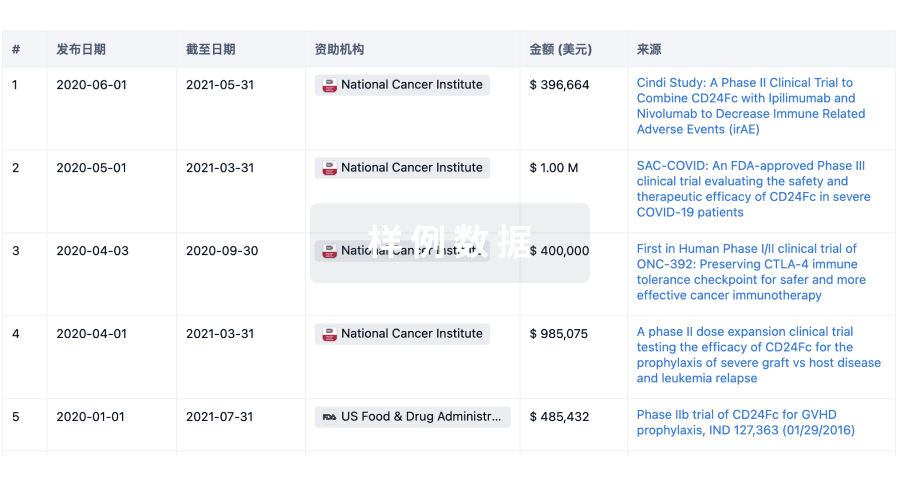
科研基金(NIH)
访问超过 200 万项资助和基金信息,以提升您的研究之旅。
登录
或
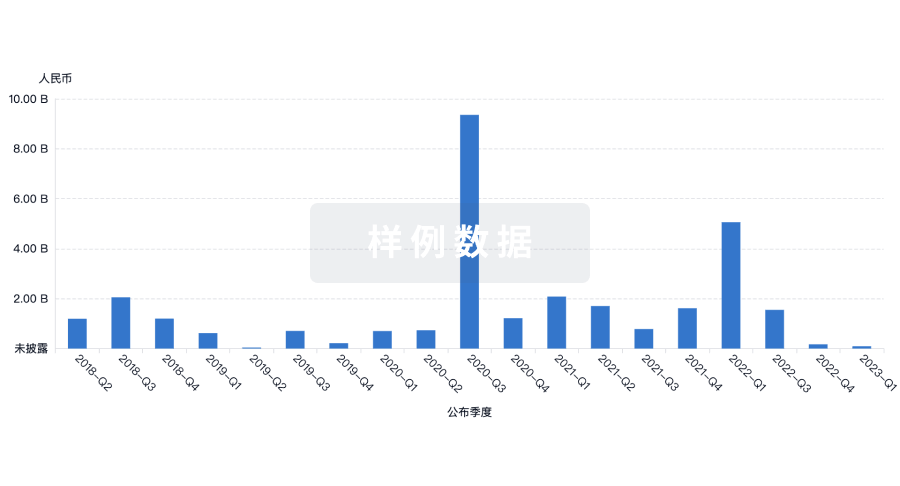
投资
深入了解从初创企业到成熟企业的最新公司投资动态。
登录
或
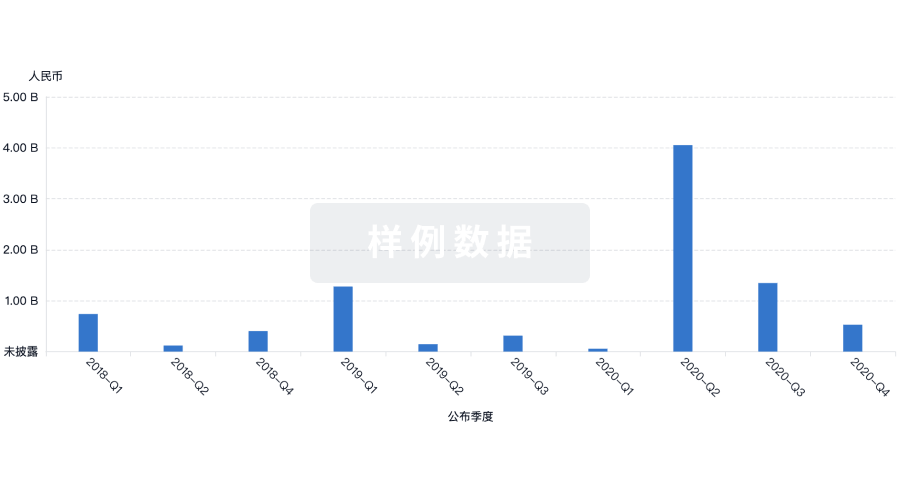
融资
发掘融资趋势以验证和推进您的投资机会。
登录
或
提出任何生物医药研究问题
让每一步生物医药决策都精准制胜
基于十亿级生物数据与全球情报的精准 AI,赋能早期药物发现
立即开始免费试用!
智慧芽新药情报库是智慧芽专为生命科学人士构建的基于AI的创新药情报平台,助您全方位提升您的研发与决策效率。
立即接入生物医药数据包
智慧芽新药库数据也通过智慧芽开放平台,以MCP或API服务形式对外开放。立即使用我们的MCP服务定制您的LLM智能体。
生物序列数据库
生物药研发创新
免费使用
化学结构数据库
小分子化药研发创新
免费使用