预约演示
更新于:2026-05-25

AbClon, Inc.
更新于:2026-05-25
概览
标签
肿瘤
免疫系统疾病
血液及淋巴系统疾病
双特异性抗体
CAR-T
自体CAR-T
疾病领域得分
一眼洞穿机构专注的疾病领域

技术平台
公司药物应用最多的技术
靶点
公司最常开发的靶点
关联
靶点 |
作用机制 |
在研机构 |
原研机构 |
在研适应症 |
非在研适应症 |
最高研发阶段 |
首次获批国家/地区 |
首次获批日期 |
靶点 |
作用机制 |
在研机构 |
原研机构 |
在研适应症 |
非在研适应症 |
最高研发阶段 |
首次获批国家/地区 |
首次获批日期 |
靶点 |
作用机制 |
在研机构 |
原研机构 |
在研适应症 |
非在研适应症 |
最高研发阶段 |
首次获批国家/地区 |
首次获批日期 |
NCT05338931
An Open-label, Single-arm, Multi-center, Phase I/II Study to Evaluate the Safety, Tolerability, and Efficacy of AT101 (Anti-CD19 Chimeric Antigen Receptor T Cell) in Patients With Relapsed or Refractory B-cell Non-Hodgkin's Lymphoma
100 项与 AbClon, Inc. 相关的临床结果
登录后查看更多信息
登录后查看更多信息
2023-01-01Methods in molecular biology (Clifton, N.J.)
Construction of Rabbit Immune Antibody Libraries
Article
作者: Lee, Jong Seo ; Nguyen, Thi Thu Ha ; Shim, Hyunbo
Rabbits have distinct advantages over mice as a source of target-specific antibodies. They produce higher affinity antibodies than mice and may elicit strong immune response against antigens or epitopes that are poorly immunogenic or tolerated in mice. However, a great majority of currently available monoclonal antibodies are of murine origin because of the wider availability of murine fusion partner cell lines and well-established tools and protocols for fusion and cloning of mouse hybridoma. Phage display selection of antibody libraries is an alternative method to hybridoma technology for the generation of target-specific monoclonal antibodies. High-affinity monoclonal antibodies from non-murine species can readily be obtained by constructing immune antibody libraries from B cells of the immunized animal and screening the library by phage display. In this article, we describe the construction of a rabbit immune Fab library for the facile isolation of rabbit monoclonal antibodies. After immunization, B-cell cDNA is obtained from the spleen of the animal, from which antibody variable domain repertoires are amplified and assembled into a Fab repertoire by PCR. The Fab genes are then cloned into a phagemid vector and transformed to E. coli, from which a phage-displayed immune Fab library is rescued. Such a library can be biopanned against the immunization antigen for rapid identification of high-affinity, target-specific rabbit monoclonal antibodies.
PLoS One
Affinity Maturation of Monoclonal Antibody 1E11 by Targeted Randomization in CDR3 Regions Optimizes Therapeutic Antibody Targeting of HER2-Positive Gastric Cancer
Article
作者: Lee, Jong-Seo ; Choi, Soyoung ; Shim, Hyunbo ; Ko, Bong-Kook ; Hwang, In-Sik ; Kim, Kyu-Tae ; Lee, Young-Ha ; Cui, Lei Guang
Anti-HER2 murine monoclonal antibody 1E11 has strong and synergistic anti-tumor activity in HER2-overexpressing gastric cancer cells when used in combination with trastuzumab. We presently optimized this antibody for human therapeutics. First, the complementarity determining regions (CDRs) of the murine antibody were grafted onto human germline immunoglobulin variable genes. No difference in affinity and biological activity was observed between chimeric 1E11 (ch1E11) and humanized 1E11 (hz1E11). Next, affinity maturation of hz1E11 was performed by the randomization of CDR-L3 and H3 residues followed by stringent biopanning selection. Milder selection pressure favored the selection of more diverse clones, whereas higher selection stringency resulted in the convergence of the panning output to a smaller number of clones with improved affinity. Clone 1A12 had four amino acid substitutions in CDR-L3, and showed a 10-fold increase in affinity compared to the parental clone and increased potency in an in vitro anti-proliferative activity assay with HER2-overepxressing gastric cancer cells. Clone 1A12 inhibited tumor growth of NCI-N87 xenograft model with similar efficacy to trastuzumab alone, and the combination treatment of 1A12 and trastuzumab completely removed the established tumors. These results suggest that humanized and affinity matured monoclonal antibody 1A12 is a highly optimized molecule for future therapeutic development against HER2-positive tumors.
Molecular cancer
Safety and efficacy of a novel anti-CD19 chimeric antigen receptor T cell product targeting a membrane-proximal domain of CD19 with fast on- and off-rates against non-Hodgkin lymphoma: a first-in-human study
Article
作者: Kim, Sung Hyun ; Cohen, Ivan ; Choi, Yoon Seok ; Ruella, Marco ; Oh, Sung Yong ; Yoon, Dok Hyun ; Porazzi, Patrizia ; Kim, Jong-Hoon ; Park, Ji-Ho ; Jo, Jae-Cheol ; Pajarillo, Raymone ; Ghilardi, Guido ; Angelos, Mathew ; Cho, Hyungwoo ; Kim, Ki Hyun ; Chung, Junho ; Hwang, In-Sik ; Cho, Jong Hyun ; Lee, Jong-Seo ; Wang, Michael ; Guruprasad, Puneeth ; Lee, Hyun-Jong ; Lee, Yoon ; Kim, Soohwan ; Zhang, Yunlin ; Lee, Yong-Jun ; Kim, Sung-Min ; Liu, Dongfang ; Jeong, Seong Hyun ; Cui, Leiguang ; Paruzzo, Luca ; Lee, Young-Ha ; Lee, Ji Hyun ; Patel, Ruchi P ; Lee, Tae Bum ; Lee, Yong Gu ; Ugwuanyi, Ositadimma ; Carturan, Alberto
Abstract:
Background:
Commercial anti-CD19 chimeric antigen receptor T-cell therapies (CART19) are efficacious against advanced B-cell non-Hodgkin lymphoma (NHL); however, most patients ultimately relapse. Several mechanisms contribute to this failure, including CD19-negative escape and CAR T dysfunction. All four commercial CART19 products utilize the FMC63 single-chain variable fragment (scFv) specific to a CD19 membrane-distal epitope and characterized by slow association (on) and dissociation (off) rates. We hypothesized that a novel anti-CD19 scFv that engages an alternative CD19 membrane-proximal epitope independent of FMC63 and that is characterized by faster on- and off-rates could mitigate CART19 failure and improve clinical efficacy.
Methods:
We developed an autologous CART19 product with 4-1BB co-stimulation using a novel humanized chicken antibody (h1218). This antibody is specific to a membrane-proximal CD19 epitope and harbors faster on/off rates compared to FMC63. We tested h1218-CART19 in vitro and in vivo using FMC63-CART19-resistant models. We conducted a first-in-human multi-center phase I clinical trial to test AT101 (clinical-grade h1218-CART19) in patients with relapsed or refractory (r/r) NHL.
Results:
Preclinically, h1218- but not FMC63-CART19 were able to effectively eradicate lymphomas expressing CD19 point mutations (L174V and R163L) or co-expressing FMC63-CAR19 as found in patients relapsing after FMC63-CART19. Furthermore, h1218-CART19 exhibited enhanced killing of B-cell malignancies in vitro and in vivo compared with FMC63-CART19. Mechanistically, we found that h1218-CART19 had reduced activation-induced cell death (AICD) and enhanced expansion compared to FMC63-CART19 owing to faster on- and off-rates. Based on these preclinical results, we performed a phase I dose-escalation trial, testing three dose levels (DL) of AT101 (the GMP version of h1218) using a 3 + 3 design. In 12 treated patients (7 DLBCL, 3 FL, 1 MCL, and 1 MZL), AT101 showed a promising safety profile with 8.3% grade 3 CRS (n = 1) and 8.3% grade 4 ICANS (n = 1). In the whole cohort, the overall response rate was 91.7%, with a complete response rate of 75.0%, which improved to 100% in DL-2 and -3. AT101 expansion correlates with CR and B-cell aplasia.
Conclusions:
We developed a novel, safe, and potent CART19 product that recognizes a membrane-proximal domain of CD19 with fast on- and off-rates and showed significant efficacy and promising safety in patients with relapsed B-cell NHL.
Trial registration:
NCT05338931; Date: 2022–04-01.
2026-05-22
2026-04-23
临床结果临床2期免疫疗法AACR会议引进/卖出
2026-03-02
100 项与 AbClon, Inc. 相关的药物交易
登录后查看更多信息
100 项与 AbClon, Inc. 相关的转化医学
登录后查看更多信息
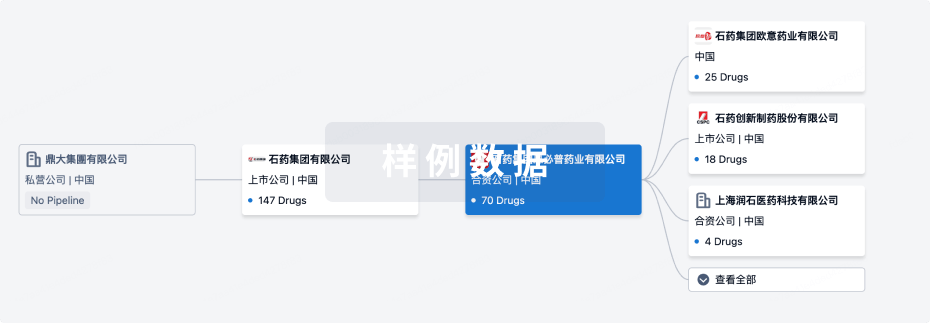
组织架构
使用我们的机构树数据加速您的研究。
登录
或
管线布局
2026年10月11日管线快照
管线布局中药物为当前组织机构及其子机构作为药物机构进行统计,早期临床1期并入临床1期,临床1/2期并入临床2期,临床2/3期并入临床3期
药物发现
3
4
临床前
临床2期
1
4
其他
登录后查看更多信息
当前项目
登录后查看更多信息
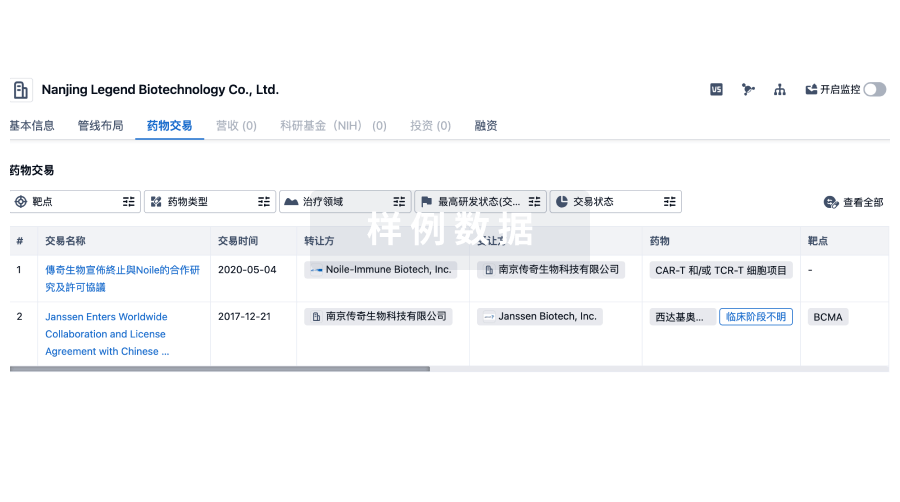
药物交易
使用我们的药物交易数据加速您的研究。
登录
或
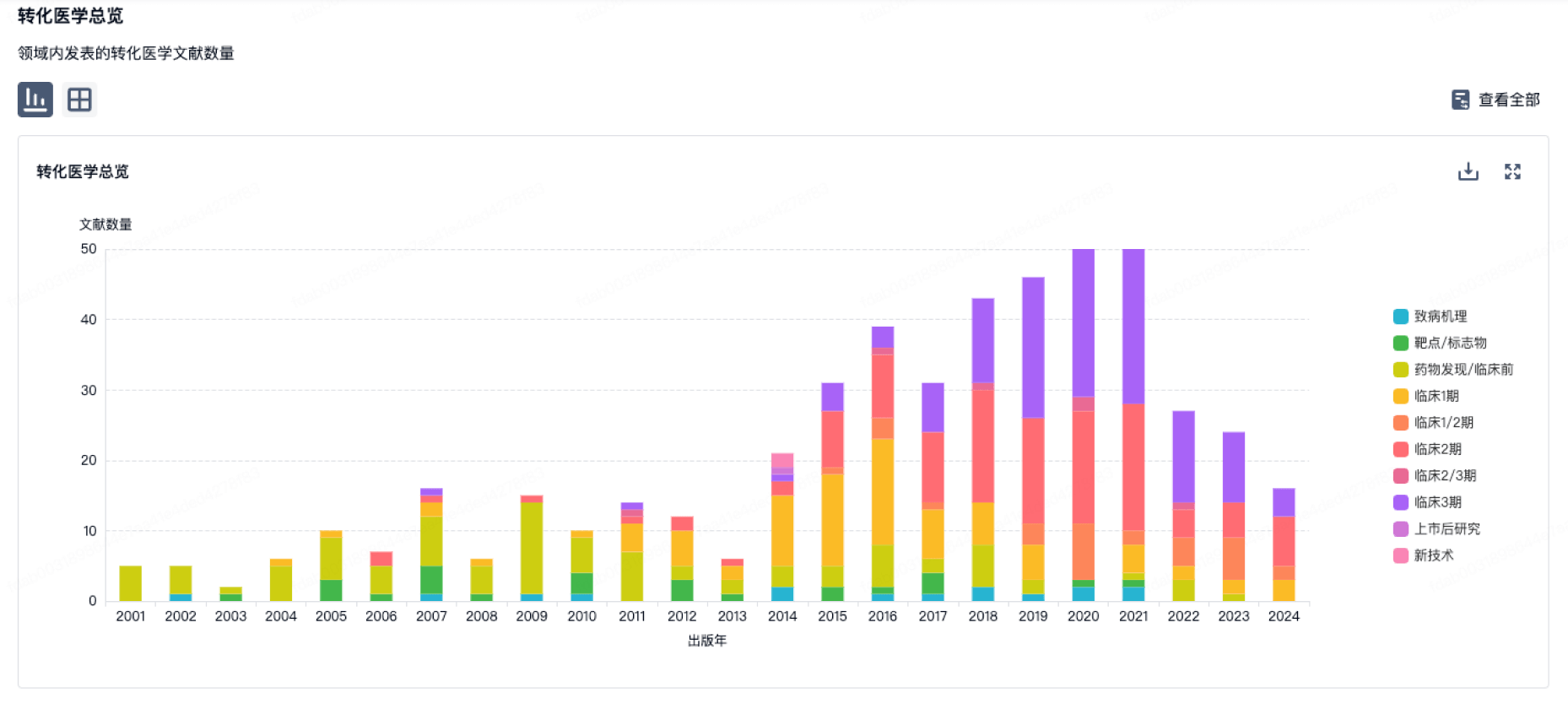
转化医学
使用我们的转化医学数据加速您的研究。
登录
或
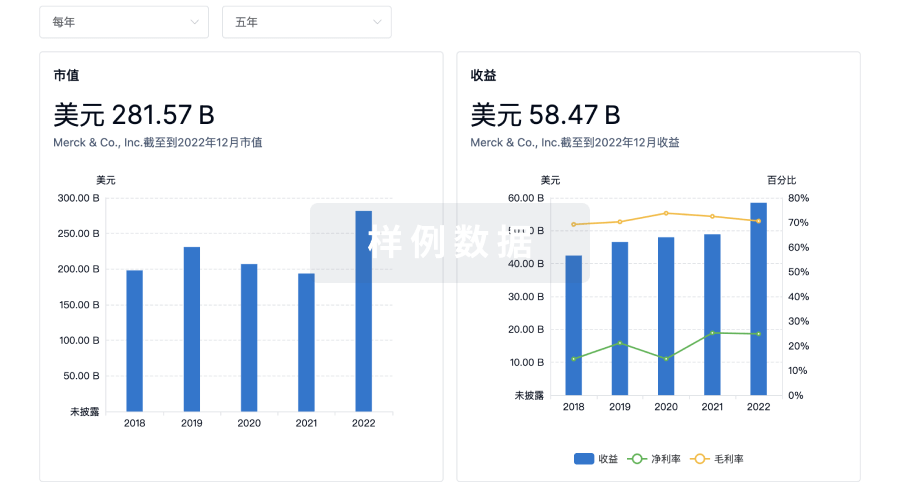
营收
使用 Synapse 探索超过 36 万个组织的财务状况。
登录
或
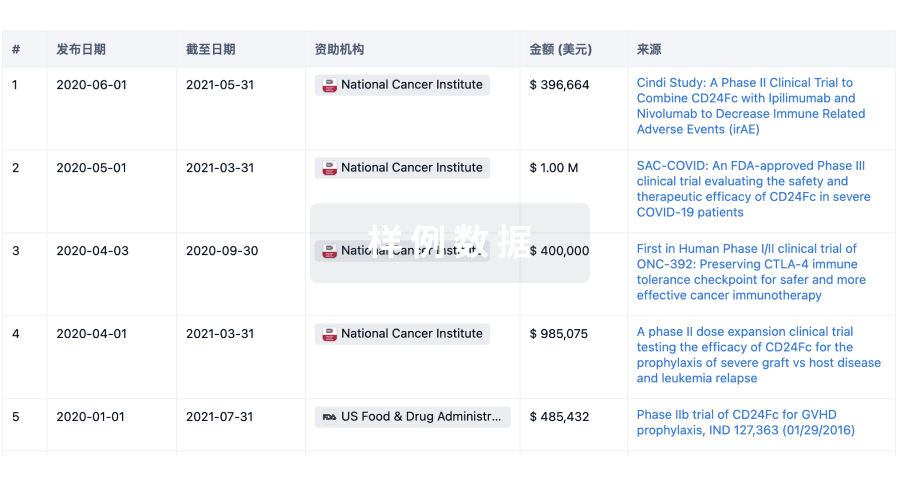
科研基金(NIH)
访问超过 200 万项资助和基金信息,以提升您的研究之旅。
登录
或
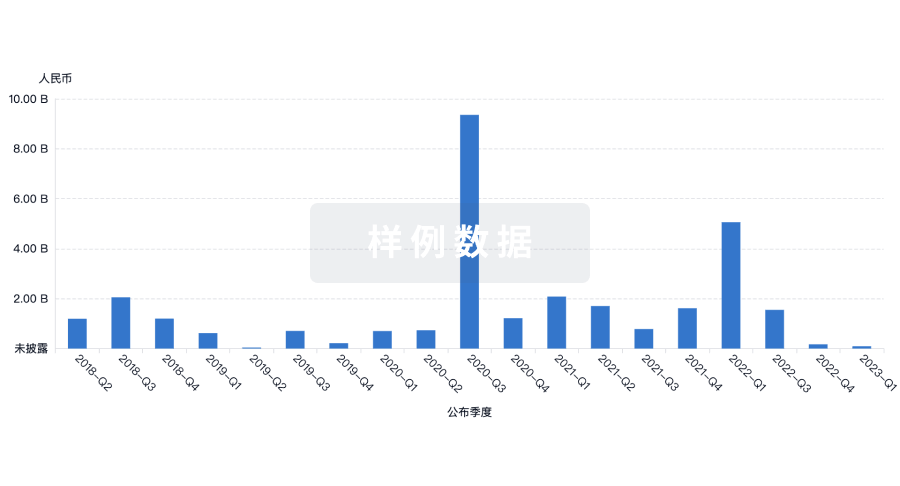
投资
深入了解从初创企业到成熟企业的最新公司投资动态。
登录
或
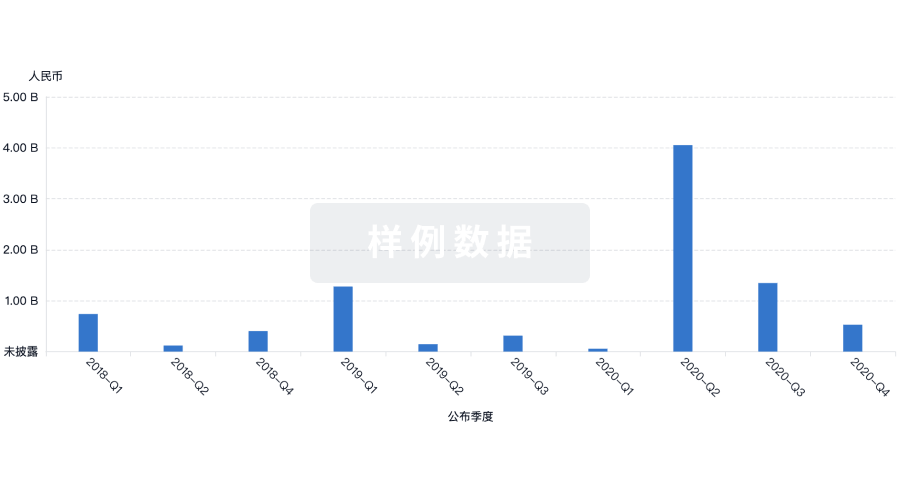
融资
发掘融资趋势以验证和推进您的投资机会。
登录
或
提出任何生物医药研究问题
让每一步生物医药决策都精准制胜
基于十亿级生物数据与全球情报的精准 AI,赋能早期药物发现
立即开始免费试用!
智慧芽新药情报库是智慧芽专为生命科学人士构建的基于AI的创新药情报平台,助您全方位提升您的研发与决策效率。
立即接入生物医药数据包
智慧芽新药库数据也通过智慧芽开放平台,以MCP或API服务形式对外开放。立即使用我们的MCP服务定制您的LLM智能体。
生物序列数据库
生物药研发创新
免费使用
化学结构数据库
小分子化药研发创新
免费使用