预约演示
更新于:2026-02-02

Wuxi Hisky Medical Technologies Co. Ltd.
更新于:2026-02-02
概览
关联
NCT06802731
A Multicenter Study on the Application of LivQ-box® Parameters in the Diagnosis of Liver Inflammation in Patients with Non-alcoholic Fatty Liver Disease
NCT06152783
Confocal Laser Microendoscopy (CellTouch) for the Diagnosis of Early Gastric Cancer: A Multicenter Clinical Study
NCT06051669
Comparison of iLivTouch and FibroScan for the Assessment of Liver Fibrosis and Steatosis in Adult Patients in the US: A Multicenter, Cross-sectional, and Prospective Study
100 项与 无锡海斯凯尔医学技术有限公司 相关的临床结果
登录后查看更多信息
登录后查看更多信息
2025-07-01Clinical and Molecular Hepatology
Fibrosis-4plus score: a novel machine learning-based tool for screening high-risk varices in compensated cirrhosis (CHESS2004): an international multicenter study
Article
作者: Zhang, Shaoting ; Zhou, Yonghe ; Tong, Zhaowei ; Yan, Qiong ; Su, Meiqin ; Liang, Yunxiao ; Qian, Linxue ; Madir, Anita ; Kim, Won ; Chen, Yuping ; Chen, Xiaomei ; Rao, Wei ; Wang, Tingyu ; Ren, Tao ; Zheng, Liyun ; Liu, Wei ; Yin, Li ; Xu, Huixiong ; Zhang, Shuhua ; Dietrich, Christoph Frank ; He, Ruiling ; Chen, Fei ; Liu, Yang ; Huang, Yanqing ; Liu, Shanghao ; Podrug, Kristian ; Liu, Yanni ; Wang, Yihua ; Li, Xin ; He, Fanbin ; Zhang, Guo ; Fan, Huizhen ; Guo, Ying ; Zhang, Yao ; Qi, Xiaolong ; Huan, Hui ; Wang, Wenjuan ; Ai, Fang ; Zhao, Zhongwei ; Ju, Shenghong ; Liu, Bo ; Wang, Xuemei ; Ji, Jiansong ; Zhang, Chaoxue ; Geng, Zhengzi ; Zhang, Liting ; Grgurevic, Ivica ; Ma, Jianzhong ; Liu, Hui ; Tang, Juan ; Shao, Jinhua ; Ma, Sumei ; Liu, Chuan ; Dong, Bingtian ; Wang, Jia ; Zhang, Xiangman ; Zhang, Xin ; Xu, Jiaojiao ; An, Ping ; Yan, Qiang ; Wang, Kun ; Bian, Li
Background/Aims: A large percentage of patients undergoing esophagogastroduodenoscopy (EGD) screening do not have esophageal varices (EV) or have only small EV. We evaluated a large, international, multicenter cohort to develop a novel score, termed FIB-4plus, by combining the fibrosis-4 (FIB-4) score, liver stiffness measurement (LSM), and spleen stiffness measurement (SSM) to identify high-risk EV (HRV) in compensated cirrhosis.Methods: This international cohort study involved patients with compensated cirrhosis from 17 Chinese hospitals and one Croatian institution (NCT04546360). Two-dimensional shear wave elastography-derived LSM and SSM values, and components of the FIB-4 score (i.e., age, aspartate aminotransferase, alanine aminotransferase, and platelet count [PLT]) were combined using machine learning algorithms (logistic regression [LR] and extreme gradient boosting [XGBoost]) to develop the LR-FIB-4plus and XGBoost-FIB-4plus models, respectively. Shapley Additive exPlanations method was used to interpret the model predictions.Results: We analyzed data from 502 patients with compensated cirrhosis who underwent EGD screening. The XGBoost-FIB-4plus score demonstrated superior predictive performance for HRV, with an area under the receiver operating characteristic curve (AUROC) of 0.927 (95% confidence interval [CI] 0.897–0.957) in the training cohort (n=268), and 0.919 (95% CI 0.843–0.995) and 0.902 (95% CI 0.820–0.984) in the first (n=118) and second (n=82) external validation cohorts, respectively. Additionally, the XGBoost-FIB-4plus score exhibited high AUROC values for predicting EV across all cohorts. The FIB-4plus score outperformed the individual parameters (LSM, SSM, PLT, and FIB-4).Conclusions: The FIB-4plus score effectively predicted EV and HRV in patients with compensated cirrhosis, providing clinicians with a valuable tool for optimizing patient management and outcomes.
100 项与 无锡海斯凯尔医学技术有限公司 相关的药物交易
登录后查看更多信息
100 项与 无锡海斯凯尔医学技术有限公司 相关的转化医学
登录后查看更多信息
组织架构
使用我们的机构树数据加速您的研究。
登录
或
管线布局
2026年02月08日管线快照
无数据报导
登录后保持更新
药物交易
使用我们的药物交易数据加速您的研究。
登录
或
转化医学
使用我们的转化医学数据加速您的研究。
登录
或
营收
使用 Synapse 探索超过 36 万个组织的财务状况。
登录
或
科研基金(NIH)
访问超过 200 万项资助和基金信息,以提升您的研究之旅。
登录
或
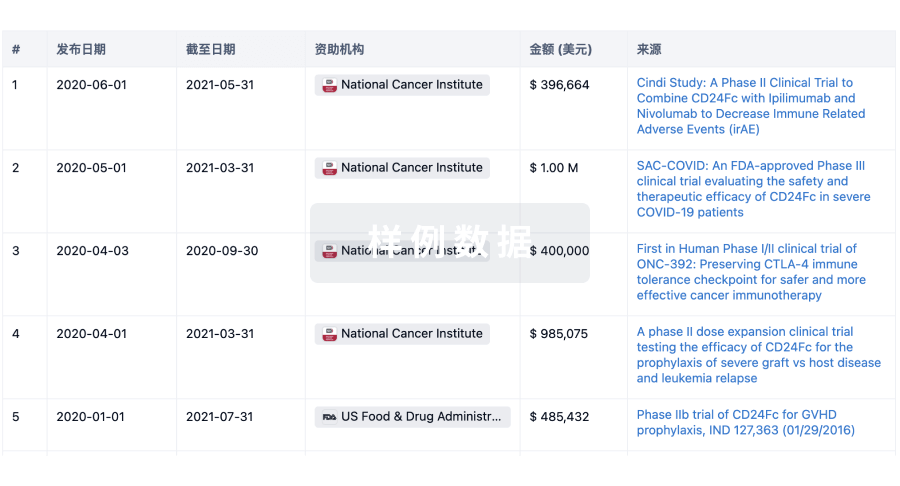
投资
深入了解从初创企业到成熟企业的最新公司投资动态。
登录
或
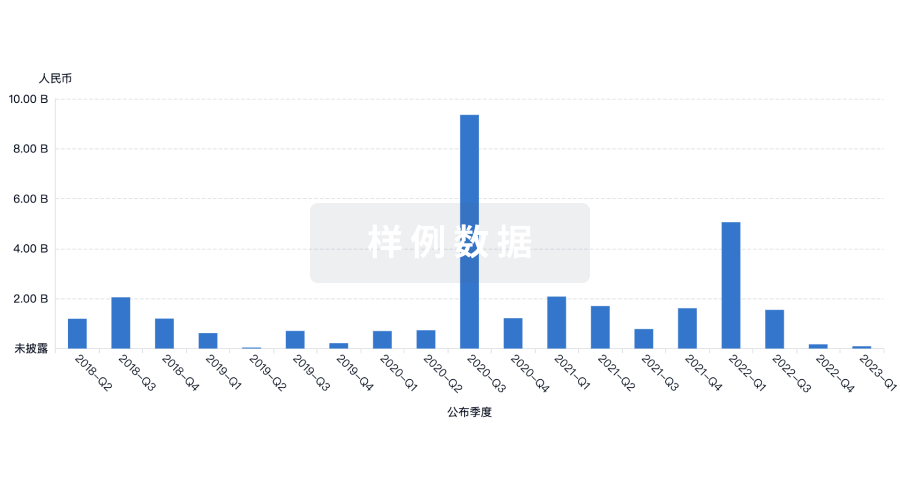
融资
发掘融资趋势以验证和推进您的投资机会。
登录
或
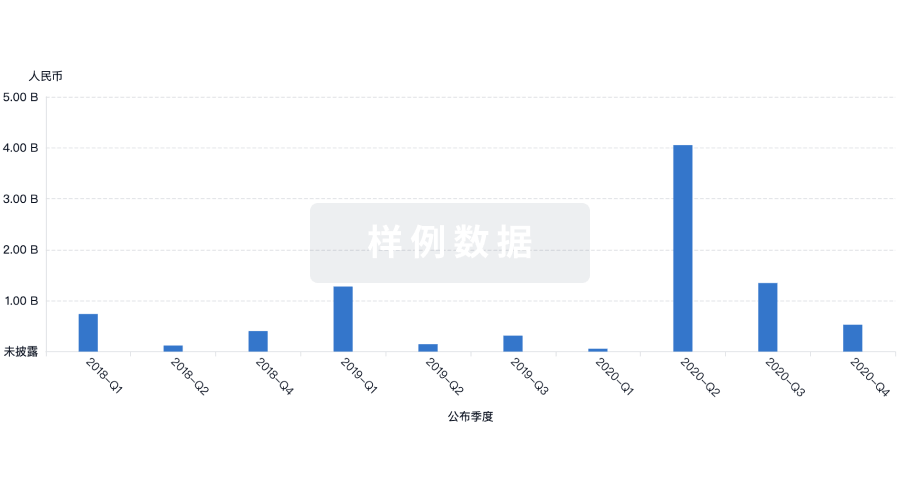
生物医药百科问答
全新生物医药AI Agent 覆盖科研全链路,让突破性发现快人一步
立即开始免费试用!
智慧芽新药情报库是智慧芽专为生命科学人士构建的基于AI的创新药情报平台,助您全方位提升您的研发与决策效率。
立即开始数据试用!
智慧芽新药库数据也通过智慧芽数据服务平台,以API或者数据包形式对外开放,助您更加充分利用智慧芽新药情报信息。
生物序列数据库
生物药研发创新
免费使用
化学结构数据库
小分子化药研发创新
免费使用