预约演示
更新于:2026-06-01

ABX advanced biochemical compounds GmbH
更新于:2026-06-01
概览
标签
肿瘤
泌尿生殖系统疾病
诊断用放射药物
多肽偶联核素
小分子化药
疾病领域得分
一眼洞穿机构专注的疾病领域

技术平台
公司药物应用最多的技术
靶点
公司最常开发的靶点
关联
靶点 |
作用机制 |
在研机构 |
原研机构 |
在研适应症 |
非在研适应症 |
最高研发阶段 |
首次获批国家/地区 |
首次获批日期 |

靶点 |
作用机制 |
在研机构 |
原研机构 |
在研适应症 |
非在研适应症 |
最高研发阶段 |
首次获批国家/地区 |
首次获批日期 |
靶点 |
作用机制 |
在研机构 |
原研机构 |
在研适应症 |
非在研适应症 |
最高研发阶段 |
首次获批国家/地区 |
首次获批日期 |
NCT06122584
Prospective, Multi-Center Study to Assess the Diagnostic Performance of [18F]PSMA-1007 PET/CT Imaging in Patients With Newly-Diagnosed High-Risk or Very-High-Risk Prostate Cancer
CTIS2023-504026-19-01
Prospective, Multi-Center Study to Assess the Diagnostic Performance of [18F]PSMA-1007 PET/CT Imaging in Patients with Newly-Diagnosed High-Risk or Very-High-Risk Prostate Cancer
NCT05422105
Multicenter Evaluation of Diagnostic Performance of [18F]FPSMA-1007 PET/CT in Patients With Suspected Prostate Cancer

100 项与 ABX advanced biochemical compounds GmbH 相关的临床结果
登录后查看更多信息
登录后查看更多信息
2026-01-01JOURNAL OF NUCLEAR MEDICINE
Efficacy of [
18
F]PSMA-1007 PET/CT in Primary Staging of Prostate Carcinoma: A Systematic Review and Metaanalysis
Review
作者: Yun, Mijin ; Giesel, Frederik L ; Herrmann, Ken ; Hoepping, Alexander ; Maurer, Tobias ; Watabe, Tadashi ; Rahbar, Kambiz ; Rudolph, Ines
Staging of prostate carcinoma (PCa) still largely relies on histopathologic examination of prostate tissue. In the last few years, PET/CT with radiotracers that target the prostate-specific membrane antigen (PSMA) has emerged as a noninvasive and sensitive method for staging of PCa. Compared with [68Ga]PSMA-11, [18F]PSMA-1007 is a relatively new radiotracer for PSMA PET/CT with favorable characteristics such as a longer physical half-life, reduced bladder background uptake, and improved availability due to production off-site. The objective of this systematic review and metaanalysis is to summarize the efficacy of [18F]PSMA-1007 in primary T, N, and M staging of PCa in comparison to histopathology. Methods: Clinical trials on primary staging of PCa with [18F]PSMA-1007 (both prospective and retrospective studies) were identified by a systematic search in PubMed. Relevant literature used histopathology as a comparator and reported discrete values for sensitivity and specificity. A metaanalysis assessed differences in diagnostic parameters. Results: Nineteen studies were included in this review: 10 studies reported on T staging (739 patients), 8 studies reported on N staging (865 patients), and 1 study reported on M staging (79 patients). For T staging, our metaanalyses of extraprostatic extension on a patient level based on 3 studies revealed a pooled sensitivity of 54% (95% CI, 46%-63%) and a pooled specificity of 92% (95% CI, 76%-98%). For N staging, our metaanalyses on detection of lymph node metastases on a patient level based on 5 studies revealed a pooled sensitivity of 42% (95% CI, 28%-57%) and a pooled specificity of 94% (95% CI, 90%-97%). In terms of sensitivity for M staging on a patient level, [18F]PSMA-1007 PET/CT outperformed all other tested conventional imaging modalities. Conclusion: PET/CT imaging with [18F]PSMA-1007 provides high sensitivity and specificity in T, N, and M staging of PCa when compared with histopathology. It offers the possibility to perform noninvasive primary T, N, and M staging before treatment in a single procedure.
2025-04-10JOURNAL OF MEDICINAL CHEMISTRY
Development of [99mTc]TcO-ABX474: Design, Synthesis, and Biological Evaluation of PSMA-Binding Technetium-99m Radioligands for SPECT Imaging of Prostate Cancer
Article
作者: Lis, Christian ; Kopka, Klaus ; Pietzsch, Jens ; Hoepping, Alexander ; Lankau, Hans-Joachim ; Ullrich, Martin ; Meyer, Christoph ; Sihver, Wiebke ; Fischer, Steffen ; Brust, Peter ; Ludwig, Friedrich-Alexander ; Gündel, Daniel ; Joseph, Desna
A current global limitation to the timely and equitable patient access to PSMA-based therapies for prostate cancer (PCa) is the insufficient PET capacity for pretreatment imaging. However, the extensive global availability of SPECT cameras renders this imaging technology as an attractive alternative. The lack of regulatory approved PSMA radioligands for SPECT imaging of PCa prompted us to design new 99mTc-labeled radioligands with a fast pharmacokinetic profile by harnessing proven complexation of the [99mTc][TcO]3+ core by a bis(aminoethanethiol) chelator. Six 99mTc-labeled PSMA radioligands were synthesized and biologically characterized in cell-based assays and by SPECT imaging in LNCaP tumor-bearing mice. From this series, [99mTc]TcO-5 ([99mTc]TcO-ABX474, Kd(PSMA) = 6.1 ± 1.7 nM) displayed the most advantageous properties for SPECT imaging of PCa: high and fast tumor uptake accompanied by rapid clearance from nontarget tissues, leading to faster pharmacokinetics than observed for the reference [99mTc]Tc-PSMA-I&S. Furthermore, [99mTc]TcO-5 performed similar to the established PSMA-PET radioligand [68Ga]Ga-PSMA-11.
2024-05-01European Journal of Nuclear Medicine and Molecular Imaging
Combination of [18F]FDG and [18F]PSMA-1007 PET/CT predicts tumour aggressiveness at staging and biochemical failure postoperatively in patients with prostate cancer
Article
作者: Giesel, Frederik L ; Lee, Misu ; Lee, Seunghwan ; Hoepping, Alexander ; Kim, Sun Jung ; Kim, Jisu ; Kim, Dongwoo ; Oh, Kyeong Taek ; Choi, Young Deuk ; Yun, Mijin ; Kopka, Klaus ; Kim, Hyun Jeong
PURPOSE:
[18F]fluorodeoxyglucose ([18F]FDG) positron emission tomography/computed tomography (PET/CT) has limitations in prostate cancer (PCa) detection owing to low glycolysis in the primary tumour. Recently, prostate-specific membrane antigen (PSMA) PET/CT has been useful for biochemical failure detection and radioligand therapy (RLT) guidance. However, few studies have evaluated its use in primary prostate tumours using PSMA and [18F]FDG PET/CT. This study aimed to evaluate [18F]PSMA-1007 and [18F]FDG PET/CT for primary tumour detection and understand the association of metabolic heterogeneity with clinicopathological characteristics at staging and postoperatively.
METHOD:
This prospective study included 42 index tumours (27 acinar and 15 ductal-dominant) in 42 patients who underwent [18F]PSMA-1007 and [18F]FDG PET/CT and subsequent radical prostatectomy. All patients were followed for a median of 26 mo, and serum prostate-specific antigen levels were measured every 3 mo to evaluate biochemical failure. One-way analysis of variance, Tukey's multiple comparison test, and Fisher's exact test were performed.
RESULTS:
All 42 index tumours were detected on [18F]PSMA-1007 PET/CT, whereas only 15 were detected on [18F]FDG PET/CT (62.3% vs. 37.7%, p < 0.0001). A high SUVmax for [18F]PSMA-1007 was observed in tumours with high Gleason scores (GS 6-7 vs. GS 8-10; 12.1 vs. 20.1, p < 0.05). Tumours with [18F]FDG uptake were mostly ductal dominant (acinar-dominant 4/27; ductal-dominant; 11/15, p < 0.001), with lower [18F]PSMA-1007 uptake than tumours without [18F]FDG uptake (SUVmax 16.58 vs. 11.19, p < 0.001). There were 16.6% (7/42) of patients with pStage IV in whom the primary tumours were [18F]FDG positive. Biochemical failure was observed in 14.8% (4/27) of patients with [18F]FDG negative tumours but in 53.3% (8/15) of patients with [18F]FDG positive tumours (p = 0.013).
CONCLUSIONS:
[18F]PSMA-1007 PET/CT was superior to [18F]FDG PET/CT in detecting primary PCa. In contrast, tumours with [18F]FDG uptake are associated with larger size, a ductal-dominant type, and likely to undergo metastasis at staging and biochemical failure postoperatively.
100 项与 ABX advanced biochemical compounds GmbH 相关的药物交易
登录后查看更多信息
100 项与 ABX advanced biochemical compounds GmbH 相关的转化医学
登录后查看更多信息
组织架构
使用我们的机构树数据加速您的研究。
登录
或
管线布局
2026年10月17日管线快照
管线布局中药物为当前组织机构及其子机构作为药物机构进行统计,早期临床1期并入临床1期,临床1/2期并入临床2期,临床2/3期并入临床3期
临床前
2
1
临床3期
其他
4
登录后查看更多信息
当前项目
登录后查看更多信息
药物交易
使用我们的药物交易数据加速您的研究。
登录
或
转化医学
使用我们的转化医学数据加速您的研究。
登录
或
营收
使用 Synapse 探索超过 36 万个组织的财务状况。
登录
或
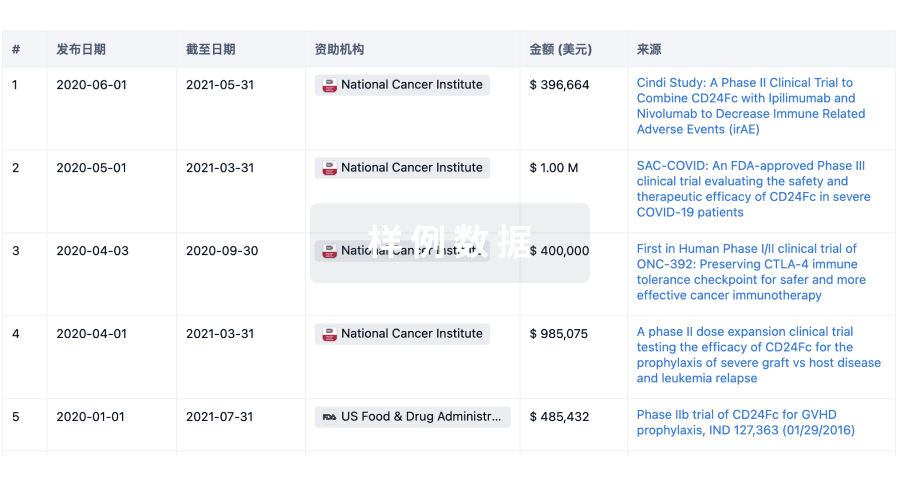
科研基金(NIH)
访问超过 200 万项资助和基金信息,以提升您的研究之旅。
登录
或
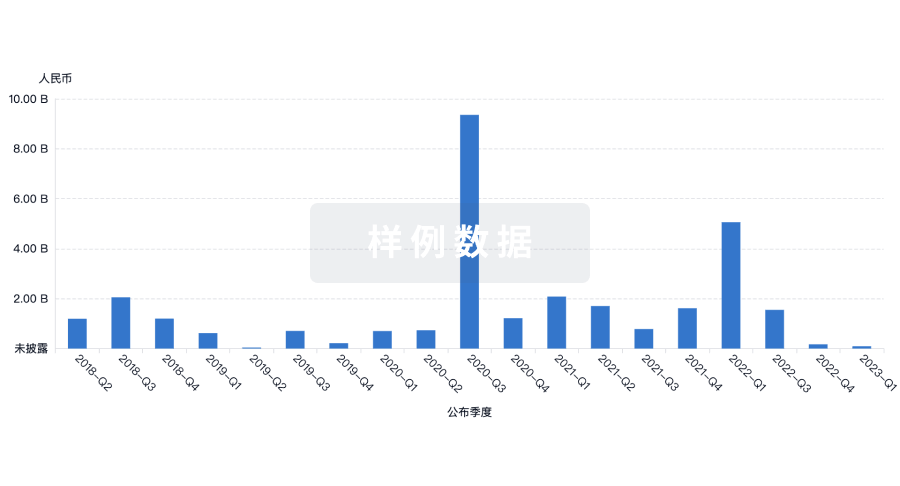
投资
深入了解从初创企业到成熟企业的最新公司投资动态。
登录
或
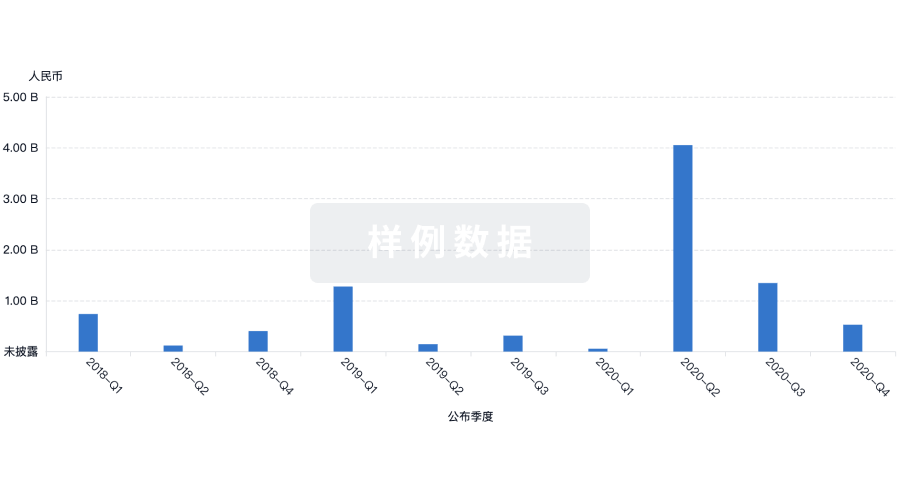
融资
发掘融资趋势以验证和推进您的投资机会。
登录
或
提出任何生物医药研究问题
让每一步生物医药决策都精准制胜
基于十亿级生物数据与全球情报的精准 AI,赋能早期药物发现
立即开始免费试用!
智慧芽新药情报库是智慧芽专为生命科学人士构建的基于AI的创新药情报平台,助您全方位提升您的研发与决策效率。
立即接入生物医药数据包
智慧芽新药库数据也通过智慧芽开放平台,以MCP或API服务形式对外开放。立即使用我们的MCP服务定制您的LLM智能体。
生物序列数据库
生物药研发创新
免费使用
化学结构数据库
小分子化药研发创新
免费使用