预约演示
更新于:2025-12-06

Rajalakshmi Engineering College
更新于:2025-12-06
概览
标签
肿瘤
皮肤和肌肉骨骼疾病
小分子化药
疾病领域得分
一眼洞穿机构专注的疾病领域
技术平台
公司药物应用最多的技术
靶点
公司最常开发的靶点

暂无数据
关联
靶点 |
作用机制 |
在研机构 |
原研机构 |
在研适应症 |
非在研适应症 |
最高研发阶段 |
首次获批国家/地区 |
首次获批日期 |

CTRI/2022/06/042963
AN OPEN LABEL, BALANCED, RANDOMIZED, MULTICENTER, AND PHASE II CLINICAL TRIAL TO DETERMINE THE EFFECT A FOOD (MAYONNAISE), ENRICHED WITH DOCOSAHEXAENOIC ACID (DHATG) (AS THE TRIGLYCERIDE ESTER), HAS ON THE CELL MEMBRANE FATTY ACID RATIO OF BLOOD CELLS OF SICKLE CELL PATIENTS RANGING IN AGE FROM 6 ââ?¬â?? 40 YEARS OF AGE.
CTRI/2022/05/042737
AN OPEN-LABEL, RANDOMIZED STUDY ON LESION AT BILATERAL SITES WITHIN GROUP TO EVALUATE THE EFFICACY AND SAFETY OF BOSWELL CREAM AND PSOROLIN B OINTMENT IN PATIENTS WITH LESIONS OF PSORIASIS.
CTRI/2021/10/037205
AN OPEN LABEL, MULTI-CENTER, TWO-ARM, TWO-TREATMENT, CLINICAL TRIAL TO COMPARE THE SAFETY AND EFFICACY OF MUCOADHESIVE TABLETSWITH ACTIVE INGREDIENTS SODIUM HYALURONATE 0.5% MANUFACTURED BY TREE OF LIFE PHARMA LTD. AND STREPSILS�® (2, 4-DICHLOROBENZYL ALCOHOL AND AMYLMETACRESOL LOZENGES) MANUFACTURED BY RECKITT BENCKISER (INDIA) PVT. LTD., P.O. BADDI, DIST. SOLAN-173 205 (H.P), INDIA IN HUMAN ADULT PATIENTS WITH ACUTE SORE THROAT. - MUCO-002-21
100 项与 Rajalakshmi Engineering College 相关的临床结果
登录后查看更多信息
登录后查看更多信息
2026-02-01COMPUTATIONAL BIOLOGY AND CHEMISTRY
Ovarian cancer detection from mutual information-ranked clinical biomarkers using an explainable attention-based residual multilayer perceptron
Article
作者: Loganathan, G ; Palanivelan, M
Ovarian cancer is a major health concern for women, contributing to substantial mortality and morbidity. Timely identification of ovarian cancer is crucial for enhancing patient health and survival rates. Current diagnostic practices involve the manual analysis of various clinical biomarkers to detect ovarian cancer. However, this approach can be subjective, time-consuming, and dependent on the expertise of the medical professional. To optimize workflow efficiency and improve diagnosis accuracy, we develop an automated deep learning model, called EA-ResMLP, which integrates a residual multilayer perceptron with squeeze-and-excitation attention block and explainable artificial intelligence. The integration of residual connections and attention mechanisms contributes to improved diagnostic accuracy by enabling deeper feature learning and emphasizing the most informative features through adaptive recalibration. The experimental results demonstrated that proposed method achieved an accuracy of 92.05%, indicating a 7.98% improvement over the conventional multilayer perceptron. Furthermore, the predictions of the EA-ResMLP model are analyzed using explainable artificial intelligence techniques such as local interpretable model-agnostic explanations, which generate feature contribution charts to highlight the impact of each input feature on the prediction. By integrating model predictions with feature contribution charts, the proposed model provides an explainable framework for ovarian cancer detection.
2025-10-28COMBINATORIAL CHEMISTRY & HIGH THROUGHPUT SCREENING
Ambient-Stable Electroactive Graphene Nanoribbons: A Comprehensive
Analysis of Distance, Degree, Energetics and
13
C NMR Signals
Article
作者: Augustine, Tony ; Arulperumjothid, M. ; Jose, Bibin K. ; Prabhu, Savari ; Abraham, Simili
Introduction::
Topological indices serve as mathematical descriptors for chemical
structures, playing a crucial role in elucidating the physicochemical characteristics of compounds. Ambient-
stable electroactive graphene nanoribbons are air-stable, electronically tunable and easily fabricated
nanostructures, formed by the elongation of nanographene ribbon segments. This study aimed
to develop precise topological formulations for three types of ambient-stable electroactive graphene
nanoribbons (AEGNR) using graph-theoretical structural measures, and to evaluate their
energetic properties along with their 13C NMR spectral characteristics.
Methods::
The study employs the cut method, which is based on the Djoković-Winkler θ relation,
to calculate topological indices.
Results::
In this article, we evaluated selected spectral and energetic properties of AEGNR variants.
Discussion::
The computed topological indices based on distance and vertex degree could provide important
chemical insights into the properties of AEGNR(l).
Conclusions::
We developed exact mathematical expressions for bond-additive molecular descriptors
corresponding to three types of ambient-stable electroactive graphene nanoribbons
(AEGNRs). An evaluation of HOMO-LUMO energy gaps was also performed for the AEGNR(l)
chains.
2025-10-03Inorganic and Nano-Metal Chemistry
Visible-light driven photocatalytic degradation of organic dyes by carbonized palladium-impregnated graphene oxide quantum dots
作者: Sivalingam, Sivamani ; Lee, Meng-Jen ; Krishnegowda, Puneetha Gangadahosahalli ; Shabbirahmed, Asma Musfra ; Raja Sekhar, Medidi ; Jayakodi, SanthoshKumar ; Sekar, Rajkumar ; Somu, Prathap ; Gomez, Levin Anbu ; Basavegowda, Nagaraj
In this study, palladium impregnated graphene oxide quantum dots (Pd-GOQD) have been synthesized by biogenic carbonization.The formation of Pd-GOQD and GOQD was confirmed by physicochem. techniques such as Brunauer-Emmett-Teller (BET), photoluminescence spectroscopy, XRD, Raman spectroscopy, XPS anal., and HAADF-STEM anal.TEM anal. revealed that GOQD and Pd-GOQD are spherical, with a mean size of around 2.9 and 3.7 nm, resp.The photocatalytic activities of Pd-GOQD and GOQD using methylene blue (MB) and methyl orange (MO) dye under visible light were investigated using spectroscopic anal.Pd-GOQD showed nearly better dye degradation efficiency as 90% dye was reduced within 75 min compared to 50% efficiency of GOQD.Kinetic of the reduction process of MB and MO was well correlated with first-order kinetics.Besides, the Pd-GOQD exhibited its regeneration and reusability as its photo-degradation performance remained unaffected after five successive reuses.Hence GO-Pd nanocomposite was a promising option for removing synthetic dyes from aqueous solutions
100 项与 Rajalakshmi Engineering College 相关的药物交易
登录后查看更多信息
100 项与 Rajalakshmi Engineering College 相关的转化医学
登录后查看更多信息
组织架构
使用我们的机构树数据加速您的研究。
登录
或
管线布局
2026年10月09日管线快照
管线布局中药物为当前组织机构及其子机构作为药物机构进行统计,早期临床1期并入临床1期,临床1/2期并入临床2期,临床2/3期并入临床3期
临床前
1
登录后查看更多信息
当前项目
登录后查看更多信息
药物交易
使用我们的药物交易数据加速您的研究。
登录
或
转化医学
使用我们的转化医学数据加速您的研究。
登录
或
营收
使用 Synapse 探索超过 36 万个组织的财务状况。
登录
或
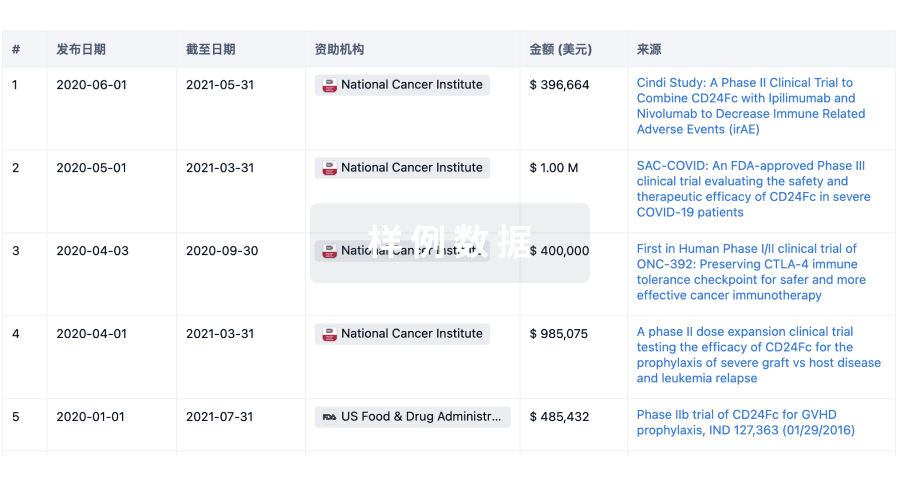
科研基金(NIH)
访问超过 200 万项资助和基金信息,以提升您的研究之旅。
登录
或
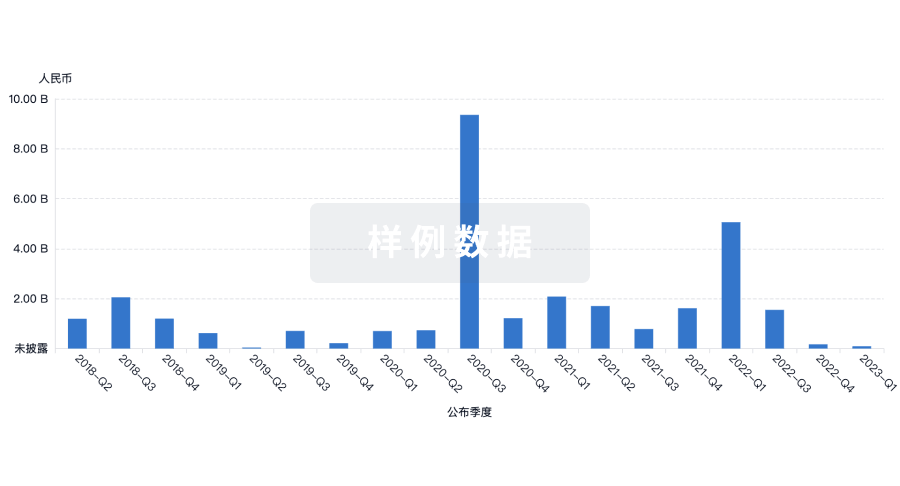
投资
深入了解从初创企业到成熟企业的最新公司投资动态。
登录
或
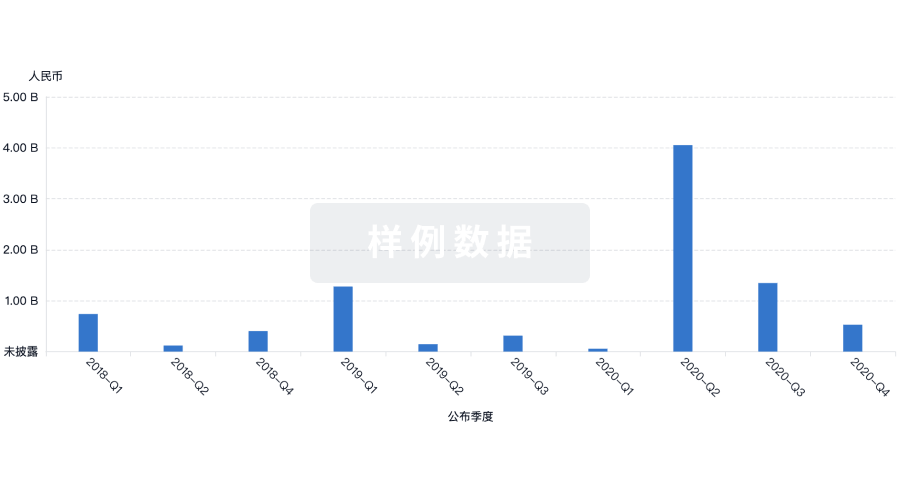
融资
发掘融资趋势以验证和推进您的投资机会。
登录
或
提出任何生物医药研究问题
让每一步生物医药决策都精准制胜
基于十亿级生物数据与全球情报的精准 AI,赋能早期药物发现
立即开始免费试用!
智慧芽新药情报库是智慧芽专为生命科学人士构建的基于AI的创新药情报平台,助您全方位提升您的研发与决策效率。
立即接入生物医药数据包
智慧芽新药库数据也通过智慧芽开放平台,以MCP或API服务形式对外开放。立即使用我们的MCP服务定制您的LLM智能体。
生物序列数据库
生物药研发创新
免费使用
化学结构数据库
小分子化药研发创新
免费使用