预约演示
更新于:2026-08-22

China Three Gorges University
更新于:2026-08-22
概览
标签
肿瘤
内分泌与代谢疾病
皮肤和肌肉骨骼疾病
小分子化药
腺相关病毒基因治疗
mRNA
疾病领域得分
一眼洞穿机构专注的疾病领域

技术平台
公司药物应用最多的技术
靶点
公司最常开发的靶点
关联
靶点 |
作用机制 |
在研机构 |
原研机构 |
在研适应症 |
非在研适应症 |
最高研发阶段 |
首次获批国家/地区 |
首次获批日期 |

靶点 |
作用机制 |
在研机构 |
原研机构 |
在研适应症 |
非在研适应症 |
最高研发阶段 |
首次获批国家/地区 |
首次获批日期 |
靶点 |
作用机制 |
在研机构 |
原研机构 |
在研适应症 |
非在研适应症 |
最高研发阶段 |
首次获批国家/地区 |
首次获批日期 |
NCT06467500
A Prospective, Open-label, Single-center, Single-arm Phase II Clinical Study of Cadonilimab (AK104) Combined With Monotherapy Chemotherapy in Patients With Advanced Non-small Cell Lung Cancer (NSCLC) With Negative Driver Genes and Failed Immunotherapy
NCT06458972
Safety and Efficacy of Telitacicept in the Treatment of Systemic Lupus Erythematosus (SLE) in the Real World: a Multicenter Retrospective Study
NCT05749042
Concurrent Chemoradiotherapy Based of Cisplatin With or Without Sintilimab as First-line Therapy for Patients With Advanced Oral Cavity Squamous Cell Carcinoma :a Phase 2,Prospective, Open-label,Unicentral,Randomised Controlled Trial
100 项与 三峡大学 相关的临床结果
登录后查看更多信息
登录后查看更多信息
2026-12-31Journal of Biological Dynamics
Dynamics of virus infection under the influence of antibody and cytokine
Article
作者: Jiang, Cuicui ; Wang, Kaifa ; Yao, Miaoran ; Tian, Yanni
To study the macroscopic dynamics of susceptible host cells, infected host cells, free virus particles and antibodies after viral infection within-host, this study develops a novel dynamic model that integrates three key mechanisms: a general incidence function capturing the complexity of antibody production, the inhibitory effect of antibodies on viral infectivity and the cytokine-mediated self-cure of infected cells. The basic reproduction numbers for both the virus and immune response are derived, along with sufficient conditions for the stability of equilibria. Bifurcation analysis revealed that a Hopf bifurcation may occur when the basic reproduction number of the immune response exceeds one. Numerical simulations highlight the critical role of saturation effects in viral replication and the immune response for infection control. Antibody immunity, once depleted, may not be replenished and neglecting saturation effects could overestimate both the oscillatory parameter range and the severity of infection.
2026-12-01Nano-Micro Letters
Dual-Site Functional Orchestration Enables Synergistic Anodic Modulation and Cathodic Mooring for Durable Zinc–Iodine Batteries
Article
作者: Cao, Jin ; An, Xin ; Huang, Can ; Yang, Xuelin ; Wang, Shenghan ; Jin, Yan
Abstract:
Aqueous zinc-iodine batteries represent a compelling technology for large-scale, sustainable energy storage, yet their practical application is severely hampered by the simultaneous interfacial challenges of uncontrolled dendrite growth on the zinc anode and the parasitic polyiodide shuttle. Herein, we introduce a dual-site functional orchestration strategy by employing a single electrolyte additive, 2-imidazolidone (ELA), to concurrently stabilize both the anode and cathode interfaces. On the anode side, the carbonyl (C=O) functional group of ELA initiates an effective anodic modulation, regulating the Zn
2+
solvation environment and facilitating a dynamic adsorption layer. This homogenizes the ion flux and guides preferential Zn deposition along the (002) plane, effectively suppressing dendrite formation. Concurrently, at the cathode, the imino (N-H) group immobilizes soluble polyiodide species via hydrogen bonding, realizing an effective cathodic mooring. This targeted confinement arrests the shuttle effect without impeding the intrinsic redox kinetics. This synergistic stabilization translates into exceptional electrochemical performance, with symmetric cells achieving an ultra-long lifespan of over 5500 h at a high current density of 8 mA cm
-2
and the full Zn||I
2
cells demonstrating robust cycling with 79.4% capacity retention after 2500 cycles. This work introduces a dual-site functional orchestration strategy, offering a pathway toward more durable aqueous batteries.
2026-12-01Molecular & general genetics : MGG
miR-133b induces antitumor immunity in cervical cancer through modulating CMTM6/PD-L1 axis
Article
作者: Wang, Hong-Bing ; Liu, Xu-Ji ; Li, Li ; Tan, Wei-Ming ; Zeng, Hui ; Wang, Jia-Qi
Immune evasion mediated by the PD-L1 pathway remains a major hurdle in the effective treatment of cervical cancer (CC). While microRNAs (miRNAs) are known to critically regulate host immune responses, their specific roles in modulating the immunosuppressive microenvironment in CC remain largely elusive. Therefore, this study aims to elucidate the scope, clinical relevance, and mechanistic actions of the novel miR-133b/CMTM6/PD-L1 axis in cervical cancer immune evasion. Through a comprehensive series of in vitro and in vivo assays, we evaluated the expression and function of miR-133b, CMTM6, and PD-L1 in CC tissues and cell lines. Our results revealed that miR-133b is significantly downregulated in CC, which strongly correlates with poor patient prognosis. Mechanistically, miR-133b directly targets CMTM6, thereby suppressing PD-L1 expression. In clinical CC tissues, miR-133b levels were negatively correlated with both CMTM6 and PD-L1. Utilizing an immune-competent murine syngeneic model, we demonstrated that miR-133b overexpression profoundly inhibited tumor growth. This tumor suppression was accompanied by enhanced intra-tumoral infiltration of CD4+ and CD8+T cells and an attenuated presence of myeloid-derived suppressor cells (MDSCs). Furthermore, co-culture experiments revealed that miR-133b-overexpressing CC cells significantly increased IFN-γ release, decreased IL-10 secretion, and attenuated T cell apoptosis effects that were mechanistically dependent on the inhibition of the CMTM6/PD-L1 axis. In conclusion, our findings establish miR-133b as a critical tumor suppressor and immune modulator in cervical cancer. By deciphering the miR-133b/CMTM6/PD-L1 regulatory network, this work provides a novel mechanistic perspective on CC immune evasion, suggesting that targeting this axis holds significant promise as a therapeutic strategy to reverse the immunosuppressive microenvironment and enhance anti-tumor immunity.
100 项与 三峡大学 相关的药物交易
登录后查看更多信息
100 项与 三峡大学 相关的转化医学
登录后查看更多信息
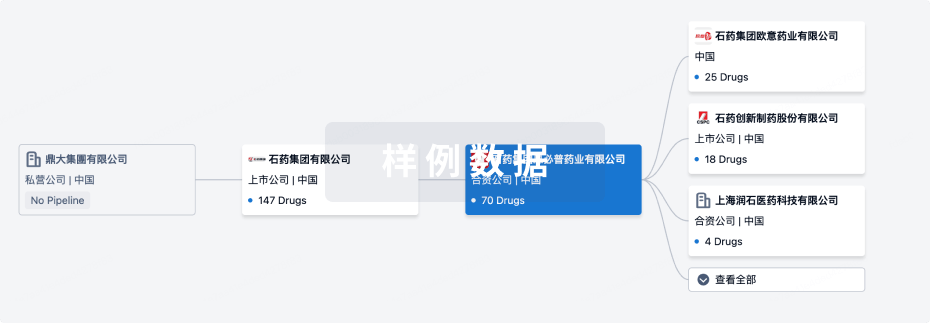
组织架构
使用我们的机构树数据加速您的研究。
登录
或
管线布局
2026年09月10日管线快照
管线布局中药物为当前组织机构及其子机构作为药物机构进行统计,早期临床1期并入临床1期,临床1/2期并入临床2期,临床2/3期并入临床3期
药物发现
16
5
临床前
登录后查看更多信息
当前项目
登录后查看更多信息
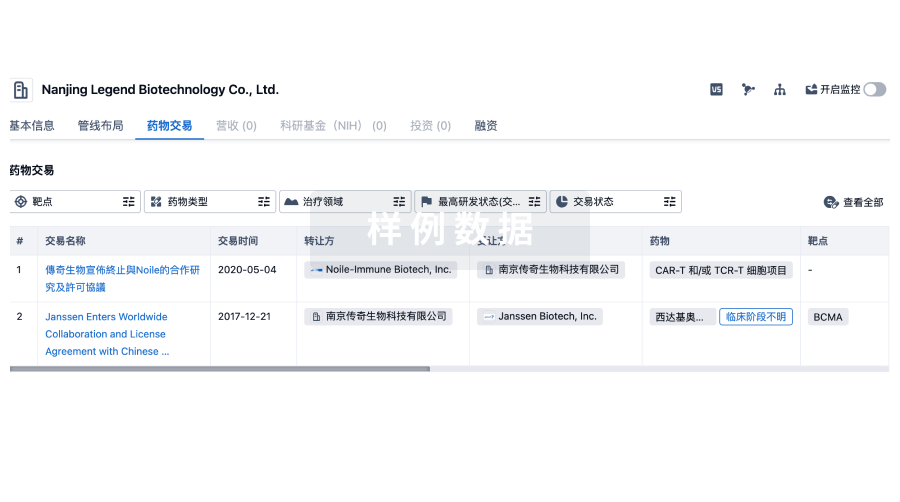
药物交易
使用我们的药物交易数据加速您的研究。
登录
或
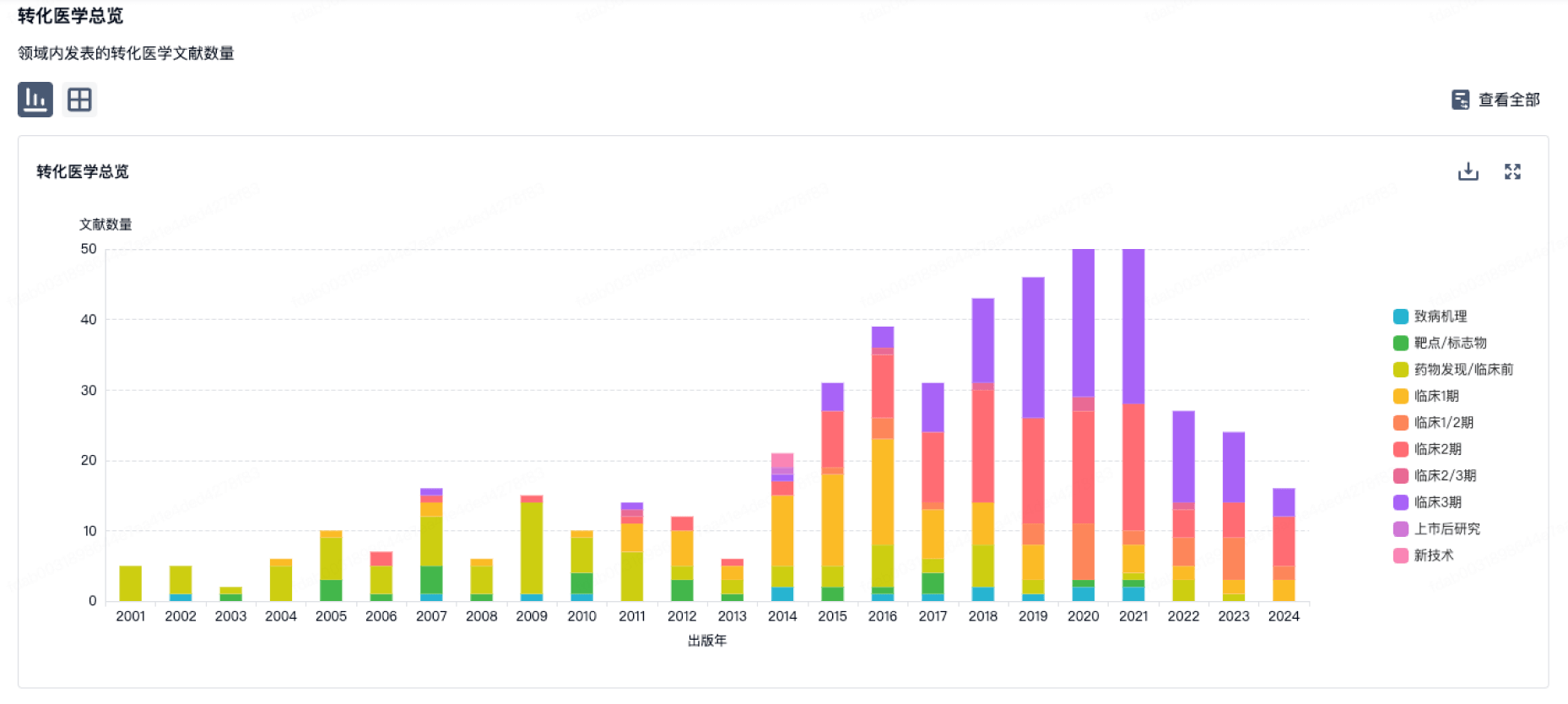
转化医学
使用我们的转化医学数据加速您的研究。
登录
或
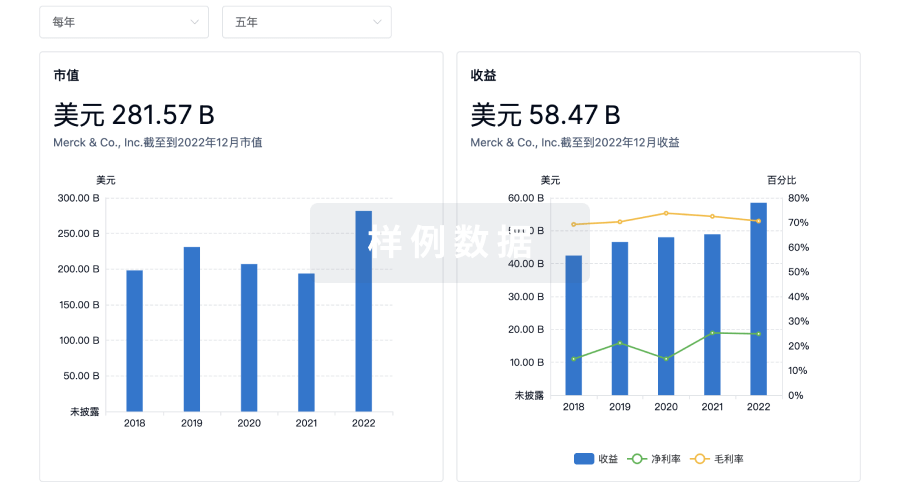
营收
使用 Synapse 探索超过 36 万个组织的财务状况。
登录
或
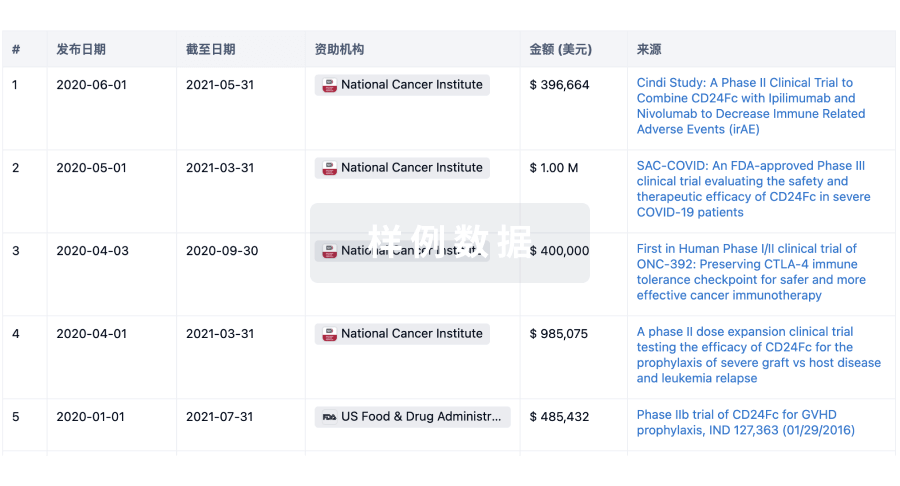
科研基金(NIH)
访问超过 200 万项资助和基金信息,以提升您的研究之旅。
登录
或
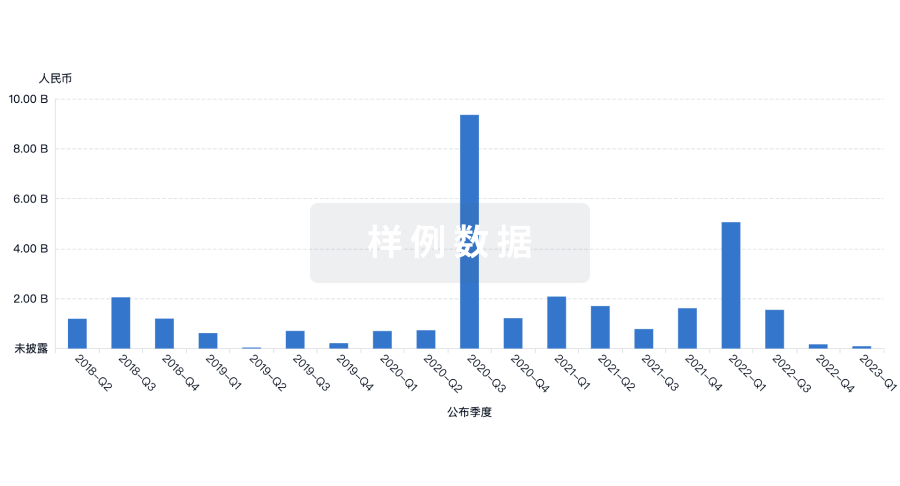
投资
深入了解从初创企业到成熟企业的最新公司投资动态。
登录
或
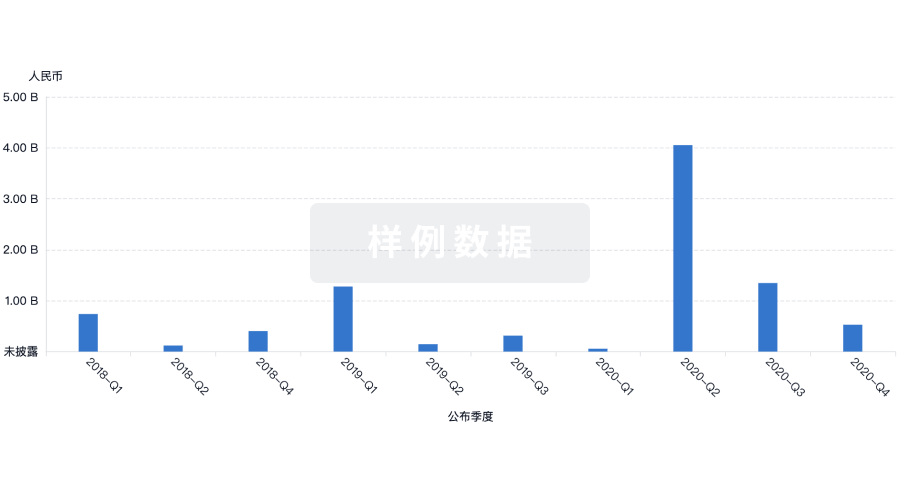
融资
发掘融资趋势以验证和推进您的投资机会。
登录
或
提出任何生物医药研究问题
让每一步生物医药决策都精准制胜
基于十亿级生物数据与全球情报的精准 AI,赋能早期药物发现
立即开始免费试用!
智慧芽新药情报库是智慧芽专为生命科学人士构建的基于AI的创新药情报平台,助您全方位提升您的研发与决策效率。
立即接入生物医药数据包
智慧芽新药库数据也通过智慧芽开放平台,以MCP或API服务形式对外开放。立即使用我们的MCP服务定制您的LLM智能体。
生物序列数据库
生物药研发创新
免费使用
化学结构数据库
小分子化药研发创新
免费使用