预约演示
更新于:2025-12-07

Osaka Prefecture University
更新于:2025-12-07
概览
标签
神经系统疾病
小分子化药
单克隆抗体
疾病领域得分
一眼洞穿机构专注的疾病领域

技术平台
公司药物应用最多的技术
靶点
公司最常开发的靶点
关联
靶点 |
作用机制 |
在研机构 |
原研机构 |
在研适应症 |
非在研适应症 |
最高研发阶段 |
首次获批国家/地区 |
首次获批日期 |

WO2023163187
专利挖掘靶点 |
作用机制 |
在研机构 |
原研机构 |
在研适应症 |
非在研适应症 |
最高研发阶段 |
首次获批国家/地区 |
首次获批日期 |
JPRN-UMIN000053377
Development and evaluation of a support program based on mothers' information needs regarding breastfeeding continuation or termination: to reduce mothers' decisional conflict - Development and evaluation of a support program based on mothers' information needs regarding breastfeeding continuation or termination
JPRN-UMIN000043353
A Study to Validate the Usability, Reliability and Validity of the Modified Barthel Index for Palliative Care Cancer Patients - A Study to Validate the Usability, Reliability and Validity of the Modified Barthel Index for Palliative Care Cancer Patients
JPRN-UMIN000048907
The development and evaluation of an online program to enhance parenthood for Japanese fathers of infants - Parenthood to online program for father
100 项与 Osaka Prefecture University 相关的临床结果
登录后查看更多信息
登录后查看更多信息
2025-10-01VIRUS GENES
Cucumber mosaic virus infection does not increase the translocation of the green fluorescent protein from GM rootstock to non-GM scion in transgrafted plants
Article
作者: Asuka, Harue ; Ohta, Daisaku ; Ogawa, Takumi ; Kodama, Hiroaki ; Kato, Kanae ; Miyahara, Taira ; Mochizuki, Tomofumi
Plant viruses use the plasmodesmata and vascular systems to spread systemically in a plant, which may influence the translocation of exogenous transgene products in genetically modified (GM) plants. Transgrafting is a technique that involves the use of GM plants as grafting partners for non-GM plants, and yields non-GM edible harvests from transgrafted crops; thus, there is potential for its distribution as a non-GM product. However, when growing in agricultural fields, transgrafts are exposed to biotic stresses, such as plant virus infections. In this study, we investigated the influence of a plant virus infection on translocation of transgene products between GM and non-GM parts of transgrafts. We generated homo- and hetero-transgrafts of green fluorescent protein (GFP)-expressing GM tomatoes and GM Nicotiana benthamiana rootstocks with non-GM tomato scions and infected them with cucumber mosaic virus (CMV), a major plant virus, and analyzed the translocation of GFP protein in transgrafts. The results showed that CMV infection did not promote GFP transfer from GM rootstock to non-GM scions.
2025-09-01Analytical and Bioanalytical Chemistry
A multiple-cross self-powered sensor based on photo-assisted zinc-air battery for spatio-temporal reconciliated accurate assay
Article
作者: Wang, Wenchang ; Yang, Yanguang ; Chen, Zhidong ; Du, Xiaojiao ; Shiigi, Hiroshi ; Shan, Xueling ; Jiang, Ding
The development of a spatio-temporal coordination and multiple-cross detection platform is crucial for the highly accurate assay in complex sample or varied environments. In this study, a sensitive and accurate dual-mode self-powered electrochemical sensor (SPES) was constructed based on the Z-scheme heterojunction-promoted photo-assisted zinc-air battery (ZAB) and electrochromic (EC) technology for the multiple-cross quantitative analysis of gallic acid (GA). With AgBr/BiFeO3 Z-scheme heterojunction as the photocathode, the photo-assisted ZAB functions as an energy collection and conversion device to realize the SPES with enhanced energy conversion efficiency. Furthermore, this platform enables the sensitive and selective detection of GA with the use of molecular imprinting technology. In detail, the presence of GA initiates its binding to the molecularly imprinted cavity, subsequently hindering electron transfer on the electrode surface. This not only reduces output power density but also hinders electron participation in the electrochromic reaction, leading to a color change. By combining the advantages of SPES and EC technology, this platform enables simultaneous collection and multiple cross-validation of electrochemical signals and visual signals, thereby enhancing detection accuracy. The limit of detection of SPES and EC was found to be 1.2 × 10⁻¹⁰ M and 1.9 × 10⁻¹⁰ M (S/N = 3), respectively. This research offers a new idea for the construction of a highly accurate dual-mode sensing platform with multiple-cross signals and convenient operation.
2025-09-01MICROCHIMICA ACTA
Dual-ligand strategy boosted electrochemiluminescence sensing based on Tb-MOF/Ag3PO4@TCPP
Article
作者: Wang, Wenchang ; Shan, Xueling ; Zhao, Ziyu ; Shiigi, Hiroshi ; Hu, Zhibang ; Yan, Guoping ; Wu, Yuqi ; Chen, Zhidong ; Jiang, Ding
A dual-ligand strategy was employed to construct an electrochemiluminescence (ECL) sensing platform based on dual-ligand Tb-MOF and Ag3PO4@TCPP for sensitive detection of chloramphenicol (CAP), demonstrating its potential applications in environmental monitoring and food safety. The dual-ligand Tb-MOF can be used as a co-reactant promoter, facilitating the rapid electroreduction of S2O82- to generate more oxidative mediator SO4•-, thereby enhancing the luminescence efficiency of the luminescent material Ag3PO4@TCPP. Furthermore, the integration of Ag3PO4@TCPP emitter could effectively overcome the aggregation-caused quenching (ACQ) effect of TCPP and then increase the luminescence intensity by seven-fold, which was attributed to the efficient electron transfer and energy transfer between Ag3PO4 and TCPP. Additionally, ECL spectra and electron spin resonance (ESR) spectra were utilized to investigate the possible ECL mechanism of the dual-ligand Tb-MOF/Ag3PO4@TCPP system. As a proof of concept, we successfully established an ECL biosensor for detecting CAP, which displayed a wide linear range (10-6 ~ 10-15 M) and low detection limit (8.29 × 10⁻¹⁶ M), demonstrating practical feasibility. This study introduces a dual-ligand strategy to enhance ECL signals, expands the application scope of dual-ligand lanthanide MOFs, and provides new insights into designing high-performance sensing platforms.
100 项与 Osaka Prefecture University 相关的药物交易
登录后查看更多信息
100 项与 Osaka Prefecture University 相关的转化医学
登录后查看更多信息
组织架构
使用我们的机构树数据加速您的研究。
登录
或
管线布局
2026年02月08日管线快照
管线布局中药物为当前组织机构及其子机构作为药物机构进行统计,早期临床1期并入临床1期,临床1/2期并入临床2期,临床2/3期并入临床3期
药物发现
1
1
临床前
登录后查看更多信息
当前项目
登录后查看更多信息
药物交易
使用我们的药物交易数据加速您的研究。
登录
或
转化医学
使用我们的转化医学数据加速您的研究。
登录
或
营收
使用 Synapse 探索超过 36 万个组织的财务状况。
登录
或
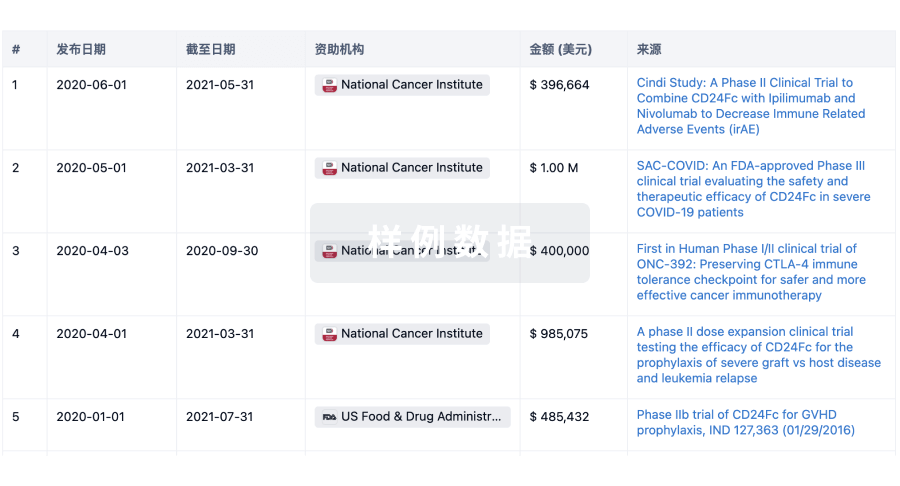
科研基金(NIH)
访问超过 200 万项资助和基金信息,以提升您的研究之旅。
登录
或
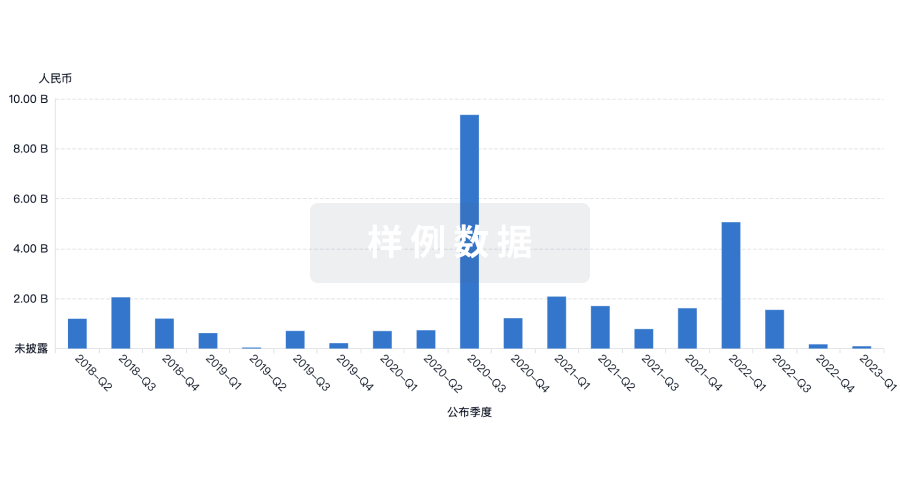
投资
深入了解从初创企业到成熟企业的最新公司投资动态。
登录
或
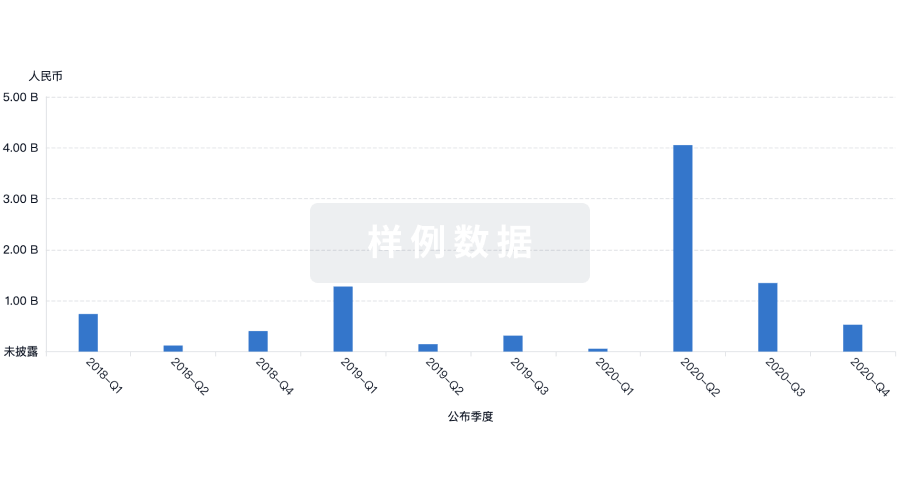
融资
发掘融资趋势以验证和推进您的投资机会。
登录
或
生物医药百科问答
全新生物医药AI Agent 覆盖科研全链路,让突破性发现快人一步
立即开始免费试用!
智慧芽新药情报库是智慧芽专为生命科学人士构建的基于AI的创新药情报平台,助您全方位提升您的研发与决策效率。
立即开始数据试用!
智慧芽新药库数据也通过智慧芽数据服务平台,以API或者数据包形式对外开放,助您更加充分利用智慧芽新药情报信息。
生物序列数据库
生物药研发创新
免费使用
化学结构数据库
小分子化药研发创新
免费使用