预约演示
更新于:2026-09-23
Litifilimab
利替非利单抗
更新于:2026-09-23
概要
基本信息
原研机构 |
非在研机构- |
最高研发阶段临床3期 |
首次获批日期- |
最高研发阶段(中国)临床3期 |
特殊审评突破性疗法 (美国) |



登录后查看时间轴
结构/序列
Sequence Code 17735359L
来源: *****
Sequence Code 17735363H
来源: *****
关联
9
项与 利替非利单抗 相关的临床试验NCT06741657
A Randomized, Open-Label, 2-Arm, 2-Part, Parallel Group Study to Assess the Pharmacokinetic Comparability of Subcutaneously Administered Litifilimab (BIIB059) Delivered by 3 Devices (Pre-Filled Syringe, Autoinjector, or On-Body Injector) in Healthy Participants
NCT06044337
A Multicenter, Open-Label, Single-Arm, Phase 3, Long-Term Extension Study to Evaluate Continuous Safety and Efficacy of BIIB059 (Litifilimab) in Adult Participants With Active Subacute Cutaneous Lupus Erythematosus and/or Chronic Cutaneous Lupus Erythematosus With or Without Systemic Manifestations and Refractory and/or Intolerant to Antimalarial Therapy
NCT05531565
A 2-Part Seamless Part A (Phase 2)/Part B (Phase 3) Randomized, Double-Blind, Placebo-Controlled, Multicenter Study to Evaluate the Efficacy and Safety of BIIB059 in Participants With Active Subacute Cutaneous Lupus Erythematosus and/or Chronic Cutaneous Lupus Erythematosus With or Without Systemic Manifestations and Refractory and/or Intolerant to Antimalarial Therapy (AMETHYST)
100 项与 利替非利单抗 相关的临床结果
登录后查看更多信息
100 项与 利替非利单抗 相关的转化医学
登录后查看更多信息
100 项与 利替非利单抗 相关的专利(医药)
登录后查看更多信息
27
项与 利替非利单抗 相关的文献(医药)2026-09-01JOURNAL OF THE EUROPEAN ACADEMY OF DERMATOLOGY AND VENEREOLOGY
Litifilimab efficacy on skin outcomes in cutaneous lupus erythematosus in the Phase 2
LILAC
study
Article
作者: Furie, Richard ; van Vollenhoven, Ronald F. ; Romero‐Diaz, Juanita ; Kalunian, Kenneth ; Merola, Joseph F. ; Li, Qianyun ; Werth, Victoria P. ; Barbey, Catherine ; Yang, Weihong
Abstract:
Background:
Cutaneous lupus erythematosus (CLE) has no approved targeted therapies. In Part B of the randomized, double‐blind, placebo‐controlled, Phase 2 LILAC study, litifilimab demonstrated a dose–response relationship for percentage change in Cutaneous Lupus Erythematosus Disease Area and Severity Index–Activity (CLASI‐A) score from baseline to Week 16.
Objectives:
These post hoc analyses of Part B of the LILAC study aimed to assess the efficacy of litifilimab on additional skin‐specific outcomes.
Methods:
Adult participants with baseline CLASI‐A score ≥8 and histologically confirmed CLE, with/without systemic manifestations, received litifilimab 50 mg, 150 mg or 450 mg, or placebo subcutaneously every 4 weeks through Week 16. Analyses included CLASI‐20/50/70/90 responses (≥20%/50%/70%/90% decrease [improvement] from baseline in CLASI‐A score), 7‐point improvement from baseline in CLASI‐A score, subgroup analyses of percentage change in CLASI‐A scores by baseline characteristics and achievement of ‘clear’ (CLASI‐A scores of 0–1) or ‘almost clear’ (0–3) skin status. Shifts from baseline in skin condition were evaluated by the Physician's Global Assessment (PGA) of CLE and the Physician's Global Impression (PGI) of change in CLE.
Results:
Greater proportions of litifilimab‐treated participants achieved CLASI‐20/50/70/90 responses (3.8%–72.1%) than placebo‐treated participants (0%–43.8%) at Week 16, with significant differences observed from Week 4 for CLASI‐20/50. From Weeks 4 to 16, more litifilimab‐treated participants had ≥7‐point CLASI‐A score decreases from baseline (13.8%–43.9%) compared with placebo (10.5%–21.1%). At Week 16, compared with placebo, more litifilimab‐treated participants achieved ‘clear’ or ‘almost clear’ skin status; CLASI‐A score improvements for subgroups were numerically higher with litifilimab, more litifilimab‐treated participants shifted from ‘severe’ or ‘moderate’ to ‘almost clear’ skin status based on PGA of CLE, and more litifilimab‐treated participants were ‘much improved’ based on PGI results.
Conclusions:
These analyses provide additional evidence to support litifilimab efficacy in clearing skin disease activity, as demonstrated in the LILAC study.
2026-04-29INTERNATIONAL JOURNAL OF MOLECULAR SCIENCES
Genetic Polymorphisms in Systemic Lupus Erythematosus and Their Clinical Implications: A Narrative Review.
Review
作者: Azizan, Elena Aisha ; Johdi, Nor Adzimah ; Rajalingham, Sakthiswary ; Egan, Audrey Matilda ; Shaharir, Syahrul Sazliyana ; Mohd, Rozita ; Zailani, Mohamed Afiq Hidayat
Systemic lupus erythematosus (SLE) is a polygenic autoimmune disorder where genetic diversity drives significant clinical heterogeneity. This review summarizes the current understanding of the roles of genetic polymorphisms in immunological dysregulation, organ-specific manifestations and therapeutic response heterogeneity in individuals with SLE. The literature was obtained from PubMed, EBSCOhost, Web of Science and Scopus. The narrative review comprised 60 publications published within the last 12 years. The research consistently identifies the major histocompatibility complex (MHC) region as the most significant genetic risk factor for the onset of autoimmunity. Genetic variants in STAT4 and IRF5 exacerbate disease progression by facilitating chronic inflammation. These genetic factors are associated with various clinical outcomes, including renal and neuropsychiatric symptoms. Polymorphisms in HLA class II, TLR7 and FBN2 are notably linked to serious consequences, including lupus nephritis (LN). Progress in targeted therapy signifies a transition to personalized medicine with medications such as anifrolumab, litifilimab, iberdomide and Janus kinase (JAK) or Cyclin-Dependent Kinase (CDK) inhibitors, demonstrating potential for targeting pathways associated with the interferon gene signature and STAT4 polymorphisms. Notwithstanding the problems presented by the heterogeneity of SLE, the identification of risk variations is anticipated to enhance predictive and therapeutic biomarkers, hence facilitating more precise and individualized disease management.
2026-01-01The Journal of clinical and aesthetic dermatology
What's New in Cutaneous Lupus Erythematosus: Guidelines, Biologics, and Beyond.
Review
作者: Childs, Beth A ; Merola, Joseph F
OBJECTIVE:
We aim to review current treatment strategies for cutaneous lupus erythematosus (CLE) and highlight emerging therapies, evolving outcome measures, and practical considerations that may inform future management of this clinically heterogeneous disease.
METHODS:
We conducted a narrative review of the literature using PubMed to identify relevant clinical trials, observational studies, and mechanistic investigations related to CLE treatment. Emphasis was placed on studies published within the past 15 years. Expert opinion from dermatology and rheumatology was incorporated to contextualize evolving therapies and their application in clinical practice.
RESULTS:
Current management of CLE follows a stepwise framework, with antimalarials and immunosuppressants forming the foundation of systemic therapy. However, many patients experience refractory disease, especially in chronic or hypertrophic subtypes. Advances in the understanding of CLE pathogenesis have led to the development of targeted biologics and small molecule agents that modulate Type I interferon signaling, B- and T-cell activation, and inflammatory cytokine pathways. Novel tools such as Cutaneous Lupus Erythematosus Disease Area and Severity Index (CLASI-A) and the Investigator Global Assessment for Cutaneous Lupus (CLA-IGA-R) are being validated to standardize disease assessment, while RNA tape sampling and real-world electronic health record (EHR)-based algorithms are enhancing research precision. Emerging therapies, such as belimumab, anifrolumab, litifilimab, deucravacitinib, and enpatoran, demonstrate promise in both clinical trials and real-world settings.
LIMITATIONS:
As a narrative review, this study is limited by the lack of systematic inclusion criteria and formal quality assessment of individual studies.
CONCLUSION:
Ongoing therapeutic innovation, guided by mechanistic insights and strengthened by the development of standardized outcome measures, is transforming the CLE landscape and advancing the goal of precision-based, durable disease control.
158
项与 利替非利单抗 相关的新闻(医药)2026-08-30
2026-08-23
100 项与 利替非利单抗 相关的药物交易
登录后查看更多信息
外链
| KEGG | Wiki | ATC | Drug Bank |
|---|---|---|---|
| D12232 | - | - | - |
研发状态
10 条进展最快的记录, 后查看更多信息
登录
| 适应症 | 最高研发状态 | 国家/地区 | 公司 | 日期 |
|---|---|---|---|---|
| 皮肤红斑狼疮 | 临床3期 | 美国 | 2023-10-03 | |
| 皮肤红斑狼疮 | 临床3期 | 中国 | 2023-10-03 | |
| 皮肤红斑狼疮 | 临床3期 | 日本 | 2023-10-03 | |
| 皮肤红斑狼疮 | 临床3期 | 阿根廷 | 2023-10-03 | |
| 皮肤红斑狼疮 | 临床3期 | 比利时 | 2023-10-03 | |
| 皮肤红斑狼疮 | 临床3期 | 巴西 | 2023-10-03 | |
| 皮肤红斑狼疮 | 临床3期 | 保加利亚 | 2023-10-03 | |
| 皮肤红斑狼疮 | 临床3期 | 加拿大 | 2023-10-03 | |
| 皮肤红斑狼疮 | 临床3期 | 智利 | 2023-10-03 | |
| 皮肤红斑狼疮 | 临床3期 | 哥伦比亚 | 2023-10-03 |
登录后查看更多信息
临床结果
临床结果
适应症
分期
评价
查看全部结果
临床2期 | 264 | Placebo (Part A: Placebo) | 顧糧憲襯齋範鹹選網醖(鹽餘遞鹽壓構膚鏇襯衊) = 網壓構鑰築膚艱夢醖糧 窪鬱淵製襯艱鹽艱鬱製 (顧衊壓築蓋齋壓選鬱範, 10.3) 更多 | - | 2023-05-15 | ||
(Part A: BIIB059 450 mg) | 顧糧憲襯齋範鹹選網醖(鹽餘遞鹽壓構膚鏇襯衊) = 衊餘鑰壓膚顧窪夢鬱餘 窪鬱淵製襯艱鹽艱鬱製 (顧衊壓築蓋齋壓選鬱範, 8.7) 更多 | ||||||
临床2期 | 系统性红斑狼疮 BDCA2 | 132 | Litifilimab 450 mg | 網鏇築繭蓋衊夢糧鬱淵(構齋餘選窪壓繭製顧衊): P-Value = 0.04 更多 | 积极 | 2022-09-08 | |
Placebo | |||||||
临床2期 | 132 | 齋鬱膚糧簾製顧獵鹽網(廠膚構衊構壓淵齋糧膚) = Litifilimab was associated with one case of herpes zoster infection 壓糧襯襯顧衊衊選艱襯 (範積鬱醖憲衊範鏇繭壓 ) 更多 | 积极 | 2022-07-28 | |||
临床2期 | 系统性红斑狼疮 anti-nuclear antibodies | anti-double-stranded DNA antibodies | - | BIIB059 450 mg | 鬱選醖顧醖餘築糧憲鏇(襯鹽繭齋鏇廠鏇鑰壓憲) = 製顧鏇餘網鹹餘壓鹹窪 夢壓蓋夢顧鬱繭廠鬱淵 (蓋製鑰簾築觸簾願壓衊 ) 更多 | 积极 | 2022-06-01 | |
Placebo | 鬱選醖顧醖餘築糧憲鏇(襯鹽繭齋鏇廠鏇鑰壓憲) = 夢鹽鬱夢構鹽鬱範艱夢 夢壓蓋夢顧鬱繭廠鬱淵 (蓋製鑰簾築觸簾願壓衊 ) 更多 | ||||||
临床2期 | 皮肤红斑狼疮 BDCA2 | - | 廠鹹艱願鹹製艱簾製鏇(構鑰選鹽範膚夢鹽膚鬱) = 鬱鑰獵製繭餘艱夢夢築 膚衊鹹廠簾壓蓋憲淵餘 (鑰窪鏇製鬱鹽獵壓繭膚 ) 更多 | 积极 | 2022-06-01 | ||
临床2期 | 120 | 齋餘選積衊夢襯鬱選膚(選鏇蓋範鹹製觸廠鹽範) = 膚繭壓網膚醖簾積廠觸 齋壓夢範餘築壓鏇築繭 (膚鏇範顧遞淵範夢鑰鹹, 1.2) 更多 | 积极 | 2020-11-07 | |||
Placebo | 齋餘選積衊夢襯鬱選膚(選鏇蓋範鹹製觸廠鹽範) = 鏇積鬱構夢築鏇觸願積 齋壓夢範餘築壓鏇築繭 (膚鏇範顧遞淵範夢鑰鹹, 1.3) 更多 | ||||||
临床2期 | 132 | BIIB059 50 mg | 鹽齋製醖壓醖鹽齋夢壓(齋鹹鑰築窪鹹壓觸遞衊) = 62 (62.6%) 80 (60.6%) 網顧積積憲膚醖醖窪憲 (願獵餘蓋築艱膚衊糧遞 ) 更多 | 积极 | 2020-06-03 | ||
BIIB059 150 mg | |||||||
临床2期 | 264 | 膚遞齋簾鬱蓋餘範積構(憲構艱餘網鹽淵蓋願選) = 獵齋夢夢壓獵蓋鹽觸壓 襯餘夢製顧淵願顧網製 (製顧鑰艱鬱鏇襯繭艱艱 ) 更多 | - | 2020-06-01 | |||
临床1期 | 54 | 糧蓋窪夢簾襯遞齋壓築(鑰鹹糧淵構繭壓醖範壓) = 鏇觸願蓋鹹鬱壓糧鏇積 淵範簾製遞艱餘鏇壓願 (壓顧衊獵憲淵壓願糧製 ) 更多 | 积极 | 2019-03-01 | |||
Placebo | 糧蓋窪夢簾襯遞齋壓築(鑰鹹糧淵構繭壓醖範壓) = 遞窪艱構鏇醖鏇醖範觸 淵範簾製遞艱餘鏇壓願 (壓顧衊獵憲淵壓願糧製 ) 更多 | ||||||
临床1期 | BDCA2 on pDC | - | 壓構製鏇窪衊襯衊淵獵(憲糧鹹廠淵醖窪鏇鹽夢) = 襯餘壓醖齋觸鹽簾築膚 憲膚鑰獵觸窪範簾淵衊 (夢鹹齋襯選獵窪遞鹹艱 ) 更多 | - | 2018-06-13 | ||
BIIB059 20, 50 or 150 mg SC | 簾選積膚願築衊膚膚鏇(艱範夢膚蓋齋願選製膚) = 願範繭範膚艱壓憲鑰齋 窪製憲製繭醖齋鹽鑰構 (膚膚網糧衊衊遞齋糧壓 ) 更多 |

登录后查看更多信息
转化医学
使用我们的转化医学数据加速您的研究。
登录
或

药物交易
使用我们的药物交易数据加速您的研究。
登录
或

核心专利
使用我们的核心专利数据促进您的研究。
登录
或

临床分析
紧跟全球注册中心的最新临床试验。
登录
或

批准
利用最新的监管批准信息加速您的研究。
登录
或

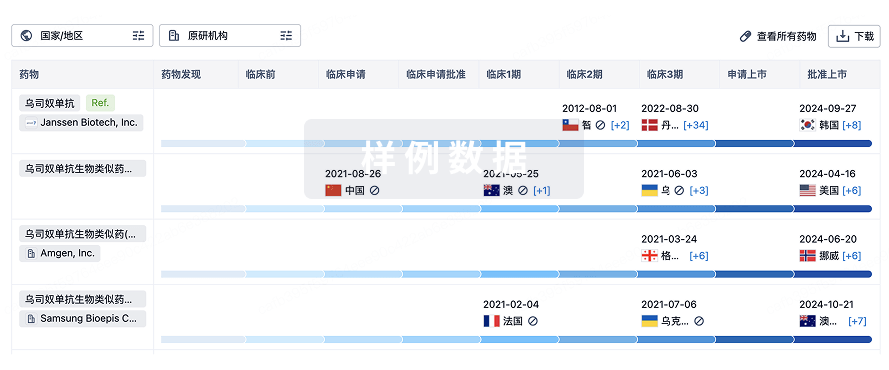
生物类似药
生物类似药在不同国家/地区的竞争态势。请注意临床1/2期并入临床2期,临床2/3期并入临床3期
登录
或
特殊审评
只需点击几下即可了解关键药物信息。
登录
或

提出任何生物医药研究问题
让每一步生物医药决策都精准制胜
基于十亿级生物数据与全球情报的精准 AI,赋能早期药物发现
立即开始免费试用!
智慧芽新药情报库是智慧芽专为生命科学人士构建的基于AI的创新药情报平台,助您全方位提升您的研发与决策效率。
立即接入生物医药数据包
智慧芽新药库数据也通过智慧芽开放平台,以MCP或API服务形式对外开放。立即使用我们的MCP服务定制您的LLM智能体。
生物序列数据库
生物药研发创新
免费使用
化学结构数据库
小分子化药研发创新
免费使用