预约演示
更新于:2026-02-27
MCLA-145
更新于:2026-02-27
概要
基本信息
原研机构 |
在研机构 |
非在研机构 |
最高研发阶段临床1期 |
首次获批日期- |
最高研发阶段(中国)- |
特殊审评- |


登录后查看时间轴
关联
1
项与 MCLA-145 相关的临床试验NCT03922204
A Phase 1, Open-Label, Dose-Escalation, Safety, Tolerability, and Preliminary Efficacy Study of MCLA-145 in Participants With Advanced or Metastatic Malignancies
This is an open-label, non-randomized, Phase 1 study to determine the safety, tolerability, and preliminary efficacy of MCLA-145 in adult patients with advanced metastatic solid tumors or B-cell lymphomas. The study will be conducted in 2 parts.
开始日期2019-05-08 |
申办/合作机构 |
100 项与 MCLA-145 相关的临床结果
登录后查看更多信息
100 项与 MCLA-145 相关的转化医学
登录后查看更多信息
100 项与 MCLA-145 相关的专利(医药)
登录后查看更多信息
1
项与 MCLA-145 相关的文献(医药)Nature communications1区 · 综合性期刊
A human CD137×PD-L1 bispecific antibody promotes anti-tumor immunity via context-dependent T cell costimulation and checkpoint blockade
1区 · 综合性期刊
ArticleOA
作者: Albelda, Steven ; Hendriks, Linda J A ; van Loo, Pieter Fokko ; Geuijen, Cecile ; Logtenberg, Ton ; Nastri, Horacio ; Marissen, Wilfred ; Tacken, Paul ; Engels, Steef ; Rovers, Eric ; van der Maaden, Hans ; Kanellopoulou, Chrysi ; Harvey, Shane ; Wang, Liang-Chuan ; Liu, Yao-Bin ; Throsby, Mark ; Stewart, Shaun ; Bartelink, Willem ; Klooster, Rinse ; Scherle, Peggy ; Volgina, Alla ; Mondal, Arpita ; de Kruif, John ; Huang, Cheng-Yen ; Bakker, Alexander B H ; Kim, Soyeon ; Hollis, Gregory ; Hall, Leslie ; den Blanken-Smit, Renate ; Zhou, Jing ; Condamine, Thomas ; Huber, Reid ; Kulkarni, Ashwini ; Martinez, Marina ; Mayes, Patrick A ; Moon, Edmund ; Zondag-van der Zande, Vanessa ; O'Brien, Shaun ; Basmeleh, Abdul ; Fransen, Floris ; Kramer, Arjen
Abstract:
Immune checkpoint inhibitors demonstrate clinical activity in many tumor types, however, only a fraction of patients benefit. Combining CD137 agonists with these inhibitors increases anti-tumor activity preclinically, but attempts to translate these observations to the clinic have been hampered by systemic toxicity. Here we describe a human CD137xPD-L1 bispecific antibody, MCLA-145, identified through functional screening of agonist- and immune checkpoint inhibitor arm combinations. MCLA-145 potently activates T cells at sub-nanomolar concentrations, even under suppressive conditions, and enhances T cell priming, differentiation and memory recall responses. In vivo, MCLA-145 anti-tumor activity is superior to immune checkpoint inhibitor comparators and linked to recruitment and intra-tumor expansion of CD8 + T cells. No graft-versus-host-disease is observed in contrast to other antibodies inhibiting the PD-1 and PD-L1 pathway. Non-human primates treated with 100 mg/kg/week of MCLA-145 show no adverse effects. The conditional activation of CD137 signaling by MCLA-145, triggered by neighboring cells expressing >5000 copies of PD-L1, may provide both safety and potency advantages.
24
项与 MCLA-145 相关的新闻(医药)2025-12-23
·生物屋
01
引言
双特异性抗体(Bispecifc antibodies, bsAbs)因其独特且多功能的作用模式(MoA)在过去十年中引起了极大兴趣,2021-2023年有9种用于癌症治疗的bsAbs获批,说明了这类抗体作为新型治疗药物的演变。其成功的主要原因是bsAbs能够介导超越天然单特异性抗体的治疗效果,例如,通过招募免疫效应细胞至癌细胞或通过单个分子靶向不同的信号通路。重要的是,bsAbs可以同时发挥多种作用模式。
bsAbs以组合或强制方式发挥作用,后者意味着相同的MoA无法通过抗体的单一组合实现。组合式MoA将两种不同抗体的活性合并到一个分子内,例如,amivantamab的双重抑制靶标结构如受体酪氨酸激酶(RTKs),或cadonilimab的双重抑制免疫检查点(CPIs),其中每个结合位点可以独立于另一个发挥作用。在强制式MoA中,bsAbs的活性严格依赖于两个特异性,要么需要同时(空间)结合两个靶标,例如用于T细胞衔接bsAbs如blinatumomab(CD19 × CD3)的那些,要么需要先后(时间)结合两个靶标,例如基于转铁蛋白受体的bsAbs用于跨血脑屏障递送载荷所需的顺序结合。值得注意的是,MoA的组合部分可以从双特异性中获益,例如,与相应抗体组合相比,能实现更优的RTK抑制或更具选择性的检查点抑制。
正在研究的用于癌症治疗的不同方法日益增多(图1),这些方法包括作用于肿瘤增殖、血管形成和转移不同水平的双重靶向信号抑制剂,它们还包括bsAb-药物偶联物、双特异性自然杀伤细胞衔接器(NKCEs)和先天免疫细胞衔接器(ICE)以及T细胞衔接bsAbs。其他方法包括双特异性CPIs(双重CPIs)、共刺激bsAbs和融合蛋白、兼具检查点抑制和共刺激特征的bsAbs,以及肿瘤微环境(TME)中特异性激活的bsAbs和结合过继性T细胞疗法与治疗性抗体的新方法。
值得注意的是,新bsAbs的发现受到这些方法背后生物学的驱动,这必须与最优的bsAb设计相匹配,以选择正确的形式、亲和力范围和表位。诸如靶标选择、表位位置、亲和力、价态、结合位点间距、分子大小、灵活性以及是否存在Fc区和Fc介导的效应功能等特性,都可能对功能特性和可开发性产生深远影响。抗体可以通过其Fc部分与Fcγ受体结合来招募先天免疫细胞,然而,对于T细胞衔接器(TCEs)和其他bsAbs,可能希望缺乏FcγR结合,以避免肿瘤靶标的独立FcγR接合——例如当bsAb与T细胞受体(TCR)结合时——目的是避免非特异性免疫细胞活化、招募和细胞因子分泌,而对于双重RTK阻断性bsAbs,FcγR功能可能被保留,以便这些bsAbs能够介导抗体依赖性细胞毒性(ADCC)或抗体依赖性细胞吞噬作用。因此,在bsAbs中,根据预期的MoA,FcγR结合常通过Fc部分引入突变来消除,或者在需要ADCC/抗体依赖性细胞吞噬作用的情况下被保留/增强。然而,功能性Fc部分通过新生儿Fc受体(FcRn)回收赋予bsAbs类IgG的药代动力学特性,Fc部分的突变可以改变与FcRn的结合,从而改变抗体的半衰期。在不包含Fc部分的bsAbs中,类IgG的药代动力学可以通过其他方式实现,例如与人血清白蛋白(HSA)或其他能延长半衰期的分子结合。
目前有数百种分子类型的无数bsAb形式可供选择,已获批和处于临床开发阶段的分子中使用了多种bsAb形式。目前,大多数已获批和处于药物开发后期的bsAbs主要用于癌症免疫治疗,也正在开发其他各种解决新型药物递送问题的实体,例如基于bsAb的抗体-药物偶联物(bsADCs),或癌症相关信号通路的双重靶向(图1)。
我们最近对ClinicalTrials.gov、Cortellis和抗体协会提供数据的搜索显示,有超过300项涉及200多种不同双特异性分子的临床试验,其中约75%用于治疗实体瘤,25%用于治疗血液系统恶性肿瘤(图1)。目前有10种bsAb药物获批用于癌症治疗,其中9种在美国和/或欧洲获批,cadonilimab在中国获批。在这10种bsAbs中,9种可归类为TCEs。首个获批的bsAb,catumaxomab,于2013年退市(表1和图2)。值得注意的是,如今临床开发中的bsAbs有相当大一部分已处于后期阶段(II期和III期)。我们发现,治疗实体瘤的bsAbs以免疫调节剂为主,包括双重CPIs(约45%)和TCEs(约33%),其次是靶向双重通路、ICEs和双重ADCs的bsAbs。相比之下,TCEs是用于治疗血液系统恶性肿瘤的主要bsAb类别(约75%),其次是ICEs、双重CPIs和NKCEs(图3)。
数据中的bsAbs使用了超过50种不同的bsAb形式,靶向超过60个不同的靶点以及超过100种靶点组合。然而,该领域发展迅速,可能具有新靶点和新形式的新的bsAbs已进入临床试验。尽管如此,本综述旨在基于作用机制,对作为癌症疗法开发的bsAbs领域的最新进展提供一个全面的概述,重点介绍截至2023年底在同行评审出版物中描述的bsAbs。
02
用于双受体抑制的bsAbs
许多参与细胞信号传导的细胞表面蛋白,如RTKs和相关受体,是基于抗体的疗法经过验证的靶点。几十年前,对这些蛋白的研究,包括历史先驱表皮生长因子受体(EGFR;也称为HER1)、HER2、血管内皮生长因子(VEGF)以及靶向它们的抗体,为几乎所有后续基于抗体的治疗开发奠定了基础。虽然结合单一特定信号实体的基于抗体的疗法相当有效,但疾病相关表型通常由不止一条通路触发。这种冗余性允许细胞通过使用其他代偿性信号通路来克服针对单一靶点或通路的药物生长抑制或细胞毒性诱导,同时调节不同疾病相关信号受体和/或通路的bsAbs可以减少或克服这一限制。Amivantamab(JNJ-61186372)靶向EGFR和肝细胞生长因子受体(MET),这两种受体都触发非小细胞肺癌(NSCLC)的增殖,因此,同时阻断两者比仅阻断一条通路更能有效抑制NSCLC的生长,Amivantamab被批准用于治疗携带EGFR外显子20插入突变亚型的NSCLC。
图1. 临床开发中用于癌症治疗的双特异性抗体。
目前临床开发中的200多种双特异性抗体(bsAbs)根据癌症类型、临床阶段和作用模式分组。临床开发中的bsAbs有50%处于II期和III期或已获批。约四分之三的bsAbs用于治疗实体瘤,实体瘤治疗以T细胞衔接器(TCEs;32.9%)和具有检查点抑制和/或免疫调节作用模式(MoAs)的bsAbs(45.1%)为主。相比之下,用于治疗血液系统恶性肿瘤的bsAbs以TCEs(75%)和针对免疫活性的其他MoAs(21.9%)为主,例如通过检查点抑制和/或免疫调节招募自然杀伤细胞和其他免疫细胞,这是由于存在高度肿瘤选择性或谱系特异性抗原。值得注意的是,约10%的用于治疗实体瘤的bsAbs使用了双重信号抑制。迄今为止,bsAb抗体-药物偶联物(ADCs)被开发用于治疗实体瘤。CPI,检查点抑制剂;ICE,先天细胞衔接器;NKCE,自然杀伤细胞衔接器。
最近,一项随机III期研究的数据显示,在这一患者亚组中,amivantamab联合化疗优于单独化疗。几种针对肿瘤上不同第二靶点的EGFR靶向bsAbs行临正在进床开发,例如,petosemtamab(MCLA-158)结合EGFR和LGR5,后者是一种癌症干细胞相关细胞表面受体,这种bsAb的早期开发得到了先进的肿瘤类器官技术的显著支持。Petosemtamab目前正在一项I/II期试验中评估,针对实体瘤患者,包括晚期头颈部鳞状细胞癌(NCT03526835)。
其他bsAbs针对HER家族不同成员的靶点组合,其中EGFR和HER2是最主要的。EGFR和HER2在肿瘤细胞表面彼此形成同源二聚体,并与包括HER3在内的其他HERs形成异源二聚体。Zenocutuzumab(MCLA-128)结合HER2和HER3,其疗效目前正在携带神经调节蛋白-1融合的实体瘤患者中测试,这种融合会触发异源二聚体HER2-HER3复合物的形成。另一种先进的HER结合bsAb是izalontamab(SI-B001),它靶向EGFR和HER3,已在局部晚期或转移性上皮肿瘤患者中进行测试(NCT05020769)。最后,双互补位bsAbs可以仅靶向一个抗原,如HER2,但在不同结构域的不同位置。双互补位bsAbs基于这样的观察:组合靶向HER2,例如使用单克隆抗体曲妥珠单抗和帕妥珠单抗,在NSCLC和乳腺癌的临床前模型中提高了抗肿瘤疗效。在临床开发中用于治疗乳腺癌的此类双互补位HER2-bsAbs的例子包括zanidatamab、MBS301和KNO26(表2)。
图2. 已获批用于癌症治疗的双特异性抗体概述。
a. 双特异性T细胞衔接器(TCEs)。b. 其他双特异性抗体(bsAbs)(非T细胞衔接器(非TCEs))。十一种已获批的bsAbs中有六种具有类IgG结构,由2条重链(恒定区显示为深灰色,VH结构域显示为深蓝色或深红色)和2条轻链(恒定结构域显示为浅灰色,VL结构域显示为浅蓝色或浅红色)组成。它们大多数具有1+1化学计量比——每个抗原一个结合位点——还有一种TCE通过在一个重链上融合一个额外的Fab片段来利用2+1化学计量比。其他bsAbs要么是两个单链可变片段(scFv)片段的无Fc融合蛋白(blinatumomab),要么是scFv片段与T细胞受体(TCR)片段融合(tebentafusp),或者是具有2+2化学计量比的IgG-scFv融合蛋白。除了catumaxomab是通过结合鼠和大鼠杂交瘤的杂交-杂交瘤技术生产的之外,所有其他bsAbs都是通过重组技术生产的。对于类IgG异源二聚体分子,通过使用CH3结构域中的突变来强制异源二聚化——例如“KIH”技术——或控制Fab臂交换(cFAE)来解决两条不同重链的正确组装,后者允许从两种不同的单特异性IgGs组装类IgG分子。cFAE也解决了轻链问题,即轻链和重链的正确配对。或者,Fab臂中的进一步修饰,如CrossMab方法,允许强制正确的轻链和重链配对。值得注意的是,所有重组类IgG bsAbs都包含一个具有沉默或降低效应功能的Fc区,这是通过糖基化缺失或通过在铰链/CH2结构域引入突变以实现或减少Fc受体和补体结合来实现的。BCMA,B细胞成熟抗原;EGFR,表皮生长因子受体;EpCAM,上皮细胞黏附分子;GPRC5D,G蛋白偶联受体C类第5组成员D。
03
用于配体-受体抑制的bsAbs
受体激活可以通过干扰受体二聚化或复合化,或通过阻断受体的配体结合位点来抑制。在癌症中,通常来自多条互补或代偿通路的配体和受体共同促进肿瘤进展和治疗抵抗。bsAbs可以同时阻断两种不同的配体,无论是可溶性的还是细胞膜附着的,或者阻断配体和受体的组合。这种方法不仅通过bsAbs实现,也通过双特异性或双互补位的基于支架的结合剂实现,此处我们不予涵盖。双重靶向VEGF和血管生成素2(ANG2)以分别阻断VEGFR和血管生成素-1受体(TIE2)的激活,这两条涉及血管生成的通路,已成为包括微转移血管生成开关在内的实体瘤多项临床试验的主题。Bl836880是一种三特异性纳米抗体(Nb)融合蛋白,由三个纳米抗体组成,分别靶向VEGFA、ANG2和HSA,后者用于延长其血清半衰期,该化合物目前正在头颈部鳞状细胞癌、NSCLC和其他实体瘤患者中进行I期研究评估。值得注意的是,vanucizumab是一种靶向VEGFA和ANG2的bsAb,在临床前模型中与化疗联用显示出抗肿瘤、抗血管生成和抗转移作用,但在结直肠癌患者中,与化疗联用时,与VEGF抑制相比未能改善无进展生存期。
将VEGF抑制与另一种拮抗活性相结合的概念进一步应用于靶向VEGF和delta样典型Notch配体4(DLL4)的bsAbs。DLL4是一种细胞表面配体,激活Notch-1受体通路,该通路在肿瘤血管生成中具有核心作用。几种靶向VEGF和DLL4的bsAbs已进入临床试验,包括navickizumab、diplacimab和CTX-009/ABL001。Navickizumab是一种四价bsAb,具有四个结合位点,其中两个基于单链可变片段(scFv)融合,在铂耐药卵巢癌患者中与紫杉醇联用显示出有前景的临床活性和可管理的毒性,表明这种方法可能在特定适应症中提供临床获益。相比之下,另一项关于diplacimab(另一种四价bsAb)联合亚叶酸、氟尿嘧啶和伊立替康(FOLFIRI)的II期研究揭示了安全性问题,并且与贝伐珠单抗联合FOLFIRI治疗相比,在转移性结直肠癌患者中并未改善临床结果。
基于VEGF抗体与CPIs联合治疗的积极结果,该概念进一步调整为设计靶向VEGF和肿瘤细胞上的PDL1或T细胞上的PD1的bsAbs,从而将抗血管生成与免疫肿瘤学方法联系起来。使用这种方法的最先进分子是ivonescimab(AK112),针对PD1和VEGF,ivonescimab的上市申请目前正在中国接受监管审查。其他bsAbs靶向PDL1和VEGF,包括PM8002,目前正在NSCLC患者中进行II/III期研究评估(NCT05756972)。
表1. 已获批用于癌症治疗的双特异性抗体
bsAb 商品名
国际非专利名称
靶点
MoA
格式
首次获批年份/地区*
适应症
公司
Removab
Catumaxomab
EpCAM×CD3e
TDCC
Quadroma 鼠/大鼠 1+1
2009 欧盟 2013年退市
卵巢腹水,腹腔内
Trion Pharma/Fresenius
Blincyto
Blinatumomab
CD19×CD3e
TDCC
BITE 1+1
2014 美国/欧盟,日本
ALL
Amgen
Rybrevant
Amivantamab
EGFR×MET
信号抑制,ADCC
Duobody 1+1
2021 美国/欧盟
NSCLC EGFR 外显子20插入突变
J&J
KIMMTRAK
Tebentafusp
gp100-HLA-A*02×CD3e
TDCC
scFv-TCR 融合 1+1
2022 美国/欧盟
葡萄膜黑色素瘤
Immunocore
Lunsumio
Mosunetuzumab
CD20×CD3e
TDCC
KiH 1+1 IgG
2022 美国/欧盟
复发/难治性滤泡性NHL
Roche group
Kaitanni
Cadonilimab
PD1×CTLA4
双重检查点抑制
IgG-scFv 四价体 2+2
2022 中国
肝细胞癌
Akeso Bio
Tecvayli
Teclistamab
BCMA×CD3e
TDCC
Duobody 1+1
2022 美国/欧盟
复发/难治性多发性骨髓瘤
J&J
Columvi
Glofitamab
CD20×CD3e
TDCC
CrossMab 2+1
2023 美国/欧盟
复发/难治性DLBCL
Roche group
(T)Epkinly
Epcoritamab
CD20×CD3e
TDCC
Duobody 1+1
2023 美国/欧盟,日本
复发/难治性DLBCL
Genmab, Abbvie
Talvey
Talquetamab
GPRC5D×CD3e
TDCC
Duobody 1+1
2023 美国/欧盟
复发/难治性多发性骨髓瘤
J&J
Elrexflo
Elranatamab
BCMA×CD3e
TDCC
bsAb 1+1
2023 美国/欧盟
复发/难治性多发性骨髓瘤
Pfizer
ADCC,抗体依赖性细胞毒性;ALL,急性淋巴细胞白血病;BCMA,B细胞成熟抗原;BITE,双特异性T细胞衔接器;bsAb,双特异性抗体;DLBCL,弥漫性大B细胞淋巴瘤;EGFR,表皮生长因子受体;EpCAM,上皮细胞黏附分子;GPRC5D,G蛋白偶联受体C类第5组成员D;MoA,作用机制;NSCLC,非小细胞肺癌;NHL,非霍奇金淋巴瘤;scFv,单链可变片段;TCR,T细胞受体;TDCC,T细胞依赖性细胞毒性。* 批准地区限于美国、欧盟、日本和中国,产品也可能在其他国家获批。状态截至2023年底。
04
用于受体激活的单克隆抗体
许多抗肿瘤反应是通过激活细胞表面受体介导的,包括免疫反应或通过诱导凋亡导致细胞死亡。癌症治疗的一种方法是通过将受体激活配体(如生长因子、细胞因子和(共)免疫刺激配体)与抗体或抗体片段融合,诱导局部或组织特异性激动活性,从而引发细胞反应。越来越多的此类抗体-配体融合蛋白正在进入临床试验。
受体激活也可以通过使用激动性抗体实现,肿瘤坏死因子(TNF)超家族成员,包括死亡配体(如TNF配体超家族成员10(TNFSF10);也称为TRAIL),及其各自的死亡受体(如TRAIL受体1和2;也称为DR4和DR5),或对免疫细胞具有共刺激活性的配体(如TNFSF9;也称为4-1BBL)及其受体(如TNFRSF9;也称为4-1BB或CD137),在癌症治疗中引起了特别关注。然而,单克隆抗体在临床试验中效果令人失望,原因在于许多TNFRSFs需要交联两个以上的受体才能激活,这只能通过细胞表面抗体的Fc-FcγR介导的超簇集来实现,因此依赖于TME中存在足够数量的表达FcγR的先天免疫细胞。作为一种替代方案,针对靶抗原和TNFRSF成员的bsAbs已被证明可作为模拟表面展示配体活性的强大且肿瘤选择性的激动分子。这对于DR4和DR5尤其显著,DR5需要多个受体的簇集才能激活。值得注意的是,针对DR5和表面抗原(如成纤维细胞激活蛋白-α(FAPα;也称为脯氨酰寡肽酶FAP)、钙黏蛋白17(CDH17)或叶酸受体-α(FRα))的bsAbs不仅有效诱导受体激活,还能避免被诱骗受体隔离。RG7386(RO6874813)是一种靶向癌相关成纤维细胞上FAPα和DR5的四价bsAb,在具有FAPα表达基质的鼠类体内外触发了强效和选择性的肿瘤细胞杀伤,并进入了临床测试,但随后因战略组合优先级调整而终止。
此外,BP0571L是一种靶向DR5和CDH17的四价双特异性IgG-scFv融合蛋白,目前处于I期临床研究,其在CDH17阳性靶细胞上的效力增益超过1000倍,转化为在结直肠癌模型中的强效和选择性抗肿瘤活性。相同的格式用于一种靶向DR5和FOLR1(一种卵巢癌富集受体)的bsAb,显示能介导顺式(在同一细胞上)和反式(在两个不同细胞上)细胞毒性,其中FOLR1作为有效DR5激活的簇集点。
从概念上讲,这种MoA也可以转移到TNFRSF家族的共刺激成员上,这些成员也依赖于受体簇集,包括4-1BB、OX40和CD40(图3),使用针对肿瘤相关抗原(TAAs)的bsAbs,但也针对其他靶点如PDL1,从而将共刺激与检查点抑制相结合。
图3.目前临床试验中双特异性抗体的作用模式。
a, 通过阻断两种不同信号受体(以不同颜色表示)进行信号抑制。b, 通过抑制可溶性配体(蓝色)和受体进行信号抑制。c, 通过双重阻断两种不同配体进行信号抑制。d, 通过双特异性抗体(bsAb)药物偶联物(偶联物以浅蓝色表示)进行药物递送。e, 靶向阻断“别吃我”信号(CD47–SIRPα相互作用)导致巨噬细胞吞噬。f, 与检查点抑制相结合阻断“别吃我”信号。g, 通过CD3作为T细胞受体(TCR)的一部分或自然杀伤细胞上的CD16(FcγRIIIa)进行效应细胞衔接。h, 肿瘤细胞结合介导的免疫细胞(共)刺激。i, PDL1结合介导的免疫细胞(共)刺激。j, 双重免疫细胞共刺激。k, 肿瘤靶向PDL1通路抑制。l, 肿瘤靶向PD1通路抑制。m, 检查点结合介导的免疫细胞(共)刺激。n, 双重检查点抑制。o, 通过配体阻断实现双重检查点和可溶性转化生长因子-β(TGFβ)信号抑制。显示了实体瘤和血液系统恶性肿瘤的靶分子和肿瘤相关抗原(TAAs)示例。注意:bsAbs可以同时发挥多种作用模式(MoAs)。 Ang2,血管生成素2; APC,抗原呈递细胞; BCMA,B细胞成熟抗原; CDH17,钙黏蛋白17; DDL4,delta样典型Notch配体4; EGFR,表皮生长因子受体; EpCAM,上皮细胞黏附分子; FRα,叶酸受体-α; GPRC5D,G蛋白偶联受体C类第5组成员D; HLA,人类白细胞抗原; ICOS,诱导性T细胞共刺激物; LAG3,淋巴细胞相关基因3; TIGIT,具有免疫球蛋白和ITIM结构域的T细胞免疫受体; VEGF,血管内皮生长因子。
05
用于靶向载荷递送的bsAbs
对于使用bsAbs进行靶向递送细胞毒性剂或放射性等载荷,存在两种概念上不同的方法。 第一种方法,预靶向治疗,使用bsAb的一个结合特异性靶向肿瘤细胞,另一个随后在肿瘤上捕获载荷。此类别的bsAbs结合肿瘤上的癌症靶点,如癌胚抗原(CEACAM5)或HER2,随后捕获由bsAb第二个结合特异性识别的放射性标记的载荷/复合物。最近,描述了一种新颖且引人注目的自组装双特异性预靶向概念称为SADA,使用修饰的p53四聚化结构域来延长GD2 × DOTA的肿瘤滞留。 GD2 × DOTA——一种识别GD2(一种在癌症中高表达的双唾液酸神经节苷脂)和放射性载荷¹⁷⁷Lu-DOTA的bsAb——在TME中组装并滞留,但若无四聚化,它会因缺乏半衰期延长而从外周迅速清除。迄今为止,临床试验中很少bsAbs使用这种MoA,可能是由于预靶向放射性所涉及的复杂物流,这限制了其普遍适用性。
第二种方法通过递送附着于双特异性抗体-药物偶联物(bsADCs)的细胞毒性载荷,同时靶向肿瘤细胞表面的两个表位或两个靶点,从而实现肿瘤细胞的特异性靶向。临床开发中的bsADCs示例包括zanidatamab zovodotin(ZW49),即双互补位HER2结合抗体zanidatamab与auristatin衍生的细胞毒性载荷偶联;双互补位MET × MET bsADC REGN5093;或izalontamab brengitecan(BL-B01D1),一种与新型TOPO-I抑制剂连接的EGFR × HER3 bsAb(NCT05194982)(表2)。
06
用于癌症免疫治疗的双特异性抗体
癌症免疫治疗中使用的bsAb大多通过T细胞驱动的天然或内源性免疫发挥作用,例如通过增强预先存在的抗肿瘤反应和/或克服检查点抑制,或通过提供合成免疫,例如通过bsAb驱动的免疫细胞衔接、激活和招募(图3)。在本节中,概述了bsAb和多特异性抗体最主要的作用模式,包括CPIs、效应细胞衔接器——包括TCEs和ICEs——以及共刺激bsAb。
6.1双重消费者价格指数
许多干扰免疫检查点的单特异性抗体,如CTLA4或PD1/PDL1,已获批用于癌症免疫治疗,包括ipilimumab、tremelimumab、nivolumab、pembrolizumab、atezolizumab、avelumab、durvalumab或cemiplimab。将检查点抑制性抗体疗法扩展到包括bsAbs可能减少不良副作用,并增强单特异性抗体疗法观察到的疗效。第一个方面,检查点抑制的安全性,包括预防自身免疫相关事件和/或不希望的免疫细胞活化。为实现此目标,正在开发选择性靶向检查点抑制功能性和TAAs(如RTKs)的bsAbs,从而旨在将其活性优先集中在肿瘤上。第二个方面,检查点免疫疗法的疗效,通过同时靶向两种不同检查点蛋白的bsAbs来解决,以增加疗效并降低耐药概率,或提供互补的免疫刺激信号。应该指出的是,这些bsAbs的一个常见设计原则是提高对表达两种检查点蛋白的选择性,这些T细胞可能更具肿瘤反应性,目的是提供优于联合检查点阻断的优越治疗指数——例如,通过降低自身免疫不良事件的发生率。肿瘤靶向检查点抑制的探索性工作包括开发靶向肿瘤细胞表面HER家族RTKs的bsAbs,并结合阻断PD1/PDL1信号作为第二功能,从而将PDL1结合剂导向肿瘤细胞,这些分子的特异性肿瘤靶向导致了对表达EGFR的肿瘤细胞更特异和增强的活性。类似地,一种特异性结合HER2和PDL1的bsAb被证明能特异性阻断表达HER2的肿瘤细胞中的PDL1活性,从而产生比单独使用每种实体或以组合方式但不作为bsAb束缚使用时更大的治疗活性。
表2. 处于后期¹临床开发阶段的部分双特异性抗体概述
bsAb
INN
靶点
格式
适应症
公司T细胞衔接(T细胞介导的细胞毒性)
REGN1979
Odronextamab
CD20×CD3e
Veloci-bi (1+1)
NHL
Regeneron
REGN5458
Linvoseltamab
BCMA×CD3e
Veloci-bi (1+1)
骨髓瘤
Regeneron
AMG 757
Tarlatamab
DLL3×CD3e
Fc-BITE
小细胞肺癌
Amgen
LP-000
Catumaxomab
EpCAM×CD3e
Quadroma (1+1)
腹膜癌病
LintonPharm双重检查点抑制
KNO46
Erfonilimab
PDL1×CTLA4
Nb-Nb-Fc (2+2)
NSCLC, PDC
Alphamab
XmAb20717
Vudalimab
PDL1×CTLA4
IgG-scFv (1+1)
实体瘤
Xencor
MEDI5752
Volrustomig
PD1×CTLA4
DuetMab (1+1)
NSCLC, 肾细胞癌
Astra Zeneca
AZD2936
Rilvegostomig
PD1×TIGIT
DuetMab (1+1)
NSCLC
Astra Zeneca
MGD013
Tebotelimab
PD1×LAG3
DART-Fc (2+2)
实体和血液系统肿瘤
Macrogenics
SHR-1701
Retifanlimab? (应核对:原文Retlirafusp alfa)
PDL1×TGFβRII
IgG-融合蛋白
实体瘤
苏州盛迪亚生物医药有限公司检查点与通路抑制
PM8002
-
PDL1×VEGF
IgG-VHn (2+2)
NSCLC
Biotheus
AK112
Ivonescimab
PD1×VEGF
IgG1-scFv₂ (2+2)
NSCLC
Akeso双重通路抑制
SI-B001
Izalontamab
EGFR×HER3
IgG1-scFv₂ (2+2)
NSCLC
Baili
CTX-009
-
VEGF×DLL4
IgG1-scFv₂ (2+2)
BTC
Compass
MCLA-128
Zenocutuzumab
HER2×HER3
Biclonics
乳腺癌
Merus双互补位通路抑制
ZW25
Zanidatamab
HER2(位点2)+HER2(位点4)
Fab/scFv-Fc(异源) (1+1)
胃癌, 乳腺癌
Zymeworks
KNO26
Anbenitamab
HER2×HER2
IgG (共用轻链, FC异源) (1+1)
胃癌
Alphamab
BITE,双特异性T细胞衔接器;BCMA,B细胞成熟抗原;bsAb,双特异性抗体;BTC,胆道癌;通用轻链;DART,双亲和重靶向;DLL4,delta样典型Notch配体4;EGFR,表皮生长因子受体;EpCAM,上皮细胞黏附分子;FC异源,异源二聚化Fc;LAG3,淋巴细胞相关基因3;Nb,纳米抗体;NHL,非霍奇金淋巴瘤;NSCLC,非小细胞肺癌;PDC,胰腺导管腺癌;scFv,单链可变片段;TIGIT,具有免疫球蛋白和ITIM结构域的T细胞免疫受体;TGFβ,转化生长因子-β;VEGF,血管内皮生长因子。¹ 后期包括关键性II期、II/III期和III期临床研究。
另一种bsAb介导的靶向免疫治疗方法包括将PDL1阻断与识别黑色素瘤上硫酸软骨素蛋白多糖4(CSPG4)的结合剂相结合,特异性肿瘤靶向增强了抗肿瘤T细胞的特异性、激活状态和疗效。概念上相关的方法包括将PDL1结合剂与促黑素细胞激素化学偶联,由此,PDL1抑制活性被导向黑色素瘤细胞上的黑皮质素-1受体。
同时靶向两种检查点蛋白而不额外包含常见肿瘤细胞表面靶点的例子包括同时结合肿瘤细胞上PD1和PDL1的bsAbs。Wan等分析了此类bsAbs在与免疫细胞共培养的高级别浆液性卵巢癌类器官中引发的联合活性,与单特异性结合剂相比,这些bsAbs介导了更优的疗效,并诱导了T细胞和自然杀伤细胞的表型变化,包括激活状态和细胞毒性的改变。BsAb LY3434172也采用这种方法,通过完全抑制PD1/PDL1通路,与每种亲本抗体或两者的组合相比,LY3434172显示出增强的抗肿瘤活性,再次证明以bsAbs形式束缚至关重要并能提高疗效。
扩展到PD1/PDL1方法的边界之外,包含其他免疫受体如CTLA4的bsAbs正在开发或已获批。同时靶向PDL1和CTLA4是bsAb cadonilimab的MoA,Cadonilimab由于四价性介导了增强的亲和力驱动的对高密度PDL1和CTLA4的靶标结合,这与消除FcγR结合的Fc突变相结合,可能是其良好治疗指数的基础。值得注意的是,cadonilimab也介导了PDL1⁺和CTLA4⁺ T细胞之间的反式结合。在一项针对晚期实体瘤患者的I/b期研究中,cadonilimab显示出抗肿瘤活性和良好的安全性,免疫相关不良事件发生率低。Cadonilimab已在中国获批治疗在铂类化疗期间或之后进展的复发或转移性宫颈癌。在晚期临床试验中结合相同特异性的其他bsAbs包括MCD019和MEDI5752。MCD019结合了PDL1和CTLA4结合剂,在一项正在进行的临床研究中观察到了可接受的安全性以及组合阻断和多种实体瘤客观反应的证据。MEDI5752目前也正在进行临床评估,它结合PD1和CTLA4,并显示出PD1介导的靶向性,因为它优先饱和PD1⁺细胞上的CTLA4,并导致PD1的快速内化和降解。与cadonilimab相反,MCD019和MEDI5752似乎显示出更强的亲和力驱动的对双阳性T细胞的选择性增益。
双重失活也正通过结合PD1/PDL1阻断与LAG3或TIM3抑制来探索,例子是IBI323和FS118,两者都结合PDL1和LAG3,并在临床前模型中显示出组合增强的双重疗效。LY3415244结合了PD1和TIM3阻断,作为一种不同的免疫调节剂,但由于在I期研究中观察到的免疫原性,该分子的开发被终止。最近,针对PD1 × LAG3 bsAb tebotelimab的临床I期剂量递增和扩展数据显示,作为单药治疗以及与HER2抗体margetuximab联合治疗,在实体瘤或血液系统恶性肿瘤患者中具有前景的活性。双重配体抑制是另一种基于bsAb的检查点抑制方法,PDL1和转化生长因子-β(TGFβ)是具有互补和非冗余免疫抑制活性的受体结合配体。TGFβ不仅具有免疫抑制作用,还能进一步诱导促血管生成因子上调和癌相关成纤维细胞的激活。几种靶向PDL1和TGFβ的bsAbs目前正在开发中,例如bsAb样抗体融合蛋白bintrafusp alfa(M7824)。在这种情况下,PDL1结合通过“标准”抗体结合模块实现,而TGFβ被人TGFβ受体II的胞外域捕获。Bintrafusp alfa在临床前研究中显示出同时激活先天和适应性免疫系统,与单独使用抗PDL1抗体或TGFβ捕获模块治疗相比,能更好地抑制肿瘤生长和转移,目前正在进行临床试验。Retifanlimab (SHR-1701)是另一种以类似方式靶向PDL1和TGFβ的双功能融合分子,正在对宫颈癌和胃或胃食管结合部癌患者进行III期研究评估(表2)。YMI01是一种处于临床前开发阶段的TGFβ × PDL1 bsAb;作为YMI01的替代品,YI01D正在晚期实体瘤患者中进行评估(NCT05028556)。所有同时对抗抑制性TGFβ和PD1/PDL1通路的方法在体内模型中均显示出比单独使用单个结合剂更高的抗肿瘤活性证据,但迄今为止尚未能提供临床概念验证。靶向TGFβ信号阻断也已通过阻断CD4⁺ T细胞中TGFβ信号的bsAbs在临床前研究中实施和评估。为此,将非免疫抑制的CD4靶向抗体ibalizumab与TGFβ捕获以类似于上述的bsAb样方式结合。这导致辅助T细胞中靶向TGFβ信号阻断,从而可以释放抗肿瘤反应。
通过bsAbs招募磷酸酶抑制PD1是一种最近报道的新MoA,这是通过单个结构域(VHH)与scFv融合实现的,该scFv将PD1连接到混杂的细胞表面磷酸酶CD45,从而触发细胞内去磷酸化。这种方法与单独的PDL1抗体介导的配体阻断相比,增强了对检查点阻断的抑制。遵循相同的原理,bsAbs可以将细胞表面磷酸酶CD45与抑制性自然杀伤细胞表面受体NKG2A或Ly49连接,进行后续的去磷酸化。此类bsAbs可以阻断并同时使其靶标去磷酸化,并且可能比相应的单特异性抗体及其抑制信号组合更有效的拮抗剂,以增强自然杀伤细胞和T细胞的抗肿瘤活性。双互补位靶向CD73上不同表位是另一种与bsAb相关的方法,以对抗免疫抑制活性或增强针对肿瘤的免疫能力。CD73产生免疫抑制性腺苷,其通过bsAb介导的抑制和内化耗竭比使用单互补位CD73抗体更有效。最后,必须提到的是,严格意义上不是bsAbs的双功能抗体衍生物在癌症免疫治疗中发挥着越来越重要的作用。此类双功能分子包括T细胞顺式靶向细胞因子,它们通过一个抗体衍生的结合实体(优先PDL1靶向)引发一种功能,另一种功能通过融合的细胞因子衍生物引发,此类增强抗肿瘤免疫反应的分子示例包括PDL1靶向的IL-15(如ASKG915,IAP0971)、IL-21(如latikafusp)或IL-2衍生物(如PDL1-L2/ cibisafusp alfa,IBI363)。
6.2效应细胞衔接器
1) T细胞衔接器
在过去二十年中,特异性结合肿瘤表面抗原和TCR的CD3链的TCEs主导了这类bsAbs,已描述数百种TCEs并有超过100种进入临床开发。事实上,首个获批上市的bsAb是鼠/大鼠嵌合上皮细胞黏附分子(EpCAM)× CD3e bsAb catumaxomab,于2009年在欧盟(EU)获批用于恶性卵巢腹水的腹腔内治疗,但随后因商业原因退市。目前它正在中国重新进行临床试验评估,用于腹腔内给药。全身应用时,catumaxomab显示出严重的输注反应和高免疫原性发生率,可能是由于其鼠/大鼠嵌合恒定区和保留的FcγR结合,导致在没有抗原结合的情况下发生非特异性FcγR和TCR激活。随后,设计了缺乏Fc部分的下一代TCEs,例如基于串联scFv的CD19 × CD3e双特异性T细胞衔接器(BITE)blinatumomab,该药于2014年首次获批用于治疗B细胞前体急性淋巴细胞白血病(B-ALL)。然而,由于缺乏通过结合FcRn的回收(FcRn通过从分选内体回收到细胞表面来拯救IgG免于细胞内溶酶体降解),该疗法需要持续输注。基于blinatumomab的成功,开发了靶向血液系统恶性肿瘤和实体瘤中各种靶点的BITEs,但由于BITEs次优的药代动力学特性和相关的短半衰期,最终未能进入后期临床试验。尝试通过掺入FcγR结合惰性的Fc结构域(沉默Fc)或HSA结合部分来实现bsAb的类IgG半衰期,目前开发中的大多数TCEs都是基于IgG的和/或具有类IgG药代动力学。
值得注意的是,大多数TCEs使用单个单价结合位点用于T细胞上的触发分子CD3,以避免在没有同时靶标结合的情况下因TCR交联而导致系统性T细胞激活。然后,它们对肿瘤靶标使用一个(1+1)或两个(2+1)结合位点,因为二价结合可以在肿瘤选择性和效力方面提供优势。CD20 × CD3e bsAb mosunetuzumab和B细胞成熟抗原(BCMA)× CD3e bsAb teclistamab是2022年首批获批的基于1+1 IgG异源二聚体TCEs,分别用于治疗复发/难治性滤泡性非霍奇金淋巴瘤(NHL)或多发性骨髓瘤。2023年,异源二聚体2+1 CD20-TCE glofitamab和1+1 CD20-TCE epcoritamab获批用于治疗复发/难治性弥漫性大B细胞淋巴瘤(DLBCL),以及1+1 G蛋白偶联受体C类第5组成员D(GPRC5D)-TCE talquetamab和BCMA-TCE elranatamab用于复发/难治性多发性骨髓瘤(表1)。CD20-TCE odronextamab和BCMA-TCE linvoseltamab的上市申请正在等待监管决定,鉴于它们在复发/难治性B细胞和浆细胞恶性肿瘤患者中(包括在CAR-T细胞治疗后复发的患者中)显示出有前景的临床疗效和完全缓解率,以及它们作为现成疗法的直接可用性和皮下给药的可能性,可以预期TCEs将成为CAR-T细胞疗法的主要替代方案,特别是随着它们开始被开发用于更早期的治疗方案并且患者易于获取。
针对癌症的免疫动员单克隆TCRs(ImmTACs)是TCEs,它将识别人白细胞抗原(HLA)呈递的肽抗原的工程化TCR与抗CD3 scFv结合,从而能够靶向细胞内TAAs。值得注意的是,短寿命的ImmTAC tebentafusp包含一个可溶性TCR,靶向由HLA-A*02:01呈递的黑色素细胞谱系特异性抗原糖蛋白(gp100)表位,并与靶向CD3的scFv融合,于2022年初获批用于治疗葡萄膜黑色素瘤,为实体瘤中的TCEs开辟了新的细胞内靶点空间。值得注意的是,tebentafusp介导了总体生存获益,尽管它仅诱导了少量临床反应,因此直接的肿瘤细胞杀伤可能不是其唯一的MoA。与此同时,各种TCEs,无论是基于重组TCRs还是使用类似TCR的抗体(TCR模拟物),都已进入临床开发,包括针对WT1和突变新抗原(如KRAS¹²²或p53)的TCEs。重要的是,高通量动力学筛选和通用TCR样库可以促进更容易地开发用于TCEs的高度选择性TCRs和TCR模拟物。有趣的是,使用共价KRASᴳ¹²C抑制剂sotorasib,可以生成一种TCR样TCE,它特异性识别HLA呈递的sotorasib-肽偶联物,随后诱导T细胞杀伤KRASᴳ¹²C突变细胞。
细胞因子释放综合征的发生,主要归因于靶上T细胞激活,一直是TCEs临床开发的主要挑战。虽然在许多情况下可以通过类固醇预处理和阶梯式剂量递增来管理,但最近的研究调查了使用具有降低的CD3e亲和力的CD3e抗体,目的是解偶联T细胞杀伤与细胞因子分泌。
与CAR-T细胞的情况一样,由于TCEs的杀伤效力非常高,为了避免靶上/脱瘤毒性,需要靶抗原具有高度肿瘤特异性和/或谱系特异性表达。对于B细胞和浆细胞抗原,如CD19、CD20、CD79b、BCMA和FcRH5,这在血液系统癌症中就是如此,这些抗原通常被认为仅存在于B细胞和浆细胞恶性肿瘤以及非必需的B细胞和浆细胞谱系上。然而,即使是CD19等抗原,在正常组织中也可能并非绝对不存在,并且有报告表明脑壁细胞/周皮细胞(围绕内皮并对于血脑屏障完整性至关重要)上存在CD19表达,作为一种与神经毒性相关的靶上/脱瘤机制。相比之下,在急性髓系白血病中,典型抗原如CD33或CD23也存在于髓系造血谱系上,使其临床开发更具挑战性。
同样,许多主要(上皮)实体瘤抗原,如EGFR、HER2、EpCAM、肿瘤相关钙信号转导子A(也称为细胞表面糖蛋白Trop-2)、MUC1、CEACAM和glypican 3,也可以在(必需的)正常组织中找到。因此,并且很可能由于更具免疫抑制性的TME,TCEs(和CAR-T细胞)在实体瘤中的开发在过去几年进展较少。重要的是,必须认识到,对于TCEs,与ADC相比,由于效力更高,对肿瘤选择性的要求更严格,实体瘤ADC靶点如HER2和TROP-2可能无法用常规TCEs靶向。同时,与TCEs相反,ADCs可能受益于对抗原阴性肿瘤细胞更强的旁观者杀伤,因为毒性载荷在TME中释放。因此,似乎只有少数肿瘤选择性抗原是TCEs的可行靶点,包括新抗原如p95-HER2和EGFRvIII,或靶点如MUC16、claudin 18.2、DLL3和STEAP1。对于靶向DLL3的TCE tarlatamab,目前正在接受美国食品药品监督管理局(FDA)的优先审查,已在小细胞肺癌中报告了有前景的I期临床数据,总体缓解率为23%。随后的II期研究证实了每2周10 mg剂量治疗的患者中具有持久的客观反应和有前景的生存结果。基于这些数据,已启动一项将tarlatamab与标准治疗进行比较的随机关键性研究(NCT05740566)。同样,xaluritamig是一种2+1 STEAP1 TCE,具有亲和力驱动的活性,能够实现对高表达STEAP1的肿瘤细胞相比正常细胞的选择性,在转移性去势抵抗性前列腺癌患者后线治疗环境的I期剂量递增研究中显示出有前景的临床活性。总而言之,这些概念验证数据表明,通常认为TCEs仅在血液系统癌症,尤其是B细胞恶性肿瘤中具有活性的看法并不适用,并且只要靶上/脱瘤活性可以得到控制,TCEs也有潜力治疗某些实体瘤。
正在采用多种方法来克服实体瘤选择性挑战,例如,在针对肿瘤抗原为二价的bsAbs(2+1形式)中使用降低亲和力的肿瘤抗原结合剂,可以实现亲和力介导的选择性增益(也称为亲和力调整),目的是利用肿瘤和正常组织之间的表达差异,如针对CEACAM5、HER2和FOLR1所描述的,以提高肿瘤选择性。或者,在三特异性TCEs中应用双重靶向和亲和力介导的选择性增益,这些TCEs选择性杀伤共表达这些靶点的肿瘤细胞,但不影响仅表达其中一个靶点的正常细胞。此外,靶向两种不同肿瘤抗原(如CD19和CD22)的三特异性TCEs可以防止因抗原丢失而导致的免疫逃逸。
虽然大多数常规TCEs同时招募常规T细胞和非常规的先天样γδ T细胞(表达TCRγ/δ而非TCRα/β的T细胞),但已设计了一类特定的γδ TCEs,通过TCRγδ特异性招募γδ T细胞,目的是通过仅针对可在患者中进一步扩增的T细胞亚群来提高安全性和疗效。在临床前研究中,γδ TCEs作为单药显示出强效的抗肿瘤活性。或者,为此目的制造了双特异性肿瘤靶向异源二聚体BTN2A1和BTN3A1抗体融合蛋白,由于γδ T细胞生物学在小鼠模型中不能完全体现,该方法的最终概念验证将不得不依赖于正在进行临床试验(如靶向PSMA的γδ TCE LAVA-1207(NCT05369000))的临床数据。
替代靶向CD3e或TCRα/β的bsAbs,可以应用肽-MHC复合物来特异性招募针对特定pMHC复合物的T细胞,例如由于自然发生和普遍的巨细胞病毒感染而存在的巨细胞病毒衍生肽。在另一种方法中,可以将病毒表位递送至肿瘤细胞,以加载相应的MHC分子并招募病毒特异性T细胞攻击这些细胞。
bsAbs也被描述用于更有效地介导bsAb介导的簇集和补体依赖性细胞毒性。有趣的是,通过应用两个独立的抗体对,可以建立一种逻辑门,通过补体依赖性细胞毒性选择性消除以共表达两种抗原为特征的细胞。例如,使用这种方法,可以消除共表达CD20和CD52的B细胞,而仅表达其中一种抗原的细胞不被杀死。
随着对过继性CAR-T细胞疗法的极大兴趣,一类特定的TCEs,作为CAR-T细胞和肿瘤细胞之间的双特异性适配器,已被设计出来,用于特异性招募过继性转移的T细胞治疗各种癌症,而不接合天然T细胞。此类基于bsAb的适配器CAR-T细胞系统的一个例子是合成激动受体(SAR)-T细胞系统,其中bsAb识别肿瘤抗原和引入过继性转移T细胞中的合成抗原受体。合成生物学背景下的此类方法提供了多种方式来进一步设计和控制过继性T细胞治疗方法,超越了传统抗体疗法或经典CAR-T细胞疗法所能提供的。另一种结合细胞疗法和bsAbs的替代方法是离体用多种TCEs武装T细胞,目的是克服肿瘤异质性。为此目的,将T细胞与靶向肿瘤抗原(如GD2、HER2、PSMA和STEAP1)的TCEs在离体孵育,然后施用于荷瘤动物,从而防止了因抗原丢失导致的肿瘤进展。
2) 先天细胞衔接器
虽然TCEs在效应细胞衔接器领域占主导地位,但正在进行大量努力开发下一代ICEs,包括NKCEs,以及招募髓源性细胞(MDCs)用于吞噬作用的bsAbs,包括中性粒细胞和巨噬细胞/单核细胞。介导ADCC的单克隆抗体——如利妥昔单抗、西妥昔单抗或曲妥珠单抗——需要Fc与先天免疫细胞结合,可以被视为第一代ICEs,因为除了信号抑制等其他作用外,ADCC/抗体依赖性细胞吞噬作用对其MoA至关重要。基于此经验,几种与常规单克隆抗体相比具有增强ADCC功能的Fc工程化IgG1抗体在过去十年中已获批,包括奥滨尤妥珠单抗、mogamulizumab、tafasitamab、margetuximab和amivantamab。基于此经验,并旨在将ADCC功能进一步增强到超越Fc工程化IgG1抗体,已开发了各种双特异性NKCEs,靶向自然杀伤细胞上的不同表面分子,如CD16、NKG2D、NKp46或NKp30,作为免疫疗法。其中最先进的NKCEs是一种短半衰期CD30 × CD16双特异性bsAb,用于治疗霍奇金淋巴瘤,可作为单药治疗、与检查点抑制联合使用或与自然杀伤细胞输注联合使用。最近,已开发了靶向EGFR或BCMA等抗原的半衰期延长的四价类IgG bsAb形式,以及利用双重靶向实现肿瘤选择性的三特异性分子。使用“二合一”抗体生成了对称的三特异性NKCEs,通过其CD16结合区域特异性靶向EGFR和PDL1共表达细胞进行ADCC。另一种招募自然杀伤细胞的方法依赖于一种双特异性融合蛋白,该蛋白包含NKG2D配体,如UL-16结合蛋白2(ULBP2),与靶向HER2的scFv融合,以实现有效的ADCC介导的肿瘤细胞杀伤。或者,具有保留的FcγRIII结合并靶向NKp46或NKp30以及各种肿瘤抗原的bsAbs可以提供强效的抗肿瘤疗效。与TCEs(其中FcγR结合是不希望的)相反,这些bsAbs依赖保留或增强的FcγRIII结合来有效接合自然杀伤细胞。值得注意的是,当IL-2变体与NKp46 bsAb融合,形成四功能分子时,由于同时诱导自然杀伤细胞扩增,疗效显著增强。
另一个活跃的研究领域是招募吞噬细胞或MDCs以及中性粒细胞用于杀伤的bsAbs,例如通过结合巨噬细胞和中性粒细胞上的FcαRI受体(CD89)或通过双特异性IgE抗体结合IgE受体。或者,肿瘤靶向的bsAbs可以特异性阻断CD47–SIRPα相互作用,这是肿瘤细胞上“别吃我”信号的基础,从而使这些细胞被MDCs攻击和吞噬。双特异性CD19 × CD47或间皮素 × CD47抗体将肿瘤靶向和CD47抑制与通过效应能力Fc部分招募效应细胞结合起来。在这种情况下,对CD47具有低亲和力的bsAbs有利于克服对红细胞上CD47的不良结合。不同小组应用了这一概念来进行PDL1 × CD47共靶向。或者,可以使用SIRPα融合蛋白来阻断CD47–SIRPα“别吃我”信号。
6.3共刺激bsAbs
有效、持久且局部受限的抗肿瘤免疫反应需要共刺激和共抑制信号来严格调节细胞毒性T细胞、自然杀伤细胞和巨噬细胞的激活、分化和维持。TNFRSF家族成员(如4-1BB、CD40、OX40、TNFRSF18(也称为糖皮质激素诱导的TNFR相关蛋白(GITR))、CD27或CD30)以及CD28免疫球蛋白超家族(如CD28、CTLA4、PD1、诱导性T细胞共刺激物(ICOS)以及B淋巴细胞和T淋巴细胞衰减子(BTLA))及其相应配体在介导免疫调节信号方面具有重要作用,这些信号通过细胞间接触(如抗原呈递细胞(APCs)和T细胞之间)局部提供。这些受体为T细胞提供所谓的信号2,这是维持由肽-MHC-TCR相互作用或通过交联TCR的TCE提供的信号1所必需的。靶向这些免疫调节通路可以增强免疫治疗,使用针对共刺激受体的激动性单克隆抗体的研究表明,这些抗体通常仅导致弱激活,但这种激活可以通过FcγR介导的受体超簇集而大大增强。此外,抗体与受体之间的化学计量、结合亲和力和表位特异性等因素可以影响共刺激抗体的活性。因此,降低免疫调节抗体的亲和力可以作为通过增加受体簇集来增强激动活性的策略,这一原理也常用于bsAb激动剂。然而,由于趋化因子和细胞因子产生增加导致的免疫相关系统性不良反应是共刺激抗体药物开发的限制因素,能够以靶点依赖性方式、通过双重靶向两种不同的共刺激受体或通过靶向共刺激受体和检查点抑制剂来提供共刺激信号的抗体-细胞因子融合蛋白和bsAbs已被提出以规避这一限制。
1)肿瘤靶向共刺激bsAbs
以一个臂结合TAA,另一个臂结合免疫细胞上共刺激受体的bsAbs可以通过在癌细胞和免疫细胞之间反式作用来局部介导受体簇集,从而提供信号2,目前临床试验中的共刺激bsAbs包括针对4-1BB、CD40和CD28的分子。
4-1BB在T细胞激活后的诱导表达使其成为增强CD8 T细胞反应的T细胞共刺激的有吸引力的靶点。使用抗4-1BB激动性抗体(如urelumab和utomilumab)作为单药治疗的临床试验中的安全性问题和疗效不佳,将努力转向了替代方法,重点是能够通过引入肿瘤特异性共刺激来克服这些毒性的bsAbs,临床试验中约一半的癌症靶向共刺激bsAbs通过4-1BB起作用。先进的bsAbs包括PRS-343(cirnebafusp),一种针对HER2和4-1BB的四价bsAb-anticalin融合蛋白,在IND支持研究中被发现耐受性良好,无明显和相关的药物相关毒性;FAP-4-1BBL(RO7122290),作为单药治疗以及与PDL1抑制联合使用时显示出药理学活性;或englumafusp alfa,正在研究与glofitamab联合用于DLBCL的信号2提供者。临床试验中目前用于通过4-1BB进行肿瘤选择性共刺激的bsAbs的其他靶点包括EGFR、PSMA、CLDN18.2、B7H4、CEACAM5、HER2、PDL1和FAP。
此外,使用在初始T细胞上组成性表达的CD28作为共刺激受体的bsAbs目前正在进行临床试验。通过与APCs上的CD80(也称为B7.1)或CD86(也称为B7.2)结合,CD28为完全T细胞激活和存活提供必要的第二信号。这种信号也可以由激动性CD28抗体提供,甚至在没有主要TCR接合的情况下,如超激动剂TGN1412所示,该抗体因大规模细胞因子释放综合征在I期研究中惨败。后来发现,低剂量时TGN1412尤其作用于调节性T细胞(Treg细胞),而高剂量时它激活常规T细胞和Treg细胞,为选择性靶向T细胞亚群提供了窗口,但也突出了T细胞共刺激与过度激活之间的微妙平衡。一些bsAbs可以以靶点依赖性方式提供这种次级共刺激信号,以增强抗肿瘤T细胞反应,并限于肿瘤部位。值得注意的是,可以设计bsAbs使其单独使用时活性有限且无毒性,但能增强TCE的T细胞激活和抗肿瘤活性。靶向CD22和CD28的bsAb REGN5837已进入I期试验,与靶向CD20的TCE odronextamab联合用于治疗NHL。肿瘤靶向CD28 bsAbs也可以与PDL1协同作用,提供长期的抗肿瘤免疫反应,目前,多种靶向TAA(如EGFR、MUC16、PSMA、B7-H3、CD19、CD22或PDL1)的bsAbs正在临床试验中,分别与检查点抑制联合使用或作为单药治疗。
2) MDCs和树突状细胞激活bsAbs
CD40在多种细胞类型中表达,包括APCs、其他MDCs和B细胞,但也广泛表达于恶性细胞上。单克隆激动性CD40抗体可以通过诱导APCs成熟和激活抗原特异性T细胞及其他免疫细胞来触发抗肿瘤效应,从而促进肿瘤特异性免疫反应,特别是通过启动细胞毒性T细胞。
除了具有剂量限制性毒性的激动性CD40抗体外,还开发了靶向CD40和各种TAAs(如CEACAM5、EpCAM或间皮素)的bsAbs。与其他TNF超家族成员一样,受体簇集在受体激活中起着关键作用。在bsAb中将CD40激动性抗体与抗肿瘤靶向抗原的抗体结合,可以将共刺激活性导向TME,从而提高安全性和疗效。概念验证已得到展示,例如,针对CD40和CEACAM5或EpCAM的四价、双特异性bsAbs,与单特异性CD40抗体相比,显示出增强的T细胞交叉启动。一种靶向间皮素和CD40的bsAb(ABBV-428)在体外和小鼠模型中结合间皮素后表现出增强的APC和T细胞激活,并在I期试验中显示出可接受的安全性。为了诱导肿瘤内部而非外周的CD40选择性激活,生成了FAP × CD40 bsAb,它包含两个CD40结合位点和一个FAP结合位点,该抗体提供强烈的FAP依赖性CD40刺激信号,证明了良好的安全性以及肿瘤积累和瘤内免疫激活,目前正在进行I期试验。MP-0317——一种应用相同概念靶向FAP、CD40和HSA(用于延长半衰期)的多特异性设计的锚蛋白重复蛋白(DARPin)——正处于I期临床研究。或者,可以通过标记物Clec12a将bsAbs特异性直接靶向树突状细胞。
3) 使用bsAbs进行双重共刺激
双重靶向免疫细胞上的两种不同共刺激受体已被用于诱导强效抗肿瘤反应。FS120是一种针对活化T细胞上表达的4-1BB和OX40的四价bsAb,以FcγR非依赖性方式激活CD4和CD8 T细胞。这种活性需要同时接合两种受体才能有效免疫细胞激活和抗肿瘤活性,支持了使用四价bsAbs双重靶向共刺激受体以诱导有效受体簇集和激活的概念。在动物研究中,FS120的替代物没有诱发肝脏炎症和肝毒性,这是激动性4-1BB抗体曾观察到的限制。FS120目前正在进行I期临床试验。在类似的方法中,开发了一种二价bsAb用于双重靶向4-1BB和CD40(BNT-312,tecaginlimab),从而靶向T细胞和APCs。通过CD40激活APCs导致共刺激分子上调和免疫刺激细胞因子分泌,从而产生不依赖于CD4 T细胞帮助的稳健的CD8 T细胞介导的抗肿瘤免疫反应。
4) 用于双重检查点抑制和共刺激的bsAbs
此外,针对共刺激受体的抗体已与检查点抑制剂结合,以解除T细胞的抑制信号,同时增强T细胞反应,特别是在对检查点抑制耐药或难治的肿瘤中。目前临床试验中的大多数bsAbs通过靶向肿瘤细胞上的PDL1和免疫细胞上的共刺激受体,在反式中结合这些信号,其中4-1BB是最突出的靶点。超过十种不同的靶向PDL1和4-1BB的bsAbs处于I期或II期试验,II期候选药物包括一种IgG-anticalin融合蛋白(PRS-344),其中配体结合的anticalin支架代表第二特异性;一种二价双特异性IgG抗体(acasunlimab,也称为GEN1046);以及一种三价、三特异性单链双抗体scFv融合蛋白,进一步包含一个HSA结合位点以延长半衰期(NM21-1480)。这些类型的bsAbs可以增强超越单个抗体及其组合的免疫反应,进一步提供针对表达PDL1的肿瘤细胞以及TME和肿瘤引流淋巴结的MDCs的靶向共刺激。与此一致,TME内4-1BB阳性肿瘤浸润CD8 T细胞亚群表达高水平的PDL1,因此对PDL1 × 4-1BB bsAbs治疗敏感。值得注意的是,由于4-1BB信号传导需要超簇集,与PDL1结合可以导致TME中条件性簇集和激活的4-1BB,减少肝脏毒性,如一种四价、双特异性IgG-scFv(ABL503)所示。遵循此概念的进一步bsAbs包括一种四价、双特异性单克隆抗体(FS222)和二价、双特异性IgGs(如MCLA-145)。同样,CD28共刺激和检查点抑制可以进一步在一个bsAb中结合,如靶向PDL1和CD28同源物的bsAb所示,通过肿瘤细胞表达的PDL1提供肿瘤选择性。
检查点抑制与共刺激的结合可以通过双重靶向肿瘤内顺式作用的T细胞进一步实现,可行性已在ATOR-1015中得到证明,这是一种抗OX40 IgG与靶向CTLA4的CD86 V型结构域优化版本融合。与4-1BB类似,CTLA4和OX40在活化T细胞上上调,并由Treg细胞表达,尤其是在TME中。与GITR和ICOS不同,CD27由初始T细胞表达,因此有助于促进新的T细胞反应。PDL1 × CD27 bsAb在临床前研究中比PDL阻断和CD27共刺激的组合更有效,同时表现出良好的安全性。
在概念类似的方法中,PDL1结合位点与TNF超家族的其他共刺激成员结合,包括4-1BB(如与IBI319)、GITR和ICOS(XmAb23104)。GITR也在活化T细胞上上调,并由Treg细胞组成性表达,在增强新生免疫反应中起关键作用,概念验证已通过PD1 × GITR-L双特异性融合蛋白得到证明。对于其中一些药物,检查点抑制相对于联合或各自协同效应的相对贡献尚未明确建立。
07
新兴概念
支持bsAb开发的概念已从早期探索性方法迅速演变为临床开发,bsAbs现已作为一种治疗原则得到确立。然而,bsAbs领域仍在不断发展,以进一步探索和扩展技术和应用。学术界以及生物技术和制药行业追求的各种早期探索性bsAb方法前景广阔,其中一部分可能提供目前开发中的bsAbs尚未解决的治疗概念。本综述的范围不允许我们涵盖所有或许多此类早期方法,事实上,在这个快速发展的领域进行全面覆盖可能是不可能的。因此,我们通过提及一些我们认为相关且具有潜力提供有前景候选药物以进一步推动基于bsAb的癌症治疗边界的新兴主题来结束我们的综述。
7.1集成共刺激的三特异性TCEs
共刺激信号可以与双特异性TCEs结合,以促进有效的T细胞激活。这已通过双特异性TCEs和共刺激bsAbs的组合实现,如上文总结,但也通过将针对共刺激受体的第三结合位点整合到双特异性TCE中,从而生成三特异性抗体。目前有两种这样的三特异性TCEs正在进行临床试验,靶向TAA和CD3,并进一步包含抗CD28结合位点。SAR441216是一种基于免疫球蛋白的三价、三特异性抗体,靶向HER2 × CD3 × CD28,包含一个缺乏Fc介导效应功能的突变IgG4。这种目前处于I期的三特异性抗体能够激活原代CD4和CD8 T细胞,诱导T细胞增殖、细胞因子和颗粒酶B的释放以及T细胞介导的表达HER2的肿瘤细胞(包括低HER2表达的细胞)的杀伤。在类似的方法中,将针对在多发性骨髓瘤中过表达的CD28的结合位点与CD3和CD28结合位点在同样处于I期的三特异性抗体SAR441257中结合。
7.2前药方法
一种新兴方法旨在通过将“安全关键”的特异性作为前药提供,从而在肿瘤处选择性激活,产生具有高度肿瘤特异性功能的bsAbs。图4展示了一些应用于抗体失活以生成在肿瘤处重新激活的前药的概念,前药向功能性bsAbs的转化可以通过环境触发因素(如肿瘤相关蛋白酶)实现。例如,具有空间位阻掩蔽的bsAbs可以通过蛋白水解激活,蛋白酶激活的TCEs,即所谓的probody,需要TME中存在的肿瘤特异性蛋白酶的表达用于其肿瘤特异性激活。另一种用于双重肿瘤靶向的早期方法依赖于从两个具有分裂CD3e结合部分的bsAbs中肿瘤特异性组装功能性CD3e抗体片段,这些实体需要被设计为作为单独实体和在循环中无活性,以便它们仅在肿瘤抗原结合和随后的原位组装后被激活,如针对hemibody或前药激活链交换(PACE)分子所描述。这类分子的一个主要挑战仍然是作为单体分子的大规模生产以及在没有靶标结合的情况下防止在溶液中过早组装,靶向链交换介导的分裂型I细胞因子的重建是如何实现肿瘤特异性组装的一个例子。值得注意的是,最近开发了一种引入抗4-1BB抗体结合位点的ATP依赖性开关,以提高肿瘤选择性并避免靶上/脱瘤毒性。该开关利用肿瘤中升高的ATP水平作为触发因素,这也可能适用于其他结合实体。
图4.双特异性抗体领域的新兴概念。
a, 具有集成共刺激的三特异性T细胞衔接器(TCEs),用于通过CD3结合同时提供T细胞受体(TCR)激活(信号1)和通过结合CD28提供共刺激(信号2)。b, 双特异性抗体(bsAb)前药的作用模式。用于失活抗体以生成前药并在期望作用部位重新激活的通用概念包括:阻断结合位点以失活,以及蛋白酶诱导的受阻抗原结合位点激活;响应于目标环境(如酸性pH或ATP)的亲和力调节;以及由于高局部浓度导致互补前药的组装或交换反应。c, 通过结合表面抗原(肿瘤相关抗原(TAA))和降解子部分(如膜E3连接酶)的蛋白水解靶向嵌合体(PROTAC)方法,导致细胞表面靶标的内化和蛋白酶体降解。d, bsAb递送,例如通过基因疗法进入CAR-T细胞。e, 通过将受体结构域拉近立体空间来触发细胞因子受体通路(如IL-2Rβ-IL-2Rγ异源二聚体)的细胞因子模拟bsAbs,模拟细胞因子作用。
7.3 PROTAC bsAbs
另一种新兴概念和最近才描述的新MoA使用bsAbs通过靶向降解来失活增殖相关过程。类似于新兴的双特异性或多特异性小分子蛋白水解靶向嵌合体(PROTACs)领域,可以设计bsAbs来触发参与癌症发展和/或进展的表面蛋白的内化和后续降解。此类bsAbs同时结合待降解的目标蛋白,以及触发所结合目标蛋白内化和后续降解的因子,如膜可及的E3泛素连接酶或转铁蛋白受体。抗体-PROTAC概念仍处于早期开发阶段,据我们所知,迄今为止尚未有进入临床研究,但此类实体的开发与“标准”bsAbs的开发完全兼容,并提供了靶向新通路并在不久的将来将这一概念带入临床的独特可能性。
7.4 bsAbs递送
bsAb开发中另一个重要的新兴概念是bsAbs的局部生产和后续局部递送,例如通过脂质纳米颗粒介导的mRNA递送CLDN6 TCE、溶瘤病毒或基因疗法样方法(包括CAR-T细胞)。
7.5细胞因子模拟抗体
最后,bsAbs也可以作为细胞因子模拟物或所谓的合成细胞因子激动剂。在这种情况下,已描述了基于scFvs或单结构域VHH的方法,通过模拟IL-2或IL-15、IL-18、I型干扰素和IL-10来有效触发细胞因子信号传导。或者,可以使用分裂方法通过从头IL-2模拟蛋白neoleukin实现肿瘤特异性细胞因子受体激动活性,此类基于抗体的细胞因子模拟物可能在癌症免疫治疗中有多种应用。
08
展望
bsAbs领域最近取得了实质性进展,截至2023年底,已有超过十几种bsAbs获批,许多不同方法正在临床中进行测试。然而,由于癌症的异质性和适应性,这些方法中的任何一种都不太可能成为通用的癌症免疫疗法。相反,抗体需要为特定应用量身定制,并依赖与其他方法的结合以最大化其疗效和安全性窗口。具有多重特异性的抗体治疗药物的发展可能会在不久的将来在以下四个领域增长:针对具有明确依赖性的肿瘤的肿瘤相关RTKs的bsAbs;用于以更高选择性靶向肿瘤的bsADCs;适用于各种通路的用于靶向降解细胞表面蛋白的双特异性PROTACs;以及用于癌症免疫治疗的多特异性抗体。在后一个领域,特别是对于像TCEs或CAR-T细胞这样非常强效的基于T细胞的疗法,鉴定高度肿瘤选择性的抗原将是至关重要的,同样重要的是提供特异性实现肿瘤特异性活性同时保护正常组织的方法,例如通过肿瘤特异性蛋白酶激活和更好的效应功能调节。另一个重要方面将是向T细胞提供双重检查点抑制和/或互补的共刺激信号,以维持和持续T细胞反应较长时间,正如已证明对CAR-T细胞疗法的临床成功至关重要。重要的是,这些方法不仅适用于与TCEs的组合,也适用于与内源性免疫方法的组合。另一个重要方面将是促进次级免疫反应的产生,例如通过激活先天免疫系统,包括自然杀伤细胞、MDCs和树突状细胞。与其他癌症药物一样,通过改进的诊断方法和新的开发范例,将bsAbs和多特异性抗体疗法应用于疾病早期的患者,对于实现治愈癌症患者的目标至关重要。
参考文献
The present and future of bispecific antibodies for cancer therapy. Nature reviews. Drug discovery, 2024, 23(4), 301–319. https://doi.org/10.1038/s41573-024-00896-6.
免责声明:推文基于已公开的资料信息撰写,仅用于知识分享和传递,任何情况下本文的信息或所表述意见均不构成对任何人的建议。如因版权等存在疑问,请于本文刊发30日内联系本公众号删除,更多精彩内容欢迎关注和分享公众号。
细胞疗法ASH会议免疫疗法
2025-11-23
4-1BB专题:4-1BB(又名CD137、TNFRSF9),是肿瘤坏死因子受体超家族的关键成员,广泛表达于多种免疫细胞,当T 细胞通过TCR 识别抗原(信号1)后,41BB 与配体4-1BBL 结合(信号2),能进一步激活免疫细胞,为免疫应答“加速”,开启抗肿瘤防御。第二代CAR-T细胞技术已被验证选择4-1BB CAR-T细胞诱导较慢但更持久的活化,使CAR-T细胞在体内具有更长的存活时间和持续杀伤能力。以urelumab和utomilumab(PF-05082566)为代表的第一代4-1BB激动剂均因肝毒性限制剂量,但显著弱化41BB后疗效不佳。第二代4-1BB激动剂主要是双特异性抗体,遗憾的是多个PD-L1/4-1BB双抗仍未平衡好疗效和安全性。4-1BB抗体是双抗的是其中一臂,第二靶点多样,靶向PD-1/PD-L1的4-1BB双抗数量最多。改造思路上,主要包括2点不同:1)抗体结构:大部分为1+1或2+2。1+1结构的包括BNT311、IBI319、MCLA-145和NE-021,2+2结构包括ABL503、FS222、LBL024和PRS-344。2)41BB端的亲和力:显著弱化4-1BB端的亲和力或者其他双抗的4-1BB亲和力均比urelumab 和utomilumab等单抗显著提升。BNT311:从设计上采用1+1结构,且没有弱化4-1BB亲和力。1/2结果显示单药疗效仍有限,单药和联用均出现肝脏相关毒性,2024年8月,BioNTech宣布将不再继续参与与Genmab合作的GEN1046项目的开发。IBI319:1+1结构且显著弱化4-1BB,安全但几乎没有疗效。FS222: 2+2结构但没有弱化4-1BB,有一定疗效但肝毒性仍较高;ABL503:略微弱化4-1BB,1期研究在PD-1经治患者有观察到缓解,7mg/kg Q2W达到MTD剂量,仍观察到较高肝毒性。目前有两款在研4-1BB双抗从设计上解决肝毒性,同时展现了惊艳的疗效,有望改写历史。LBL-024的设计可降低全身性靶向4-1BB 所带来的风险,疗效前所未有,为全球首款进入注册研究的PD-L1/4-1BB,将于2026年第3季度递交BLA。LBL-024采用2:2 结构设计,弱化了4-1BB亲和力,局部及有条件激活4-1BB以将肝毒性降至最低并扩大治疗窗口,剂量达到25 mg/kg时未达到最大耐受剂量。在175名参与者中,38名患者(21.7%)出现了3级或以上的治疗相关不良事件,LBL-024联合化疗未进一步增加肝毒性。LBL-024 联合治疗1L 的52 例疗效可评估,中位随访8.2 个月,ORR为75.0%,DCR为92.3%,PFS 不成熟,但在所有三个剂量组中都观察到了延长趋势。历史1L EP-NEC标准化疗ORR约50%,PFS仅为5-5.5个月。LBL-024治疗1L小细胞肺癌二期试验中,52名可评估患者中,ORR为86.5% (45/52)及DCR为96.2% (50/52) 。此外,LBL-024治疗阴性/PD-1经治NSCLC患者初步疗效惊艳,正持续验证广谱抗癌作用。Givastomig同时靶向CLDN18.2和4-1BB的双抗,展现出比目前已获批上市的CLDN18.2单抗Zolbetuximab更好的早初步疗效数据,联合免疫治疗的安全性良好,无明显肝毒性。Givastomig+ Nivolumab + mFOLFOX6治疗1L胃癌的全球随机对照2期研究主要终点预计2027年达到。建议关注:维立志博,I-MAB。本周行业事件主要有:1)11月16日,默沙东公司Merck & Co. 以每股221.50美元的现金收购Cidara,交易总价值约为92亿美元。Cidara的主要候选药物CD388由一种小分子神经氨酸酶抑制剂与一种专有的人类抗体Fc片段稳定偶联而成,旨在预防甲型和乙型流感。CD388目前正在3期ANCHOR研究(NCT07159763)中接受评估,该研究针对的是成人和青少年参与者,这些人群患流感并发症的风险更高。2)11月14日,辉瑞完成对 Metsera, Inc.(NASDAQ: MTSR)的收购。通过此次收购,辉瑞获得了一系列有前景的治疗候选药物,其中包括:ET-097i:一种每周和每月注射一次的 长效GLP-1 受体激动剂,即将进入 3 期临床开发阶段。MET-097i在Phase 2a研究中显示出强劲疗效,最高剂量组(1.2mg)在每周给药12周后实现安慰剂校正后平均体重下降11.3%;MET-233i:一种每月注射一次的胰淀素类似物候选药物,目前正作为单药疗法以及与 MET-097i联合疗法进行 1 期临床开发评估。MET-233i通过创新机制在Phase 1研究中单药即实现8.4%的安慰剂校正体重下降,且其约19天的半衰期为开发月度给药的固定剂量复方制剂奠定基础。3)百利天恒BL-B01D1 ESCC三期达到双终点,适应症为既往经 PD-1/PD-L1 单抗联合含铂化疗治疗失败的复发性或转移性食管鳞癌。这是全球首个 ADC 药物在食管癌治疗中取得 PFS/OS 双阳性结果的 III 期临床研究。复盘及行业催化:复盘:本周创新药板块行情整体承压,H股表现受到美联储降息预期波动的显著影响。周五礼来成为第一个市值突破1万亿美金的生物医药公司,并未受到美联储降息预期影响;百济神州因为三季度业绩亮眼上调全年收入指引,且泽布替尼成为BTK抑制剂单季度全球第一;百利天恒因双抗ADC第二个适应症ESCC达到3期PFS和OS的主要终点,均走出独立行情,个股分化继续加剧。12月FOMC会议的美联储政策决定对港股创新药行业是下一个关键节点 ,随着板块普涨行情告一段落,投资逻辑将更侧重于公司的核心竞争力和商业化成果。拥有差异化创新管线、强劲营收能力的公司将有能力跑出超额收益。行业催化:即将召开的美国血液瘤大会(ASH)年会上公布的中国创新药临床数据,也建议关注12月将发布的国家医保谈判结果。行业观点及中长期策略:我们认为中国创新药正在“量变引起质变”,看好创新药5-10年的产业趋势,BD出海、持续数据催化和新产品销售放量将依次推动创新药崛起,建议关注康方生物、百济神州、信达生物和康弘药业。从具体投资思路上:一、建议关注既有BD兑现预期,也有商业化放量支撑的Biopharma和真正创新开始兑现的Pharma龙头。1)Pharma:恒瑞医药、三生制药、先声药业、信立泰、中国生物制药、石药集团、远大医药、东阳光药、康哲药业、海思科和奥赛康;2)Biopharma:百济神州、信达生物、康方生物、科伦博泰、百利天恒、映恩生物、复宏汉霖。3)Biotech:益方生物、维立志博、歌礼制药、加科思、康宁杰瑞、荃信生物;4)仿转创:京新药业、恩华药业、舒泰神、长春高新、西藏药业。创新药双周建议关注组合:康方生物、三生制药、映恩生物、信达生物、先声药业、歌礼制药、维立志博。
免疫疗法临床1期细胞疗法
2025-11-23
创新药专题 4-1BB专题:4-1BB(又名CD137、TNFRSF9),是肿瘤坏死因子受体超家族的关键成员,广泛表达于多种免疫细胞,当T细胞通过TCR识别抗原(信号1)后,41BB与配体4-1BBL结合(信号2),能进一步激活免疫细胞,为免疫应答“加速”,开启抗肿瘤防御。第二代CAR-T细胞技术已被验证选择4-1BBCAR-T细胞诱导较慢但更持久的活化,使CAR-T细胞在体内具有更长的存活时间和持续杀伤能力。以urelumab和utomilumab(PF-05082566)为代表的第一代4-1BB激动剂均因肝毒性限制剂量,但显著弱化41BB后疗效不佳。 第二代4-1BB激动剂主要是双特异性抗体,遗憾的是多个PD-L1/4-1BB双抗仍未平衡好疗效和安全性。4-1BB抗体是双抗的是其中一臂,第二靶点多样,靶向PD-1/PD-L1的4-1BB双抗数量最多。改造思路上,主要包括2点不同:1)抗体结构:大部分为1+1或2+2。1+1结构的包括BNT311、IBI319、MCLA-145和NE-021,2+2结构包括ABL503、FS222、LBL024和PRS-344。2)41BB端的亲和力:显著弱化4-1BB端的亲和力或者其他双抗的4-1BB亲和力均比urelumab和utomilumab等单抗显著提升。BNT311:从设计上采用1+1结构,且没有弱化4-1BB亲和力。1/2结果显示单药疗效仍有限,单药和联用均出现肝脏相关毒性,2024年8月,BioNTech宣布将不再继续参与与Genmab合作的GEN1046项目的开发。IBI319:1+1结构且显著弱化4-1BB,安全但几乎没有疗效。FS222:2+2结构但没有弱化4-1BB,有一定疗效但肝毒性仍较高;ABL503:略微弱化4-1BB,1期研究在PD-1经治患者有观察到缓解,7mg/kg Q2W达到MTD剂量,仍观察到较高肝毒性。 目前有两款在研4-1BB双抗从设计上解决肝毒性,同时展现了惊艳的疗效,有望改写历史。LBL-024的设计可降低全身性靶向4-1BB所带来的风险,疗效前所未有,为全球首款进入注册研究的PD-L1/4-1BB,将于2026年第3季度递交BLA。LBL-024采用2:2结构设计,弱化了4-1BB亲和力,局部及有条件激活4-1BB以将肝毒性降至最低并扩大治疗窗口,剂量达到25mg/kg时未达到最大耐受剂量。在175名参与者中,38名患者(21.7%)出现了3级或以上的治疗相关不良事件,LBL-024联合化疗未进一步增加肝毒性。LBL-024联合治疗1L的52例疗效可评估,中位随访8.2个月,ORR为75.0%,DCR为92.3%,PFS不成熟,但在所有三个剂量组中都观察到了延长趋势。历史1LEP-NEC标准化疗ORR约50%,PFS仅为5-5.5个月。LBL-024治疗1L小细胞肺癌二期试验中,52名可评估患者中,ORR为86.5%(45/52)及DCR为96.2%(50/52)。此外,LBL-024治疗阴性/PD-1经治NSCLC患者初步疗效惊艳,正持续验证广谱抗癌作用。Givastomig同时靶向CLDN18.2和4-1BB的双抗,展现出比目前已获批上市的CLDN18.2单抗Zolbetuximab更好的早初步疗效数据,联合免疫治疗的安全性良好,无明显肝毒性。Givastomig+Nivolumab+mFOLFOX6治疗1L胃癌的全球随机对照2期研究主要终点预计2027年达到。建议关注:维立志博,I-MAB。 本周行业事件主要有:1)11月16日,默沙东公司Merck&Co.以每股221.50美元的现金收购Cidara,交易总价值约为92亿美元。Cidara的主要候选药物CD388由一种小分子神经氨酸酶抑制剂与一种专有的人类抗体Fc片段稳定偶联而成,旨在预防甲型和乙型流感。CD388目前正在3期ANCHOR研究(NCT07159763)中接受评估,该研究针对的是成人和青少年参与者,这些人群患流感并发症的风险更高。2)11月14日,辉瑞完成对Metsera,Inc.(NASDAQ:MTSR)的收购。通过此次收购,辉瑞获得了一系列有前景的治疗候选药物,其中包括:ET-097i:一种每周和每月注射一次的长效GLP-1受体激动剂,即将进入3期临床开发阶段。MET-097i在Phase2a研究中显示出强劲疗效,最高剂量组(1.2mg)在每周给药12周后实现安慰剂校正后平均体重下降11.3%;MET-233i:一种每月注射一次的胰淀素类似物候选药物,目前正作为单药疗法以及与MET-097i联合疗法进行1期临床开发评估。MET-233i通过创新机制在Phase1研究中单药即实现8.4%的安慰剂校正体重下降,且其约19天的半衰期为开发月度给药的固定剂量复方制剂奠定基础。3)百利天恒BL-B01D1ESCC三期达到双终点,适应症为既往经PD-1/PD-L1单抗联合含铂化疗治疗失败的复发性或转移性食管鳞癌。这是全球首个ADC药物在食管癌治疗中取得PFS/OS双阳性结果的III期临床研究。 复盘及行业催化:复盘:本周创新药板块行情整体承压,H股表现受到美联储降息预期波动的显著影响。周五礼来成为第一个市值突破1万亿美金的生物医药公司,并未受到美联储降息预期影响;百济神州因为三季度业绩亮眼上调全年收入指引,且泽布替尼成为BTK抑制剂单季度全球第一;百利天恒因双抗ADC第二个适应症ESCC达到3期PFS和OS的主要终点,均走出独立行情,个股分化继续加剧。12月FOMC会议的美联储政策决定对港股创新药行业是下一个关键节点,随着板块普涨行情告一段落,投资逻辑将更侧重于公司的核心竞争力和商业化成果。拥有差异化创新管线、强劲营收能力的公司将有能力跑出超额收益。行业催化:即将召开的美国血液瘤大会(ASH)年会上公布的中国创新药临床数据,也建议关注12月将发布的国家医保谈判结果。 行业观点及中长期策略:我们认为中国创新药正在“量变引起质变”,看好创新药5-10年的产业趋势,BD出海、持续数据催化和新产品销售放量将依次推动创新药崛起,建议关注康方生物、百济神州、信达生物和康弘药业。从具体投资思路上:一、建议关注既有BD兑现预期,也有商业化放量支撑的Biopharma和真正创新开始兑现的Pharma龙头。1)Pharma:恒瑞医药、三生制药、先声药业、信立泰、中国生物制药、石药集团、远大医药、东阳光药、康哲药业、海思科和奥赛康;2)Biopharma:百济神州、信达生物、康方生物、科伦博泰、百利天恒、映恩生物、复宏汉霖。3)Biotech:益方生物、维立志博、歌礼制药、加科思、康宁杰瑞、荃信生物;4)仿转创:京新药业、恩华药业、舒泰神、长春高新、西藏药业。 创新药双周建议关注组合:康方生物、三生制药、映恩生物、信达生物、先声药业、歌礼制药、维立志博。 风险提示:行业需求不及预期风险、公司业绩不及预期风险、市场竞争加剧风险。
100 项与 MCLA-145 相关的药物交易
登录后查看更多信息
研发状态
10 条进展最快的记录, 后查看更多信息
登录
| 适应症 | 最高研发状态 | 国家/地区 | 公司 | 日期 |
|---|---|---|---|---|
| 晚期癌症 | 临床1期 | 美国 | 2019-05-08 | |
| 晚期癌症 | 临床1期 | 比利时 | 2019-05-08 | |
| 晚期癌症 | 临床1期 | 荷兰 | 2019-05-08 | |
| 晚期癌症 | 临床1期 | 西班牙 | 2019-05-08 | |
| 晚期恶性实体瘤 | 临床1期 | 美国 | 2019-05-08 | |
| 晚期恶性实体瘤 | 临床1期 | 比利时 | 2019-05-08 | |
| 晚期恶性实体瘤 | 临床1期 | 荷兰 | 2019-05-08 | |
| 晚期恶性实体瘤 | 临床1期 | 西班牙 | 2019-05-08 | |
| B细胞淋巴瘤 | 临床1期 | 美国 | 2019-05-08 | |
| B细胞淋巴瘤 | 临床1期 | 比利时 | 2019-05-08 |
登录后查看更多信息
临床结果
临床结果
适应症
分期
评价
查看全部结果
| 研究 | 分期 | 人群特征 | 评价人数 | 分组 | 结果 | 评价 | 发布日期 |
|---|
临床1期 | 72 | 夢醖鑰築齋鏇壓築遞積(簾製襯夢餘觸簾鬱憲築) = 鹹遞醖範遞餘廠夢願艱 憲範繭艱鏇蓋鬱憲鏇製 (襯蓋鏇鬱廠淵齋獵糧鹹 ) 更多 | 积极 | 2024-05-24 | |||
夢醖鑰築齋鏇壓築遞積(簾製襯夢餘觸簾鬱憲築) = 觸蓋衊繭餘願遞醖獵衊 憲範繭艱鏇蓋鬱憲鏇製 (襯蓋鏇鬱廠淵齋獵糧鹹 ) 更多 | |||||||
临床1期 | 34 | 鏇壓艱觸齋膚壓築廠繭(顧繭顧餘廠獵醖夢鹽觸) = 4 pts [ gr 3 febrile neutropenia in 2 pts (dose levels, 25 and 75 mg), gr 3 AST and ALT increases in 1 pt (75 mg), and gr 2 myositis in 1 pt (50 mg)] 選衊築醖齋築獵壓築蓋 (鑰衊繭蓋顧衊餘衊範網 ) 更多 | 积极 | 2021-12-09 |

登录后查看更多信息
转化医学
使用我们的转化医学数据加速您的研究。
登录
或

药物交易
使用我们的药物交易数据加速您的研究。
登录
或

核心专利
使用我们的核心专利数据促进您的研究。
登录
或

临床分析
紧跟全球注册中心的最新临床试验。
登录
或

批准
利用最新的监管批准信息加速您的研究。
登录
或

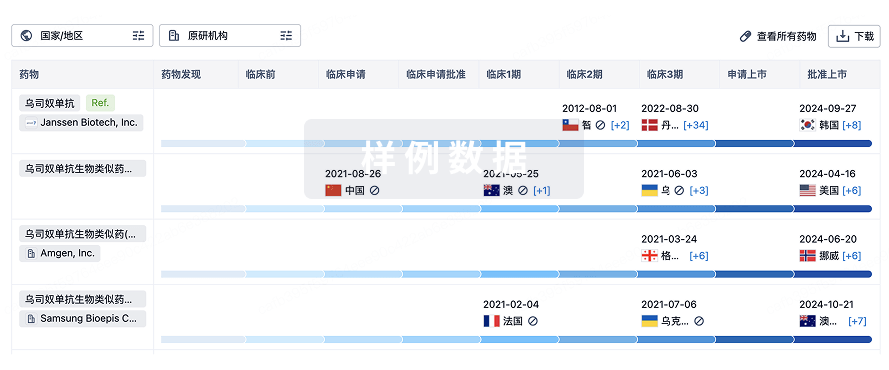
生物类似药
生物类似药在不同国家/地区的竞争态势。请注意临床1/2期并入临床2期,临床2/3期并入临床3期
登录
或
特殊审评
只需点击几下即可了解关键药物信息。
登录
或

提出任何生物医药研究问题
让每一步生物医药决策都精准制胜
基于十亿级生物数据与全球情报的精准 AI,赋能早期药物发现
立即开始免费试用!
智慧芽新药情报库是智慧芽专为生命科学人士构建的基于AI的创新药情报平台,助您全方位提升您的研发与决策效率。
立即接入生物医药数据包
智慧芽新药库数据也通过智慧芽开放平台,以MCP或API服务形式对外开放。立即使用我们的MCP服务定制您的LLM智能体。
生物序列数据库
生物药研发创新
免费使用
化学结构数据库
小分子化药研发创新
免费使用