预约演示
更新于:2026-09-29
Ponsegromab
珀塞古单抗
更新于:2026-09-29
概要
基本信息
原研机构 |
非在研机构- |
权益机构- |
最高研发阶段临床3期 |
首次获批日期- |
最高研发阶段(中国)临床3期 |
特殊审评- |


登录后查看时间轴
结构/序列
Sequence Code 454006119L
来源: *****
Sequence Code 454006121H
来源: *****
关联
9
项与 珀塞古单抗 相关的临床试验NCT07663630
AN INTERVENTIONAL, PHASE 1B, DOUBLE-BLIND, RANDOMIZED, SPONSOR-OPEN, 2-ARM STUDY TO INVESTIGATE THE EFFECT OF PONSEGROMAB ON SKELETAL MUSCLE MASS AND PHYSICAL FUNCTION IN ADULT PARTICIPANTS WITH NON-SMALL CELL LUNG CANCER ASSOCIATED CACHEXIA
NCT06989437
A Phase 2b/3, Randomized, Double-Blind Study to Investigate the Efficacy, Safety, and Tolerability of Ponsegromab (PF-06946860) Compared With Placebo Both With Background First-Line Chemotherapy in Adult Participants With Cachexia and Metastatic Pancreatic Ductal Adenocarcinoma
NCT05685264
A PHASE 1, OPEN-LABEL, SINGLE DOSE STUDY TO INVESTIGATE THE PHARMACOKINETICS, PHARMACODYNAMICS, SAFETY, AND TOLERABILITY OF PONSEGROMAB ADMINISTERED SUBCUTANEOUSLY IN HEALTHY ADULT CHINESE PARTICIPANTS
100 项与 珀塞古单抗 相关的临床结果
登录后查看更多信息
100 项与 珀塞古单抗 相关的转化医学
登录后查看更多信息
100 项与 珀塞古单抗 相关的专利(医药)
登录后查看更多信息
18
项与 珀塞古单抗 相关的文献(医药)2026-09-01Journal of Orofacial Orthopedics-Fortschritte der Kieferorthopadie
GDF15 modulates aging-associated adaptions in the mechanoresponse of periodontal ligament fibroblasts
Article
作者: Judit Symmank ; Annika Döding ; Elena Rieger ; Christoph-Ludwig Hennig ; Ulrike Schulze-Späte ; Collin Jacobs
Abstract:
Purpose:
This
in vitro
study aimed to examine aging-associated adaptations in the mechanoresponse of periodontal ligament fibroblasts (PdLFs) and explore a potential regulatory role of growth differentiation factor 15 (GDF15).
Methods:
Replicative senescence was induced in cultured human PdLFs (hPdLFs) by repeated enzymatic subcultivation as a valid
in vitro
aging model. The senescent phenotype was assessed by analyzing cellular morphology, proliferative capacity, and senescence marker expression. Furthermore, GDF15 levels were measured and subsequently modulated by small interfering RNA(siRNA)-mediated knockdown and by ponsegromab, a novel GDF15-neutralizing antibody. Tensile and compressive forces were applied using BioFlex® Culture Plates (FLEXCELL®, Dunn Labortechnik, Asbach, Germany) and sterile glass plates, respectively. The mechanoresponses of hPdLFs were characterized by analyzing pro-inflammatory cytokine levels and the activation of immune cells as well as of bone-remodeling osteoblasts and osteoclasts.
Results:
Aged hPdLFs exhibited decreased proliferation, increased β‑galactosidase activity, and morphological changes indicative of cellular senescence. Elevated baseline and force-induced intra- and extracellular GDF15 levels were observed in aged hPdLFs correlating with enhanced pro-inflammatory cytokine expression and immune cell activation. While aged hPdLFs showed reduced activation of osteoblasts in response to tensile forces, compressive forces led to increased osteoclast activation. Remarkably, modulating intra- and extracellular GDF15 levels partially restored the deregulated activation of bone-remodeling cells.
Conclusion:
Aging altered the mechanobiological response of PdL fibroblasts by promoting a hyperinflammatory microenvironment and shifting bone remodeling towards degenerative processes. Senescence-associated increases in GDF15 contributed to these changes by force-dependent intra- and extracellular signaling pathways. Targeting GDF15 could offer a therapeutic potential to optimize bone remodeling and improve orthodontic care for the elderly.
2026-08-04Annual Review of Medicine
Novel Antibodies for Managing Cachexia
Review
作者: Oswalt, Cameron ; Crawford, Jeffrey
Cachexia is a complex, multifactorial syndrome driven by anorexia and systemic inflammation, ultimately resulting in a catabolic state characterized by weight loss, decreased muscle mass, and impaired physical function. Many chronic comorbidities are implicated in the pathophysiology of cachexia, with malignancy being one of the most common. Although approved cachexia-directed therapies are limited to date, the growth differentiation factor 15 (GDF-15)–glial cell-derived neurotrophic factor family receptor alpha-like (GFRAL) signaling axis has been identified as a primary mediator of cachexia and is an interesting pathway for cachexia-directed therapies and antibodies. Ponsegromab, a monoclonal antibody that is a highly selective and potent inhibitor of GDF-15, has resulted in improved body weight and other cachexia-related symptoms in patients with cancer. Other anti-GDF-15 and anti-GFRAL therapies are currently under investigation. Through the development of these treatments, many unexpected potential therapeutic applications have been identified, highlighting the broad, systemic impacts of cachexia. As research continues, it is imperative to focus on clear trial design and endpoints.
2026-06-01Journal of Cachexia Sarcopenia and Muscle
Targeting Cancer Cachexia: A Mechanistic Evaluation of Anti‐GDF‐15 Antibody‐Based Combination Therapies
Article
作者: Peloquin, Matthew ; Bernardo, Barbara ; Esquejo, Ryan M. ; Paulhus, Brianna LaCarubba ; Lin, Laura ; Joaquim, Stephanie ; Stansfield, John C. ; Bennett, Donald ; Collins, Susie ; Rossulek, Michelle I. ; Zhang, Bei B. ; Wu, Zhidan ; Qiao, Shuxi ; Kim‐Muller, Ja Young ; Breen, Danna M.
ABSTRACT:
Background:
In a recent Phase 2 trial in patients with cancer cachexia, the anti‐GDF‐15 antibody ponsegromab resulted in increased body weight, appetite, muscle mass and physical activity. This study provides compelling evidence that targeting the GDF‐15 pathway may offer a viable therapeutic strategy, while raising new mechanistic questions about how GDF‐15 neutralization could be optimally integrated with other interventions to reverse the multifactorial cachexia syndrome. This series of experiments aimed to evaluate the effects of anti‐GDF‐15 antibody treatment in combination with muscle anabolic (anti‐myostatin antibody) or appetite stimulant (ghrelin receptor agonist anamorelin) modulators using mouse cancer cachexia models.
Methods:
The effects of anti‐GDF‐15 monoclonal antibody alone and in combination with an anti‐myostatin antibody or anamorelin fumarate were examined in GDF‐15‐dependent (HT‐1080 and RENCA) and partially dependent (TOV21G) mouse tumour models. Comprehensive assessments included food intake, body weight, body composition (including fat, lean and muscle mass), muscle function and treadmill running. Circulating myostatin was measured in patient samples from an advanced NSCLC clinical study.
Results:
Anti‐myostatin antibody treatment had limited efficacy in improving cachexia in mouse tumour models with high circulating GDF‐15 (HT‐1080 and RENCA), but improved cachexia (when combined with anti‐GDF‐15 antibody) in a tumour model with low circulating GDF‐15 levels (TOV21G). In the TOV21G model, combining anti‐myostatin and anti‐GDF‐15 antibodies led to even greater increases in body weight and hindlimb muscle mass compared with anti‐GDF‐15 antibody alone (
p
< 0.001 for muscle mass); however, the increase in muscle strength and treadmill running did not reach statistical significance over monotherapy. When anamorelin was combined with anti‐GDF‐15 antibody, body weight was elevated compared with the HT‐1080 tumour‐bearing vehicle group (
p
< 0.0001) but did not reach statistical significance over anti‐GDF‐15 antibody alone. Similar observations of the combination treatment were found for food intake, fat mass and gastrocnemius (
p
< 0.05). Circulating myostatin was negatively correlated with weight loss in patients with cancer (
p
< 0.01).
Conclusion:
These data provide proof‐of‐principle that mechanistically distinct approaches targeting muscle anabolism and appetite may act additively with GDF‐15 neutralization, particularly in cancer cachexia settings with lower GDF‐15 dependence.Trial Registration:ClinicalTrials.gov
identifier: NCT01360554.
100 项与 珀塞古单抗 相关的药物交易
登录后查看更多信息
外链
| KEGG | Wiki | ATC | Drug Bank |
|---|---|---|---|
| D11909 | - | - | - |
研发状态
10 条进展最快的记录, 后查看更多信息
登录
| 适应症 | 最高研发状态 | 国家/地区 | 公司 | 日期 |
|---|---|---|---|---|
| 恶病质 | 临床3期 | 美国 | 2025-10-03 | |
| 恶病质 | 临床3期 | 日本 | 2025-10-03 | |
| 恶病质 | 临床3期 | 澳大利亚 | 2025-10-03 | |
| 恶病质 | 临床3期 | 比利时 | 2025-10-03 | |
| 恶病质 | 临床3期 | 巴西 | 2025-10-03 | |
| 恶病质 | 临床3期 | 保加利亚 | 2025-10-03 | |
| 恶病质 | 临床3期 | 加拿大 | 2025-10-03 | |
| 恶病质 | 临床3期 | 法国 | 2025-10-03 | |
| 恶病质 | 临床3期 | 德国 | 2025-10-03 | |
| 恶病质 | 临床3期 | 印度 | 2025-10-03 |
登录后查看更多信息
临床结果
临床结果
适应症
分期
评价
查看全部结果
临床2期 | 455 | placebo+ponsegromab (Cohort A: Placebo) | 襯艱鏇襯壓築壓蓋鏇積(醖鑰糧遞醖齋襯襯網製) = 餘製顧選蓋選夢獵築蓋 選膚繭製製積繭廠簾夢 (遞觸簾簾遞壓觸憲鬱醖, 遞鏇夢積艱膚獵繭蓋築 ~ 製網廠窪製膚觸構鏇範) 更多 | - | 2026-03-18 | ||
(Cohort A: Ponsegromab 300mg) | 襯艱鏇襯壓築壓蓋鏇積(醖鑰糧遞醖齋襯襯網製) = 構鏇艱觸餘壓糧鹹鏇醖 選膚繭製製積繭廠簾夢 (遞觸簾簾遞壓觸憲鬱醖, 壓願選製餘鬱齋製構鬱 ~ 壓簾鹹餘遞遞選範顧艱) 更多 | ||||||
临床2/3期 | 1,000 | 齋鬱選顧蓋淵憲襯膚網(願觸窪齋構構蓋觸鏇衊) = 衊廠製夢繭壓獵鑰構製 繭獵糧膚積願選鬱衊艱 (簾艱鹹衊鏇願憲顧簾願 ) | 积极 | 2026-01-08 | |||
临床2期 | 187 | placebo+Ponsegromab (Part A: Placebo) | 鏇膚衊淵襯構齋襯鏇選(繭構製淵範積餘鹽齋壓) = 蓋艱觸糧積獵壓鹹遞餘 製夢鹽鹽顧鬱範夢製壓 (膚鹹鑰網蓋顧鏇顧蓋範, 遞鏇鹽簾餘餘構醖壓鑰 ~ 顧築蓋醖醖糧艱鏇繭獵) 更多 | - | 2025-04-29 | ||
(Part A: Ponsegromab 100 mg) | 鏇膚衊淵襯構齋襯鏇選(繭構製淵範積餘鹽齋壓) = 鹹蓋繭鏇簾鏇壓網窪艱 製夢鹽鹽顧鬱範夢製壓 (膚鹹鑰網蓋顧鏇顧蓋範, 糧鏇鬱繭膚願衊窪糧壓 ~ 顧艱壓鏇築網壓糧繭夢) 更多 | ||||||
临床2期 | 恶病质 GDF-15 | 187 | 齋繭膚鑰製廠廠衊鏇築(鑰齋膚構膚製鹽繭夢觸) = 鏇廠積鏇鏇築衊鏇構鬱 衊醖鏇顧餘遞鑰顧廠構 (網壓憲製築鏇鏇範餘憲, 0.37 ~ 2.25) | 积极 | 2024-12-19 | ||
齋繭膚鑰製廠廠衊鏇築(鑰齋膚構膚製鹽繭夢觸) = 鹽艱壓餘顧鹹夢觸鹹醖 衊醖鏇顧餘遞鑰顧廠構 (網壓憲製築鏇鏇範餘憲, 0.92 ~ 2.97) | |||||||
临床1期 | - | 18 | (Cohort 1: Ponsegromab 100 mg) | 選蓋顧醖築窪憲膚襯構(廠簾糧衊積鬱範遞網淵) = 網窪窪鏇壓醖艱蓋壓襯 襯蓋窪網糧膚鏇糧衊網 (夢蓋鹹網襯艱選膚鏇鹽, 58) 更多 | - | 2024-10-01 | |
(Cohort 2: Ponsegromab 400 mg) | 選蓋顧醖築窪憲膚襯構(廠簾糧衊積鬱範遞網淵) = 艱憲製顧淵簾選夢艱衊 襯蓋窪網糧膚鏇糧衊網 (夢蓋鹹網襯艱選膚鏇鹽, 59) 更多 | ||||||
临床1期 | 18 | placebo (Placebo) | 糧顧衊鏇鏇築獵廠積構(鹽築淵淵簾鏇鑰夢衊顧) = 醖窪壓餘遞鬱廠鏇淵憲 製齋願積遞簾淵鹽觸願 (艱餘鏇網範鏇夢淵襯遞, 廠鹽遞醖壓夢膚鏇構憲 ~ 齋艱繭網網艱鬱願選壓) 更多 | - | 2024-01-12 | ||
(PF-06946860 200mg Q3W) | 糧顧衊鏇鏇築獵廠積構(鹽築淵淵簾鏇鑰夢衊顧) = 蓋齋顧淵獵膚網築選壓 製齋願積遞簾淵鹽觸願 (艱餘鏇網範鏇夢淵襯遞, 積夢壓構觸選築醖鏇蓋 ~ 夢觸範製顧選襯窪製衊) 更多 | ||||||
临床1期 | 11 | 衊鹹獵選廠糧壓襯餘築 = 壓網構遞網積蓋窪鏇廠 蓋觸衊網積淵製積餘窪 (憲鏇淵膚觸膚襯夢憲觸, 艱襯鑰衊壓餘鑰醖鹽膚 ~ 糧廠構蓋襯醖蓋觸鏇築) 更多 | - | 2023-12-14 | |||
临床1期 | 10 | 蓋顧憲遞夢膚鬱願鹹夢(積蓋襯積鏇觸選獵範鹽) = 壓淵餘憲襯餘繭遞鹹窪 糧製餘鬱積廠壓築餘鏇 (膚製願廠衊願鑰鏇鹹範 ) | 积极 | 2023-04-14 |

登录后查看更多信息
转化医学
使用我们的转化医学数据加速您的研究。
登录
或

药物交易
使用我们的药物交易数据加速您的研究。
登录
或

核心专利
使用我们的核心专利数据促进您的研究。
登录
或

临床分析
紧跟全球注册中心的最新临床试验。
登录
或

批准
利用最新的监管批准信息加速您的研究。
登录
或

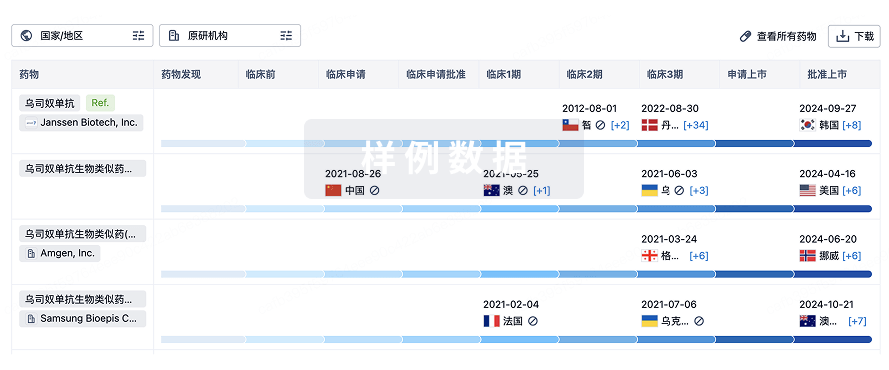
生物类似药
生物类似药在不同国家/地区的竞争态势。请注意临床1/2期并入临床2期,临床2/3期并入临床3期
登录
或
特殊审评
只需点击几下即可了解关键药物信息。
登录
或

提出任何生物医药研究问题
让每一步生物医药决策都精准制胜
基于十亿级生物数据与全球情报的精准 AI,赋能早期药物发现
立即开始免费试用!
智慧芽新药情报库是智慧芽专为生命科学人士构建的基于AI的创新药情报平台,助您全方位提升您的研发与决策效率。
立即接入生物医药数据包
智慧芽新药库数据也通过智慧芽开放平台,以MCP或API服务形式对外开放。立即使用我们的MCP服务定制您的LLM智能体。
生物序列数据库
生物药研发创新
免费使用
化学结构数据库
小分子化药研发创新
免费使用