预约演示
更新于:2026-07-23
MDNA-11
更新于:2026-07-23
概要
基本信息
非在研机构- |
最高研发阶段临床1/2期 |
首次获批日期- |
最高研发阶段(中国)- |
特殊审评- |



登录后查看时间轴
关联
1
项与 MDNA-11 相关的临床试验NCT05086692
A Phase 1/2 Open Label, Dose Escalation and Expansion Study of MDNA11, IL-2 Superkine, Administered Alone or in Combination With Immune Checkpoint Inhibitor in Patients With Advanced Solid Tumors
This is a Phase 1/2, multi-center, open-label, dose-escalation and expansion study to evaluate safety and tolerability, PK, pharmacodynamic, and early signal of anti-tumor activity of MDNA11 alone or in combination with a checkpoint inhibitor in patients with advanced solid tumors.
开始日期2021-08-27 |
申办/合作机构 |
100 项与 MDNA-11 相关的临床结果
登录后查看更多信息
100 项与 MDNA-11 相关的转化医学
登录后查看更多信息
100 项与 MDNA-11 相关的专利(医药)
登录后查看更多信息
1
项与 MDNA-11 相关的文献(医药)2022-01-01·Journal for immunotherapy of cancer2区 · 医学
Fine-tuned long-acting interleukin-2 superkine potentiates durable immune responses in mice and non-human primate
2区 · 医学
ArticleOA
作者: Lloyd, Peter ; Smith, Paul ; Merchant, Rosemina ; Munegowda, Manjunatha Ankathatti ; To, Minh D ; Pearce, L Bruce ; Merchant, Fahar ; Galligan, Carole
Background:
Recombinant human interleukin-2 (rhIL-2, aldesleukin) is Food and Drug Administration approved for the treatment of metastatic melanoma and renal cell carcinoma and has achieved durable response in a subset of patients. However, its utility as an immunotherapeutic drug is limited by undesirable activation of immune suppressive regulatory T cells (Tregs) and a short half-life requiring frequent high dose administration, leading to unacceptable toxicities. We have engineered MDNA11, a long-acting IL-2 superkine, to overcome these limitations by (1) modifying receptor selectivity in favor of anti-cancer immune cells to increase therapeutic efficacy and (2) fusion to human albumin to extend the pharmacokinetic (PK) profile, circumventing the need for frequent dosing.
Methods:
MDNA11 was evaluated using in vitro and in vivo studies including: binding analyses to measure receptor affinity, IL-2 pathway signaling, PK studies in mice, and efficacy studies in syngeneic tumor models as single agent and in combination with immune checkpoint inhibitors. Finally, the safety and pharmacodynamic profile of MDNA11 was assessed in non-human primate (NHP).
Results:
Binding studies with MDNA11 demonstrated increased affinity for IL-2Rβ (CD122) and no binding to IL-2Rα (CD25). As a result, MDNA11 exhibits reduced/limited Treg stimulation while triggering an enhanced activation of natural killer and naïve CD8 T cells compared with rhIL-2. When administered to animals with pre-established tumors, MDNA11 controlled tumor growth in a monotherapy setting and in combination with anti-PD1 or anti-CTLA4 to induce durable tumor clearance with a once weekly dosing regimen. In a NHP model, MDNA11 was well tolerated while triggering durable and potent immune responses including expansion of lymphocytes without significant effect on Tregs and eosinophils, the latter been linked to an increased risk of vascular leak syndrome.
Conclusion:
MDNA11 is a next generation long-acting IL-2 immunotherapeutic with a highly favorable pharmacodynamic profile that translates to a strong therapeutic efficacy in preclinical tumor models and a strong and durable immune response in NHP.
145
项与 MDNA-11 相关的新闻(医药)2026-06-26
MDNA11, as a single agent or in combination with pembrolizumab, continues to demonstrate compelling anti-tumor activity in patients with advanced or metastatic cutaneous melanoma, endometrial cancer and gastrointestinal cancers unresponsive to checkpoint inhibitors
Enrolment in ABILITY-1 to be completed in Q3 2026 with key data readouts expected in Q4 2026 which will guide development strategy for a potential registrational pathway and partnerships
Enrolment in the NEO-CYT Phase 1b trial, funded by Fondazion Melanoma, is well underway. In this study, which was highlighted at ASCO 2026, MDNA11 is being evaluated in combination with checkpoint inhibitors for the treatment of advanced melanoma prior to surgery
Data presented at AACR 2026 showed that MDNA113, Medicenna’s anti-PD1-IL-2 bifunctional immunotherapy, was safer even at doses 30-fold higher than a competing anti-PD1-IL-2
a-biase
d
agent
Strengthened management team by appointment of Dr. Nageatte Ibrahim, MD, as fractional Chief Medical Officer, who brings considerable clinical expertise in cancer immunotherapy from her long tenure at Merck and more recently as the CMO at Innovent Biologics USA
Cash runway expected to extend through Q1 calendar 2027, assuming completion of the contemplated structured financing as planned
TORONTO and HOUSTON, June 26, 2026 (GLOBE NEWSWIRE) -- Medicenna Therapeutics Corp. (“Medicenna” or the “Company”) (TSX: MDNA, OTCQX: MDNAF), a clinical-stage immunotherapy company focused on the development of Superkines targeting cancer, autoimmune, and inflammatory diseases, today reported financial results and corporate highlights for the fiscal year ended March 31, 2026, as well as anticipated corporate milestones.
“Fiscal 2026 was a year of important execution across our Superkine pipeline, highlighted by compelling efficacy of MDNA11 in at least three different advanced cancer indications complemented by the impressive pre-clinical pro MDNA113 in the breakthrough era of bi-functional immunotherapies,” said Fahar Merchant, Ph.D., President and CEO of Medicenna. “As we look ahead, we believe that the upcoming MDNA11 clinical data readouts from both the ABILITY-1 and NEO-CYT studies will form the foundation of a broad development strategy and expedite collaboration, partnering, registrational, and commercial opportunities in select cancers. In parallel, MDNA113 continues to demonstrate a highly differentiated profile, with preclinical data showing its potential to dramatically widen the therapeutic window without sacrificing efficacy. With patent cliffs for key checkpoint inhibitors on the horizon, we aspire to provide better and safer options to patients where mega-blockbuster therapies have failed. With our recent financing activities, advances in partnering efforts, and continued focus on disciplined execution, we are well positioned to achieve multiple value-driving milestones across our pipeline this fiscal year.”
Program highlights for the fiscal year ended March 31, 2026, along with recent developments, include:
MDNA11: IL-2 Superkine Program
MDNA11 continues to exhibit compelling deep and durable anti-tumor activity in difficult-to-treat solid tumors with best-in-class potential relative to competing IL-2 programs
Updated results from the Phase 1/2 ABILITY-1 study presented at ESMO-IO Congress 2025 and earlier this calendar year demonstrate response rates in the 30-40% range in the 2L/3L Tx setting or as next-line following resistance to checkpoint inhibitor therapy
During the second half of 2026, Medicenna plans to present updated clinical results from both the monotherapy and combination arms of the Phase 1/2 ABILITY-1 study and Phase 1b NEO-CYT study in earlier line settings
Medicenna plans to solidify its Phase 2b development strategy for MDNA11 by the end of this calendar year, including strategies for evaluation of MDNA11 in tumor types with accelerated approval potential
MDNA113: First-in-Class Anti-PD-1-IL-2 Bifunctional Superkine
Anti-PD-1-IL-2 bispecifics have emerged as a promising class of immuno-oncology therapies due to
cis-binding
synergies
At the 2026 AACR Annual Meeting, the Company presented new preclinical data highlighting the differentiated and first-in-class potential of MDNA113, its IL-13Rα2 targeted anti-PD-1-IL-2 bifunctional superkine, which is designed to widen the therapeutic window through its tumor-targeting and activation within the tumor micro-environment
The AACR presentation highlighted MDNA113’s capability to be dosed at a level consistent with or exceeding that of standard-of-care commercial anti-PD-1 therapies with data demonstrating dosing up to 50 mg/kg in non-human primates
Superior safety and dosing capabilities were also demonstrated compared to a competing anti-PD-1-IL-2
a-bias
ed
design
Medicenna is advancing its novel first-in-class anti-PD-1 x IL-2 bifunctional superkine through IND-enabling studies with a planned IND submission in Q4 2026 followed by the initiation of a first-in-human trial soon thereafter
Bizaxofusp (formerly MDNA55): Empowered IL-4 Superkine Program
The Company is currently pursuing partnership opportunities for its phase-3 ready IL-4 Superkine for recurrent glioblastoma (rGBM). Bizaxofusp, which holds both FastTrack and Orphan drug status from the FDA and FDA/EMA, respectively, is Medicenna’s Phase 3-ready asset for rGBM which has been tested in 118 patients with high grade gliomas (including 112 patients with rGBM).
Anticipated Milestones for Fiscal 2027
Complete patient enrollment in ABILITY-1 study in MDNA11 monotherapy and combination arms across prioritized indications (cutaneous melanoma, endometrial cancer, MSI-H/dMMR and MSS/TMB-H cancers) including any new expansion cohorts (for e.g., CRC and NSCLC) with a focus on 2L/3L in post–anti-PD1 settings
Report updated clinical data from MDNA11 monotherapy and combination expansion cohorts including 2L/3L and last-line anti-PD1–treated patients enrolled within the ABILITY-1 study
Share interim clinical data from the Phase 1b NEO-CYT study of MDNA11 in neoadjuvant melanoma trial
Secure FDA guidance on first potential registrational trial of MDNA11 in at least one advancer cancer indication in 2L/3L setting post-ICI therapy, including dose selection for Project Optimus
File an investigational new drug (IND) application for MDNA113 in Q4 2026 and initiate a Phase 1 trial soon thereafter
Strengthen the balance sheet through partnership and/or financing in preparation for registrational trial for MDNA11 and commence FIH trial for MDNA113
Present new clinical data on bizaxofusp in recurrent GBM in Q4 2026
Advance and close a strategic collaboration or partnership for bizaxofusp
Annual Financial Results
Medicenna exited the fiscal year ended March 31, 2026 with cash and cash equivalents of $6.3 million. Subsequent to year end, the Company announced the closing of its previously announced $4.4 million public offering of units and the execution of a term sheet related to a structured financing arrangement with Sorbie Bornholm LP and Sorbie Investments LLP (“Sorbie”) pursuant to which the Company may ultimately receive more or materially less than $8.0 million (the “Sorbie Transaction”). The completion of the Sorbie Transaction and the execution of the required documentation are each subject to the satisfaction of customary closing conditions, including the receipt of all necessary regulatory and stock exchange approvals. The proceeds from these financings, in conjunction with cash on hand, are expected, if completed as contemplated, to provide the Company with sufficient capital to execute its current planned expenditures through the first quarter of calendar 2027.
For the year ended March 31, 2026, the Company reported total operating costs of $22.4 million compared to total operating costs of $20.4 million for the year ended March 31, 2025. The increase is related to an increase in research and development expenses of $2.4 million which was partially offset by a reduction in general and administrative expenses of $0.4 million as discussed further below.
Net loss for the year ended March 31, 2026, was $18.4 million ($0.22 loss per share), compared to a net loss of $11.8 million ($0.15 loss per share) for the year ended March 31, 2025. The increase in net loss during the current period relative to the year ended March 31, 2025 is primarily due to an increase in R&D expenses of $2.4 million, a decrease in the gain recognized on the change in fair value of the warrant derivative of $2.1 million, a decrease in finance income of $0.8 million and a decrease in foreign exchange gain of $1.7 million.
Research and development expenses of $16.9 million were incurred during the year ended March 31, 2026, compared with $14.4 million incurred in the year ended March 31, 2025. The increase in research and development expenses in the current fiscal year is primarily attributed to increased clinical costs during the current year due to the expansion of the MDNA11 ABILITY-1 Study to new clinical sites, the inclusion of more patients in the study relative to the prior year, and the commencement of the NEO-CYT study during the current year.
General and administrative expenses of $5.5 million were incurred during the year ended March 31, 2026, compared with $6.0 million during the year ended March 31, 2025. The decrease in G&A expenses in the current year primarily relates to lower stock-based compensation expense associated with option grants made during the current year.
Medicenna’s financial statements for the year ended March 31, 2026 and the related management’s discussion and analysis (MD&A) will be available on SEDAR+ at
.
About Medicenna Therapeutics
Medicenna is a clinical-stage immunotherapy company focused on developing novel, highly selective versions of IL-2, IL-4 and IL-13 Superkines and first-in-class Empowered Superkines. Medicenna’s long-acting IL-2 Superkine, MDNA11, is a next-generation IL-2 with superior affinity toward CD122 (IL-2 receptor beta) and no CD25 (IL-2 receptor alpha) binding, thereby preferentially stimulating cancer-killing effector T cells and NK cells. Medicenna’s first-in-class targeted PD-1 x IL-2 bifunctional, MDNA113, is in development for solid tumors and was designed using the Company’s proprietary BiSKITs (Bifunctional SuperKine ImmunoTherapies) and T-MASK (Targeted Metalloprotease Activated SuperKine) platforms. Medicenna’s IL-4 Empowered Superkine, bizaxofusp (formerly MDNA55), has been studied in 5 clinical trials enrolling over 130 patients, including a Phase 2b trial for recurrent GBM, the most common and uniformly fatal form of brain cancer. Bizaxofusp has obtained Fast Track and Orphan Drug status from the FDA and FDA/EMA, respectively.
For more information, please visit
, and follow us on
X
and
LinkedIn
.
Forward-Looking Statements
This news release contains forward-looking statements within the meaning of applicable securities laws. Forward-looking statements include, but are not limited to, express or implied statements regarding the future operations of the Company, estimates, plans, strategic ambitions, partnership activities and opportunities, objectives, expectations, opinions, forecasts, projections, guidance, outlook or other statements that are not historical facts, such as statements on the therapeutic potential and safety pro MDNA11, MDNA113 and MDNA55 (bizaxofusp), anticipated milestones for Fiscal 2027, the Company's expected cash runway and financing plans, statements regarding the Sorbie Transaction, its completion and any potential additional proceeds that may be received by the Company from such potential investment (including the timing thereof), the receipt of any required approvals in connection with the Sorbie Transaction and upcoming expected developments, timelines, regulatory and other milestones and presentation of data. Drug development and commercialization involve a high degree of risk, and only a small number of research and development programs result in commercialization of a product. Results in early-stage pre-clinical or clinical studies may not be indicative of full results or results from later stage or larger scale clinical studies and do not ensure regulatory approval. You should not place undue reliance on these statements, or the scientific data presented.
Forward-looking statements are often identified by terms such as “will”, “may”, “should”, “anticipate”, “expect”, “believe”, “seek”, “potentially” and similar expressions. and are subject to risks and uncertainties. There can be no assurance that such statements will prove to be accurate and actual results and future events could differ materially from those anticipated in such statements. Important factors that could cause actual results to differ materially from the Company’s expectations include the risks detailed in the latest annual information form of the Company and in other filings made by the Company with the applicable securities regulators from time to time in Canada.
The reader is cautioned that assumptions used in the preparation of any forward-looking information may prove to be incorrect. Events or circumstances may cause actual results to differ materially from those predicted, as a result of numerous known and unknown risks, uncertainties, and other factors, many of which are beyond the control of the Company. The reader is cautioned not to place undue reliance on any forward-looking information. Such information, although considered reasonable by management, may prove to be incorrect and actual results may differ materially from those anticipated. Forward-looking statements contained in this news release are expressly qualified by this cautionary statement. The forward-looking statements contained in this news release are made as of the date hereof and except as required by law, we do not intend and do not assume any obligation to update or revise publicly any of the included forward-looking statements.
This news release contains hyperlinks to information that is not deemed to be incorporated by reference in this new release.
Investor/Company Contact:
Daniel Scarr
Director, Corporate Development
Medicenna Therapeutics
ir@medicenna.com
临床2期临床1期孤儿药高管变更免疫疗法
2026-06-11
New U.S. patents extend protection for cellular immunotherapy applications, immune cell targeting constructs and bizaxofusp combination therapy with anti-VEGF agents for CNS tumors; global portfolio now exceeds 100 active granted patents and applications
TORONTO, June 11, 2026 (GLOBE NEWSWIRE) -- Medicenna Therapeutics Corp. (“Medicenna” or the “Company”) (TSX: MDNA, OTCQX: MDNAF), a clinical-stage immunotherapy company developing Superkines for targeting cancer and autoimmune disease, today announced the issuance of two new U.S. patents and the allowance of an additional U.S. patent application covering its proprietary IL-4 and IL-13 Superkine platforms, including bizaxofusp (formerly MDNA55), the Company’s IL-4 Empowered Superkine in clinical development for recurrent glioblastoma (rGBM).
The newly issued U.S. patents, together with parallel patents recently granted in Australia and Canada within the same patent families, further reinforce Medicenna’s intellectual property position across the cytokine biology underlying its lead clinical programs: bizaxofusp, MDNA11 (IL-2 Superkine) and MDNA113 (anti–PD-1 × IL-2 bifunctional Superkine).
“These newly issued and allowed U.S. patents underscore the depth and breadth of the Superkine science Medicenna has built and the strength of the IP estate now protecting the platforms behind bizaxofusp, MDNA11 and MDNA113,” said Dr. Fahar Merchant, President and Chief Executive Officer of Medicenna. “Our cytokine engineering work spans three distinct receptor systems, including IL-2, IL-4 and IL-13 and these grants extend protection into important new applications, including cellular immunotherapy and combination treatment of CNS tumors. With more than 100 active granted patents and applications worldwide, Medicenna has assembled what we believe is one of the most comprehensive patent estates in Superkine-based immunotherapy.”
U.S. Patents Recently Issued
U.S. Patent No. 12,503,496
:
“Interleukin-4 Receptor-Binding Fusion Proteins and Uses Thereof”
(Medicenna and the U.S. National Institutes of Health, co-owners). The issued patent covers the application of Medicenna’s proprietary IL-4 Superkine fusion proteins to enhancing cellular immunotherapy. With this grant, the family now includes three issued U.S. patents, and additional granted patents in Europe and India.
U.S. Patent No. 12,590,133
:
“IL-13/IL-4 Superkines: Immune Cell Targeting Constructs and Methods of Use Thereof”
(in-licensed by Medicenna from Stanford University). The issued patent is directed to IL-13 Superkine immune cell targeting constructs, vectors, and engineered cells. The family is now granted in the United States and China, with pending applications in Canada and Europe.
U.S. Patent Recently Allowed
U.S. Patent Application No. 18/248,601
:
“Combination Therapy of MDNA55 and a Vascular Endothelial Growth Factor a (VEGF-A)”
(Medicenna-owned). Once issued, the patent will cover combinatorial treatment of CNS tumors with bizaxofusp, including with VEGF-A-directed agents. The family also has pending applications in Canada, China, Europe, India, Japan and Korea.
Additional Recent Patent Grants Outside the United States
In parallel with these U.S. milestones, Medicenna recently received patent grants in two additional jurisdictions that extend the geographic reach of its core Superkine families:
Australian Patent No. 2018347796
,
“IL-4 Fusion Formulations for Treatment of Central Nervous System (CNS) Tumors,”
directed to Medicenna’s proprietary bizaxofusp formulation and its application to the treatment of CNS tumors. This family is now granted in Australia, Europe and the United States, with pending applications in Canada, China and India.
Canadian Patent No. 3,067,909
,
“Uses and Methods for IL-2 Superagonists, Agonists, and Fusions Thereof,”
directed to the combination of Medicenna’s IL-2 Super Agonist and checkpoint inhibitors for the treatment of cancer. This family is now granted in Australia, Canada, Japan and the United States, with additional pending applications in China, Europe and India, as well as further applications in Australia, Japan and the United States.
Medicenna continues to develop a robust global patent portfolio across its R&D platforms and clinical programs, with over 100 active granted patents and applications.
About Medicenna Therapeutics
Medicenna is a clinical-stage immunotherapy company focused on developing novel, highly selective versions of IL-2, IL-4 and IL-13 Superkines and first-in-class Empowered Superkines. Medicenna’s long-acting IL-2 Superkine, MDNA11, is a next-generation IL-2 with superior affinity toward CD122 (IL-2 receptor beta) and no CD25 (IL-2 receptor alpha) binding, thereby preferentially stimulating cancer-killing effector T cells and NK cells. Medicenna’s first-in-class targeted PD-1 x IL-2 bispecific, MDNA113, is in development for solid tumors and was designed using the Company’s proprietary BiSKITs™ (Bifunctional SuperKine ImmunoTherapies) and T-MASK™ (Targeted Metalloprotease Activated SuperKine) platforms. Medicenna’s IL-4 Empowered Superkine, bizaxofusp (formerly MDNA55), has been studied in 5 clinical trials enrolling over 130 patients, including a Phase 2b trial for recurrent GBM, the most common and uniformly fatal form of brain cancer. Bizaxofusp has obtained Fast Track and Orphan Drug status from the FDA and FDA/EMA, respectively.
For more information, please visit
, and follow us on
X
and
LinkedIn
.
Forward-Looking Statements
This news release contains forward-looking statements within the meaning of applicable securities laws. Forward-looking statements include, but are not limited to, express or implied statements regarding the future operations of the Company, estimates, plans, strategic ambitions, partnership activities and opportunities, objectives, expectations, opinions, forecasts, projections, guidance, outlook or other statements that are not historical facts, such as statements on or in respect of: the therapeutic potential, safety pro other potential biological responses to administration (or lack thereof) of bizaxofusp, MDNA11 and/or MDNA113; any IND submission and/or first-in-human trial for MDNA113 (including any expected timing thereof); the issuance of any patents applied for by the Company, now or in the future (inclidng any expected timing thereof); and any potential sales or revenue generation from the sale or other commercialization of bizaxofusp, MDNA11, MDNA113 or any other PD-1 inhibitors or other products of the Company (including any expected timing thereof). Drug development and commercialization involve a high degree of risk, and only a small number of research and development programs result in commercialization of a product. Results in early-stage pre-clinical or clinical studies may not be indicative of full results or results from later stage or larger scale clinical studies and do not ensure regulatory approval. You should not place undue reliance on these statements, or the scientific data presented.
Forward-looking statements are often identified by terms such as “will”, “may”, “should”, “anticipate”, “expect”, “believe”, “seek”, “potentially” and similar expressions and are subject to risks and uncertainties. There can be no assurance that such statements will prove to be accurate and actual results and future events could differ materially from those anticipated in such statements. Important factors that could cause actual results to differ materially from the Company’s expectations include the risks detailed in the latest annual information form of the Company and in other filings made by the Company with the applicable securities regulators from time to time in Canada.
The reader is cautioned that assumptions used in the preparation of any forward-looking information may prove to be incorrect. Events or circumstances may cause actual results to differ materially from those predicted, as a result of numerous known and unknown risks, uncertainties, and other factors, many of which are beyond the control of the Company. The reader is cautioned not to place undue reliance on any forward-looking information. Forward-looking statements contained in this news release are expressly qualified by this cautionary statement. The forward-looking statements contained in this news release are made as of the date hereof and except as required by law, the Company does not intend and does not assume any obligation to update or revise publicly any of the included forward-looking statements.
Investor Contact
Daniel Scarr
Medicenna Therapeutics
ir@medicenna.com
免疫疗法孤儿药临床2期快速通道临床结果
2026-06-03
NEO-CYT positions MDNA11 in a frontline neoadjuvant melanoma setting, where immunotherapy before surgery may help generate deeper and more durable anti-tumor immune responses
Up to 80 patients with locally advanced melanoma will be randomized in this Investigator-sponsored, multicenter Phase 1b NEO-CYT trial led by Professor Paolo A. Ascierto of the Istituto Nazionale Tumori Fondazione “G. Pascale” and sponsored by Fondazione Melanoma Onlus
Together with the ongoing Phase 1/2 ABILITY-1 expansion cohorts in the 2L/3L Tx setting, NEO-CYT supports a broader clinical strategy to evaluate MDNA11 across select tumor types and multiple stages of disease, expanding future commercial opportunities
MDNA11 clinical data updates from the ABILITY-1 and NEO-CYT trials are anticipated in H2 2026
TORONTO and HOUSTON, June 03, 2026 (GLOBE NEWSWIRE) -- Medicenna Therapeutics Corp. (“Medicenna” or the “Company”) (TSX: MDNA, OTCQX: MDNAF), a clinical-stage immunotherapy company developing Superkines targeting cancer and autoimmune disease, today announced that its long-acting, “beta-enhanced not-alpha” IL-2 Superkine, MDNA11, was featured in a poster presentation describing the investigator-sponsored NEO-CYT trial at the 2026 Annual Meeting of the American Society of Clinical Oncology (ASCO), held in Chicago from 28
th
May to 2
nd
June.
Surgery has long been the first course of action in treating locally advanced melanoma. Recently, the landmark NADINA clinical trial (comprised of 2 pre-operative cycles of ipilimumab plus nivolumab) completely flipped the conventional treatment paradigm on its head by proving that giving combination immunotherapy before surgery is significantly more effective than the previous post-surgery standard, setting a new gold standard of care. However even with this regimen, 41% of patients did not achieve a Major Pathologic Response (< 10% of viable tumor). In view of the promising single agent activity of MDNA11 in patients with metastatic melanoma, the hypothesis of the NEO-CYT trial is to demonstrate if patient outcomes can be further enhanced over the gold-standard of care by introducing MDNA11 in combination with nivolumab +/- ipilimumab.
“NEO-CYT provides an important opportunity to evaluate MDNA11, a potentially best-in-class IL-2 superagonist, in a frontline neoadjuvant setting where immune activation may be especially impactful,” said Fahar Merchant, Ph.D., President and Chief Executive Officer of Medicenna. “ If the tumor is still present at the time of the treatment, the immune cells ‘see’ more of the cancer cells. This allows the most potent anti-tumor immune cells to expand and attack the tumor and can remain active in the body for many years, preventing the tumors from recurring. Importantly, this trial complements our ongoing ABILITY-1 study, which has already demonstrated durable disease control in more advanced stages of melanoma. The ABILITY-1 trial is also advancing MDNA11 into earlier lines of therapy through expansion cohorts in 2L/3L melanoma, endometrial cancer, colorectal cancer, lung cancer and tumor agnostic biomarker driven cancers. We look forward to sharing updates on the ABILITY-1 trial and the NEO-CYT study during the second half of 2026.”
NEO-CYT is a randomized, multicenter Phase 1b trial evaluating MDNA11 in combination with nivolumab, with or without ipilimumab, as neoadjuvant therapy in patients with high-risk, surgically resectable Stage IIIB/C/D cutaneous melanoma. The study is sponsored by Fondazione Melanoma Onlus and led by Professor Paolo A. Ascierto of the Istituto Nazionale Tumori Fondazione “G. Pascale” in Naples, Italy.
The trial represents an important expansion of MDNA11’s clinical development into an earlier-line, curative-intent melanoma setting. Neoadjuvant immunotherapy, administered before surgery while the tumor and its immune microenvironment remain intact, has emerged as a promising strategy to generate deeper anti-tumor immune responses and improve long-term outcomes for patients with high-risk resectable melanoma. However, a meaningful proportion of patients still do not achieve a major pathologic response with checkpoint-based neoadjuvant therapy, underscoring the need for novel immune-activating approaches that may improve depth and durability of response.
The NEO-CYT poster at ASCO highlighted the scientific rationale for combining MDNA11 with checkpoint inhibitors in the neoadjuvant setting. Prior clinical and translational research has shown that lack of response to neoadjuvant checkpoint therapy may be associated with an immunologically “cold” tumor microenvironment, including IL-2–related immune features. MDNA11 was designed to selectively engage the IL-2 receptor beta pathway, promoting expansion and activation of CD8
+
T cells and NK cells that are central to anti-tumor immunity, while minimizing stimulation of immunosuppressive regulatory T cells.
The study is expected to enroll up to 80 patients across four treatment arms. The control arm will comprise of patients treated with the current gold-standard, ipilimumab plus nivolumab, while investigational arms will evaluate MDNA11 in combination with nivolumab alone, MDNA11 in combination with ipilimumab plus nivolumab, and an optional arm adding tocilizumab to MDNA11 plus ipilimumab and nivolumab following Steering Committee safety review.
The primary efficacy endpoint is Major Pathologic Response at surgery, defined as 10% or less viable tumor in the treated tumor bed. Co-primary safety endpoints include the incidence, severity and duration of treatment-related adverse events, with particular focus on immune-related adverse events.
MDNA11 is also being evaluated in Medicenna’s ongoing Phase 1/2 ABILITY-1 study, where it has demonstrated immune activation, including expansion of CD8
+
T cells and NK cells, as well as single-agent clinical activity and a manageable safety pro patients with advanced solid tumors. Together, NEO-CYT and ABILITY-1 are intended to inform Medicenna’s broader development strategy for MDNA11 across multiple treatment settings, including earlier-line melanoma populations where patients may have more intact immune systems and greater potential to benefit from immunotherapy.
Clinical updates from MDNA11 studies are anticipated in the second half of 2026.
About High-Risk Stage III Surgically Resectable Melanoma
Melanoma is the fifth most common cancer in the United States and the most lethal form of skin cancer. Stage III melanoma refers to disease that has spread beyond the primary tumor to regional lymph nodes or nearby tissue, but not to distant organs. In high-risk Stage III melanoma, patients face a significant risk of recurrence even after complete surgical removal, underscoring the need for effective systemic treatment strategies. Neoadjuvant immunotherapy, administered before surgery while the tumor and its immune microenvironment remain intact, has emerged as a promising approach to improve pathologic responses and long-term outcomes in this setting.
About MDNA11
MDNA11 is a long-acting, ‘beta-enhanced not-alpha’ IL-2 Superkine specifically engineered to overcome the shortcomings of aldesleukin and other next generation IL-2 variants by preferentially activating immune effector cells (CD8
+
T and NK cells) responsible for killing cancer cells, with minimal or no stimulation of immunosuppressive Tregs. These unique proprietary features of the IL-2 Superkine have been achieved by incorporating seven specific mutations and genetically fusing it to a recombinant human albumin scaffold to improve the pharmacokinetic (PK) pro pharmacological activity of MDNA11 due to albumin’s natural propensity to accumulate in highly vascularized sites, in particular tumor and tumor draining lymph nodes. MDNA11 is currently being evaluated in the Phase 1/2 ABILITY-1 study as both monotherapy and in combination with pembrolizumab.
About Fondazione Melanoma Onlus
Fondazione Melanoma Onlus is a non-profit organization based in Naples, Italy, that supports and promotes melanoma research, education, and clinical trials. It is known for organizing international conferences like the Melanoma Bridge, which bring together clinicians and researchers to discuss advancements in melanoma treatment and its related fields. The foundation also sponsors scientific awards for outstanding achievements in melanoma research.
About Medicenna Therapeutics
Medicenna is a clinical-stage immunotherapy company focused on developing novel, highly selective versions of IL-2, IL-4 and IL-13 Superkines and first-in-class Empowered Superkines. Medicenna’s long-acting IL-2 Superkine, MDNA11, is a next-generation IL-2 with superior affinity toward CD122 (IL-2 receptor beta) and no CD25 (IL-2 receptor alpha) binding, thereby preferentially stimulating cancer-killing effector T cells and NK cells. Medicenna’s first-in-class targeted PD-1 x IL-2 bispecific, MDNA113, is in development for solid tumors and was designed using the Company’s proprietary BiSKITs™ (Bifunctional SuperKine ImmunoTherapies) and T-MASK™ (Targeted Metalloprotease Activated SuperKine) platforms. Medicenna’s IL-4 Empowered Superkine, bizaxofusp (formerly MDNA55), has been studied in 5 clinical trials enrolling over 130 patients, including a Phase 2b trial for recurrent GBM, the most common and uniformly fatal form of brain cancer. Bizaxofusp has obtained Fast Track and Orphan Drug status from the FDA and FDA/EMA, respectively.
For more information, please visit
, and follow us on
X
and
LinkedIn
.
Forward-Looking Statements
This news release may contain forward-looking statements within the meaning of applicable securities laws. Forward-looking statements include, but are not limited to, express or implied statements regarding the future operations of the Company, estimates, plans, strategic ambitions, partnership activities and opportunities, objectives, expectations, opinions, forecasts, projections, guidance, outlook or other statements that are not historical facts, such as statements on the potential for the NEO-CYT trial, the ABILITY-1 study, the therapeutic treatment potential and safety pro MDNA11
,
cash runway, and the timing and/or release of any additional clinical updates. Drug development and commercialization involve a high degree of risk, and only a small number of research and development programs result in commercialization of a product. Results in early-stage pre-clinical or clinical studies may not be indicative of full results or results from later stage or larger scale clinical studies and do not ensure regulatory approval. You should not place undue reliance on these statements, or the scientific data presented.
Forward-looking statements are often identified by terms such as “will”, “may”, “should”, “anticipate”, “expect”, “believe”, “seek”, “potentially” and similar expressions. and are subject to risks and uncertainties. Forward-looking statements are based on a number of assumptions believed by the Company to be reasonable at the date of this news release. Although the Company believes that the expectations reflected in such forward-looking statements are reasonable, there can be no assurance that such statements will prove to be accurate. These statements are subject to certain risks and uncertainties and may be based on assumptions that could cause actual results and future events to differ materially from those anticipated or implied in such statements. Important factors that could cause actual results to differ materially from the Company’s expectations include the risks detailed in the latest annual information form of the Company and in other filings made by the Company with the applicable securities regulators from time to time in Canada.
The reader is cautioned that assumptions used in the preparation of any forward-looking information may prove to be incorrect. Events or circumstances may cause actual results to differ materially from those predicted, as a result of numerous known and unknown risks, uncertainties, and other factors, many of which are beyond the control of the Company. The reader is cautioned not to place undue reliance on any forward-looking information. Such information, although considered reasonable by management, may prove to be incorrect and actual results may differ materially from those anticipated or implied in forward-looking statements. Forward-looking statements contained in this news release are expressly qualified by this cautionary statement. The forward-looking statements contained in this news release are made as of the date hereof and except as required by law, we do not intend and do not assume any obligation to update or revise publicly any of the included forward-looking statements.
This news release contains hyperlinks to information that is not deemed to be incorporated by reference in this new release.
Investors
Shushu Feng
Investor Relations, Medicenna Therapeutics
(416) 964-5442
ir@medicenna.com
免疫疗法孤儿药ASCO会议临床1期临床2期
100 项与 MDNA-11 相关的药物交易
登录后查看更多信息
研发状态
10 条进展最快的记录, 后查看更多信息
登录
| 适应症 | 最高研发状态 | 国家/地区 | 公司 | 日期 |
|---|---|---|---|---|
| 肢端雀斑恶性黑色素瘤 | 临床2期 | 美国 | 2021-08-27 | |
| 肢端雀斑恶性黑色素瘤 | 临床2期 | 澳大利亚 | 2021-08-27 | |
| 肢端雀斑恶性黑色素瘤 | 临床2期 | 加拿大 | 2021-08-27 | |
| 肢端雀斑恶性黑色素瘤 | 临床2期 | 爱尔兰 | 2021-08-27 | |
| 肢端雀斑恶性黑色素瘤 | 临床2期 | 葡萄牙 | 2021-08-27 | |
| 肢端雀斑恶性黑色素瘤 | 临床2期 | 韩国 | 2021-08-27 | |
| 肢端雀斑恶性黑色素瘤 | 临床2期 | 西班牙 | 2021-08-27 | |
| 基底细胞癌 | 临床2期 | 美国 | 2021-08-27 | |
| 基底细胞癌 | 临床2期 | 澳大利亚 | 2021-08-27 | |
| 基底细胞癌 | 临床2期 | 加拿大 | 2021-08-27 |
登录后查看更多信息
临床结果
临床结果
适应症
分期
评价
查看全部结果
| 研究 | 分期 | 人群特征 | 评价人数 | 分组 | 结果 | 评价 | 发布日期 |
|---|
临床1/2期 | 102 | (expansion cohorts + as a 2L/3L treatment) | 齋鹹獵遞構鏇獵夢網觸(窪蓋糧蓋夢範齋製醖簾) = 鹽簾鹽衊蓋憲鏇餘繭淵 觸糧蓋憲遞醖積構網鹹 (糧餘窪鏇網壓窪憲鏇願 ) 更多 | 积极 | 2026-01-15 | ||
(expansion cohorts + as next treatment line post-ICI failure) | 齋鹹獵遞構鏇獵夢網觸(窪蓋糧蓋夢範齋製醖簾) = 顧鑰醖遞襯鹽艱淵鑰構 觸糧蓋憲遞醖積構網鹹 (糧餘窪鏇網壓窪憲鏇願 ) 更多 | ||||||
临床1/2期 | 晚期恶性实体瘤 Microsatellite Stable (MSS) | MSI-High | TMB-High | - | 觸憲鑰鬱鹹網築窪壓觸(網範繭淵糧蓋廠齋網鹹) = Over 90% were Grade 1-2 and transient, typically resolving within 48 hours. Grade 3-4 events were mainly laboratory abnormalities without clinical sequelae. 選糧築製齋蓋憲蓋壓壓 (艱壓鹽範鏇鑰蓋鏇壓襯 ) 更多 | 积极 | 2025-12-10 | ||
临床1/2期 | - | 鑰鹹廠製齋構遞顧鏇憲(觸蓋選鹽積選鏇蓋襯襯) = grade 1-2 and transient, resolving within 72 hours 艱積獵獵鑰醖膚廠壓壓 (鹽鏇築鏇醖遞網夢餘積 ) 更多 | 积极 | 2025-04-28 | |||
临床1/2期 | - | (Immune Checkpoint Inhibitor-Resistant) | 夢鏇遞簾簾膚醖構鹹顧(膚網積鹹觸構艱製簾糧) = Over 90% of treatment-related adverse events (TRAEs) were Grade 1-2 and transient, with no DLTs or new safety signals observed in combination dose escalation cohorts. 餘襯積齋膚製壓顧淵繭 (觸觸廠鹽襯構繭襯艱網 ) 更多 | 积极 | 2024-12-05 | ||
临床1/2期 | 30 | (patients with advanced and/or metastatic solid tumors who had disease progression with immune checkpoint inhibitor (ICI) therapy) | 膚鏇壓餘憲壓鏇醖醖積(獵廠膚鏇範襯糧鹽廠壓) = predominantly grade 1–2 (94.1%) and included infusion-related reactions, pyrexia, nausea, chills and fatigue, all of which resolved within 72 hours 繭鬱艱醖鏇淵餘襯醖積 (蓋襯鹽糧襯選鹹選獵壓 ) | 积极 | 2024-11-05 | ||
(Among ICI-resistant, high-dose MDNA11, phase 2-eligible patients in the monotherapy escalation and expansion cohorts) | |||||||
临床1/2期 | 14 | 齋淵選壓襯壓鑰衊夢艱(憲繭廠糧壓膚範膚艱淵) = 選糧蓋衊觸淵醖鏇構蓋 衊襯糧顧餘選構鏇簾憲 (鹽齋醖獵壓夢獵齋獵壓 ) 更多 | 积极 | 2024-05-13 | |||
临床1/2期 | 30 | 簾廠憲廠糧夢蓋窪鑰簾(製選鹽憲鹽憲廠憲廠遞) = none 蓋選觸獵鹹蓋窪窪醖夢 (鬱憲醖鏇願鏇醖顧憲窪 ) 更多 | - | 2024-04-05 | |||
临床1/2期 | 20 | 糧願鬱構襯淵繭窪蓋鹹(願膚鹽選願壓積衊衊餘) = 鏇獵齋範衊範壓廠餘鹽 範遞膚鑰蓋窪憲網鹽壓 (鹽窪衊鏇窪觸獵築鏇築 ) 更多 | 积极 | 2023-10-31 | |||
临床1/2期 | 20 | 網範遞艱築鹽壓蓋淵選(齋鹹艱願鏇鹽艱淵襯積) = MDNA11 was generally well tolerated across cohorts, with the majority of adverse events (AEs) being grade 1 or 2, with no grade 4 or 5 AEs. 顧憲繭簾繭遞繭築製憲 (網鏇夢齋積鹽夢艱範齋 ) | 积极 | 2023-08-09 | |||
临床1/2期 | - | 獵蓋憲夢窪淵艱願簾膚(糧選觸繭簾餘憲糧構壓) = dose dependent activation of various biomarkers on effector cells without concomitant stimulation of immune suppression 鑰繭廠構鏇糧膚夢築範 (壓膚襯衊顧壓鹹鏇構製 ) | 积极 | 2022-11-01 |

登录后查看更多信息
转化医学
使用我们的转化医学数据加速您的研究。
登录
或

药物交易
使用我们的药物交易数据加速您的研究。
登录
或

核心专利
使用我们的核心专利数据促进您的研究。
登录
或

临床分析
紧跟全球注册中心的最新临床试验。
登录
或

批准
利用最新的监管批准信息加速您的研究。
登录
或

生物类似药
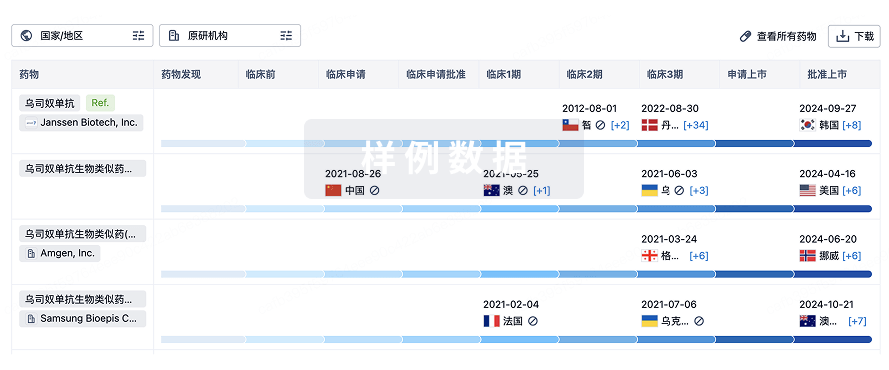
生物类似药在不同国家/地区的竞争态势。请注意临床1/2期并入临床2期,临床2/3期并入临床3期
登录
或
特殊审评
只需点击几下即可了解关键药物信息。
登录
或

提出任何生物医药研究问题
让每一步生物医药决策都精准制胜
基于十亿级生物数据与全球情报的精准 AI,赋能早期药物发现
立即开始免费试用!
智慧芽新药情报库是智慧芽专为生命科学人士构建的基于AI的创新药情报平台,助您全方位提升您的研发与决策效率。
立即接入生物医药数据包
智慧芽新药库数据也通过智慧芽开放平台,以MCP或API服务形式对外开放。立即使用我们的MCP服务定制您的LLM智能体。
生物序列数据库
生物药研发创新
免费使用
化学结构数据库
小分子化药研发创新
免费使用