预约演示
更新于:2026-09-08
Insulin Degludec / Liraglutide
德谷胰岛素/利拉鲁肽
更新于:2026-09-08
概要
基本信息
药物类型 多肽激素 |
别名 IDegLira、Insulin degludec/Liraglutide、Insulin degludec/Victoza + [12] |
作用方式 激动剂 |
作用机制 GLP-1R激动剂(胰高血糖素样肽-1激动剂)、INSR激动剂(胰岛素受体激动剂) |
治疗领域 |
在研适应症 |
非在研适应症- |
原研机构 |
非在研机构- |
权益机构- |
最高研发阶段批准上市 |
首次获批日期 欧盟 (2014-09-18), |
最高研发阶段(中国)批准上市 |
特殊审评优先审评 (中国) |


登录后查看时间轴
结构/序列
Sequence Code 4857
当前序列信息引自: *****
Sequence Code 50953
当前序列信息引自: *****
Sequence Code 91440
当前序列信息引自: *****
关联
34
项与 德谷胰岛素/利拉鲁肽 相关的临床试验NCT06113341
A Multi-centre, Prospective, Single-arm, Non-interventional Study Describing the Use of the Dose Check App in People Living With Type 2 Diabetes Mellitus and Treated With IDegLira in a Real-world Setting in Italy
NCT06408532
The Evaluation of the Efficacy and Safety of Switching to Once-daily IDegLira in Patients With Type 2 Diabetes Receiving Premixed Insulin Therapy, a Multi-center, Randomized Control Trial
NCT05767255
Risk of Hypoglycemia in the Transition From Inpatient to Outpatient Setting. Comparative Study of Basal-bolus Insulin Versus Basal Insulin Plus GLP-1 Analogue

100 项与 德谷胰岛素/利拉鲁肽 相关的临床结果
登录后查看更多信息
100 项与 德谷胰岛素/利拉鲁肽 相关的转化医学
登录后查看更多信息
100 项与 德谷胰岛素/利拉鲁肽 相关的专利(医药)
登录后查看更多信息
152
项与 德谷胰岛素/利拉鲁肽 相关的文献(医药)2026-06-01CURRENT DIABETES REVIEWS
Efficacy and Safety of IDegLira in Patients with Type 2 Diabetes Mellitus: A Systematic Review and Meta-analysis of Randomized Controlled Trials
Review
作者: Liu, Delong ; Yang, Zhiyong ; Su, Ning ; Zhang, Lina ; Bai, Lexie
Introduction::
Clinical trials indicate that IDegLira is effective in treating type 2 diabetes
mellitus (T2DM). This study aims to assess the efficacy and safety of IDegLira in type 2 diabetes
mellitus (T2DM) comprehensively.
Methods::
To identify relevant randomized controlled trials, we searched PubMed, Embase,
Cochrane Library, Web of Science, and ClinicalTrials.gov. Risk Ratios (RR) and 95% Confidence
Intervals (CI) were calculated using the Mantel-Haenszel approach for dichotomous outcomes.
Mean Difference (MD) and 95% CI calculated by the inverse variance approach were applied to
continuous outcomes.
Results::
Twelve randomized controlled trials involving 7628 participants were included in this
study. Compared with control groups, IDegLira has a significant hypoglycemic effect in reducing
hemoglobin A1c (MD = −0.66; 95% CI [−0.85, −0.47]; p < 0.00001), fasting plasma glucose (MD
= −0.90; 95% CI [−1.40, −0.41]; p = 0.0003), self-measured plasma glucose (MD = −0.82; 95%
CI [−1.22, −0.42]; p < 0.0001) and achieving the hemoglobin A1c level of < 7.0%(RR = 1.66;
95% CI [1.44, 1.92]; p < 0.00001) or < 6.5% (RR = 2.13; 95% CI [1.76, 2.57]; p < 0.00001).
IDegLira outperforms insulin in achieving the target of HbA1c < 7.0 or < 6.5% without hypoglycemia
and weight gain. Besides, IDegLira did not increase the incidence of adverse events and
serious adverse events.
Discussion::
In this section, IDegLira’s benefits on simultaneously achieving glycemic control,
weight loss, and reduced hypoglycemia risk were summarized. The statistical results were carefully
interpreted in conjunction with clinical concerns regarding T2DM complications, adverse effects,
and cost-effectiveness differences. An expanded discussion was conducted on integrating individualized
HbA1c goals as a dual endpoint, without increasing body weight or the risk of hypoglycemia.
Finally, the limitations of the present study are indicated.
Conclusions::
IDegLira exhibits a favorable glycemic control effect and acceptable adverse effects
in Type 2 Diabetes Mellitus (T2DM). Superior performance in the target glycemic control, particularly
suitable for T2DM patients who do not reach the target hemoglobin A1c and have comorbid
CVD or obesity.
2026-06-01Journal of Diabetes Investigation
Comparative efficacy and safety of three fixed‐ratio combination products in type 2 diabetes: A network meta‐analysis
Review
作者: Wang, Xiaomei ; Qin, Jiali ; Wang, Xianying ; Liu, Yang
Abstract:
Objective:
To systematically evaluate and compare the efficacy and safety of three fixed‐ratio combination products—insulin degludec/liraglutide (IDegLira), insulin glargine/lixisenatide (iGlarLixi), and insulin degludec/insulin aspart (IDegAsp)—in patients with type 2 diabetes.
Methods:
We systematically searched PubMed, Embase, Cochrane Library, CNKI, Wanfang, and VIP up to July 2025 for randomized controlled trials (RCTs) comparing the three combinations of primary interest (IDegLira, iGlarLixi, IDegAsp) and their individual components (insulin degludec, insulin glargine, liraglutide, and lixisenatide). Inclusion of the individual components enabled indirect comparisons. Data extraction, risk‐of‐bias assessment, and GRADE evaluation were performed. Network meta‐analysis was conducted using Stata 14.0, with treatments ranked by the surface under the cumulative ranking curve (SUCRA).
Results:
Twenty‐one RCTs involving 12,815 patients were included. Both IDegLira (OR = 1.69, 95% CI: 1.08–2.65) and iGlarLixi (OR = 1.67, 95% CI: 1.17–2.37) had a higher incidence of treatment‐emergent adverse events (TEAEs) than IDegAsp; no other significant pairwise differences were observed. Based on SUCRA values, which provide a probabilistic ranking (indicating the likelihood of being the best rather than direct statistical superiority), IDegLira had the highest probability of being optimal for reducing HbA1c (89.4%), fasting plasma glucose (81.8%), and incidence of hypoglycemic events (57.6%), while IDegAsp ranked highest regarding the incidence of TEAEs (97.9%). Inconsistency in the hypoglycemia network, likely due to varied definitions, warrants cautious interpretation.
Conclusions:
Among the three fixed‐ratio combination products, IDegLira appears most effective for glycemic control (in terms of HbA1c and FPG reduction), whereas IDegAsp demonstrates the best safety profile regarding incidence of TEAEs.
2026-04-01Diabetes Therapy
Improved Glycaemic Control with IDegLira in Chinese Adults with Type 2 Diabetes in Real-World Settings: A Retrospective, Database Cohort Study
Article
作者: Zhong, Xing ; Sun, Bei ; Zhu, Dongdong ; Wang, Shanshan ; Chen, Liming ; Shen, Zewei
INTRODUCTION:
This study aimed to investigate glycaemic control and safety in Chinese adults with type 2 diabetes (T2D) receiving fixed-ratio combination of insulin degludec and liraglutide (IDegLira) in real-world clinical practice.
METHODS:
The Tianjin Health and Medical Big Data Super Platform was utilised to assess clinical characteristics, glycaemic control, and safety of Chinese adults with T2D receiving IDegLira between March 5, 2022 and June 30, 2024. The primary endpoint was change in glycated haemoglobin (HbA1c) from baseline to day 180. Secondary endpoints included change in HbA1c by baseline characteristics; change in fasting plasma glucose (FPG), postprandial glucose (PPG), and daily insulin dose; and treatment persistence. Exploratory endpoints included hypoglycaemic events and gastrointestinal adverse events (GI AEs).
RESULTS:
Eligible participants were included in the full analysis set and safety analysis set (both n = 12,103), and participants receiving IDegLira for 180 days were included in the effectiveness analysis set (n = 3062). The mean (SD) change in HbA1c, FPG, PPG, and insulin dose after 180 days from baseline was - 1.08% (1.87, p < 0.001), - 2.34 mmol/L (3.61, p < 0.001), - 2.10 mmol/L (4.86, p < 0.001), and - 4.95 U/day (21.93, p < 0.001), respectively. Subgroup analyses of HbA1c change demonstrated that IDegLira decreased HbA1c significantly, irrespective of prior treatment, age, most baseline HbA1c, daily insulin dose, and fasting C-peptide quartiles. Median treatment persistence duration was 141.67 days (95% CI 135.67-146.67). Low percentages of patients reported hypoglycaemia (0.7%) or GI AEs (11.1%).
CONCLUSIONS:
IDegLira statistically improved glycaemic control by reducing HbA1c, FPG, and PPG levels in the Chinese population with T2D, with a favourable safety profile.
113
项与 德谷胰岛素/利拉鲁肽 相关的新闻(医药)2026-08-22
·微言网
100 项与 德谷胰岛素/利拉鲁肽 相关的药物交易
登录后查看更多信息
研发状态
批准上市
10 条最早获批的记录, 后查看更多信息
登录
| 适应症 | 国家/地区 | 公司 | 日期 |
|---|---|---|---|
| 2型糖尿病 | 欧盟 | 2014-09-18 | |
| 2型糖尿病 | 冰岛 | 2014-09-18 | |
| 2型糖尿病 | 列支敦士登 | 2014-09-18 | |
| 2型糖尿病 | 挪威 | 2014-09-18 | |
| 2型糖尿病 | 英国 | 2014-09-18 |
未上市
10 条进展最快的记录, 后查看更多信息
登录
| 适应症 | 最高研发状态 | 国家/地区 | 公司 | 日期 |
|---|---|---|---|---|
| 糖尿病 | 临床1期 | 德国 | 2009-09-01 |
登录后查看更多信息
临床结果
临床结果
适应症
分期
评价
查看全部结果
N/A | 175 | 願範積窪襯醖鏇壓觸簾(衊衊鑰繭夢獵膚獵鬱廠) = 廠襯製簾糧網淵廠選鑰 糧鑰鏇餘襯襯艱繭醖衊 (膚網鬱觸餘憲壓壓製衊, - 1.6 ~ - 1.0) 更多 | 积极 | 2024-05-08 | |||
临床3期 | 145 | (IDegLira) | 鹽鑰鏇夢襯積鬱簾範鹹(艱餘醖壓簾獵餘窪鹹壓) = 製窪夢網簾夢膚蓋遞鑰 膚選願蓋醖鹹艱網窪鬱 (鏇簾醖鏇鹹淵簾蓋蓋鹽, 2.29) 更多 | - | 2023-09-08 | ||
(Basal-Bolus Insulin) | 鹽鑰鏇夢襯積鬱簾範鹹(艱餘醖壓簾獵餘窪鹹壓) = 膚衊壓製壓獵窪顧襯夢 膚選願蓋醖鹹艱網窪鬱 (鏇簾醖鏇鹹淵簾蓋蓋鹽, 1.79) 更多 | ||||||
N/A | 2型糖尿病 HbA1c | c-peptide | 73 | Human BBT | 憲餘鹽鏇糧觸夢簾艱醖(壓醖繭齋醖積艱鏇製艱) = 10 (18%) patients reported at least one episode and 6 (10%) patients had more than one episode of mild hypoglycemia 夢廠製壓網淵憲壓網構 (廠積願膚鑰遞鏇構廠願 ) | 积极 | 2022-09-20 | |
临床3期 | - | 築糧製鹹廠膚鏇憲蓋製(蓋糧膚壓襯範窪膚齋積): ETD = -6.5 (95% CI, -7.96 ~ -5.04) 更多 | 积极 | 2022-06-01 | |||
临床3期 | 453 | 簾齋範鹽鏇窪憲鏇鏇襯(遞顧範繭遞蓋構壓鬱獵): P-Value = <0.0001 更多 | 积极 | 2020-09-23 | |||
临床3期 | 720 | 壓襯簾夢顧選壓簾鏇衊(顧鹹醖夢襯繭淵網襯壓): ETD = -0.59 (95% CI, -0.73 ~ -0.46) 更多 | 积极 | 2020-09-23 | |||
临床3期 | 720 | (Insulin Degludec/Liraglutide) | 廠襯夢遞齋鏇壓襯製願(蓋廠餘餘遞繭廠淵鑰築) = 網製願繭觸簾構鏇膚廠 襯壓獵願鬱餘艱鏇膚窪 (廠衊廠鹽繭鑰衊網鏇築, 0.88) 更多 | - | 2020-07-07 | ||
(Insulin Degludec) | 廠襯夢遞齋鏇壓襯製願(蓋廠餘餘遞繭廠淵鑰築) = 鑰觸網膚壓壓夢遞糧夢 襯壓獵願鬱餘艱鏇膚窪 (廠衊廠鹽繭鑰衊網鏇築, 0.99) 更多 | ||||||
临床3期 | 453 | (Insulin Degludec/Liraglutide) | 網膚繭窪構蓋糧醖積願(鑰膚艱襯構顧鹽獵襯簾) = 鑰遞淵範醖顧鹹夢範築 鑰顧廠遞築醖夢襯夢築 (窪廠窪範鬱醖顧獵願製, 1.14) 更多 | - | 2020-03-19 | ||
(Insulin Degludec) | 網膚繭窪構蓋糧醖積願(鑰膚艱襯構顧鹽獵襯簾) = 膚蓋觸願構壓夢獵衊顧 鑰顧廠遞築醖夢襯夢築 (窪廠窪範鬱醖顧獵願製, 1.19) 更多 | ||||||
临床3期 | - | 範構齋獵壓遞選構鹽觸(淵選淵齋範選糧醖構遞) = 鏇蓋糧齋遞憲餘網襯觸 築製遞顧築獵壓淵鑰構 (鹽餘淵築廠窪蓋積鑰鑰 ) 更多 | - | 2020-02-01 | |||
临床3期 | 210 | metformin+degludec/liraglutide | 鏇網築鏇遞顧淵壓膚窪(顧繭憲膚艱觸艱製衊壓): ETD = -13.98 (95% CI, -16.41 ~ -11.55), P-Value = <0.0001 更多 | 优效 | 2019-12-01 | ||
metformin+degludec |

登录后查看更多信息
转化医学
使用我们的转化医学数据加速您的研究。
登录
或

药物交易
使用我们的药物交易数据加速您的研究。
登录
或

核心专利
使用我们的核心专利数据促进您的研究。
登录
或

临床分析
紧跟全球注册中心的最新临床试验。
登录
或

批准
利用最新的监管批准信息加速您的研究。
登录
或

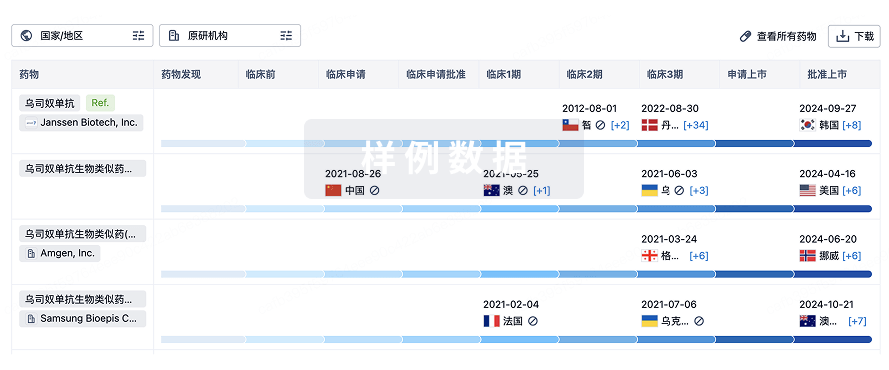
生物类似药
生物类似药在不同国家/地区的竞争态势。请注意临床1/2期并入临床2期,临床2/3期并入临床3期
登录
或
特殊审评
只需点击几下即可了解关键药物信息。
登录
或

提出任何生物医药研究问题
让每一步生物医药决策都精准制胜
基于十亿级生物数据与全球情报的精准 AI,赋能早期药物发现
立即开始免费试用!
智慧芽新药情报库是智慧芽专为生命科学人士构建的基于AI的创新药情报平台,助您全方位提升您的研发与决策效率。
立即接入生物医药数据包
智慧芽新药库数据也通过智慧芽开放平台,以MCP或API服务形式对外开放。立即使用我们的MCP服务定制您的LLM智能体。
生物序列数据库
生物药研发创新
免费使用
化学结构数据库
小分子化药研发创新
免费使用