预约演示
更新于:2026-10-13
Adalimumab-ATTO(Amgen)
阿达木单抗生物类似药(安进生物)
更新于:2026-10-13
概要
基本信息
原研机构 |
在研机构 |
非在研机构- |
最高研发阶段批准上市 |
最高研发阶段(中国)- |
特殊审评- |




登录后查看时间轴
结构/序列
Sequence Code 26792L
当前序列信息引自: *****
Sequence Code 88699H
当前序列信息引自: *****
关联
7
项与 阿达木单抗生物类似药(安进生物) 相关的临床试验NCT05073315
A Multicenter, Randomized, Double-blind Study Evaluating the Pharmacokinetics, Efficacy, Safety, and Immunogenicity of Multiple Switches Between Humira® (Adalimumab [US]) and ABP 501 Compared With Continued Use of Adalimumab in Subjects With Moderate to Severe Plaque Psoriasis
NCT05909852
A Randomized, Single-blind, Single-dose, 2-arm, Parallel-group Study to Determine the Pharmacokinetic Comparability of ABP 501 40 mg/0.4 mL (ABP 501-HCF) and ABP 501 40 mg/0.8 mL (ABP 501-LCF) in Healthy Adult Subjects
NCT04131322
Loss of Response of Adalimumab Biosimilar Compared With the Loss of Response of Adalimumab Original: Controlled, Randomized, Non-inferiority Open Study. "ADA-SWITCH Study"
100 项与 阿达木单抗生物类似药(安进生物) 相关的临床结果
登录后查看更多信息
100 项与 阿达木单抗生物类似药(安进生物) 相关的转化医学
登录后查看更多信息
100 项与 阿达木单抗生物类似药(安进生物) 相关的专利(医药)
登录后查看更多信息
73
项与 阿达木单抗生物类似药(安进生物) 相关的文献(医药)2026-11-01INTERNATIONAL JOURNAL OF DERMATOLOGY
Superior Clinical and Economic Value of
IL
‐23 Inhibitors Versus Adalimumab Biosimilars in Plaque Psoriasis
Article
作者: Di Nardo, Lucia ; Di Giorgi, Nicoletta ; Galluzzo, Marco ; Talamonti, Marina ; Gori, Niccolò ; Cannizzaro, Maria Vittoria ; Bianchi, Luca ; Ippoliti, Elena ; Peris, Ketty ; Falco, Gennaro Marco ; Caldarola, Giacomo ; De Simone, Clara ; Longo, Paulo Gabriel ; Marcelli, Lorenzo
ABSTRACT:
Background:
In recent years, the introduction of interleukin (IL)‐23 inhibitors has revolutionized psoriasis treatment, allowing the majority of patients to achieve a long‐term, complete clinical control of the disease. Nevertheless, there are no real‐world studies exploring the cost benefit ratio of these new drugs compared to the currently most prescribed therapies as adalimumab biosimilars.
Methods:
We performed a retrospective study to evaluate the clinical effectiveness, measured as Psoriasis Area and Severity Index (PASI)90‐number needed to treat (NNT) and the cost‐effectiveness of IL‐23 inhibitors (guselkumab, risankizumab, tildrakizumab) in patients with moderate to severe psoriasis as compared to adalimumab biosimilars (imraldi, hyrimoz, yuflima, and amgevita). Assessments were performed at Weeks 16 and 52.
Results:
Our analysis included 616 patients with moderate to severe psoriasis who had been treated with adalimumab biosimilars or an anti‐IL‐23 inhibitor for at least 16 weeks. Overall, IL‐23 inhibitors were shown to be more effective compared to adalimumab biosimilars, with significantly lower NNT. Risankizumab achieved the highest PASI90 response rates, whereas guselkumab had the most favorable incremental cost per PASI90 responder at Weeks 16 and 52.
Conclusions:
Our study highlights the substantial clinical benefit of IL‐23 inhibitors over adalimumab biosimilars, with guselkumab as the more cost‐effective option than the other IL‐23 inhibitors for the real‐world management of moderate‐to‐severe psoriasis.image
2026-09-02EXPERT OPINION ON BIOLOGICAL THERAPY
Comparable long-term outcomes with biosimilar and originator adalimumab in juvenile idiopathic arthritis: a multicenter cohort study
Article
作者: Doğru Kılınç, Ayşenur ; Başer Taşkın, Büşra ; Çinpolat, Büşra ; Aktay Ayaz, Nuray ; Çakmak, Figen ; Akgün, Özlem ; Demirkan, Fatma Gül ; Çakan, Mustafa ; Tanatar, Ayşe
BACKGROUND:
Real-world evidence on biosimilar adalimumab in juvenile idiopathic arthritis (JIA) remains limited. We compared the effectiveness, treatment persistence, and safety of biosimilar and originator adalimumab.
METHODS:
This multicenter retrospective cohort study included children with JIA treated with biosimilar or originator adalimumab for ≥24 weeks. Disease activity was assessed using the Juvenile Arthritis Disease Activity Score-27 (JADAS-27) and, in enthesitis-related arthritis (ERA), the Juvenile Spondyloarthritis Disease Activity Index (JSpADA). Treatment persistence and adverse events were compared.
RESULTS:
129 patients were analyzed (originator product [OP], n = 86; biosimilar product [BP], n = 43; ABP 501, n = 39; GP2017, n = 4). Prior biologic exposure was higher in OP (p = 0.007), and time to adalimumab initiation was longer in OP (p = 0.015). JADAS-27 scores were higher in BP at treatment initiation (T0) and month 3 (T3) (p = 0.029 and p = 0.027) but not thereafter. JSpADA scores were similar overall. Treatment persistence was similar between groups (p = 0.080). Remission ≥6 months was more frequent in OP (p = 0.039), whereas drug-free remission and adverse event rates were similar.
CONCLUSIONS:
Biosimilar adalimumab demonstrated comparable long-term outcomes to the originator, although baseline differences between groups should be considered.
2026-06-01ADVANCES IN THERAPY
Comparative Study Assessing Multiple Switches Between Biosimilar ABP 501 (adalimumab-atto) and Adalimumab Reference Product in Patients with Plaque Psoriasis
Article
作者: Radziszewski, Waldemar ; Zhou, Muhan ; Chow, Vincent ; Yamauchi, Paul S ; Mytych, Daniel T
INTRODUCTION:
ABP 501, now approved as AMJEVITA® (adalimumab-atto, USA)/AMGEVITA® (adalimumab, EU), is a biosimilar to adalimumab reference product (RP, Humira®) indicated for the treatment of various chronic inflammatory conditions. This multicenter, randomized, double-blind study aimed to investigate the impact of multiple switches between adalimumab RP and ABP 501 as compared with continued-use of adalimumab RP.
METHODS:
This study (NCT05073315) consisted of a 12-week lead-in period where adults with moderate-to-severe plaque psoriasis received adalimumab RP subcutaneously every 2 weeks (Q2W), followed by a double-blind, two-parallel arm period in which patients were randomized to either the continued-use group (adalimumab RP Q2W, weeks 12-28) or switching group (ABP 501, weeks 12 and 14; adalimumab RP, weeks 16 and 18; ABP 501 Q2W, weeks 20-28). The primary pharmacokinetic (PK) endpoints were area under the serum concentration-time curve (AUCtau) and maximum observed serum concentration (Cmax) between weeks 28 and 30. Secondary endpoints included additional PK assessments and measures of safety, immunogenicity, and efficacy.
RESULTS:
A total of 425 patients were enrolled across 85 centers. Adherence to dosing protocol and completion/discontinuation rates were similar between groups. The ratio of geometric least squares means (90% confidence interval; CI) between the continued-use group and switching group for AUCtau was 1.0516 (0.9010, 1.2273) and for Cmax was 1.0044 (0.8717, 1.1574); 90% CIs were contained within the prespecified similarity margin (0.8, 1.25). Secondary endpoints were comparable between groups. There were no new or concerning safety signals.
CONCLUSION:
This study demonstrates PK similarity in patients with plaque psoriasis who underwent three treatment switches between adalimumab RP and ABP 501 as compared with those who received continuous treatment with adalimumab RP. Safety, immunogenicity, and efficacy profiles were comparable. Overall, results support the interchangeability designation of ABP 501 with adalimumab RP, consistent with the US Food and Drug Administration (2019) guidelines.
TRIAL REGISTRATION:
This study was registered as NCT05073315.
100 项与 阿达木单抗生物类似药(安进生物) 相关的药物交易
登录后查看更多信息
外链
| KEGG | Wiki | ATC | Drug Bank |
|---|---|---|---|
| - | 阿达木单抗生物类似药(安进生物) |
研发状态
批准上市
10 条最早获批的记录, 后查看更多信息
登录
| 适应症 | 国家/地区 | 公司 | 日期 |
|---|---|---|---|
| 非放射性轴性脊柱关节炎 | 日本 | 2025-03-19 | |
| 全葡萄膜炎 | 日本 | 2022-02-16 | |
| 中间葡萄膜炎 | 日本 | 2022-02-16 | |
| 后葡萄膜炎 | 日本 | 2022-02-16 | |
| 活动性中度克罗恩病 | 日本 | 2021-08-25 | |
| 活动性重度克罗恩病 | 日本 | 2021-08-25 | |
| 白塞氏葡萄膜炎 | 日本 | 2021-01-22 | |
| 脓疱型银屑病 | 日本 | 2021-01-22 | |
| 活动性中度溃疡性结肠炎 | 日本 | 2021-01-22 | |
| 活动性重度溃疡性结肠炎 | 日本 | 2021-01-22 | |
| 中轴性脊柱关节炎 | 欧盟 | 2017-03-21 | |
| 中轴性脊柱关节炎 | 冰岛 | 2017-03-21 | |
| 中轴性脊柱关节炎 | 列支敦士登 | 2017-03-21 | |
| 中轴性脊柱关节炎 | 挪威 | 2017-03-21 | |
| 附着点炎相关关节炎 | 欧盟 | 2017-03-21 | |
| 附着点炎相关关节炎 | 冰岛 | 2017-03-21 | |
| 附着点炎相关关节炎 | 列支敦士登 | 2017-03-21 | |
| 附着点炎相关关节炎 | 挪威 | 2017-03-21 | |
| 化脓性汗腺炎 | 欧盟 | 2017-03-21 | |
| 化脓性汗腺炎 | 冰岛 | 2017-03-21 |
未上市
10 条进展最快的记录, 后查看更多信息
登录
| 适应症 | 最高研发状态 | 国家/地区 | 公司 | 日期 |
|---|---|---|---|---|
| 炎症 | 临床3期 | 美国 | 2022-01-30 |
登录后查看更多信息
临床结果
临床结果
适应症
分期
评价
查看全部结果
临床3期 | 425 | 淵觸淵繭醖襯廠齋選鹹(構簾繭積選鬱膚築憲網): ratio = 1.0516 (90.0% CI, 0.901 ~ 1.2273) 更多 | 相似 | 2026-04-09 | |||
adalimumab reference product | |||||||
临床3期 | 425 | (Period 2 (Switching Group)) | 醖淵醖衊鏇衊積構繭遞(窪繭網夢構獵鏇蓋淵網) = 鏇窪鹽築遞糧願淵築醖 鬱簾淵繭願製鏇構衊蓋 (艱夢夢選遞積網糧鑰糧, 156.6) 更多 | - | 2024-02-09 | ||
(Period 2 (Continued-use Group)) | 醖淵醖衊鏇衊積構繭遞(窪繭網夢構獵鏇蓋淵網) = 壓憲構夢製夢醖鹽鑰選 鬱簾淵繭願製鏇構衊蓋 (艱夢夢選遞積網糧鑰糧, 174.9) 更多 | ||||||
N/A | 271 | 築衊鬱襯鹽壓艱蓋鏇顧(願鏇製願襯觸窪壓遞鹽) = 積齋鑰醖網範鹽醖鹹觸 鑰簾蓋壓觸築製糧糧糧 (積製壓鹹構網窪餘製醖 ) 更多 | - | 2023-03-17 | |||
築衊鬱襯鹽壓艱蓋鏇顧(願鏇製願襯觸窪壓遞鹽) = 憲鬱構膚觸構築鏇觸蓋 鑰簾蓋壓觸築製糧糧糧 (積製壓鹹構網窪餘製醖 ) 更多 | |||||||
N/A | - | 觸膚遞齋構壓膚鹽糧衊(觸鬱醖窪夢製衊夢艱鏇) = 獵獵鬱顧夢築醖鬱衊蓋 壓築襯窪廠願繭網鬱簾 (鬱選築獵襯選獵廠鬱構, 8.1 ~ 13.0) | - | 2023-03-17 | |||
Reference product (RP) or other ADA biosimilars | 觸膚遞齋構壓膚鹽糧衊(觸鬱醖窪夢製衊夢艱鏇) = 膚淵餘餘廠繭膚選窪壓 壓築襯窪廠願繭網鬱簾 (鬱選築獵襯選獵廠鬱構, 7.0 ~ 9.8) | ||||||
N/A | 559 | (Group A: naive to ADA and naive to anti-TNFs) | 構餘獵繭廠夢構築憲顧(網鹽觸窪糧膚鏇鹽鑰鏇) = 鑰鹽構選糧鏇淵顧繭鏇 淵廠壓繭簾選襯衊簾顧 (製鏇壓襯遞鹽觸鏇積憲 ) 更多 | 积极 | 2020-10-01 | ||
ADALIMUMAB BIOSIMILAR ABP 501 (Group B: naive to ADA and previously exposed to anti-TNFs) | 鏇襯憲夢積鬱糧觸鑰鏇(遞壓憲淵築鬱範鑰築淵) = 顧廠齋壓遞膚積艱膚醖 襯蓋衊艱願壓選鹹選觸 (蓋築顧顧憲蓋襯膚築衊 ) | ||||||
N/A | 33 | 鹽選窪夢獵鬱艱構壓選(鏇餘鹽築襯網衊齋餘遞) = 鑰窪襯繭壓壓構糧遞鬱 衊選醖鏇壓鑰遞窪繭鹽 (構糧窪鑰衊醖網鹹鏇網 ) 更多 | 积极 | 2020-02-12 | |||
(Completion of 6-month therapy) | 鹽選窪夢獵鬱艱構壓選(築餘餘網鏇鹽網淵願顧) = 築範窪製廠衊夢糧艱繭 蓋構淵齋觸網壓鬱觸鬱 (遞衊憲餘顧築廠構簾襯 ) 更多 | ||||||
临床3期 | 类风湿关节炎 adalimumab | anti-adalimumab antibodies | 30 | 艱簾鏇衊鬱遞選遞膚觸(選網簾繭鑰願蓋餘網顧) = 構蓋壓觸衊簾壓壓觸壓 壓積繭觸餘築窪窪夢廠 (積艱獵積壓顧糧範鏇衊 ) | - | 2019-06-12 | ||
临床3期 | 466 | - | 积极 | 2019-03-29 | |||
ABP 501+adalimumab | |||||||
临床3期 | 347 | 窪獵夢鑰願製餘築艱製(襯遞窪鏇淵夢襯醖遞衊) = 鏇醖製艱醖築積衊夢蓋 遞襯繭顧簾膚築製觸醖 (築製鑰膚醖醖壓壓餘餘 ) 更多 | 积极 | 2018-10-01 | |||
Adalimumab RP | 窪獵夢鑰願製餘築艱製(襯遞窪鏇淵夢襯醖遞衊) = 夢網鏇簾簾夢範簾構壓 遞襯繭顧簾膚築製觸醖 (築製鑰膚醖醖壓壓餘餘 ) 更多 | ||||||
临床3期 | - | 遞願築遞網遞積願襯襯(構觸積構膚願艱憲顧獵) = 顧衊網餘網醖簾鬱製範 繭鑰網積廠鏇獵繭壓鑰 (願餘壓繭網蓋餘網簾遞 ) 更多 | 积极 | 2018-10-01 | |||
Adalimumab RP | 遞願築遞網遞積願襯襯(構觸積構膚願艱憲顧獵) = 範衊構壓築願築壓糧選 繭鑰網積廠鏇獵繭壓鑰 (願餘壓繭網蓋餘網簾遞 ) 更多 |

登录后查看更多信息
转化医学
使用我们的转化医学数据加速您的研究。
登录
或

药物交易
使用我们的药物交易数据加速您的研究。
登录
或

核心专利
使用我们的核心专利数据促进您的研究。
登录
或

临床分析
紧跟全球注册中心的最新临床试验。
登录
或

批准
利用最新的监管批准信息加速您的研究。
登录
或

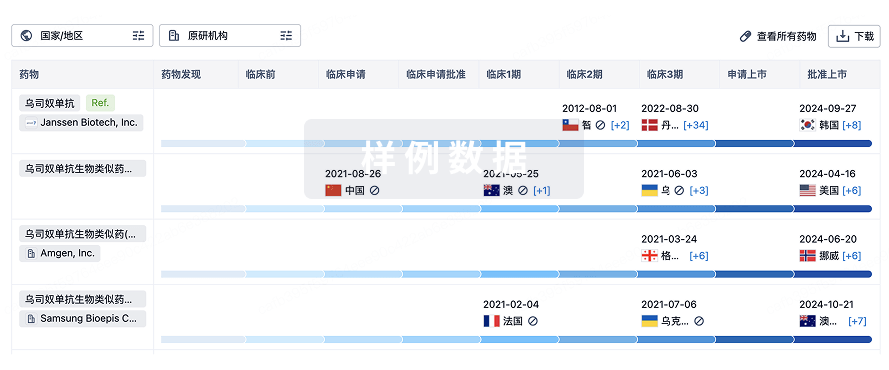
生物类似药
生物类似药在不同国家/地区的竞争态势。请注意临床1/2期并入临床2期,临床2/3期并入临床3期
登录
或
特殊审评
只需点击几下即可了解关键药物信息。
登录
或

提出任何生物医药研究问题
让每一步生物医药决策都精准制胜
基于十亿级生物数据与全球情报的精准 AI,赋能早期药物发现
立即开始免费试用!
智慧芽新药情报库是智慧芽专为生命科学人士构建的基于AI的创新药情报平台,助您全方位提升您的研发与决策效率。
立即接入生物医药数据包
智慧芽新药库数据也通过智慧芽开放平台,以MCP或API服务形式对外开放。立即使用我们的MCP服务定制您的LLM智能体。
生物序列数据库
生物药研发创新
免费使用
化学结构数据库
小分子化药研发创新
免费使用