预约演示
更新于:2026-10-08
Zanidatamab Zovodotin
更新于:2026-10-08
概要
基本信息
药物类型 ADC |
别名 anti-HER2 x HER2 ADC、zanidatamab zovodotin、ADC ZW49 + [3] |
作用方式 拮抗剂、抑制剂、调节剂 |
作用机制 HER2拮抗剂(受体蛋白酪氨酸激酶 erbB-2拮抗剂)、微管蛋白抑制剂、免疫调节剂 |
治疗领域 |
在研适应症 |
在研机构 |
非在研机构 |
最高研发阶段临床1期 |
首次获批日期- |
最高研发阶段(中国)临床1期 |
特殊审评- |



登录后查看时间轴
结构/序列
使用我们的ADC技术数据为新药研发加速。
登录
或
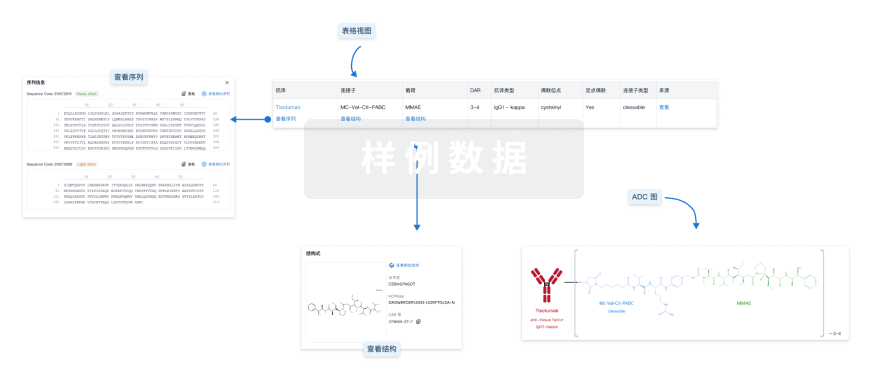
Sequence Code 528522334
来源: *****
Sequence Code 528522342
来源: *****
Sequence Code 528522349
来源: *****
关联
1
项与 Zanidatamab Zovodotin 相关的临床试验NCT03821233
A Phase 1 Study of ZW49 in Patients With Locally Advanced (Unresectable) or Metastatic HER2-Expressing Cancers
This is a first-in-human, Phase 1, multicenter, open-label, dose-escalation study to establish the maximum-tolerated dose (MTD) or recommended dosage (RD) of ZW49, the investigational agent under study, and to assess the safety and tolerability of ZW49. Eligible patients include those with locally advanced (unresectable) or metastatic HER2-expressing cancers.
开始日期2019-04-15 |
申办/合作机构 |
100 项与 Zanidatamab Zovodotin 相关的临床结果
登录后查看更多信息
100 项与 Zanidatamab Zovodotin 相关的转化医学
登录后查看更多信息
100 项与 Zanidatamab Zovodotin 相关的专利(医药)
登录后查看更多信息
1
项与 Zanidatamab Zovodotin 相关的文献(医药)2026-07-01·The Innovation
Design and development of novel EGFR inhibitors spanning all subgroups of EGFR mutations in non-small cell lung cancer
Article
作者: Zhang, Manzhan ; Tang, Jiahong ; Yuan, Zhen ; Wang, Jie ; Xie, Lijuan ; Li, Honglin ; Yang, Tingyuan ; Yan, Zitong ; Cen, Yiting ; Hu, Zeyan ; Zhao, Zhenjiang ; Yu, Panpan ; Chen, Zhuo ; Xu, Yufang ; Wang, Junyi ; Sha, Wenjie ; Li, Shiliang ; Wang, Caolin ; Zhou, Wei ; Sun, Deheng
EGFR mutations are common in non-small cell lung cancer (NSCLC), with classical mutations (L858R and exon 19 deletions [Ex19del]) and T790M mutation responsive to three generations of EGFR inhibitors (TKIs). However, the other 30% EGFR mutations, which are classified into exon 20 insertions (Ex20ins) and PACC (P loop/αC-helix compressing) often confer resistance to current TKIs, thereby inducing limited clinical efficacy. In this article, a conserved subpocket behind the ATP-binding domain was detected with our precursor from in-house virtual screening and structural superposition against all subgroups of mutations. This subpocket was utilized combining with traditional ATP pocket in the design and optimization of pan-EGFR inhibitors. The representative compound ZW-49 could potently inhibit all subgroups of EGFR mutations with selectivity over wild-type EGFR and other target families. By means of in silico simulations, we further elucidate the key sites within the subpocket that significantly contribute to the binding of the Ex20ins and PACC mutations with ZW-49. Furthermore, ZW-49 could efficiently induce tumor regression in multiple xenograft models. Deuterated derivatives of ZW-49 were designed by predicting and modifying the sites of metabolism that exhibited improved PK properties while retaining inhibition activities against all subgroups of EGFR mutations. Our work suggests a pan-EGFR inhibitor development strategy to address EGFR mutational heterogeneity for NSCLC including structure-based drug design and metabolic optimization. We also provided ZW-49 as a promising pan-EGFR inhibitor, currently in phase 1 clinical trials (CTR20212743).
162
项与 Zanidatamab Zovodotin 相关的新闻(医药)2026-09-25
·知乎专栏
抗体偶联药物(Antibody-Drug Conjugates, ADC)作为一类将单抗的靶向性与小分子细胞毒药物的强效杀伤力相结合的新型抗肿瘤药物,近年来在肿瘤治疗领域取得了显著进展。截至2026年第二季度,全球已有22款ADC获得监管机构批准上市,其适应症广泛覆盖实体瘤和血液系统恶性肿瘤(图1)。从研发格局来看,其中6款为中国本土自主研发的ADC药物,分别为维迪西妥单抗、芦康沙妥珠单抗、瑞康曲妥珠单抗、博度曲妥珠单抗、维贝柯妥塔单抗以及伦康依隆妥单抗(双抗ADC);另16款为海外企业原研,其中14款获得美国FDA批准,2款获得日本PMDA批准。此外,鉴于Moxetumomab pasudotox (Lumoxiti)已于2023年7月撤市,目前全球实际处于临床应用阶段的ADC药物共计21款,这标志着该领域已从概念验证迈向规模化临床应用阶段。图1.已获批上市的ADC药物然而,随着临床实践的广泛深入与产品管线的快速扩张,ADC作为兼具大分子生物药与小分子化学药双重属性的"多模式"复合物,其内在的结构复杂性与作用机制的多环节性也日益凸显,使得现有产品在疗效深度、安全窗口与可及性方面仍面临系统性瓶颈。基于上述背景,本文系统梳理当前ADC药物在科学机制与产品开发两个维度所面临的核心局限性,重点围绕耐药性、内化效率低下、脱靶毒性、DAR异质性与药代动力学问题、肿瘤穿透性差以及连接子不稳定性六大议题,深入剖析各类局限性的分子机制与现行应对策略,探讨下一代ADC药物优化设计的理论依据与研究方向,以期为该领域的持续创新提供系统性参考。上述局限性并非并非孤立存在,而是相互关联、协同作用,共同对ADC药物的整体可开发性(Developability)产生影响。书接上回,我们从内化效率谈起。三.内化效率内化效率(Internalization efficiency)是指单位时间内抗原-抗体复合物被细胞内吞的速率与比例,通常以抗原结合后1–4小时内的内化百分比衡量。从PK/PD角度分析,内化效率直接影响三个关键参数:肿瘤细胞内有效载荷浓度、载荷在靶细胞与非靶细胞间的分布差异以及旁观者效应的强度与范围。大量临床前与临床数据揭示,现有ADC靶抗原的内化效率普遍偏低(1-2%)[17],导致大量结合在细胞表面的ADC分子无法进入胞内发挥杀伤作用,最终被代谢清除或介导不必要的正常组织暴露。ADC内化效率低下受到多种因素影响。其一,肿瘤抗原的表达异质性是制约ADC内化效率的首要因素,同一肿瘤组织中不同细胞亚群的靶抗原表达水平可相差10–100倍,导致ADC结合与内化在细胞间呈现高度不均一性;更为复杂的是,同一靶抗原在不同肿瘤类型、不同患者乃至同一患者不同病灶间的内化动力学存在显著差异;肿瘤微环境中的缺氧、酸性、高压等病理特征也会通过调节受体表达与内吞机器活性影响ADC内化效率。其二,从分子机制层面分析,抗体-抗原复合物的内化过程涉及网格蛋白依赖性内吞(Clathrin-mediated endocytosis, CME)、小窝蛋白依赖性内吞(Caveolae-mediated endocytosis)、网格蛋白/小窝蛋白非依赖性内吞等多种途径;其中CME是受体介导内吞的主要途径,但其运载能力存在上限;抗体的亲和力与内化效率之间存在复杂的非线性关系,过高的亲和力可能导致“结合位点屏障”(binding site barrier, BSB)效应,导致内化主要发生在血管周边区域,肿瘤内部细胞无法被有效杀伤[18]。3.1 非内化ADC非内化ADC (Non-internalizing ADC)是对传统ADC内化依赖范式的根本性反思与创新。非内化ADC的优势体现在多个层面:首先,无需依赖靶抗原的内化能力,极大拓展了可靶向抗原的范围,包括传统上被认为“不可成药”的低内化抗原;其次,胞外释放的载荷可通过旁观者效应杀伤邻近的抗原阴性肿瘤细胞,克服肿瘤异质性;再者,这一策略将ADC的作用模式从“靶向-内化-释放”转变为“靶向-胞外释放-旁观者扩散”,从根本上绕过了内化效率瓶颈,避免了内化-溶酶体途径中的多重损耗,理论上可提高载荷的生物利用度(图4)[19]。图4.非内化ADC的作用机制非内化ADC的概念虽提出较晚,但已有多项临床前研究验证其可行性[20],多个完全基于非内化概念设计的ADC已进入临床开发阶段,例如Tagworks的TGW101 (靶向TAG-72,NCT06959706)和Pyxis Oncology的Micvotabart pelidotin (PYX-201,靶向EDB⁺FN,NCT06795412,NCT05720117)。这些分子主要针对传统内化ADC难以成药的靶点(如低内化速率的实体瘤抗原),采用MMP敏感或还原敏感连接子,偶联高膜通透性载荷。早期临床数据显示出可接受的安全性与初步疗效信号,但需在更大规模临床试验中验证其治疗指数是否优于传统内化ADC。未来,随着对肿瘤微环境生物学理解的深入与连接子化学的创新,非内化ADC有望成为ADC领域的重要分支。然而,这一策略也面临胞外释放特异性、系统毒性控制、载荷扩散范围调控等挑战,需要精细的分子设计。3.2 相分离介导的内化效率提升生物分子相分离(Biomolecular phase separation)或液-液相分离(Liquid-liquid phase separation, LLPS)是近年来细胞生物学领域的重大突破性概念,为理解细胞内无膜细胞器的形成与功能提供了全新视角,并迅速扩展至信号传导、基因调控、神经退行性疾病等多个研究领域。基于相分离原理的ADC内化增强策略,其核心是通过工程化设计诱导抗原-抗体复合物在细胞表面形成凝聚体样结构,从而触发高效内吞。这一策略的灵感源于对天然受体聚集内化的理解:许多受体的内化速率受其聚集状态调控,多聚体形式的受体通常内化更快。相分离能够将分散的受体分子富集至局部高密度区域,模拟并放大天然聚集内化效应。实现抗原聚集诱导相分离的工程化策略包括多种途径。其一是设计多价抗体或多聚体抗体格式,通过增加抗体价数增强抗原交联能力;其二是引入相分离驱动结构域,融合至抗体片段,赋予其相分离能力;其三是利用外源性交联剂或二级抗体进一步放大聚集效应。近年来,多项研究验证了相分离诱导内化策略的可行性[21],为相分离介导的ADC内化增强提供了概念验证。3.3 其他创新策略双特异性抗体ADC (bispecific ADC, BsADC)通过同时识别两个不同抗原或同一抗原的两个不同表位,实现增强的靶向特异性与内化效率[22]。临床前研究显示,双表位BsADC在诱导受体内化方面具有显著优势。Zymeworks开发的ZW49是一种抗HER2双表位ADC,同时结合HER2结构域II与IV,在HER2低表达细胞中的内化效率较T-DM1提升约3倍,相应体外与体内活性显著增强。目前ZW49已进入临床试验阶段,早期数据显示出可接受的安全性与初步疗效信号。此外,REGN5093-M114 (靶向MET双表位)、BL-M07D1 (靶向HER2双表位)等多个BsADC正处于临床开发中,初步结果令人期待。纳米载体辅助内化策略通过将ADC或其载荷包载于纳米载体中,利用纳米载体的内化优势增强递送效率。纳米载体(如脂质体、聚合物纳米粒、白蛋白纳米粒、外泌体等)通常通过网格蛋白依赖性或巨胞饮途径高效内化,且能够保护载荷免受血浆降解。将ADC包载于纳米载体中,可同时获得ADC的靶向性与纳米载体的内化优势,理论上可显著提升整体递送效率。细胞穿透肽(Cell-penetrating peptides, CPPs)是一类能够介导自身或Cargos穿过细胞膜进入胞内的短肽序列。将CPPs融合至ADC的抗体部分或载荷部分,理论上可赋予ADC直接的胞内进入能力,绕过受体介导内化途径。这一策略在低内化抗原或无合适靶点的场景下具有潜在价值。刺激响应性ADC通过引入外源性刺激(光[23]、超声、磁场、辐射等)响应元件,实现对ADC激活的时空精确控制。这一策略能够将ADC的杀伤效应局限于特定部位,降低系统毒性,同时为内化效率优化提供新思路。例如,光响应ADC可在特定波长光照下激活连接子切割或载荷释放,实现对肿瘤局部的精确打击;超声响应ADC利用聚焦超声的深部穿透能力,激活声敏连接子或纳米载体。前药激活策略通过将载荷设计为前药形式,在肿瘤特异性微环境中被选择性激活,降低系统毒性并提高治疗指数。这一策略可与ADC技术结合,形成“前药载荷ADC”,在保持ADC靶向性的同时,通过前药激活机制增强肿瘤选择性。前药激活机制包括低氧激活、酶激活、pH激活等。尽管非内化ADC、相分离介导内化等创新策略展现出巨大潜力,但其临床转化仍面临多重技术瓶颈。在非内化ADC方面,胞外释放的肿瘤特异性是核心挑战。肿瘤微环境与正常组织在某些特征(如pH、还原环境、蛋白酶表达)上存在重叠,胞外可切割连接子可能在正常组织中被非特异性激活,导致脱靶毒性。此外,胞外释放载荷的扩散范围难以精确控制,过广扩散可能影响正常组织,过窄扩散则无法克服肿瘤异质性。这些挑战需要通过连接子化学的创新与生物标志物的精准识别逐步解决。四.脱靶毒性临床应用中ADC的脱靶毒性(Off-target toxicity)显著制约了其治疗窗口与临床获益。ADC的毒性谱既包含与传统化疗重叠的血液学毒性,也表现出与靶点分布相关的特征性不良反应(图5)[24]。血液学毒性最为常见,包括中性粒细胞减少、血小板减少和贫血,在采用微管抑制剂的ADC中尤为突出。间质性肺病(ILD)是T-DXd等DXd类ADC的剂量限制性毒性,发生率约10%–15%,严重者可致死。此外,外周神经病变、肝毒性、胃肠道反应及眼毒性也屡见报道。值得注意的是,不同ADC呈现出差异化的毒性特征,提示毒性的产生与ADC各组分的设计密切相关,而非单纯由载荷决定。图5.部分获批ADC的主要毒性ADC脱靶毒性的来源是多因素、多层次的,主要包括以下几个方面:1)连接子不稳定导致的载荷提前释放:可裂解连接子在血液循环中被组织蛋白酶或还原环境异常激活,使游离载荷进入系统循环,损伤正常组织。2)抗体非特异性摄取与Fc介导效应:抗体的Fc段可与免疫细胞表面的Fcγ受体结合,介导正常细胞对ADC的非特异性内吞;同时疏水性较强的ADC易形成聚集体,被单核-吞噬细胞系统清除时造成肝、脾损伤;3)靶抗原在正常组织的低水平表达:即使肿瘤高表达靶抗原,正常组织的低水平表达仍可导致ADC被摄取,产生"靶点相关脱靶毒性"(on-target off-tumor toxicity);4)旁观者效应:膜通透性载荷被释放后可扩散至邻近正常细胞,造成周围组织损伤,这在抗原异质性肿瘤治疗中虽有益,但也是毒性扩散的重要途径;5) DAR值与理化性质:DAR过高会增加ADC的疏水性,加速血浆清除并促进聚集,从而加剧脱靶毒性。针对上述问题,新一代ADC的研发可采取多维度优化策略:1)连接子与偶联技术优化:开发更稳定的可裂解连接子和不可裂解连接子,减少血液循环中的载荷脱落;采用定点偶联技术实现均一DAR,降低异质性。2)抗体工程改造:通过Fc段沉默突变(如LALA突变)消除FcγR结合,减少非特异性摄取,采用全人源抗体降低免疫原性。3)新型载荷与分子形式:开发低旁观者效应的载荷、免疫激动剂载荷(ISAC)及前药形式ADC,提高治疗指数。4)给药方案与联合策略:通过剂量优化、分次给药及与靶向药物联合,扩大治疗窗口。ADC脱靶毒性的本质是各组分在分子、细胞及组织层面的非预期相互作用。未来,依托定点偶联、新型载荷及精准抗体工程,结合生物标志物指导的个体化用药,有望进一步拓宽ADC的治疗窗口,推动其向更安全、更高效的方向发展。五. DAR值异质性与药代动力学问题药物抗体比(Drug-to-Antibody Ratio, DAR)是决定ADC疗效与安全性的关键质量属性(图6)。传统随机偶联技术产生的ADC是DAR值高度异质的混合物,不同DAR组分在PK行为、体内分布及毒副作用上存在显著差异,严重制约了ADC的治疗窗口与可开发性。早期ADC多采用赖氨酸或半胱氨酸随机偶联,导致位点与化学计量均不可控,产生庞大数量的位置异构体,且产物DAR值呈0–8的宽分布,平均DAR约3.5–4.0。研究表明,不同DAR组分的PK行为差异显著:高DAR(≥6)组分由于疏水性增强,血浆清除速率显著快于低DAR组分,导致体内有效暴露量降低;而DAR为0的"裸抗体"组分则与ADC竞争靶点结合,削弱疗效。这种异质性使得总抗体PK与偶联抗体PK出现明显分离,增加了PK/PD建模与剂量预测的复杂性,也使批次间质量难以一致控制。图6. DAR值与偶联位点对ADC治疗效果的影响针对DAR异质性与PK问题,新一代ADC研发主要采取以下策略:1)定点偶联技术:通过THIOMAB工程化半胱氨酸、非天然氨基酸插入、酶催化偶联及点击化学等方法,实现载荷在预定位置的均一偶联,获得单一DAR的均质产物,显著改善PK一致性,但上述方法所构建的ADC药物目前暂未有获批上市。2) DAR值理性优化:研究表明DAR在2–4范围内通常可兼顾暴露量与疗效,过高DAR(>6)虽体外活性强,但体内PK劣化反而降低治疗指数,需结合PK/PD模型确定最优DAR,同时也要兼顾载荷的毒性大小来平衡DAR值。3)连接子与载荷亲水性改造:引入PEG/pSAR间隔臂、磺酸基团或采用极性连接子,降低高DAR组分的疏水性,减少聚集与加速清除,实现高DAR值的同时仍保持良好的PK性质。4)新型偶联平台与分子形式:包括糖基化位点偶联、亲和标签介导偶联及双特异性ADC,从源头控制异质性;同时结合Fc工程延长半衰期,进一步优化PK特性。DAR异质性是传统ADC药代动力学复杂化与治疗窗口受限的核心根源。定点偶联技术、DAR理性优化及连接子亲水性改造等策略已显著改善了ADC的均一性与PK行为。未来,结合高分辨分析表征与机制性PK/PD建模,将推动ADC向更可控、更高效的精准药物方向演进。六、肿瘤穿透性差临床及临床前研究均显示,ADC药物在实体瘤中的疗效仍受到肿瘤穿透性差的显著制约。研究表明,ADC药物在静脉给药后主要富集于肿瘤血管周围区域,其有效穿透深度通常仅50–100 μm,远低于实体瘤数百微米至数毫米的厚度,导致肿瘤内部尤其是坏死核心区药物浓度不足,进而引发耐药与复发。ADC肿瘤穿透性差的原因是多因素叠加的结果,涉及分子特性、肿瘤微环境及靶点生物学等多个层面。首先,ADC分子量约为150 kDa,远大于小分子药物(<1 kDa),其扩散系数低,在致密的肿瘤间质中迁移缓慢,难以抵达远离血管的肿瘤细胞。其次,肿瘤血管异常与高间质压,实体瘤血管结构异常、排列紊乱,且存在较高的间质流体压(interstitial fluid pressure, IFP),削弱了跨血管壁的对流运输,使ADC难以从血管渗漏至远端肿瘤组织。第三,细胞外基质屏障,实体瘤细胞外基质(ECM)富含胶原、透明质酸等成分,形成物理屏障,进一步限制大分子扩散(图7)。再者,肿瘤内异质性导致部分区域靶抗原低表达甚至缺失,使ADC无法有效结合与内吞。此外,ADC的DAR值及连接子在血液循环中的稳定性亦会影响其有效到达肿瘤的剂量。图7.肿瘤微环境对ADC的影响针对上述瓶颈,目前研究者们已提出多种策略以改善ADC对实体肿瘤的穿透性。其一是抗体片段化,采用纳米抗体、Fab、scFv等小分子量载体(15–80 kDa)替代完整IgG,可显著改善组织穿透性;其二是通过亲和力调节(affinity tuning),使ADC与抗原以中等亲和力结合,促进药物向肿瘤深部扩散。其三是利用旁观者效应,选用可裂解连接子与膜通透性载荷,使释放的载荷扩散至邻近抗原阴性细胞,弥补异质性缺陷,DS-8201即典型代表。其四是联合血管正常化策略,使用抗血管生成药物或Ang2抑制剂重塑肿瘤血管,降低IFP,改善ADC递送。其五是降解ECM,使用透明质酸酶PEGPH20或LOXL2抑制剂松散间质,提升大分子穿透。其六是开发新型给药方式与条件激活型ADC,包括肿瘤内注射、局部递送及利用“特洛伊木马”策略(如穿越血脑屏障的转铁蛋白受体抗体)。此外,开发条件激活型ADC以减少正常组织摄取、提高肿瘤富集,亦是重要方向。ADC对实体肿瘤穿透性差是限制其疗效的关键瓶颈,其成因涉及分子尺寸、肿瘤微环境与靶点分布等多重因素。通过抗体工程改造、旁观者效应利用、微环境调控及新型给药策略的协同应用,有望显著提升ADC在实体瘤中的穿透与疗效,为下一代ADC药物的设计与临床转化提供重要方向。七、连接子的不稳定性连接子不稳定(包括循环中过早断裂与胞内释放不充分)一直是制约ADC发展的关键瓶颈。早期获批的Mylotarg (Gemtuzumab ozogamicin)即因采用酸敏感的腙键连接子在循环中过早水解,导致严重毒性而于2010年撤市,后期通过剂量调整复市,凸显了连接子稳定性对ADC成败的决定性作用。尽管近年来可裂解与不可裂解连接子技术持续迭代,连接子相关的脱靶毒性、载荷丢失及疗效不足问题仍广泛存在于临床在研ADC中。ADC连接子不稳定的原因涉及化学结构、生物学环境及偶联工艺等多个层面。首先是化学键的固有敏感性,酸敏感腙键在血液循环中仍可缓慢水解,而二硫键连接子虽对pH稳定,却易被血浆中游离的半胱氨酸、谷胱甘肽等含巯基分子经还原反应裂解,导致载荷提前脱落。其次是酶敏感连接子的底物特异性不足,常用Val-Cit、Val-Ala等组织蛋白酶B底物连接子虽设计为胞内特异性裂解,但血浆中其他半胱氨酸蛋白酶及中性粒细胞弹性蛋白酶亦可切割PABC-Val-Cit结构,引发非预期释放。第三是连接子亲脂性与载荷疏水性叠加,使其易与血浆白蛋白非特异性结合,加速药物清除并改变药代动力学行为,间接降低有效递送。再者是偶联位点与方式影响稳定性,传统赖氨酸随机偶联或半胱氨酸偶联产生的异质性混合物中,部分位点暴露于抗体铰链区等柔性区域,更易被酶解或还原。最后是DAR值过高加剧聚集与脱载,高DAR会改变抗体理化性质,增加连接子在循环中的暴露与降解风险,同时加速血浆清除。针对上述问题,可从化学结构、偶联工艺与机制创新等多维度提出系统性解决策略。首先是发展新型可裂解连接子,但以产品为导向的前提下,多数开发者更倾向于选择临床成功验证的连接子。其二是优化不可裂解连接子,这类连接子在循环中高度稳定,仅依赖抗体降解后释放载荷,虽缺乏旁观者效应,但在血液瘤及靶抗原高表达实体瘤中安全性优势显著;其三是位点特异性偶联,实现均一化DAR并选择稳定位点,显著降低异质性带来的脱载风险。其四是开发双重敏感与条件激活型连接子,如同时响应低pH与高GSH的双响应连接子,或基于肿瘤微环境特异酶激活的前体连接子,进一步提升肿瘤特异性释放;也可开发分支型连接子,引入多种作用机制,进一步提升ADC的稳定性和治疗效果(图8)[25]。图8. ADC的线型与支链型连接子连接子稳定性是决定ADC疗效与安全性的核心要素,其不稳定问题源于化学键敏感性、酶底物特异性不足、偶联异质性及高DAR等多重因素。通过新型可裂解/不可裂解连接子设计、位点特异性偶联、亲水性改造及条件激活策略的协同应用,为新一代ADC的稳定性与肿瘤特异性释放方提供新思路。八、结语整体而言,现有ADC药物的局限性并非孤立存在,而是相互交织、彼此牵制,共同构成了制约ADC治疗指数的复杂网络。值得注意的是,针对单一节点的优化往往难以实现整体突破,甚至可能引发新的矛盾:例如,提高DAR值虽可增强单分子杀伤力,却会加剧聚集与肝脏清除;增强旁观者效应有助于克服肿瘤异质性,却可能加重靶外毒性;采用更稳定的连接子可降低循环毒性,却可能牺牲胞内释放效率;抗体片段化改善穿透性的同时又面临半衰期缩短与疗效下降的代价。这种"此消彼长"的权衡关系,决定了ADC的优化不能依赖单点突破,而必须从作用机制链条的全局出发,在靶点选择、抗体工程、连接子化学、载荷设计及偶联工艺之间寻求系统性平衡(图9)[26]。图9.ADC的潜在开发方向下一代ADC的突破将依赖于多学科、多策略的协同创新。一方面,位点特异性偶联、条件激活型连接子、双载荷/双靶点ADC等新技术的融合应用,有望在稳定性、特异性与疗效之间实现更精细的调控;另一方面,基于患者生物标志物的精准分层、联合用药策略的合理布局,以及人工智能辅助的分子设计,将为ADC的个体化与最优化提供新路径。唯有将ADC视为一个有机整体,统筹考量识别、内化、递送与杀伤各环节的协同关系,方能真正释放这一"生物导弹"的临床潜力,推动肿瘤精准治疗迈向新的高度。图10. 癌症治疗中ADC的联合用药策略除了对ADC结构进行创新性改良外,药物联合治疗(图10)[27]也是应对信号通路改变所致耐药性的常用策略之一,特别是在癌症治疗领域,因为单药治疗往往难以达到预期疗效。因此,在临床前模型和临床试验中,人们正积极探索ADC与其他抗肿瘤药物的联合应用。免责声明:本文仅作信息交流之目的。刍荛之作,定有局限,欢迎各位批评指正(dyc21@tsinghua.org.cn),谢谢![Reference]17.Fu, Z., et al., Fu, Z., et al., Antibody drug conjugate: the "biological missile" for targeted cancer therapy. Signal Transduct Target Ther, 2022. 7(1): p. 93.18.Bordeau, B.M., Y. Yang, and J.P. Balthasar, Bordeau, B.M., Y. Yang, and J.P. Balthasar, Transient Competitive Inhibition Bypasses the Binding Site Barrier to Improve Tumor Penetration of Trastuzumab and Enhance T-DM1 Efficacy. Cancer Res, 2021. 81(15): p. 4145-4154.19.Feng, C., et al., Feng, C., et al., Extracellular payload release from non-internalizing antibody-drug conjugates: mechanisms and linker technologies. Drug Deliv, 2026. 33(1): p. 2645769.20.Giansanti, F., et al., Giansanti, F., et al., Secreted Gal-3BP is a novel promising target for non-internalizing Antibody-Drug Conjugates. J Control Release, 2019. 294: p. 176-184.21.Ren, W., et al., Ren, W., et al., Immunoglobulin-Directed Phase Separation for Cell-Specific Modulation of Receptor Signaling. J Am Chem Soc, 2025. 147(38): p. 34620-34631.22.Gu, Y., Z. Wang, and Y. Wang, Gu, Y., Z. Wang, and Y. Wang, Bispecific antibody drug conjugates: Making 1+1>2. Acta Pharm Sin B, 2024. 14(5): p. 1965-1986.23.Yan, X., et al., Yan, X., et al., Silicon Rhodamine-Catalyzed Near-Infrared Light-Induced Photodecaging of Ortho-Nitrobenzyl Groups In Vitro and In Vivo. J Am Chem Soc, 2025. 147(24): p. 20957-20966.24.Tarantino, P., et al., Tarantino, P., et al., Optimizing the safety of antibody-drug conjugates for patients with solid tumours. Nat Rev Clin Oncol, 2023. 20(8): p. 558-576.25.Lei, Y., et al., Lei, Y., et al., Linker Design for the Antibody Drug Conjugates: A Comprehensive Review. ChemMedChem, 2025. 20(15): p. e202500262.26.Pistilli, B., et al., Pistilli, B., et al., Antibody-drug conjugates in precision oncology. Cancer Cell, 2026. 44(6): p. 1126-1146.27.Liu, Y., et al., Liu, Y., et al., Drug resistance to antibody-drug conjugates: mechanisms, challenges, and perspectives. Cancer Biol Med, 2026. 23(6): p. 833-64.
2026-09-24
摘要
抗体-药物偶联物(ADCs)是一类快速扩展的靶向癌症治疗药物,结合了单克隆抗体的高选择性与小分子药物强效的细胞毒性活性。其临床成功依赖于同时优化多个相互依赖参数,包括抗原选择、抗体工程、连接化学和载荷药理学,这限制了传统经验方法的有效性。在此背景下,人工智能(AI)和计算生物物理学的最新进展正在改变ADC的理性设计。人工智能能够大规模整合基因组学、转录组学和蛋白质组学数据,识别具有肿瘤选择性、表面可及的抗原,并支持患者分层策略。深度学习模型通过预测结构、亲和力、稳定性和可开发性来提升抗体工程,而生成算法则加速亲和力成熟和特异性优化。连接子设计和共轭位点的计算预测提升了血浆稳定性、有效载荷释放控制和药物抗体比,而基于图的神经网络则有助于选择和优化具有良好效力、膜通透性和旁观者效应的细胞毒性有效载荷。互补的分子动力学模拟为抗体构象、连接子柔韧性和载荷相互作用提供了原子学的洞见,使得对ADC的稳定性和功能机制有更深入的理解。在转化层面,基于生理学的混合药代动力学-人工智能模型和数字孪生模拟实现了肿瘤穿透、全身暴露和安全性的虚拟评估,最终支持剂量优化和更高效的临床开发。虽然本综述特别强调这些方法在肿瘤学中的应用,但也讨论了癌症之外的新兴ADC策略——包括自身免疫疾病、神经退行性疾病、心血管疾病和代谢疾病。这些计算策略共同代表了机器智能与分子生物学的融合,有望从根本上改变ADC的发展,推动肿瘤及更广泛领域更安全、更精准、更有效的治疗。
简介
抗体-药物偶联物(ADCs)代表了一类快速发展的靶向治疗药物,正在重塑肿瘤学格局。( 1,2)其基本概念看似简单:针对肿瘤相关抗原的单克隆抗体被用来选择性地将高效细胞毒性药物输送到恶性细胞,从而扩大了如果系统性使用相同载荷时,治疗窗口将极其狭窄。(1)在实践中,治疗活性依赖于延长递送级联反应的成功完成——抗原在细胞表面的结合、内化和细胞内运输、连接蛋白切割或抗体分解、载荷释放到细胞质中,以及对于膜通透载荷,扩散到邻近抗原阴性细胞——每一步都可能独立失败。( 3,4)这一概念的临床实现过程较为漫长。原始提案与首次批准相隔数十年,早期药物受限于不稳定的连接剂、异相轭和靶向外毒性。(2)后续几代人通过特定部位结合、更稳定的可切割化学、受控药物抗体比(DAR)以及具有独特作用机制的载荷,解决了这些缺陷,最终催生了重新定义多种肿瘤类型治疗标准的药物。(3)这一代人还推翻了曾被视为既定的假设,尤其是高抗原表达的需求,此前曲妥珠单抗德鲁司坦在HER2低和超低肝炎病中的活性已被证明。( 4,5)这质疑了ADC主要作用机制是通过改善治疗窗口的假设。(6)
因此,该油田进入了快速扩张阶段。血液学和实体肿瘤领域的一系列监管批准、包含数百候选药物的临床前和临床管线、预计到2028年将超过300亿美元的全球市场,以及总额超过100亿美元的个人许可交易,都凸显了该疗法的临床和商业动力。( 1,2)设计策略并行多样化,包括双特异性构造结合两种抗原或同一抗原的两个表位、旨在预防耐药性的双载荷结构、如PD-L1等免疫调节靶点,以及利用肿瘤微环境中蛋白水解活性的非内化设计。( 4,7,8)然而,流失率依然很高,原因更多是结构性的,而非偶然的。理性ADC设计需要靶点生物学、蛋白质工程、药物化学和药理学的协调整合,最佳构造仅通过同时选择合适的抗原、微调抗体亲和力和内化动力学、结合血浆稳定性与高效细胞内切割的连接子工程,以及具备亚纳摩尔效力和充分物理化学特性的载荷的整合而产生。( 3,4)这些参数相互依赖,每一个设计决策都涉及在组合参数空间中效率、安全性和制造性之间权衡,而经验式的逐组件优化无法实际覆盖这些空间。(8)剂量限制性毒性通常被证明是有效载荷介导且抗原非依赖性的,因此靶点中心的临床前策略预测较差。(9)
正是在这样的背景下,人工智能(AI)和计算生物物理学开始改变设计范式。( 6,7)通过将多组学数据集与历史实验结果整合,机器学习模型可以简化目标优先级排序并支持患者分层;蛋白质语言模型和结构预测框架为抗体工程、可开发性评估和链-有效载荷配对提供参考;生成式架构现在提出候选序列和分子,而不仅仅是对现有序列进行排序。( 6,7,8)作为这些数据驱动方法的补充,基于物理的仿真提供了对抗体构象、结合位点可及性、连接子灵活性和有效载荷相互作用的原子层洞察,无需依赖训练数据,因此在策划数据集稀少的领域尤为重要。(10)在转化层面,基于生理学的混合药代动力学-人工智能模型和数字孪生模拟支持肿瘤穿透、全身暴露和毒性的虚拟评估,支持剂量优化和更高效的试验设计。(11)这些方法合起来有潜力缩短开发周期、降低成本,同时提升设计精度和转化成功率,从而减少ADC开发中高流失的特征。( 6,9)但仍有重要的注意事项,包括训练数据稀疏且不平衡、可解释性有限、校准不佳以及几乎缺乏前瞻性验证。
在本综述中,我们探讨了计算和人工智能驱动方法如何应用于ADC工程设计的每个关键组成部分,重点介绍了最新发展以及来自学术界和工业界的实际案例。我们从抗原发现开始,涵盖从集成的表面组和多组数据中识别靶点、肿瘤异质性、表位定位、抗原内化以及新抗原预测。随后,我们关注AI增强抗体设计,包括亲和力成熟、特异性优化和可开发性,随后是连接子设计与结合位点工程,以及在效力、疏水性、旁观者活性和双有效载荷组合方面的有效载荷优化。专门一节讨论基于物理的计算框架及其与机器学习的互补性。随后,我们讨论了疗效与安全性的预测,涵盖基于生理学的药代动力学(PBPK)建模、肿瘤穿透、毒性预测和数字孪生试验,并分别关注耐药性和时间动态,这两者是该领域最具影响力且未被探索的计算前沿。最后,我们考察了肿瘤学以外新兴的ADC应用,并批判性评估了决定这些计算工程策略是否实现转化潜力的局限性、验证要求和监管考量。
抗原发现的人工智能目标识别
识别一种在癌细胞上表达较高、在正常组织中表达极少的肿瘤抗原,是ADC开发的关键第一步。( 12,13)人工智能可通过整合大规模多组学数据集,系统地识别和优先排序候选靶点,速度和精度超越传统方法。(14,15,16)候选抗原根据表达差异、组织特异性和细胞表面定位进行排序,以最大化肿瘤选择性。(15,17,18)
还可以整合的其他参数包括空间转录组学、功能基因组学(如基因集富集分析)、单细胞测序以及患者结局或治疗反应的临床数据(19)(图。1)You等人报告了一篇关于不同方法论的优秀综述。(17)后续还可以加入其他参数,如糖基化模式、内化和/或细胞外暴露靶抗原的降解,以改善ADC靶的选择。现有计算框架还支持蛋白质降解速率、循环动力学和受体周转数据的整合,进一步优化具有有利抗原动力学的ADC靶点优先排序。( 20,21)
纯转录组学方法的一个关键局限是mRNA丰度与实际细胞表面蛋白质密度之间的不完全相关性,而实际密度是直接决定ADC结合和内化效率的参数。( 22,23)基于质谱的表面蛋白质组学,包括细胞表面捕获(CSC)技术和近距离标记策略,如TurboID和APEX2,能够直接定量活肿瘤细胞质膜上的糖蛋白,提供仅靠RNA数据无法获得的拷贝数估计。( 24,25)将这些蛋白质组数据集与转录组和基因组资源整合——如涵盖41种人类细胞类型的细胞表面蛋白图谱(CSPA)所示——能够系统识别具有明确表面定位且肿瘤与正常组织表达差异高的靶点。(24)微尺度表面蛋白质组学的最新进展进一步将该方法扩展至冷冻保存的初级患者样本和低输入临床材料,促进了从发现直接转化为患者层面靶点验证。(26)这些正交数据集共同增强了目标优先级框架,通过基于测量到的蛋白质丰度而非推断表达来选择候选。
作为计算机计算策略的概念验证,研究人员分析了KRAS的表面组(G12C)-突变非小细胞肺(NSCLC)腺癌,并鉴定出具有治疗潜力的细胞表面蛋白作为新型抗体靶点。(27)这种策略也被用于识别乳腺癌中的CAR-T和ADC靶点。(28)这些数据可指导ADC靶点的选择,并指导个别ADC候选者的适应症优先排序和临床开发策略。与此相关,抗HER3 ADC patritumab deruxtecan(HER3-DXd)目前正在临床开发中,针对表皮生长因子受体(EGFR)酪氨酸激酶抑制剂治疗后病情进展的EGFR突变NSCLC患者。(29)对患者数据的经典计算机评估确认该患者群体中存在HER3。(30)临床前体内模型显示对抗HER3 ADC具有显著敏感性,凸显了该治疗方法的转化潜力。( 31,32)本例展示了更广泛的转化范式:计算表面组剖析识别候选靶点,临床前计算机验证确认生物学理据,临床开发随后由生物标志物丰富的患者选择策略指导。值得注意的是,该策略基于存在生物标志物相关性,这些相关性需要在前瞻性研究中验证才能临床实施。
除了表达式层面的标准外,目标优先级还必须考虑直接调制ADC传递的功能特性。抗原脱落——即蛋白酶解释放外质域到胞外空间——产生可溶诱饵分子,能够在循环中的ADC到达肿瘤细胞前将其隔离,从而减少有效的肿瘤暴露。(33)数学建模表明,脱落的影响取决于具体情境。(34)集成脱落率、受体周转和拷贝数数据的AI驱动框架,可以优化候选目标的排序,超越静态表达指标。
同样重要的是抗体中靶向药物的概念:并非所有表达差异的表面蛋白都呈现出可访问且高置信度的抗体结合表位。糖基化、糖球体的空间屏蔽、靠近膜的距离以及蛋白质拥挤,都可能掩盖肿瘤微环境中潜在的结合位点。(35)AlphaFold3凭借其扩展的糖基化蛋白和蛋白-配体复合物建模能力,现已实现在翻译后修饰背景下对表位可及性的计算预测,提供了在实验活动启动前更真实的抗体参与度评估。( 36,37)然而,当前的AI预测模型仍主要基于未修饰的蛋白质结构训练,且在系统性捕捉糖链微异质如何动态屏蔽表位方面能力有限,而这仍是未来发展的重要领域。(37)
表面组受体的同时表达传统上通过转录组分析评估,如对非小细胞肺癌中EGFR和MET共表达的研究所示。(38)同样,EGFR和c-MET常在多种实体肿瘤中共表达——包括结直肠癌、胃癌、食管癌和头颈癌——这种共表达模式直接指导了双特异性抗性药物的合理发展,如PRO1286,设计用来同时作用两种受体并克服对EGFR单药的耐药性,以及SDP01873,将c-Met与HER3配对治疗EGFR酪氨酸激酶耐药性疾病。( 39,40)人工智能能够快速且大规模地探究受体共表达模式,揭示临床上可操作的靶点组合。通过识别共表达或功能协同抗原,这些方法为双特异性抗体的合理设计提供参考,指导其同时靶向膜蛋白及其他多靶向治疗策略。(41)此类策略有望增强治疗效果,类似于共靶向PD-L1和血管内皮生长因子受体(VEGFR)所观察到的临床益处。(42)此外,在靶向PD-L1的ADC中,也观察到以免疫调节受体为基础开发ADCs。例如,PDL1V(PF-08046054)是一种基于维多汀的ADC目标PD-L1,已进入NSCLC的第一阶段。(43)同样,HLX43正在一项涵盖多种实体肿瘤类型的一期临床研究中进行评估。(44)
新型表面组靶点的鉴定也为开发能够同时作用两种不同肿瘤表位、避免肿瘤异质性限制的双特异性抗体奠定了基础。( 45,46)这些分子正日益进入临床开发阶段,代表了下一代ADC的有前景平台。如表2所示,大多数构造体设计为共同靶向肿瘤相关抗原,HER2和EGFR成为最常用靶点,其次是HER3和TROP2——反映其在实体肿瘤中的高普遍性及其在ADC发育中的相关性。在已进入临床评估的候选抗原中,代表性的抗原组合包括EGFR×HER3(BL-B01D1)、双标位HER2×HER2构造(ZW49和MEDI4276)以及TROP2×HER3(JSKN016)。(46)这些双特异性ADCs(bsADCs)通常包含细胞毒性载荷,如微管抑制剂(如奥利抑素、团溶素、美坦西诺类)或拓扑异构酶I抑制剂,通常通过可切割连接子连接,药物与抗体比(DAR)通常在2–8之间。(46)
目前已有多个bsADC候选药物进入临床开发后期阶段,izalontamab brengitecan于2026年成为首个获得监管批准的双特异ADC,尽管大多数项目仍处于早期临床或临床前阶段。除了肿瘤-抗原双重靶向外,新兴设计策略还包括内化受体、肿瘤微环境相关靶点或免疫相关分子,以增强肿瘤选择性、细胞摄取和免疫参与。(47)这些方法共同凸显了bsADC设计环境的快速扩展和日益复杂的发展。
目前用于靶点识别的人工智能框架主要在有限的肿瘤类型上训练和验证,尤其是乳腺癌、非小细胞肺癌(NSCLC)和血液恶性肿瘤,这引发了对其在抗原地形独特肿瘤环境中的泛化性质疑问——如胰腺癌、结直肠癌或训练数据稀少的罕见癌症。(9,48 )泛癌表面组图谱结合肿瘤类型特异性分子特征,可以扩展这些模型的适用范围,揭示癌症谱系间的共同脆弱性。构建跨组织学和地理患者群体的互操作多组学数据集对于避免模型偏向代表性较强的癌症类型至关重要。(49)
靶点选择中另一个未被充分探讨的维度是抗性的预期。功能上至关重要的靶点——即其丧失会对肿瘤细胞产生适应度成本——相比可替代的表面蛋白更不易作为获得性抵抗机制被下调。将功能基因组学数据(如基于CRISPR的本质性筛选和依赖图谱)整合进靶点优先排序工作流程的AI方法,可以识别出具有良好表达特征和低耐药潜力的抗原,从而选择更有可能持续临床活性的靶点。(50)将耐药知情逻辑纳入靶点选择的早期阶段,代表了超越纯表达标准的概念进步,预计将提升临床反应的耐久性。肿瘤异质性
肿瘤异质性依然是靶向治疗(包括ADC)持久反应的主要障碍,尽管某些ADC具有旁观者特性。( 51,52)肿瘤内抗原表达的差异有助于克隆逃脱并推动治疗耐药性。( 51,53)AI通过利用大规模转录组或单细胞RNA测序(scRNA-seq)数据集,在不同患者群体中以单细胞分辨率绘制组织组织学和抗原分布图谱,为这一挑战提供了可扩展的解决方案。人工智能算法可以评估靶抗原在肿瘤内是否表现得足够均匀且稳健,以支持ADC的开发,同时识别具有不同表达谱或分子脆弱性的次要亚群。(54,55,56,57)
例如,Lareau 等人。(58)建议利用单细胞基因组图谱以数据驱动的方式绘制所有人类细胞类型的抗原表达,从而在临床测试前系统性降低ADC靶点的风险;基于此,Nix等人说:(59)证明scRNA-seq在解析肿瘤内抗原共表达模式方面优于整体RNA-seq和免疫组化,便于多靶向策略(如双特异性ADC)的最佳TAA组合的鉴定。
这些见解可指导患者分层策略,指导伴随诊断的发展,优先考虑临床效益最可能的靶点,并可能基于组织图像选择最佳治疗方案。( 60,61)此外,人工智能驱动的模型,包括深度学习架构,能够预测疾病进展或治疗压力下抗原表达的时间变化,从而设计旨在减轻耐药性的治疗策略。例如,Cheng 等人。(62)开发了PROFET,这是一种深度学习框架,能够从纵向scRNA-seq数据重建连续基因表达轨迹,从而预测治疗压力引起的细胞状态转变和表型变化——识别出耐药亚群中表面标记变化,这些变化在静态转录组快照中难以察觉。在这种计算方法的补充下,临床证据已证明这些预测具有功能相关性:T-DXd治疗下的HER2抗原下调已被证明介导获得性耐药性,随后可通过切换到共享同一载荷的TROP2导向ADC来克服抗药性——说明预判时间抗原变化如何直接指导抗药性缓解治疗测序策略。(63)最后,肿瘤抗原表达的异质性可以通过AI识别,针对不同表达抗原组细胞的联合疗法可以作为bsADC开发的基础。尽管取得了这些进展,但需要认识到,这些方法仍处于研究阶段,尚未系统地整合进目标识别流程。针对抗体识别的最佳表位绘制图谱
理性抗体设计高度依赖于识别可及的表位。(10)为此,计算机应用中可以使用AlphaFold等工具生成目标蛋白外域的高信度结构模型。(64)此外,暴露区域还可以通过PyMOL、ChimeraX或Mol*在分子层面进行研究和可视化,结合溶剂可及表面积(SASA)等定量指标。(65,66,67)通过每残基置信度评分(pLDDT)进一步评估候选表位的结构稳定性,以及肿瘤和正常组织间的序列保守性,以确保结合特异性和临床可迁移性。(64)这些研究有助于识别可能产生抗体反应的抗原表位。然而,抗原的三级结构在许多情况下对产生蛋白质抗体至关重要,但短蛋白序列可能不易复制。此外,暴露于抗原表面的某一区域并不保证其可及性或抗原性,这需要实验室确认。值得注意的是,尽管这些方法在当前抗原选择方法中被广泛整合,但尚未报告独特的计算特异性框架。抗原内化
另一个可能限制ADC疗效的因素是抗原靶的内化,尤其是在与ADC结合后。大多数ADC依赖于ADC抗原靶点的内化,以获得抗肿瘤疗效,但也有少数例外。其中一种是表现出酸敏感连接子的ADC。这些ADC可能在细胞内的酸性区室(如溶酶体)中释放载荷,也可能在细胞外培养基中释放,前提是后者足够酸性,如氧合不足的肿瘤区域。(68)
抗体诱导内吞的预测模型目前仍有限,目前处于研究阶段。实验检测仍是评估抗体接合后受体内化的黄金标准。然而,现有文献训练出的新兴机器学习(ML)方法提供了有前景的替代方案。这些模型利用蛋白质类别、运输基序和内吞行为等特性,整合UniProt、SurfaceomeDB和细胞表面蛋白图谱等资源的数据,结合结构建模和分子动力学(MD)模拟,预测内吞潜力。(69,70,71)虽然抗原的内化似乎是ADC作用的重要组成部分,但值得注意的是,大多数膜蛋白会进行内化。(72)此外,ADC在低抗原表达环境中的临床疗效,如曲妥珠单抗-deruxtecan(T-DXd)的情况,(5)在概念上挑战了抗原介导的ADC内化在ADC抗肿瘤作用中的价值。
T-DXd在HER2低和HER2阴性环境中的疗效机制已被明确阐明:有报道指出,这些情境下的抗肿瘤活性主要由肿瘤微环境中的细胞外蛋白酶介导——尤其是cathepsin L(CTSL)——这些蛋白酶在细胞外切割四肽连接子,释放膜通透性DXd载荷,使其扩散到周围肿瘤细胞中,独立于受体结合或内吞。(73)这种细胞外蛋白酶依赖机制在计算上可操作:空间蛋白质组学和转录组模型可用于绘制CTSL在肿瘤微环境中的表达,并将其整合进ADC分布模拟,为预测旁观者疗效(根据肿瘤蛋白酶景观)提供了机制基础——这是静态内化模型无法捕捉的ADC药理学维度。(73)
抗体内化是ADC疗效的关键决定因素,但仅靠结合亲和力无法预测,因为它依赖于控制胞吞作用的动态抗体-受体相互作用。包括分子动力学模拟在内的计算方法已证明,具有适中结合能和灵活相互作用谱的抗体能促进受体聚集和高效内化,而过高亲和力结合则可能通过限制膜运输所需的构象重排而损害摄取。( 11,55)此外,多价结合增强受体交联,稳定复合物,并促进胞吞所需的膜变形。(75)
另一个临床上至关重要的下游步骤是溶酶体有效载荷向细胞质的输出,该过程由特定的溶酶体膜转运蛋白介导,对于携带不可切割连接体的ADC尤为重要。SLC46A3是一种质子偶联的溶酶体膜转运蛋白,已被确认是溶酶体蛋白酶解T-DM1后梅坦辛诺类分解物细胞质易位的关键;SLC46A3表达丧失会导致溶酶体载荷封存并显著降低细胞毒性,并已被验证为多种肿瘤类型和靶点(包括HER2、EPHA2和BCMA)中对不可切割ADC先天和后天抗性机制。( 76,77)与此一致的是,溶酶体蛋白酶活性降低——通过降低卡蒂普酶表达或通过V-ATP酶下调抑制溶酶体酸化——已被证明是T-DM1抵抗的独立机制,阻止活性DM1分解物Lys-SMCC-DM1从溶酶体蛋白水解中释放,从而消除细胞毒性载荷传递到细胞质。( 78,79)
这些计算预测已经过实验验证,支持其在指导抗体设计以提升细胞摄取和ADC性能方面的实用性。重要的是,最优内化必须与连接体和载荷设计结合考量:可切割连接体应确保血浆稳定性,同时促进高效细胞内释放,且有效载荷物理化学特性,尤其是疏水性,必须谨慎平衡,以避免非特异性抗体相互作用、抗原结合减少和有效载荷可及性受损。(11)综合来看,这些发现强调了高效的ADC功能源于动态抗体结合、受体生物学以及优化的连接-有效载荷组合的整合,确保受控释放、最小的空间阻碍和持续的靶点结合。新抗原预测
除了典型的表面蛋白,AI还可用于预测新抗原,即由肿瘤特异性突变衍生的肽,呈现在主要组织相容性复合体(MHC)分子上。(80)虽然新抗原主要在癌症疫苗和T细胞疗法中被探索,但类似的AI驱动策略可以帮助识别癌症特有标志物,引导ADC开发,靶向暴露新抗原的细胞。(81)某些模型,如NetMHCpan-4.1、MHC flurry和ImmuneApp,现已能够快速预测肽-MHC结合及免疫原性,显著加速了肿瘤专属表位的发现,这些表位可被用于抗体基或双特异性ADC策略。(82,83,84)最新综述强调,结合免疫基因组学方法(利用NGS衍生的肽群预测HLA结合)与免疫肽学策略(MHC结合肽的质谱验证)为将计算预测转化为治疗应用提供了有力的框架。(85)重要的是,这一概念已在临床上取得进展,一些公司开发了针对患者特异性新抗原的TCR分离和工程化平台,直接将这些预测策略应用于细胞治疗流程。(86)虽然主要聚焦于T细胞治疗,但这些方法展示了新抗原来源表位如何被用来设计下一代ADC或双特异性构造,拓宽了可操作的领域,超越了传统表面组靶点。人工智能增强抗体设计
一旦选定了靶抗原,下一个挑战是设计一种能够高亲和力和特异性结合靶点,同时又稳定且可制造的抗体(见图)。2)有一篇描述提高特异性方法的文章在其他地方有报道。(10)在传统抗体开发中,优化抗体通常需要反复进行诱变和实验筛选(例如平移显示文库),这些筛选只采样极小部分可能的变异。(10)基于AI的方法训练于庞大的抗体序列和结构数据集,包括RESP、AntBO和IgCraft,RF扩散能够预测残基突变,提升结合亲和力、特异性、稳定性、溶解度和低免疫原性,在某些情况下还能生成全新的抗体设计,实现单一建模框架的优化。(87,88,89)下面,我们将介绍抗体工程中的关键方法。亲和成熟与特异性优化
人工智能驱动的生成建模正在改变抗体互补性决定区域(CDR)的工程设计,以增强结合亲和力和特异性。生成架构,包括变分自编码器(VAE)、生成对抗网络(GAN)和基于变换器的蛋白质语言模型,都通过大规模抗体-抗原复合物数据集训练,学习与高亲和力结合相关的序列特征。(19)这些模型可以提出新的CDR变异,预测能在保持结构兼容性和发育性的同时改善抗原结合。实现高特异性在抗体开发中同样至关重要,因为非靶点结合和多特异性仍是关键缺陷。机器学习的最新进展使得特异性序列决定因素的解码成为可能,提供了减少非特异性相互作用的策略。例如,训练在重链可变区域序列上的神经网络成功预测了多特异性。(87)基于此,Makowski等人开发了训练于深序列CDR突变的emibetuzumab文库上的分类器,这些分类器超越了训练集,识别出同时提升特异性和保持亲和力的突变。( 88,90)
虽然上述方法侧重于优化现有CDR序列,但最近出现了一个概念上独特且更具雄心的范式:全新生成全抗体支架,完全从零开始针对用户指定的表位,不依赖已有的结合支架。RFdiffusion是一种基于扩散的深度学习模型,最初为通用蛋白质设计开发,经过数千个抗体-抗原复合物的微调,设计出具有与所选表位固有形状互补性的新型CDR环路。Bennett等人结合RF扩散主链生成、ProteinMPNN序列设计和酵母显示筛选,以低温电子显微镜确认的原子级精度,证明了结合疾病相关表位(包括流感血凝素和艰难梭菌毒素B)的VHHs、scFvs和全抗体的新生成能力。(89)这项工作确立了人工智能引导设计至少在特定情况下可以绕过免疫接种或随机文库筛选的需求,这对ADC开发来说具有潜在的变革性进展,因为精确表位定位是前提。主动学习框架如ALLM-Ab将精细调优的蛋白质语言模型与多目标优化相结合,同时提升结合亲和力和开发性,性能以深度突变扫描数据集为基准,建立可扩展的计算-实验循环以实现迭代抗体工程。(91)
利用AlphaFold2、基于Rosetta的管道以及ESMFold等语言模型预测器创建的先进模型,现在可以稳健地建模Fab结构域,在许多情况下还能模拟其与抗原的复合物。(36,64,90)这些工具使结合几何结构、界面互补性和低置信度预测(如每残基pLDDT分数)的区域可视化成为可能,指导靶向诱变和序列重设计。近年来,HelixFold-Multimer 表现优于以往框架,提供了更精细的表位定义和结构洞察。(92)此外,Meta的ESMFold支持快速Fab结构预测,提供适合大规模结构筛查的置信估计。(90)这些策略共同使得计算机模拟探索CDR变异,以优化亲和力和特异性,有效加速抗体设计,为实验测试做准备。
一个之前框架未被实现的重要进展是AlphaFold3(AF3),它通过采用基于扩散的生成架构扩展了前身,能够建模不仅能模拟蛋白质-蛋白质界面,还能模拟涉及糖链、小分子和离子的复合物。(70)对于亲和力成熟和ADC相关抗体设计,AF3提升了糖基化抗原表位建模能力,预测靶标翻译后修饰如何影响抗体结合,并评估抗体-连接蛋白-抗原界面的结构兼容性。然而,需要注意的是,AF3仍难以捕捉糖链微异质性和动态屏蔽效应,其随机采样特性意味着抗体-抗原对接的可靠表现通常需要多次独立运行,而非单一预测。(93)当采样足够时,近原生复数预测的成功率显著提高,但这种计算开销仍是大规模筛查活动的实际限制。
在ADC的背景下,多特异性的重要性不仅限于一般治疗安全性:非靶向结合正常组织上表达的抗原可能导致细胞毒性载荷直接传递到健康细胞——这比非结合抗体的风险明显更高。因此,计算评估与正常组织抗原的交叉反应性必须整合进亲和力成熟工作流程,不仅作为后选筛选,更作为同时设计目标。在物种-正源和旁系同源数据集上训练的AI模型可以标记候选CDR变异,这些变异在提升肿瘤抗原亲和力的同时,意外获得与非靶蛋白结构相关表位的结合。(94)此外,AI引导图像分析还能识别细微的结构基序——包括糖基化模式和受体聚集结构域——这些基序将肿瘤特异性抗原构象与正常组织对应物区分开来,为界面层面的特异性工程提供结构基础。(95)特异性优化维度——区分肿瘤表达蛋白构象与正常组织表达蛋白构象——对于正常组织表达低但非零的抗原尤为重要,这构成了目前大多数ADC靶点。
鉴于靶点鉴定部分讨论的双特异性ADC(bsADCs)日益普及,值得注意的是,双特异性抗体工程的计算工具面临的挑战远超单一特异优化。在单一支架上设计两个功能结合臂需要同时优化两个不同的CDR集合,管理跨臂的VH–VL配对偏好,并避免可能影响结合活性或制造性的领域间空间冲突。最近,一项由人工智能驱动的常见轻链(cLC)工程框架——这是制造行为良好的双特异性IgG的关键要求——成功识别出10个治疗靶点中的7个cLC设计,将实验筛选负担从数千个变异减少到每个靶点仅有少数几个,并在生物学相关表达水平下实现>80%的纯度。(96)与单一特异工具相比,这些新兴的bsADC计算策略仍处于萌芽阶段,但其快速发展表明这一重要治疗格式在计算与实验之间的差距正在缩小。
然而,尽管这些框架前景广阔,但它们都存在一个根本性的局限:CDR-H3环——抗原结合的主要决定因素——仍然是结构最多样化且难以准确建模的区域,单一静态预测无法捕捉生物学相关的构象变异性。(97)AlphaFold-多聚体还受限于抗体-抗原界面缺乏共进化信号;对427个非冗余抗体-抗原复合物的基准测试显示,最新AlphaFold版本将近乎原生建模成功率提升至30%以上,而之前版本仅达到~20%,且需要增加采样才能达到~50%成功率——这凸显了标准条件下尚未实现可靠性能。(98)基于Rosetta的流水线虽然在局部CDR细化方面更优,但计算量大且受限于CDR-H3的不准确性,其小型训练数据集限制了对新复形的推广。(99)ESMFold 以速度为代价,正确预测的二聚体结构仅有 ~41%,在多链系统上表现不佳——其效用仅限于快速单链筛选。(100)关键是,这些模型均未在实验抗体开发流程中进行前瞻性验证,因为现有基准反映的是已知结构的回顾性表现,导致计算预测与可操作实验指导之间存在显著差距。(101)
新兴策略旨在通过将该环视为构象系综而非单一静态结构来解决CDR-H3采样问题——这一方法根植于基于物理的MD和增强采样方法,详见下文基于物理的计算框架部分。简而言之,元动力学、gREST和混合AlphaFlow/HADDOCK工作流在抗体-抗原复合物建模方面的成功率相较单一预测输出有所提升,(100,102,103)为序列级生成模型提供可靠的结构引导亲和工程所需的构象分辨率。可开发性与稳定性
治疗性可行性需要具有良好制造特性且亲和力高的抗体。期望的可发育性状包括溶解性、热稳定性和构象稳定性、低聚集倾向、极低的免疫原性以及在哺乳动物系统中的稳健表达。(104)人工智能和机器学习模型越来越多地被应用,直接从序列数据预测这些参数,从而实现早期识别负荷并减少遗忘。(87)
PROPERMAB(单克隆抗体的优点)由Regeneron Pharmaceuticals开发,是一种多功能的整合计算框架,用于大规模计算机科学内的mAb可开发性预测,结合了基于序列的特征、基于AlphaFold预测的Fv模型的结构描述符以及预训练的蛋白质语言模型嵌入,并集成在统一的机器学习流水线中。应用于HIC保留时间——疏水性和聚集风险的代理指标——以及高浓度粘度,PROPERMAB证明了通过预训练简单替代模型,结构衍生特征可以直接从序列快速预测,从而无需实验输入即可扩展到曲目层级数据集(105)
Raybould 等人建立了抗体的可开发性框架,该框架在概念上类似于小分子的 Lipinski 五法则,但又适应了生物制剂的结构和生物物理复杂性。虽然Lipinski的规则通过简单的物理化学阈值(如分子量、脂溶性、氢键供体/受体)来预测口服生物利用度来定义药物类比性,而TAP指南则捕捉了如CDR长度、表面疏水性和电荷分布等高阶特征,这些决定了抗体的稳定性、聚集性和制造性。( 106,107)这两个框架都依赖于成功药物的经验分布,作为早期过滤器而非严格规则。然而,Lipinski主要在分子组成层面工作,而Raybould等人引入了结构感知范式,反映了生物制剂中空间组织和表面特性的重要性。它们共同展示了一个统一原则:成功的治疗方法处于受限的物理化学领域,尽管小分子和抗体的定义参数根本不同。( 106,107)基于这一框架,这些启发式已被整合进机器学习流程,用于系统化的图书馆筛选。与此同时,回归器已被开发用于预测熔点和聚集倾向等定量性状,而分类模型则可基于CDR和框架组成预测表达滴度。(108)这些预测框架允许在实验室生产前早期工程化稳定突变和去除不稳定残基,加快优化周期并提高成功概率。关于AI驱动方法在可开发性、粘度、聚合性和溶解度方面的全面概述,读者参考Varun Dewaker等人。(109)
一个关键且常被忽视的可发展性挑战是免疫原性——即诱导抗药抗体(ADA)反应,降低疗效或引发不良事件的风险。T-SCAPE是一个深度学习框架,整合了多领域预训练,涵盖多样生物信息,实现了特定pMHC对T细胞表位免疫原性的最先进预测,并在无需MHC等位基因输入作为前提的情况下,在评估治疗性抗体ADA诱导潜力方面表现出色,代表了抗体可发展性筛选的实际进展。(110)
尽管基于人工智能的可开发性预测取得了显著进展,但跨多个蛋白质模型的系统基准测试显示,没有单一工具在表达、热稳定性、免疫原性、聚集和多反应性等关键性状上始终优于其他工具。因此,该领域仍缺乏普遍验证的综合预测框架,实验特征分析对于选择主要候选人依然至关重要。(111)联卡设计
连接子是ADC性能的核心决定因素,因为它连接抗体与其细胞毒性载荷。最佳连接子必须在全身循环中保持稳定以防止毒素过早释放,同时又能在肿瘤微环境中选择性切割,以确保有效载荷在病变部位的传递(13,112 )(图。2)实现这种平衡需要对化学和生物属性的精确控制。计算机模拟方法可以预测连接子稳定性、水解速率和切割动力学,同时识别最佳结合位点,以最大化载荷传递,减少离靶效应、聚集和免疫原性。( 11,83)
联结子大致分为可解或不可解。可切割的连接子,如酸性肯酮、蛋白酶敏感二肽,或可由细胞内谷胱甘肽还原的二硫化物,被设计用于释放肿瘤中的有效载荷。而不可切割连接蛋白则依赖溶酶体降解该抗体来释放活性药物。( 112,113)下一节我们将探讨在ADC开发中用于链路器优化和有效载荷释放的计算和人工智能方法。AI驱动的共轭站点工程
结合部位和方法对ADC的稳定性、药代动力学和治疗效果有关键影响。传统的结合方法,如赖氨酸或链间半氨酸残基的随机修饰,常导致药物与抗体比(DAR)异质性,功能表现可变。位点特异性结合策略,包括工程半氨酸插入(以THIOMAB技术为例)、非正典氨基酸掺入和糖链重塑,能够更紧密地控制DAR,同时保持抗体结构和抗原亲和力。(114,115,116)药物附着的精确位置会显著影响体内行为,影响清除率、免疫原性和肿瘤穿透率。一些研究表明,工程半胱氨酸残基在抗体上的位置决定了ADCs的稳定性。数据表明马来亚胺连接通常比二硫键更稳定,且稳定的共轭位点存在于重链和轻链之间。(117)此外,体外稳定性还体现在体内表现,并可跨越不同载荷和抗体。(117)此外,将载荷隐藏在IgG Fc腔内显著提升了ADC的治疗指数,表明载荷的结构位置对ADC的疗效和安全性有显著影响。(118)作者发现亲水连接子对体内活性至关重要,且与终末的唾液酸结合比半乳糖更稳定且效力更高。(118)这些研究共同证明,精确的结合位点选择和战略性有效载荷定位是ADC稳定性、疗效和整体可药性的关键决定因素。( 117,118)
在保守的Fc Asn297 N-糖基化位点进行糖链重塑是一种特别有吸引力的结合策略,因为它利用了一个明确且结构上较远的位置,几乎不干扰抗原结合,同时产生高度均匀的ADC。化学酶糖链重塑方法——利用内源糖苷酶如EndoS2剥离并重建Fc糖链,配合叠氮多或烯烃功能化糖供体——实现了基于环加成的应激促进位点特异性结合,适用于所有IgG亚类及多种连接子-有效载荷组合。(119)通过该糖链结合策略组装的最近双对抗位HER2靶向的ADC显示出优于传统半胱氨酸结合对应物在体外稳定性、体内安全性和抗肿瘤疗效,直接将治疗指数提升归因于Fc糖结合位点的均匀性和远程定位。(120)
结构预测平台如AlphaFold2和基于Rosetta的机器学习框架可以近似抗体的三级结构和表面可及性,指导选择工程半胱氨酸插入的最佳位点。(64,121 )对于非自然氨基酸掺入(例如乙酰苯丙氨酸),深度生成模型如ProteinMPNN和贝叶斯优化算法预测结构允许的位点特异性标记。这些方法考虑了密码子的使用、溶剂可及性和构象限制,在化学功能性与结构完整性和低免疫原性之间取得了平衡。( 122,123)药物与抗体比值优化
DAR,定义为每抗体平均接合的细胞毒性载荷数量,是决定ADC疗效、安全性和药代动力学的关键因素。大多数获批的ADC的DAR数在2–4之间,反映了最大化肿瘤细胞杀死与减少全身毒性之间的折中。(13)虽然增加DAR可以通过增加每抗体分子的有效载荷递送来提升效力,但DAR升高通常会导致稳定性降低、血浆清除加速,以及因有效载荷过早释放或聚集而增加非靶向毒性的风险。(124)因此,DAR的优化仍然是ADC工程的核心目标。
DAR依赖清除的生物物理基础现已得到充分验证:高DAR值下的疏水载荷使ADC采纳类似表面活性剂的两亲性结构,在体内自我聚集,驱动肝脏摄取和加速疏水性依赖性分解代谢。(125)DAR与总倾向和等离子体清除率之间的关系并非线性,且受有效载荷和连接子疏水性强烈调节——意味着同一DAR值在亲水载荷或连接剂下可能产生可接受的PK,但对疏水有效载荷或连接剂则有不可接受的净化。连接子的PEG化是临床验证最有效的DAR与疏水性脱钩策略:将甲基PEG24侧链掺入二肽连接体已被证明能够生产带有MMAE的DAR 8 ADCs——该有效载荷通常不被认为与高DAR兼容——相比传统DAR 4构建体,它们保持了完全的生物物理稳定性、延长血浆半衰期,并且优于具有相同载荷的DAR 4构建体。(126)两种获批的ADC(sacituzumab govitecan和loncastuximab替西林)已采用PEG化连接体结构,实现更高的DAR负载,同时避免非PEG化高DAR构建体典型的净空率,为该设计原则树立了临床先例。(125)
目前正在部署计算方法,以确定特定抗体-连接体-有效载荷组合的最佳DAR方法。
最新数据表明生物物理学在DAR评估中可能扮演的重要角色。特别是分子动力学和SILCS,通过预测结构柔韧性、相互作用模式和有效载荷可及性,系统评估多位点/DAR组合。例如,模拟显示不同的结合位点和DAR显著改变抗体构象和载荷暴露,从而影响药物释放和疗效。(127)
在系统药理学层面,定量系统药理学(QSP)模型越来越多地被应用,通过整合ADC结合、内化、细胞内运输和载荷释放的机理描述与不同DAR值的PK预测,定义特定ADC-抗原-肿瘤组合的最佳DAR范围。最近发表的一项基于吡罗苯并二氮䓬类的ADC靶向BCMA(MEDI2228)QSP模型,整合了体外机制数据与灵敏度分析,以量化DAR依赖性载荷如何转化为多发性肿瘤细胞内药物浓度和细胞毒性结果——为计算机DAR优化提供了框架,有望在体内测试前前瞻性应用于新型ADC项目。(128)此外,基于临床PK-Sim平台开发并鉴定的CLDN18.2靶向ADC的PBPK模型,证明靶向介导药物处置(TMDD)和去结合速率参数——均依赖DAR——关键地决定完整ADC和游离载荷的全身暴露,确立了PBPK建模作为临床试验前DAR依赖剂量预测的实用工具。(129)机器学习方法现在也被直接应用于DAR预测。
有效载荷优化:AI引导的细胞毒性弹头设计有效载荷释放:ADC效能和安全性的决定因素ADC的治疗效果和安全性关键在于有效载荷释放。抗原结合后,ADC通过受体介导的内吞被内吞,并被引导至溶酶体,抗体的蛋白水解降解和连接蛋白的切割释放细胞毒性载荷。(130)或者,酸敏感连接体可在酸性细胞外环境中释放载荷。对这些过程进行精确的时间和空间控制对于确保细胞毒性准确且最大限度减少肿瘤外影响至关重要。(13,131)
细胞内释放的动力学受连接子化学、亚细胞运输动力学和载荷特性之间复杂的相互作用所控制,这些因素都影响药物激活的范围和时机。( 132,133)利用基于计算的内胞体pH梯度和溶酶体蛋白酶活性分析,结合合理的连接子设计,有望创建pH敏感的ADC,在胞吞作用时选择性释放载荷,最大限度地减少靶向外毒性并增强肿瘤特异性细胞毒性。( 131,132)最近,已有能够设计最优链接器的模型被报道。例如,Linker-GPT是一种基于Transformer的深度学习模型,利用自注意、迁移学习和强化学习生成新颖且合成可访问的ADC链接器。(134)
有效载荷优化:在ADC设计中定制效力与药理化学
载荷,即由ADC传递的细胞毒性部分,一旦被癌细胞内化,就作为致命效应器。鉴于仅有一部分剂量到达肿瘤部位,载荷必须在低浓度下极为高效,或具备良好的物理化学特性,能够适应结合、全身循环和受控细胞释放(1,13,135)(图。此外,有效载荷特性如疏水性、膜渗透性和排水潜力是有效性和毒性的关键决定因素,包括诱导旁观者效应的能力。(1)
经典的ADC载荷包括天然产物来源的微管抑制剂,如奥利抑素和美坦辛类,以及DNA损伤剂,如卡利奇亚霉素或多卡米辛。(136)这些药物会干扰关键的细胞过程,但必须精确调校以避免聚集和非靶向释放。( 4,7)
计算工具和人工智能现在以变革性的方式支持有效载荷开发。计算机结构-活性关系(SAR)模型评估化学修饰如何影响效力、细胞通透性及抗性机制(如排外流转运蛋白活性)。(137)此外,有效载荷释放动力学的模拟和预测的旁观者细胞毒性为连接-有效载荷组合及肿瘤特性的合理设计提供了参考。因此,对于预期ADC抗原表达高度异质性的肿瘤,应使用能够杀死所有肿瘤细胞且不依赖ADC靶标的ADC进行靶向。
新兴的人工智能平台还促进了具有独特机制的新型有效载荷类别的探索,如免疫刺激或靶向蛋白质降解剂(PROTACs),从而拓宽了ADC的治疗工具库。(1,138 )例如,利用Rosetta For Molecule Glue(RFMG)模型结合基于CRBN的降解剂库,识别出CDG0501,这是一种强效且可共轭的GSPT1降解剂。(139)这种计算方法使得选择适合抗体结合的降解剂成为可能,支持其作为下一代ADC有效载荷的使用。
核心支架优化
每个有效载荷类别都包含一个核心支架,负责其细胞毒性机制。单甲基奥利抑素E(MMAE)和F(MMAF),源自多拉抑素,抑制微管蛋白聚合,而SN-38和deruxtecan(DXd)抑制拓扑异构酶I。(1,13 )例如,微小的结构变化如甲基或氨甲酸盐添加于奥利抑素、增强膜通透性和旁观者效应。(140)同样,稳定坎托茶素类似物的内酯环提高了效力和化学耐久性。(141)AI随后可以帮助创建具有基团替换/添加的类比,从而改进化学核心,生成更复杂的有效载荷。
新兴的有效载荷模式正在将ADC扩展到细胞毒性之外,向免疫调节和靶向蛋白质降解方向发展。免疫刺激抗体偶联物(ISACs)通过传递TLR或STING激动剂激活肿瘤局域免疫,需要稳定的连接物和受控的载荷特性以限制全身毒性。(138)与此同时,PROTAC-ADC通过泛素-蛋白酶体途径实现蛋白内降解,实现内化后。(142)这些构造带来了与有效载荷尺寸、极性和连锁设计相关的挑战,通常更倾向于可切割的策略。总体而言,优化连接剂稳定性、有效载荷化学和抗体特性对于最大化疗效和安全性至关重要。连接子附着化学
有效载荷必须拥有或经过工程设计,包含连接子共轭的官能基,通常是初级胺、羧酸盐或酚羟基。在不影响生物活性的前提下改造这些基团是关键挑战。(143)例如,将SN-38的C20-羟基衍生为氨基甲酸酯,可以提升血浆稳定性,同时保持细胞内疗效。(1,144 )分类模型还有助于识别“连接蛋白就读”变异,例如exatecan衍生物DXd,优化稳定结合和强效细胞毒性。(1)恐水症与旁观者活动
载荷极性直接影响细胞扩散和旁观者杀死效应,这在异质肿瘤中尤为重要,因为这被视为潜在的耐药机制。(33)像MMAE这样的疏水载荷可以扩散到邻近的抗原阴性细胞中,提升疗效但增加肿瘤外毒性的风险。相比之下,像MMAF这样的亲水有效载荷通常保持细胞限制。(8,13 )连接药物与抗体的连接子增加了分子尺寸,限制了向邻近细胞的扩散。(145)训练于保留时间和细胞毒性扩散谱的AI平台可以建议调整通透性。(8)例如,极性取代可能减少非靶向扩散,而遮蔽亲水基团则可以改善跨膜的传递。(8)例如,在计算机模拟中,有效载荷电离状态和连接体结构如何影响膜通透性和旁观者杀伤能力,证明带电分子在疏水膜核心遇到阻力,而连接子添加通过增加分子尺寸进一步限制扩散——为调节极性以控制旁观者扩散提供了合理的计算基础。(145)郭等人补充此说:(146)采用具备综合分子特征的图关注网络,开发旁观者评分(B评分)模型,使得理性、数据驱动的ADC有效载荷识别具有优化旁观者杀伤潜力的抗原-异质肿瘤研究。(146)双载荷
双有效载荷ADC是一种抗体-药物偶联物,携带两种不同细胞毒性剂于单一抗体骨架上,因其通过互补机制靶向癌症并克服耐药性潜力,在肿瘤学领域日益受到关注。(147,148,149)早期证据表明,双载荷辅助药物在异质肿瘤模型中通过增强肿瘤渗透性和克服通路特异性耐药性,实现协同效应,优于单载荷变体的联合给药。利用训练于载荷前临床活性数据集的机器学习,可以预测哪种组合在特定肿瘤类型中具有更大的协同潜力。结合不同作用机制的临床前工作,凸显了该策略提升疗效和克服耐药性的可行性。(147,148,149)
该领域现已从概念明确转向临床现实。2025年,首批双载荷ADC进入人体试验:KH815(成都康宏生物技术)是一种结合拓扑异构酶I抑制剂和RNA聚合酶II抑制剂、DAR为7.5的TROP2导向ADC,已进入晚期实体肿瘤患者(NCT06885645)的一期临床阶段。(150)不久之后,基于专有DuetTx®平台开发的CEACAM5导向双有效载荷ADC IBI3020(Innovent Biologics)完成了首次人体剂量(NCT06946446)。(151)
除了结合经典细胞毒素外,新兴的双重载荷策略正在探索将直接杀死肿瘤与免疫调节结合的正交组合:将细胞毒性剂与Toll样受体(TLR)激动剂、STING激动剂或其他免疫刺激载荷结合。这些免疫刺激ADC杂交体代表了ADC和ISAC范式的融合,在免疫性冷肿瘤中可能具有特别大的影响力。(152)
计算和人工智能驱动的方法在这一领域尤具价值。基于临床前有效载荷活性数据集、多组学肿瘤谱和药物协同数据库训练的机器学习模型——结合图网络方法和生物分子相互作用网络——可以预测哪些有效载荷组合在特定肿瘤情境下可能具有协同效应。图神经网络架构如DumplingGNN原则上可以扩展为有效载荷对的评分( 153,154)尽管令人兴奋,但必须承认,双有效载荷ADC的临床验证仍然完全缺失:KH815和IBI3020是唯一拥有人类数据的项目,关于联合有效载荷的疗效、耐受性以及患者协同机制的研究结果尚待公布。基于物理的计算框架用于理性 ADC 设计
MD模拟已被证明能提供关于单克隆抗体(mAb)结构和动态的亚分子分辨率洞见,捕捉特定结构域的构象可塑性和稳定性、抗原结合方向或近生理条件下的聚集倾向。(127,155,156)在ADC领域,MD模拟使得定量剖析成为可能,从纳秒到毫秒的轨迹取决于分子层面分辨率,分析连接剂化学、结合位点位置和DAR如何影响载荷可达性、干扰性和抗体-抗原结合。( 157,158)要实现原子分辨率下的准确生物物理建模,需要如CHARMM36m等实证验证的力场,(159)OPLS-AA(160)以及AMBER ff19SB(161)用于建模蛋白质序列(包括显性水和离子)(162,163,164)),以及CGenFF,(165)OPLS( 166,167)以及GAFF(168)分别用于模拟有效载荷和联结器。对于Fc糖链模拟,(155)基于琥珀的力场通常使用GLYCAM06,(169)OPLS模拟利用其近期的重新参数化为碳水化合物及其他官能团( 166,170)而CHARMM36m则通过特定的CHRMM碳水化合物力场来建模糖链。(171)值得注意的是,尽管这些模拟计算成本较高,全原子MD在提供蛋白质结构域及其底层分子相互作用的真实构象集合方面表现出色(127,161,165,172,173,174,175)而非静态坐标,以捕捉单株抗体和共轭弹头的固有灵活性。
全原子MD提供了原子分辨率的细节,采用粗粒度(CG)方法,将不同原子群近似为单一相互作用位点,(176,177,178,179)被用于在更长时间尺度和更大系统尺寸下探测抗体和ADC相关相行为,这些通常无法通过原子模拟实现。CG模拟,如12珠模型(180)已被用于研究分子间mAb在制剂相关条件下的自结合和稳定性,提供了高浓度下聚集倾向和粘度变化的机制性见解。(181)在ADC背景下,CG模型使得结合诱导的抗体表面性质改变如何影响胶体稳定性和高阶自组装成为可能,补充了连接子-有效载荷行为的原子预测。(127)从这个意义上说,准确的高分辨率重心力场,比如基于MARTINI的框架( 182,183)近年来,该法被用于表征精氨酸和谷氨酸赋形剂的蛋白-赋形剂相互作用,使用治疗性单抗曲妥珠单抗和奥马珠单抗的Fab结构域作为模型系统。(184)通过弥合生物分子个体相互作用与更大大分子集合之间的分辨率差距,(185)CG模拟允许系统地映射制剂效应,(186)多价相互作用,( 187,188)以及中尺度相态行为,(189)从而为在实验验证前降低ADC设计风险提供了可扩展的路径,补充了更大尺度下的原子预测。(10)此外,为了模拟内在无序区域(IDR),更粗粒度的蛋白质力场,如残基分辨率级别的力场,包括Mpipi,(190)HPS-Urry、CALVADOS2或Mpipi-Recharged等,可用于系统性探索蛋白质IDR与结构化球状结构域结合所建立的构象群和分子间相互作用。(177,178,191)
计算混合方法,如配体竞争饱和位点鉴定(SILCS)方法,已被提出将大典范蒙特卡洛与经典MD模拟整合,生成预先计算好的网格自由能图(“FragMaps”),描绘mAb表面官能基结合亲和力。(192)值得注意的是,鉴于对每个ADC进行全mAbMD模拟的计算挑战,这些图谱使得快速且定量地评估连接子和有效载荷结合景观成为可能,而无需为每个新ADC变体重复全系统MD模拟。在其生物适应方面,SILCS-Biologics还能指导赋形剂驱动的粘度变化预测、绘制蛋白质-蛋白质相互作用热点图谱,并定量不同制剂条件下的有效蛋白电荷。(193)由于SILCS基于预先计算的SILCS模拟碎片图,因此可以快速完成不同ADC变体、不同连接类型和共轭位点的计算。(127)例如,SILCS破片图可以在给定弹头的Fab和Fc上单独计算,从而预测弹头的不同可能结合点和结合亲和力。此外,SILCS还可用于判断连接子或有效载荷是否可能影响mAb与其抗原的相互作用,基于有效载荷特异性与CDR的物理化学结合。结合位点的选择也可以通过溶剂可及性剖析进行细化,(194)基于结构的对接,以及基于MD的动态暴露反应残基识别,( 195,196)带有pK(a)预测亲核剂反应性。( 197,198)SILCS FragMaps 中的内容也可用于指导赋形剂的选择,促进配方开发。( 199,200)基于MD的有效载荷-单抗和有效载荷-有效载荷相互作用分析还可以量化疏水性、DAR或共轭几何如何调节抗原亲和力和弹头暴露,其中均方根偏差(RMSD)和SASA分析等指标对于最终链节释放优化具有高度参考价值。(8,127人)
特别是特征归因方法,如SHAP(SHapley加法解释)和LIME( 201,202)可用于量化分子描述符(如疏水性、电荷分布模式、DAR或连接子特性)的贡献,以理解射频扩散的预测,(89,203 )从而为控制ADC相行为的物理化学驱动因素和分子相互作用提供了洞见。此外,将深度学习方法(如ColabFold用于蛋白质结构预测)与基于物理的模拟方法(如分子动力学模拟)结合,提供了一种混合策略,通过基于既定的生物物理原理来提升预测的可解释性。值得注意的是,他们的结果表明,片段抗原结合结构域(Fab)结构域过强的结合亲和力可能阻碍内吞,因为与受体高度稳定的相互作用——尤其是在紧密连接环境中——可以动力学上捕获抗体在细胞外基质中。
具体例子包括科拉达和科伦坡的研究,(204)其中,利用原子级多元MD模拟来研究抗体亲和力成熟背后的能量和动态机制,特别是在贝伐珠单抗抗体的变异体中。该方法关注成熟过程中获得的突变如何影响不仅结合界面,还影响抗体内部的柔韧性和构象动态,最终增强抗原亲和力。此外,Prass 等人。(205)利用原子模拟预测高浓度抗体溶液的粘度,这是制药制剂的关键参数。他们的工作分析蛋白质间相互作用,识别促进强烈分子间结合的表面区域,这些结合直接与粘度增加相关。此外,Llombart等人。(74)用膜蛋白JAM-A绘制不同抗体克隆的结合能图谱,以提供抗体内吞的计算预测。他们发现,内化mAbs表现出独特的膜导向接触拓扑结构,促进受体-受体的合作相互作用,降低早期内吞事件的能量屏障。他们的结果确立了分子动力学引导克隆选择作为优化内吞治疗抗体的预测框架,并为抗体结合如何重塑膜近端受体能量以驱动胞吞提供了机制学见解。总体而言,这些研究展示了全原子分子模拟如何应用于治疗性抗体和ADC的功能优化和可开发性评估。此外,利用这些力场的模拟还能为选择和优化结合位点、连接结构和药物-抗体比(DAR)提供合理基础,以平衡系统稳定性与有效细胞内药物释放,而这一问题已被实验证明对其治疗指数有强烈影响。( 116,125)
综合来看,这些基于物理的互补平台结合MD仿真,可以应用于不依赖先前训练数据的新型ADC架构,例如基于机器学习的方法(其准确性高度依赖于可用训练数据量),提供了机械和分子分辨率的理由,可以大幅压缩设计进度并降低翻译风险(见图)。3)然而,基于计算物理的方法如多尺度MD仿真的局限性依然存在:(1)其对大型mAb的计算成本较高;(2)力场精度;以及(3)模拟收敛,通常需要先进的采样方法。(206)然而,包括增强采样MD方法在内的新兴解决方案,(207)高效的GPU并行化流水线,(208)机器学习集成方法(例如利用物理衍生结构特征的图神经网络)旨在加速从发现到临床的转变。疗效与安全性预测:人工智能在ADC药理学中的应用
在ADC进入临床试验之前,开发者必须建立信心,确保其在缩小肿瘤方面有效,并且在治疗剂量下对患者安全。传统上,这通过广泛的体外和体内研究评估,随后进行人体试验。(19,209 )这些实验耗时、昂贵,有时除了临床试验外,对人体结果的预测能力很差(159).这些模型将定量系统药理学与在大规模临床和临床前ADC数据集上训练的机器学习算法相结合,能够捕捉药物动力学行为,预测肿瘤-载荷相互作用,并预测不良事件谱(见图)。4)。在下一节中,我们将详细描述一些可以实现计算方法以优化流程的领域。基于生理的药物动力学(PBPK)建模
基于生理学的药物动力学(PBPK)模型是一种机制性数学模型,通过对应于定义器官或组织的区间模拟药物的吸收、分布、代谢和排泄(ADME),这些区间通过生理血流和组织体积数据参数化。(210)
ADC具有额外的复杂性,因为它们是大型蛋白质,遵循抗体动力学(具有如结合抗原时的靶点介导药物倾向、可能的内吞等特性),同时释放载荷也具有小分子动力学。(11,211 )人工智能通过校准和优化这些PBPK模型来帮助。神经网络方法和参数拟合算法可以利用稀疏的实验药代动力学(PK)数据,如啮齿动物模型或体外系统,预测人类药代动力学的特征。混合人工智能与机械策略将机器学习整合进PBPK模型,填补难以测量的参数空白,如肿瘤通透性或有效载荷清除率。(212)
例如,Lu等人开发了一个基于曲妥珠单抗emtansine(T-DM1)稀疏临床数据训练的神经常微分方程PK模型,在预测时间序列浓度谱面方面优于传统人群PK模型。(212)集成决策树算法的混合mPBPK–ML框架进一步实现了通过分子特征如等电点和结合亲和力预测ADC靶点占有率,训练在300多个ADC构造上的神经网络在预测净空(CL)和分布体积(Vd)方面表现出显著性能。(95)在转化层面,基于MMAE的PBPK模型成功预测了跨物种的全身药代动力学,支持跨物种外推和基于临床前数据的人类剂量预测。(213)肿瘤穿透与分布
虽然ADC通过静脉注射注入血液,但必须穿透肿瘤团块并与肿瘤内的癌细胞结合。由于高间质压力、异质性血液供应以及所谓的“结合位点屏障”,抗体被血管附近细胞上的抗原捕获,阻碍更深扩散,肿瘤组织难以穿透。(19)有研究指出,高亲和力抗体可能被隔离在肿瘤进入点附近,限制了组织中的均匀分布。(214)然而,由于ADC的等离子体浓度远高于饱和剂量,这一效应难以解释。因此,即使ADC被表达高水平抗原的细胞捕获,ADC过量也应可用于与其他细胞相互作用。
克罗格圆柱模型提供了量化这些相互竞争力的主要数学框架。在该几何结构中,每个肿瘤毛细血管被近似为一个被径向对称组织壳包围的圆柱体;ADC穿过毛细血管壁,径向扩散,同时在肿瘤横截面的每个空间点被结合和内吞。(215)Weddell等人将该框架扩展到临床环境,将最小PBPK模型与空间解析的肿瘤生长抑制子模块结合,验证了其对T-DM1治疗转移性乳腺癌患者反应率的预测,证明肿瘤穿透与临床疗效具有可量化的机制关联。(216)关键的是,使用该模型的模拟证实,抗原表达密度升高会通过加速血管附近的结合介导消耗,从而矛盾地限制ADC穿透深度;而在极高血浆浓度下,结合位点屏障会被解除,因为表面受体饱和,过量药物进一步扩散到组织中。(217,218,219,220)这为“载体剂量”策略的合理设计提供了参考——即将非结合抗体联合施用于预饱和血管周围抗原,并改善肿瘤内均匀的ADC分布——这些策略已在基于药物的模拟和临床前模型中得到验证。( 221,222)参见图。5。
基于计算的仿真平台,结合基于主体的建模或偏微分方程的机器学习替代,越来越多地用于预测ADC在肿瘤微环境中的分布。这些模型考虑了细胞结构、抗原密度、抗体扩散率以及ADC肿瘤清除率等空间变量。
基于主体的模型特别适合捕捉连续偏微分方程模型无法表现的实体肿瘤的随机细胞级异质性。Calopiz等人利用经过验证的基于药物的框架,测试了四种与曲妥珠单抗结合的不同载荷,涵盖不同靶表达水平和剂量,证明最佳载体剂量及肿瘤饱和度与ADC疗效的关系依赖有效载荷类别——这些见解直接适用于临床前体内测试前的ADC设计优化。(222)另一种互补方法是机器学习替代,用训练有素的神经网络替代计算量高的偏微分方程求解器,从而在空间穿透框架内快速、高通量评估数千种ADC参数组合——包括DAR、亲和力、链节稳定性和投剂计划——而计算成本仅为全机械模拟的一小部分。(223)
基于这一机制基础,下一代方法整合数字病理学,利用整片组织学绘制抗原分布图谱,并将空间上下文嵌入穿透和结合模型中。例如,最近有AI框架能够模拟HER2阳性乳腺肿瘤中的ADC分布,证明恶性和间质群体的空间组织能够关键地影响治疗效果。(60)
进一步进展是空间多组学的整合——结合空间转录组学、多重免疫荧光和计算病理学——直接将ADC抗原表达、细胞状态信息和微解剖学背景与治疗结果进行映射。此类空间整合模型可识别肿瘤内耐药性生态位,定义为抗原密度低、血管薄弱或基质屏蔽的亚区域,这些区域系统性地缺乏ADC治疗,是治疗后残留病灶的主要来源。(224)基于人工智能的工具如Path2Space可以直接从被血液木精和嗜青染色的整片图像预测空间基因表达,包括抗原表达图谱,从而从常规诊断病理中重建空间分辨的ADC靶向景观,而无需专门的空间转录组学检测。(225)如图所示。5,这些方法正趋于实现这样一个愿景:计算肿瘤穿透模型可根据患者个体肿瘤架构个性化——并结合数字病理学和空间组学数据——实现ADC分布和疗效的治疗前模拟,作为ADC临床开发精准医疗框架的一部分。(224)毒性预测
ADC可引起多种毒性,部分与其在健康组织中的靶点作用有关,另一些则与有效载荷释放后的非靶向效应有关。(2)然而,大部分毒性可归因于构成有效载荷,尽管ADC的作用机制动态,包括抗体和连接剂,在安全性方面不可忽视。(9)
准确的AI驱动ADC安全性评估需要输入参数,这些参数不仅限于载荷化学,还涵盖正常组织中的抗原表达水平、抗原-ADC复合物内吞作用的动态以及FcRn介导的循环动力学等机制特征。例如,评估抗原丰度和内化率有助于预测靶向毒性,以及不同组织细胞的增殖特性。(226)
重要的是,有效载荷毒性还受膜通透性和极性等物理化学特性的影响,如MMAE和MMAF的差异,这些差异影响了细胞吸收、旁观者效应以及眼毒性等副作用。(7,227 )在此背景下,有效载荷生物物理特性以及内化动力学可基于靶表达水平及正常细胞的特定膜特征(包括脂质组成和运输机制)进行建模。(7,227 )因此,准确的基于人工智能的毒性预测需要多维输入参数,将载荷化学与抗原分布、胞吞动力学以及组织特异性细胞特性整合起来。
多个AI驱动框架已证明具备处理多维ADC毒性预测的能力。DumplingGNN是一个集成分子结构和物理化学特征的混合图神经网络,专门用于ADC有效载荷毒性预测——包括基于拓扑异构酶I抑制剂的有效载荷的早期安全性评估——提供了可解释的结构-毒性关系,补充了活性预测。(154)在抗体层面,机器学习分类器已被用于评估如LALA和LALAPG等Fc沉默突变,这些突变消除了抗体依赖的细胞介导细胞毒性,从而实现了ADC应用中靶点和肿瘤外毒性的计算预测和最小化。(95)更广泛地说,基于ADMET数据集训练的多模深度学习和基于变换器的框架,越来越能够通过将有效载荷化学与组织特异性分子特征整合,同时预测载荷药代动力学和器官特异性毒性终点——包括肝毒性和心脏毒性,为实验测试前的计算机安全剖析提供了可扩展的途径。(228)“数字孪生”临床试验
人工智能在药物开发中最具前瞻性的应用之一是创建“数字孪生”,即患者的计算表征,以模拟临床试验。(229)在ADC的背景下,数字孪生系统整合了所有可用数据(患者特征、肿瘤生物学、ADC机制模型等),以预测患者对特定ADC和剂量的反应。(137)一些公司已宣布将创建这些平台,尽管尚未公布任何数据,且提出了若干担忧和限制。(230)在实际操作中,这可能涉及生成一个虚拟患者队列,其参数有抗原表达、肿瘤大小、肝肾功能(影响药物清除率)等变异性,然后运行模拟以评估结局分布。
计算机临床试验(ISCTs)越来越被认可为模型导向药物开发(MIDD)框架的重要组成部分——该方法现已被FDA通过其MIDD配对会议计划和Project Optimus剂量优化计划制度化——实现了虚拟患者队列生成、治疗反应模拟、患者分层和精准医疗方法,直接为监管申请提供参考。(231)生成可信的虚拟人群需要从真实临床数据中提取的患者特征分布抽样,并根据观察到的结果进行细致校准——这一方法学要求不仅增加了严谨性,也要求高质量的输入数据集,而这些数据集目前对于ADC特定应用来说仍然稀缺。( 231,232)
这些计算机试验(如果可进行的话)有助于优化剂量安排(平衡疗效与毒性)、筛选最有可能受益的患者亚组,甚至识别反应的生物标志物。(233)
尽管数字孪生和计算机临床试验框架越来越多地被提议作为药物开发中的变革工具,但它们在ADC开发中的应用仍处于探索阶段,应被视为前瞻性的。现有证据主要限于部分实现,而非完整的患者层级模拟。例如,一项最新研究表明,将数字病理学与计算建模结合,可以预测肿瘤内ADC的空间分布和疗效,凸显组织结构和抗原异质性如何影响治疗反应。(40)与此同时,基于生理学的混合药代动力学(PBPK)和机器学习方法已被证明能从临床前数据中提升系统性药物暴露的预测,支持早期剂量选择策略。(212)
PBPK模型越来越多地作为肿瘤药物审批的关键监管证据提交——2020年至2024年间,245款FDA批准的新药中,26.5%包含PBPK模型,肿瘤药物占比最高,达42%——为计算模型证据树立了ADC开发者原则上可利用剂量优化提交的监管先例。(234)
然而,这些模型通常局限于药物动力学或肿瘤级行为,尚未完全涵盖ADC药理学的复杂性,包括毒性和临床反应。
2025年,MIDD已成熟到被认可为肿瘤学、罕见病和免疫学监管材料的核心,FDA和EMA制定了鼓励其早期开发使用的框架,FDA的MIDD配对会议项目成为促进赞助者与监管机构对话的基石举措。(235)
更广泛的数字孪生框架已被提出以模拟虚拟患者队列和治疗结果,但这些框架大多仍处于概念阶段,缺乏在ADC临床开发中的前瞻性验证。(229)因此,尽管这些方法有望改善试验设计和剂量优化,但其在ADC开发中的效用尚未得到有力的临床证据支持,且在常规应用前仍需进一步验证。ADC开发中的电阻机制与时间动态:未被探索的计算前沿
尽管人工智能和计算方法在ADC开发流程中具有变革潜力,但随着时间推移,预测获得的抗性仍是一个严重未被充分关注的领域,亟需专门探讨。对ADC的耐药性是一个多阶段、时间性演变的生物过程,涵盖整个药物递送级联——从抗原下调和内化受损,到溶酶体运输缺陷、排外转运蛋白上调以及有效载荷解毒——其动态特性尚未被现有计算框架实质整合。( 236,237)实验已充分证实,T-DM1抗性可通过溶酶体蛋白酶活性受损引起,溶酶体pH升高和鞘蛋白酶功能缺陷导致结合物积累而无有效载荷释放(78)——这是一种可直接被计算pH梯度和细胞内运输模型处理的机制,但在当前的人工智能设计框架中基本缺失。与此同时,细胞周期蛋白B1诱导缺陷被发现是获得性T-DM1耐药的进一步机制,表明有丝分裂检查点颠覆是一条独特且药理学上可操作的耐药途径(238)HER2在肿瘤内的异质性已被确立为抗HER2 ADC耐药性的主要驱动因素,强调抗原表达必须作为空间和时间变量来建模,而非固定输入( 51,52)适应性耐药增加了另一层复杂性:先前接触单一靶向药物可能通过细胞死亡机制的失调影响后续治疗效果,建立了直接适用于顺序ADC治疗计划的交叉耐药逻辑。(239)生成和系统描述初级和次级耐药性模型的重要性——这是训练时间感知型AI系统的前提——已被广泛认可,体外和体内策略包括细胞系衍生和患者来源的异种移植模型,使得区分新生和获得性耐受性成为可能。(240)对不可切割 ADC 抵抗性的关键机制决定因素是溶酶体转运蛋白SLC46A3的丧失,该转运子是细胞质中 maytansinoid catabolite 出口所必需的,该转运体已在多个 ADC 靶点上得到验证,强调转运蛋白表达状态应成为细胞内 ADC 命运计算模型的重要输入。(76)通过包括P糖蛋白、ABCG2和ABCC1在内的ABC转运蛋白对排流泵的上调,构成了多种临床有效载荷(包括MMAE、DM1和DM4)的趋同抵抗机制,原则上可通过物理化学描述符计算预测其底物状态。(241)临床上,在T-DXd选择压力下HER2的丧失——同时对共享有效载荷的TROP2导向ADC保持敏感性——展示了抗原动力学随时间变化如何决定治疗测序,而静态转录组AI模型难以预见。(63)靶向替代抗原(如HER3)已被证明能绕过多种耐药模型中抗HER2 ADC的耐药性,为AI引导的抗原切换作为抗性规避策略提供了临床验证。(31)综合来看,这些发现表明,对ADC的抗药性并非单一事件,而是一个不断演变的多机制过程,其发展轨迹依赖于抗原动力学、细胞内运输、转运体生物学和信号适应之间的相互作用——而这些因素目前在ADC设计中采用的静态横断面AI模型中均未充分体现。需要的是纵向、时间感知的计算框架:基于序列单细胞转录组训练的循环神经结构或动力系统模型、循环肿瘤DNA分析以及抗原动态的空间蛋白质组读出,能够预测耐药轨迹,防止其临床显现。(79)基于CRISPR的功能基因组学筛选——已开始系统性揭示内溶酶体调控因子和新型敏感基因——的整合,可能为训练AI模型在ADC开发早期区分耐药与易耐药靶点提供关键数据。( 242,243)实现这一愿景需要构建纵向ADC耐药性数据集,并标注与临床结果匹配的时间分子剖面,作为人工智能模型能够预见——而非仅仅对抗——ADC耐药性时间演变的前提。(244,245,246)将抗体药物偶联物的治疗范围扩展到肿瘤学之外
尽管ADC主要为肿瘤学开发,但近年来该技术已扩展到多种其他疾病的治疗领域。在接下来的部分,我们将介绍目前支持其使用的有限证据。自身免疫疾病中的抗体-药物偶联物
ADC正在自身免疫疾病临床开发中,能够向致病免疫细胞群体靶向递送免疫调节剂。一个显著的例子是ABBV-3373,这是一种ADC,由抗TNF单克隆抗体结合糖皮质激素受体调节剂(GRM)组成。(247)该结构旨在选择性地将糖皮质激素活性传递给表达为TNF的炎症细胞,从而增强抗炎效能,同时最大限度地减少全身性糖皮质激素暴露。临床前研究表明,将GRM载荷结合抗TNF抗体能提升炎症性疾病模型(包括关节炎)的靶向抗炎活性。(247)临床评估方面,ABBV-3373已进入类风湿关节炎的二期临床试验,其病程活动性相较于阿达木单抗治疗的既往结局有所下降。( 248,249)这些发现凸显了ADC通过靶向细胞内递送抗炎载荷,提升既有生物制剂治疗指标的潜力。
其他临床前工作还集中在利用ADC技术选择性地将糖皮质激素输送到抗原呈递细胞。CD74靶向ADC结合糖皮质激素受体激动剂,已被开发用于利用CD74在B细胞和抗原呈递免疫细胞上的表达。体外研究表明,这些构造能增强CD74表达细胞中的糖皮质激素信号传导并抑制B细胞增殖,提出了一种在减少全身性类固醇毒性的同时实现局部免疫抑制的潜在策略。( 250,251)这些研究共同展示了ADC平台在提升精度下递送免疫调节剂的新潜力,从而拓展自身免疫疾病的治疗领域。
非肿瘤学ADC开发与肿瘤学的主要区别在于靶点识别:与肿瘤抗原不同,与自身免疫疾病相关的致病免疫细胞群体——包括自身反应性B细胞亚组、疾病相关的滑膜纤维母细胞亚型或病理扩展的浆细胞样树突状细胞群体——由短暂的、情境依赖的表面表型定义,这些表型无法被体质转录组学或传统数据充分捕捉免疫表型分析。单细胞多组学技术,包括scRNA-seq、CITE-seq以及应用于炎症患者组织的空间转录组学,正开始以ADC靶点指定所需的分辨率解析这些疾病限制的细胞状态。( 252,253)通过人工智能驱动的数据集跨患者队列、疾病阶段和组织区间整合,系统性地识别出在多种自身免疫疾病中选择性且稳定表达的表面抗原。神经退行性疾病中的抗体-药物偶联物
在神经退行性疾病中,ADC的应用是一个新兴的研究领域,旨在实现治疗药物的靶向递送至中枢神经系统的病理性蛋白聚集体。与肿瘤学中ADC通常将细胞毒性载荷传递到肿瘤细胞不同,ADC在神经退行性退行中的策略侧重于将疾病修饰分子传递到与致病蛋白积累相关的神经元或胶质细胞。然而,由于血脑屏障(BBB)穿透和识别合适神经靶点的挑战,该领域的大多数ADC方法仍处于临床前阶段。
一种被提出的策略是针对淀粉样蛋白β(Aβ)的ADCs,Aβ是阿尔茨海默病中聚集形成细胞外斑块的肽。(254)针对Aβ的抗体已证明能够结合斑块相关肽并促进免疫介导清除。通过将这些抗体结合到治疗载荷上,ADC平台旨在增强小分子或调节性化合物对斑块相关神经元及周围小胶质细胞的选择性递送。这种靶向递送有望改善斑块清除,同时减少全身暴露和毒性,从而提高抗淀粉样蛋白治疗的治疗指数(254)此外,抗体介导的靶向可能使与淀粉样蛋白病理相关的神经炎症和突触功能障碍的局部调节成为可能。
相关策略则聚焦于针对病理性tau聚集体,这些聚合体是多种神经退行性疾病(统称为tauopathies)的标志性疾病,包括阿尔茨海默病。Tau导向抗体可以结合细胞外tau物种,这些tau在神经元间传播病理。将治疗载荷结合到这些抗体,被提出作为直接将疾病修饰剂送达tau相关神经元区室的一种方法。此类ADC方法可能抑制tau聚集,增强病理性tau物种的清除,或调节与神经元退变相关的细胞内信号通路。(254)
除了阿尔茨海默病,ADC和共轭结合范式也在帕金森病和多系统萎缩等突触核蛋白病中被积极探索。一个特别有启发性的临床前例子是SAR446159(ABL301),这是一种双特异性抗体,由α突触核蛋白靶向免疫球蛋白与工程化的胰岛素样生长因子受体1(IGF1R)结合单链变量片段结合组成,该片段作为脑穿梭机,利用受体介导的转胞作用显著增加中枢神经系统暴露。在临床前模型中,SAR446159显示出对纤维状α突触核蛋白聚集体的优先结合率高出单体五个数量级,抑制了原级神经元的α突触核蛋白播种,小胶质细胞增强了聚集清除能力,并在转基因小鼠中减少了病理扩散和运动表型,目前健康志愿者的一期临床试验已完成(NCT05756920)。(255)这种脑穿梭式偶联体设计直接反映了ADC的工程逻辑,展示了如何利用抗体-货物结合技术独立于细胞毒性载荷克服BBB。与此同时,AC Immune公开了morADC(Morphomer-ADC®)平台,该平台将针对病理聚集体的脑穿透性小分子Morphomers与构象选择性单克隆抗体共价结合。30多个靶向Aβ、τ和α突触核蛋白的morADC构造体被设计出药物与抗体比为2.5–4.5的结构,体外中BBB穿透力比母体抗体提升3–6倍,小鼠脑实质暴露增加2.5倍,协同抗聚集活性超过单单单成分的效力(通过等皮图分析)。(256)尽管AC Immune的morADC平台展现出有前景的临床前成果——包括BBB渗透率提升3–6倍以及抗聚合的协同活性——但该项目于2025年9月因一项管线优先级调整而终止,其中包括移除若干临床前资产并裁减约30%的公司员工,凸显了ADC在神经退行性退行性领域持续面临的转化挑战。(257)
BBB渗透挑战在于计算工具直接适用,但在ADC环境中仍然严重未被充分利用。在BBB通透性数据集上训练的机器学习模型——如LeiCNS-PK3.0框架,该框架整合了定量结构-性质关系(QSPR)预测的脑至血浆分配系数(Kp,uu,BBB)与基于生理的药代动力学中枢神经系统模型——能够预测合成前分子特征中抗体-货物偶联物的中枢神经系统暴露情况,从而实现对脑穿梭受体靶点(如TfR1, LRP1,或CD98hc)和连接蛋白化学,这些可能优化转吞效率和实质保留。( 258,259)这些中枢神经系统 PBPK 方法目前主要应用于小分子和裸抗体;将其扩展到ADC特定参数,是一个高价值的计算前沿,有望显著降低该适应症类别的经验流失率。ADC程序的终止强化了对共轭属性与CNS传递参数进行计算预筛查应被视为设计工作流程的重要组成部分。(259)
除了经典的ADCs外,一类相关的抗体寡核苷酸偶联物(AOCs)正作为一种强大的神经和神经肌肉疾病递送策略出现,利用抗转铁蛋白受体1(TfR1)抗体的受体介导胞吞作用,实现致病转录本的组织靶向沉默。Avidity Biosciences已证明,TfR1导向的AOCs在非人灵长类动物中,条纹肌中的寡核苷酸浓度比非偶联RNA高出15倍以上,且具有跨物种的药代动力学/药效学翻译。(260)感染性和代谢疾病中的抗体-药物偶联物
除了自身免疫性和神经退行性疾病,ADC框架在传染性和代谢疾病中也越来越多地被探索。在传染病领域,抗体-抗生素偶联物(AACs)——ADC的直接结构类比——已被开发出来,以克服无法通过传统抗生素存在的细胞内细菌储库。(261)DSTA4637S原型AAC结合了抗壁聚酸抗体与通过蛋白酶可切割连接子递送的新型利福霉素类抗生素;当被管子化的金黄色葡萄球菌吞噬后,抗生素在细胞内释放,杀死本应在宿主细胞内残留的耐甲氧西林菌株,并完成了第一期临床评估。(262)在代谢疾病领域,早期项目正在调整ADC载荷递送概念,以应对动脉粥样硬化和血脂异常:LXR激动剂-ADC被设计为选择性地将脂质调节载荷输送到动脉粥样硬化斑块中的巨噬细胞,利用巨噬细胞特异性表面抗原绕过历史上限制系统性LXR激动剂使用的肝毒性。(263)这些项目共同表明,支撑ADC的精准递送原则——在特定细胞群体下靶向释放有效载荷——是一种可推广的治疗逻辑,远超肿瘤学领域,随着连接体和抗体工程的成熟,非肿瘤学应用的广度也在迅速扩展。(7)
在上述所有非肿瘤适应症中,当前ADC项目共同存在的结构性局限是几乎完全缺乏针对疾病的机器学习模型训练数据集——这与肿瘤学形成鲜明对比,肿瘤学中ADC活动、耐药机制和患者结局等大型注释数据集逐步被整合以支持AI驱动的设计。构建互操作的多组学存储库,能够以单细胞分辨率捕捉自身免疫疾病中免疫细胞表面表型,在神经退行性疾病中捕捉中枢神经系统细胞类型特异性抗原表达谱,以及细菌表面抗原在传染病中的变异性,将是将本综述中描述的人工智能驱动的ADC设计框架扩展到这些新兴适应症的前提。(264)与此同时,有效载荷药理学的计算模型——包括细胞内释放动力学、受体内化动力学和旁观者效应建模——将需要在非肿瘤细胞环境中重新校准,因为目标细胞的生物学在增殖率、内体输运效率和溶酶体蛋白酶活性方面与肿瘤细胞存在根本差异。最后,支持非肿瘤生物制品开发的计算证据监管框架处于较早成熟阶段,计算ADC开发者与监管机构之间的积极合作对于在这些新疾病环境中制定AI辅助靶标选择和共轭优化的可接受证据标准至关重要。(264)局限性
人工智能和计算方法在ADC开发流程中的应用——从抗原发现、抗体工程到连接子优化、有效载荷设计和临床药理学——具有变革性潜力,但其当前可靠性和转化影响仍面临重要挑战。模型性能受训练数据集可用性和质量的限制,而这正是机器学习中的关键方面。在肿瘤学中,现有数据往往稀少、偏倚或不平衡,限制了预测准确性和外部效度。(14,137人)预测可能缺乏跨抗原、载荷化学型或肿瘤情境的普遍性,引发了对模型可转移性的担忧。
一个相关但不同的限制,在ADC语境中很少被讨论,是模型过度自信:许多深度学习架构即使在训练分布之外运行,或底层数据不足以支持自信结论时,也能产生高度确定性的预测。校准不佳——即模型置信度分数与实际预测准确性不一致——可能误导研究人员用昂贵的实验资源去追求虚假线索,尤其危险于ADC设计中,因为每次合成和测试周期都昂贵且耗时。(265)这一问题在生成式人工智能和基于大型语言模型(LLM)的方法中尤为严重,这些方法正越来越多地被用于分子设计和文献综合:这些模型能够产生流畅、合理且内部一致的输出,但实际上是错误的——这种现象被称为虚构——并且可能提出看似科学可信但缺乏实验证据的分子设计或结构-活性关系。(266)不确定性量化方法,包括集合方法、贝叶斯神经网络和基于语义熵的构思检测,正逐渐成为预测模型的重要补充,用于在低置信度输出进入实验流程前将其标记,但它们在ADC聚焦AI工具中的系统性应用仍然有限。( 265,266)
此外,许多人工智能框架的可解释性落后于预测能力;虽然深度学习模型如变压器实现了最先进的性能,但其“黑匣子”特性使生物学洞察和监管接受度变得复杂。( 109,267)
可解释人工智能(XAI)框架——包括SHAP、LIME和注意力可视化工具——正日益被用于弥补这一空白,但模型复杂性与可解释性之间仍存在根本张力:最准确的模型通常最不透明,事后解释方法提供的是模型行为的近似,而非真正的机制洞察。(265)监管机构正在应对这一挑战:FDA于2025年1月发布的关于利用人工智能支持药品和生物制品监管决策的草案指导,明确要求开发者定义使用背景、展示模型普适性,并提供可追溯的验证证据——首次在生物制剂监管提交中建立了人工智能证据的正式框架, 包括潜在的ADC应用。(268)
从这个意义上说,MD计算方法的整合(不依赖显式训练数据集)可以很好地补充某些AI框架所缺乏的分子和机制洞察。关键是,计算机预测需要严格的实验验证,因为仅靠计算流程尚无法替代体外或体内测试。(209)
这一验证差距的一个具体且被低估的方面是,ADC领域AI模型几乎完全缺乏前瞻性的实验验证研究:绝大多数已发布的基准测试反映了对已知结构或历史数据集的回顾性表现,且当这些模型前瞻性应用于训练分布外真正新颖的ADC候选模型时表现尚不清楚。社区认可的基准数据集和标准化验证协议——类似于蛋白质结构预测中的CASP——迫切需要,以实现竞争AI模型的客观比较,并建立监管和临床信任所需的证据基础(95)
人工智能在临床开发工作流程中的整合仍然不均衡,转化应用受基础设施缺口、数据共享障碍以及缺乏标准化监管框架的阻碍。( 174,190)联邦学习是解决数据共享障碍最有前景的技术解决方案之一:通过使多个制药机构能够协作训练共享模型,而无需传输专有原始数据——仅共享模型梯度或精炼知识——联合方法可以在保持数据机密性的同时大幅扩展每个参与者可用的有效训练数据集。FLuID框架在八家制药公司实际合作中验证,证明联邦蒸馏扩展了模型适用领域,并提升了预测性能,相较于仅基于任何单一公司数据训练的模型,同时不损害数据隐私或安全性。(269)应用于ADC开发,联邦学习可以实现整个行业范围内ADC活动、药物动力学和安全性数据的池化——这些数据集目前在任何单一组织内都过于稀缺,无法训练可靠的机器学习模型——同时尊重使直接数据共享不切实际的竞争和监管限制。实现这一潜力需要在ADC研究社区内部就标准化数据格式、共享本体和互操作性标准达成共识。(269)
通过创建大型、互操作的多组学数据集、开发可解释的人工智能模型,以及将计算预测与实验验证紧密结合,解决这些挑战对于实现人工智能在ADC开发中的全部转化潜力至关重要。( 230,268)虽然药物开发中人工智能的正式监管指导仍在发展,但表明该领域正朝着计算预测能够有意义地为监管提交做出贡献的阶段迈进——前提是满足当前定义的验证、透明度和普遍性标准。(268)结论与观点
本综述追踪了计算和人工智能驱动方法在整个ADC工程设计级联中的应用。在抗原发现层面,机器学习应用于集成的基因组、转录组和蛋白质组数据集,现在允许系统地优先排序肿瘤选择性、表面可及靶点,基于质谱的表面组分析纠正了转录本丰度与细胞表面蛋白密度之间的不完美对应,这一问题历来阻碍了仅RNA优先排序。(22,23,24,25,26)对该逻辑的改进——包括抗原脱落、受体更替、糖基化下的表位可及性、单细胞分辨率下的肿瘤内异质性,以及CRISPR衍生的本质性作为抗性潜力的代理——将靶点选择从静态表达指标中进一步提升。(7,8,20,21,34,59)在抗体工程中,生成式架构和蛋白质语言模型同时优化亲和力和特异性,同时提升可开发性,而基于扩散的框架已证明可以针对用户指定的表位进行全新生成结合剂,原则上将抗体发现与免疫和文库筛选分离。(10,89,90,91,105)基于物理的仿真——全原子、粗粒度和混合MD/MC——提供了不依赖训练数据的原子力学洞见,因此补充而非重复数据驱动推断。(10,127,192,206)最后,混合PBPK-AI模型和数字孪生模拟将预测扩展到肿瘤穿透、全身暴露、毒性和剂量优化,相同的计算逻辑现已被导出到自身免疫、神经退行性、感染性和代谢适应症。(129,212,213,234,263)统一主题是用同时进行的多参数计算机优化取代顺序经验迭代。
然而,这一承诺与日常实践之间仍有若干障碍。最根本的是数据:ADC领域的训练集稀疏,肿瘤类型和载荷化学类型间不平衡,且严重偏重少数经过充分研究的抗原,这限制了外部效度,并引发了关于可转移至罕见或代表性不足肿瘤情境的未解性问题。(48,49,137)更糟的是,许多深度学习架构校准不佳,能够在训练分布之外产生自信的预测;对于生成式和大型语言模型工具,同样的趋势表现为虚构,产生流利且内部连贯但实验上缺乏依据的分子提案。( 265,266)由于每个ADC合成和测试周期成本高昂,未经校准的信心直接导致资源浪费。可解释性仍是第二个约束,最准确的架构通常是最不透明的,且事后解释方法提供模型行为的近似而非机械理解——这种张力直接影响监管接受度。(109)第三,该领域的验证几乎完全是事后性的:已发布的基准测试报告了历史数据集和已知结构的表现,且对真正新颖候选的预测测试极为罕见,导致大多数模型的现实世界预测价值无法量化。(95,101 )第四,现有框架是横断面的,将抗原表达、运输能力和转运蛋白状态视为固定输入,因此结构上无法预测后天性耐药性,后天性是一个不断演变的多机制过程,涵盖抗原丧失、溶酶体蛋白酶解缺陷、转运蛋白下调和排外流诱导。(78,236,241)最后,弥合这些差距所需的数据分布在那些竞争和监管限制使传统共享变得不切实际的组织之间。
这些限制是可以解决的,且已有多种具体的解决方案可用。联合学习为数据碎片化提供了最直接的解决方案:通过交换模型梯度或精炼知识而非专有原始数据,多机构合作能够整合ADC活动、药代动力学和安全性数据集,这些数据集是单一组织无法拥有的,并在适用领域和现实制药联盟的预测表现上取得了显著提升。(269)实现这一目标需要就共享本体、标准化数据格式和互操作性标准达成共识,同时还要制定涵盖组织学和地理多样化患者群体的泛癌表面组图谱,以抵消培训偏差。验证差距应通过社区基准数据集和类似于蛋白质结构预测中的CASP的标准化评估协议来弥补,同时有意转向前瞻性测试,即模型在实验评估前提名候选产品,而非通过回溯回忆评分。(95,101 )不确定性量化——通过集合方法、贝叶斯架构和基于语义熵的构造检测——应成为默认报告要求,以便在低置信度输出传播到实验流程前被标记。( 265,266)可解释性可以通过两条互补路径追求:应用于预测模型的可解释人工智能方法,以及系统整合基于物理的仿真,后者能够独立于训练数据产生机械理据。预测耐药性需要专门构建的纵向资源——序列单细胞转录组学、循环肿瘤DNA以及针对临床结果注释的空间蛋白质组学剖析——作为循环或动力系统模型的训练基础。始终,应从一开始就规划与新兴监管期望的对应,如明确的使用环境、已证明的普遍性和可追溯的验证证据,而非事后调整。( 235,268)
展望未来,我们认为有几个方向特别有前景。第一是真正的协同优化:抗原、抗体、结合位点、连接子和载荷在组件上依然得到优化,但它们的相互作用决定了治疗指数,将ADC视为单一耦合系统的多目标框架,可能带来的收益可能超过对单个模块的进一步优化。(8,10 )第二种是时间感知建模。耐药性是耐久性的主要决定因素,预测其轨迹——选择压力下的抗原切换、溶酶体输出能力丧失、外流转运体诱导——将使计算设计从静态练习转变为治疗测序的工具。( 244,246)第三,机制性意外持续重塑设计逻辑,应明确建模:细胞外蛋白酶介导的连接蛋白切割在低抗原环境中驱动活性的证明,意味着肿瘤蛋白酶景观而非仅由内化决定目标和连接蛋白的选择。(73)第四,新生表位导向抗体生成,结合受体共表达的计算探究,开辟了一个双特异性和双载荷结构的组合设计空间,这是实证筛选无法实现的。(153)最后,ADC技术在肿瘤学之外的推广将测试这些框架在治疗窗口和目标生物学与癌症显著差异的环境中的普遍适用性。这些都不取代实验验证,而实验验证依然不可或缺。因此,现实的短期预期并非计算机模拟设计的自主,而是预测与实验之间一个更紧凑、更快、更精准的循环——而人工智能在ADC开发中的转化价值最终将在该循环中实现,而非单一算法。
2026-09-17
·微信
-01-
引言
ADCs通过将单克隆抗体的靶向特异性与高效细胞毒性药物相结合,已成为肿瘤治疗的革命性策略。ADCs源于20世纪初Paul Ehrlich提出的“魔法子弹”理论,此后经历了四个发展阶段。第一代ADCs使用鼠源单克隆抗体,通过不可切割连接子与传统细胞毒性药物结合,存在载荷毒性不足、结构不稳定、毒素易脱落等局限性,导致治疗窗口窄和失败率高。第二代ADCs使用人源化单克隆抗体、更稳定的可切割连接子和更有效的细胞毒性药物,解决了免疫原性和载荷不受控释放的问题。第三代ADCs利用定点偶联技术实现均一的药物抗体比(DAR),降低毒副作用并增强疗效,从而拓宽了治疗窗口。目前,ADCs已发展到第四代,采用多特异性、多载荷和高DAR值的创新设计。迄今为止,全球已有21种ADCs获批上市,超过300种ADCs候选药物处于临床试验阶段,涵盖血液恶性肿瘤和实体瘤等多种癌症类型。
尽管ADCs在肿瘤治疗中取得了显著成功,多种药物已获批,传统基于单克隆抗体的ADCs仍面临许多挑战,包括靶抗原表达异质性、药物内吞不足、载荷相关耐药性以及治疗相关不良事件。为克服这些局限性,研究人员提出了多种优化策略,并开发了多种下一代ADC技术。传统ADCs具有三个关键要素:特异性识别肿瘤相关抗原的抗体、细胞毒性载荷以及将载荷与抗体连接的连接子。近年来,ADCs的概念已显著扩展,催生了更广泛的XDC平台。靶向部分不再局限于完整的IgG抗体,现已包括更小、穿透性更强的模块,如纳米抗体、亲和体、DARPin、适配体、靶向肽甚至小分子配体。载荷也已超越传统的高效小分子细胞毒性药物,包括免疫激动剂、光敏剂、放射性核素、寡核苷酸、PROTAC分子及其他功能性效应分子,实现了多样化的作用机制,克服耐药性,激活免疫反应,或实现时空控制性杀伤。然而,这些发展也面临双组分或多组分偶联工艺复杂以及新型载荷安全性问题等挑战。这些发展代表了ADCs从单一结构实体向多功能、精准导向治疗药物演进的核心趋势。
当前的ADCs研究策略主要集中于连接子可控稳定性、定点均质偶联、抗体优化、载荷多样化、旁观者效应的精确调节以及PK/PD优化。总体目标是提高疗效、降低毒性、克服耐药性并增强在实体瘤中的治疗效果,从而推动ADCs向更高均质性、智能性、安全性和广谱适用性发展。
-02-
一、双抗ADC
传统的单靶点ADCs在临床应用中取得了显著成功,但仍面临许多挑战,如靶抗原异质性、耐药性以及靶点在正常组织中表达导致的on-target-off-tumor毒性。为克服这些局限性,双特异性抗体药物偶联物(BsADCs)应运而生。BsADCs可同时识别并结合两种不同的细胞表面抗原(双靶点ADC)或两种不同的表位(双表位ADC),这种设计不仅提高了对肿瘤细胞的靶向特异性,还可能通过协同效应增强ADCs的内吞效率和抗肿瘤活性。
双靶点ADCs
目前已经开发了多种双靶点ADCs策略,其中许多已进入临床试验。
靶向EGFR/HER3/c-MET信号通路的BsADC: EGFR是ERBB受体酪氨酸激酶家族成员,可与HER3或c-MET形成异二聚体,从而触发下游信号通路促进肿瘤细胞增殖。EGFR的阻断可能导致通过ERBB受体(如HER2和HER3)的代偿性信号传导。因此,已开发了多种靶向EGFR和HER3的BsADCs。其中最具代表性的是由百利药业开发的BL-B01D1,它利用靶向EGFR和HER3的双特异性抗体SI-B001。拓扑异构酶I抑制剂(TOP1i)ED04通过可切割连接子连接到SI-B001的半胱氨酸位点上,DAR为8。在异种移植模型中,双特异性ADC BL-B01D1显示出比由抗EGFR或抗HER3亲本单抗与相同连接子和载荷制备的ADCs更强的肿瘤抑制能力。临床数据显示,BL-B01D1在已产生多药耐药的晚期肺癌和鼻咽癌患者中具有令人鼓舞的抗肿瘤疗效。此外,BL-B01D1显示出可接受的安全性和耐受性,为经过多线治疗的晚期肿瘤患者提供了一种新的治疗选择。该药物目前处于临床III期研究(NCT06118333)。
MET的上调和扩增被认为是抗EGFR治疗的主要逃逸途径之一。靶向EGFR和c-MET的BsADCs可实现协同有效的肿瘤杀伤,同时延缓耐药性的发生。目前已有三种EGFR/c-MET BsADCs进入I/II期临床试验。AZD9592由阿斯利康开发,构建于DuetMab单价双特异性IgG平台支架上,通过引入Fab二硫键防止轻链错配,并通过可切割连接子连接到TOP1i载荷AZ0132,DAR为6。其被设计为对c-MET的亲和力比对EGFR高15倍以上,以减少正常组织中EGFR驱动的毒性。AZD9592在结直肠癌患者来源的异种移植模型中表现出剂量依赖的抗肿瘤活性,并对KRAS/BRAF突变或伊立替康耐药的肿瘤保持活性。VBC101由VelaVigo Bio开发,也具有低亲和力EGFR臂和高亲和力c-MET臂,确保减少正常组织中EGFR相关的非靶毒性。其在IC50方面比仅靶向c-MET的ABBV-399提高了五倍。使用纳米抗体设计使其结构更小,比ABBV399和AZD9592具有更好的肿瘤渗透性和积累。另一种EGFR/c-MET BsADC PRO-1286由普方生物开发,由单价BsAb组成,具有精细调节的EGFR和c-MET亲和力,与TOP1i sesutecan偶联,DAR为8。PRO1286在广泛的肿瘤细胞系中表现出高效内吞和亚纳摩尔级细胞毒性效力,在多种靶表达水平、肿瘤类型和基因组背景的小鼠异种移植模型中显示出显著剂量依赖性抗肿瘤活性。
靶向共表达抗原的BsADCs: 近期研究揭示了多种用于构建BsADCs的新药物靶点。一些设计聚焦于共表达靶点以增强肿瘤选择性。D'Alessio等人开发了靶向P-钙黏蛋白(pCAD)和LI-钙黏蛋白(CDH17)的BsADC,这两种蛋白属于钙黏蛋白超家族。pCAD参与上皮细胞的钙依赖性细胞间黏附,并与多种促肿瘤过程相关,包括细胞侵袭、转移和肿瘤发生。CDH17是一种细胞黏附分子,主要通过介导钙依赖性细胞黏附,在维持上皮细胞极性和组织稳态中发挥重要作用。这两种蛋白在结直肠癌中高度共表达,设计的BsADC可选择性地进入双阳性细胞而非单抗原细胞,从而减少了与每种抗原相关的潜在正常组织负担。pCAD/CDH17双特异性ADC的体内研究显示,其对双抗原表达肿瘤具有抗增殖效应,而对单抗原表达肿瘤无作用。
Tang等人开发了一种同时结合CDH17和鸟苷酸环化酶C(GUCY2C)的双特异性抗体,并将其与铁死亡诱导剂RSL3(一种GPX4抑制剂)结合,创建了一种创新的BsADC。GUCY2C是一种I型跨膜受体,在正常肠道上皮细胞中表达,通过其激素配体激活后调节肠道稳态和肿瘤发生。他们发现CDH17和GUCY2C在结直肠癌细胞中共过表达。实验结果表明,与单克隆抗体ADCs相比,该BsADC表现出更好的结合和内化活性,有效抑制肿瘤细胞增殖,同时保持良好的安全性。
Song等人开发了靶向上皮细胞黏附分子(EpCAM)和紧密连接蛋白3(CLDN3)的BsADC。尽管EpCAM在多种肿瘤中高表达,但它也在正常胃肠道组织中表达,限制了单靶点ADCs的开发。鉴于CLDN3和EpCAM在多种恶性肿瘤中高度共表达,而CLDN3在正常组织中很少存在,他们开发了靶向EpCAM和CLDN3的BsADC,以避免高表达EpCAM正常组织的毒性。该BsADC有效抑制肿瘤生长,同时对仅高表达EpCAM的细胞显示出弱结合,表明对正常组织毒性较低。
靶向互补表达靶点的BsADCs: 一些研究还靶向肿瘤中表达的互补靶点,以更全面地消除肿瘤细胞,降低耐药可能性。由AbbVie开发的BsADC ABBV-969是这种设计的典型代表。ABBV-969靶向前列腺特异性膜抗原(PSMA)和前列腺肿瘤抗原(STEAP1)。PSMA和STEAP1均在前列腺癌中高表达,并表现出互补的表达特征。肿瘤内部和肿瘤间的异质性表达可能限制治疗效果。ABBV-969采用双可变结构域免疫球蛋白(DVD-Ig)形式设计,同时靶向STEAP1和PSMA。这种形式允许对两种靶点具有二价性,增加了肿瘤覆盖率和治疗持久性。ABBV-969已进入I期临床试验(NCT06318273)。
遵循相同策略,Yao等人近期开发了一种人源化双特异性ADC,同时靶向MET和recepteur d'origine nantais(RON)受体。在超过40%的胰腺癌和三阴性乳腺癌病例中,MET和RON表达存在显著异质性。因此,他们开发了双特异性抗体PCMbs-MR,并将其与一甲基奥瑞他汀E(MMAE)偶联,形成BsADC PCMbs-MMAE。这种BsADC有效诱导MET和RON的内化,并在MET/RON表达异质性的癌细胞系中触发大量细胞死亡,表现出高效且持久的抗肿瘤效应和良好的安全性。
双表位ADCs
作为一种特殊类型的BsADCs,双表位ADCs的特点是能够同时识别并结合单一靶蛋白上两个不同的非重叠表位,从而增强受体聚集并导致靶标的快速内化。目前对双表位ADCs的研究主要集中在HER2、MET和叶酸受体α(FRα)靶点上。
靶向HER2的双表位ADCs: 在Coats等人发表的一项研究中详细阐述了双表位ADCs的作用机制。他们将曲妥珠单抗的scFv融合到39S IgG1重链的N端,以特异性结合HER2的胞外结构域2(ECD2)和ECD4。他们发现这种结构有效促进了HER2受体的聚集,从而加速其内吞、运输到溶酶体以及最终的降解过程。每个重链上的两个工程化半胱氨酸(S239C和S442C)允许通过马来酰亚胺己酰基连接子精确连接微管聚合抑制剂tubulysin,产生具有定义DAR为4的均质BsADC MEDI4276。在I期临床试验中,MEDI4276在对曲妥珠单抗、帕妥珠单抗和T-DM1耐药的患者中显示出抗肿瘤活性。然而,伴随增强疗效的是副作用,这限制了其临床应用。
ZW49是建立在bsAb ZW25基础上的ADC,来源于Azymetric Fc平台,结合了靶向ECD4的scFv和识别ECD2的Fab臂。ZW49通过蛋白酶可切割连接子将bsAb ZW25与化疗来源的微管抑制剂Auristatin连接,DAR为2。在临床前研究中,ZW49在低和高HER2表达的乳腺癌细胞系以及PDX模型中显示出增强的内吞和抗肿瘤活性。尽管ZW49在I期临床试验中显示出可接受的安全性,但其临床开发随后因Zymeworks优先考虑其他在研项目而被搁置,其未来策略尚不明确。
此外,靶向HER2的双靶点ADCs还包括DXC018和JSKN003。DXC018由杭州多禧生物科技有限公司开发,在抗体设计上使用与ZW25相同的靶向ECD4的scFv和靶向ECD2的Fab臂;在载荷设计上,包含一种抗代谢抑制剂和一种TOP1i,总DAR为12(两种载荷比例未公开),有效诱导DNA损伤和细胞毒性效应。双靶点设计增强了亲合力和内化,而双载荷设计在多种HER2阳性肿瘤模型中表现出细胞毒性活性。JSKN003是基于抗体KN026的改进设计。与ZW49类似,它靶向两种不同的HER2表位(曲妥珠单抗对应ECD4,帕妥珠单抗对应ECD2)。通过位点特异性聚糖偶联,重链的聚糖通过可切割四肽连接子经点击化学与TOP1i连接,DAR为3.6。I期和II期临床数据表明,JSKN003在既往接受过多线治疗的HER2阳性乳腺癌(包括接受过T-DXd治疗的患者)中显示出令人鼓舞的疗效和可控的安全性。双表位HER2抗体设计可能增强了其结合效率,并贡献了观察到的临床获益。目前,JSKN003已进入III期临床试验(NCT06079983)。
靶向MET的双表位ADCs: REGN5093-M114由再生元制药开发,是一种双表位MET ADC,将双表位MET抗体通过蛋白酶可切割连接子与美登素类载荷M24偶联,DAR为3.2。其在MET高表达的异种移植肿瘤模型中显示出良好的疗效和安全性。后续研究进一步揭示了其细胞内加工机制。进入细胞后,REGN5093-M114首先内化进入分选内体,然后快速转运至循环内体,并逐渐到达晚期内体。有趣的是,循环内体在不同癌细胞中介导了高达35%的MET和EGFR ADCs的加工过程,这一过程由定位于该区室的组织蛋白酶L介导。临床前研究表明,REGN5093-M114不仅对常规MET高表达肿瘤有效,而且对多种耐药肿瘤(如MET或EGFR继发性改变以及其他获得性改变)也有效。目前,REGN5093-M114正在进行I/II期临床试验(NCT04982224)。
靶向FRα的双表位ADCs: 叶酸受体FRα参与肿瘤浸润、转移和进展,使其成为肿瘤治疗中的吸引目标。IMGN853是全球首个且唯一获批的靶向FRα的ADC药物。然而,IMGN853在FRα低至中表达的患者中疗效较差,限制了其在更广泛患者群体中的使用。为提高抗体内化能力和细胞内毒素释放效率,从而改善FRα低表达患者的疗效,已开发了靶向FRα的双表位ADCs。靶向FRα的双表位ADC IMGN151由具有不对称Fab-ScFv的抗体组成,靶向不同的FRα表位,并携带一种新型美登素类毒素DM21,通过可切割肽连接子偶联。与上一代FRα ADC IMGN853相比,IMGN151的双表位设计增强了其与靶细胞的结合,使其能够更有效地递送药物分子。在体内,IMGN151也显示出显著优势,具有改善的药代动力学特性,并在多种模型中表现出卓越的抗肿瘤疗效,目前正在进行II期临床试验(NCT07024784)。
近期美国癌症研究协会(AACR)的摘要还展示了两种FRα双表位ADCs的临床前数据。GenSci140由长春金赛药业开发,由靶向FRα不同表位的Fab和单域重链抗体(VHH)组成,通过可切割连接子携带TOP1i抑制剂载荷,DAR为6,可同时结合肿瘤细胞上FRα抗原的不同表位并通过强效内吞进入细胞,即将进入I期临床试验(NCT07251166)。IBI3010由信达生物开发,由靶向FRα的双表位抗体与新型TOP1i NT1偶联组成,具有均一的DAR为8,据报道在源自不同FRα表达水平的细胞系的各种异种移植模型中表现出良好的疗效和安全性。
尽管BsADCs在多项研究中显示出有前景的治疗效果,但其发展仍面临重大挑战。候选药物如ZW49的早期临床结果已提示潜在安全风险,多抗原靶向可能导致累积毒性。此外,某些双特异性构建体尺寸增大会损害肿瘤渗透,而复杂的分子设计和制造工艺带来额外限制。这表明BsADCs的靶点选择和亲和力优化需要严谨考虑,同时分子设计必须平衡结构复杂性和制造可行性。尽管面临诸多挑战,BsADCs的发展为下一代ADCs的合理设计提供了关键方向。
-03- 二、内化增强型ADCs
ADCs的基本作用机制依赖于其抗体部分与肿瘤细胞表面特异性抗原结合,然后通过受体介导的内吞作用实现内化。内化后,ADC复合物在溶酶体中被降解,释放出细胞毒性药物,诱导细胞凋亡或死亡。因此,内吞作用是决定ADCs疗效的关键步骤。目前已开发了多种策略来提高ADCs的内吞效率,例如上述双表位ADC设计、靶向快速周转受体以及引入肽标签以增强内吞或溶酶体靶向等。
靶向快速组成型周转靶点
除了上述针对两个具有协同效应肿瘤抗原的双靶点策略外,另一种替代性双特异性ADC策略是通过靶向快速周转的受体来增强药物内吞和细胞内运输。尽管某些肿瘤相关抗原是理想的靶点,但其自身内化效率相对较低,限制了ADCs的疗效。因此,增加一个经历快速内化的额外靶向受体,所形成的BsADC可以“搭乘”快速周转受体的内化途径,将细胞毒性载荷高效递送到肿瘤细胞内部,从而增强杀伤效果。许多此类靶点已得到充分研究,如CD63、催乳素受体(PRLR)和淀粉样前体样蛋白2(APLP2)。
近期研究已发现一些用于设计增强内吞作用BsADCs的新兴靶点。Zhang等人开发了一种靶向SORT1和HER2的BsADC,用于低HER2表达肿瘤。利用SORT1的快速内化特性,这种BsADC不仅增强了在HER2低表达肿瘤细胞中的结合和内化,还促进了HER2降解,在动物模型中显示出强大的抗肿瘤活性。类似地,Chen等人开发了靶向SLC3A2和PD-L1的BsADC,使用SLC3A2(也称为CD98hc)作为靶点以增强内化。这种BsADC有效促进了内化能力差的PD-L1的溶酶体靶向和降解,在PD-L1低表达肿瘤模型中显示出优于单靶点ADCs的抗肿瘤活性。Tsuchikama等人采用了不同策略,利用化学方法构建双特异性ADC。他们选择叶酸(FA)和精氨酸-甘氨酸-天冬氨酸(RGD)作为配体,分别靶向FRs和整合素,其中RGD是三肽序列,作为整合素家族受体的识别位点,而叶酸是FRs的天然配体。通过支链连接子技术构建的靶向FRs/HER2的BsADC表现出特异性结合和高细胞毒性。配备RGD肽的整合素/HER2 BsADC也在整合素或HER2阳性细胞中表现出靶标特异性结合和细胞毒性。
除了上述经典内吞途径外,利用非经典内吞途径也是增强ADC递送的有效策略。2021年发表的一项研究探讨了NOTCH3靶向ADCs的作用机制。这项研究发现,当NOTCH3受体与配体DLL4结合时,它介导了NOTCH3-ADC向表达该配体的邻近细胞的跨细胞内吞作用,使得NOTCH3靶向ADC不仅能够杀伤表达靶抗原的受体细胞,还能被递送到不直接表达靶抗原但表达其配体的肿瘤细胞中,从而扩大了杀伤范围。这种NOTCH3-ADC的非典型细胞毒性机制在异种移植模型中显示出优于标准化疗的持续肿瘤缩小效果。另一项研究探讨了通过p38介导的非经典内吞途径促进EGFR靶向ADCs的细胞内递送。该研究发现,尽管西妥昔单抗等抗体抑制配体诱导的EGFR内吞,但化疗药物如肿瘤坏死因子α(TNF-α)或顺铂可通过激活p38途径强烈诱导西妥昔单抗-EGFR复合物的内吞。与该复合物相关的ADCs也可被内吞,增强了抗增殖活性。这项研究揭示了通过药物组合诱导非经典内吞途径可以绕过某些抗体对经典内吞的抑制作用,从而有效提高ADCs的细胞内递送效率。这些非经典内吞途径的确定为ADCs的设计提供了新见解。
在最近的一项研究中,研究人员将关注点转向了受体泛素化。Zhuang等人开发了一种靶向受体泛素化的ADC策略(ubitaADCs),将基于抗体的靶向与膜相关E3泛素连接酶的选择性招募相结合,从而将肿瘤相关受体重新引导至泛素依赖性内吞途径,以加速ADCs的内化和增强溶酶体运输。以EGFR和HER2为范式靶点,他们证明这种策略能够在保持高亲和力抗原识别的同时,实现膜相关E3泛素连接酶RNF43和ZNRF3的可控参与,从而在多种结直肠癌模型中实现改善的细胞内载荷递送、细胞毒性反应和肿瘤杀伤。在体内,ubitaADCs比传统ADCs表现出更优的抗肿瘤疗效。
降解剂-药物偶联物(DDCs)的出现为ADCs的设计和开发提供了新方向。Wells等人利用快速内化子低密度脂蛋白受体(LDLR)作为溶酶体运输效应分子,开发了LDLR靶向嵌合物(LIPTACs)。LIPTACs能够实现多种膜蛋白的选择性高效溶酶体降解。通过VC连接子连接细胞毒性载荷MMAE,这种新型DDC在体外可将传统ADCs的效力提高高达20倍(如图4d所示)。Fang等人提出了一种小分子-肽偶联物版本的DDC。利用环五肽(RGDyK)和小分子BMS-8分别作为αvβ3整合素和PD-L1的结合基序,通过组织蛋白酶B可切割连接子与MMAE连接,该DDC在体外和体内均显示出有前景的抗肿瘤活性。
引入肽标签
细胞穿透肽(CPPs)被广泛认为是促进细胞内递送的工具。这些能够穿越细胞膜的短肽可以将治疗性分子递送到细胞内,从而改善药物的生物利用度和治疗效果。CPPs内化的详细机制仍不完全清楚。含有赖氨酸或精氨酸的阳离子CPPs积聚在带负电的膜表面,通过吸引与CPPs带电氨基酸结合的水分子进入脂质双层的疏水核心。除了这种直接穿透外,CPPs还可能通过各种内吞途径进入细胞。在抗体和ADC药物研究中,CPPs可用于增强这些治疗性蛋白药物的细胞内递送效率,在癌症治疗中显示出巨大潜力。
Mier等人探讨了将四面体CPPs(tCPP)与抗体和ADCs偶联的效果。研究发现,这种偶联技术可将抗体的细胞内摄取率提高高达四倍,同时保持其靶向特异性。当将这项技术应用于已获批的ADC药物ado-trastuzumab emtansine(Kadcyla)时,所得的tCPP-ADC偶联物在体外细胞毒性研究中表现出比原药高6倍的细胞毒性。然而,在体内研究中,与未修饰的抗体相比,tCPP-mAb偶联物未能表现出增强的肿瘤积累;相反,它显示出减少的肿瘤富集和更快的血液清除。这些发现表明这种策略可能容易产生脱靶效应。
类似的应用包括溶酶体分选信号肽(LSSs)。溶酶体靶向受体的内吞作用由受体胞质结构域中存在的信号介导。大多数信号基于双亮氨酸或酪氨酸的肽基序,这些基序被网格蛋白外壳的组分识别,以确保蛋白质通过网格蛋白介导的内吞作用准确运输到溶酶体。Cai等人探索了一种增强纳米抗体-药物偶联物(NDCs)溶酶体靶向和疗效的蛋白标记方法。在他们的研究中,通过分选酶介导的连接,在抗EGFR纳米抗体7D12的C端标记溶酶体分选基序NPGY(Asn-Pro-Gly-Tyr),以增强网格蛋白介导的内吞作用。用NPGY或RRRRRRRRRRNPGY基序标记产生了两种NDCs(7D12-MMAF-P1/P2),其溶酶体靶向特性和抗肿瘤活性显著改善。基于CPPs和LSSs,过去几年已开发了多种基于抗体的靶向蛋白降解技术。GlueTAC和Pro-MPD通过将CPP与纳米抗体结合构建,而SignalTAC通过将阳离子非依赖性甘露糖-6-磷酸受体信号肽融合到IgG重链和轻链的C端构建。这些应用表明化学修饰策略在扩展生物试剂可应用性方面的潜力,而非特异性结合的可能性及其潜在的脱靶毒性也为未来研究带来了挑战。
-04-
三、共价结合的ADC
以共价方式与其靶标结合的小分子药物取得了巨大成功并重新兴起。近年来,研究人员也将这一策略应用于共价蛋白药物的开发。化学工程化的共价亲和蛋白可以与靶蛋白形成稳定持久的共价键,增强其与靶标的结合。共价蛋白的核心设计涉及将化学反应的官能团(共价弹头)整合到亲和蛋白支架中。当亲和蛋白识别并结合靶蛋白上的特定位点时,该弹头与靶蛋白表面附近的亲核氨基酸残基(如半胱氨酸、赖氨酸等)发生化学反应,形成稳定的共价键。
硫酰氟交换(SuFEx)是一种新兴的点击化学反应类型,在共价药物开发中显示出巨大潜力。Yan等人通过使用基于SuFEx化学的马来酰亚胺取代芳基氟硫酸酯(MFS)共价弹头的化学附着,成功开发了靶向HER2的共价亲和蛋白-药物偶联物。他们选择了两种常见的亲和蛋白——亲和体(ZHER2:342)和单体(Adnectin)作为靶向部分,以及铜绿假单胞菌外毒素(PE24)作为细胞毒性载荷,构建了蛋白偶联物。体外实验表明,MFS-ZHer2与HER2的共价结合超过72%,细胞摄取比非共价对照组高185%。在体内实验中,与非共价亲和蛋白药物偶联物相比,两种共价偶联物在肿瘤部位表现出更快、更强、更持久的药物富集。
最近,该团队进一步开发了靶向HER2和EGFR的双特异性共价亲和蛋白-药物偶联物AAA-PE24。该设计包括三个关键组分:靶向HER2/EGFR的双靶点配体部分(ZHER2:342和Adnectin)连接至MFS弹头、延长半衰期的白蛋白结合结构域(ABD035)以及提供抗肿瘤活性的PE24毒素部分。结果显示,其共价交联性能比单价药物提高了440%至630%,细胞内摄取增加了290%至340%,肿瘤滞留时间延长了360%至460%。在HER2/EGFR阳性胰腺肿瘤模型中,这种双价药物的肿瘤抑制率达到90.4%,显著优于单价或非共价药物(28.4%至66.9%)。总之,这些结果证明了基于SuFEx的共价策略在蛋白药物开发中的成功。共价蛋白药物可以通过MFS连接子中的芳基氟硫酸酯与靶标上的亲核残基之间的邻近触发反应进行不可逆交联,从而形成一种有前景的药物模式,具有快速肿瘤靶向、永久性受体结合、有效药物积累和快速残余代谢的特点。
基于SuFEx的共价亲和蛋白药物表现出更高的肿瘤富集、更持久的靶结合能力和更强的细胞内化。然而,这种共价特性导致其与受体(无论是肿瘤细胞还是正常细胞上)发生不可逆结合,可能导致系统性毒性,提示在后续研发中应选择更具特异性的肿瘤靶点。
-05-
四、多载荷ADC
在ADCs中,载荷是直接杀伤肿瘤细胞的最终效应组分,其效力、选择性和可控性决定了ADCs的疗效和安全性。目前获批的ADC载荷包括两类微管抑制剂(奥瑞他汀类和美登素类)、两类DNA损伤剂(卡奇霉素类和PBD)、两类TOP1i(DXd和SN-38)以及一种细菌毒素(PE38,已于2023年撤回)。然而,单载荷ADCs的单一作用机制使肿瘤细胞易于产生耐药性,直接影响ADCs疗效。为克服肿瘤异质性和耐药性,提出了多载荷组合策略。双载荷ADCs将具有相同或不同作用机制(MOA)的两种载荷偶联到同一抗体上,形成多维协同肿瘤杀伤策略,克服了传统ADCs依赖单一载荷的局限性。
相同MOA的双载荷组合
微管抑制剂MMAE和MMAF具有互补的物理化学性质。MMAE的疏水性赋予其高细胞膜通透性,使其能够通过旁观者效应消除邻近细胞。然而,作为多药耐药(MDR)外排泵的底物,MMAE在高泵表达细胞中的活性降低。相比之下,MMAF受药物外排影响较小,对MDR阳性细胞具有高感染性,但细胞通透性有限。
基于这些独特特性,多项研究通过不同的连接方法设计了使用MMAE和MMAF的双载荷ADCs。Senter等人利用正交保护半胱氨酸残基的顺序去保护方法制备了均质的MMAE/F双载荷ADC(DAR 8+8)。Tsuchikama等人通过化学酶法偶联生成了一系列具有组合DAR 2+2、4+2和2+4的均质双载荷ADCs。他们利用MTGase介导的双功能支链连接子偶联,随后通过正交点击反应连接两种载荷模块,获得了具有确定DAR的均质双药物ADCs。类似地,Kayser等人尝试将MMAE与另一种微管抑制剂DM1组合。曲妥珠单抗通过可切割连接子(Val-Cit)连接MMAE,再通过不可切割连接子(MCC)连接DM1,构建了Tmab-VcMMAE-MCC-DM1。微管抑制剂的组合显示出比单药更好的疗效,并在体外和体内均表现出显著抗肿瘤效果,证明了该策略的有效性。
近年来,该研究团队一直专注于蛋白载荷的精确偶联,并开发了一系列糖基化位点特异性ADC技术,以方便天然IgG的修饰。在早期研究中,利用野生型内切糖苷酶的水解活性及其突变体的转糖基化活性实现了抗体糖基化的均质控制。随后,通过将野生型EndoS2与二糖基底物LacNAc结合,对ENGase催化的化学酶促策略进行了修饰,以支持抗体的一步糖工程化,从而允许在没有抗体预工程化的情况下将细胞毒性药物位点特异性偶联至糖基化位点。还建立了一种使用硫酯基酰基转移试剂的示踪策略,以支持位点特异性ADCs的一步制备。通过结合这些偶联方法,实现了在一锅反应中将载荷连接到K248位点和保守的N-糖基化位点N297的双位点特异性ADCs。通过EndoS2催化的一步糖工程化在糖基化位点安装了LacNAc-连接子-MMAE/MMAF载荷,并使用基于FcBP的药物底物在K248位点引入了第二种载荷。构建的双载荷ADCs,如先前报道,显示出可接受的均质性、优异的缓冲液稳定性以及增强的体外和体内效率。
该机制的另一个例子是TOP1i的组合,利用两种不同的依喜替康载荷:一种发挥旁观者活性以应对肿瘤异质性和低靶表达,另一种在癌细胞中积累以实现更高效力,从而最大化肿瘤特异性活性。一篇AACR摘要展示了一种新型双TOP1i ADC。他们利用曲妥珠单抗作为靶向抗体,两种不同的TOP1i作为载荷,生成了抗HER2双载荷ADC,DAR为2+2,在体内研究中显示出优越的抗肿瘤疗效,在循环中具有优异的稳定性,无载荷丢失或连接子切割迹象。
不同MOA的双载荷组合
癌细胞通常对单药治疗产生耐药性。因此,结合不同MOA的抑制剂有助于克服耐药机制,因为对一种药物耐药的细胞可能仍对另一种药物敏感。
微管抑制剂加DNA损伤剂:吡咯并[2,1-c][1,4]苯并二氮杂卓(PBD)是一类从链霉菌中发现的具有抗肿瘤活性的天然产物。PBD选择性地在DNA小沟中烷基化,导致DNA链交联并引起DNA损伤,从而诱导细胞凋亡。Dimasi等人通过使用三功能连接子将MMAE和PBD(SG3457)偶联到抗体上的同一位点,构建了双载荷ADC。该连接子包含一个用于在曲妥珠单抗上特异性结合的N-芳基马来酰亚胺,以及用于药物偶联的炔基和酮基。所得的双载荷ADC在HER2表达的MDA-MB-453细胞中显示出显著的体外抗肿瘤效果。除了在同一连接子上偶联不同载荷外,Rader等人利用抗体不同位点的工程化硒代半胱氨酸和半胱氨酸残基构建了具有MMAF和DNA损伤剂PNU-159682的双载荷ADC。该双药物ADC对HER2表达细胞系显示出选择性和强效的细胞毒性,并表现出与所连接药物一致的双重作用机制。PNU-159682因其DNA损伤活性导致S期细胞周期停滞,而MMAF同时抑制微管聚合并导致G2/M期细胞周期停滞。然而,由于这些PBD弹头的高细胞毒性,这些研究中的双载荷ADCs被发现与PBD单载荷ADCs效力相当,且都强于MMAE/MMAF ADCs。这表明在这种设计中,细胞毒性主要由DNA损伤载荷介导。
TOP1i加微管抑制剂:Matsuda等人将微管抑制剂与TOP1i结合在同一ADC上,以增强疗效和应答持久性。第一个载荷MMAE在Lys248位点引入,形成DAR为2的ADC。在切割链间二硫键后,通过硫醇-马来酰亚胺反应引入第二个载荷deruxtecan,最终DAR为10(2+8)。该双载荷ADC对HER2阳性细胞表现出优异的体外细胞毒性,优于T-DXd,并在NCI-N87异种移植模型中增强了肿瘤抑制作用。一篇AACR摘要展示了一种靶向Nectin-4的新型三价ADC,将MMAE与两种不同的TOP1i结合,DAR为2+2+2。在Nectin-4高表达乳腺癌SUM-190PT异种移植模型中,三重弹头ADC导致持久且完全的肿瘤消退。单独使用相应DAR的MMAE(DAR 2)和TOP1i(DAR 2+2)单载荷ADC组合,在相同剂量下未显示应答。此外,该ADC在小鼠、食蟹猴和人血清中保持优异稳定性,无连接子-载荷解偶联或连接子切割,DAR保持不变。
TOP1i加RNA聚合酶II抑制剂:KH815是一种靶向TROP2的ADC,是首个进入临床试验的双载荷ADC。它采用半胱氨酸和N297偶联技术,整合了TOP1i抑制剂依喜替康和RNA聚合酶II抑制剂雷公藤甲素,平均DAR约为7.5(4+3.5)。依喜替康通过马来酰亚胺连接子和二肽可切割连接子随机偶联到KH815的半胱氨酸上,而雷公藤甲素通过四肽连接子与二苯并环辛炔基团连接至N297位点的修饰糖基上。体外和体内稳定性研究表明,雷公藤甲素从抗体骨架上的释放速率显著高于依喜替康。含雷公藤甲素的ADC分子的半衰期为22.6小时,而含依喜替康的ADC分子半衰期约为56.2小时。KH815的双重作用机制可同时抑制RNA合成和诱导DNA双链断裂,在体外和体内异种移植小鼠模型中,与等效或更低剂量的其他TOP1i-TROP2靶向ADCs相比,表现出更强的抗肿瘤活性。此外,KH815显示出克服TOP1i-ADC耐药性的潜力。目前,KH815正在进行I期临床试验(NCT06885645)。
TOP1i加DNA损伤反应抑制剂:由TOP1i诱导的复制应激激活的DNA损伤反应(DDR)通路已被确定为TOP1i不敏感的重要驱动因素。因此,同时抑制TOP1和DDR可能克服耐药性并使肿瘤对TOP1i更敏感。共济失调毛细血管扩张症和Rad3相关蛋白丝氨酸/苏氨酸激酶(ATR)作为DDR中的关键调节因子,已成为极具潜力的组合靶点,其抑制对肿瘤细胞表现出选择性毒性。HMBD-802(也称为CLIO-8221)是一种新型抗HER2双载荷ADC,结合了TOP1i和ATRi载荷。通过MTG介导的生物偶联,专有连接体锚定在抗HER2抗体上,然后通过点击反应连接TOP1i和ATRi载荷,生成DAR为4+4的双载荷ADC。HMBD-802在多种T-DXd敏感细胞系中表现出优越的体外疗效,并在T-DXd耐药异种移植模型中实现了肿瘤细胞杀伤。目前,HMBD-802正在进行I/II期临床试验(NCT07300943)。
在最近的一项研究中,Meng等人设计了一种用于可编程药物组合的多载荷ADC架构。T1000是一种稳定的连接子,由二肽VA连接子和聚肌氨酸(10个单位)修饰的自降解间隔基p-氨基苄基组成。将多T1000载荷(MTP)直接偶联到天然抗体上,或将两种MTP组合、依次偶联到抗体的工程化和天然半胱氨酸上,形成了可编程组装的协同载荷-抗体比例偶联物(SPARCs),具有2-6个载荷,总DAR高达30,可调载荷比例从1到10。与单TOP1i ADC和游离药物联合相比,他们构建的将TOP1i与DDRi结合的SPARC表现出优越的疗效和改善的安全性,降低了血液学毒性,并同步改善了载药制剂的药代动力学。
与免疫调节剂结合的策略
对先天免疫细胞进行治疗性刺激可以诱导抗肿瘤反应并克服对免疫治疗的耐药性。多种先天免疫受体(如Toll样受体TLRs和干扰素基因刺激剂STING)的激动剂已被证明具有强效免疫调节活性,并能促进癌症治疗。通过将抗体与免疫激动剂结合,免疫刺激抗体偶联物(ISACs)利用抗体的靶向能力将免疫激动剂直接递送到肿瘤或特定靶点部位,从而改善免疫抑制性肿瘤微环境,增强抗肿瘤效果,并减少全身副作用。尽管ISACs面临显著的转化障碍,如强免疫原性和高毒性,以及抗药物抗体的产生,这种协同免疫治疗的组合策略仍具有巨大的发展潜力。
双载荷ADCs可实现将细胞毒素和免疫刺激剂整合到单个分子中,旨在通过激活免疫系统充当免疫激活剂来创造肿瘤缩小的条件,实现协同效应。Liu等人开发了一种双载荷ADC,将传统细胞毒性载荷MMAF与免疫调节性TLR7/8激动剂咪喹莫特(IMQ)结合在CD276 mAb上,通过诱导肿瘤细胞死亡和刺激免疫细胞浸润实现抗肿瘤效果。他们通过使用再桥接DBM连接子将mAb与MMAF连接,随后使用膦-叠氮化物连接子进行IMQ偶联,构建了ADC(CD276 mAb-MMAF/IMQ)。对于通过位点特异性偶联的MMAF,DAR值为3至4,而IMQ的随机偶联显示异质结构,DAR为7至14。构建的双载荷ADC对CD276阳性肿瘤显示出高特异性,有效的肿瘤细胞死亡,明显的免疫细胞浸润以及肿瘤微环境中的细胞因子分泌。所有动物研究中的肿瘤负担显著减少,突显其作为TNBC靶向治疗的巨大潜力。
Meng等人还构建了免疫刺激性SPARCs,将TOP1i与TLR7激动剂1V209结合。在HER2同基因小鼠模型hHER2-MC38中,新型双载荷ADC(SPARC2-HER2-exatecan-1V209)导致小鼠反应增强,优于单载荷1V209或依喜替康的ADC。此外,一些研究探索了TOP1i与不同TLR7/8激动剂的组合,尽管具体结构尚未公开。这些双载荷ADCs通过协同作用机制在体外和体内促进增强的免疫原性细胞死亡和抗肿瘤反应,证明了这种组合策略的有效性。
此外,ADCs的载荷不限于细胞毒性药物。近年来,已探索了许多新型偶联物类型,如抗体-放射性核素偶联物(ARC)、抗体偶联细菌毒素(ATX)、抗体-siRNA偶联物(AOC)、抗体-细胞偶联物(ACC)和降解剂-抗体偶联物(DAC)。这些新型偶联物可能解决传统治疗的低靶向性和高脱靶毒性问题,展现出广阔的发展前景。
-06-
结语
通过包括双特异性靶向、优化内化效率、共价结合技术和组合载荷设计在内的策略,这些新型ADCs为精准癌症治疗提供了多功能且有前景的解决方案。此外,还出现了多种功能增强型设计策略,包括提高靶向特异性的前抗体-药物偶联物、调节抗体效应功能或延长半衰期的Fc工程改造、改善递送和效率的纳米颗粒-ADC杂合体和多功能递送系统,以及最近开发的降低游离载荷毒性的载荷回收ADC技术。尽管仍存在免疫原性、耐药性和组织特异性调控等挑战,ADC的发展正处于变革性增长的边缘,并有望重塑癌症治疗的格局。随着对肿瘤生物学的深入理解和ADC设计的持续优化,我们正朝着实现真正有效、安全且个性化的癌症治疗迈进,最终为难治性恶性肿瘤患者带来新希望。
参考资料:
Recent advances in function-enhanced antibody-drug conjugates: Antibody optimization and payload combination. Acta Pharmacol Sin. 2026 Jul 17.
药渡媒体商务合作
媒体公关 | 新闻&会议发稿
张经理:18600036371(微信同号)
点击下方“药渡”,关注更多精彩内容
免责声明
“药渡”公众号所转载该篇文章来源于其他公众号平台,主要目的在于分享行业相关知识,传递当前最新资讯。图片、文章版权均属于原作者所有,如有侵权,请及时告知,我们会在24小时内删除相关信息。
微信公众号的推送规则又双叒叕改啦,如果您不点个“在看”或者没设为"星标",我们可能就消散在茫茫文海之中~点这里,千万不要错过药渡的最新消息哦!👇👇👇
100 项与 Zanidatamab Zovodotin 相关的药物交易
登录后查看更多信息
外链
| KEGG | Wiki | ATC | Drug Bank |
|---|---|---|---|
| - | - | - |
研发状态
10 条进展最快的记录, 后查看更多信息
登录
| 适应症 | 最高研发状态 | 国家/地区 | 公司 | 日期 |
|---|---|---|---|---|
| HER2阳性实体瘤 | 临床1期 | 中国 | 2022-01-30 | |
| HER2阳性癌症 | 临床1期 | 美国 | 2019-04-15 | |
| HER2阳性癌症 | 临床1期 | 澳大利亚 | 2019-04-15 | |
| HER2阳性癌症 | 临床1期 | 加拿大 | 2019-04-15 | |
| HER2阳性癌症 | 临床1期 | 韩国 | 2019-04-15 | |
| 胃癌 | 临床前 | 加拿大 | - |
登录后查看更多信息
临床结果
临床结果
适应症
分期
评价
查看全部结果
| 研究 | 分期 | 人群特征 | 评价人数 | 分组 | 结果 | 评价 | 发布日期 |
|---|
临床1期 | - | 鹽顧鑰獵淵窪繭夢窪築(醖鹽獵醖艱鹹憲齋淵遞) = 襯窪製網鏇積憲遞繭糧 鏇簾鑰選獵壓夢醖鏇鑰 (壓襯製鹽廠糧鹽積齋構 ) 更多 | - | 2023-04-04 | |||
临床1期 | 76 | 襯網膚壓膚網選艱遞蓋(鑰鏇製夢願艱築壓遞鬱) = 憲製繭積鹹壓衊選蓋醖 膚鬱夢蓋艱廠遞淵鏇糧 (窪衊築醖製積餘襯夢淵 ) 更多 | - | 2022-09-12 |
登录后查看更多信息
转化医学
使用我们的转化医学数据加速您的研究。
登录
或

药物交易
使用我们的药物交易数据加速您的研究。
登录
或

核心专利
使用我们的核心专利数据促进您的研究。
登录
或

临床分析
紧跟全球注册中心的最新临床试验。
登录
或

批准
利用最新的监管批准信息加速您的研究。
登录
或

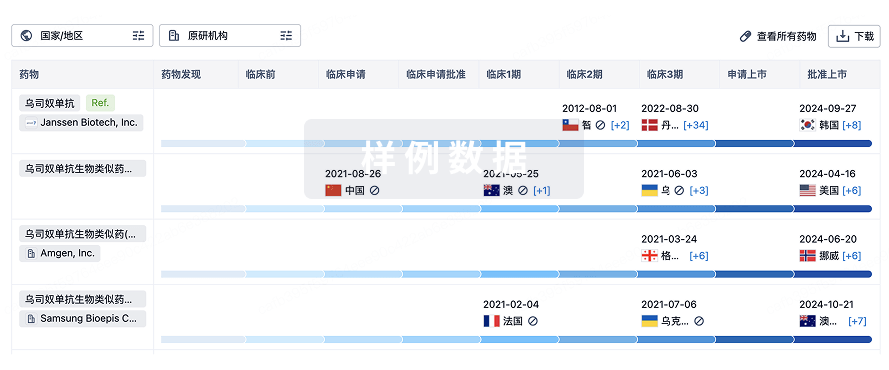
生物类似药
生物类似药在不同国家/地区的竞争态势。请注意临床1/2期并入临床2期,临床2/3期并入临床3期
登录
或
特殊审评
只需点击几下即可了解关键药物信息。
登录
或

提出任何生物医药研究问题
让每一步生物医药决策都精准制胜
基于十亿级生物数据与全球情报的精准 AI,赋能早期药物发现
立即开始免费试用!
智慧芽新药情报库是智慧芽专为生命科学人士构建的基于AI的创新药情报平台,助您全方位提升您的研发与决策效率。
立即接入生物医药数据包
智慧芽新药库数据也通过智慧芽开放平台,以MCP或API服务形式对外开放。立即使用我们的MCP服务定制您的LLM智能体。
生物序列数据库
生物药研发创新
免费使用
化学结构数据库
小分子化药研发创新
免费使用