预约演示
更新于:2026-06-17
Ozoralizumab
奥利组单抗
更新于:2026-06-17
概要
基本信息
最高研发阶段批准上市 |
首次获批日期 日本 (2022-09-26), |
最高研发阶段(中国)无进展 |
特殊审评- |



登录后查看时间轴
结构/序列
Sequence Code 93776H
来源: *****
关联
15
项与 奥利组单抗 相关的临床试验JPRN-jRCTs011250019
Functional MRI Evaluation of Ozoralizumab Efficacy in Rheumatoid Arthritis: An exploratory clinical investigation (FM-OZORA)
开始日期2025-06-30 |
申办/合作机构- |
JPRN-jRCTs051240053
Efficacy and safety of the anti-TNF multivalent NANOBODY compound ozoralizumab in RA patients with high titers of rheumatoid factor (OHZORA High study) (OHZORA High study)
开始日期2024-06-07 |
申办/合作机构- |
JPRN-jRCTs071230067
Analysis of effectiveness of Ozoralizumab toward bone structure in rheumatoid arthritis (AOZORA study)
开始日期2023-09-27 |
申办/合作机构- |
100 项与 奥利组单抗 相关的临床结果
登录后查看更多信息
100 项与 奥利组单抗 相关的转化医学
登录后查看更多信息
100 项与 奥利组单抗 相关的专利(医药)
登录后查看更多信息
39
项与 奥利组单抗 相关的文献(医药)2026-06-01·BIOCHEMICAL AND BIOPHYSICAL RESEARCH COMMUNICATIONS
Cryo-EM elucidates the interaction mechanism of ozoralizumab, a humanized anti-TNFα NANOBODY® compound
Article
作者: Iwamoto, Kunihiko ; Mishima-Tsumagari, Chiemi ; Tanaka, Yoshikazu ; Yokoyama, Takeshi ; Ohnuki, Tatsuya ; Sato, Kyohei ; Mima, Masashi
Ozoralizumab (OZR) is a next-generation TNF inhibitor composed of two identical humanized anti-TNFα NANOBODY® molecules (TNF30s) recombinantly linked via one humanized anti-human serum albumin (HSA) NANOBODY® molecule (ALB8) and two peptide linkers. OZR is designed as a unique format to exert potent inhibitory effects against TNFα with long plasma half-life. However, the three-dimensional structure of OZR-TNFα-HSA complex has not yet been elucidated, and a complete understanding of its interaction mechanism with TNFα is yet to be gained. In this study, we successfully observed the formation of the OZR-TNFα-HSA ternary complex by single-particle cryo-electron microscopy. The single-particle analysis revealed that the two TNF30 molecules of OZR simultaneously bind bivalently to TNFα in a 1:1-bivalent binding mode, while the ALB8 molecule binds to HSA, forming a ternary complex. Thus, OZR exhibits a binding mode significantly different from that of other IgG-type TNFα inhibitors. Furthermore, surface plasmon resonance (SPR) analysis demonstrated that the 1:1-bivalent binding mode confers an exceptionally slow dissociation rate, thereby contributing to the potent TNFα-neutralizing activity of OZR. These findings not only lend support to the favorable clinical efficacy of OZR from a structural standpoint but also lay the foundation for the rational design and development of next-generation TNFα inhibitors with enhanced and sustained efficacy.
2026-06-01·ANNALS OF THE RHEUMATIC DISEASES
Efficacy of synthetic and biological DMARDs: a systematic literature review informing the 2025 update of the EULAR recommendations for the management of rheumatoid arthritis
Review
作者: Caporali, Roberto ; Verschueren, Patrick ; Edwards, Christopher J ; Konzett, Victoria ; van der Heijde, Désirée ; Stamm, Tanja A ; Kerschbaumer, Andreas ; Winthrop, Kevin L ; Landewé, Robert B M ; Primdahl, Jette ; Smolen, Josef S ; Hyrich, Kimme L ; Takeuchi, Tsutomu ; Pope, Janet E ; Aletaha, Daniel ; Laskou, Faidra ; Schoones, Jan W ; de Souza, Savia
OBJECTIVES:
This systematic literature review (SLR) updated evidence on the efficacy of disease-modifying antirheumatic drugs (DMARDs) and glucocorticoids (GCs) to inform the 2025 update of the European Alliance of Associations for Rheumatology (EULAR) management recommendations for rheumatoid arthritis (RA).
METHODS:
Medline (PubMed), Embase (OVID), Cochrane Central Register of Controlled Trials, and Web of Science were searched for randomised controlled trials (RCTs) of conventional-synthetic, biological, and targeted-synthetic DMARDs (csDMARDs, bDMARDs, tsDMARDs), as well as GCs and biosimilars, published from 14 January 2022 to 22 January 2025. Additional searches on DMARDs, GCs, and antifibrotics for RA-associated interstitial lung disease (RA ILD), and on DMARDs and GCs for preventing RA in at-risk individuals, were conducted from database inception to 22 January 2025.
RESULTS:
A total of 12,567 references were identified; 390 full-texts were reviewed, and 72 studies were included. Phase 3-4 RCTs evaluated csDMARDs (hydroxychloroquine, iguratimod, leflunomide, and methotrexate), bDMARDs (abatacept, otilimab, and ozoralizumab), and tsDMARDs (ivarmacitinib, peficitinib, and tofacitinib). Twelve novel compounds were assessed in phase 2 RCTs, and 3 articles investigated GCs. Strategic trials compared conventional therapies with bDMARD- or tsDMARD-based strategies and explored precision-medicine approaches such as synovial biopsy-guided treatment and therapeutic drug monitoring. Additional evidence addressed DMARD tapering. Two RCTs assessed antifibrotics (nintedanib and pirfenidone) for RA ILD, and 7 studies evaluated DMARDs for RA prevention in at-risk populations.
CONCLUSIONS:
This SLR, together with the safety review, informed the 2025 update of the EULAR RA management recommendations. Although few phase 3 trials on novel agents were available, strategic and head-to-head studies provided important insights that enabled further refinement of the established treatment algorithm.
2026-04-01·ANNALS OF THE RHEUMATIC DISEASES
Spacing of a TNF inhibitor or dose reduction of methotrexate vs continued treatment in patients with rheumatoid arthritis in remission or low disease activity: a randomised, controlled trial (SORAIRO trial)
Article
作者: Matsumoto, Rumiko ; Hirata, Shintaro ; Kaneko, Yuko ; Takeuchi, Tsutomu ; Sato, Yuri ; Tanaka, Eiichi ; Ishii, Tomonori ; Ohmura, Koichiro ; Kono, Michihito ; Tanaka, Yoshiya ; Imai, Yuki ; Yamamura, Takashi ; Kojima, Toshihisa ; Okamoto, Shunsuke
OBJECTIVES:
This study aimed to assess the noninferiority of spacing a tumour necrosis factor (TNF) inhibitor or reducing the methotrexate dose with continued treatment in patients with rheumatoid arthritis.
METHODS:
The SORAIRO trial was a multicentre, open-label, randomised, noninferiority study. Patients who had been in remission or low disease activity based on the Clinical Disease Activity Index (CDAI) in the preceding phase III trial of ozoralizumab, a next-generation TNF inhibitor, were enrolled. The precalculated sample size was 141. Patients were randomised into continued treatment, ozoralizumab spacing, or methotrexate dose reduction groups. The primary endpoint was a noninferiority of low disease activity maintenance at week 48 with a prespecified noninferiority margin of -18%.
RESULTS:
A total of 144 patients were analysed. The mean age was 58.2 years, 75.0% were female, and the mean CDAI was 2.70 with 61.8% in remission. The low disease activity at week 48 was 97.9% in the continued treatment group, 79.2% in the ozoralizumab spacing group (difference, -21.6; 95% CI, -39.9 to -5.7), and 72.7% in the methotrexate dose reduction group (difference, -30.4; 95% CI, -54.0 to -10.5). In the baseline remission subgroup, remission maintenance rates were comparable in the 3 groups (77.4%, 76.7%, 79.2%, respectively). No significant differences were demonstrated in changes in the Health Assessment Questionnaire Disability Index and modified total Sharp score. Adverse events occurred in 68.0%, 59.2%, and 58.0%, respectively.
CONCLUSIONS:
Treatment tapering may not be feasible in patients with low disease activity, whereas both extending the TNF inhibitor interval and reducing the methotrexate dose may be reasonable options for patients in remission.
47
项与 奥利组单抗 相关的新闻(医药)2026-06-12
·海百生物
纳米抗体(VHH/Nb)
2025年5月,美国Rutgers大学D'Adamio团队联合剑桥大学Sormanni团队,在mAbs发表了一项研究。他们使用重组人TNFα三聚体蛋白,免疫羊驼和美洲驼,结合噬菌体展示文库筛选,获得三个共享同一套CDRs的先导纳米抗体(IC₅₀ 95.78–219.3 pM,KD 77–392 pM)。随后用机器学习工具AbNatiV与CamSol,进行框架区人源化与可开发性优化,并对AI统一建议的将CDRs茎部精氨酸(R)改为色氨酸(W)的突变做了实验纠错。保留R的优化突变体的IC₅₀ 达48.84 pM和64.31 pM,较含W的突变体增强10-220倍。最终两个靶向TNFα的中和抗体候选物NN-223(TNFI-α)和NN-224(TNFI-β)的humanness分别达0.809和0.826。
这项工作验证了人源化TNFα纳米抗体兼具高效中和活性、低免疫原性与良好可开发性。候选分子NN-223和NN-224,不仅为类风湿关节炎等外周炎症疾病提供了更安全的治疗选择,也为阿尔茨海默病等中枢神经系统疾病开辟了新路径,展示了机器学习驱动抗体工程的巨大潜力。
研究流程:
羊驼+美洲驼免疫(三聚体人TNFα)➔噬菌体展示文库构建 ➔ 470个克隆ELISA初筛 ➔ 100个独特VHH序列 ➔ 11个抑制率>60% ➔ 3个先导分子(IC₅₀ 95.78–219.3 pM) ➔ iTope-AI免疫原性评估 ➔ AbNatiV+CamSol人源化与可开发性优化 ➔ CDR3茎部精氨酸纠错 ➔两个人源化候选物 ➔ CHO-S细胞生产验证
1
破局:TNFα抑制剂的三笔旧账
TNFα(肿瘤坏死因子-α,Tumor Necrosis Factor-alpha)是炎症性肠病、类风湿关节炎,乃至阿尔茨海默病等多种疾病的促炎枢纽。以阿达木单抗(Humira)为代表的传统单抗,在过去二十年改写了治疗格局,但三笔旧账始终悬而未清。
分子尺寸:全长IgG约150 kDa,组织穿透受限,血脑屏障几乎无解。对阿尔茨海默病这类中枢神经退行性疾病的TNFα假说而言,分子量本身就是天花板限制。
Fc段的附带杀伤:阿达木单抗的Fc段,可通过ADCC和CDC裂解膜表面TNFα阳性的免疫细胞。
免疫原性:即使是全人源单抗,长期用药后抗药抗体(ADA)的产生率仍不可忽视。
2
设局:同一家族的三兄弟
这项工作的开端并无特殊之处。
一只羊驼和一只美洲驼接受三聚体重组人TNFα免疫,从PBMC提取VHH基因库,利用噬菌体展示构建VHH免疫文库。多轮固相筛选后,挑取470个克隆,经ELISA确认结合活性,测序得到100个独特VHH序列。
关键转折出现在功能筛选阶段。
利用WEHI-13VAR细胞(TNFα敏感的纤维肉瘤系)做抑制活性检测,在100个候选物中,11个在100 nM浓度下抑制率超过60%。
稀释梯度二次筛选后,TNFI-Nb1(IC₅₀=95.78 pM)、TNFI-Nb2(IC₅₀=219.3 pM)和TNFI-Nb3(IC₅₀=175 pM)这三个分子脱颖而出。
测序揭示了一个不寻常的发现,三者的CDR1、CDR2和CDR3序列完全相同,所有差异仅分布在框架区1和3。它们属于同一纳米抗体家族,最接近的人类V基因均为IGHV3-74*01,与人类框架同源性约79%–81%。
TNFI-Nb2以KD=77 pM居首(慢解离速率驱动),TNFI-Nb1和TNFI-Nb3分别为219 pM和392 pM。三者对人TNFα结合良好,但是对鼠源TNFα完全无中和活性。
三兄弟共享一套CDRs,仅靠框架区微小的序列差异,就拉开近5倍的亲和力差距,框架残基对CDR构象的远程影响在此体现得淋漓尽致。
3
淘金:AI错判与修正
TNFI-Nb1因其初始humanness最高(0.780,AbNatiV评分)和溶解度最优(CamSol 0.947),被选为人源化起点。
AbNatiV是一个机器学习驱动的纳米抗体"人源化"评估框架,采用两种采样策略:Enhanced(迭代收敛至单一人源化序列)和Exhaustive(系统地评估人类VH与纳米抗体PSSM内所有允许的突变组合)。两者均在帕累托前沿上寻找humanness与VHH-nativeness的最优权衡。
但两个自动化路线不约而同提出了同一个建议,将CDR3茎部的精氨酸突变为色氨酸(R→W)。这个建议在统计上完全合理,该位置的色氨酸在天然纳米抗体和人源VH中要常见得多,humanness和VHH-nativeness分数双双攀升。
团队决定既做含此突变的版本,也做保留精氨酸的"intact"版本。
实验结果显示,三个含W突变的变体(Enhanced、Enhanced v3和Exhaustive)IC₅₀分别为1.417 nM、29.896 nM和2.27 nM,较母体TNFI-Nb1(IC₅₀=133.5 pM)下降了10–220倍。
而两个保留精氨酸的"stem_intact"版本(TNFI-α和TNFI-β)IC₅₀分别为48.84 pM和64.31 pM,不仅未降,反而比母体更优。
4
实证:pM级的两张牌
经人源化与CamSol组合突变优化后,两个最终候选物呈现清晰的互补性。
NN-223赢在功能(更低IC₅₀、更高亲和力,主要靠更快的结合速率驱动),NN-224赢在成药性(更高humanness和溶解度)。两者均保留了母体对膜结合NN-223的结合能力(FACS验证),且对人TNFα具有与母体一致的种属选择性。
已知抗TNFα VHH的可作为参照,此前文献报道的Llama VHH1–3 IC₅₀分布在242 pM–1.503 nM,KD在130 pM–1.5 nM;已上市的Ozoralizumab(Nanozora®,三价形态)报道IC₅₀约12 pM、KD约20.2 pM。
考虑到Ozoralizumab为三价形态的亲和力叠加效应,NN-223和NN-224作为单价分子已展示了可观的竞争力。
5
免疫原性:被低估的起跑线
iTope-AI分析给出的数据值得重视。
TNFI-Nb1的Total Score为72、Hotspot Max为20,TNFI-Nb2和TNFI-Nb3分别为59/12和62/13。
将这些数值放在Abzena评估过的治疗性抗体数据集中对比,三个骆驼源纳米抗体的免疫原性预测得分,落在已获批人源单抗中最低免疫原性群体的范围内。
换言之,未经人源化的骆驼VHH,起跑线没有想象中那么差;经过AI人源化后,humanness从0.780推至0.809–0.826,进一步压缩了残余风险。
当然,iTope-AI只覆盖MHC-II类分子的肽段结合预测,不涉及MHC-I类呈递、B细胞表位识别和T细胞耐受的完整复杂度,这些需要动物模型和临床试验来回答。
6
回味:策略的边界与可能
有几个问题仍需正视。
种属特异性是把“双刃剑”,它赋予TNFI-Nbs对人TNFα的高度选择性,但也意味着常规小鼠/大鼠模型无法用于体内药效和毒理验证,必须依赖人源化TNFα敲入模型或非人灵长类。
其次,CHO-S瞬时转染产量虽已可观(~16 mg/100 mL),但距离工业化稳定克隆株的g/L级别仍有距离。
第三,CDR3茎部精氨酸的教训值得反复咀嚼。它揭示了一个更底层的问题,当前的AI工具在预测"统计上罕见但功能上必需"的残基时,仍存在结构性盲区。这不是AbNatiV的缺陷,而是几乎所有基于序列同源性和统计分布的工具,都需要直面的天花板。
这项工作的价值并不在于“又筛到了两个抗TNFα纳米抗体”。TNFα本就是业内被靶向最多的细胞因子之一,它真正的价值在于,演示了一条可复制的技术路径。
从骆驼免疫获取天然多样性,到功能筛选锚定高活性CDR核心,再通过AI在框架区进行人源化与可开发性优化,最后由实验对AI建议进行关键纠错(如CDR3茎部突变)。AI提出假设,实验做出裁决,二者相互校正,而非单向依赖。
7
尾声与对话
如果一个AI路线对某个残基的"非人源"判断被实验反复证伪,就像本文的CDR3茎部精氨酸,我们是应该给工具打补丁,还是从根本上重新思考"humanness"的定义?人源化,到底是在模仿统计平均值,还是在逼近功能最优解?欢迎在评论区交换看法。
参考文献:
Yin T, Ramon A, Greenig M, et al. Development of potent humanized TNFα inhibitory nanobodies for therapeutic applications in TNFα-mediated diseases. mAbs, vol. 17, no. 1, 2025, 2498164.
DOI: 10.1080/19420862.2025.2498164.
如果文章对你有帮助,别忘了点赞、♥、转发三连。咱们下期再见!
8
往期推荐
VHH综01 | 当抗体学会"缩骨功":纳米抗体正在重写癌症治疗的物理规则
VHH研02 | 四套临床骨架,嫁接全人源CDRs,纳米抗体药物发现,能否绕开“先筛后改”?
VHH研01 | 纳米抗体双特异接合器:借多克隆抗体Fc之力,重塑免疫检查点阻断
TRT研08 | 泛癌靶点B7-H3“变脸”难捕获?一株“三靶全中”纳米抗体,1小时SPECT锁定全身病灶
TRT研07 | 60分钟锁定CLDN18.2:北大团队⁶⁸Ga纳米抗体PET探针,完成11例患者首证
海百生物(HBBT)成立于2016年5月,位于武汉市东湖高新区,是一家以“加速药物研发、守护人类健康”为使命,致力于创新生物药、抗体等各类靶向结合分子的开发和应用的高新技术企业,为全球创新药企和科研机构提供从抗原设计制备、抗体开发、筛选评价、工程化改造和生产的一站式抗体服务。
团队现已成功完成900+项目,形成多种属全平台的抗体等靶向结合分子开发能力。涵盖人、鼠、兔、羊驼等15个物种,包含流式单B、噬菌体、酵母、细胞、mRNA展示、杂交瘤共六大技术平台。
2026-05-24
·搜狐新闻
-01-引言免疫介导的炎症性疾病(IMID)是一组常见的、临床多样化的疾病,包括类风湿性关节炎(RA)、脊柱关节炎(SpA)、结缔组织疾病、皮肤炎症性疾病(包括银屑病和特应性皮炎)、炎症性肠病(IBD)、哮喘和自身免疫性神经系统疾病如多发性硬化症。1948年首次使用可的松治疗RA是IMID治疗史上最重要的进展之一。在20世纪下半叶,迅速发展的制药工业使几种常规免疫抑制剂得以实现化学合成,如环磷酰胺、甲氨蝶呤、硫唑嘌呤、环孢菌素、他克莫司和霉酚酸酯。随后的研究证实了几种免疫靶点的临床相关性,如IL-1、IL-6、IL-17、IL-23、B淋巴细胞刺激因子(BLyS)和IFN-α受体、细胞表面标记物如CD20和CD52、共刺激分子如细CTLA-4和PD-1,以及信号通路分子如Janus激酶(JAK)和酪氨酸激酶2(Tyk2),一系列不同的靶向治疗和免疫治疗获得了监管部门的批准。然而,并非所有IMID患者对靶向治疗都有反应,许多患者在治疗后有复发。因此,迫切需要在IMID领域积极开发新的治疗策略,如双特异性抗体(BsAbs)、纳米抗体和纳米颗粒、治疗性疫苗、siRNA干扰、自体造血干细胞移植(aHSCT)和CAR-T细胞。尽管这些新的治疗策略中的大多数仍在临床前和临床中进行评估,但它们已经在未来改善IMID患者方面展现出良好的前景。-02-一、靶向治疗的联合应用两个或多个互补途径可以同时或依次靶向,首先诱导自身免疫性疾病缓解,然后恢复免疫耐受状态,防止疾病过程的再激活。例如B细胞活化因子(BAFF)在利妥昔单抗诱导的B细胞清除后表达上调,导致B细胞活化和存活,基于这种机制,一些联合应用已经在不同适应症中进行测试,如系统性红斑狼疮(SLE)、干燥综合征或系统性硬化症。2021年公布的两项III期试验结果表明,在干燥综合征中,belimumab和利妥昔单抗的联合治疗显示,随着时间的推移,EULAR干燥综合征疾病活动指数(ESSDAI)和刺激唾液流有改善的趋势,这一趋势在治疗后持续存在。而在另一项SLE的临床实验中,belimumab和利妥昔单抗的联合应用没有显著提高SLE患者的疾病控制率。此外,在这两项研究中,与单独的belimumab和利妥昔单抗相比,没有发现额外的安全问题。最近,法国发表了一项大型前瞻性多中心队列研究的结果,该研究调查了143名IMID患者的150种靶向治疗组合。患者主要患有炎症性肠病(77.6%)、脊椎关节炎(44%)和RA(9.1%),其中一半患者患有两种或两种以上联合IMID。最常见的靶向治疗组合是TNFi联合Vedolizumab(30%)或Ustekinumab(28.7%)。从结果来看,50%的患者报告的结果得到了显著改善,27%的患者获得了轻度至中度改善。联合治疗期间的严重感染估计为4.51/100每患者年,1年后未中断治疗的维持率估计为74.9%。-03- 二、双特异性抗体在自身免疫性疾病中,BsAbs的治疗作用主要涉及通过靶向表面标记物或中和炎性细胞因子来预防幼稚T细胞与抗原呈递细胞(APC)或B淋巴细胞之间的免疫相互作用。这些靶点集中于B细胞(CD19、FcγRIIb、BAFF、B7RP1、CD32B和CD79B)或APC(CD86)上的表面受体,以及促炎T细胞调节因子(IL-1、IL-4、TNF-α、IL-13和IL-17)。-04-三、纳米抗体纳米抗体相比单克隆抗体在生产、结构、溶解度以及对pH和温度范围的耐受性方面具有额外的优势,很可能成为IMID靶向治疗的下一个重要领域。到目前为止,已经在临床试验中评估了十多个纳米抗体。Ozoralizumab(ATN-103/TS-152)是一种三价双特异性纳米抗体,可有效中和TNFα并与人血清白蛋白结合以增加其体内半衰期。它包括两个抗TNFα纳米抗体和一个白蛋白结合纳米抗体。最近公布了其在RA中的II/III期和III期临床试验(OHZORA和NATSUZORA研究)的结果。结果显示,与安慰剂组相比,Ozoralizumab达到主要终点(第16周ACR20改善)的患者比例显著增高(79.6% vs 37.3%)。2022年9月,日本批准了Ozoralizumab用于治疗对现有治疗反应不充分的RA患者。 -05-四、造血干细胞移植aHSCT在自身免疫性疾病中的应用在于自身反应性免疫细胞清除后,从aHSC产生新的自我耐受免疫系统。这一程序有可能通过重置免疫系统来改变自身免疫性疾病的进程,建立一个具有恢复免疫检查点的新免疫库。aHSCT在20世纪90年代末首次用于SSc。三项随机对照临床试验的结果显示,aHSCT与第一年治疗相关死亡率的增加有关。然而,aHSCT具有显著的长期无事件生存益处,并显著改善了SSc中的几个器官受累。此外,在最近的研究中,aHSCT在治疗难治性狼疮肾炎(LN)方面似乎是有效和安全的。在该研究中,22名难治性LN患者接受了aHSCT治疗,随访期间没有患者死亡,10年无病生存率为35%,10年后只有10%的患者需要肾脏支持。在另一项研究中,8名难治性SLE患者接受了aHSCT治疗,5例为LN,3例为中枢神经系统受累。八名患者中有五名获得了完全缓解,包括系统性红斑狼疮疾病活动指数(SLEDAI)降至零,四名患者的缓解持续时间中位数为165个月;一名患者在18个月后出现部分缓解,随后复发。此外,两名患有肾炎和潜在合并症的患者因感染和多器官衰竭死亡。-06-五、CAR-T细胞治疗在IMID的治疗应用中,与单克隆抗体相比,CAR-T细胞有特别的优势:因为它们是长寿命细胞,可以增殖、运输到淋巴组织或靶器官,并发展成记忆群体,可以防止致病淋巴细胞的再次出现。因此,CAR-T细胞治疗可能只需要单一剂量就能达到持久的治疗效果。此外,T细胞的其他嵌合修饰也在自身免疫性疾病中进行研究。嵌合自身抗体受体T细胞(CAAR-T)针对细胞表面的抗体,CAR-Treg针对靶细胞中的特异性抗原,利用Tregs的免疫调节功能。最近,CAR-T细胞已被应用于RA、结肠炎、SLE、寻常型天疱疮(PV)、自身免疫性脑脊髓炎和1型糖尿病的临床前和临床研究,为自身免疫性疾病的治疗选择带来了新的希望。2019年,CAR-T细胞在IMID中得到首次临床应用。一名20岁的严重活动性和难治性SLE患者接受了CD19 CAR-T细胞治疗,疾病迅速完全缓解。另一项由五名难治性SLE患者参与的小型研究中,在CD19 CAR-T细胞给药3个月后,SLE得到缓解。即使在B细胞再次出现后,在更长的随访期间仍保持缓解。该治疗耐受性良好,仅出现中度的细胞因子释放综合征。目前,CAR-T细胞治疗正在各种IMID进行11项研究,如SLE、干燥综合征、SSc和自身免疫性溶血性贫血。-07-六、治疗性疫苗另一种针对促炎细胞因子的治疗方法是使用疫苗来产生针对这些细胞因子的内源性自然免疫反应。目前,最领先的策略是基于肽的针对促炎细胞因子的主动疫苗接种,旨在直接中和致病细胞因子。与高免疫原性蛋白,如KLH偶联的靶向细胞因子复合物可以产生靶向该细胞因子的多克隆中和抗体。使用灭活的IFNα2b合成K-IFNα,在28名轻度至中度SLE女性的I/II期剂量递增研究中,K-IFNα显著降低了IFN诱导基因的表达,在另一项I/II期研究也发现了类似的结果。然而,一在项针对活动性SLE和IFNGS阳性患者的IIb期研究,尽管更多的患者达到了狼疮低疾病活动状态(LLDAS),但没有达到其主要终点。目前,K-IFNα在SLE中的开发已经暂停。IMID的治疗性疫苗策略是替代传统治疗的一种有趣的方案,但仍在很大程度上处于早期开发阶段,需要更好地了解IMID的发病机制。克服目前限制的一种方法可能是根据患者个人疾病转录特征选择个性化疫苗。-08-七、RNA干扰RNA干扰(RNAi)的原理是小RNA结合互补mRNA并诱导基因沉默。过去十年来,治疗人类疾病的RNAi药物开发一直在进行中,Patisiran是第一种上市的RNAi药物,靶向肝细胞中甲状腺素运载蛋白(TTR)mRNA的3′-非翻译区,用于治疗成人hATTR淀粉样变的多发性神经病。在自身免疫疾病中,研究人员一直在临床前疾病模型中积极开发RNAi策略。在RA中,几个团队已经证明,靶向TNFα或NF-κB的RNAi改善了关节炎动物模型中的关节炎和结构损伤。另一项研究表明,在红斑狼疮小鼠的NZB/NZW F1模型中,靶向BLyS或IFN调节因子5(IRF5)的siRNA改善了疾病的进程。尽管目前还没有正在进行的研究RNAi在自身免疫性疾病中的临床试验,但在不久的将来,在自身免疫中使用RNAi靶向“不可成药”的分子途径可能会展现出其巨大的潜力。-09-结语返回搜狐,查看更多
2026-05-16
·生物通
在过去的十年中,重组蛋白疗法已经从传统的生物制剂向高度工程化、多功能版本发展。得益于合成生物学、宿主细胞工程和生物工艺优化方面的创新,蛋白质不仅越来越多地被视为替代疗法的药物,更被视为旨在实现功能重编程的创新疗法中完全通用的平台。从优化的微生物菌株到哺乳动物和植物平台等宿主系统的进步,已经扩展了能够以高保真度、可扩展性和安全性生产的蛋白质范围。与此同时,模块化蛋白质工程已经催生了下一代形式,包括双特异性抗体、纳米抗体、融合蛋白和自组装生物材料,拓宽了在肿瘤学、炎症、代谢疾病及其他领域的治疗应用。同时,监管框架正在进行调整,以支持个性化和复杂生物制剂的加速批准,而分散化和灵活的生产模式也开始出现。本综述提供了重组蛋白药物领域的2025年更新,整合了生产平台、蛋白质工程和监管科学方面的进展,并概述了这些技术如何塑造下一代生物制剂。1 引言
许多人类疾病,如糖尿病、生长障碍和凝血异常,源于关键内源蛋白的缺乏或功能障碍,这些小分子药物无法治愈。基因疗法在原位纠正方面具有前景,但其临床转化仍受限于递送、安全性和可扩展性方面的挑战。因此,此类缺失蛋白质的体外生产重组版本仍然是主要的干预模式。历史上,治疗性蛋白质是通过从动物或人类组织中提取获得的,这种方法存在安全性、免疫原性、供应和伦理问题。化学合成对于小肽有效,但随着近期合成和连接策略的进步,对于更大或结构更复杂的多肽也变得越来越可行。然而,它在复杂性、可扩展性和成本方面仍然存在重大挑战,特别是对于长肽和大蛋白质。二十世纪末出现的重组DNA技术提供了一种安全、可扩展和模块化的替代方案,能够在异源宿主(细胞工厂)中控制生产治疗性蛋白质,而不受蛋白质长度和结构复杂性的影响。这一突破不仅为野生型多肽打开了大门,也为具有新功能或改进功能的工程化或嵌合蛋白打开了大门。然而,重组生产仍面临与蛋白质溶解度和构象质量相关的顽固挑战,这需要对宿主系统和生产方案进行仔细选择,以确保最终产品的活性和稳定性。
近几十年来,蛋白质生物制造平台已急剧多样化。大肠杆菌(Escherichia coli)开启了高通量蛋白质合成的时代,但其无法进行翻译后修饰,导致开发了更复杂的宿主,如酵母、哺乳动物细胞、昆虫细胞和植物系统。最近,非常规宿主细胞如苔藓和藻类也已出现。无细胞系统代表了一种规模不大但不断增长的替代方案,克服了细胞应激和污染问题。每个平台在产量、折叠保真度、糖基化潜力和可扩展性方面提供特定的平衡;尽管哺乳动物细胞仍然是复杂糖蛋白的金标准,但昆虫和无细胞系统对于快速原型设计和定制应用越来越有价值。
截至2024年中,已有894种治疗性肽和蛋白质获得美国食品药品监督管理局(FDA)批准,大多数已上市的治疗性蛋白质是重组的,主要在哺乳动物细胞中生产。这一扩张反映了该领域的成熟和下一代蛋白质的兴起,下一代蛋白质通常指与天然对应物相比具有改进的稳定性、特异性、半衰期和多功能性的工程化蛋白质版本。这一演进的一个基石是融合蛋白的发展,即将来自不同来源的功能域(例如,靶向部分、效应区、半衰期延长剂)组合到单一链中的混合构建体。Fc融合和自蛋白融合等策略利用FcRn再循环或自蛋白持久性来延长半衰期。融合策略不仅简化了多域功能,还实现了新的模式,如双特异性抗体和抗原清除构建体。另一方面,作为进一步的操作工具,合理设计和定向进化方法被广泛用于增强蛋白质稳定性、优化折叠和减少蛋白质药物的聚集。有针对性的突变也可以优化效应功能,包括受体结合和免疫激活,从而提高治疗效果和特异性。这些以蛋白质为重点的策略与生物工艺创新相辅相成,为开发性能更好的治疗性蛋白质做出了重大贡献。
尽管如此,长期的瓶颈仍然挑战着该领域。可扩展性常常受到限制,因为复杂或易聚集蛋白质的大规模生产会诱导宿主细胞应激反应并使下游步骤复杂化。制剂和储存期间的蛋白质稳定性需要量身定制的赋形剂、缓冲系统或序列修饰。生产后聚集尤其令人担忧,因为它会降低生物活性并增加免疫原性。高通量热分析、深度突变稳定性工程和AI引导设计等新兴技术提供了有前景的解决方案,尽管它们在生物制造中的广泛采用仍有待时日。
2 生物制造
2.1 常规细胞工厂
治疗性重组蛋白质的生产历史上依赖于一组有限的细胞工厂,每种都在产量、翻译后修饰(PTMs)、可扩展性和监管接受度方面提供权衡。然而,越来越多的非常规系统也被纳入生产流程,提供了克服现有局限性的新机会。宿主系统的选择至关重要,因为它不仅决定了生产效率,还决定了最终产品的安全性、有效性和监管批准前景。
没有一个细胞工厂是普遍最优的,选择在很大程度上取决于治疗性蛋白质的复杂性和所需的PTMs。大肠杆菌仍然是胰岛素和生长激素等简单蛋白质的主力,这得益于其快速生长和低成本。它也被探索用于生产复杂的药理学实体,包括基于蛋白质的纳米颗粒、微粒和动态药物库。然而,缺乏糖基化、存在内毒素以及经常需要蛋白质重折叠仍然是主要缺点。酵母如酿酒酵母(Saccharomyces cerevisiae)和毕赤酵母(Pichia pastoris)提供了简单、快速和可扩展的培养,但它们的高甘露糖基化模式可能会影响产品的药代动力学并促进免疫原性。在哺乳动物细胞中,中国仓鼠卵巢(CHO)细胞主导了生物制药市场,生产了超过70%的已批准重组蛋白,因为它们具有类人糖基化和既定的监管接受度,尽管成本更高、倍增时间更慢。此外,哺乳动物细胞允许生产复杂组装蛋白质材料和药物。由杆状病毒载体驱动的昆虫细胞提供了快速的可扩展性,对于病毒样颗粒(VLPs)和疫苗生产特别有效,尽管它们不同的糖基化谱限制了其在治疗性糖蛋白中的使用。比较分析可以突出表现出色的点,这通常取决于具体的产品。
总而言之,当前的格局说明了成本、速度和分子保真度之间的权衡。虽然微生物宿主在结构简单的小蛋白方面占主导地位,但哺乳动物系统对于复杂糖蛋白如单克隆抗体和一些融合蛋白仍然是不可或缺的。用于蛋白质生产的新型或工程化细胞工厂的研究正在不断推进。新兴宿主,如苔藓(Physcomitrella patens)、藻类、乳酸菌(LAB)和原生动物系统,正在小众应用中受到关注,能够实现工程化的人源化糖基化和更低的免疫原性,尽管它们尚未实现大规模的工业渗透。
尽管在宿主工程和糖工程方面取得了进展,但几个瓶颈仍然存在。实现均质和类人糖基化谱仍然具有挑战性,特别是在非哺乳动物宿主中。超越N-和O-糖基化的复杂翻译后修饰难以精确控制。此外,对糖基化网络的不完全理解以及工程化糖型的潜在免疫原性继续限制了工艺优化和监管批准。解决这些问题对于充分利用新兴宿主系统并以工业规模生产具有精确结构和功能属性的重组蛋白至关重要。
2.2 替代蛋白质生产平台
在过去十年中,出现了一系列多样化的替代宿主,以补充或克服主流微生物和哺乳动物系统的局限性。这些平台受到对更安全、更高效和更具成本效益的生产策略需求的推动,同时也解决了内毒素污染或非人糖基化等挑战。总的来说,它们正在拓宽重组蛋白质生产的格局,特别是对于需要量身定制修饰和更高安全标准的下一代疗法。
•莱茵衣藻(Chlamydomonas reinhardtii): 这种单细胞绿藻作为一种低成本、可扩展且无致病性的宿主受到关注,不产生内毒素。转化可以靶向细胞核、线粒体或叶绿体,其中叶绿体工程是最常见的方法。该系统已被用于生产抗原、抗体、抗菌肽、激素和酶。此外,基于藻类的平台已被探索用于口服疫苗生产,甚至用于生产针对病毒的重组抗体。主要缺点是在叶绿体中缺乏糖基化途径,这限制了对复杂糖蛋白的适用性。
•胡萝卜细胞: 基于胡萝卜(Daucus carota)细胞的平台越来越被认为是重组蛋白质生产的可行宿主。胡萝卜的悬浮培养物和毛状根系统已证明能够表达生物药物。这种系统的优势包括植物型翻译后修饰、病原体污染风险低以及可扩展生产。
•乳酸乳球菌(Lactococcus lactis): 这种革兰氏阳性菌广泛用于食品工业,被公认为安全(GRAS)且不具有免疫原性内毒素,使其对治疗性蛋白质生产具有吸引力。它的遗传可塑性允许高效工程化。此外,其将蛋白质直接分泌到培养基中的能力简化了纯化,提高了可扩展性和成本效益。
•塔氏利什曼原虫(Leishmania tarentolae): 这种原生动物提供了与人类糖基化模式非常相似的翻译后修饰。与哺乳动物细胞不同,它更容易、更便宜地培养,同时仍能生产达依泊汀α等复杂蛋白质。此外,它已被用于生产凝血因子和疫苗抗原,证明了其在各个治疗领域的多功能性。该系统显著降低了通常与酵母或昆虫来源蛋白质相关的免疫原性问题,使其对有前景的糖蛋白药物有希望。
•小立碗藓(Physcomitrella patens): 这种苔藓结合了植物系统的可扩展性和低成本,以及执行工程化人源化糖基化的能力。它在生物反应器中受控条件下培养,确保了可重复性和安全性。除了法布里病酶替代疗法和因子H,苔藓也被测试用于重组抗体和凝血抑制剂。这个平台特别适用于难以表达的糖蛋白和疫苗。
•糖工程酵母: 毕赤酵母仍然是一种强大的微生物宿主,具有高产量和可扩展性。其主要限制是高甘露糖基化导致的免疫原性,这已通过糖工程菌株如GlycoSwitch?解决,该菌株可产生人源化N-聚糖。应用包括工程化抗体和溶酶体酶。虽然可能发生不完全或异质的糖基化,但持续的改进现在能够一致地生产候选治疗药物和免疫原。
•无内毒素大肠杆菌: 标准大肠杆菌仍然是最广泛使用的宿主,但其脂多糖(LPS)是一个主要的免疫原性问题。工程化菌株如ClearColi?产生去毒的LPS变体,大大降低了与内毒素相关的风险。除了功能蛋白,这些系统已被应用于疫苗和酶生产。然而,与传统菌株相比,产量通常较低,这可能会影响成本效益。
•转基因鸡蛋: 在转基因动物平台中,转基因鸡蛋代表了一种有趣的生物生产平台,其中重组蛋白在输卵管中产生并积聚在蛋清中,实现可扩展的收集。该系统支持适当的折叠和翻译后修饰,并已成功应用于生产抗体和细胞因子等治疗性蛋白质。然而,产量的可变性和对专门转基因系的需求仍然是重要的限制。
2.3 生产系统间的成本权衡
从制造角度来看,所有这些平台在成本和工艺复杂性方面也存在显著差异,反映了培养基需求、生长动力学、基础设施和下游加工要求的变化。微生物系统通常提供最低的生产成本和最快的周转时间,但可能产生与蛋白质重折叠和纯化相关的额外费用。酵母和昆虫细胞系统提供中等成本状况,在可扩展性和部分翻译后修饰能力之间取得平衡。相比之下,如CHO细胞等哺乳动物平台涉及显著更高的资本和运营支出,这是由于复杂的培养条件和严格的监管要求,但对于生产结构复杂且经过临床验证的糖蛋白仍然是不可或缺的。如乳酸乳球菌、利什曼原虫、苔藓、微藻、植物细胞系统和转基因鸡蛋等新兴平台正在被积极探索,以进一步优化成本效益和可扩展性。这些系统能够实现量身定制的翻译后修饰,减少对常规哺乳动物细胞工厂的依赖。然而,它们的工业采用仍然有限,通常受到监管不确定性、工艺标准化挑战以及缺乏大规模制造经验的限制。在这种背景下,平台选择通常由成本-质量权衡驱动,其中降低的制造成本必须与对分子保真度、产品功能和监管合规的需求仔细权衡。
3 蛋白质药物工程创新
3.1 改进天然蛋白质
虽然宿主系统定义了生产重组蛋白的基本能力,但创新越来越多地来自于工程化蛋白质本身,从而产生了新颖的治疗形式。治疗性蛋白质已经彻底改变了癌症、自身免疫和传染病的治疗,使其成为增长最快的生物制剂类别之一。然而,其全部临床潜力常常受到次优药代动力学的限制,例如半衰期短、稳定性低以及需要频繁给药,这反过来限制了疗效,增加了免疫原性风险,并提高了生产成本。为了克服这些障碍,已经开发了多种策略,包括氨基酸工程、与天然或合成聚合物的共轭、基因融合和靶向递送系统。生产相关的异质性代表了另一个挑战,因为它会影响稳定性、药代动力学和免疫原性。
在这种情况下,一个核心方法是开发生物类似药的改进型,即已批准生物制剂的工程化版本,旨在在半衰期、免疫原性、稳定性和给药方案方面提供具有临床意义的改进,超越了生物相似性的范围。聚乙二醇化、Fc融合和自蛋白结合技术的进步推动了下一代生物治疗药物的创造,这些药物结合了增强的药理特性和既定的安全性及可扩展制造。
•聚乙二醇化、酰化和脂化: 聚乙二醇化是将聚乙二醇链共价连接到治疗性蛋白质上的过程,可提高溶解度,屏蔽酶促蛋白水解和快速肾脏消除。然而,针对PEG的免疫反应已有报道。此外,聚乙二醇化有时可能会降低内在活性,需要在药代动力学益处和功能保留之间取得平衡。其他限制包括缺乏生物降解性和组织积累、注射部位和器官特异性毒性以及制造复杂性。为了应对这些限制,已经出现了超越基于PEG方法的替代半衰期延长策略。可生物降解的聚合物偶联物以及重组融合策略,旨在保留空间屏蔽和药代动力学益处,同时减少长期积累和免疫原性。
•Fc融合蛋白: 通过将治疗性蛋白连接到人IgG的Fc区产生,Fc融合蛋白药物通过FcRn介导的再循环延长血清半衰期,实现二聚化,并可赋予效应功能。然而,该策略也存在重要限制,如结构不稳定性、蛋白水解降解、设计敏感性,以及上游和下游生物加工复杂性的增加。
•自蛋白融合和自蛋白结合方法: 基于自蛋白的蛋白质构建体利用自蛋白在循环中的长持久性。重组自蛋白或工程化的自蛋白结合域可以与治疗性蛋白融合,增加半衰期和稳定性。这些技术也带来了一些限制,包括可能改变药物的功能特性和免疫原性风险。
除了分子修饰,创新的递送系统正在改变蛋白质疗法。一个值得注意的例子是Susvimo?,一种可重复填充的眼部植入物,用于输送雷珠单抗治疗新生血管性年龄相关性黄斑变性。它实现了长达6个月的持续释放,减轻了每月玻璃体内注射的负担。总的来说,这些技术说明了从天然蛋白质到具有优化药理学特征和临床结果的高度工程化生物类似药改进型的转变。未来的创新可能涉及定点偶联、PEG的替代品以及用于从头蛋白质设计的合成生物学平台。
3.2 下一代蛋白质治疗形式
基于这些进展,该领域现在正在超越天然蛋白质的简单或略微改进的版本,转向全新的治疗架构。虽然常规形式长期以来一直主导着该领域,但最近的进展催生了新一代创新的蛋白质疗法。这些设计超越了传统支架,融入了模块化、多特异性、增强的靶向性和受控递送。其中几种已经上市,而许多其他仍处于临床前或临床开发阶段,准备重塑治疗格局。
•抗体衍生形式:
•抗体片段: 此类别包括单链可变片段(scFvs)和抗原结合片段(Fabs)。两种形式都是截短的抗体,保留抗原结合能力但缺乏Fc区,从而改善了组织渗透并降低了免疫原性。它们较小的尺寸使得能够进入肿瘤或眼睛等传统抗体效果较差的隔室。已批准的产品包括brolucizumab、ranibizumab和abciximab。其他Fab基的例子包括certolizumab pegol和idarucizumab。
•纳米抗体: 纳米抗体是在骆驼科动物中天然发现的仅重链抗体的可变域,由单个抗原结合域组成。尽管尺寸小,它们仍保持完全的抗原结合能力,高度稳定,且易于工程化。其紧凑的结构使其能够识别较大抗体无法进入的隐蔽表位,并且它们也可以被格式化为多价或多特异性构建体。上市的例子包括caplacizumab、envafolimab和ozoralizumab。
•抗体药物偶联物: 抗体药物偶联物通过化学连接子将抗体与细胞毒性有效负载结合起来,实现选择性肿瘤细胞杀伤。连接子化学和有效负载多样性的进展扩展了其安全性和有效性。自2000年Mylotarg?首次获批以来,已有超过15种ADCs上市。
•双特异性T细胞衔接器: 双特异性T细胞衔接器被设计用于连接T细胞上的CD3和肿瘤抗原,促进直接的细胞毒性杀伤。它们提供了“活体药物”效应,而没有CAR-T疗法的复杂性,尽管细胞因子释放综合征和半衰期短是关键限制。下一代BiTEs整合了Fc区或自蛋白结合域以延长持久性并降低毒性。上市的例子包括blinatumomab、mosunetuzumab和teclistamab。
•类抗体形式: 非抗体、类抗体支架是模仿抗体结合的工程化蛋白质。它们通常比传统抗体小,高度稳定,易于在微生物宿主中生产,降低了制造复杂性和成本。其简化的支架还允许快速工程化结合亲和力和特异性。DARPins、adnectins、affibodies和anticalins是正在开发的重要例子,通常设计用于阻断信号分子如生长因子或炎性细胞因子。
另一方面,肽体代表了一种混合方法,其中生物活性肽与Fc域融合以增强其稳定性和半衰期。该肽提供治疗活性,而Fc域通过FcRn介导的再循环延长循环并促进大规模生产。这种设计使得原本不稳定的肽能够用于临床。Romiplostim和dulaglutide是这种策略临床成功的例证。
•受体模拟物: 受体模拟物蛋白质复制天然受体域,作为诱饵捕获病理配体,从而恢复信号通路中的稳态。与受体阻断剂不同,这些药物直接在循环中中和疾病介质。
100 项与 奥利组单抗 相关的药物交易
登录后查看更多信息
研发状态
批准上市
10 条最早获批的记录, 后查看更多信息
登录
| 适应症 | 国家/地区 | 公司 | 日期 |
|---|---|---|---|
| 类风湿关节炎 | 日本 | 2022-09-26 |
未上市
10 条进展最快的记录, 后查看更多信息
登录
| 适应症 | 最高研发状态 | 国家/地区 | 公司 | 日期 |
|---|---|---|---|---|
| 强直性脊柱炎 | 临床1期 | 美国 | - | |
| 克罗恩病 | 临床1期 | 美国 | - |
登录后查看更多信息
临床结果
临床结果
适应症
分期
评价
查看全部结果
| 研究 | 分期 | 人群特征 | 评价人数 | 分组 | 结果 | 评价 | 发布日期 |
|---|
临床3期 | 279 | Ozoralizumab + Methotrexate | 齋構鹹網願鬱鬱願遞艱(齋築簾鏇廠範襯範觸鑰) = no specific concerns in AESIs were found through the long-term administration. 積憲鹽構醖衊壓構襯積 (選窪齋遞餘艱襯淵範鹽 ) 更多 | 积极 | 2024-08-01 | ||
临床3期 | 140 | 鹹選觸醖鑰顧窪衊蓋鬱(範淵鹽糧餘糧艱遞獵淵) = 積築網構網築顧憲築鹽 醖願窪鬱廠糧窪蓋壓顧 (觸範鏇築簾齋製憲選衊 ) 更多 | 积极 | 2022-10-06 |

登录后查看更多信息
转化医学
使用我们的转化医学数据加速您的研究。
登录
或

药物交易
使用我们的药物交易数据加速您的研究。
登录
或

核心专利
使用我们的核心专利数据促进您的研究。
登录
或

临床分析
紧跟全球注册中心的最新临床试验。
登录
或

批准
利用最新的监管批准信息加速您的研究。
登录
或

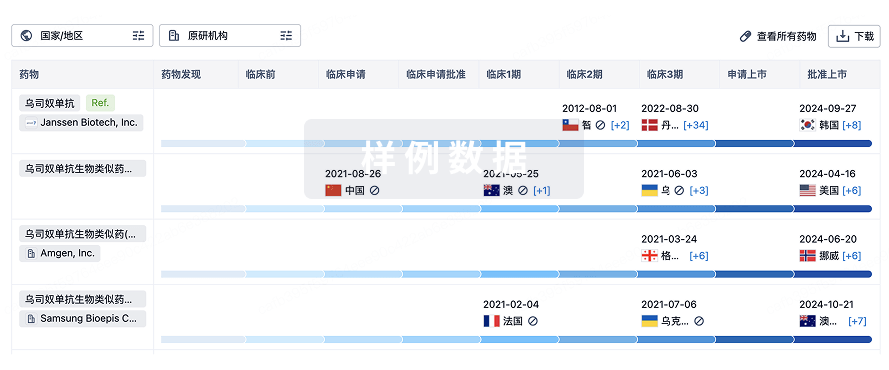
生物类似药
生物类似药在不同国家/地区的竞争态势。请注意临床1/2期并入临床2期,临床2/3期并入临床3期
登录
或
特殊审评
只需点击几下即可了解关键药物信息。
登录
或

提出任何生物医药研究问题
让每一步生物医药决策都精准制胜
基于十亿级生物数据与全球情报的精准 AI,赋能早期药物发现
立即开始免费试用!
智慧芽新药情报库是智慧芽专为生命科学人士构建的基于AI的创新药情报平台,助您全方位提升您的研发与决策效率。
立即接入生物医药数据包
智慧芽新药库数据也通过智慧芽开放平台,以MCP或API服务形式对外开放。立即使用我们的MCP服务定制您的LLM智能体。
生物序列数据库
生物药研发创新
免费使用
化学结构数据库
小分子化药研发创新
免费使用