预约演示
更新于:2026-08-30

Arovella Therapeutics Ltd.
更新于:2026-08-30
概览
标签
肿瘤
血液及淋巴系统疾病
免疫系统疾病
恒定NKT疗法
CAR-NKT
CAR-iNKT
疾病领域得分
一眼洞穿机构专注的疾病领域

技术平台
公司药物应用最多的技术
靶点
公司最常开发的靶点
关联
靶点 |
作用机制 |
在研机构 |
原研机构 |
在研适应症 |
非在研适应症 |
最高研发阶段 |
首次获批国家/地区 |
首次获批日期 |
靶点 |
作用机制 |
在研机构 |
原研机构 |
在研适应症 |
非在研适应症 |
最高研发阶段 |
首次获批国家/地区 |
首次获批日期 |
靶点 |
作用机制 |
在研机构 |
原研机构 |
在研适应症 |
非在研适应症 |
最高研发阶段 |
首次获批国家/地区 |
首次获批日期 |

NCT07518329
A Phase 1 Open-Label Dose-Escalation and Expansion Study to Assess the Safety, Tolerability, Pharmacokinetics, Pharmacodynamics and Preliminary Efficacy of ALA-101, Allogeneic, Off-the-shelf, CD19-directed CAR-iNKT Cells in Patients With CD19+ Non-Hodgkin Lymphoma and Leukemia
100 项与 Arovella Therapeutics Ltd. 相关的临床结果
登录后查看更多信息
登录后查看更多信息
2018-07-01The Pediatric infectious disease journal4区 · 医学
Pathogen Clearance and New Respiratory Tract Infections Among Febrile Children in Zanzibar Investigated With Multitargeting Real-Time Polymerase Chain Reaction on Paired Nasopharyngeal Swab Samples
4区 · 医学
Article
作者: Birger Trollfors ; Kristina Elfving ; Kimberly Baltzell ; Max Petzold ; Anders Björkman ; Deler Shakely ; Magnus Lindh ; Mwinyi I. Msellem ; Andreas Mårtensson ; Maria Andersson
Background::
New molecular methods have revealed frequent and often polymicrobial respiratory infections in children in low-income settings. It is not known whether presence of multiple pathogens is due to prolonged infections or to frequent exposure. The aim of this study was to analyze short-term pathogen clearance from nasopharynx and the rate of new respiratory tract infections in febrile preschool children.
Methods::
Children (n = 207) with uncomplicated acute febrile illness 2–59 months of age presenting to a health center in Zanzibar, Tanzania, April–July 2011, were included. Paired nasopharyngeal swab samples, collected at enrolment and after 14 days, were analyzed by multiple real-time polymerase chain reaction for Adenovirus, bocavirus, Bordetella pertussis, Chlamydophila pneumoniae, Coronaviruses, Enterovirus, influenza A and B virus, metapneumovirus, measles virus, Mycoplasma pneumoniae, parainfluenza virus, Parechovirus, respiratory syncytial virus and Rhinovirus. An age-matched and geographically matched healthy control group (n = 166) underwent nasopharyngeal sampling on 1 occasion.
Results::
At baseline, 157/207 (76%) patients had at least 1 pathogen detected, in total 199 infections. At follow-up (day 14), 162/199 (81%) of these infections were not detected, including >95% of the previously detected infections with Enterovirus, influenza A virus, influenza B virus, metapneumovirus or parainfluenza virus. Still 115 (56%) children were positive for at least 1 pathogen at follow-up, of which 95/115 (83%) were not found at baseline. Detection of influenza B on day 14 was significantly associated with fever during follow-up.
Conclusion::
The results suggest that children with acute febrile illness in Zanzibar rapidly clear respiratory tract infections but frequently acquire new infections within 14 days.
2018-05-01The Lancet. Infectious diseases1区 · 医学
Asymptomatic low-density malaria infections: a parasite survival strategy?
1区 · 医学
Article
作者: Björkman, Anders B
Malaria parasitaemias are usually suppressed or eliminated in the human host by the immune system and antimalarial drugs. Low-density asymptomatic infections are therefore expected to be common in high-endemic areas with high herd immunity and premunition in the population. However, it is becoming increasingly apparent, with sensitive molecular PCR-based diagnostics, that submicroscopical asymptomatic infections are also common in low-endemic areas,1Okell LC Bousema T Griffin JT Ouédraogo AL Ghani AC Drakeley CJ Factors determining the occurrence of submicroscopic malaria infections and their relevance for control.Nat Commun. 2012; 3: 1237Crossref PubMed Scopus (410) Google Scholar despite residents having little protective or suppressive immunity. Previously, the interest in these infections was related to whether they affected health,2Greenwood BM Asymptomatic malaria infections—do they matter?.Parasitol Today. 1987; 3: 206-214Summary Full Text PDF PubMed Scopus (99) Google Scholar, 3Chen I Clarke SE Gosling R et al.“Asymptomatic” malaria: a chronic and debilitating infection that should be treated.PLoS Med. 2016; 13: e1001942Crossref PubMed Scopus (197) Google Scholar whereas now there is interest in their role in malaria transmission and elimination. In The Lancet Infectious Diseases, Thuy-Nhien Nguyen and colleagues4Nguyen T-N von Seidlein L Nguyen T-V et al.The persistence and oscillations of submicroscopic Plasmodium falciparum and Plasmodium vivax infections over time in Vietnam: an open cohort study.Lancet Infect Dis. 2018; (published online Jan 22.)http://dx.doi.org/10.1016/S1473-3099(18)30046-XSummary Full Text Full Text PDF PubMed Scopus (81) Google Scholar have studied the existence, persistence, and possible oscillations of asymptomatic low-density infections in an area in Vietnam with low and seasonal transmission of malaria. They used ultrasensitive quantitative real-time PCR5Imwong M Hanchana S Malleret B et al.High-throughput ultrasensitive molecular techniques for quantifying low-density malaria parasitemias.J Clin Microbiol. 2014; 52: 3303-3309Crossref PubMed Scopus (151) Google Scholar to detect Plasmodium falciparum and Plasmodium vivax infections (detection limit 22 parasites per mL) in a cohort of 356 villagers who tested positive for plasmodium among 3362 tested. They were followed up for up to 24 months with surveys every 1–3 months. The infections were evenly distributed between P falciparum or P vivax monoinfections and mixed infections. There was wide variation in infection duration from 1 to 20 months, with median durations of 2 months (IQR 1–3) for P falciparum and 6 months (3–9) for P vivax episodes. These findings confirm that both infections can be quite long-lived.6Felger I Maire M Bretscher MT et al.The dynamics of natural Plasmodium falciparum infections.PLoS One. 2012; 7: e45542Crossref PubMed Scopus (74) Google Scholar, 7Ashley EA White NJ The duration of Plasmodium falciparum infections.Malar J. 2014; 13: 500Crossref PubMed Scopus (151) Google Scholar The reason for varying durations is, however, unclear. These variations might reflect the fact that 190 (53%) of 356 study individuals were treated with dihydroartemisinin and piperaquine at least once (treatment indication not stated) or different natural infection courses related to different, perhaps strain-specific, immunity despite the low-transmission context. Of more interest is the longitudinal variation in parasite densities, although only 16 (7%) untreated infections evolved to parasite densities of more than 200 000 parasites per mL, above the detection limit of microscopy or rapid diagnostic tests. The median amplitude in P falciparum densities in individuals who persistently had parasitaemia for minimum 6 months was log 6·5 (about 500-times), but among 29 participants for whom detailed data were presented, only four developed densities above 1 000 000 parasites per mL (range 3 975 000–25 600 000), all of whom were non-febrile. Among all recorded febrile events, there was little or no correlation to parasite densities. Fluctuations in parasite density persistent infections can occur day to day because of synchronised sequestration of parasite populations,8Farnert A Snounou G Rooth I Bjorkman A Daily dynamics of Plasmodium falciparum subpopulations in asymptomatic children in a holoendemic area.Am J Trop Med Hyg. 1997; 56: 538-547Crossref PubMed Scopus (185) Google Scholar but the high amplitude oscillations observed by Nguyen and colleagues4Nguyen T-N von Seidlein L Nguyen T-V et al.The persistence and oscillations of submicroscopic Plasmodium falciparum and Plasmodium vivax infections over time in Vietnam: an open cohort study.Lancet Infect Dis. 2018; (published online Jan 22.)http://dx.doi.org/10.1016/S1473-3099(18)30046-XSummary Full Text Full Text PDF PubMed Scopus (81) Google Scholar most probably reflect longer fluctuations than those found day to day. A major reason for these persisting and fluctuating infections is probably evasion of adaptive strain-specific immunity by antigenic variation9Scherf A Lopez-Rubio JJ Riviere L Antigenic variation in Plasmodium falciparum.Annu Rev Microbiol. 2008; 62: 445-470Crossref PubMed Scopus (325) Google Scholar and possibly because low-density infections might be less immunogenic. The oscillations therefore probably occur within a persistent infection in this relatively low-transmission context. A sudden increase in parasite density might also reflect a superinfection by a newly acquired infection. This possibility could not be addressed in Nguyen's study because of the small amounts of DNA in these low-density infections. One important issue is the extent to which these persisting asymptomatic infections are transmitted. Individuals with asymptomatic infections can carry parasites until the next transmission peak.10Babiker HA Abdel-Muhsin AM Ranford-Cartwright LC Satti G Walliker D Characteristics of Plasmodium falciparum parasites that survive the lengthy dry season in eastern Sudan where malaria transmission is markedly seasonal.Am J Trop Med Hyg. 1998; 59: 582-590Crossref PubMed Scopus (108) Google Scholar But are persisting infections transmitted only if and when the oscillations peak and do gametocyte counts follow the pattern of asexual parasite fluctuations? There were no tests of the infectivity of these infections or gametocyte presence and densities in Nguyen and colleagues' study. From previous studies, the main conclusion is that submicroscopic infections could be important contributors to transmission in areas with very low transmission intensity.1Okell LC Bousema T Griffin JT Ouédraogo AL Ghani AC Drakeley CJ Factors determining the occurrence of submicroscopic malaria infections and their relevance for control.Nat Commun. 2012; 3: 1237Crossref PubMed Scopus (410) Google Scholar A key question that remains is why P falciparum infections in individuals with no or low immunity can remain asymptomatic often without the development of high parasite densities. A new hypothesis might be that in a low-endemic environment, parasites that are less virulent might not be exposed to high competition from more virulent strains and might therefore persist at a low density, asymptomatic, undetected, and untreated allowing for further transmission over a long time period and therefore eventually selected. Less virulent parasites would thus have an advantage over highly virulent parasites, which would be eliminated earlier by diagnosis and treatment and would possibly be subject to a more potent immune response. The study by Nguyen and colleagues4Nguyen T-N von Seidlein L Nguyen T-V et al.The persistence and oscillations of submicroscopic Plasmodium falciparum and Plasmodium vivax infections over time in Vietnam: an open cohort study.Lancet Infect Dis. 2018; (published online Jan 22.)http://dx.doi.org/10.1016/S1473-3099(18)30046-XSummary Full Text Full Text PDF PubMed Scopus (81) Google Scholar highlights the presence and potential importance of persistent asymptomatic and very low malaria parasite density infections. However, questions remain regarding more precise dynamics and infectiousness of these infections and their implications for malaria elimination. I declare no competing interests. The persistence and oscillations of submicroscopic Plasmodium falciparum and Plasmodium vivax infections over time in Vietnam: an open cohort studyPersistent largely asymptomatic P vivax and P falciparum infections are common in this area of low seasonal malaria transmission. Infections with low-density parasitaemias can develop into much higher density infections at a later time, which are likely to sustain malaria endemicity. Full-Text PDF Open Access
2017-12-01MALARIA JOURNAL
Unexpected selections of Plasmodium falciparum polymorphisms in previously treatment-naïve areas after monthly presumptive administration of three different anti-malarial drugs in Liberia 1976–78
Article
作者: Björkman, Anders ; Roper, Cally ; Ursing, Johan ; Jovel, Irina T ; Mårtensson, Andreas
BACKGROUND:
To assess the effect on malaria prevalence, village specific monthly administrations of pyrimethamine, chlorproguanil, chloroquine or placebo were given to children in four previously treatment-naïve Liberian villages, 1976-78. Plasmodium falciparum in vivo resistance developed to pyrimethamine only. Selection of molecular markers of P. falciparum resistance after 2 years of treatment are reported.
METHODS:
Blood samples were collected from 191 study children in a survey in 1978. Polymorphisms in pfcrt, pfmdr1, pfdhfr, pfdhps, pfmrp1 and pfnhe1 genes were determined using PCR-based methods.
RESULTS:
Pfcrt 72-76 CVIET was found in one chloroquine village sample, all remaining samples had pfcrt CVMNK. Pfmdr1 N86 prevalence was 100%. A pfmdr1 T1069ACT→ACG synonymous polymorphism was found in 30% of chloroquine village samples and 3% of other samples (P = 0.008). Variations in pfnhe1 block I were found in all except the chloroquine treated village (P < 0.001). Resistance associated pfdhfr 108N prevalence was 2% in the pyrimethamine village compared to 45-65% elsewhere, including the placebo village (P = 0.001).
CONCLUSIONS:
Chloroquine treatment possibly resulted in the development of pfcrt 72-76 CVIET. Selection of pfmdr1 T1069ACG and a pfnhe1 block 1 genotypes indicates that chloroquine treatment exerted a selective pressure on P. falciparum. Pyrimethamine resistance associated pfdhfr 108N was present prior to the introduction of any drug. Decreased pfdhfr 108N frequency concurrent with development of pyrimethamine resistance suggests a non-pfdhfr polymorphisms mediated resistance mechanism.
2026-08-13
临床1期细胞疗法
2026-08-10
100 项与 Arovella Therapeutics Ltd. 相关的药物交易
登录后查看更多信息
100 项与 Arovella Therapeutics Ltd. 相关的转化医学
登录后查看更多信息
组织架构
使用我们的机构树数据加速您的研究。
登录
或
管线布局
2026年10月19日管线快照
管线布局中药物为当前组织机构及其子机构作为药物机构进行统计,早期临床1期并入临床1期,临床1/2期并入临床2期,临床2/3期并入临床3期
临床前
2
1
临床1期
其他
5
登录后查看更多信息
当前项目
登录后查看更多信息
药物交易
使用我们的药物交易数据加速您的研究。
登录
或
转化医学
使用我们的转化医学数据加速您的研究。
登录
或
营收
使用 Synapse 探索超过 36 万个组织的财务状况。
登录
或
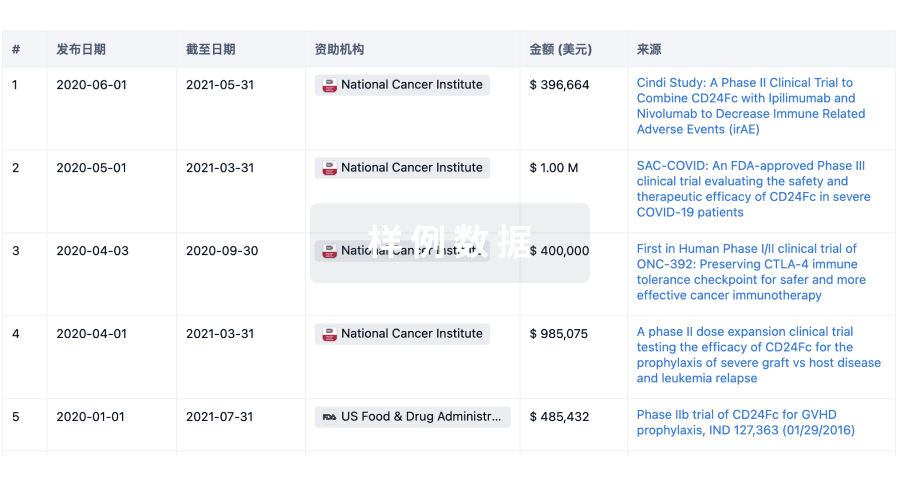
科研基金(NIH)
访问超过 200 万项资助和基金信息,以提升您的研究之旅。
登录
或
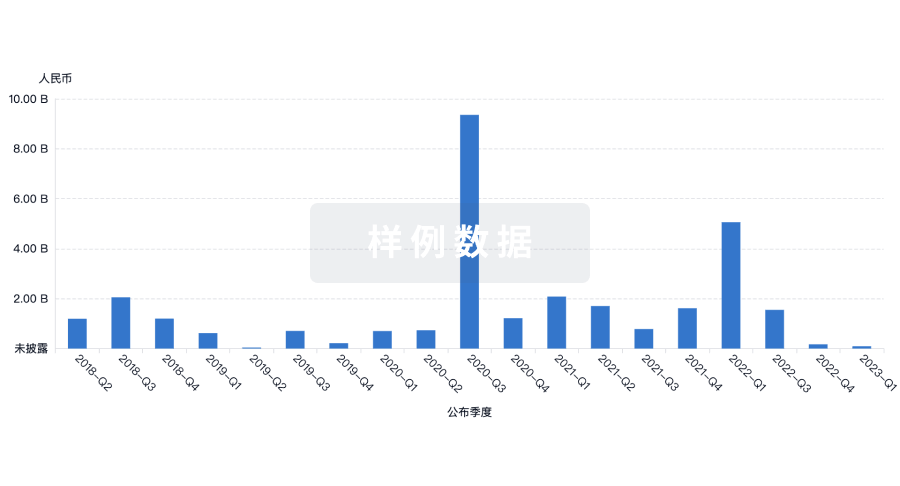
投资
深入了解从初创企业到成熟企业的最新公司投资动态。
登录
或
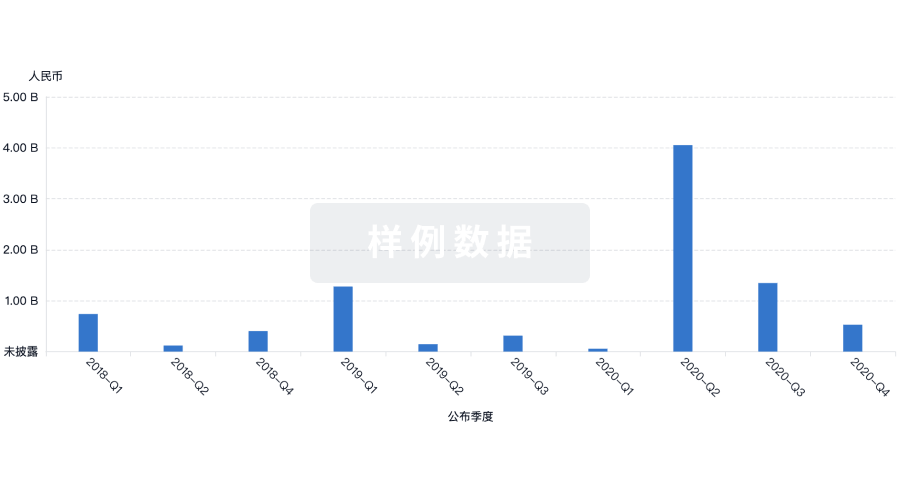
融资
发掘融资趋势以验证和推进您的投资机会。
登录
或
提出任何生物医药研究问题
让每一步生物医药决策都精准制胜
基于十亿级生物数据与全球情报的精准 AI,赋能早期药物发现
立即开始免费试用!
智慧芽新药情报库是智慧芽专为生命科学人士构建的基于AI的创新药情报平台,助您全方位提升您的研发与决策效率。
立即接入生物医药数据包
智慧芽新药库数据也通过智慧芽开放平台,以MCP或API服务形式对外开放。立即使用我们的MCP服务定制您的LLM智能体。
生物序列数据库
生物药研发创新
免费使用
化学结构数据库
小分子化药研发创新
免费使用