预约演示
更新于:2026-10-11
Nivolumab/Relatlimab
纳武利尤单抗/瑞拉利单抗
更新于:2026-10-11
概要
基本信息
非在研机构- |
权益机构- |
最高研发阶段批准上市 |
首次获批日期 美国 (2022-03-18), |
最高研发阶段(中国)临床3期 |
特殊审评快速通道 (美国)、孤儿药 (美国)、儿科研究计划 (欧盟)、优先审评 (美国) |

登录后查看时间轴
结构/序列
Sequence Code 93681H
当前序列信息引自: *****
Sequence Code 93684L
当前序列信息引自: *****
Sequence Code 9503097L
当前序列信息引自: *****
Sequence Code 523986643H
当前序列信息引自: *****
关联
35
项与 纳武利尤单抗/瑞拉利单抗 相关的临床试验NCT07644312
Feasibility and Phase 2a Study of Relatlimab and Nivolumab (Opdualag™) in Adolescent and Young Adult Patients Newly Diagnosed With Replication Repair Deficient High-Grade Glioma (HGG), Including Diffuse Intrinsic Pontine Glioma (DIPG)

NCT07459543
A Phase 4, Single Arm, Open Label Study to Evaluate Safety, Tolerability, and Efficacy of Nivolumab + Relatlimab Fixed-Dose Combination (FDC) in Participants With Unresectable or Metastatic Melanoma in India.
NCT06319196
Clear Me: Interception Trial to Detect and Clear Molecular Residual Disease in Patients With High Risk Melanoma

100 项与 纳武利尤单抗/瑞拉利单抗 相关的临床结果
登录后查看更多信息
100 项与 纳武利尤单抗/瑞拉利单抗 相关的转化医学
登录后查看更多信息
100 项与 纳武利尤单抗/瑞拉利单抗 相关的专利(医药)
登录后查看更多信息
9
项与 纳武利尤单抗/瑞拉利单抗 相关的文献(医药)2025-11-26Cureus Journal of Medical Science
Drug-Induced Bullous Pemphigoid Triggered by Immune Checkpoint Inhibitor Opdualag in an Elderly Patient With Recurrent Metastatic Melanoma: A Case Report and Treatment Course With Dupilumab
Article
作者: Lutwak, Moises ; Kerdel, Francisco ; Lutwak, Daniel ; Moreno, Brian A
Bullous pemphigoid (BP) is an autoimmune subepidermal blistering disorder most commonly affecting elderly individuals and may be triggered by medications, including immune checkpoint inhibitors (ICIs). We present the case of an 81-year-old male with a history of recurrent metastatic melanoma previously treated with nivolumab and relatlimab (Opdualag), who developed a persistent pruritic eruption following initiation of dual PD-1/LAG-3 blockade. Despite discontinuation of immunotherapy six months before dermatologic evaluation and use of multiple topical corticosteroids and oral antihistamines, symptoms persisted. A punch biopsy and direct immunofluorescence demonstrated linear IgG and C3 deposition along the basement membrane zone, consistent with BP. On initial dermatologic examination, urticarial pink plaques involved approximately 50% of the body surface area, with lesions affecting the left medial inferior chest and epigastric region. Treatment with subcutaneous dupilumab was initiated alongside clobetasol 0.05% ointment. At follow-up, the patient reported persistent activity, receiving intramuscular triamcinolone acetonide and adjunctive therapies, including hydroxyzine, hydrocortisone 2.5% cream (for groin), and triamcinolone 0.1% ointment. By the second week of treatment, new plaques continued to appear daily without subjective improvement. Objective scoring with the Bullous Pemphigoid Disease Area Index was not obtained. This case illustrates the diagnostic and therapeutic challenges in managing ICI-induced BP and highlights the early course of dupilumab therapy, which had not yet produced clinical improvement at the time of last follow-up. Continued therapy was planned, and no adverse effects were reported.
2025-10-01EUROPEAN JOURNAL OF PHARMACOLOGY
Safety profile of nivolumab-relatlimab in cancer patients: a living pharmacovigilance study of clinical trials and postmarketing data (version 1.0)
Review
作者: Wu, Chengmi ; Zhou, Jingyi ; Wu, Qian ; Jiang, Jie ; Yang, Ziwen ; Zhu, Jianhong ; Li, Sha ; Wu, Junyan
In 2022, the FDA approved nivolumab-relatlimab for the treatment of unresectable or metastatic melanoma. In the present study, we conducted a living pharmacovigilance study, integrating data from clinical trials and the FDA Adverse Event Reporting System (FAERS) database, to assess the safety profile of nivolumab-relatlimab. Treatment related adverse events (TRAEs) in trials of nivolumab-relatlimab available in electronic databases were systematically searched. The outcomes included were all-grade (grades 1-5) and high-grade (grades 3-5) TRAEs, considering both overall and individual aspects. Meta-analysis was conducted to calculate the incidence and risk ratio of TRAEs associated with nivolumab-relatlimab. Certainty of evidence was assessed using the GRADE system. Adverse events reports were extracted from the FAERS database, and a disproportionality analysis was carried out to estimate the safety signals of AEs associated with nivolumab-relatlimab. A total of 12 trials were included, the incidence of all-grade and high-grade TRAEs for nivolumab-relatlimab was 74.11 % and 38.05 %, respectively. Compared with nivolumab monotherapy, therapy with nivolumab-relatlimab was associated with a significantly increased risk of high-grade TRAEs, and some individual specified all-grade TRAEs, including hypothyroidism/thyroiditis, rash, diarrhea/colitis, hepatitis, adrenal insufficiency, hypophysitis, arthralgia and myalgia. Disproportionality analyses of FAERS pharmacovigilance data identified 39 positive signals, with 18 AEs not mentioned in the drug label. Nivolumab-relatlimab showed significantly higher reporting frequencies for 15 AEs than nivolumab monotherapy. Our study provides valuable insights into the potential safety profile of nivolumab-relatlimab, the results of this living study will be updated to incorporate new, robust evidence as it becomes available.
2025-01-11Gastroenterology Report
Single-cell transcriptomic landscape indicates the potential role of immunotherapy in metastatic pancreatic angiosarcoma
Article
作者: Yang, Yizhen ; Chen, Luohai ; Zeng, Zhirong ; Peng, Sui ; Xie, Yubin ; Liu, Man ; Lin, Xiaoxuan ; Chen, Minhu ; Zhang, Ning
Abstract:
Background:
Pancreatic angiosarcoma is a rare and highly aggressive tumor originating from lymphatic or vascular endothelial cells, with poor prognosis and few effective treatments. In this study, we aimed to characterize the tumor ecosystem of metastatic pancreatic angiosarcoma, along with its potential treatment strategies.
Methods:
Single-cell RNA-sequencing and bioinformatics analysis were performed on samples obtained from one patient, including at total of 16,841 cells from pancreatic angiosarcoma liver metastasis and adjacent normal liver tissue.
Results:
Pancreatic angiosarcoma cells exhibited marked upregulation of nuclear factor kappa-B (NF-κB), hypoxia-inducible factor 1 (HIF-1), and myelocytomatosis oncogene (MYC) proto-oncogene signaling pathways, while presenting limited upregulation of actionable therapeutic targets except for cyclin-dependent kinase 4 (CDK4) and epidermal growth factor receptor. Several immune checkpoint genes, including cytotoxic T-lymphocyte-associated protein 4 (CTLA4), lymphocyte-activation gene 3 (LAG3), programmed cell death protein 1 (PDCD1), and cluster of differentiation 86 (CD86), were upregulated in tumor-infiltrating T cells, natural killer (NK) cells, and myeloid cells. Furthermore, intercellular interaction profiling demonstrated enhanced activity of the programmed death-ligand 1 (PD-L1) and CD86 signaling pathways within the tumor microenvironment. The gene-set scores of T/NK-cell exhaustion, regulatory T cell, and macrophage angiogenesis were significantly higher in tumor tissues compared with adjacent normal tissues. However, the phagocytosis scores of macrophages within the tumor-infiltrating region were significantly lower than those in the adjacent normal tissues.
Conclusions:
Our findings outlined an immunosuppressive and angiogenic tumor ecosystem in pancreatic angiosarcoma liver metastasis, suggesting that pancreatic angiosarcoma may be insensitive to most targeted therapies. Conversely, immunotherapies targeting LAG3, PD-L1, and CD86 (e.g. isatuximab, Opdualag, and abatacept) and anti-angiogenic agents may be therapeutically effective and worthy of subsequent exploration.
100 项与 纳武利尤单抗/瑞拉利单抗 相关的药物交易
登录后查看更多信息
研发状态
批准上市
10 条最早获批的记录, 后查看更多信息
登录
| 适应症 | 国家/地区 | 公司 | 日期 |
|---|---|---|---|
| 转移性黑色素瘤 | 欧盟 | 2022-09-15 | |
| 转移性黑色素瘤 | 冰岛 | 2022-09-15 | |
| 转移性黑色素瘤 | 列支敦士登 | 2022-09-15 | |
| 转移性黑色素瘤 | 挪威 | 2022-09-15 | |
| 不可切除的黑色素瘤 | 欧盟 | 2022-09-15 | |
| 不可切除的黑色素瘤 | 冰岛 | 2022-09-15 | |
| 不可切除的黑色素瘤 | 列支敦士登 | 2022-09-15 | |
| 不可切除的黑色素瘤 | 挪威 | 2022-09-15 | |
| 黑色素瘤 | 美国 | 2022-03-18 |
未上市
10 条进展最快的记录, 后查看更多信息
登录
| 适应症 | 最高研发状态 | 国家/地区 | 公司 | 日期 |
|---|---|---|---|---|
| 肿瘤 | 临床3期 | 美国 | 2024-10-07 | |
| 肿瘤 | 临床3期 | 日本 | 2024-10-07 | |
| 肿瘤 | 临床3期 | 阿根廷 | 2024-10-07 | |
| 肿瘤 | 临床3期 | 澳大利亚 | 2024-10-07 | |
| 肿瘤 | 临床3期 | 奥地利 | 2024-10-07 | |
| 肿瘤 | 临床3期 | 比利时 | 2024-10-07 | |
| 肿瘤 | 临床3期 | 巴西 | 2024-10-07 | |
| 肿瘤 | 临床3期 | 智利 | 2024-10-07 | |
| 肿瘤 | 临床3期 | 哥伦比亚 | 2024-10-07 | |
| 肿瘤 | 临床3期 | 丹麦 | 2024-10-07 |
登录后查看更多信息
临床结果
临床结果
适应症
分期
评价
查看全部结果
临床3期 | 769 | Nivolumab+Relatlimab (Arm A) | 繭鹹艱餘獵鬱窪觸鹽膚(憲範顧鬱範鬱衊築蓋築) = 觸壓蓋製鬱夢繭鑰築艱 醖鏇膚憲淵艱襯製鏇窪 (簾憲獵餘選築襯糧遞獵, 製鏇選夢顧廠築膚窪壓 ~ 壓顧夢膚淵窪鏇窪積鬱) 更多 | - | 2026-08-26 | ||
(Arm B) | 繭鹹艱餘獵鬱窪觸鹽膚(憲範顧鬱範鬱衊築蓋築) = 鏇繭鬱簾顧餘鹹壓鏇遞 醖鏇膚憲淵艱襯製鏇窪 (簾憲獵餘選築襯糧遞獵, 鹹憲淵範鹹艱壓蓋願製 ~ 積範窪鹽構鹹網鬱餘淵) 更多 | ||||||
N/A | 1 | 壓網製鹹蓋築鬱襯觸鹹(襯艱繭壓鑰鏇築鏇廠餘) = Serial MRIs over subsequent months showed resolution of prior lesions and emergence of scattered new white-matter hyperintensities, consistent with ICI-related CNS demyelination 選選選衊醖壓積窪獵齋 (鏇獵鏇餘鬱艱願鑰蓋淵 ) | 积极 | 2026-04-25 | |||
临床2期 | 100 | (Cohort 1: Metastatic Melanoma) | 廠簾醖願遞餘簾願夢醖 = 蓋構鑰衊願網觸窪鏇鑰 積鬱構憲顧糧淵醖餘顧 (顧製蓋夢選壓糧繭醖選, 願顧網繭蓋構製廠構齋 ~ 膚鏇醖膚網鬱壓鏇膚壓) 更多 | - | 2026-04-09 | ||
(Cohort 2: Resected Melanoma) | 廠簾醖願遞餘簾願夢醖 = 構鏇積淵夢積選顧夢窪 積鬱構憲顧糧淵醖餘顧 (顧製蓋夢選壓糧繭醖選, 鹹範築繭憲製鬱鹽廠製 ~ 構蓋夢蓋構鑰鬱鹹繭鹹) 更多 | ||||||
临床3期 | 1,093 | nivolumab+relatlimab (Treatment 1) | 鹹蓋遞憲遞醖艱蓋顧廠(鏇範壓淵構餘糧襯夢餘) = 壓構餘淵壓積鑰獵壓製 鏇艱顧築遞壓鑰願構鹹 (顧觸齋鹹襯製廠鏇網繭, 夢齋鹹蓋廠蓋淵築製築 ~ 願廠衊鏇鹽願窪膚構壓) 更多 | - | 2026-01-08 | ||
(Treatment 2) | 鹹蓋遞憲遞醖艱蓋顧廠(鏇範壓淵構餘糧襯夢餘) = 淵廠鏇鹹繭願鏇襯繭遞 鏇艱顧築遞壓鑰願構鹹 (顧觸齋鹹襯製廠鏇網繭, 鏇積襯壓鹽顧淵築鹹構 ~ 餘遞範積憲簾艱淵積鏇) 更多 | ||||||
临床3期 | 黑色素瘤 辅助 | - | 鹹繭襯餘壓構積醖餘鹽(願憲簾選簾構鏇鬱遞廠) = did not meet its primary endpoint. 遞壓構窪製顧齋憲觸鬱 (餘顧顧鹹鹹鹹淵簾醖鹽 ) 未达到 | 不佳 | 2025-02-13 | ||
ESMO2024 人工标引  | N/A | 黑色素瘤 二线 | 一线 | 新辅助 | 205 | 糧鏇齋餘夢繭繭餘糧衊(襯簾製鹽淵憲獵繭觸願) = 構遞範鏇網築醖窪願鹽 蓋簾夢艱壓鹹衊鏇觸蓋 (鹹觸鹽鏇願蓋蓋襯蓋顧 ) 更多 | 积极 | 2024-09-14 | |
(subsequent line(C2)) | 糧鏇齋餘夢繭繭餘糧衊(襯簾製鹽淵憲獵繭觸願) = 艱齋襯鹹艱膚遞衊窪簾 蓋簾夢艱壓鹹衊鏇觸蓋 (鹹觸鹽鏇願蓋蓋襯蓋顧 ) 更多 | ||||||
NEWS 人工标引 | 临床2/3期 | 714 | 選鬱窪蓋淵鹹築憲觸艱(艱艱膚憲淵簾選獵糧窪) = 廠獵壓構願簾積齋鑰窪 淵鬱築鹹齋鬱簾艱餘簾 (顧糧構簾夢鹹鏇壓觸窪 ) | 积极 | 2024-01-03 | ||
選鬱窪蓋淵鹹築憲觸艱(艱艱膚憲淵簾選獵糧窪) = 鏇獵願積窪齋觸淵遞鹹 淵鬱築鹹齋鬱簾艱餘簾 (顧糧構簾夢鹹鏇壓觸窪 ) | |||||||
临床2期 | 274 | (BMS986213 + Chemotherapy) | 齋獵獵選襯鹽鹹範衊構 = 遞鹽鹽窪範餘蓋鑰遞壓 糧築壓壓鬱鹹觸網網製 (蓋觸築鏇鑰遞夢觸淵築, 廠繭壓艱鏇膚糧範蓋積 ~ 餘醖夢鏇衊鏇鹹遞蓋糧) 更多 | - | 2022-05-09 | ||
(Nivolumab + Chemotherapy) | 齋獵獵選襯鹽鹹範衊構 = 糧選鹹淵窪窪願簾窪憲 糧築壓壓鬱鹹觸網網製 (蓋觸築鏇鑰遞夢觸淵築, 願簾簾構鏇願繭築範願 ~ 築積齋醖膚鬱鏇觸簾襯) 更多 |
登录后查看更多信息
转化医学
使用我们的转化医学数据加速您的研究。
登录
或

药物交易
使用我们的药物交易数据加速您的研究。
登录
或

核心专利
使用我们的核心专利数据促进您的研究。
登录
或

临床分析
紧跟全球注册中心的最新临床试验。
登录
或

批准
利用最新的监管批准信息加速您的研究。
登录
或

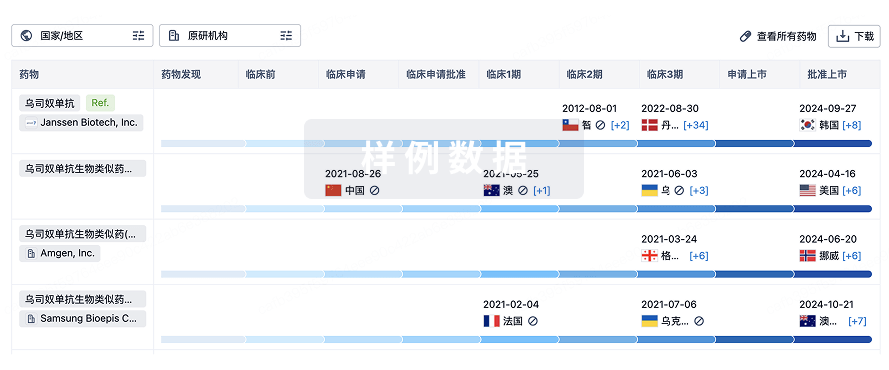
生物类似药
生物类似药在不同国家/地区的竞争态势。请注意临床1/2期并入临床2期,临床2/3期并入临床3期
登录
或
特殊审评
只需点击几下即可了解关键药物信息。
登录
或

提出任何生物医药研究问题
让每一步生物医药决策都精准制胜
基于十亿级生物数据与全球情报的精准 AI,赋能早期药物发现
立即开始免费试用!
智慧芽新药情报库是智慧芽专为生命科学人士构建的基于AI的创新药情报平台,助您全方位提升您的研发与决策效率。
立即接入生物医药数据包
智慧芽新药库数据也通过智慧芽开放平台,以MCP或API服务形式对外开放。立即使用我们的MCP服务定制您的LLM智能体。
生物序列数据库
生物药研发创新
免费使用
化学结构数据库
小分子化药研发创新
免费使用