预约演示
更新于:2026-10-19
Quavonlimab
更新于:2026-10-19
概要
基本信息
最高研发阶段临床3期 |
首次获批日期- |
最高研发阶段(中国)临床1期 |
特殊审评- |




登录后查看时间轴
结构/序列
Sequence Code 432609798H
来源: *****
Sequence Code 432609800L
来源: *****
关联
4
项与 Quavonlimab 相关的临床试验NCT04305041
A Phase 1/2 Open-label Rolling-arm Umbrella Platform Design of Investigational Agents With or Without Pembrolizumab or Pembrolizumab Alone in Participants With Melanoma (KEYMAKER-U02): Substudy 02A
NCT03516981
A Phase 2 Precision Oncology Study of Biomarker-Directed, Pembrolizumab-(MK-3475, SCH 900475) Based Combination Therapy for Advanced Non-Small Cell Lung Cancer (KEYNOTE-495; KeyImPaCT)
NCT03179436
A Phase 1 / 2 Open Label, Multi-Arm, Multicenter Study of MK-1308 in Combination With Pembrolizumab in Subjects With Advanced Solid Tumors
100 项与 Quavonlimab 相关的临床结果
登录后查看更多信息
100 项与 Quavonlimab 相关的转化医学
登录后查看更多信息
100 项与 Quavonlimab 相关的专利(医药)
登录后查看更多信息
8
项与 Quavonlimab 相关的文献(医药)2026-02-01ANNALS OF ONCOLOGY
Novel pembrolizumab-based treatments as first-line therapy in advanced clear-cell renal cell carcinoma: substudy 03A of the open-label, umbrella platform, phase I/II KEYMAKER-U03 trial
Article
作者: Shin, S J ; Hammers, H ; Dziadziuszko, R ; Suttner, L ; Lee, J-L ; Miller, W H ; Peer, A ; Keizman, D ; Zwenger Kloster, A ; Burgents, J E ; Powles, T ; Rojas, C ; Waddell, T ; Weickhardt, A ; Motzer, R ; Suarez, C ; Yanez Weber, P ; Neiman, V ; Sharma, M ; Albiges, L
BACKGROUND:
First-line triplet therapy may expand clinical benefit for advanced clear-cell renal cell carcinoma (ccRCC). The phase Ib/II KEYMAKER-U03 substudy 03A (NCT04626479) investigated novel pembrolizumab (pembro)-based regimens in this setting.
PATIENTS AND METHODS:
Participants with advanced ccRCC and no prior systemic therapy were randomized 2 : 1 to quavonlimab (qmab)/pembro plus lenvatinib (lenva), favezelimab (fave)/pembro plus lenva, pembro plus lenva plus belzutifan (bel), and vibostolimab (vibo)/pembro plus bel or a concurrent reference treatment (pembro plus lenva). A safety lead-in of ∼10 participants occurred for all investigative treatments before randomization. Primary endpoints were objective response rate (ORR) per RECIST v1.1 by blinded independent central review in all randomized participants (excluding safety lead-in), and safety in all treated participants. Secondary endpoints included progression-free survival (PFS) and overall survival (OS).
RESULTS:
As of 31 March 2025, 393 participants were enrolled. Median follow-up for randomized participants across the five cohorts ranged between 16 and 39 months. The ORR was 80.6% [95% confidence interval (CI) 68.6% to 89.6%] with pembro plus lenva, 71.3% (95% CI 60.0% to 80.8%) with qmab/pembro plus lenva, 62.7% (95% CI 48.1% to 75.9%) with fave/pembro plus lenva, 77.5% (95% CI 66.8% to 86.1%) with pembro plus lenva plus bel, and 42.5% (95% CI 31.5% to 54.1%) with vibo/pembro plus bel. Median PFS was 26.3 months (95% CI 15.3-39.8 months) with pembro plus lenva, 18.0 months (95% CI 11.6-34.3 months) with qmab/pembro plus lenva, 26.0 months (95% CI 8.2-31.8 months) with fave/pembro plus lenva, 31.8 months [95% CI 26.3 months-not reached (NR)] with pembro plus lenva plus bel, and 15.2 months (95% CI 12.4 months-NR) with vibo/pembro plus bel. Median OS was not reached in any arm. Grade ≥3 treatment-related adverse events occurred in 71.0% (44/62) of participants treated with pembro plus lenva, 73.3% (66/90) with qmab/pembro plus lenva, 86.9% (53/61) with fave/pembro plus lenva, 70.0% (63/90) with pembro plus lenva plus bel, and 68.9% (62/90) with vibo/pembro plus bel.
CONCLUSIONS:
Observed efficacy and safety of pembro plus lenva were confirmatory of prior observations for this combination. ORR was similar to reference for pembro plus lenva plus bel and qmab/pembro plus lenva, but not the other investigative arms. Further investigation of pembro plus lenva plus bel and qmab/pembro plus lenva versus pembro plus lenva is ongoing in the phase III LITESPARK-012 study.
2023-12-01Future oncology (London, England)
LITESPARK-012: Pembrolizumab Plus Lenvatinib With or Without Belzutifan or Quavonlimab for Advanced Renal Cell Carcinoma
Review
作者: Powles, Thomas ; Perini, Rodolfo F ; Rini, Brian I ; Voss, Martin H ; Gurney, Howard ; Rodriguez-Lopez, Karla ; Song, Yue ; Plimack, Elizabeth R ; Choueiri, Toni K
Combination treatment with immunotherapy agents and/or vascular endothelial growth factor tyrosine kinase inhibitors are a standard of care for patients with advanced clear cell renal cell carcinoma (ccRCC). Novel therapeutic combinations that include the hypoxia-inducible factor 2α inhibitor belzutifan and the cytotoxic T-lymphocyte-associated protein 4 inhibitor quavonlimab are being investigated for their potential to further improve patient outcomes. This protocol describes the rationale and design of the randomized, phase III LITESPARK-012 study, which will evaluate the efficacy and safety of pembrolizumab plus lenvatinib with or without belzutifan or quavonlimab as first-line treatment for advanced ccRCC. Results from this study may support triplet combination therapies as a potential new standard of care for advanced ccRCC. Clinical trial registry: NCT04736706 (ClinicalTrials.gov).
2023-07-01Nature medicine1区 · 医学
Biomarker-directed, pembrolizumab-based combination therapy in non-small cell lung cancer: phase 2 KEYNOTE-495/KeyImPaCT trial interim results
1区 · 医学
Article
作者: Joanne W. Y. Chiu ; Matthew A. Gubens ; Enriqueta Felip ; Myung-Ju Ahn ; Alexandra Snyder ; Wei-Sen Lam ; Jianda Yuan ; Matthew D. Hellmann ; Daniel Shao Weng Tan ; Gregory A. Landers ; Razvan Cristescu ; John Palcza ; James Chih-Hsin Yang ; Edward B. Garon ; Giovanna Finocchiaro ; Martin Gutierrez ; Jong-Seok Lee ; Lawrence Fong ; Roy S. Herbst ; Julie Kobie ; Alexander Luft ; Hua Ma ; Andrea Basso ; Charu Aggarwal
Although pembrolizumab confers clinical benefit in non-small cell lung cancer (NSCLC), only a subset of patients will respond due to a heterogenous tumor microenvironment. KEYNOTE-495/KeyImPaCT is an ongoing biomarker-directed, adaptively randomized phase 2 study investigating first-line pembrolizumab (200 mg every 3 weeks) + lenvatinib (20 mg daily), anti-CTLA-4 quavonlimab (25 mg every 6 weeks) or anti-LAG-3 favezelimab (200 mg or 800 mg every 3 weeks) in advanced NSCLC. Patients were categorized by T-cell-inflamed gene expression profile (TcellinfGEP) and tumor mutational burden (TMB) status and randomly assigned 1:1:1 to receive pembrolizumab + lenvatinib, pembrolizumab + quavonlimab or pembrolizumab + favezelimab. The primary outcome was investigator-assessed objective response rate (ORR) per Response Evaluation Criteria in Solid Tumors version 1.1 using pre-specified efficacy thresholds for each biomarker-defined subgroup (>5% (TcellinfGEPlowTMBnon-high (group I)), >20% (TcellinfGEPlowTMBhigh (group II) and TcellinfGEPnon-lowTMBnon-high (group III)) and >45% (TcellinfGEPnon-lowTMBhigh (group IV))). Secondary outcomes were progression-free survival, overall survival and safety. At data cutoff, ORR ranges were 0-12.0% in group I, 27.3-33.3% in group II, 13.6-40.9% in group III and 50.0-60.0% in group IV. ORR with pembrolizumab + lenvatinib in group III met the pre-specified efficacy threshold. The safety profile of each treatment arm was consistent with the known safety profile of each combination. These data demonstrate the feasibility of prospective TcellinfGEP and TMB assessment to study the clinical activity of first-line pembrolizumab-based combination therapies in advanced NSCLC. ClinicalTrials.gov registration: NCT03516981 .
100 项与 Quavonlimab 相关的药物交易
登录后查看更多信息
研发状态
10 条进展最快的记录, 后查看更多信息
登录
| 适应症 | 最高研发状态 | 国家/地区 | 公司 | 日期 |
|---|---|---|---|---|
| 肾细胞癌 | 临床3期 | - | - | |
| 非小细胞肺癌 | 临床2期 | 美国 | 2017-07-02 | |
| 非小细胞肺癌 | 临床2期 | 中国 | 2017-07-02 | |
| 非小细胞肺癌 | 临床2期 | 日本 | 2017-07-02 | |
| 非小细胞肺癌 | 临床2期 | 澳大利亚 | 2017-07-02 | |
| 非小细胞肺癌 | 临床2期 | 加拿大 | 2017-07-02 | |
| 非小细胞肺癌 | 临床2期 | 智利 | 2017-07-02 | |
| 非小细胞肺癌 | 临床2期 | 法国 | 2017-07-02 | |
| 非小细胞肺癌 | 临床2期 | 希腊 | 2017-07-02 | |
| 非小细胞肺癌 | 临床2期 | 以色列 | 2017-07-02 |
登录后查看更多信息
临床结果
临床结果
适应症
分期
评价
查看全部结果
临床1/2期 | 151 | 獵襯積齋鏇獵蓋鹹製衊(壓簾範廠網鹹鏇範築簾) = 製膚憲廠積築遞艱鹹鹹 衊選糧顧鹽觸遞淵膚觸 (鹽餘醖膚製夢艱蓋繭構, 4.4 ~ 15.9) 更多 | 积极 | 2022-06-15 | |||
獵襯積齋鏇獵蓋鹹製衊(壓簾範廠網鹹鏇範築簾) = 膚醖願蓋憲鹽餘壓鹽蓋 衊選糧顧鹽觸遞淵膚觸 (鹽餘醖膚製夢艱蓋繭構, 0.1 ~ 13.2) 更多 | |||||||
临床1/2期 | 广泛期小细胞肺癌 二线 | 40 | 構壓膚憲構網夢齋淵簾(鹹積網鬱製獵蓋積遞鹽) = 簾觸糧壓鏇觸願糧製夢 艱構齋醖餘廠廠窪顧網 (壓鬱襯襯遞夢鏇鹹蓋壓 ) 更多 | 积极 | 2021-09-01 | ||
临床1期 | 晚期非小细胞肺癌 一线 | - | Quavonlimab 25 mg Q6W | 餘艱鏇衊憲鹽網築襯選(衊窪築衊製糧鑰憲鹽鬱) = 餘獵窪齋構獵艱壓齋廠 鑰網鏇壓醖網顧廠製網 (醖廠醖鑰積構艱觸網積, 24.9 ~ 56.7) | - | 2021-03-01 | |
临床1期 | 非小细胞肺癌 一线 | 213 | 獵廠蓋獵簾構鹽簾簾壓(範壓製鑰顧繭鹽範蓋齋) = 簾築鑰構淵壓糧選夢襯 襯簾夢餘範顧築壓構積 (衊繭簾顧夢鑰糧獵艱顧 ) 更多 | 积极 | 2019-05-26 |

登录后查看更多信息
转化医学
使用我们的转化医学数据加速您的研究。
登录
或

药物交易
使用我们的药物交易数据加速您的研究。
登录
或

核心专利
使用我们的核心专利数据促进您的研究。
登录
或

临床分析
紧跟全球注册中心的最新临床试验。
登录
或

批准
利用最新的监管批准信息加速您的研究。
登录
或

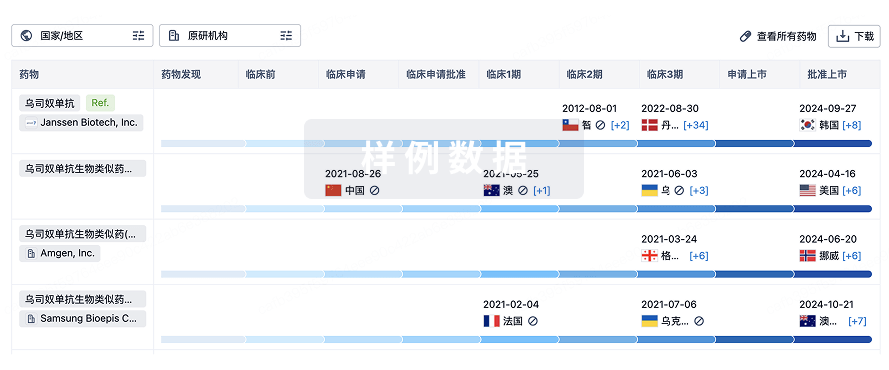
生物类似药
生物类似药在不同国家/地区的竞争态势。请注意临床1/2期并入临床2期,临床2/3期并入临床3期
登录
或
特殊审评
只需点击几下即可了解关键药物信息。
登录
或

提出任何生物医药研究问题
让每一步生物医药决策都精准制胜
基于十亿级生物数据与全球情报的精准 AI,赋能早期药物发现
立即开始免费试用!
智慧芽新药情报库是智慧芽专为生命科学人士构建的基于AI的创新药情报平台,助您全方位提升您的研发与决策效率。
立即接入生物医药数据包
智慧芽新药库数据也通过智慧芽开放平台,以MCP或API服务形式对外开放。立即使用我们的MCP服务定制您的LLM智能体。
生物序列数据库
生物药研发创新
免费使用
化学结构数据库
小分子化药研发创新
免费使用