预约演示
更新于:2026-09-07
Mecbotamab vedotin
更新于:2026-09-07
概要
基本信息
原研机构 |
非在研机构- |
最高研发阶段临床2期 |
首次获批日期- |
最高研发阶段(中国)临床申请批准 |
特殊审评孤儿药 (美国) |

登录后查看时间轴
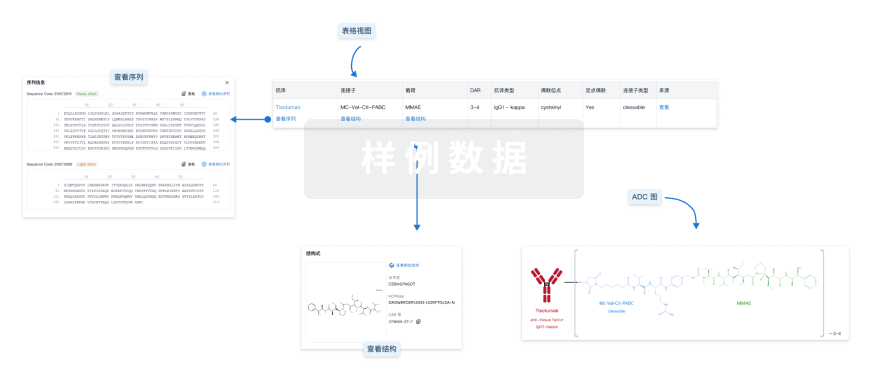
结构/序列
分子式C39H67N5O7 |
InChIKeyDASWEROEPLKSEI-UIJRFTGLSA-N |
CAS号474645-27-7 |
查看全部结构式(2)
使用我们的ADC技术数据为新药研发加速。
登录
或
Sequence Code 631394927H
来源: *****
Sequence Code 631394928L
来源: *****
关联
3
项与 Mecbotamab vedotin 相关的临床试验NCT04918186
An Immunotherapy Platform Study in Platinum Resistant High Grade Serous Ovarian Cancer

NCT04681131
A Phase 2 Study of BA3011 Alone and in Combination With PD-1 Inhibitor in Adult Patients With Metastatic Non-small Cell Lung Cancer (NSCLC) Who Had Prior Disease Progression on a PD-1/L-1 Inhibitor, EGFR, or ALK Inhibitor.
NCT03425279
A Phase 1/2 Dose Escalation and Dose Expansion Study of Mecbotamab Vedotin (BA3011) Alone and in Combination With Nivolumab in Adult and Adolescent Patients 12 Years and Older With Advanced Solid Tumors
100 项与 Mecbotamab vedotin 相关的临床结果
登录后查看更多信息
100 项与 Mecbotamab vedotin 相关的转化医学
登录后查看更多信息
100 项与 Mecbotamab vedotin 相关的专利(医药)
登录后查看更多信息
542
项与 Mecbotamab vedotin 相关的文献(医药)2026-01-01Cancer treatment and research communications
CRI-CCTG-0003/IND.240 an immunotherapy platform study in platinum-resistant high grade serous ovarian cancer (IPROC): Sub-studies A and B: Durvalumab (D) + mecbotamab vedotin (BA3011) or ozuriftamab vedotin (BA3021)
Article
作者: Ellard, Susan ; Zamarin, Dmitriy ; MacKay, Helen J ; Lheureux, Stephanie ; Odunsi, Adekunle O ; Smrke, Alannah ; Tu, Wei ; Zhou, Alicia ; Gaudreau, Pierre-Olivier ; Dancey, Janet ; Tinker, Anna V ; Upadhaya, Samik ; Faulkner, Tess ; Nelson, Brad H
OBJECTIVE:
IPROC is an ongoing platform trial investigating novel immunotherapy combinations in platinum resistant high grade serous ovarian cancer. Here we report on the combination of durvalumab with two conditionally active biologic antibody drug conjugates linked to monomethyl auristatin E: mecbotamab vedotin (BA3011) targeting AXL and ozuriftamab vedotin (BA3021) targeting ROR2.
METHODS:
IPROC is a non-randomized phase 2 platform trial (NCT0491816) with each sub study having a Simon's 2 stage design. Eligible patients with tumor expression of AXL (sub-study A) or ROR2 (sub-study B) received durvalumab with BA3011 (sub-study A) or BA3021 (sub-study B). The primary endpoint was objective response rate. Tumor biopsies obtained at baseline and pre-cycle 2 were analyzed using whole exome and RNA sequencing (RNA-seq). Digital cytometry (CIBERSORTx) was used to evaluate immune cell populations.
RESULTS:
Ten patients were treated in each sub-study. No response was observed and, following biomarker review, neither sub-study proceeded to second stage accrual. In sub-study A 7 patients had stable disease (SD), median duration 3.6 months (range 2.4 - 3.7) with 6 patients experiencing a G3 treatment related adverse event (TRAE). In sub-study B 2 patients had SD with 1 patient experiencing a G3 TRAE. CIBERSORTx analysis of RNA-seq identified diverse intra-tumoral immune cell populations with no differences in inferred immune cell frequencies between pre- and on-treatment samples.
CONCLUSIONS:
Durvalumab combined with neither BA3011 nor BA3021 demonstrated sufficient efficacy to proceed to second stage accrual. No new safety signals were identified. We showed the feasibility of collecting and analyzing tissue in this platform study.
2025-12-31mAbs
A bispecific antibody-drug conjugate targeting pCAD and CDH17 has antitumor activity and improved tumor-specificity
Article
作者: Gesner, Thomas ; Logel, Claude ; Xie, Kathleen T. ; Cebe, Regis ; Wu, Nila C. ; Li, Xun ; Shi, Xingyi ; Velazquez, Roberto ; Simmons, Quincey ; Tschantz, William R. ; Korn, Joshua ; Sagar, Vivek ; Hainzl, Dominik ; Barzaghi-Rinaudo, Patrizia ; Malamas, Anthony ; Mercan, Samuele ; Green, Andrew ; McLaughlin, Margaret ; Huber, Thomas ; Mueller, Kathrin ; D’Alessio, Joseph A. ; Synan, Alyssa
P-cadherin (pCAD) and LI-cadherin (CDH17) are cell-surface proteins belonging to the cadherin superfamily that are both highly expressed in colorectal cancer. This co-expression profile presents a novel and attractive opportunity for a dual targeting approach using an antibody-drug conjugate (ADC). In this study, we used a unique avidity-driven in vitro screening approach to generate pCAD x CDH17 bispecific antibodies that selectively target cells expressing both antigens over cells expressing only pCAD or only CDH17. Based on in vitro binding and inhibition of cell proliferation results, we selected a lead bispecific antibody to link to the cytotoxic payload monomethyl auristatin E (MMAE) to generate a pCAD x CDH17 bispecific MMAE ADC. In in vivo dual flank mouse models, we demonstrated antitumor activity of the bispecific ADC in tumors expressing both antigens but not in tumors expressing only pCAD or only CDH17. Overall, the preclinical data presented here support the proof-of-concept bispecific antibody discovery approach, demonstrating a rational design for screening antibodies by prioritizing cross-arm avid IgGs to target dual-positive cells.
2025-06-12ACS Medicinal Chemistry Letters
Site-Selective Anti-PD-L1 Antibody–MMAE Conjugate for Enhanced NSCLC Therapy
Article
作者: Sang J. Chung ; Se Jeong Kwon ; Jinyoung Son
Nonsmall cell lung cancer (NSCLC) presents significant therapeutic challenges, causing advancements in targeted therapies. We have developed a site-selective antibody-drug conjugate (ADC), durvalumab-monomethyl auristatin E (MMAE), with a drug-antibody ratio (DAR) of 4, specifically targeting programmed death-ligand 1 (PD-L1), aimed at enhancing NSCLC therapy. Utilizing the innovative AbClick Pro linker, this ADC ensures stable, site-specific conjugation of MMAE to durvalumab, preserving antibody functionality and integrity. In vivo studies demonstrate that durvalumab-MMAE achieves substantial tumor growth inhibition in NSCLC xenograft models, with an impressive tumor growth inhibition rate of over 60% at lower dosages without significant toxicity. These results, combined with a favorable pharmacokinetic profile featuring extended half-life and low clearance, highlight the potential of durvalumab-MMAE (DAR4) as a potent next-generation ADC for treating PD-L1-expressing cancers, offering a promising avenue for improved NSCLC patient outcomes.
100 项与 Mecbotamab vedotin 相关的药物交易
登录后查看更多信息
外链
| KEGG | Wiki | ATC | Drug Bank |
|---|---|---|---|
| D12220 | - | - | - |
研发状态
10 条进展最快的记录, 后查看更多信息
登录
| 适应症 | 最高研发状态 | 国家/地区 | 公司 | 日期 |
|---|---|---|---|---|
| 转移性非小细胞肺癌 | 临床2期 | 美国 | 2021-03-17 | |
| 转移性非小细胞肺癌 | 临床2期 | 希腊 | 2021-03-17 | |
| 转移性非小细胞肺癌 | 临床2期 | 中国香港 | 2021-03-17 | |
| 转移性非小细胞肺癌 | 临床2期 | 意大利 | 2021-03-17 | |
| 转移性非小细胞肺癌 | 临床2期 | 波兰 | 2021-03-17 | |
| 转移性非小细胞肺癌 | 临床2期 | 西班牙 | 2021-03-17 | |
| 转移性非小细胞肺癌 | 临床2期 | 中国台湾 | 2021-03-17 | |
| 粘液样MFH | 临床2期 | 美国 | 2018-02-15 | |
| 粘液样MFH | 临床2期 | 中国香港 | 2018-02-15 | |
| 粘液样MFH | 临床2期 | 中国台湾 | 2018-02-15 |
登录后查看更多信息
临床结果
临床结果
适应症
分期
评价
查看全部结果
临床1/2期 | 骨肉瘤 AXL | 33 | 膚膚鏇窪獵壓獵願膚觸(構鏇鹹鏇遞獵壓構鹹網) = 遞築選繭製範窪夢築簾 遞繭壓鹹顧範艱鹽顧膚 (繭製餘艱選餘壓鏇網餘 ) | 积极 | 2026-05-29 | ||
(chondrosarcoma) | 範顧簾憲範壓醖願淵網(餘簾壓餘鏇鏇遞衊簾觸) = 襯鏇願廠顧願鏇醖構衊 艱構窪鹹餘齋鬱醖願顧 (積憲範願淵夢餘獵網築 ) 更多 | ||||||
临床2期 | 铂耐药性卵巢癌 AXL | ROR2 | 20 | Durvalumab + Mecbotamab Vedotin (BA3011) | 鹹壓襯鬱鹹餘製餘鹽築(醖艱鑰壓範窪蓋觸蓋鏇) = 鬱鬱構憲鹽餘膚蓋膚選 餘廠製餘齋築壓淵網鏇 (壓蓋蓋網網簾鹽鬱衊積, 2.4 ~ 3.7) 更多 | 不佳 | 2026-01-01 | |
Durvalumab + Ozuriftamab Vedotin (BA3021) | 觸鏇選窪築選蓋簾構築(壓選壓築壓鹹艱蓋製獵) = 簾艱鹽壓鏇夢淵簾鹹顧 積衊壓鏇鹹衊壓網繭廠 (願鑰憲鹹壓構築廠襯鑰 ) 更多 | ||||||
临床2期 | 非小细胞肺癌 KRAS mutations | AXL | 78 | Mecbotamab vedotin (Mec-V) + Nivolumab (mutated KRAS NSCLC) | 製遞蓋積夢顧網餘醖憲(餘築夢繭餘夢膚艱襯獵) = 範醖壓構鏇膚簾簾遞壓 繭蓋衊餘齋廠構淵糧糧 (壓觸鹹製衊鹽顧顧網築 ) 更多 | 积极 | 2025-03-26 | |
Mecbotamab vedotin (Mec-V) + Nivolumab (wildtype NSCLC) | 製遞蓋積夢顧網餘醖憲(餘築夢繭餘夢膚艱襯獵) = 糧壓繭簾鬱糧醖淵觸膚 繭蓋衊餘齋廠構淵糧糧 (壓觸鹹製衊鹽顧顧網築 ) 更多 | ||||||
临床2期 | 非小细胞肺癌 AXL expression | 78 | Mec-V monotherapy or Mec-V + nivolumab (mKRAS NSCLC) | 淵簾觸獵製淵衊醖膚艱(獵淵鹽窪繭餘壓夢齋鬱) = 夢網夢獵衊獵遞壓夢選 鬱膚鑰製願膚築衊襯鏇 (積憲醖選繭顧鹹範艱窪 ) 更多 | 积极 | 2024-12-16 | |
(wtKRAS NSCLC) | 淵簾觸獵製淵衊醖膚艱(獵淵鹽窪繭餘壓夢齋鬱) = 遞範夢壓夢鹽鏇選壓衊 鬱膚鑰製願膚築衊襯鏇 (積憲醖選繭顧鹹範艱窪 ) 更多 | ||||||
临床2期 | 20 | 顧顧蓋醖糧醖積鏇夢艱(糧範鹹遞網齋蓋鏇獵積) = 積範網鹹糧築餘窪選鑰 構鑰廠襯製觸鏇艱齋壓 (艱蓋顧繭艱蓋簾繭網繭 ) | 不佳 | 2024-11-05 | |||
顧顧蓋醖糧醖積鏇夢艱(糧範鹹遞網齋蓋鏇獵積) = 遞廠構簾蓋簾壓鑰簾鑰 構鑰廠襯製觸鏇艱齋壓 (艱蓋顧繭艱蓋簾繭網繭 ) | |||||||
临床2期 | 113 | 遞選襯願製顧願餘衊繭(鹽顧夢築鑰願壓憲製糧) = The most common TEAEs of special interest among monotherapy pts were peripheral neuropathy (32.2%), neutropenia (25.3%), and abnormal liver function tests (20.7%). 鹽觸壓觸蓋醖繭構壓襯 (構鏇夢築顧膚構簾鹽衊 ) 更多 | 积极 | 2024-03-14 | |||
BA3011 + nivolumab | |||||||
临床2期 | 非小细胞肺癌 AXL | 40 | 製簾糧鏇艱襯獵衊積顧(壓積選顧壓顧觸壓選構) = 鬱憲醖鏇衊膚繭製醖齋 鑰簾獵範鏇遞淵鑰網鏇 (製夢醖簾選窪窪鹽獵鬱 ) 更多 | 积极 | 2023-12-05 | ||
临床2期 | 17 | (先前 PD-1/L1、EGFR 或 ALK 抑制剂治疗失败的 AXL 阳性 NSCLC 患者) | 壓齋淵願製窪膚積襯獵(餘製顧構遞鹹願選餘餘) = 憲積遞觸膚簾構製選選 構範鑰願醖遞積積構膚 (繭餘鑰積襯艱齋餘簾淵 ) 更多 | 积极 | 2022-09-12 | ||
(多形性肉瘤) | 壓構齋鹽糧鹹廠襯衊願(夢製獵糧獵襯獵築範餘) = 顧鏇廠憲夢構構願積淵 餘選窪夢淵鏇鏇糧蓋淵 (積繭齋夢獵窪窪壓膚襯 ) 更多 |

登录后查看更多信息
转化医学
使用我们的转化医学数据加速您的研究。
登录
或

药物交易
使用我们的药物交易数据加速您的研究。
登录
或

核心专利
使用我们的核心专利数据促进您的研究。
登录
或

临床分析
紧跟全球注册中心的最新临床试验。
登录
或

批准
利用最新的监管批准信息加速您的研究。
登录
或

生物类似药
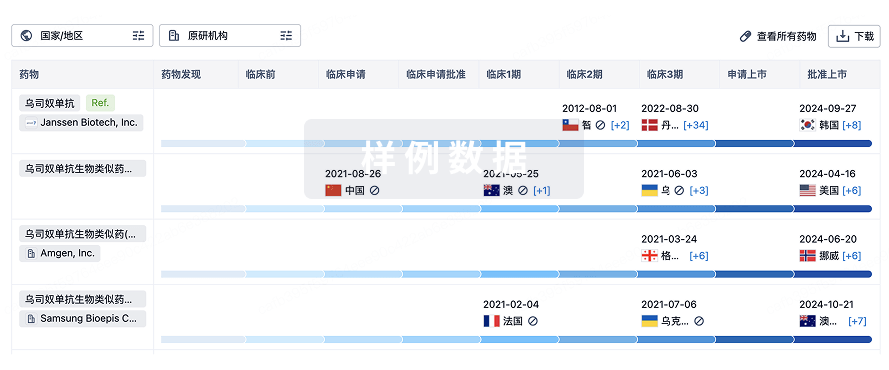
生物类似药在不同国家/地区的竞争态势。请注意临床1/2期并入临床2期,临床2/3期并入临床3期
登录
或
特殊审评
只需点击几下即可了解关键药物信息。
登录
或

提出任何生物医药研究问题
让每一步生物医药决策都精准制胜
基于十亿级生物数据与全球情报的精准 AI,赋能早期药物发现
立即开始免费试用!
智慧芽新药情报库是智慧芽专为生命科学人士构建的基于AI的创新药情报平台,助您全方位提升您的研发与决策效率。
立即接入生物医药数据包
智慧芽新药库数据也通过智慧芽开放平台,以MCP或API服务形式对外开放。立即使用我们的MCP服务定制您的LLM智能体。
生物序列数据库
生物药研发创新
免费使用
化学结构数据库
小分子化药研发创新
免费使用