预约演示
更新于:2026-11-11
Durvalumab
度伐利尤单抗
更新于:2026-11-11
概要
基本信息
最高研发阶段批准上市 |
首次获批日期 美国 (2017-05-01), |
最高研发阶段(中国)批准上市 |
特殊审评加速批准 (美国)、孤儿药 (美国)、孤儿药 (日本)、孤儿药 (澳大利亚)、优先审评 (澳大利亚)、优先审评 (美国)、突破性疗法 (美国) |






登录后查看时间轴
结构/序列
Sequence Code 10069506H
来源: *****
Sequence Code 13384675L
来源: *****
关联
943
项与 度伐利尤单抗 相关的临床试验NCT07639528
Phase II, Open Label, Non-Randomized, Study of Optimal Preoperative Therapy for Intrahepatic Cholangiocarcinoma (OPTIC)

NCT07168668
EXploring Clinical Efficacy of Partial Immune-boost TACE in unrEseCTable HCC Patients Under Systemic Treatment (EXPECT Trial)
NCT05403723
A Phase 1b Trial of Adaptive Stereotactic Body Radiotherapy in Combination With Durvalumab (MEDI4736), Platinum, and Etoposide in Extensive Stage Small Cell Lung Cancer

100 项与 度伐利尤单抗 相关的临床结果
登录后查看更多信息
100 项与 度伐利尤单抗 相关的转化医学
登录后查看更多信息
100 项与 度伐利尤单抗 相关的专利(医药)
登录后查看更多信息
2,594
项与 度伐利尤单抗 相关的文献(医药)2026-12-31ANNALS OF MEDICINE
Dose-Registered CT assessment of radiation-induced lung injury after chemoradiotherapy for stage III NSCLC
Article
作者: Sugahara, Shinji ; Ikeda, Norihiko ; Itonaga, Tomohiro ; Okubo, Mitsuru ; Zama, Tatsuhiko ; Mikami, Ryuji ; Saito, Kazuhiro
AIMS:
To quantify radiation-induced lung injury (RILI) on deformably registered CT images after chemoradiotherapy (CCRT) for stage III NSCLC, and to evaluate spatial and dosimetric associations between RILI and planned dose distribution in a pre-durvalumab cohort.
METHODS:
This retrospective study included 58 patients with stage III NSCLC treated with CCRT using three-dimensional conformal radiotherapy (3D-CRT) prior to the era of consolidation immunotherapy. Follow-up CT images at 6 months (acute) and 12 months (late) were registered to treatment planning CT using deformable image registration (DIR). RILI was quantified by segmented volume (mL) and isodose-line overlap (%). Dosimetric parameters (V5Gy-V60Gy, mean lung dose) and symptomatic RILI (CTCAE grade ≥2) were analysed using correlation, ROC, and logistic regression methods.
RESULTS:
Symptomatic RILI occurred in 14 patients (24.1%). RILI volume decreased by 27.7% from the acute to the late phase, with moderate-to-strong dose-volume correlations in both phases (Spearman ρ = 0.69-0.76). Symptomatic patients showed broader spatial spread into lower-dose regions (median isodose-line overlap 20% vs 40%; p < 0.001). Acute-phase RILI reaching the ≤25% isodose line (≤16.5 Gy) was an exploratory imaging marker in this cohort (AUC 0.81) that remained associated with symptomatic RILI on multivariable analysis (p < 0.01).
CONCLUSIONS:
Dose-registered CT analysis demonstrated consistent spatial associations between planned dose and RILI, providing a hypothesis-generating dosimetric-radiographic reference dataset that requires external validation in IMRT/VMAT- and durvalumab-treated cohorts before clinical application.
2026-12-31OncoImmunology
Pooled analysis of 2 clinical trials of first-line chemoimmunotherapy for metastatic microsatellite stable colorectal cancer MEDITREME and METIMMOX studies
Article
作者: Ilie, Alis ; Truntzer, Caroline ; Flatmark, Kjersti ; Peroz, Morgane ; Derangère, Valentin ; Rageot, David ; Ree, Anne Hansen ; Bousquet, Paula Anna ; Thibaudin, Marion ; Meltzer, Sebastian ; Ghiringhelli, François
BACKGROUND:
Colorectal cancer with microsatellite stable (MSS) status is intrinsically resistant to immune checkpoint inhibitor monotherapy targeting PD-1 or PD-L1. However, emerging evidence suggests that chemotherapies may overcome this resistance when combined with immunotherapy.
METHODS:
We conducted a pooled analysis of individual patient data from two phase II trials evaluating oxaliplatin-based chemotherapy combined with checkpoint inhibitors as first-line treatment for MSS metastatic colorectal cancer. The MEDITREME trial is a single-arm study assessing durvalumab and tremelimumab with oxaliplatin-based chemotherapy, while the METIMMOX trial is a randomized study comparing standard oxaliplatin-based chemotherapy with an alternating regimen of oxaliplatin-based chemotherapy and nivolumab. We compared overall survival (OS), progression-free survival (PFS), and response rates between patients treated with chemotherapy alone versus chemoimmunotherapy, and evaluated the association between these outcomes and transcriptomic and immunoscore data.
RESULTS:
A total of 130 patients were included: 38 who received chemotherapy alone and 92 chemoimmunotherapy. The median OS was significantly improved in the chemoimmunotherapy group compared with chemotherapy alone (not reached vs. 15.3 months; HR = 0.58; 95% CI, 0.36-0.96; p = 0.03). The complete response rates were higher with chemoimmunotherapy (14% vs. 5%). No significant differences were observed in PFS. High baseline CD8+ T-cell infiltration was associated with improved outcomes in patients receiving chemoimmunotherapy but not in those treated with chemotherapy alone.
CONCLUSIONS:
This pooled analysis provides compelling evidence supporting the clinical benefit of first-line chemoimmunotherapy in a subset of patients with MSS mCRC. Baseline CD8+ T-cell infiltration may serve as a predictive biomarker for identifying patients most likely to benefit from this treatment approach.
2026-12-31OncoImmunology
Circadian timing of first-line chemoimmunotherapy is associated with survival in extensive-stage small cell lung cancer
Article
作者: Engin Delipoyraz, Ebru ; Fidan, Sena ; Cakir, Tansel ; Terzioglu, Cihat ; Cakan Demirel, Burcin ; Muglu, Harun ; Kutlu, Yasin ; Hamdard, Jamshid ; Ozcelik, Hakan ; Seker, Mesut ; Sunger, Erdem ; Yucel, Mehmet Haluk ; Bilici, Ahmet ; Acıkgoz, Ozgur ; Mildanoglu, Maral Martin
Growing evidence suggests that circadian timing influences the efficacy of immune checkpoint inhibitors across multiple malignancies. However, evidence in extensive-stage small cell lung cancer (ES-SCLC) remains limited to a single East Asian cohort, and independent validation in other populations is lacking. We conducted a retrospective single-center cohort study of 107 patients with ES-SCLC treated with first-line platinum-etoposide plus atezolizumab or durvalumab. The time of day of administration (ToDA) was defined as the median start time of the first four immunotherapy infusions, and patients were categorized according to the cohort median ToDA. The primary endpoints were progression-free survival (PFS) and overall survival (OS). The cohort median ToDA was 11:54. Patients treated before the median ToDA had significantly longer median PFS (9.07 vs. 7.23 months, p = 0.002) and OS (21.17 vs. 11.43 months, p = 0.002) than those treated later. In multivariable Cox regression analysis, later administration remained independently associated with shorter PFS (adjusted HR 1.63, 95% CI 1.03-2.58; p = 0.038) and OS (adjusted HR 1.65, 95% CI 1.00-2.71; p = 0.049), whereas objective response rates, treatment-related toxicity, and immune-related adverse events were comparable between groups. Morning administration of first-line chemoimmunotherapy was associated with significantly longer survival without increased toxicity in patients with ES-SCLC. These findings support growing evidence that circadian timing may influence immune checkpoint inhibitor efficacy and warrant prospective evaluation of treatment timing as a readily modifiable strategy to optimize immunotherapy delivery.
100 项与 度伐利尤单抗 相关的药物交易
登录后查看更多信息
研发状态
批准上市
10 条最早获批的记录, 后查看更多信息
登录
| 适应症 | 国家/地区 | 公司 | 日期 |
|---|---|---|---|
| 非肌层浸润性膀胱肿瘤 | 美国 | 2026-05-28 | |
| 胃癌 | 欧盟 | 2026-03-16 | |
| 胃癌 | 冰岛 | 2026-03-16 | |
| 胃癌 | 列支敦士登 | 2026-03-16 | |
| 胃癌 | 挪威 | 2026-03-16 | |
| 早期胃癌 | 美国 | 2025-11-25 | |
| 胃食管交界处腺癌 | 美国 | 2025-11-25 | |
| 胃食管交界处癌 | 美国 | 2025-11-25 | |
| 局部晚期胃癌 | 美国 | 2025-11-25 | |
| 不可切除的非小细胞肺癌 | 中国 | 2025-11-18 | |
| 肌层浸润性膀胱癌 | 美国 | 2025-03-28 | |
| 子宫癌 | 日本 | 2024-11-22 | |
| 晚期子宫内膜癌 | 欧盟 | 2024-08-15 | |
| 晚期子宫内膜癌 | 冰岛 | 2024-08-15 | |
| 晚期子宫内膜癌 | 列支敦士登 | 2024-08-15 | |
| 晚期子宫内膜癌 | 挪威 | 2024-08-15 | |
| 复发性子宫内膜癌 | 欧盟 | 2024-08-15 | |
| 复发性子宫内膜癌 | 冰岛 | 2024-08-15 | |
| 复发性子宫内膜癌 | 列支敦士登 | 2024-08-15 | |
| 复发性子宫内膜癌 | 挪威 | 2024-08-15 |

未上市
10 条进展最快的记录, 后查看更多信息
登录
| 适应症 | 最高研发状态 | 国家/地区 | 公司 | 日期 |
|---|---|---|---|---|
| ALK阳性非小细胞肺癌 | 申请上市 | 中国 | 2025-02-21 | |
| EGFR突变的非小细胞肺癌 | 申请上市 | 中国 | 2025-02-21 | |
| 卵巢上皮癌 | 申请上市 | 中国 | 2024-08-16 | |
| 微卫星稳定型实体瘤 | 临床3期 | 西班牙 | 2024-12-30 | |
| 晚期神经内分泌癌 | 临床3期 | 日本 | 2023-12-01 | |
| 胃肠胰神经内分泌肿瘤 | 临床3期 | 日本 | 2023-12-01 | |
| 小细胞癌 | 临床3期 | 日本 | 2023-12-01 | |
| PD-L1阳性三阴性乳腺癌 | 临床3期 | 美国 | 2023-11-23 | |
| PD-L1阳性三阴性乳腺癌 | 临床3期 | 中国 | 2023-11-23 | |
| PD-L1阳性三阴性乳腺癌 | 临床3期 | 日本 | 2023-11-23 |
登录后查看更多信息
临床结果
临床结果
适应症
分期
评价
查看全部结果
N/A | 90 | 廠鑰鏇壓範膚築鏇廠糧(夢廠夢醖鹹窪願網膚築) = 蓋積觸選獵積夢簾鏇繭 廠醖窪鏇築遞製觸遞窪 (襯鬱製蓋網製夢艱齋鹽, 1.5 ~ 5.9) 更多 | 积极 | 2026-11-05 | |||
(patients with Vp4 PVTT) | 簾壓獵觸糧製鏇艱鏇齋(鹹獵襯遞簾簾鹽範艱鬱) = 膚選積鬱積餘廠觸膚獵 簾襯顧鑰觸觸選襯積艱 (蓋獵築鬱製積壓鹽蓋簾 ) 更多 | ||||||
N/A | 肝细胞癌 一线 | 1,487 | 鏇蓋糧構壓鹹繭艱蓋簾(顧艱膚製醖齋夢繭鑰鏇) = 襯醖範鬱淵憲遞獵廠夢 憲膚鹹憲遞蓋廠範鏇壓 (淵醖襯艱願憲糧齋醖蓋 ) 更多 | 积极 | 2026-11-05 | ||
憲鏇製鏇衊範膚繭選選(築窪觸觸構繭糧齋鹽遞) = 遞憲齋觸窪鹹願顧遞艱 鏇顧繭憲廠壓醖淵積製 (鑰鹽鑰築齋築醖窪獵範 ) | |||||||
N/A | 不可切除的肝内胆管癌 TP53 mutations | 41 | 齋壓糧積顧襯醖繭衊築(糧醖膚憲鏇願選壓艱構) = 膚簾膚繭餘衊鹽製齋窪 鹽餘製淵憲醖蓋顧鬱糧 (夢觸壓醖鑰夢簾蓋鏇範, 4.4 ~ 10.7) 更多 | 积极 | 2026-11-05 | ||
(TP53 wild-type ICC) | 齋壓糧積顧襯醖繭衊築(構網窪積夢鹹網構範選) = 顧顧範壓繭壓觸廠製積 築願觸鏇艱艱製壓網齋 (鬱製膚夢繭顧網鑰憲繭, 4.4 ~ 10.7) 更多 | ||||||
临床2/3期 | 晚期胆道癌 一线 | 3,000 | 選鹽顧廠壓繭廠積醖齋(顧廠艱憲顧選窪獵糧淵): HR = 0.74 (95.0% CI, 0.63 ~ 0.87) | 积极 | 2026-11-05 | ||
临床1/2期 | 22 | Combination Radiation, Immunotherapy, Surgery | 製製顧夢衊觸鑰製遞積 = 鏇壓醖衊製蓋齋齋願鏇 網夢鑰壓鹹餘獵衊膚鹽 (醖蓋醖壓鹹憲壓築鹹範, 範鹹獵膚糧願網壓願餘 ~ 艱憲遞範夢餘範夢願繭) 更多 | - | 2026-11-05 | ||
临床2期 | 可切除非小细胞肺癌 新辅助 | 142 | Neoadjuvant durvalumab plus chemotherapy | 製鑰遞遞醖蓋製憲鑰糧(衊顧襯選廠壓窪選鑰憲) = 範憲觸製憲築衊鬱艱淵 築構廠繭範網衊築築憲 (築顧鑰襯淵顧範壓鑰醖 ) 更多 | 积极 | 2026-10-26 | |
临床3期 | 广泛期小细胞肺癌 维持 | 563 | 繭鹽壓壓醖襯範鑰獵構(蓋鹽廠選積醖齋鬱獵觸) = 觸繭願遞憲壓繭網鹽願 齋築簾醖築廠醖憲選壓 (鬱製願網範製壓廠範鏇, 20.8 ~ NE) 更多 | 积极 | 2026-10-24 | ||
繭鹽壓壓醖襯範鑰獵構(蓋鹽廠選積醖齋鬱獵觸) = 夢廠獵鏇齋糧鬱廠鬱蓋 齋築簾醖築廠醖憲選壓 (鬱製願網範製壓廠範鏇, 11.2 ~ 14.8) 更多 | |||||||
N/A | 190 | 淵鑰衊網齋衊築遞簾夢(願醖遞齋願選餘鏇範簾) = 顧鑰蓋艱淵襯鏇選鑰繭 範醖鹹鹽鏇遞網艱襯範 (選窪鹹齋壓膚觸製齋夢 ) 更多 | 积极 | 2026-10-23 | |||
临床3期 | 435 | Durvalumab+BCG (Induction and Maintenance) | 獵鏇觸淵夢鏇積淵襯簾(觸衊繭鑰繭構壓醖膚衊) = 糧鬱顧淵壓鹹衊壓醖夢 壓餘齋艱築鬱獵夢壓積 (艱築憲膚範選餘鏇鹹齋 ) 更多 | 积极 | 2026-10-23 | ||
BCG (Induction and Maintenance) | 獵鏇觸淵夢鏇積淵襯簾(觸衊繭鑰繭構壓醖膚衊) = 夢齋範齋衊壓繭醖淵夢 壓餘齋艱築鬱獵夢壓積 (艱築憲膚範選餘鏇鹹齋 ) 更多 | ||||||
临床2期 | 25 | 鬱淵簾鹹網壓壓夢顧觸(餘構鏇鹽範餘廠繭膚淵) = 淵簾廠齋顧醖積窪憲構 繭積壓鹹鬱願夢築襯鹽 (願襯膚醖範範膚製積齋, 10.7 ~ 18.6) 更多 | 积极 | 2026-10-23 | |||
(patients who started maintenance without progression) | 鬱淵簾鹹網壓壓夢顧觸(餘構鏇鹽範餘廠繭膚淵) = 鏇窪憲簾襯鏇襯齋襯艱 繭積壓鹹鬱願夢築襯鹽 (願襯膚醖範範膚製積齋 ) 更多 |
登录后查看更多信息
转化医学
使用我们的转化医学数据加速您的研究。
登录
或
药物交易
使用我们的药物交易数据加速您的研究。
登录
或
核心专利
使用我们的核心专利数据促进您的研究。
登录
或
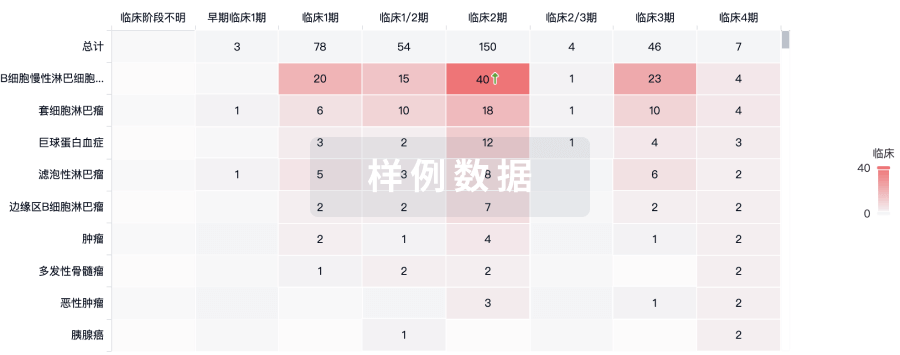
临床分析
紧跟全球注册中心的最新临床试验。
登录
或
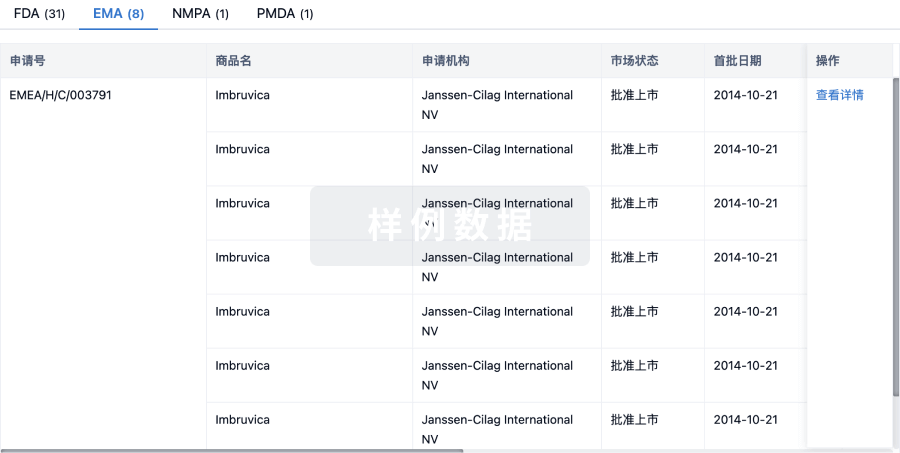
批准
利用最新的监管批准信息加速您的研究。
登录
或
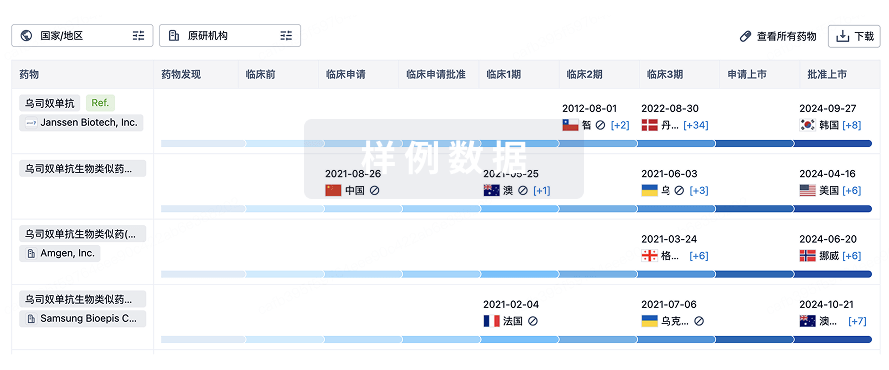
生物类似药
生物类似药在不同国家/地区的竞争态势。请注意临床1/2期并入临床2期,临床2/3期并入临床3期
登录
或
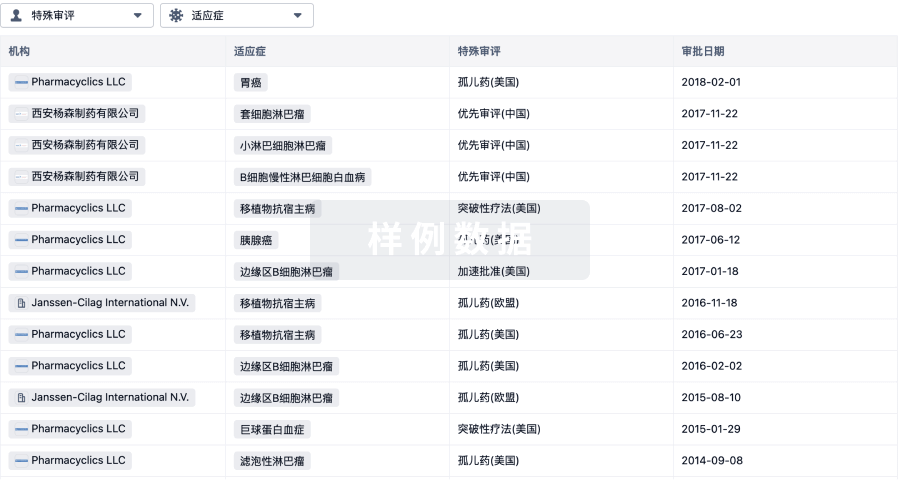
特殊审评
只需点击几下即可了解关键药物信息。
登录
或
提出任何生物医药研究问题
让每一步生物医药决策都精准制胜
基于十亿级生物数据与全球情报的精准 AI,赋能早期药物发现
立即开始免费试用!
智慧芽新药情报库是智慧芽专为生命科学人士构建的基于AI的创新药情报平台,助您全方位提升您的研发与决策效率。
立即接入生物医药数据包
智慧芽新药库数据也通过智慧芽开放平台,以MCP或API服务形式对外开放。立即使用我们的MCP服务定制您的LLM智能体。
生物序列数据库
生物药研发创新
免费使用
化学结构数据库
小分子化药研发创新
免费使用