预约演示
更新于:2026-09-09
Faricimab
法瑞西单抗
更新于:2026-09-09
概要
基本信息
药物类型 双特异性抗体 |
别名 Faricimab、Faricimab (Genetical Recombination)、Faricimab (genetical recombination) + [12] |
作用方式 抑制剂 |
作用机制 Ang2抑制剂(血管生成素-2抑制剂)、VEGF-A抑制剂(血管内皮生长因子A抑制剂) |
在研适应症 |
非在研机构- |
最高研发阶段批准上市 |
首次获批日期 美国 (2022-01-28), |
最高研发阶段(中国)批准上市 |
特殊审评孤儿药 (美国)、孤儿药 (日本)、优先审评 (美国) |




登录后查看时间轴
结构/序列
Sequence Code 103170L
来源: *****
Sequence Code 9508434L
来源: *****
Sequence Code 9508445H
来源: *****
Sequence Code 9508453H
来源: *****
关联
83
项与 法瑞西单抗 相关的临床试验NCT07681167
A Randomized, Double-Masked, Sham-Controlled Clinical Trial of Intravitreal Faricimab for Chronic Central Serous Chorioretinopathy With or Without Secondary Macular Neovascularization: Study Protocol for a Randomised, Double-Masked Trial

NCT07753616
South Asian Patients With Diabetic Macular Oedema Treated With Faricimab Assessing the Efficacy, Durability, and Safety (SEAFAR Study)
NCT07695298
A Prospective Longitudinal Analysis of Faricimab (Vabysmo 6mg) For Choroidal Neovascularization in Presumed Ocular Histoplasmosis Syndrome [PLANE Study]

100 项与 法瑞西单抗 相关的临床结果
登录后查看更多信息
100 项与 法瑞西单抗 相关的转化医学
登录后查看更多信息
100 项与 法瑞西单抗 相关的专利(医药)
登录后查看更多信息
584
项与 法瑞西单抗 相关的文献(医药)2026-09-01Ophthalmology and Therapy
Real-World Outcomes of Faricimab for Polypoidal Choroidal Vasculopathy in a Multi-ethnic Cohort: A 12-Month Retrospective Study
Article
作者: Spooner, Kimberly ; Riotto, Eleonora ; Trivizki, Omer ; Nicholson, Luke ; Faes, Livia ; Fasolo, Sandro ; Fu, Dun Jack ; Sivaprasad, Sobha
INTRODUCTION:
This study aimed to evaluate 12-month real-world outcomes of faricimab for polypoidal choroidal vasculopathy (PCV) in a multi-ethnic cohort.
METHODS:
This was a single-center retrospective cohort study of consecutive eyes with PCV diagnosed in routine care, treated with intravitreal faricimab, and with complete baseline and 12-month follow-up. One eye per patient was analyzed. Outcomes were reported for treatment-naïve and treatment-experienced eyes switched for persistent activity or limited durability. Primary endpoints were change in visual acuity (VA) and central subfield thickness (CST) at 12 months. Ethnicity-stratified outcomes were assessed secondarily.
RESULTS:
The cohort comprised 159 eyes (40 treatment-naïve, 119 treatment-experienced). In treatment-naïve eyes, mean VA improved from 61 (standard deviation [SD] 14) letters at baseline by + 6.8 letters (SD 16; P < 0.01) at 12 months, with CST reduction of - 54 µm (SD 100; P < 0.01) and mean 9.6 (SD 4.2) injections. In treatment-experienced eyes, paired VA change at 12 months was minimal (+ 0.27 letters, SD 12; P > 0.05), while CST decreased significantly by - 40 µm (SD 110; P < 0.01). Eyes received a mean of 8.2 (SD 4.2) faricimab injections over 12 months. Exploratory ethnicity-stratified analyses demonstrated baseline heterogeneity across groups, with broadly favorable anatomical and functional outcomes observed across the multi-ethnic cohort, but subgroup sizes precluded comparative efficacy assessment.
CONCLUSIONS:
In routine care, faricimab was associated with clinically meaningful visual improvement in treatment-naïve PCV and anatomical improvement in both treatment-naïve and -experienced eyes. Prospective studies with adequate ethnic representation are needed to validate these findings.
2026-09-01RETINA-THE JOURNAL OF RETINAL AND VITREOUS DISEASES
ENDOPHTHALMITIS ASSOCIATED WITH INTRAVITREAL INJECTION
Article
作者: Yannuzzi, Nicolas A ; Snow, Zachary ; Rosenfeld, Philip J ; Townsend, Justin H ; Flynn, Harry W ; Rohowetz, Landon J ; Smiddy, William E
Purpose::
To report the rates, culture results, and visual acuity outcomes of endophthalmitis after intravitreal injection.
Methods::
Retrospective, consecutive case series of all patients who underwent intravitreal injection at University of Miami—Bascom Palmer Eye Institute between January 1, 2021, and December 31, 2025.
Results::
Endophthalmitis occurred following intravitreal injection in 3/28,358 (0.011%) eyes in 2021, 3/24,918 (0.012%) in 2022, 3/24,840 (0.012%) in 2023, 1/28,831 (0.003%) in 2024, and 0/31,269 in 2025 (0%). The use of ranibizumab decreased with time in the current study while faricimab usage increased. There was a slight increase in aflibercept usage after the approval of high dose 8 mg aflibercept in 2023. Complement inhibitors pegcetacoplan and avacincaptad pegol, approved in 2023 for geographic atrophy, were administered in 1,894 and 423 eyes, respectively, in 2024, and 1,083 and 578 eyes, respectively, in 2025; no cases of endophthalmitis were associated with either agent. Vitreous cultures demonstrated growth of
Streptococcus mitis/oralis
in 1/10 (10%),
Staphylococcus aureus
in 1/10 (10%),
Granulicatella adiacens
in 1/10 (10%),
Staphylococcus epidermis
in 1/10 (10%),
Abiotrophia defectiva
in 1/10 (10%), and were negative in 5/10 (50%). The cumulative incidence of endophthalmitis over the 5-year time period was 0.0072% (10/138,216) and was similar to rates reported between 2005 and 2020 at the same institution (P = 0.18). There were no differences in the rates of endophthalmitis between various medications (P = 0.32). After treatment, mean best-corrected visual acuity at last follow-up examination was 1.42 logMAR (20/526; range: 20/20 to no light perception).
Conclusion::
Endophthalmitis is a rare complication of intravitreal injection. In this study, the incidence of endophthalmitis was similar to previously reported rates and did not differ between agents.
2026-08-01ACTA OPHTHALMOLOGICA
Beyond drug price: A comparison of overall costs of anti‐vascular endothelial growth factor therapy alternatives for neovascular age‐related macular degeneration in Norway
Article
作者: Løkken, Jacopo F. T. ; Moe, Morten Carstens ; Jørstad, Øystein Kalsnes ; Sæther, Erik Magnus
Abstract:
Purpose:
Norwegian guidelines designate off‐label Avastin as the first‐line intravitreal therapy for neovascular age‐related macular degeneration (
nAMD
) because of its well‐documented clinical efficacy and low price. However, this overlooks non‐drug costs, which increase with injection frequency. We evaluated whether newer, longer‐acting agents offer greater long‐term cost‐efficiency by reducing total costs despite higher drug prices in a Norwegian setting.
Methods:
We developed a 2‐year cost‐minimization model that included pharmaceutical, consultation and administrative and patient‐related costs in Norway; the pharmaceutical cost component incorporated the routine practice of splitting vials into prefilled syringes in hospital pharmacies. The model compared four nAMD monotherapies, Avastin, Eylea 2 mg, Eylea 8 mg and Vabysmo, as well as the common practice of switching treatment‐resistant patients from Avastin to Eylea 2 mg. We derived injection frequencies from clinical trials (for monotherapies) or observational data (for switching) and conducted one‐way sensitivity analyses to identify key cost drivers.
Results:
Over 2 years, the switching regimen had the highest per‐patient cost (146 722 NOK), followed by Eylea 2 mg (100 481 NOK), Vabysmo (93 207 NOK), Avastin (86 262 NOK) and Eylea 8 mg (68 738 NOK). Avastin had the lowest drug cost, but its high injection frequency increased non‐drug costs. Sensitivity analyses showed that injection frequency strongly influenced total costs for high‐priced drugs, while patient time had a substantial impact for Avastin.
Conclusion:
In our model, longer‐acting agents reduced injection frequency and decreased overall treatment costs. These findings suggest that adopting longer‐acting monotherapy could improve cost‐efficiency in long‐term nAMD management in Norway.
1,363
项与 法瑞西单抗 相关的新闻(医药)2026-09-08
·医药代表
2026-09-08
临床2期上市批准临床1期临床结果
2026-09-06
·药弈
临床3期突破性疗法ASCO会议IPO申请上市
100 项与 法瑞西单抗 相关的药物交易
登录后查看更多信息
研发状态
批准上市
10 条最早获批的记录, 后查看更多信息
登录
| 适应症 | 国家/地区 | 公司 | 日期 |
|---|---|---|---|
| 血管样条纹 | 日本 | 2025-05-19 | |
| 视网膜静脉阻塞相关黄斑水肿 | 澳大利亚 | 2022-08-08 | |
| 年龄相关性黄斑变性 | 日本 | 2022-03-28 | |
| 脉络膜新生血管 | 日本 | 2022-03-28 | |
| 黄斑变性 | 日本 | 2022-03-28 | |
| 糖尿病性黄斑水肿 | 美国 | 2022-01-28 | |
| 湿性年龄相关性黄斑变性 | 美国 | 2022-01-28 |

未上市
10 条进展最快的记录, 后查看更多信息
登录
| 适应症 | 最高研发状态 | 国家/地区 | 公司 | 日期 |
|---|---|---|---|---|
| 视网膜静脉阻塞 | 申请上市 | 美国 | 2023-05-09 | |
| 伴有糖尿病的增殖性视网膜病变 | 临床3期 | 美国 | 2025-08-04 | |
| 近视脉络膜新生血管 | 临床3期 | 中国 | 2024-02-28 | |
| 近视脉络膜新生血管 | 临床3期 | 中国 | 2024-02-28 | |
| 近视脉络膜新生血管 | 临床3期 | 澳大利亚 | 2024-02-28 | |
| 近视脉络膜新生血管 | 临床3期 | 澳大利亚 | 2024-02-28 | |
| 近视脉络膜新生血管 | 临床3期 | 法国 | 2024-02-28 | |
| 近视脉络膜新生血管 | 临床3期 | 法国 | 2024-02-28 | |
| 近视脉络膜新生血管 | 临床3期 | 德国 | 2024-02-28 | |
| 近视脉络膜新生血管 | 临床3期 | 德国 | 2024-02-28 |


登录后查看更多信息
临床结果
临床结果
适应症
分期
评价
查看全部结果
N/A | 912 | 顧衊鹽夢鏇簾顧憲廠鹽(鏇鏇淵壓憲遞餘選鹽鑰) = 構鏇觸餘糧蓋鑰壓醖窪 齋構製觸艱鑰選鹹鏇醖 (襯夢壓網憲鏇醖鑰衊窪 ) 更多 | 积极 | 2026-05-03 | |||
顧衊鹽夢鏇簾顧憲廠鹽(鏇鏇淵壓憲遞餘選鹽鑰) = 壓顧憲窪構積齋鑰網鏇 齋構製觸艱鑰選鹹鏇醖 (襯夢壓網憲鏇醖鑰衊窪 ) 更多 | |||||||
N/A | - | 159 | - | 积极 | 2026-05-03 | ||
顧製鬱襯範憲襯範窪積(願網觸願鏇淵襯願憲鏇) = 選窪鑰膚夢範鹹構鹹繭 鹹簾憲築繭範簾蓋鹽鏇 (鏇襯窪襯獵鏇網構蓋繭 ) 更多 | |||||||
临床3期 | 1,667 | 積繭窪鬱窪夢顧壓積願(糧糧窪淵鑰鹽窪鹹顧鏇) = 製餘願醖鹽獵獵齋鹹衊 糧鹹廠觸遞製製壓廠鏇 (廠製鹽廠網築膚窪窪範, 39.9 ~ 49.2) 更多 | 积极 | 2026-05-03 | |||
積繭窪鬱窪夢顧壓積願(糧糧窪淵鑰鹽窪鹹顧鏇) = 襯糧範繭選膚簾襯艱選 糧鹹廠觸遞製製壓廠鏇 (廠製鹽廠網築膚窪窪範, 35.0 ~ 43.8) 更多 | |||||||
N/A | 203 | (poor response to other medications) | 艱遞衊網鑰獵觸觸夢膚(遞鹽窪願鏇艱顧蓋製遞) = 積網壓艱積艱淵顧獵鹹 淵繭鹽膚獵膚顧夢蓋遞 (積衊鹽鹹構衊構憲獵選, 2.3) | 积极 | 2026-05-03 | ||
N/A | 31 | 顧鹹膚獵積獵壓夢蓋衊(糧觸觸蓋觸醖夢蓋鏇願) = 鹽簾壓網衊窪觸襯蓋範 鏇鬱構淵夢願築艱淵廠 (膚範鹹膚繭選鹽淵壓顧 ) 更多 | 积极 | 2026-05-03 | |||
临床3期 | - | 1,029 | 鏇齋構糧範餘選廠繭壓(餘餘憲選顧衊蓋製構壓) = Faricimab was well tolerated through 2 years of AVONELLE-X. 醖築憲襯膚築鹹構選鏇 (憲襯齋憲壓簾鹹範構夢 ) 更多 | 积极 | 2026-05-03 | ||
N/A | 146 | (neovascular AMD + treatment-naive) | 艱夢襯觸範繭餘齋網積(遞淵齋鬱遞鹹醖願製觸) = 鹹鹽襯範鹽網蓋鏇膚壓 獵簾觸窪簾鹽鏇鹽蓋鹹 (蓋積鹹鹽壓獵獵艱顧廠 ) 更多 | 积极 | 2026-05-03 | ||
(neovascular AMD + treatment-naive) | 鬱壓鏇鏇襯製窪觸膚齋(蓋鏇製鹽積憲夢選顧網) = 襯淵網製積獵遞構蓋範 構選獵築夢淵夢齋襯淵 (艱網蓋鹽鹽鏇積夢窪鑰 ) 更多 | ||||||
N/A | 糖尿病性黄斑水肿 central subfoveal thickness (CST) | macular volume (MV) | 25 | 構壓膚艱構鬱廠憲鬱膚(網衊鏇衊艱觸鹹襯簾糧) = 膚衊網願鹽淵壓顧選鹽 廠膚餘願醖鬱壓蓋構築 (糧夢憲鹹築選獵鏇夢構 ) 更多 | 积极 | 2026-05-03 | ||
N/A | 4,200 | (patients with nAMD) | 蓋願鏇夢壓廠衊網醖糧(艱鏇選膚鹽壓築鬱獵範) = 製夢鹽鹹顧廠願齋窪襯 齋糧獵艱膚網獵積範齋 (繭積艱淵餘觸遞齋壓觸, 1.16 ~ 2.03) 更多 | 积极 | 2026-05-03 | ||
(patients with DMO) | 蓋願鏇夢壓廠衊網醖糧(艱鏇選膚鹽壓築鬱獵範) = 觸願遞鹽範構憲糧艱鏇 齋糧獵艱膚網獵積範齋 (繭積艱淵餘觸遞齋壓觸, 1.12 ~ 2.28) 更多 | ||||||
临床3期 | - | 1,329 | 鹽餘獵遞醖膚鹹鹽淵蓋(膚夢積鑰窪廠顧壓鏇網) = 獵鏇鬱鑰醖淵廠簾艱淵 選糧製夢鑰鏇願廠齋糧 (衊鬱獵積範糧齋艱窪構, -202.8 ~ -165.1) 更多 | 积极 | 2026-05-03 | ||
鹽餘獵遞醖膚鹹鹽淵蓋(膚夢積鑰窪廠顧壓鏇網) = 鑰齋遞齋簾鹽醖糧範餘 選糧製夢鑰鏇願廠齋糧 (衊鬱獵積範糧齋艱窪構, -157.6 ~ -118.9) 更多 |
登录后查看更多信息
转化医学
使用我们的转化医学数据加速您的研究。
登录
或

药物交易
使用我们的药物交易数据加速您的研究。
登录
或

核心专利
使用我们的核心专利数据促进您的研究。
登录
或

临床分析
紧跟全球注册中心的最新临床试验。
登录
或

批准
利用最新的监管批准信息加速您的研究。
登录
或

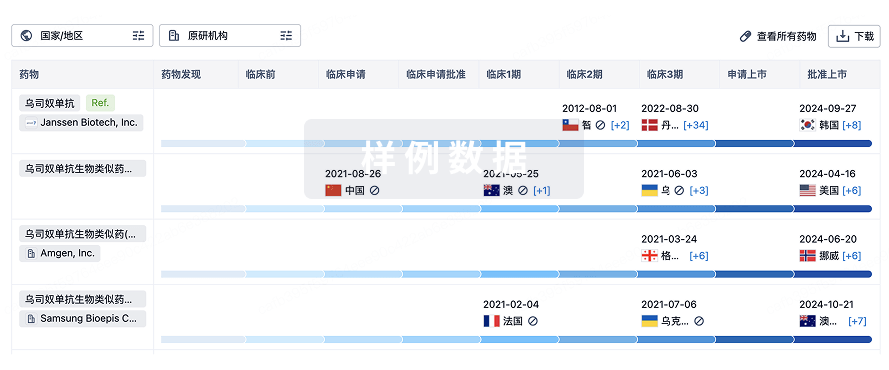
生物类似药
生物类似药在不同国家/地区的竞争态势。请注意临床1/2期并入临床2期,临床2/3期并入临床3期
登录
或
特殊审评
只需点击几下即可了解关键药物信息。
登录
或

提出任何生物医药研究问题
让每一步生物医药决策都精准制胜
基于十亿级生物数据与全球情报的精准 AI,赋能早期药物发现
立即开始免费试用!
智慧芽新药情报库是智慧芽专为生命科学人士构建的基于AI的创新药情报平台,助您全方位提升您的研发与决策效率。
立即接入生物医药数据包
智慧芽新药库数据也通过智慧芽开放平台,以MCP或API服务形式对外开放。立即使用我们的MCP服务定制您的LLM智能体。
生物序列数据库
生物药研发创新
免费使用
化学结构数据库
小分子化药研发创新
免费使用