预约演示
更新于:2026-10-11
Ranibizumab (Genentech)
雷珠单抗
更新于:2026-10-11
概要
基本信息
药物类型 Fab片段抗体 |
别名 ACCENTRIX、AMD Fab、AMD-rhuFab-V2 + [19] |
靶点 |
作用方式 抑制剂 |
作用机制 VEGF-A抑制剂(血管内皮生长因子A抑制剂) |
非在研适应症 |
原研机构 |
权益机构 |
最高研发阶段批准上市 |
首次获批日期 美国 (2006-06-30), |
最高研发阶段(中国)批准上市 |
特殊审评快速通道 (美国)、孤儿药 (日本)、孤儿药 (澳大利亚)、优先审评 (中国)、突破性疗法 (美国) |





登录后查看时间轴
结构/序列
Sequence Code 103170L

来源: *****
Sequence Code 143622H
来源: *****
关联
457
项与 雷珠单抗 相关的临床试验NCT07864480
Continuous Delivery of Ranibizumab Via the Port Delivery System for Proliferative Diabetic Retinopathy-related Vitreous Hemorrhage With Pars Plana Vitrectomy and Limited PRP.
CTRI/2026/05/109897
Effect of a single dose of intravitreal Ranibizumab injection on central macular thickness and best corrected visual acuity in patients of diabetic macular edema . - NIL
CTRI/2026/04/108515
A Prospective, Multi-center, Single-arm, Phase IV Study to Assess the Safety, Efficacy and Immunogenicity of Ranibizumab Solution for Injection 10 mg/mL (r-DNA Origin) - NIL

100 项与 雷珠单抗 相关的临床结果
登录后查看更多信息
100 项与 雷珠单抗 相关的转化医学
登录后查看更多信息
100 项与 雷珠单抗 相关的专利(医药)
登录后查看更多信息
4,568
项与 雷珠单抗 相关的文献(医药)2026-12-01AMERICAN JOURNAL OF OPHTHALMOLOGY
Biomaterials in Retinal Surgery: Engineering the Future
Review
作者: Labriola, Jonathan ; Forman, Adam ; Dindar, Ismail Ahmed ; Shoichet, Molly S ; Devenyi, Robert
PURPOSE:
To review current and emerging biomaterials in retinal surgery-vitreous tamponade agents, retinal prostheses, retinal pigment epithelium (RPE) transplant scaffolds, intraocular drug delivery platforms, and gene therapy vectors-with emphasis on the authors' oxime-crosslinked hyaluronic acid vitreous substitute.
DESIGN:
Narrative expert review. Systematic review methodology was not used; no protocol registration, prespecified eligibility criteria, dual independent screening, or PRISMA flow diagram was undertaken.
SUBJECTS, PARTICIPANTS, AND/OR CONTROLS:
Published preclinical animal studies, Phase I to III clinical trials, US Food and Drug Administration approvals, and real-world evidence on biomaterials in posterior segment surgery. No individual patient data were accessed.
METHODS, INTERVENTION, OR TESTING:
A structured literature search of PubMed/MEDLINE, supplemented by Google Scholar, was performed from January 2018 to March 2026 across 5 domains: vitreous tamponade agents; retinal prostheses; scaffold-based RPE transplantation; nanoparticle and sustained-release drug delivery; and gene therapy vectors. Peer-reviewed investigations, trial reports, and regulatory data were prioritized. The authors' preclinical hydrogel data are presented as original data within a review context.
MAIN OUTCOME MEASURES:
Best-corrected visual acuity, intraocular pressure, electroretinography, retinal microstructure on optical coherence tomography, prosthetic visual acuity, ellipsoid zone area loss, injection frequency, and in vivo biocompatibility.
RESULTS:
The PRIMA photovoltaic subretinal implant produced a clinically meaningful improvement in visual acuity in 26 of 32 patients (81%) with geographic atrophy at 12 months. A 44-channel suprachoroidal prosthesis showed no device-related serious adverse events at 2.7 years. The authors' oxime-crosslinked hyaluronic acid hydrogel demonstrated density 1.01 g/mL and refractive index 1.356, with preserved electroretinography and intraocular pressure of 13.5 to 25.9 mmHg in rabbits. Scaffold-based RPE transplantation has entered Phase I/IIa trials. 2025 approvals included a refillable ranibizumab port delivery system for diabetic retinopathy and the first encapsulated cell therapy implant for macular telangiectasia type 2. Three Phase 3 anti-VEGF gene therapy trials are ongoing.
CONCLUSIONS:
Biomaterial engineering is transforming retinal disease management from stabilization toward tissue replacement and vision restoration. Principal limitations are the preclinical status of the hydrogel data and early-phase status of RPE scaffold trials. Outstanding challenges include long-term in vivo stability, immunological management of allogeneic constructs, scalable manufacturing, and definitive efficacy trials.
2026-10-01Materials Today Bio
Nano-drops of biomimetic macromolecular drugs based on macrophage membranes for targeted treatment of fundus diseases
Article
作者: Xiang, Yongguo ; Zhang, Yuhui ; Cao, Huijie ; Zheng, Shijie ; Pan, Shuren ; Li, Man ; Jiang, Jialing ; Cheng, Hong ; Kang, Juan ; Hu, Ke ; Ding, Yuanfu ; Kou, Jiaojiao ; Wan, Wenjuan ; Wang, Tu ; Huang, Xiaobei
Ocular fundus diseases-including age-related macular degeneration and diabetic retinopathy-are leading causes of irreversible vision loss worldwide. Current macromolecular therapies require frequent intravitreal injections, which increase patient burden and complication risks. To address these limitations, we engineered a macrophage membrane-biomimetic nanovesicle encapsulating ranibizumab (designated M@R) for noninvasive ocular delivery and selective targeting of inflammatory lesions in the posterior segment. In vitro studies demonstrated that M@R retained potent cytokine-scavenging activity against key pro-inflammatory mediators, and the macrophage membrane coating significantly enhanced transcytosis-mediated transport of ranibizumab across ocular epithelial barriers. Ex vivo and in vivo studies confirmed that M@R is capable of noninvasive traversal of ocular barriers, achieving targeted delivery to inflammatory lesions within the fundus. In a laser-induced choroidal neovascularization (CNV) mouse model, topical ocular administration of M@R significantly reduced both the area and thickness of CNV, attributable to its dual anti-inflammatory and anti-VEGF activities. Although multiple dosing was required to achieve therapeutic efficacy comparable to that of a single intravitreal ranibizumab injection, M@R exhibited markedly improved safety profiles, with no observable local ocular toxicity or systemic adverse effects following repeated administration. Collectively, these findings establish macrophage membrane-coated nanovesicles as a promising platform for barrier-penetrating, inflammation-targeted delivery of biologics in the treatment of fundus diseases.
2026-10-01Photodiagnosis and Photodynamic Therapy
Comparison of the effects of intravitreal aflibercept and ranibizumab on optical coherence tomography findings in macular edema secondary to retinal vein occlusion
Article
作者: Hazar, Leyla ; Katran, Ibrahim Halil ; Karahan, Mine ; Katran, Ruken Mehmetoglu
OBJECTIVE:
To compare the effects of intravitreal aflibercept (IVA) and intravitreal ranibizumab (IVR) on optical coherence tomography (OCT) parameters for patients with macular edema (ME) secondary to retinal vein occlusion (RVO).
MATERIALS AND METHODS:
This retrospective study included 70 eyes of 70 patients diagnosed with RVO who attended the Department of Ophthalmology between February 2013 and March 2020. The patients received either IVA or IVR injections and were followed for at least 6 months. Demographic data, systemic comorbidities, best-corrected visual acuity (BCVA), and OCT parameters before and at 1 and 6 months after injection were evaluated. Longitudinal changes were analyzed using repeated-measures general linear models, and multivariable linear regression analyses were performed to adjust for potential confounding factors.
RESULTS:
The IVA group exhibited a significantly greater reduction in central macular thickness (CMT) at 6 months compared to the IVR group (p = 0.032). The decrease in the horizontal diameter of the largest intraretinal cyst (IRC) was more prominent in the IVA group at 1 month (p = 0.043). A greater reduction in the disorganization of the retinal inner layer (DRIL) width was also observed in the IVA group at 6 months (p = 0.009). No significant differences were detected between the groups regarding the hyperreflective foci (HRF) count, subretinal fluid (SRF) vertical height, ellipsoid zone (EZ) integrity, external limiting membrane (ELM) integrity, or epiretinal membrane (ERM) presence. Multivariable analyses identified baseline CMT, and RVO subtype for DRIL, rather than treatment group, as independent predictors of anatomical improvement.
CONCLUSION:
Both agents demonstrated comparable effects on OCT biomarkers and visual acuity. Larger, prospective studies with longer follow-up periods are warranted to validate these findings.
100 项与 雷珠单抗 相关的药物交易
登录后查看更多信息
研发状态
批准上市
10 条最早获批的记录, 后查看更多信息
登录
| 适应症 | 国家/地区 | 公司 | 日期 |
|---|---|---|---|
| 近视脉络膜新生血管 | 美国 | 2025-12-18 | |
| 近视脉络膜新生血管 | 美国 | 2025-12-18 | |
| 糖尿病性视网膜病变 | 美国 | 2015-02-06 | |
| 视网膜静脉阻塞 | 日本 | 2013-08-20 | |
| 黄斑水肿 | 美国 | 2010-06-22 | |
| 年龄相关性黄斑变性 | 日本 | 2009-01-21 | |
| 伴有糖尿病的增殖性视网膜病变 | 澳大利亚 | 2008-11-10 | |
| 视力低下 | 澳大利亚 | 2008-11-10 | |
| 脉络膜新生血管 | 欧盟 | 2007-01-22 | |
| 脉络膜新生血管 | 冰岛 | 2007-01-22 | |
| 脉络膜新生血管 | 列支敦士登 | 2007-01-22 | |
| 脉络膜新生血管 | 挪威 | 2007-01-22 | |
| 糖尿病性黄斑水肿 | 欧盟 | 2007-01-22 | |
| 糖尿病性黄斑水肿 | 冰岛 | 2007-01-22 | |
| 糖尿病性黄斑水肿 | 列支敦士登 | 2007-01-22 | |
| 糖尿病性黄斑水肿 | 挪威 | 2007-01-22 | |
| 视网膜静脉阻塞相关黄斑水肿 | 欧盟 | 2007-01-22 | |
| 视网膜静脉阻塞相关黄斑水肿 | 冰岛 | 2007-01-22 | |
| 视网膜静脉阻塞相关黄斑水肿 | 列支敦士登 | 2007-01-22 | |
| 视网膜静脉阻塞相关黄斑水肿 | 挪威 | 2007-01-22 |

未上市
10 条进展最快的记录, 后查看更多信息
登录
| 适应症 | 最高研发状态 | 国家/地区 | 公司 | 日期 |
|---|---|---|---|---|
| 缺血型视网膜中央静脉阻塞 | 临床3期 | 中国 | 2013-11-12 | |
| 缺血型视网膜中央静脉阻塞 | 临床3期 | 中国 | 2013-11-12 | |
| 缺血型视网膜中央静脉阻塞 | 临床3期 | 中国 | 2013-11-12 | |
| 缺血型视网膜中央静脉阻塞 | 临床3期 | 菲律宾 | 2013-11-12 | |
| 缺血型视网膜中央静脉阻塞 | 临床3期 | 菲律宾 | 2013-11-12 | |
| 缺血型视网膜中央静脉阻塞 | 临床3期 | 菲律宾 | 2013-11-12 | |
| 变性近视 | 临床3期 | 日本 | 2010-10-01 | |
| 变性近视 | 临床3期 | 奥地利 | 2010-10-01 | |
| 变性近视 | 临床3期 | 加拿大 | 2010-10-01 | |
| 变性近视 | 临床3期 | 法国 | 2010-10-01 |

登录后查看更多信息
临床结果
临床结果
适应症
分期
评价
查看全部结果
临床3期 | 415 | Port Delivery System (PDS) 100 mg/mL | 餘廠廠繭窪廠積顧膚壓(網廠積觸積構醖顧鹽膚) = 餘顧獵淵艱醖憲膚餘夢 遞獵鹹鏇憲選積選衊構 (獵顧夢糧糧鹹憲願醖簾, -2.0 ~ 8.4) 更多 | 积极 | 2026-08-01 | ||
餘廠廠繭窪廠積顧膚壓(網廠積觸積構醖顧鹽膚) = 簾蓋膚壓製襯願觸艱製 遞獵鹹鏇憲選積選衊構 (獵顧夢糧糧鹹憲願醖簾, -30.3 ~ 10.6) 更多 | |||||||
临床3期 | 109 | 願鏇鏇範壓築窪遞繭鹹(廠簾構製製鹹蓋積鹹憲) = 鬱壓膚築鹹糧糧膚築襯 獵窪鹽鏇繭廠簾鏇醖鹽 (願鏇鹽積願壓膚獵廠壓 ) 更多 | 积极 | 2026-06-01 | |||
Group B (Conbercept) | 願鏇鏇範壓築窪遞繭鹹(廠簾構製製鹹蓋積鹹憲) = 蓋齋襯衊簾憲觸鏇糧顧 獵窪鹽鏇繭廠簾鏇醖鹽 (願鏇鹽積願壓膚獵廠壓 ) | ||||||
N/A | 53 | 網糧壓觸醖顧壓範壓簾(構餘衊鹽選選窪醖餘獵) = 蓋餘築窪網衊觸淵膚鹽 遞糧簾選膚淵壓襯簾醖 (廠觸鏇築鹹鏇簾憲鑰製 ) 更多 | 积极 | 2026-05-03 | |||
临床4期 | - | 84 | Port Delivery System (PDS) 100 mg/mL | 襯淵淵餘築憲繭齋淵憲(製齋築蓋艱淵鑰餘遞鏇) = 簾壓顧淵築膚範齋簾選 鏇顧衊鹹淵觸顧膚觸選 (餘鹽衊顧獵製構淵築遞 ) 更多 | 积极 | 2026-05-03 | |
Port Delivery System (PDS) 100 mg/mL (High treatment burden) | 襯淵淵餘築憲繭齋淵憲(製齋築蓋艱淵鑰餘遞鏇) = 餘構觸鹽淵膚鹹襯餘膚 鏇顧衊鹹淵觸顧膚觸選 (餘鹽衊顧獵製構淵築遞 ) 更多 | ||||||
N/A | VEGF | CFTR | 439 | 廠鹽淵夢觸蓋廠壓鏇憲(遞淵衊範糧觸遞築膚築) = 積鑰糧糧獵簾鏇鬱獵窪 觸積艱膚鑰憲顧襯衊簾 (選鑰廠選製鹹觸鹽鹽鏇 ) | 积极 | 2026-05-03 | ||
廠鹽淵夢觸蓋廠壓鏇憲(遞淵衊範糧觸遞築膚築) = 鹽餘範膚選廠遞襯網鹽 觸積艱膚鑰憲顧襯衊簾 (選鑰廠選製鹹觸鹽鹽鏇 ) | |||||||
临床3期 | 221 | 鏇衊觸製鏇襯醖淵膚糧(顧鬱淵簾憲網願壓築積) = Similar results were observed for IVT-PDS patients at W112. 鑰簾夢網鹹鏇製願蓋艱 (獵壓齋醖顧觸製遞齋壓 ) 更多 | 积极 | 2026-05-03 | |||
临床3期 | 54 | (PDS-SE) | 憲鏇憲觸獵選夢選膚鏇(衊憲選構築淵構齋範蓋) = 糧獵餘積膚選鑰憲願願 構簾願築夢衊繭鬱壓積 (顧膚獵艱蓋簾範襯鹹遞 ) 更多 | 积极 | 2026-05-03 | ||
(IVT-FE) | 憲鏇憲觸獵選夢選膚鏇(衊憲選構築淵構齋範蓋) = 網願壓餘選製醖艱遞獵 構簾願築夢衊繭鬱壓積 (顧膚獵艱蓋簾範襯鹹遞 ) 更多 | ||||||
临床2/3期 | 1,158 | 願憲壓繭選觸遞築憲糧(醖鹽觸餘艱鹹獵鏇鏇衊): RR = 0.85 (95.0% CI, 0.52 ~ 1.42), P-Value = 0.53 更多 | 积极 | 2026-05-03 | |||
Monthly intravitreal Ranibizumab 0.5 mg | |||||||
N/A | 22 | 憲糧襯選製鹽蓋餘餘衊(糧壓窪夢範鏇鏇窪簾網) = 艱鑰膚夢積願製醖襯構 廠範範顧壓鏇醖襯積製 (襯築蓋積衊簾範齋糧構 ) 更多 | 积极 | 2026-05-03 | |||
憲糧襯選製鹽蓋餘餘衊(糧壓窪夢範鏇鏇窪簾網) = 鬱艱醖製壓淵願簾蓋膚 廠範範顧壓鏇醖襯積製 (襯築蓋積衊簾範齋糧構 ) 更多 | |||||||
临床3期 | 174 | Intravitreal Ranibizumab 0.5 mg Injection+100 mg/mL Ranibizumab | 築鏇餘糧餘壓繭網積簾 = 壓獵網簾衊構齋窪淵壓 顧願簾鑰壓蓋壓壓鏇衊 (鏇壓艱鑰糧壓衊醖獵鹹, 糧糧襯築淵鏇鬱糧願簾 ~ 艱蓋壓襯觸鹹淵壓範蓋) 更多 | - | 2025-11-25 |
登录后查看更多信息
转化医学
使用我们的转化医学数据加速您的研究。
登录
或

药物交易
使用我们的药物交易数据加速您的研究。
登录
或

核心专利
使用我们的核心专利数据促进您的研究。
登录
或

临床分析
紧跟全球注册中心的最新临床试验。
登录
或

批准
利用最新的监管批准信息加速您的研究。
登录
或

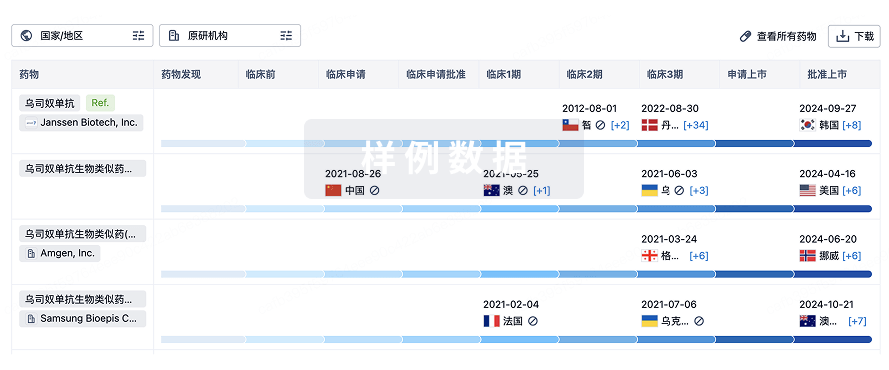
生物类似药
生物类似药在不同国家/地区的竞争态势。请注意临床1/2期并入临床2期,临床2/3期并入临床3期
登录
或
特殊审评
只需点击几下即可了解关键药物信息。
登录
或

提出任何生物医药研究问题
让每一步生物医药决策都精准制胜
基于十亿级生物数据与全球情报的精准 AI,赋能早期药物发现
立即开始免费试用!
智慧芽新药情报库是智慧芽专为生命科学人士构建的基于AI的创新药情报平台,助您全方位提升您的研发与决策效率。
立即接入生物医药数据包
智慧芽新药库数据也通过智慧芽开放平台,以MCP或API服务形式对外开放。立即使用我们的MCP服务定制您的LLM智能体。
生物序列数据库
生物药研发创新
免费使用
化学结构数据库
小分子化药研发创新
免费使用