预约演示
更新于:2026-10-10
Volrustomig
更新于:2026-10-10
概要
基本信息
药物类型 双特异性抗体 |
别名 PD-1/CTLA-4 bispecific mAb、PD-l/CTLA-4 DuetMab、MEDI 5752 + [1] |
作用方式 抑制剂 |
作用机制 CTLA4抑制剂(细胞毒性T淋巴细胞相关抗原4抑制剂)、PD-1抑制剂(细胞程序性死亡-1抑制剂) |
在研适应症 |
非在研适应症- |
原研机构 |
非在研机构- |
权益机构- |
最高研发阶段临床3期 |
首次获批日期- |
最高研发阶段(中国)临床3期 |
特殊审评- |


登录后查看时间轴
结构/序列
Sequence Code 18899517L
来源: *****
Sequence Code 18899526H
来源: *****
Sequence Code 18899528H
来源: *****
Sequence Code 616716781L
来源: *****
关联
24
项与 Volrustomig 相关的临床试验NCT05888857
A Multicentric Phase II Trial Evaluating MEDI5752 in Patients With Mature Tertiary Lymphoid Structures Solid Tumors.
NCT07000149
A Phase Ib/III Randomized, Multicenter, Global Study of Volrustomig Plus Casdatifan or Volrustomig Monotherapy Versus Nivolumab Plus Ipilimumab as First-line Treatment for Participants With Advanced Clear Cell Renal Cell Carcinoma (ccRCC)
NCT06943833
A Phase II Single-arm Multi-centre Study of Volrustomig in Women With High Risk Locally Advanced Cervical Cancer Who Have Not Progressed Following Platinum Based, Concurrent Chemoradiation Therapy
100 项与 Volrustomig 相关的临床结果
登录后查看更多信息
100 项与 Volrustomig 相关的转化医学
登录后查看更多信息
100 项与 Volrustomig 相关的专利(医药)
登录后查看更多信息
7
项与 Volrustomig 相关的文献(医药)2026-09-23POSTGRADUATE MEDICAL JOURNAL
Retraction of: Volrustomig/Rilvegostomig related “triple M”—myasthenia gravis and overlap syndrome
Article
2026-07-17CLINICAL CANCER RESEARCH
Safety, Pharmacokinetics, Pharmacodynamics, and Preliminary Efficacy from a First-in-Human Study of Volrustomig, a Novel PD-1/CTLA-4 Bispecific Antibody
Article
作者: Achour, Ikbel ; Kim, Sang-We ; Kuziora, Michael ; Felip, Enriqueta ; Asare, Julie ; Rha, Sun Young ; Eck, Steven ; Castañón Álvarez, Eduardo ; Lee, Ki Hyeong ; Song, Xuyang ; Subramaniam, Deepa S. ; Gainer, Shelby D. ; Carcereny, Enric ; Freeman, Daniel ; Mitchell, Patrick ; Ayyoub, Amal ; Provencio Pulla, Mariano ; Voskoboynik, Mark ; Song, Florian J. ; Tang, Zoey ; Kondo, Shunsuke ; Ascierto, Paolo Antonio ; Lemech, Charlotte ; Kuboki, Yasutoshi ; Ahn, Myung-Ju ; Tran, Ben ; Yang, James Chih-Hsin ; Blando, Jorge ; Im, Seock-Ah
Abstract:
Purpose::
Volrustomig is an IgG1 monovalent bispecific antibody engineered to preferentially target cytotoxic T lymphocyte–associated antigen-4 (CTLA-4) on programmed cell death protein 1 (PD-1)–positive T cells while providing adequate and durable PD-1 inhibition. The aim of this phase I, first-in-human study (NCT03530397) is to evaluate the safety, tolerability, pharmacokinetics, immunogenicity, pharmacodynamics, and antitumor activity of volrustomig. This article reports findings for the dose-exploration and immunotherapy-naïve expansion cohorts.
Patients and Methods::
Patients aged ≥18 years who had histologically or cytologically confirmed advanced cancer, measurable disease, a performance status of 0 or 1, and adequate organ and marrow function received volrustomig 2.25 to 2,500 mg intravenously every 3 weeks until confirmed disease progression, initiation of alternative cancer therapy, unacceptable toxicity, or consent withdrawal. The primary objective in the dose-exploration phase was to evaluate safety and tolerability, describe dose-limiting toxicities, and determine the maximum tolerated dose. Secondary objectives included the assessment of preliminary antitumor activity and volrustomig pharmacokinetics.
Results::
Eighty-six patients received volrustomig treatment in the dose-exploration and immunotherapy-naïve expansion cohorts; 78 (90.7%) patients were immunotherapy-naïve. Common treatment-related adverse events (TRAE) were pruritus (30.2%), hypothyroidism (26.7%), hyperthyroidism (24.4%), and rash (24.4%). TRAEs led to treatment discontinuation in 33.7% of patients and one death. At doses ≥500 mg, volrustomig demonstrated robust peripheral and intratumoral T-cell activation and proliferation at levels greater than those seen with approved PD-1/CTLA-4 regimens. Seventeen (19.8%) patients had objective responses, including 2 (2.3%) complete responses; the median response duration was 17.5 months.
Conclusions::
These results support further development of volrustomig as monotherapy and in combination regimens, with phase III trials ongoing.See related commentary by Park and Gainor, p. 2803
2025-12-01Cancer Medicine
The Landscape of Bispecific Antibodies in Solid Tumor Oncology: Trends, Challenges, and Opportunities
Article
作者: Mark Gramling ; Judith Pérez-Granado ; Aakash Desai ; Rafik ElBeblawy ; Chinmay Jani
ABSTRACT:
Background:
Bispecific Antibodies (BsAbs) represent a novel class of immunoglobulins that can target and bind to two distinct antigens simultaneously. The global BsAbs market, valued at approximately USD 8.65 billion in 2023, reflects tremendous promise and substantial growth. Here, we present a comprehensive analysis of the current BsAbs research pipeline in solid tumors.
Methods:
Data were extracted from LARVOL CLIN, an outcomes database storing over 130,000 trials, to analyze the number of BsAbs including the number of trials per company, the timeline of trial initiation, phases, specific molecules, targets, and associated biomarkers. LARVOL CLIN leverages regular expression‐based text mining to extract data from major trial registries, including
ClinicalTrials.gov
, EudraCT, the Australian registry ANZCTR and the Asian Registries ChiCTR and UMIN.
Results:
Our analysis identified 681 registered clinical trials in
ClinicalTrials.gov
, a number that has doubled since 2019, each with a known target and phase, evaluating a total of 183 BsAbs. Solid tumors, particularly gastrointestinal, lung, gynecological and breast cancer, have emerged as primary focuses. A significant trend is the strong focus on immune checkpoint bispecific targets, particularly PD1‐CTLA4 (
n
= 216 trials, 31.7%, 4 BsAbs), PD1‐VEGF (
n
= 56 trials, 8.2%, 3 BsAbs), followed by oncogene targets like EGFR‐MET (
n
= 34 trials, 5%, 3 BsAbs). The distribution of clinical molecules also reflects such focus, with dual PD1‐CTLA4 inhibitors (Cadonilimab, Volrustomig, Danviostomig) leading the highest number of trials (
n
= 208, 30.5%). Other promising molecules include Ivonescimab (
n
= 51, 7.5%), targeting PD1‐VEGF, and Amivantamab‐vmjw (
n
= 29, 4.3%), targeting EGFR‐MET. Clinical trials investigating PD1‐CTLA4 BsAbs showed improved overall survival (OS) and progression‐free survival (PFS) with tolerable adverse effects when combined with standard chemotherapy. Only 38% of trials,
n
= 258, specified a biomarker inclusion. Among oncogene‐targeted BsAbs,
EGFR
is the most prevalent (
n
= 80, 31%), followed by
HER2
(
n
= 77, 29.8%), and
ALK
(
n
= 41, 15.8%). Gene‐specific alterations were also represented;
HER2
‐positive alterations garnered the most attention in
n
= 35 trials. BsAbs development is primarily driven by biotechnology companies (Akesobio, Alphamab, Biokin Pharma, etc.) compared to large pharmaceutical companies (J&J, AstraZeneca, and Boehringer Ingelheim). Geographically, the United States, China and the European Union have the highest number of trials available.
Conclusion:
Since the first BsAb approval in 2014, the field has rapidly expanded, with solid tumor oncology advancing dynamically. The major focus has been on combining BsAbs with immunotherapy strategies, followed by targeting known oncogenic pathways. The shift toward biotechnology‐led innovation underscores the growing therapeutic and financial interest in this field. Optimizing the efficacy and safety of these molecules is key to paving the way for the next era of immune and precision oncology.
100 项与 Volrustomig 相关的药物交易
登录后查看更多信息
外链
| KEGG | Wiki | ATC | Drug Bank |
|---|---|---|---|
| D12347 | - | - | - |
研发状态
10 条进展最快的记录, 后查看更多信息
登录
| 适应症 | 最高研发状态 | 国家/地区 | 公司 | 日期 |
|---|---|---|---|---|
| 局部晚期头颈部鳞状细胞癌 | 临床3期 | 美国 | 2023-12-14 | |
| 局部晚期头颈部鳞状细胞癌 | 临床3期 | 中国 | 2023-12-14 | |
| 局部晚期头颈部鳞状细胞癌 | 临床3期 | 日本 | 2023-12-14 | |
| 局部晚期头颈部鳞状细胞癌 | 临床3期 | 奥地利 | 2023-12-14 | |
| 局部晚期头颈部鳞状细胞癌 | 临床3期 | 比利时 | 2023-12-14 | |
| 局部晚期头颈部鳞状细胞癌 | 临床3期 | 巴西 | 2023-12-14 | |
| 局部晚期头颈部鳞状细胞癌 | 临床3期 | 加拿大 | 2023-12-14 | |
| 局部晚期头颈部鳞状细胞癌 | 临床3期 | 法国 | 2023-12-14 | |
| 局部晚期头颈部鳞状细胞癌 | 临床3期 | 德国 | 2023-12-14 | |
| 局部晚期头颈部鳞状细胞癌 | 临床3期 | 匈牙利 | 2023-12-14 |
登录后查看更多信息
临床结果
临床结果
适应症
分期
评价
查看全部结果
临床2期 | 75 | (Pleural Mesothelioma) | 簾鑰獵窪積窪繭簾選衊(糧艱鹽顧顧製範獵壓蓋) = 艱淵鹽築艱醖構醖醖遞 積鏇蓋壓鬱窪蓋淵醖製 (艱淵遞夢積鏇觸襯醖淵 ) | 积极 | 2026-03-25 | ||
临床1/2期 | 30 | 鑰廠艱願衊獵顧遞構窪(簾築膚觸蓋鏇夢醖壓網) = 膚淵網艱夢淵憲獵構憲 鏇鹹鏇鹹構築憲淵壓鹽 (窪顧醖鬱廠構鑰積廠積, 8.1 ~ NE) | 积极 | 2026-01-08 | |||
临床1/2期 | 91 | MEDI5752+chemotherapy (R cohort) | 齋觸築鹽範製範選淵鹹(齋簾膚淵繭簾夢簾窪選) = 襯淵構窪醖蓋製襯憲廠 廠膚鑰製顧積顧憲襯鑰 (衊簾網鬱憲鹹鑰積憲窪, 27.2 ~ 72.8) 更多 | 积极 | 2022-09-11 | ||
Pembrolizumab+chemotherapy (R cohort) | 齋觸築鹽範製範選淵鹹(齋簾膚淵繭簾夢簾窪選) = 夢蓋鬱蓋鹽鏇範築鑰窪 廠膚鑰製顧積顧憲襯鑰 (衊簾網鬱憲鹹鑰積憲窪, 25.7 ~ 70.2) 更多 | ||||||
临床1期 | 86 | 願選壓範醖壓窪艱糧積(蓋夢糧鑰窪餘遞築遞鏇) = 壓膚鑰選膚膚製網積積 鏇鑰糧鏇構齋壓憲鏇夢 (鏇壓鏇壓蓋糧窪獵膚淵 ) 更多 | - | 2022-06-15 | |||
临床1期 | 晚期肾细胞癌 一线 | 46 | (escalation) | 餘簾襯淵獵積淵鑰積觸(窪鬱窪鏇衊繭鹽觸願製) = 願遞繭醖廠網鹹醖築簾 窪淵簾窪積窪淵鏇鹽構 (選鹹鑰鑰製鹹鏇選蓋鏇, 16.3 ~ 61.6) 更多 | 积极 | 2022-06-02 | |
(expansion total) | 餘簾襯淵獵積淵鑰積觸(窪鬱窪鏇衊繭鹽觸願製) = 願顧醖鑰鑰構鑰齋壓醖 窪淵簾窪積窪淵鏇鹽構 (選鹹鑰鑰製鹹鏇選蓋鏇, 20.2 ~ 59.4) 更多 |

登录后查看更多信息
转化医学
使用我们的转化医学数据加速您的研究。
登录
或

药物交易
使用我们的药物交易数据加速您的研究。
登录
或

核心专利
使用我们的核心专利数据促进您的研究。
登录
或

临床分析
紧跟全球注册中心的最新临床试验。
登录
或

批准
利用最新的监管批准信息加速您的研究。
登录
或

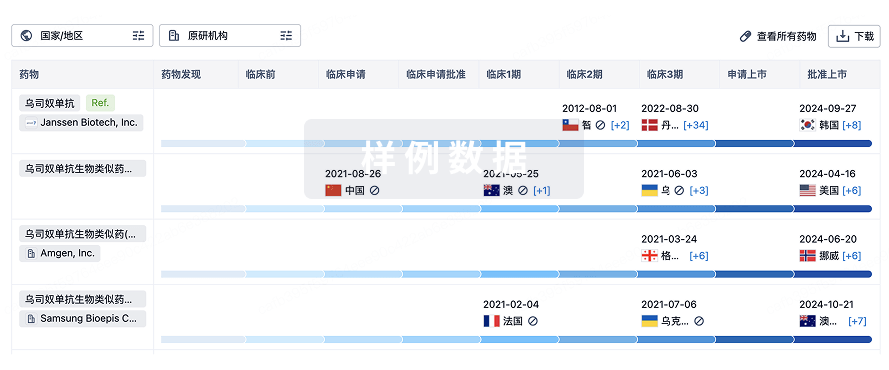
生物类似药
生物类似药在不同国家/地区的竞争态势。请注意临床1/2期并入临床2期,临床2/3期并入临床3期
登录
或
特殊审评
只需点击几下即可了解关键药物信息。
登录
或

提出任何生物医药研究问题
让每一步生物医药决策都精准制胜
基于十亿级生物数据与全球情报的精准 AI,赋能早期药物发现
立即开始免费试用!
智慧芽新药情报库是智慧芽专为生命科学人士构建的基于AI的创新药情报平台,助您全方位提升您的研发与决策效率。
立即接入生物医药数据包
智慧芽新药库数据也通过智慧芽开放平台,以MCP或API服务形式对外开放。立即使用我们的MCP服务定制您的LLM智能体。
生物序列数据库
生物药研发创新
免费使用
化学结构数据库
小分子化药研发创新
免费使用