预约演示
更新于:2026-03-05

Immunex Corp.
更新于:2026-03-05
概览
标签
皮肤和肌肉骨骼疾病
免疫系统疾病
其他疾病
Fc融合蛋白
疾病领域得分
一眼洞穿机构专注的疾病领域

技术平台
公司药物应用最多的技术
靶点
公司最常开发的靶点
关联
靶点 |
作用机制 |
在研机构 |
原研机构 |
在研适应症 |
非在研适应症 |
最高研发阶段 |
首次获批国家/地区 |
首次获批日期 |

NCT03544866
The Impact of Pediatric Skin Disorders: The "Big" Study

NCT01522742
Monitoring and Modifying Atherosclerosis in Psoriasis Patients Study
NCT01001208
A Randomized, Double-Blind, Placebo-Controlled Study to Evaluate the Efficacy and Safety of Adding Methotrexate to Etanercept in Subjects With Moderate to Severe Plaque Psoriasis
100 项与 Immunex Corp. 相关的临床结果
登录后查看更多信息
登录后查看更多信息
2013-03-27Transplantation2区 · 医学
Willingness to Pursue Live-Donor Kidney Transplantation Among Waitlisted Patients Infected With Human Immunodeficiency Virus (HIV)
2区 · 医学
Article
作者: James R. Rodrigue ; Amy D. Waterman ; Didier A. Mandelbrot ; Martha Pavlakis ; Matthew J. Paek ; Ogo Egbuna
We show that HIV-infected waitlisted patients (n=33) had significantly lower knowledge (P<0.001), more concerns (P=0.01), and lower willingness to pursue live-donor kidney transplantation (LDKT; P=0.02) than matched noninfected patients. The majority (78%) of patients felt that their HIV status reduced their chance of LDKT. Although limited to a single center and a small sample, our data suggest that HIV-infected patients who are waitlisted for kidney transplantation may need more education about the potential benefits of LDKT and may benefit from patient-centered decision support to facilitate a risk-benefit assessment consistent with their preferences and values.
2004-04-01American journal of health-system pharmacy : AJHP : official journal of the American Society of Health-System Pharmacists4区 · 医学
Current and future considerations for the new classes of biologicals
4区 · 医学
Article
作者: Mosdell, Kristen Wilkinson ; Kleinberg, Michael
PURPOSE:
Key structural features of biologicals and their development are explained, and the fundamental distinctions between biological and chemical drugs in terms of their discovery, scale-up from research to commercial quantities, quality control, regulatory requirements, and potential for generic substitution are discussed.
SUMMARY:
Recent advances in biotechnology have accelerated the introduction of biological protein drugs into the marketplace, offering new treatment options and challenges for pharmacists. Because these drugs are produced in living systems and are structurally complex, they are more difficult to manufacture, purify, and evaluate than are traditional chemical drugs. The production of recombinant-DNA-based protein and monoclonal antibody drugs is explained, and the strengths and limitations in selecting one or another host system (i.e., bacteria, yeast, or mammalian cells) for making a given biological drug are explored. Subtle variations in production methods can lead to significant differences in product volume, potential viral or bacterial contamination, bioactivity, and toxicity. Like manufacturers, federal regulators face difficult new challenges because of the structural complexity and in vivo synthesis of biologicals. Pharmacists and regulators alike must determine when and if therapeutic interchange is relevant to biologicals. Because biologicals are so difficult to manufacture and test, noninnovator biologicals must be subject to more oversight than traditional generic drugs.
CONCLUSION:
Biologicals are complex agents whose production and properties present many considerations that are not associated with traditional chemical drugs.
2004-02-15Clinical cancer research : an official journal of the American Association for Cancer Research1区 · 医学
Safety and Biological Activity of Repeated Doses of Recombinant Human Flt3 Ligand in Patients with Bone Scan-Negative Hormone-Refractory Prostate Cancer
1区 · 医学
Article
作者: Eric J Small ; Nicholas J. Vogelzang ; Anyang Feng ; Jeffrey A. Sosman ; Dania Caron ; Celestia S. Higano
Abstract:
Purpose: The purpose of this study was to evaluate the safety, biological activity, and feasibility of repeated doses of the dendritic cell (DC)-stimulating agent Flt3 ligand (FL) in patients with bone scan-negative hormone-refractory prostate cancer.Experimental Design: Thirty-one patients with hormone-refractory prostate cancer who had elevated prostate-specific antigen (PSA) levels and negative bone scans were enrolled. Six cycles (28 days each) were planned. In the first cycle, patients were randomized to FL or placebo. All patients received open-label FL during the next five courses. DC, anti-FL antibody, and PSA levels were measured every 15 days to assess biological activity.Results: DCs increased markedly in FL-treated patients from precycle to day 15, and the increase was consistent in each cycle. Mean percentages of DCs in peripheral blood ranged from 1.4% to 1.9% precycle and from 10.1% to 13.9% on day 15, and after the first cycle, absolute counts on day 15 were approximately 29-fold higher than precycle levels. Natural killer cell counts (CD56+) were found to be elevated after cycle 1 (154% increase versus 2.8% decrease in placebo group at day 22). Twenty-two of 27 patients tested developed nonneutralizing anti-FL antibody. The most frequently experienced toxicity was injection site reaction, followed by asthenia, rash, and diarrhea. Although median PSA levels did not vary during any cycle, a significant slowing in velocity of PSA was observed while patients were on-study (relative velocity = 0.002) compared with prestudy PSA velocity (relative velocity = 0.007).Conclusions: FL was well tolerated. FL consistently produced an increase in DC count without any evidence of decreasing response with continued exposure. The expansion of DCs and the slowing of PSA velocity after administration of FL suggest potential clinical applications in the immunotherapy of prostate cancer.
100 项与 Immunex Corp. 相关的药物交易
登录后查看更多信息
100 项与 Immunex Corp. 相关的转化医学
登录后查看更多信息
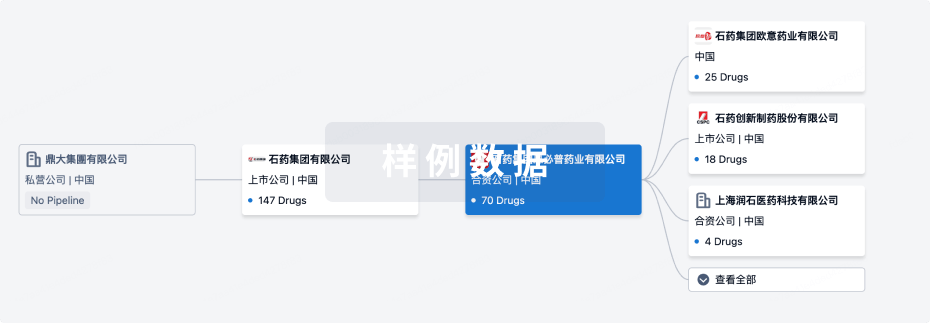
组织架构
使用我们的机构树数据加速您的研究。
登录
或
管线布局
2026年10月10日管线快照
管线布局中药物为当前组织机构及其子机构作为药物机构进行统计,早期临床1期并入临床1期,临床1/2期并入临床2期,临床2/3期并入临床3期
批准上市
1
7
其他
登录后查看更多信息
当前项目
登录后查看更多信息
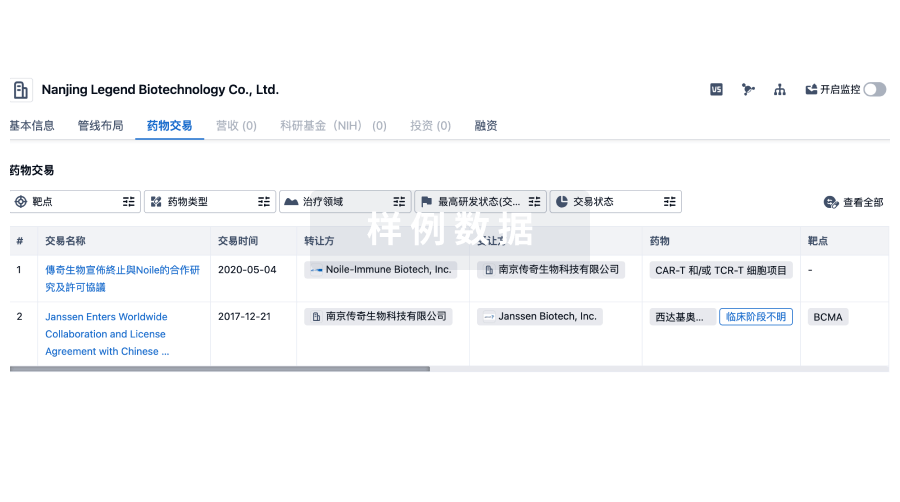
药物交易
使用我们的药物交易数据加速您的研究。
登录
或
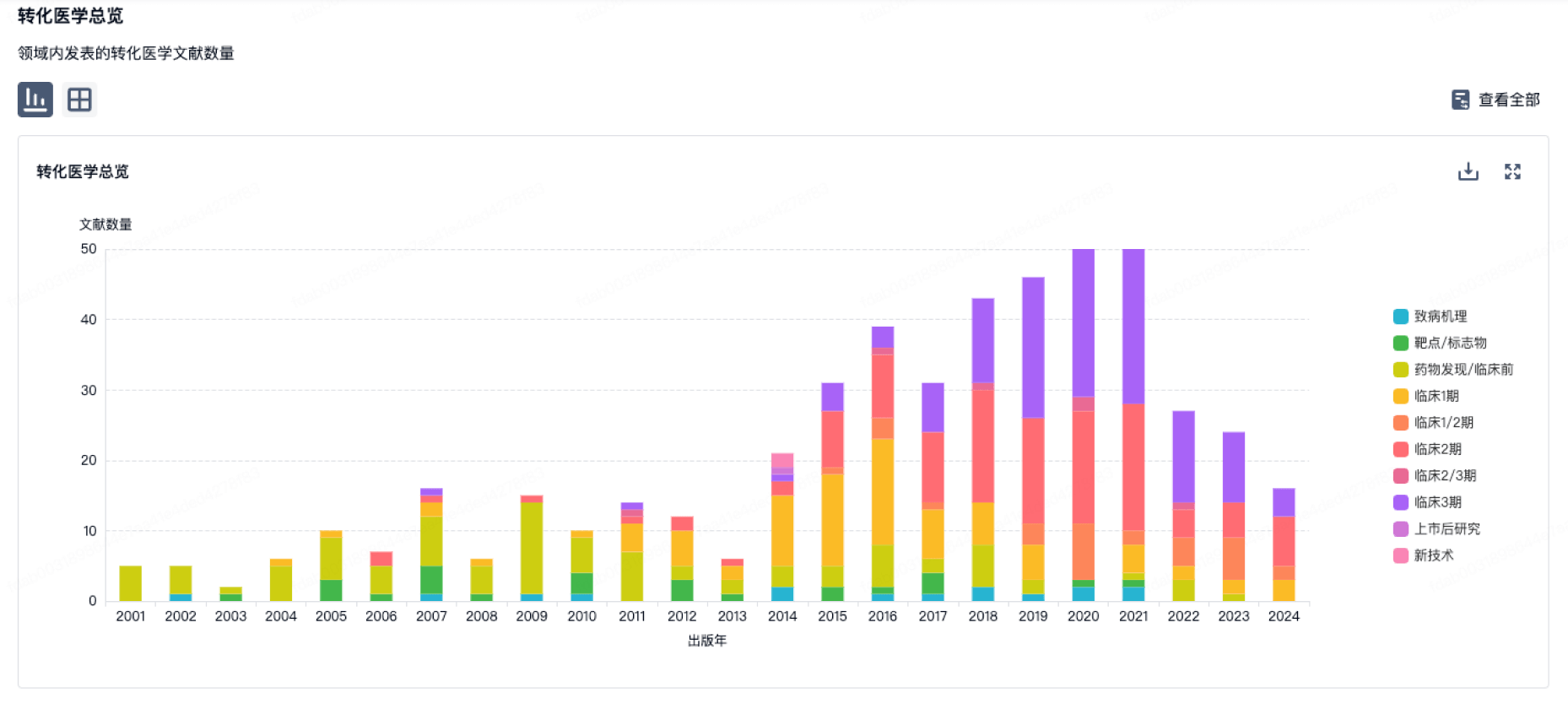
转化医学
使用我们的转化医学数据加速您的研究。
登录
或
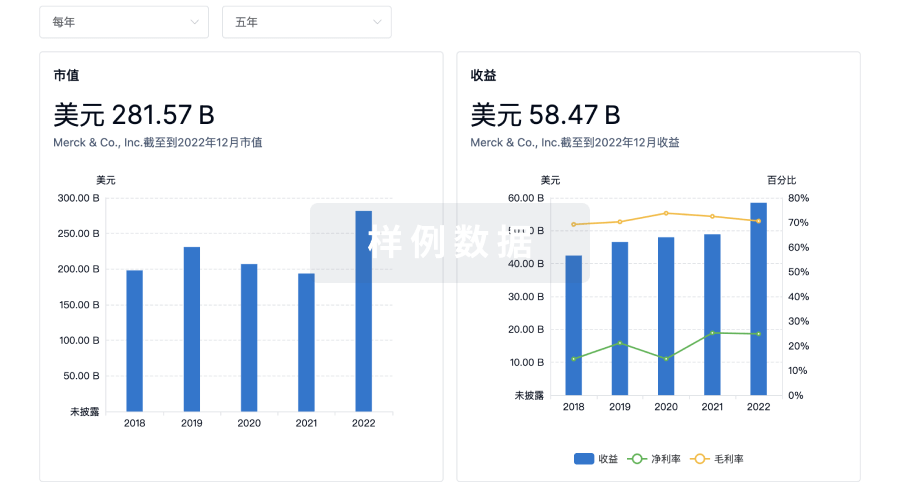
营收
使用 Synapse 探索超过 36 万个组织的财务状况。
登录
或
科研基金(NIH)
访问超过 200 万项资助和基金信息,以提升您的研究之旅。
登录
或
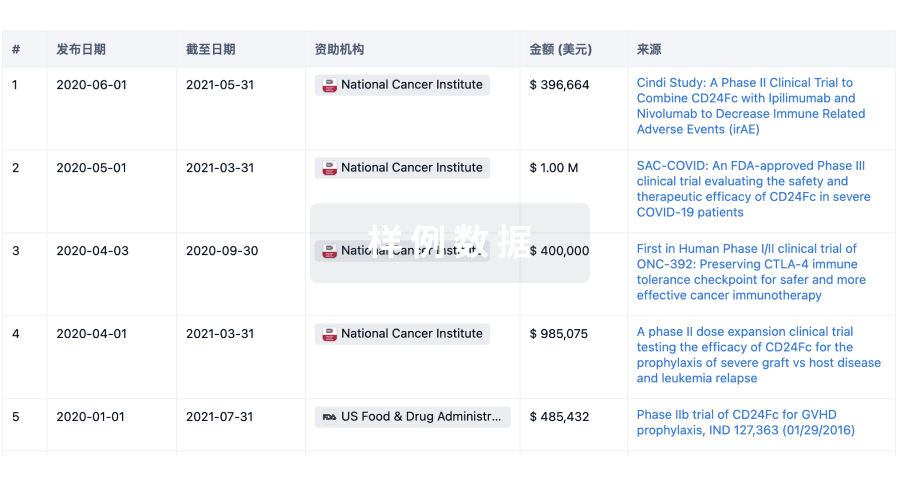
投资
深入了解从初创企业到成熟企业的最新公司投资动态。
登录
或
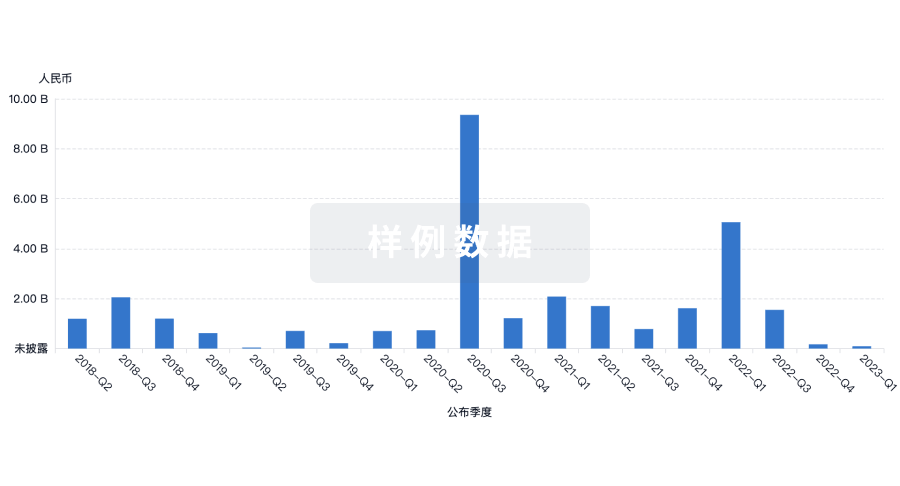
融资
发掘融资趋势以验证和推进您的投资机会。
登录
或
提出任何生物医药研究问题
让每一步生物医药决策都精准制胜
基于十亿级生物数据与全球情报的精准 AI,赋能早期药物发现
立即开始免费试用!
智慧芽新药情报库是智慧芽专为生命科学人士构建的基于AI的创新药情报平台,助您全方位提升您的研发与决策效率。
立即接入生物医药数据包
智慧芽新药库数据也通过智慧芽开放平台,以MCP或API服务形式对外开放。立即使用我们的MCP服务定制您的LLM智能体。
生物序列数据库
生物药研发创新
免费使用
化学结构数据库
小分子化药研发创新
免费使用