预约演示
更新于:2026-10-28

RedHill Biopharma Ltd.
更新于:2026-10-28
概览
标签
肿瘤
消化系统疾病
其他疾病
小分子化药
疾病领域得分
一眼洞穿机构专注的疾病领域

技术平台
公司药物应用最多的技术
靶点
公司最常开发的靶点
关联
靶点 |
作用机制 |
在研机构 |
原研机构 |
在研适应症 |
非在研适应症 |
最高研发阶段 |
首次获批国家/地区 |
首次获批日期 |

靶点 |
作用机制 |
在研机构 |
原研机构 |
在研适应症 |
非在研适应症 |
最高研发阶段 |
首次获批国家/地区 |
首次获批日期 |

靶点 |
作用机制 |
在研机构 |
原研机构 |
在研适应症 |
非在研适应症 |
最高研发阶段 |
首次获批国家/地区 |
首次获批日期 |
NCT04026984
Double Blind, Multi-center Study to Evaluate the Safety and Efficacy of 100 mg Twice Daily Rifamycin SV MMX® Added to Standard ORT Versus Placebo Plus ORT, in the Treatment of Traveler's Diarrhea in Children Age 6 to 11 Years
NCT05954286
Master Protocol for Early Treatment and Post-Exposure Prophylaxis of COVID-19 Adaptive Platform Trial PROTECT-APT 1

NCT04027894
Double Blind Study to Evaluate the Safety and Efficacy of 400 mg Twice Daily Rifamycin SV MMX® Added to Standard Oral Rehydration Therapy (ORT) Versus Placebo Plus ORT, in the Treatment of Traveler's Diarrhea in Children Age 12 to 17 Years
100 项与 RedHill Biopharma Ltd. 相关的临床结果
登录后查看更多信息
登录后查看更多信息
2023-10-31Journal of travel medicine
Development of a new travellers’ diarrhoea clinical severity classification and its utility in confirming rifamycin-SV efficacy
Article
作者: Steffen, Robert ; Almenoff, June S ; Bortey, Enoch ; Jamindar, Mansi S ; DuPont, Herbert L
Abstract:
Background:
travellers’ diarrhoea (TD) is frequently reported with incidence up to 40% in high-risk destinations. Previous studies showed that the number of loose stools alone is inadequate to holistically predict the severity of TD. To improve the prediction of prognosis and to optimize treatments, a simple risk-based clinical severity classification has been developed.
Methods:
pooled baseline data of signs and symptoms and number of loose stools from 1098 subjects enrolled in two double-blind Phase 3 trials of rifamycin-SV were analyzed with correlation, multiple correspondence analyses, prognostic factor criteria, and Contal and O’Quigley method to generate a TD severity classification (mild, moderate and severe). The relative importance of this classification on resolution of TD was assessed by Cox proportional model hazard model on the time to last unformed stool (TLUS).
Results:
the analysis showed that TLUS were longer for the severe [hazard ratio (HR) 0.24; P < 0.001; n = 173] and moderate (HR 0.54; P = 0.0272; n = 912) vs mild. Additionally, when the treatment assigned in the studies was investigated in the severity classification, the results yielded that rifamycin-SV significantly shortened TLUS vs placebo for all subjects (HR 1.9; P = 0.0006), severe (HR 5.9; P = 0.0232) and moderate (HR 1.7; P = 0.0078) groups and was as equally efficacious as ciprofloxacin for all subjects, moderate and severe groups (HRs: 0.962, 0.9, 1.2; all P = NS, respectively). When reassessed by this classification, rifamycin-SV showed consistent efficacy with the Phase 3 studies.
Conclusions:
this newly developed TD clinical severity classification demonstrated strong prognostic value and clinical utility by combining patients’ multiple signs and symptoms of enteric infection and number of loose stools to provide a holistic assessment of TD. By expanding on the current classification by incorporating patient reported outcomes in addition to TLUS, a classification like the one developed, may help optimize patient selection for future clinical studies.
2023-03-01International journal of infectious diseases : IJID : official publication of the International Society for Infectious Diseases
A randomized, placebo-controlled pilot study of upamostat, a host-directed serine protease inhibitor, for outpatient treatment of COVID-19
Article
作者: Potts, Jeffrey ; Abramson, Danielle ; McComsey, Grace A ; Delgado, Belkis ; Fathi, Reza ; Plasse, Terry F ; Fehrmann, Clara
OBJECTIVES:
We performed a pilot study of upamostat, a serine protease inhibitor, in outpatients with symptomatic COVID-19 before a pivotal trial.
METHODS:
SARS-CoV-2 patients with ≥2 moderate-severe symptoms onset within 5 days were randomized to oral upamostat 200 or 400 mg or placebo daily for 14 days. Patients completed COVID-19 symptom questionnaires daily for 28 days, then thrice weekly for 4 weeks, and underwent physical and laboratory examinations periodically.
RESULTS:
A total of 61 patients enrolled of which 20 received a placebo or upamostat 200 mg daily; 21 received upamostat 400 mg daily. Treatment was well tolerated; only one patient (upamostat 400) reported a drug-related adverse event, mild skin rash; no patient discontinued owing to a drug-related adverse event. The median time to a sustained recovery from severe symptoms was 8, 4, and 3 days for the three treatment groups, respectively. New severe symptoms developed in 20% of the placebo group vs 2.4% in the combined upamostat groups, (P = 0.036). Three placebo patients (15%) versus no upamostat patients were hospitalized for worsening COVID (P= 0.03). The mean d-dimer level remained constant in placebo patients but decreased by 38% and 48% in upamostat 200 and 400 patients, respectively.
CONCLUSION:
Upamostat was well tolerated, shortened recovery time, and decreased new severe symptoms and hospitalization.
2022-07-04Open forum infectious diseases
Opaganib in Coronavirus Disease 2019 Pneumonia: Results of a Randomized, Placebo-Controlled Phase 2a Trial
Article
作者: Raday, Gilead ; Bibliowicz, Aida ; Minkowitz, Harold S ; Anderson, Patricia ; Skolnick, Alan W ; Levitt, Mark L ; Winthrop, Kevin L ; Ben-Yair, Vered Katz ; Suszanski, Julian ; Gordon, Michael S ; Eagle, Gina ; Barnett-Griness, Ofra ; Beegle, Scott H ; Fathi, Reza ; Rafiq, Adnan M ; Koehne, Guenther
Abstract:
Background:
Opaganib, an oral sphingosine kinase-2 inhibitor with antiviral and anti-inflammatory properties, was shown to inhibit severe acute respiratory syndrome coronavirus 2 replication in vitro. We thus considered that opaganib could be beneficial for moderate to severe coronavirus disease 2019 (COVID-19) pneumonia. The objective of the study was to evaluate the safety of opaganib and its effect on supplemental oxygen requirements and time to hospital discharge in COVID-19 pneumonia hospitalized patients requiring supplemental oxygen.
Methods:
This Phase 2a, randomized, double-blind, placebo-controlled study was conducted between July and December 2020 in 8 sites in the United States. Forty-two enrolled patients received opaganib (n = 23) or placebo (n = 19) added to standard of care for up to 14 days and were followed up for 28 days after their last dose of opaganib/placebo.
Results:
There were no safety concerns arising in this study. The incidence of ≥Grade 3 treatment-emergent adverse events was 17.4% and 33.3% in the opaganib and placebo groups, respectively. Three deaths occurred in each group. A numerical advantage for opaganib over placebo was observed in in this nonpowered study reflected by total supplemental oxygen requirement from baseline to Day 14, the requirement for supplemental oxygen for at least 24 hours by Day 14, and hospital discharge.
Conclusions:
In this proof-of-concept study, hypoxic, hospitalized patients receiving oral opaganib had a similar safety profile to placebo-treated patients, with preliminary evidence of benefit for opaganib as measured by supplementary oxygen requirement and earlier hospital discharge. These findings support further evaluation of opaganib in this population.
2026-10-24
细胞疗法免疫疗法引进/卖出临床3期申请上市
2026-10-22
100 项与 RedHill Biopharma Ltd. 相关的药物交易
登录后查看更多信息
100 项与 RedHill Biopharma Ltd. 相关的转化医学
登录后查看更多信息
组织架构
使用我们的机构树数据加速您的研究。
登录
或
管线布局
2026年11月02日管线快照
管线布局中药物为当前组织机构及其子机构作为药物机构进行统计,早期临床1期并入临床1期,临床1/2期并入临床2期,临床2/3期并入临床3期
临床2期
1
2
临床3期
其他
6
登录后查看更多信息
当前项目
登录后查看更多信息
药物交易
使用我们的药物交易数据加速您的研究。
登录
或
转化医学
使用我们的转化医学数据加速您的研究。
登录
或
营收
使用 Synapse 探索超过 36 万个组织的财务状况。
登录
或
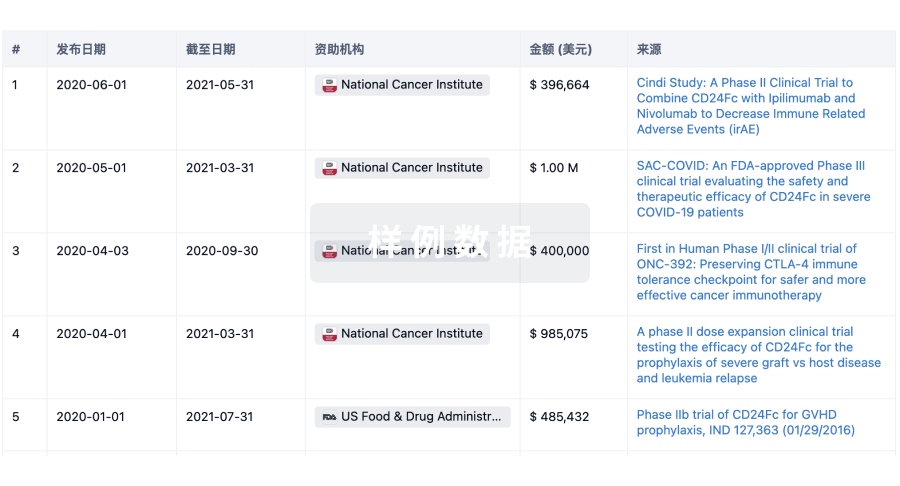
科研基金(NIH)
访问超过 200 万项资助和基金信息,以提升您的研究之旅。
登录
或
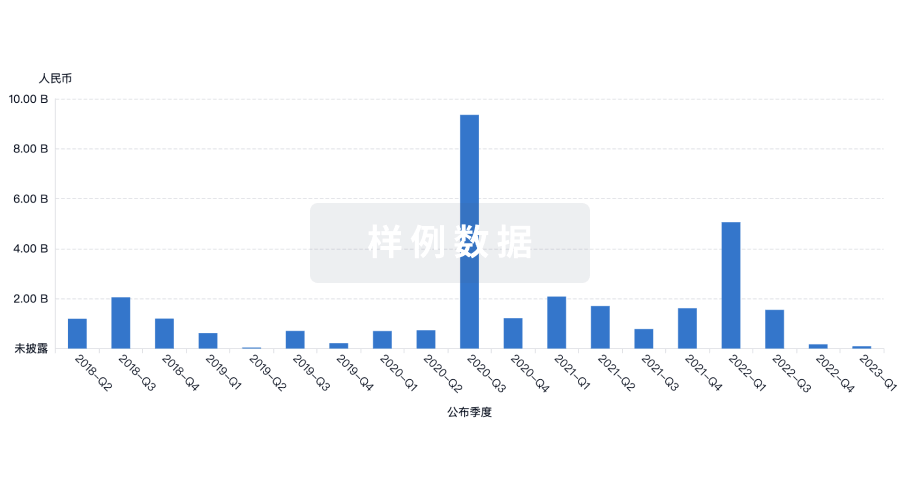
投资
深入了解从初创企业到成熟企业的最新公司投资动态。
登录
或
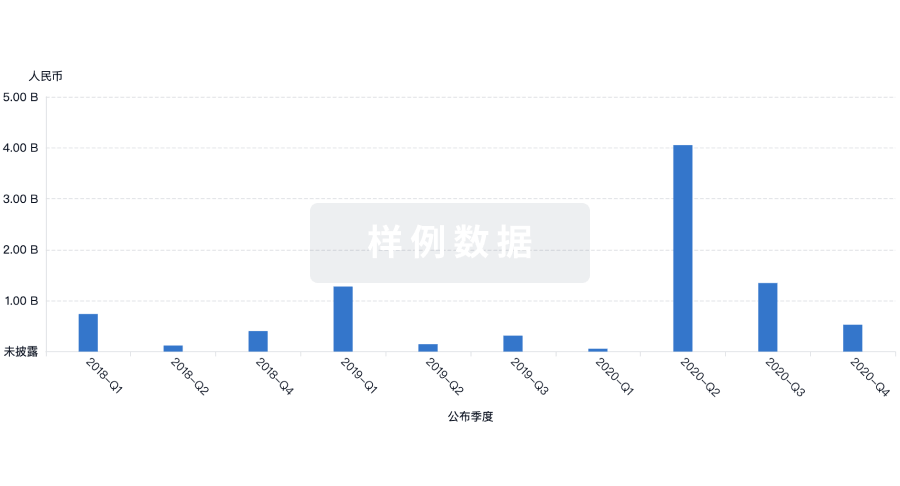
融资
发掘融资趋势以验证和推进您的投资机会。
登录
或
提出任何生物医药研究问题
让每一步生物医药决策都精准制胜
基于十亿级生物数据与全球情报的精准 AI,赋能早期药物发现
立即开始免费试用!
智慧芽新药情报库是智慧芽专为生命科学人士构建的基于AI的创新药情报平台,助您全方位提升您的研发与决策效率。
立即接入生物医药数据包
智慧芽新药库数据也通过智慧芽开放平台,以MCP或API服务形式对外开放。立即使用我们的MCP服务定制您的LLM智能体。
生物序列数据库
生物药研发创新
免费使用
化学结构数据库
小分子化药研发创新
免费使用