预约演示
更新于:2026-10-11

Chimerix, Inc.
更新于:2026-10-11
概览
标签
肿瘤
感染
消化系统疾病
小分子化药
疾病领域得分
一眼洞穿机构专注的疾病领域

技术平台
公司药物应用最多的技术
靶点
公司最常开发的靶点
关联
靶点 |
作用机制 |
在研机构 |
原研机构 |
在研适应症 |
非在研适应症 |
最高研发阶段 |
首次获批国家/地区 |
首次获批日期 |
靶点 |
作用机制 |
在研机构 |
原研机构 |
在研适应症 |
非在研适应症 |
最高研发阶段 |
首次获批国家/地区 |
首次获批日期 |


靶点 |
作用机制 |
在研机构 |
原研机构 |
在研适应症 |
非在研适应症 |
最高研发阶段 |
首次获批国家/地区 |
首次获批日期 |
NCT07533942
A Phase 2 Study to Investigate Efficacy, Safety, Tolerability, and Pharmacokinetics of JZP3507 (ONC206) in Adults With Recurrent Grade 2 or 3 Meningioma
NCT05542407
Phase 1 Clinical Trial of ONC201 and Atezolizumab in Obesity-Driven Endometrial Cancer
ACTRN12622001020774
A Randomized, Positive- and Placebo-Controlled Study to Evaluate the Effects of ONC201 on Cardiac Repolarization in Healthy Participants - Part 2
100 项与 Chimerix, Inc. 相关的临床结果
登录后查看更多信息
登录后查看更多信息
2025-09-01DRUGS IN R&D
Effect of Severe Renal Impairment on Dordaviprone (ONC201) Pharmacokinetics
Article
作者: Faison, Shamia L ; Morrison, Marion E ; Batonga, Joelle ; Mullin, Mark J ; Naderer, Odin ; Bartkus, Angela ; Arumugham, Thangam ; Tippin, Tim
BACKGROUND AND OBJECTIVE:
Dordaviprone (ONC201) is a novel small molecule with antitumor effects in patients with glioma. The major elimination pathway of dordaviprone is metabolism via cytochrome P450 (CYP) 3A4. This study was designed to assess the effect of severe renal impairment (RI) on dordaviprone pharmacokinetics.
METHODS:
Eight participants with severe RI and eight participants matched for age, body mass index, and sex, with normal renal function, received a single oral 375-mg dose of dordaviprone. Plasma and urine samples were analyzed for dordaviprone using validated liquid chromatography tandem mass spectrometry methods. Plasma and urine pharmacokinetics, plasma protein binding, and safety profiles were evaluated.
RESULTS:
Dordaviprone exposure was increased in participants with severe RI. Geometric mean ratios (90% confidence intervals) of the severe RI cohort compared with the healthy matched cohort were 1.13 (0.92-1.39), 1.48 (0.98-2.23), and 1.47 (0.97-2.21), for maximum concentration (Cmax), area under the plasma concentration-time curve from time zero to time of last measurable plasma concentration (AUClast), and AUC from time zero to infinity (AUCinf), respectively. Renal clearance of dordaviprone was negligible and similar in both cohorts. Plasma protein binding was similar in both cohorts, leading to similar increases in unbound dordaviprone Cmax and AUC in severe RI versus healthy participants. All dordaviprone-related adverse events were mild, occurring in 50% of participants with severe RI and 37.5% of healthy matched participants.
CONCLUSIONS:
Despite its minimal renal clearance, dordaviprone geometric mean AUC was increased by ~50% in severe RI participants, suggesting CYP3A4 activity may have been suppressed in these participants. The results of this study will be used to inform dordaviprone dosing in patients with RI.
TRIAL REGISTRATION NUMBER:
ACTRN12622000405718; Registered on March 9, 2022. Key Points Dordaviprone is a small molecule drug candidate for the treatment of glioma and is eliminated by non-renal mechanisms. In this clinical trial performed in severely renal-impaired participants, dordaviprone plasma concentrations were increased relative to those observed in healthy participants. This result suggests that the metabolic enzyme activity of CYP3A4 was reduced in severely renal-impaired participants.
2025-02-01Pharmacological Reports
ONC206, an imipridone derivative, demonstrates anti-colorectal cancer activity against stem/progenitor cells in 3D cell cultures and in patient-derived organoids
Article
作者: Prabhu, Varun V ; Doughan, Samer ; Tawil, Ayman ; Hussein, Maher ; Mukherji, Deborah ; Abou-Kheir, Wassim ; Allen, Joshua E ; Allen, Joshua E. ; Faraj, Walid ; Gali-Muhtasib, Hala ; Al Bitar, Samar ; Wakimian, Kevork ; Abou-Antoun, Tamara ; Monzer, Alissar ; Prabhu, Varun V. ; Ballout, Farah ; Kanso, Mariam ; Ghamlouche, Fatima ; Yehya, Amani ; Saheb, Nour
BACKGROUND:
Colorectal cancer (CRC) remains one of the most frequently diagnosed and life-threatening malignancies worldwide. CRC's high recurrence rates and drug resistance have been correlated with a subpopulation of dormant slowly dividing cells termed CRC stem cells (CCSCs). Consequently, there is a pressing need to identify novel therapeutics that can effectively and specifically target CCSCs. Imipridones are promising structurally related anticancer molecules that showed efficacy in several solid and hematological preclinical models and phase I/II/III clinical trials. This study mainly aimed to assess the potential anticancer effects of ONC206, an imipridone derivative, on CRC three-dimensional in vitro culture systems using HCT116 and HT29 cells. Importantly, the study aimed at using CRC patient-derived organoids (PDOs) to test the potential therapeutic effect of ONC206.
METHODS:
Two-dimensional cell proliferation, viability, migration, and invasion assays were used to assess the effects of ONC206 on two colorectal cancer cell lines, HCT116 and HT29, in vitro. Immunofluorescence imaging, flow cytometry, and western blot analysis were also performed to investigate the mechanism of action of this drug. Sphere formation assay and CRC PDOs were employed to evaluate the effect of ONC206 on CRC cells in a 3D setting and specifically its potency in targeting the CRC stem/progenitor subpopulation of cells.
RESULTS:
Our results showed that ONC206 was more potent than its parental molecule ONC201 in inhibiting the proliferation and viability of HCT116 and HT29 cells. Moreover, ONC206 significantly reduced the migration and invasion indices of CRC cells. These effects were accompanied by an increase in reactive oxygen species (ROS) production, sub-G1 phase accumulation, and apoptosis in HCT116 and HT29 cells. Furthermore, ONC206 significantly inhibited the 3D colonospheres growth and self-renewal ability of CCSCs more potently than ONC201, which was associated with a decrease in the expression of CSC-related markers. Lastly, ONC206 significantly reduced the growth of organoids derived from CRC patients.
CONCLUSION:
Collectively, our findings demonstrate that ONC206 is an effective anticancer molecule capable of targeting CCSCs, which may represent a novel therapeutic strategy that can overcome CRC resistance and recurrence.
2024-11-16Bioanalysis
Peripheral blood mononuclear cells isolation from mouse and rabbit blood to quantify active nucleotide and define brincidofovir dose for smallpox
Review
作者: Van Sickle, Kathy ; Karnik, Shane ; Dunn, John ; Naderer, Odin ; Mullin, Mark ; Hart, Robert ; Tippin, Tim
Aim: Brincidofovir has been approved by the US FDA for the treatment of smallpox via the "Animal Rule". The active moiety, cidofovir diphosphate (CDV-PP), was measurable in human peripheral blood mononuclear cells (PBMCs), but quantitation in animals was challenging given their limited blood volume. The aim of this study was to optimize PBMC isolation from rabbit and mouse blood to allow quantitation of CDV-PP.Materials & methods: PBMC isolation methods using various separation media were evaluated using blood from naive and brincidofovir-dosed animals. CDV-PP was quantified using liquid chromatography tandem mass spectrometry.Results & conclusion: PBMC isolation yields were increased by >fourfold compared with yields obtained using human methods, allowing cross-species exposure comparisons.
100 项与 Chimerix, Inc. 相关的药物交易
登录后查看更多信息
100 项与 Chimerix, Inc. 相关的转化医学
登录后查看更多信息
组织架构
使用我们的机构树数据加速您的研究。
登录
或
管线布局
2026年10月27日管线快照
管线布局中药物为当前组织机构及其子机构作为药物机构进行统计,早期临床1期并入临床1期,临床1/2期并入临床2期,临床2/3期并入临床3期
临床前
5
1
临床2期
批准上市
1
8
其他
登录后查看更多信息
当前项目
登录后查看更多信息
药物交易
使用我们的药物交易数据加速您的研究。
登录
或
转化医学
使用我们的转化医学数据加速您的研究。
登录
或
营收
使用 Synapse 探索超过 36 万个组织的财务状况。
登录
或
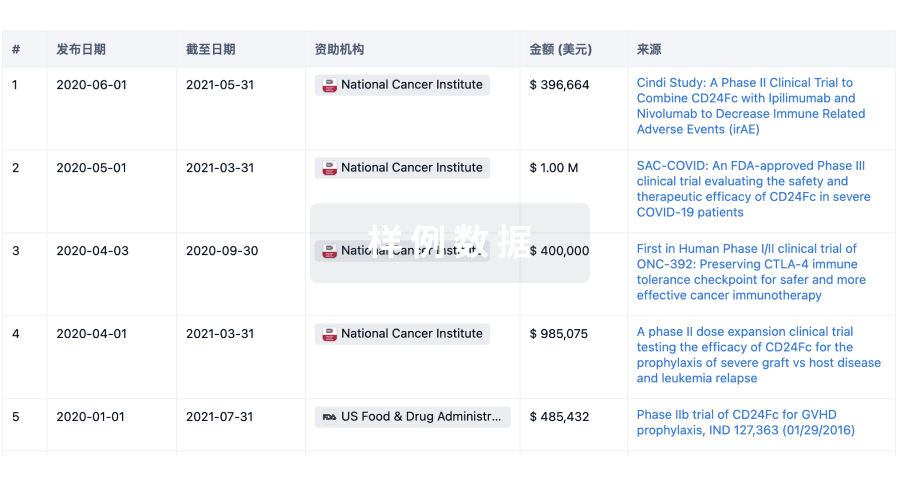
科研基金(NIH)
访问超过 200 万项资助和基金信息,以提升您的研究之旅。
登录
或
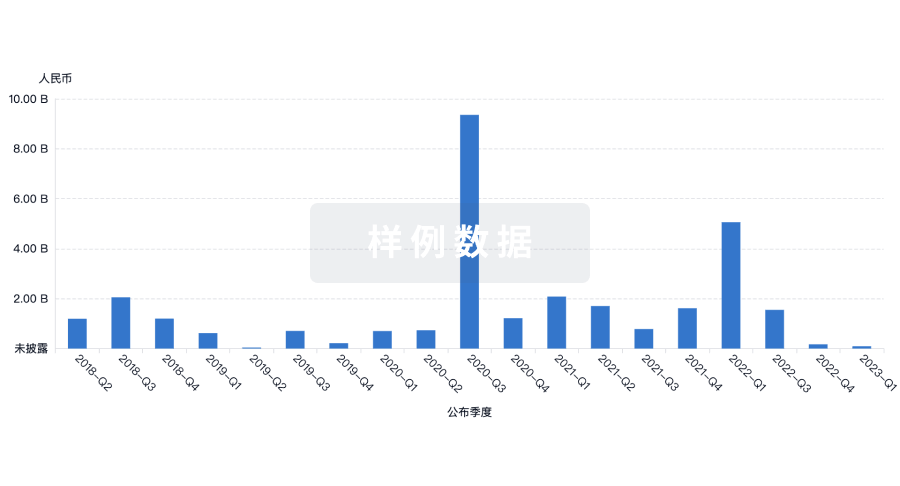
投资
深入了解从初创企业到成熟企业的最新公司投资动态。
登录
或
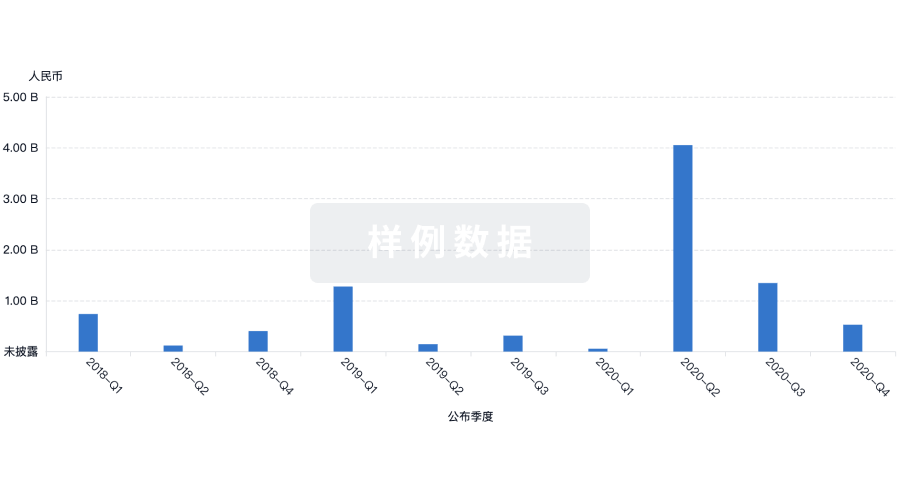
融资
发掘融资趋势以验证和推进您的投资机会。
登录
或
提出任何生物医药研究问题
让每一步生物医药决策都精准制胜
基于十亿级生物数据与全球情报的精准 AI,赋能早期药物发现
立即开始免费试用!
智慧芽新药情报库是智慧芽专为生命科学人士构建的基于AI的创新药情报平台,助您全方位提升您的研发与决策效率。
立即接入生物医药数据包
智慧芽新药库数据也通过智慧芽开放平台,以MCP或API服务形式对外开放。立即使用我们的MCP服务定制您的LLM智能体。
生物序列数据库
生物药研发创新
免费使用
化学结构数据库
小分子化药研发创新
免费使用