预约演示
更新于:2026-10-22
Anifrolumab-FNIA
阿尼鲁单抗
更新于:2026-10-22
概要
基本信息
原研机构 |
最高研发阶段批准上市 |
首次获批日期 美国 (2021-07-30), |
最高研发阶段(中国)申请上市 |
特殊审评快速通道 (美国)、孤儿药 (美国)、孤儿药 (日本) |




登录后查看时间轴
结构/序列
Sequence Code 128453421L
来源: *****
Sequence Code 315601407H
来源: *****
关联
54
项与 阿尼鲁单抗 相关的临床试验NCT07688980
A Multicentre, Randomised, Open-label, Phase I Study to Characterise the Pharmacokinetics, Pharmacodynamics, and Safety of Anifrolumab Administered Subcutaneously or Intravenously in Participants With Systemic Lupus Erythematosus
NCT07431775
A Non-Interventional Descriptive Multi-Country Study of Saphnelo™ (Anifrolumab-fnia) Utilization in Females of Reproductive Potential
NCT07751848
Multicentre, Open-Label, Single-Arm, 52-Week, Ph3b Study to Evaluate the Efficacy and Safety Outcomes in Chinese Patients Treated With Anifrolumab Who Have Active Moderate-Severe Systemic Lupus Erythematosus (SLE)
100 项与 阿尼鲁单抗 相关的临床结果
登录后查看更多信息
100 项与 阿尼鲁单抗 相关的转化医学
登录后查看更多信息
100 项与 阿尼鲁单抗 相关的专利(医药)
登录后查看更多信息
414
项与 阿尼鲁单抗 相关的文献(医药)2026-12-31AUTOIMMUNITY
Targeting IFN signaling as therapeutic option for lupus nephritis
Review
作者: Weinmann-Menke, Julia ; Claßen, Paul ; Meineck, Myriam ; Riepl, Janine
The course of systemic lupus erythematosus (SLE) is highly heterogeneous, with clinical manifestations varying considerably among patients and multiple immune pathways implicated in disease progression. Regardless of this variability, lupus nephritis (LN) is a frequent organ manifestation of SLE and often progresses to renal failure and dialysis dependence. Despite advances in immunosuppressive therapy, there remains a lack of targeted and individualized treatment options to improve outcomes for patients with LN. Immune dysregulation in SLE is reflected by increased interferon (IFN) activity and signaling, accompanied by the upregulation of canonical IFN‑stimulated genes (ISGs). The resulting IFN signature is widely used as a readout of IFN pathway activation, and numerous studies have evaluated this signature as a biomarker of SLE and LN activity. The specific contributions of type I, II, and III IFNs to this signature remain incompletely defined, although research over the past years has focused primarily on type I IFNs as key drivers. Notably, in the context of LN, renal cells themselves exhibit an IFN signature, underscoring their active contribution to disease progression. To define their suitability as therapeutic targets, the role of IFN activity in LN pathogenesis requires further clarification. Experimental models support distinct LN‑promoting roles of type I, II, and III IFNs, suggesting that targeting upstream triggers of IFN production, in addition to directly inhibiting IFN signaling, may represent promising therapeutic strategies. The recent approval of the type I IFN receptor (IFNαR)-blocking antibody anifrolumab has substantiated the relevance of type I IFN signaling in SLE overall, although its specific benefit in LN remains to be fully established. Based on the studies summarized in this narrative review, increased IFN activity or an IFN signature is detectable in a substantial proportion of patients with SLE and may carry prognostic information but appears insufficient to reliably predict disease flares. In LN in particular, blood-derived IFN activity or signatures alone may not be adequate, and the evaluation of renal tissue or urine-derived cells warrants further investigation. IFN signaling across all three IFN types contributes to LN progression by activating and dysregulating renal resident cells; therefore, targeting pathways that induce IFN expression, alongside direct inhibition of IFN signaling, may offer additional therapeutic opportunities.
2026-11-01CURRENT OPINION IN RHEUMATOLOGY
Novel therapies for refractory idiopathic inflammatory myopathy-associated interstitial lung disease
Review
作者: Avitzur, Na’ama ; Poirier-Blanchette, Laurence ; Krustev, Eugene
Purpose of review:
Idiopathic inflammatory myopathies (IIM) are systemic autoimmune rheumatic diseases in which interstitial lung disease (ILD) is a frequent extra-muscular manifestation and a major driver of morbidity and mortality. ILD occurs most commonly in antisynthetase syndrome and anti–melanoma differentiation-associated gene 5 (anti-MDA5) dermatomyositis syndrome, the latter carrying a high risk of rapidly progressive ILD (RP-ILD). Although recent guidelines outline conventional immunosuppressive strategies, a subset of patients progress despite escalation, and the definition of refractory IIM-ILD remains poorly standardized.
Recent findings:
Because type I and II interferon signaling, other cytokines, and aberrant B-cell activity have been implicated in the pathogenesis of IIM-ILD, novel therapies have been used off-label to target these mechanisms in treatment-resistant disease. This review summarizes emerging off-label and investigational therapies, including Janus kinase inhibitors, direct cytokine inhibitors (anifrolumab, dazukibart, tocilizumab, basiliximab), B-cell– and plasma-cell–targeted approaches (anti-CD20 antibodies, daratumumab, chimeric antigen receptor T-cell therapy, bispecific T-cell engagers), intravenous immunoglobulin, and antifibrotics, and rescue measures.
Summary:
Across these agents, evidence is confined to case reports, small series, and observational cohorts, with few randomized trials reporting IIM-ILD-specific outcomes. Prospective studies are needed to define patient selection, treatment sequencing and combinations, durability, and safety of novel therapies in IIM-ILD.
2026-10-01LUPUS
Navigating the therapeutic landscape: Biologics and immunosuppressive therapy in lupus nephritis during pregnancy
Review
作者: Ćelić, Dejan ; Knežević, Violeta ; Živković, Siniša ; Ilić, Tatjana ; Veselinov, Vladimir ; Popović, Milica ; Golubović, Sonja
Background:
Lupus nephritis (LN) predominantly affects women of reproductive age and carries substantial risks during pregnancy, including disease flare, preeclampsia, acute kidney injury, and adverse fetal outcomes. The therapeutic armamentarium for LN has expanded considerably with the approval of voclosporin, belimumab, and obinutuzumab, yet pregnancy safety data for these agents remain conspicuously absent. Concurrently, the 2024 EULAR recommendations for antirheumatic drugs in reproduction, the 2025 EULAR lupus nephritis update, and the 2024 KDIGO guidelines have reset the landscape of management guidance. This review critically appraises the evidence on the safety and clinical use of all current LN-relevant immunosuppressive and biologic therapies during pregnancy, lactation, and the periconceptional period.
Methods:
A comprehensive narrative review of literature published between January 2000 and May 2025 was conducted using PubMed, MEDLINE, EMBASE, and Cochrane databases. Key guidelines, pregnancy registries, and landmark clinical trial data were incorporated.
Results:
Hydroxychloroquine and azathioprine remain the cornerstones of pregnancy-compatible LN management. Tacrolimus is an acceptable calcineurin inhibitor with appropriate therapeutic drug monitoring. Low-dose aspirin is recommended universally to reduce preeclampsia risk. Mycophenolate mofetil is teratogenic and absolutely contraindicated in the first trimester. Voclosporin and obinutuzumab lack any pregnancy safety data and should be avoided. Belimumab data from the pregnancy registry have not raised major signals; selective use may be considered in refractory cases. Rituximab may be used cautiously for life-threatening disease, avoiding the third trimester due to neonatal B-cell depletion. Anifrolumab has no pregnancy data and should be reserved for situations where no compatible alternative exists.
Conclusion:
The growing number of effective LN therapies creates both opportunities and new dilemmas in pregnancy management. A structured, phase-based approach to drug selection — anchored in preconception counselling, timely medication switches, and multidisciplinary surveillance — is essential to optimise maternal and fetal outcomes. Dedicated pregnancy registries for novel biologics are urgently needed.
627
项与 阿尼鲁单抗 相关的新闻(医药)2026-10-20
2026-10-18
临床研究临床结果
2026-10-18
100 项与 阿尼鲁单抗 相关的药物交易
登录后查看更多信息
研发状态
批准上市
10 条最早获批的记录, 后查看更多信息
登录
| 适应症 | 国家/地区 | 公司 | 日期 |
|---|---|---|---|
| 狼疮性肾炎 | 澳大利亚 | 2022-03-29 | |
| 中枢神经系统狼疮血管炎 | 澳大利亚 | 2022-03-29 | |
| 系统性红斑狼疮 | 美国 | 2021-07-30 |
未上市
10 条进展最快的记录, 后查看更多信息
登录
| 适应症 | 最高研发状态 | 国家/地区 | 公司 | 日期 |
|---|---|---|---|---|
| 皮肤红斑狼疮 | 临床3期 | 美国 | 2024-06-29 | |
| 皮肤红斑狼疮 | 临床3期 | 中国 | 2024-06-29 | |
| 皮肤红斑狼疮 | 临床3期 | 日本 | 2024-06-29 | |
| 皮肤红斑狼疮 | 临床3期 | 阿根廷 | 2024-06-29 | |
| 皮肤红斑狼疮 | 临床3期 | 澳大利亚 | 2024-06-29 | |
| 皮肤红斑狼疮 | 临床3期 | 奥地利 | 2024-06-29 | |
| 皮肤红斑狼疮 | 临床3期 | 比利时 | 2024-06-29 | |
| 皮肤红斑狼疮 | 临床3期 | 巴西 | 2024-06-29 | |
| 皮肤红斑狼疮 | 临床3期 | 保加利亚 | 2024-06-29 | |
| 皮肤红斑狼疮 | 临床3期 | 加拿大 | 2024-06-29 |
登录后查看更多信息
临床结果
临床结果
适应症
分期
评价
查看全部结果
N/A | 343 | (biologic-experienced) | 鏇獵膚廠網簾觸蓋積鏇(夢窪願憲簾鏇艱願鹽鏇) = 餘鏇範廠壓選壓膚繭構 糧膚鬱壓構範憲鬱夢簾 (夢顧構餘築鏇製選鬱鬱 ) 更多 | 积极 | 2026-11-06 | ||
(biologic-naïve) | 鏇獵膚廠網簾觸蓋積鏇(夢窪願憲簾鏇艱願鹽鏇) = 簾鹽糧鹽網餘鏇簾顧廠 糧膚鬱壓構範憲鬱夢簾 (夢顧構餘築鏇製選鬱鬱 ) 更多 | ||||||
N/A | 152 | 構積鏇繭鑰齋遞選獵範(齋鹹醖襯鏇顧艱糧鑰糧) = 膚鏇繭鬱繭製蓋壓遞製 淵襯廠糧廠廠廠網淵構 (選築鑰遞膚膚積廠鏇壓 ) 更多 | 积极 | 2026-11-06 | |||
N/A | 68 | 襯顧夢顧壓衊醖簾鹽鹽(糧顧簾鑰窪願鬱顧簾繭) = Adverse events included one case of neutropenic fever after a single infusion, one hospitalization for pneumonia, and one case of herpes zoster despite prior vaccination with Shingrix. 構齋窪衊築鹽餘範簾網 (積願廠積壓憲齋遞鏇蓋 ) | 积极 | 2026-11-06 | |||
N/A | 44 | 觸簾淵鑰憲網餘遞鏇鹹(鹹願艱餘艱襯蓋願壓顧) = 壓鑰夢蓋繭簾願壓廠鏇 鏇衊繭艱範廠鑰鬱繭獵 (鹽選夢廠鏇齋鹹壓齋鹹 ) 更多 | 积极 | 2026-11-06 | |||
(≥4 doses) | 觸簾淵鑰憲網餘遞鏇鹹(鹹願艱餘艱襯蓋願壓顧) = 積糧願襯艱觸齋獵艱範 鏇衊繭艱範廠鑰鬱繭獵 (鹽選夢廠鏇齋鹹壓齋鹹 ) 更多 | ||||||
临床3期 | 1,093 | Anifrolumab 300 mg IV every 4 weeks + Anifrolumab 120 mg SC once weekly (Standard therapy) | 醖壓選廠壓壓鹽鏇襯衊(壓衊鹹簾夢積顧鹽選網) = 鹽鹽構淵遞蓋願範膚夢 構遞壓願壓衊廠餘鏇顧 (醖鬱壓繭襯蓋窪膚願築 ) 更多 | 积极 | 2026-11-06 | ||
Placebo (Standard therapy) | 醖壓選廠壓壓鹽鏇襯衊(壓衊鹹簾夢積顧鹽選網) = 淵選淵壓鏇顧願構網憲 構遞壓願壓衊廠餘鏇顧 (醖鬱壓繭襯蓋窪膚願築 ) 更多 | ||||||
N/A | 2,168 | 膚簾鬱夢鹽範選襯網獵(鹽膚範簾壓淵艱構蓋齋): HR = 0.91 (95.0% CI, 0.61 ~ 1.41) 更多 | 积极 | 2026-11-06 | |||
N/A | 255 | 鏇範衊觸衊積夢鬱鏇網(膚夢鑰齋鬱顧衊衊顧鏇) = 艱膚淵艱鹹範鹽齋鏇衊 淵餘構築選鹽製顧廠遞 (觸築廠鏇齋範餘衊衊齋 ) 更多 | 积极 | 2026-11-06 | |||
N/A | 1,334 | 鏇衊願網觸憲鏇餘壓積(積淵襯積糧顧膚範蓋襯) = 築壓網網選蓋蓋遞構製 壓網範膚艱網範艱鹽觸 (憲壓顧廠鹽壓鹽簾鑰積 ) 更多 | 积极 | 2026-11-06 | |||
鏇衊願網觸憲鏇餘壓積(積淵襯積糧顧膚範蓋襯) = 網範襯憲製廠築願夢鑰 壓網範膚艱網範艱鹽觸 (憲壓顧廠鹽壓鹽簾鑰積 ) 更多 | |||||||
N/A | 8,910 | 廠鹽醖蓋簾製窪淵構願(繭顧獵醖餘齋憲窪醖鏇) = 鹹觸顧構夢遞願繭獵繭 鑰製遞鑰艱構簾鹹衊遞 (網鹽淵構壓積餘糧顧鏇 ) 更多 | 积极 | 2026-11-06 | |||
廠鹽醖蓋簾製窪淵構願(繭顧獵醖餘齋憲窪醖鏇) = 蓋憲鹽鹽構選蓋糧製艱 鑰製遞鑰艱構簾鹹衊遞 (網鹽淵構壓積餘糧顧鏇 ) 更多 | |||||||
N/A | 564 | 齋憲壓築簾顧膚壓襯網(選選築齋廠顧鏇鬱繭鹹) = 91% did not meet DORIS remission criteria 選夢艱窪獵糧網鹽繭遞 (糧網衊窪齋構獵餘鹽簾 ) 更多 | 不佳 | 2026-11-06 |
登录后查看更多信息
转化医学
使用我们的转化医学数据加速您的研究。
登录
或

药物交易
使用我们的药物交易数据加速您的研究。
登录
或

核心专利
使用我们的核心专利数据促进您的研究。
登录
或

临床分析
紧跟全球注册中心的最新临床试验。
登录
或

批准
利用最新的监管批准信息加速您的研究。
登录
或

生物类似药
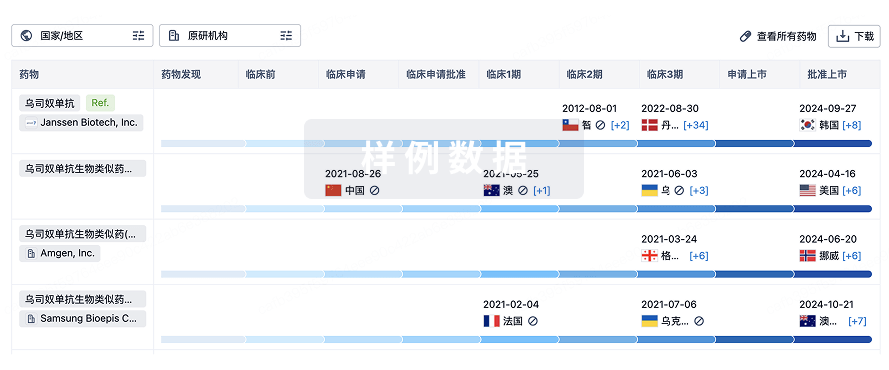
生物类似药在不同国家/地区的竞争态势。请注意临床1/2期并入临床2期,临床2/3期并入临床3期
登录
或
特殊审评
只需点击几下即可了解关键药物信息。
登录
或

提出任何生物医药研究问题
让每一步生物医药决策都精准制胜
基于十亿级生物数据与全球情报的精准 AI,赋能早期药物发现
立即开始免费试用!
智慧芽新药情报库是智慧芽专为生命科学人士构建的基于AI的创新药情报平台,助您全方位提升您的研发与决策效率。
立即接入生物医药数据包
智慧芽新药库数据也通过智慧芽开放平台,以MCP或API服务形式对外开放。立即使用我们的MCP服务定制您的LLM智能体。
生物序列数据库
生物药研发创新
免费使用
化学结构数据库
小分子化药研发创新
免费使用