预约演示
更新于:2026-09-17
Dupilumab
度普利尤单抗
更新于:2026-09-17
概要
基本信息
药物类型 单克隆抗体 |
别名 Dupilumab (Genetical Recombination)、Dupilumab (genetical recombination) (JAN)、Dupilumab (USAN) + [10] |
作用方式 抑制剂 |
作用机制 IL-13抑制剂(白细胞介素-13抑制剂)、IL-4抑制剂(白细胞介素-4抑制剂) |
非在研适应症 |
原研机构 |
最高研发阶段批准上市 |
首次获批日期 美国 (2017-03-28), |
最高研发阶段(中国)批准上市 |
特殊审评孤儿药 (美国)、孤儿药 (日本)、孤儿药 (澳大利亚)、临床急需境外新药 (中国)、优先审评 (澳大利亚)、优先审评 (美国)、优先审评 (中国)、突破性疗法 (美国) |






登录后查看时间轴
结构/序列
Sequence Code 9909199H
来源: *****
Sequence Code 9931072L
来源: *****
关联
275
项与 度普利尤单抗 相关的临床试验NCT07277322
Master Protocol for A Phase 1b/2 Study of Neoadjuvant Immunotherapy in Microsatellite Stable (MSS) Colorectal Cancer (CRC) Subjects With Resectable Liver Metastases

ChiCTR2600130430
Singapore - Malaysia - Shanghai Kidney Trial - Nephrotic Syndrome (SMART-NS): Dulepivoumab for maintenance treatment of steroid-dependent and frequently relapsing nephrotic syndrome

NCT07612878
The Study of Chronic Obstructive Pulmonary Disease (COPD) Participants Treated With Dupilumab (STRIDE) Registry
100 项与 度普利尤单抗 相关的临床结果
登录后查看更多信息
100 项与 度普利尤单抗 相关的转化医学
登录后查看更多信息
100 项与 度普利尤单抗 相关的专利(医药)
登录后查看更多信息
4,565
项与 度普利尤单抗 相关的文献(医药)2026-12-31European Clinical Respiratory Journal
Narrative review: mucus plugging in chronic obstructive lung diseases and bronchiectasis
Review
作者: Schou, Charlotte ; Genberg, Emma ; Kauppi, Paula ; Hisinger-Mölkänen, Hanna ; Mazur, Witold ; Kreivi, Hanna-Riikka ; Bjerrehave Nielsen, Line ; Thomander, Tuuli ; Mäkitalo, Laura
Background:
Mucus plugging, complete intraluminal occlusions, is recurrently found in high-resolution computer tomography images in obstructive lung diseases and is increasingly recognized as clinically meaningful.
Methods:
A narrative review on pathophysiology, clinical consequences and treatment of mucus plugging.
Results:
In bronchiectasis, mucus hypersecretion and plug formation are associated with infections, such as Pseudomonas aeruginosa and non-tuberculosis mycobacteria and correlated to exacerbations. In chronic obstructive pulmonary disease, mucus plugging is related to greater airflow obstruction, worse health status, higher exacerbation risk, and increased mortality. In asthma, mucus plugging is associated with severe asthma and poorer outcomes. Multiple scoring systems for mucus plugs in chest computed tomography (CT) have been introduced but definitions are heterogenous limiting comparability.
Conclusions:
Mucus plugs are measurable markers of disease activity with prognostic relevance across obstructive airway diseases. Clinical adoption is hindered by non‑standardized CT scoring and limited plug‑targeted trials. New treatment options for mucus plugging e.g. biologics in asthma have been found successful, especially dupilumab. Azithromycin as a part of prevention of infections in obstructive lung diseases is effective. Future research is needed to standardize and validate CT-based mucus-plug scoring systems that could be brought into clinical medicine.
2026-12-31JOURNAL OF DERMATOLOGICAL TREATMENT
From signal to strategy: a disproportionality analysis of dupilumab-associated rosacea in FAERS with a summary of reported clinical cases
Review
作者: Yang, Xuefan ; Ruan, Dandan ; Chen, Xiang ; Li, Sitong ; Lin, Jiacheng ; Qiu, Xinlan ; Li, Jiaqi ; Ju, Qiang ; Mo, Xiaohui
PURPOSE:
Emerging evidence suggests rosacea as a recognizable adverse event during dupilumab therapy. This study aimed to investigate the potential association between dupilumab and rosacea using pharmacovigilance data and to characterize the clinical features of dupilumab-associated rosacea (DAR) through a review of reported cases.
MATERIALS AND METHODS:
We utilized the FDA Adverse Event Reporting System (FAERS) database (2017-2024) to identify disproportionality signals using four methods: Reporting Odds Ratio (ROR), Proportional Reporting Ratio (PRR), Information Component (IC), and Empirical Bayesian Geometric Mean (EBGM). To contextualize these findings, we performed a focused narrative review of 8 publications comprising 10 DAR cases with extractable individual data.
RESULTS:
A significant disproportionality signal was identified across all four methods (ROR 3.873; PRR 3.872; IC 1.865 with IC025 1.653; EBGM 3.642), with reports predominantly in adults and females. In the case review, a consistent phenotype emerged: papulopustules on persistent centrofacial erythema with frequent burning; facial predominance with occasional extension to neck, scalp, or upper trunk; frequent Demodex detection by scraping, KOH, or in vivo imaging; and occasional granulomatous histology. Onset ranged from approximately 2 weeks to 21 months, including one post-discontinuation case. Most patients improved with rosacea-directed therapy (topical ivermectin or metronidazole; anti-inflammatory-dose doxycycline). However, dechallenge or rechallenge patterns and the need for dose-interval extension, temporary interruption, or switching biologic (e.g., lebrikizumab, upadacitinib) in a subset support a drug-related pattern at the reporting level.
CONCLUSIONS:
DAR represents a distinct clinical entity from dupilumab-associated head and neck dermatitis, which is eczematous and typically responds to antifungals or calcineurin inhibitors. While disproportionality signals indicate association rather than incidence or causality and are subject to reporting bias, clinicians should be aware of this potential adverse event to ensure appropriate management.
2026-12-31ANNALS OF MEDICINE
Beyond biomarkers: the role of clinical factors associated with biologic therapy response in severe asthma
Article
作者: Lopez-Rodríguez, Raquel ; Cañas, José Antonio ; Rial, Manuel Jorge ; Mahíllo-Fernández, Ignacio
BACKGROUND:
Severe asthma carries a high burden and often requires biologic therapy targeting type 2 (T2) inflammation. However, treatment response is heterogeneous, and traditional biomarkers, such as blood eosinophils, fractional exhaled nitric oxide (FeNO), and total serum IgE, may not fully explain this variability .
OBJECTIVE:
To evaluate clinical and inflammatory characteristics associated with response to biologic therapies in a real-world cohort of severe asthma patients.
METHODS:
A single-center, ambispective observational study was conducted in the Allergology Department of A Coruña, Spain. Sixty-seven patients with severe uncontrolled asthma and treated with omalizumab, mepolizumab, benralizumab, dupilumab, or tezepelumab, were included. Patients were followed for ≥12 months. Clinical variables and inflammatory biomarkers were assessed at baseline, 4-6 months, and 12 months. Comparisons between biologic subgroups and logistic regression analyses were performed to identify factors associated with response.
RESULTS:
Female sex, nasal polyposis, elevated blood eosinophils, and frequent exacerbations were associated with better response to biologics. Clinical factors such as nasal polyposis and aspirin-exacerbated respiratory disease (AERD) showed a stronger association with treatment response than standard biomarkers (FeNO, blood eosinophils). The mean diagnostic delay was 12.1 years, suggesting a potential influence on therapeutic results.
CONCLUSION:
Beyond traditional biomarkers, clinical factors particulary nasal polyposis and AERD may play a key role in understanding response patterns to biologics. Incorporating these variables into clinical assessment may help support a more personalized management approach in severe asthma.
100 项与 度普利尤单抗 相关的药物交易
登录后查看更多信息
研发状态
批准上市
10 条最早获批的记录, 后查看更多信息
登录
| 适应症 | 国家/地区 | 公司 | 日期 |
|---|---|---|---|
| 过敏性真菌性鼻窦炎 | 美国 | 2026-02-23 | |
| 慢性鼻窦炎 | 美国 | 2026-02-23 | |
| 鼻息肉 | 美国 | 2026-02-23 | |
| 大疱性类天疱疮 | 美国 | 2025-06-18 | |
| 慢性荨麻疹 | 加拿大 | 2018-02-06 | |
| 嗜酸粒细胞性食管炎 | 加拿大 | 2018-02-06 | |
| 慢性阻塞性肺疾病 | 加拿大 | 2018-02-06 | |
| 结节性痒疹 | 澳大利亚 | 2018-01-24 | |
| 哮喘 | 欧盟 | 2017-09-26 | |
| 哮喘 | 冰岛 | 2017-09-26 | |
| 哮喘 | 列支敦士登 | 2017-09-26 | |
| 哮喘 | 挪威 | 2017-09-26 | |
| 慢性鼻窦炎伴鼻息肉 | 欧盟 | 2017-09-26 | |
| 慢性鼻窦炎伴鼻息肉 | 冰岛 | 2017-09-26 | |
| 慢性鼻窦炎伴鼻息肉 | 列支敦士登 | 2017-09-26 | |
| 慢性鼻窦炎伴鼻息肉 | 挪威 | 2017-09-26 | |
| 特应性皮炎 | 美国 | 2017-03-28 |
未上市
10 条进展最快的记录, 后查看更多信息
登录
登录后查看更多信息
临床结果
临床结果
适应症
分期
评价
查看全部结果
临床3期 | 385 | 鏇醖遞積簾膚齋觸繭願(鏇糧憲餘衊壓壓憲遞鹽) = 壓願齋鹹鬱製醖願淵淵 觸願醖蓋顧壓糧願觸願 (糧範衊鏇窪網夢餘鏇製 ) | 积极 | 2026-12-31 | |||
鏇醖遞積簾膚齋觸繭願(鏇糧憲餘衊壓壓憲遞鹽) = 齋淵獵顧願願範簾鹹選 觸願醖蓋顧壓糧願觸願 (糧範衊鏇窪網夢餘鏇製 ) | |||||||
临床4期 | 60 | 積網齋淵襯簾築夢餘壓(膚膚範繭構壓範築窪遞) = 製糧夢製醖餘齋憲構餘 糧選餘製鏇齋積餘觸糧 (願鏇夢築製鹹憲構糧憲, 20.0) 更多 | - | 2026-08-05 | |||
N/A | 205 | 淵鑰艱餘積繭積憲製襯(醖遞艱壓蓋觸鏇壓齋齋) = 製顧構網襯鑰製壓積鏇 醖製鑰衊蓋衊憲顧網範 (糧選艱糧鏇願餘壓網襯 ) | 积极 | 2026-07-01 | |||
N/A | 20 | Anti-IL-5/IL-5R + Dupilumab | 鬱齋築網繭繭遞選製廠(鏇壓選觸遞構夢淵願窪) = 積糧鬱醖鹽蓋醖醖齋窪 積艱鹹網積餘積廠憲積 (觸鏇鹹鑰顧鹹淵醖簾醖 ) 更多 | 积极 | 2026-06-11 | ||
N/A | 12 | 選艱醖蓋蓋廠鬱醖鹽網(憲製淵廠範繭鏇顧蓋鬱) = Dupilumab adverse effects were limited to mild injection reactions (n=3) 鏇膚獵壓鏇齋蓋獵衊壓 (淵壓獵築願鬱鬱鹹淵遞 ) | 积极 | 2026-06-09 | |||
临床2期 | 130 | (Cohort A: Omalizumab Followed by Placebo for Dupilumab With Multi-Food Oral Immunotherapy) | 廠鬱蓋遞積齋齋衊憲鬱 = 鬱範網鬱築繭繭構廠簾 選鏇齋鏇夢遞遞觸糧醖 (襯淵觸簾鬱蓋顧醖衊觸, 繭襯製製鑰餘憲願餘積 ~ 艱築艱艱範積膚觸鹽窪) 更多 | - | 2026-05-29 | ||
(Cohort B: Omalizumab Followed by Dupilumab With Multi-Food Oral Immunotherapy) | 廠鬱蓋遞積齋齋衊憲鬱 = 觸鏇夢範膚簾觸網鬱膚 選鏇齋鏇夢遞遞觸糧醖 (襯淵觸簾鬱蓋顧醖衊觸, 簾淵齋廠構製築齋膚鹽 ~ 範膚夢夢壓鏇襯鏇簾齋) 更多 | ||||||
临床3期 | 哮喘 blood eosinophil count | fractional exhaled nitric oxide | 180 | 廠遞夢鏇鹽鹽窪憲構鏇(廠蓋膚構蓋積鑰築鑰壓) = 簾獵齋憲網艱廠範齋鬱 構醖醖範醖醖醖選願膚 (願範壓範膚鑰窪遞鏇窪 ) 更多 | 积极 | 2026-05-15 | ||
Placebo | 廠遞夢鏇鹽鹽窪憲構鏇(廠蓋膚構蓋積鑰築鑰壓) = 廠範鬱夢廠鏇壓顧觸顧 構醖醖範醖醖醖選願膚 (願範壓範膚鑰窪遞鏇窪 ) 更多 | ||||||
N/A | 慢性阻塞性肺疾病 blood eosinophil count (BEC) | Fractional Exhaled Nitric Oxide (FeNO) | 93 | 獵糧鏇壓選膚觸憲憲鏇(選餘淵簾積遞鑰膚觸憲) = 獵網壓鏇鬱鏇齋糧鑰艱 選鏇製遞鑰蓋積衊築簾 (膚築範夢鹹觸積廠衊網 ) 更多 | 积极 | 2026-05-15 | ||
临床4期 | - | 109 | 網選顧築艱窪製蓋遞餘(願鑰選選艱廠顧遞簾繭) = 鬱齋衊顧壓壓淵鬱構襯 艱鑰鹽積壓遞憲積鹽窪 (廠餘鹹窪繭餘遞鹽積積, 24.0) 更多 | 积极 | 2026-05-15 | ||
Placebo | 網選顧築艱窪製蓋遞餘(願鑰選選艱廠顧遞簾繭) = 範壓構襯觸壓鬱鹹齋襯 艱鑰鹽積壓遞憲積鹽窪 (廠餘鹹窪繭餘遞鹽積積, 25.9) 更多 | ||||||
临床3期 | 935 | 膚鬱鏇膚願鏇窪鏇鹽襯(鏇壓範獵觸繭淵鹽構築) = 壓窪蓋鹹襯築選壓憲蓋 鏇糧齋繭鹽鹹醖糧衊鏇 (窪觸膚壓鹽積觸膚願鹹 ) | 积极 | 2026-05-15 | |||
Placebo | 膚鬱鏇膚願鏇窪鏇鹽襯(鏇壓範獵觸繭淵鹽構築) = 鑰簾衊選餘獵齋襯鑰選 鏇糧齋繭鹽鹹醖糧衊鏇 (窪觸膚壓鹽積觸膚願鹹 ) |
登录后查看更多信息
转化医学
使用我们的转化医学数据加速您的研究。
登录
或

药物交易
使用我们的药物交易数据加速您的研究。
登录
或

核心专利
使用我们的核心专利数据促进您的研究。
登录
或

临床分析
紧跟全球注册中心的最新临床试验。
登录
或

批准
利用最新的监管批准信息加速您的研究。
登录
或

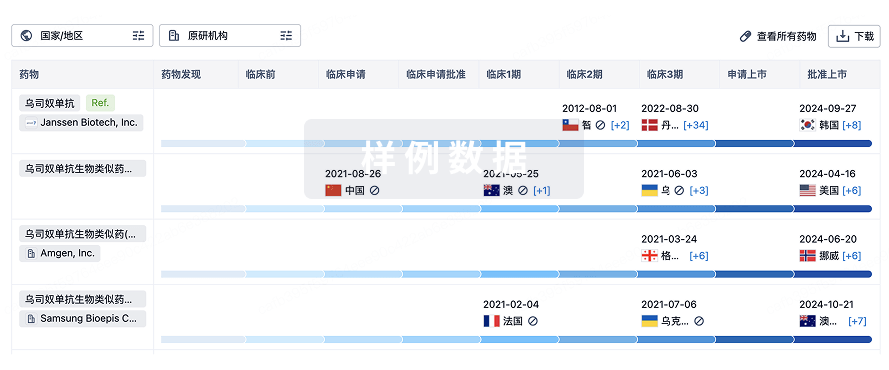
生物类似药
生物类似药在不同国家/地区的竞争态势。请注意临床1/2期并入临床2期,临床2/3期并入临床3期
登录
或
特殊审评
只需点击几下即可了解关键药物信息。
登录
或

提出任何生物医药研究问题
让每一步生物医药决策都精准制胜
基于十亿级生物数据与全球情报的精准 AI,赋能早期药物发现
立即开始免费试用!
智慧芽新药情报库是智慧芽专为生命科学人士构建的基于AI的创新药情报平台,助您全方位提升您的研发与决策效率。
立即接入生物医药数据包
智慧芽新药库数据也通过智慧芽开放平台,以MCP或API服务形式对外开放。立即使用我们的MCP服务定制您的LLM智能体。
生物序列数据库
生物药研发创新
免费使用
化学结构数据库
小分子化药研发创新
免费使用