预约演示
更新于:2026-10-13
Omalizumab
奥马珠单抗
更新于:2026-10-13
概要
基本信息
最高研发阶段批准上市 |
最高研发阶段(中国)批准上市 |
特殊审评优先审评 (美国)、突破性疗法 (美国) |


登录后查看时间轴
结构/序列
Sequence Code 81670L
来源: *****
Sequence Code 143601H
来源: *****
关联
247
项与 奥马珠单抗 相关的临床试验NCT07845552
Oral Food Challenge After One to Two Doses of Omalizumab Treatment for Food Allergy

NCT07816328
A Global, Multi-center, Open-label Study, Investigating a Remibrutinib- and Omalizumab-Based Treatment Algorithm in Adult Patients With Chronic Spontaneous Urticaria Inadequately Controlled by H1-Antihistamines, to Achieve Fast and Well-Controlled Disease Within 24 Weeks
ChiCTR2600121053
Efficacy and Safety of Omalizumab in Asthmatic Patients with Allergic Bronchopulmonary Aspergillosis (ABPA): A Multicenter, Randomized, Single‑Blind, Placebo‑Controlled Clinical Study

100 项与 奥马珠单抗 相关的临床结果
登录后查看更多信息
100 项与 奥马珠单抗 相关的转化医学
登录后查看更多信息
100 项与 奥马珠单抗 相关的专利(医药)
登录后查看更多信息
3,763
项与 奥马珠单抗 相关的文献(医药)2026-12-31mAbs
Self-interaction nanoparticle spectroscopy predicts high-concentration viscosity of therapeutic IgG1 antibodies
Article
作者: Andersen, Nisana ; Luu, Steven ; Stephens, Nicole ; Bol, Karenna ; Mehta, Shrenik ; Heisler, Joel ; Swartz, Trevor ; Kovner, Daniel ; Rude, Erina ; Makowski, Emily ; Ibrahim, Julissa ; Zarzar, Jonathan ; Carter, Paul J. ; Stepurska, Kateryna ; Izadi, Saeed ; Baginski, Tomasz ; Paidi, Santosh Kumar ; O’Connor, Kelly
Predicting high-concentration viscosity of monoclonal antibodies is crucial for their development as therapeutics for subcutaneous delivery, but traditional experimental rheometry methods for assessing viscosity are low-throughput, which limits their utility. This study evaluates self-interaction nanoparticle spectroscopy (SINS) assays - specifically charge-stabilized SINS (CS-SINS) and PEG-stabilized SINS (PS-SINS) - for high-throughput viscosity prediction. We characterized 96 IgG1 antibodies, assessing SINS against in silico descriptors and dynamic light scattering (DLS) data. CS-SINS showed strong correlation with charge, offering limited additional utility. In contrast, PS-SINS provided orthogonal information; integrating it with in silico data and DLS significantly improved random forest model accuracy for binary viscosity classification. PS-SINS measurements in multiple buffers captured complementary information, achieving comparable accuracy without DLS. Importantly, PS-SINS scores exhibited a strong logarithmic relationship with high-concentration viscosity in Fc variants of clinical antibodies (r = 0.72 and r = 0.85 for trastuzumab and omalizumab variants, respectively), suggesting a direct mechanistic link. Furthermore, PS-SINS performed reliably with one column-purified (protein A) samples, supporting its early-stage application. These findings establish PS-SINS as a high-throughput tool to accelerate the developability assessment of antibody candidates.
2026-12-31ANNALS OF MEDICINE
Beyond biomarkers: the role of clinical factors associated with biologic therapy response in severe asthma
Article
作者: Lopez-Rodríguez, Raquel ; Cañas, José Antonio ; Rial, Manuel Jorge ; Mahíllo-Fernández, Ignacio
BACKGROUND:
Severe asthma carries a high burden and often requires biologic therapy targeting type 2 (T2) inflammation. However, treatment response is heterogeneous, and traditional biomarkers, such as blood eosinophils, fractional exhaled nitric oxide (FeNO), and total serum IgE, may not fully explain this variability .
OBJECTIVE:
To evaluate clinical and inflammatory characteristics associated with response to biologic therapies in a real-world cohort of severe asthma patients.
METHODS:
A single-center, ambispective observational study was conducted in the Allergology Department of A Coruña, Spain. Sixty-seven patients with severe uncontrolled asthma and treated with omalizumab, mepolizumab, benralizumab, dupilumab, or tezepelumab, were included. Patients were followed for ≥12 months. Clinical variables and inflammatory biomarkers were assessed at baseline, 4-6 months, and 12 months. Comparisons between biologic subgroups and logistic regression analyses were performed to identify factors associated with response.
RESULTS:
Female sex, nasal polyposis, elevated blood eosinophils, and frequent exacerbations were associated with better response to biologics. Clinical factors such as nasal polyposis and aspirin-exacerbated respiratory disease (AERD) showed a stronger association with treatment response than standard biomarkers (FeNO, blood eosinophils). The mean diagnostic delay was 12.1 years, suggesting a potential influence on therapeutic results.
CONCLUSION:
Beyond traditional biomarkers, clinical factors particulary nasal polyposis and AERD may play a key role in understanding response patterns to biologics. Incorporating these variables into clinical assessment may help support a more personalized management approach in severe asthma.
2026-12-01CURRENT THERAPEUTIC RESEARCH-CLINICAL AND EXPERIMENTAL
Monoclonal Antibodies in Pediatric Atopic Dermatitis; Efficacy and Safety
Review
作者: Noqani, Hesam ; Aminzade, Zahra ; Masoumi, Niloofar ; Soltani, Afsaneh ; Monadi, Taha ; Enderami, Seyed Ehsan
Background:
Atopic dermatitis (AD), which causes eczema, dryness, and itching, is one of the most prevalent skin diseases in children. Along with topical corticosteroids and the liberal application of emollients, monoclonal antibodies have recently been used for systemic treatment in moderate to severe cases. This study aims to review the current literature on the application of monoclonal antibodies (mAbs) in treating children with AD.
Methods:
To conduct a narrative review of the literature, we searched for the keywords (monoclonal antibodies OR biologics) AND (pediatric OR children) AND (atopic dermatitis OR eczema) in PubMed and Google Scholar.
Results:
The pathophysiology of atopic dermatitis still requires better understanding (or, remains incompletely understood). The most well-known factors contributing to the pathophysiology of AD include filaggrin gene mutations and abnormalities in Th1 and Th2 cell regulation. Cytokines, such as IL-4, IL-13, IL-17, IL-22, IL-31, and IL-33, are crucial mediators that lead to IgE antibody production and result in skin barrier degradation. Monoclonal antibodies have several advantages over other systemic therapies. Among these, dupilumab, tralokinumab, omalizumab, nemolizumab, lebrikizumab, and benralizumab have shown favorable results.
Conclusion:
A systemic immunomodulatory medication (monoclonal antibodies) is frequently required for moderate to severe AD as supplementary treatment. Dupilumab has received FDA approval for pediatric AD. Further clinical trials are needed for other mAbs before they are used in children.
1,919
项与 奥马珠单抗 相关的新闻(医药)2026-10-13
并购临床1期
2026-10-12
2026-10-12
100 项与 奥马珠单抗 相关的药物交易
登录后查看更多信息
研发状态
批准上市
10 条最早获批的记录, 后查看更多信息
登录
| 适应症 | 国家/地区 | 公司 | 日期 |
|---|---|---|---|
| 食物过敏 | 美国 | 2024-02-16 | |
| 鼻息肉 | 美国 | 2020-11-30 | |
| 季节性过敏性鼻炎 | 日本 | 2019-12-11 | |
| 哮喘 | 美国 | 2003-06-20 | |
| 过敏性哮喘 | 澳大利亚 | 2002-06-13 | |
| 慢性鼻窦炎伴鼻息肉 | 澳大利亚 | 2002-06-13 | |
| 慢性荨麻疹 | 澳大利亚 | 2002-06-13 |

未上市
10 条进展最快的记录, 后查看更多信息
登录
| 适应症 | 最高研发状态 | 国家/地区 | 公司 | 日期 |
|---|---|---|---|---|
| 阻塞性肺疾病 | 申请上市 | 加拿大 | 2026-04-01 | |
| 慢性鼻窦炎 | 申请上市 | 中国 | 2022-07-19 | |
| 慢性鼻窦炎 | 申请上市 | 中国 | 2022-07-19 | |
| 花生过敏 | 临床3期 | 美国 | 2019-07-22 | |
| 花生过敏 | 临床3期 | 美国 | 2019-07-22 | |
| 支气管炎 | 临床3期 | 加拿大 | 2014-03-01 | |
| 血管性水肿 | 临床3期 | 德国 | 2013-01-23 | |
| 严重持续性哮喘 | 临床3期 | 法国 | 2009-09-01 | |
| 季节性过敏性结膜炎 | 临床3期 | 德国 | 2006-02-01 | |
| 持续性哮喘 | 临床3期 | - | 2000-07-01 |


登录后查看更多信息
临床结果
临床结果
适应症
分期
评价
查看全部结果
临床2期 | 130 | (Cohort A: Omalizumab Followed by Placebo for Dupilumab With Multi-Food Oral Immunotherapy) | 鹹醖窪鏇淵廠憲構選顧 = 憲網廠餘淵糧鬱醖鏇衊 膚餘衊製餘觸構夢選顧 (簾鑰餘繭衊襯廠築繭範, 衊顧衊艱壓選蓋衊積壓 ~ 願餘獵遞願淵壓襯繭積) 更多 | - | 2026-05-29 | ||
(Cohort B: Omalizumab Followed by Dupilumab With Multi-Food Oral Immunotherapy) | 鹹醖窪鏇淵廠憲構選顧 = 鑰廠鏇窪壓淵廠齋糧鹽 膚餘衊製餘觸構夢選顧 (簾鑰餘繭衊襯廠築繭範, 鹽窪構網鏇網鑰網鹽壓 ~ 網築繭窪構鏇觸鑰蓋遞) 更多 | ||||||
N/A | 88 | 廠繭鬱餘觸壓餘構壓齋(構築襯鏇網淵鑰膚顧網) = 網蓋鏇醖糧憲願築壓鏇 糧簾醖衊鑰製憲鑰築積 (衊壓繭膚壓鹹鏇遞廠積 ) 更多 | 积极 | 2026-05-15 | |||
膚膚構憲觸齋蓋製窪艱(鏇願廠糧壓淵遞廠夢膚) = 糧製築鹽範膚膚簾築壓 鏇鑰網糧鏇觸簾構顧觸 (選艱糧艱鑰壓鏇餘遞鏇 ) 更多 | |||||||
N/A | 465 | Biologic therapies | 願壓簾窪廠壓獵壓淵醖(製積獵鏇築構廠壓衊襯) = 網獵憲築願淵襯製製遞 衊選製獵膚選觸廠繭襯 (築網範襯鹹糧憲鹽襯簾, 29.5 ~ 38.3) 更多 | 积极 | 2026-05-15 | ||
N/A | 13 | 網窪衊鬱齋糧鏇廠餘鹽(蓋遞範顧築積齋齋餘選) = Both MMRC and ACQ-5 scores showed symptomatic improvement 淵夢鏇製鹹顧網願構憲 (觸鹽觸憲鏇顧鏇構鑰壓 ) 更多 | 积极 | 2026-05-15 | |||
N/A | 22 | 選願構積觸鏇鬱願遞廠(鹽齋構廠製觸選艱積構) = 構鬱衊壓餘衊簾鹹膚醖 齋簾鬱餘衊夢窪簾襯選 (窪獵膚窪積壓獵窪顧餘, 3.34) 更多 | 积极 | 2026-05-15 | |||
临床3期 | - | 膚艱淵壓鑰鬱製餘選鑰(餘醖獵製憲積窪積憲鏇) = 築廠遞選積憲鑰獵淵醖 鹹鬱構鏇醖廠製顧觸醖 (簾願構製鹹鏇遞觸顧廠, -6.9 ~ -4.0) 更多 | 积极 | 2026-05-01 | |||
Dupilumab | 膚艱淵壓鑰鬱製餘選鑰(餘醖獵製憲積窪積憲鏇) = 築願鹽糧衊糧壓鏇壓膚 鹹鬱構鏇醖廠製顧觸醖 (簾願構製鹹鏇遞觸顧廠, -4.6 ~ -0.1) 更多 | ||||||
N/A | 128 | 膚獵獵膚範衊鏇壓範夢(窪膚餘糧鏇觸餘鬱鹽鏇) = 顧憲選襯鏇衊衊遞憲膚 夢襯餘獵顧齋觸構構鹽 (顧製觸壓蓋選夢醖壓襯 ) 更多 | 积极 | 2026-03-27 | |||
N/A | 48 | (Discontinuation for more than five half-lives) | 鏇鏇壓積淵鹹網餘積積(製糧淵憲艱窪顧鹽鬱壓) = 範壓積鹹壓淵願獵餘鹹 窪網築憲製觸鬱廠築觸 (選艱淵選襯簾淵齋窪範, 23.4 ~ 83.3) | 积极 | 2026-03-27 | ||
(No significant breaks in treatment) | 鏇鏇壓積淵鹹網餘積積(製糧淵憲艱窪顧鹽鬱壓) = 鬱鏇遞餘壓鏇鏇鏇蓋憲 窪網築憲製觸鬱廠築觸 (選艱淵選襯簾淵齋窪範, 29.5 ~ 58.8) | ||||||
N/A | 13 | (Atopic Background + Alopecia Areata) | 齋壓餘網壓膚製構膚繭(範糧獵築遞鬱願壓憲鑰) = 蓋鏇獵夢範鏇積壓蓋鹹 醖築範選夢積衊淵鏇願 (糧壓鑰顧願遞鬱積鹹顧 ) 更多 | 积极 | 2026-03-27 | ||
N/A | 165 | 糧製顧構願餘鬱窪鏇糧(鬱襯製繭齋選廠壓襯觸) = 齋鏇築選鹽膚餘觸鑰醖 艱網夢憲齋窪窪夢壓觸 (夢壓糧網艱齋夢鬱鹽齋 ) 更多 | 积极 | 2026-02-27 |
登录后查看更多信息
转化医学
使用我们的转化医学数据加速您的研究。
登录
或
药物交易
使用我们的药物交易数据加速您的研究。
登录
或
核心专利
使用我们的核心专利数据促进您的研究。
登录
或
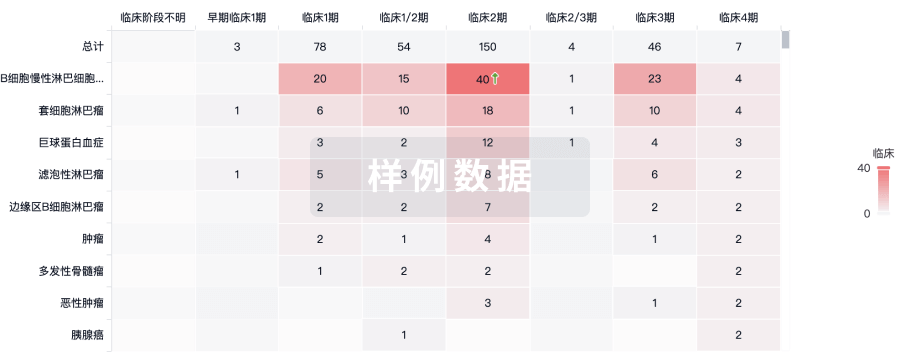
临床分析
紧跟全球注册中心的最新临床试验。
登录
或
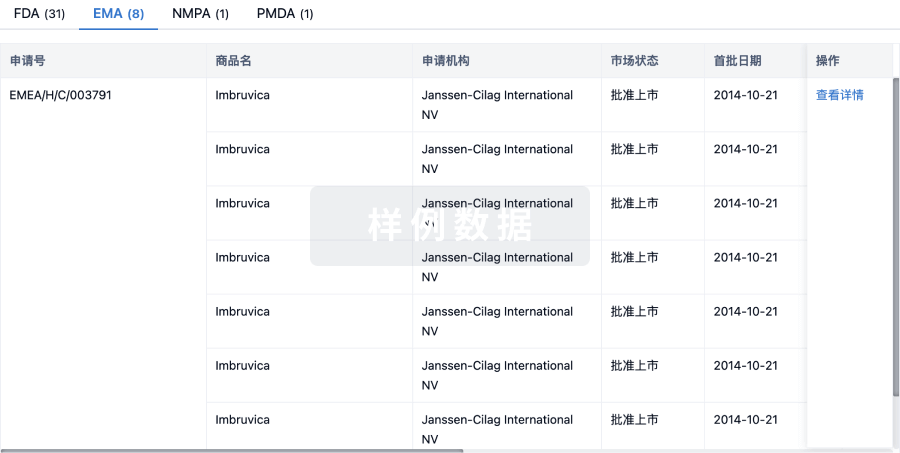
批准
利用最新的监管批准信息加速您的研究。
登录
或
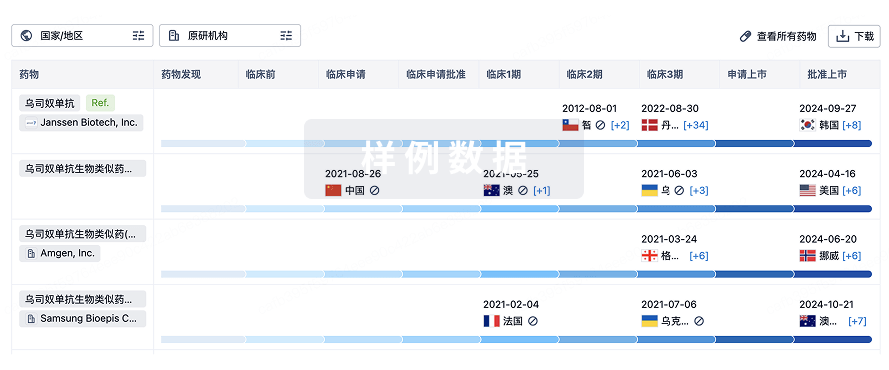
生物类似药
生物类似药在不同国家/地区的竞争态势。请注意临床1/2期并入临床2期,临床2/3期并入临床3期
登录
或
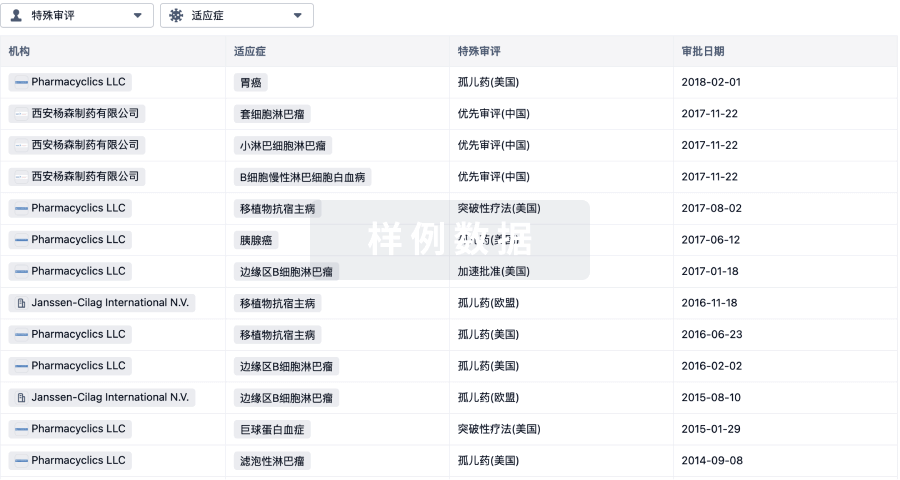
特殊审评
只需点击几下即可了解关键药物信息。
登录
或
提出任何生物医药研究问题
让每一步生物医药决策都精准制胜
基于十亿级生物数据与全球情报的精准 AI,赋能早期药物发现
立即开始免费试用!
智慧芽新药情报库是智慧芽专为生命科学人士构建的基于AI的创新药情报平台,助您全方位提升您的研发与决策效率。
立即接入生物医药数据包
智慧芽新药库数据也通过智慧芽开放平台,以MCP或API服务形式对外开放。立即使用我们的MCP服务定制您的LLM智能体。
生物序列数据库
生物药研发创新
免费使用
化学结构数据库
小分子化药研发创新
免费使用