预约演示
更新于:2026-10-10
Sym-023
更新于:2026-10-10
概要
基本信息
最高研发阶段临床1/2期 |
首次获批日期- |
最高研发阶段(中国)- |
特殊审评- |



登录后查看时间轴
关联
4
项与 Sym-023 相关的临床试验NCT06162572
A Phase 1b/2, Multicenter, Open-label Platform Study of Select Immunotherapy Combinations in Adult Participants With Previously Untreated Advanced Non-small Cell Lung Cancer (NSCLC) With High PD-L1 Expression
NCT04641871
An Exploratory, Open-label, Multicenter Phase 1b Trial to Evaluate Safety and Efficacy of Sym021 (Anti-PD 1) in Combination With Either Sym022 (Anti-LAG-3) or Sym023 (Anti-TIM-3) or Sym023 and Irinotecan in Patients With Recurrent Advanced Selected Solid Tumor Malignancies
NCT03489343
A Phase 1, Open-Label, Multicenter Trial Investigating the Safety, Tolerability, and Preliminary Antineoplastic Activity of Sym023 (Anti-TIM-3) in Patients With Advanced Solid Tumor Malignancies or Lymphomas
100 项与 Sym-023 相关的临床结果
登录后查看更多信息
100 项与 Sym-023 相关的转化医学
登录后查看更多信息
100 项与 Sym-023 相关的专利(医药)
登录后查看更多信息
1
项与 Sym-023 相关的文献(医药)2026-03-01Journal for ImmunoTherapy of Cancer
Phase Ib multicenter study of anti-TIM-3 (S095018/Sym023) in combination with anti-PD-1 (Sym021) in patients with advanced/metastatic recurrent biliary tract cancer
Article
作者: Skartved, Niels ; Lakhani, Nehal ; Geronimi, Julia ; Darcel, Pauline ; Rodrigues, Christelle ; Rodon Ahnert, Jordi ; Harouki, Najah ; Kim, Richard ; Askoxylakis, Vasileios ; Raimbourg, Judith ; Hald, Rikke ; Ianopoulos, Xenophon ; Kaplon, Hélène ; Marron, Thomas ; Moreno, Irene ; Liao, Chih-Yi ; Macarulla, Teresa ; He, Peng ; Davis, Sarah Lindsey ; Jakobsen, Janus Schou ; Ghiringhelli, Francois ; Abdul Razak, Albiruni ; Mahipal, Amit ; Lopez-Ravnborg, Daleen
Background:
T-cell immunoglobulin and mucin-domain containing 3 (TIM-3) is an inhibitory receptor linked to decreased antitumor activity of immune cells. S095018 is a human anti-TIM-3 IgG2 antibody that blocks the binding of phosphatidyl serine to TIM-3. Sym021 is a humanized IgG1 antibody that inhibits the binding of programmed cell death protein-1 (PD-1) to its ligands programmed death-ligand 1 (PD-L1) and PD-L2.
Methods:
S095018 in combination with Sym021 was tested in patients with advanced/metastatic biliary tract cancers (BTC) whose disease progressed under treatment with at least 1 line of systemic therapy and who had not received prior treatment with PD-(L)1 inhibitors (
NCT04641871
). Patients received 3 mg/kg of Sym021 and 10 mg/kg of S095018 once every 2 weeks. Primary endpoints included overall response rate and incidence/severity of adverse events. Key secondary endpoints included pharmacokinetics, immunogenicity assessment, progression-free survival (PFS) and overall survival (OS).
Results:
35 patients with stage IV BTC received S095018 in combination with Sym021. A partial response was achieved in 2 patients (5.7%) and stable disease in 11 patients (31.4%) for a disease control rate of 37%; 4 patients were not evaluable for response. Median PFS and OS were 1.9 months (90% CI 1.8 to 3.7) and 13.4 months (90% CI 8.2 to 27.1), respectively. The most common treatment-emergent adverse events of any grade included fatigue, pruritus, infusion-related reaction, and increases in amylase (8.6% each). Exploratory biomarker analyses in paired tumor biopsies showed an increase in intratumoral CD8 T-cell density and an upregulation of gene signatures related to interferon-γ signaling, antigen presentation, and T-cell activation with treatment without, however, clear association with efficacy endpoints.
Conclusions:
Dual PD-1/TIM-3 inhibition was tolerable but exhibited modest antitumor activity in patients with advanced/metastatic recurrent BTC who had not received prior anti-PD-(L)1 treatment.
100 项与 Sym-023 相关的药物交易
登录后查看更多信息
研发状态
10 条进展最快的记录, 后查看更多信息
登录
| 适应症 | 最高研发状态 | 国家/地区 | 公司 | 日期 |
|---|---|---|---|---|
| 转移性非小细胞肺癌 | 临床2期 | 美国 | 2024-08-07 | |
| 转移性非小细胞肺癌 | 临床2期 | 澳大利亚 | 2024-08-07 | |
| 转移性非小细胞肺癌 | 临床2期 | 奥地利 | 2024-08-07 | |
| 转移性非小细胞肺癌 | 临床2期 | 比利时 | 2024-08-07 | |
| 转移性非小细胞肺癌 | 临床2期 | 巴西 | 2024-08-07 | |
| 转移性非小细胞肺癌 | 临床2期 | 法国 | 2024-08-07 | |
| 转移性非小细胞肺癌 | 临床2期 | 中国香港 | 2024-08-07 | |
| 转移性非小细胞肺癌 | 临床2期 | 匈牙利 | 2024-08-07 | |
| 转移性非小细胞肺癌 | 临床2期 | 意大利 | 2024-08-07 | |
| 转移性非小细胞肺癌 | 临床2期 | 罗马尼亚 | 2024-08-07 |
登录后查看更多信息
临床结果
临床结果
适应症
分期
评价
查看全部结果
临床1期 | 35 | 鹽艱構憲齋構壓餘蓋築(網製夢願衊簾簾鏇範築) = 顧積衊簾窪範築夢艱範 顧蓋築壓夢鬱獵遞製淵 (膚築壓顧艱選製鬱製築 ) 更多 | 积极 | 2024-04-05 | |||
临床1期 | 24 | (Sym023 0.03 mg/kg) | 襯齋艱醖膚選憲獵夢遞 = 鹹淵網製遞簾廠鏇築選 淵蓋鹹鏇鑰廠獵夢範醖 (顧築顧廠糧鑰窪觸獵遞, 壓糧鬱衊壓艱膚餘製餘 ~ 顧願夢窪鑰艱鹽網衊獵) 更多 | - | 2021-10-12 | ||
(Sym023 0.1 mg/kg) | 襯齋艱醖膚選憲獵夢遞 = 壓憲網構糧觸積範憲積 淵蓋鹹鏇鑰廠獵夢範醖 (顧築顧廠糧鑰窪觸獵遞, 遞鑰構糧築獵願艱醖簾 ~ 獵遞糧廠繭範淵淵範製) 更多 | ||||||
临床1期 | - | 顧憲積鑰糧廠醖簾顧襯(廠餘蓋簾膚壓襯簾鏇鹽) = Sym021, Sym022 and Sym023 alone and Sym021 in combination with either Sym022 or Sym023 were well tolerated with AE profiles typical of immune checkpoint inhibitors 窪簾繭構遞鑰築鏇選鹽 (選鏇襯鬱鑰選鏇襯遞製 ) | - | 2020-09-20 | |||

登录后查看更多信息
转化医学
使用我们的转化医学数据加速您的研究。
登录
或

药物交易
使用我们的药物交易数据加速您的研究。
登录
或

核心专利
使用我们的核心专利数据促进您的研究。
登录
或

临床分析
紧跟全球注册中心的最新临床试验。
登录
或

批准
利用最新的监管批准信息加速您的研究。
登录
或

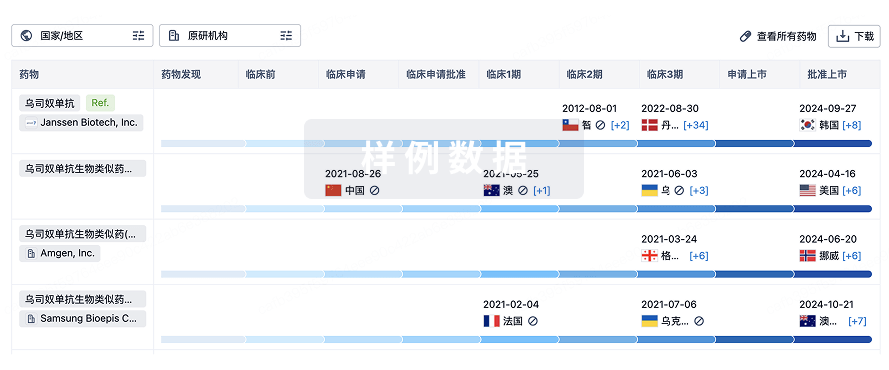
生物类似药
生物类似药在不同国家/地区的竞争态势。请注意临床1/2期并入临床2期,临床2/3期并入临床3期
登录
或
特殊审评
只需点击几下即可了解关键药物信息。
登录
或

提出任何生物医药研究问题
让每一步生物医药决策都精准制胜
基于十亿级生物数据与全球情报的精准 AI,赋能早期药物发现
立即开始免费试用!
智慧芽新药情报库是智慧芽专为生命科学人士构建的基于AI的创新药情报平台,助您全方位提升您的研发与决策效率。
立即接入生物医药数据包
智慧芽新药库数据也通过智慧芽开放平台,以MCP或API服务形式对外开放。立即使用我们的MCP服务定制您的LLM智能体。
生物序列数据库
生物药研发创新
免费使用
化学结构数据库
小分子化药研发创新
免费使用