预约演示
更新于:2026-10-22
Bevacizumab biosimilar (Celltrion)
贝伐珠单抗生物类似药 (Celltrion)
更新于:2026-10-22
概要
基本信息
非在研机构- |
最高研发阶段批准上市 |
最高研发阶段(中国)- |
特殊审评- |




登录后查看时间轴
结构/序列
Sequence Code 41632H
当前序列信息引自: *****
Sequence Code 41637L
当前序列信息引自: *****
关联
4
项与 贝伐珠单抗生物类似药 (Celltrion) 相关的临床试验JPRN-jRCT2031250738
Cohort Study Using the MDV Database to Compare the Risk of Venous Thromboembolism Associated with Bevacizumab BS for I.V. Infusion 100 mg / 400mg CTNK versus Control Drugs
CTRI/2018/12/016621
Double-Blind, Randomized, Active-Controlled, Parallel-Group, Phase 3 Study to Compare Efficacy and Safety of CT-P16 and EU-Approved Avastin as First-Line Treatment for Metastatic or Recurrent Non-Squamous Non-Small Cell Lung Cancer
NCT03676192
A Double-Blind, Randomized, Active-Controlled, Parallel-Group, Phase 3 Study to Compare Efficacy and Safety of CT-P16 and EU-Approved Avastin as First-Line Treatment for Metastatic or Recurrent Non-Squamous Non-Small Cell Lung Cancer
100 项与 贝伐珠单抗生物类似药 (Celltrion) 相关的临床结果
登录后查看更多信息
100 项与 贝伐珠单抗生物类似药 (Celltrion) 相关的转化医学
登录后查看更多信息
100 项与 贝伐珠单抗生物类似药 (Celltrion) 相关的专利(医药)
登录后查看更多信息
7
项与 贝伐珠单抗生物类似药 (Celltrion) 相关的文献(医药)2026-09-01BIODRUGS
Population Pharmacokinetic Comparability of CT-P16 Versus EU-Avastin® and US-Avastin® in Healthy Subjects and Patients with Non-Squamous Non-Small Cell Lung Cancer
Article
作者: Park, Taehong ; Chang, Min Jung ; Kim, Heungjo ; Baek, Hyungseok ; Ahn, Keumyoung ; Lee, Hongjae ; Kim, Taekyung
BACKGROUND AND OBJECTIVE:
CT-P16 (Vegzelma®) is a bevacizumab biosimilar approved for indications including non-squamous non-small cell lung cancer. We developed an integrated population pharmacokinetic model pooling data from two phase I studies in healthy subjects and one phase III study in patients with non-small cell lung cancer to (i) quantify the influence of the drug product on pharmacokinetic parameters within a single unified framework simultaneously evaluating CT-P16 against both EU-Avastin® and US-Avastin®; (ii) characterise covariate-driven exposure variability, including disease-status effects, across healthy subjects and patients with non-small cell lung cancer, and compare these effects with previously reported analyses of reference bevacizumab and other bevacizumab biosimilars; and (iii) contextualise simulated steady-state exposure under the approved 15 mg/kg every-3-weeks regime against a published exposure-response benchmark, thereby supporting a biosimilar assessment within the streamlined regulatory paradigm.
METHODS:
Concentration data from one phase III trial (NCT03676192) and two phase I trials (NCT03247673; CT-P16 1.2) were pooled. The population pharmacokinetic analysis used nonlinear mixed-effects modelling in NONMEM® (Version 7.4) with first-order conditional estimation with interaction. Drug product (CT-P16, EU-Avastin®, US-Avastin®) and clinical/demographic covariates were evaluated by stepwise selection. Model adequacy was assessed by goodness-of-fit diagnostics, non-parametric bootstrap resampling (1000 replicates), and a visual predictive check. Steady-state exposure under 15 mg/kg every 3 weeks was simulated using both typical population-predicted profiles and the observed phase III patient covariate distribution with inter-individual variability.
RESULTS:
A total of 8058 serum concentrations from 834 subjects (phase I: 187 healthy male volunteers; phase III: 649 patients with non-small cell lung cancer) were analyzed. A two-compartment model with first-order elimination adequately described the pooled data. Body weight, sex, and disease status were retained as covariates on clearance; sex, baseline serum albumin, and disease status were retained on central volume of distribution. Drug product was not retained as a significant covariate, indicating no clinically meaningful difference between CT-P16 and either EU-Avastin® or US-Avastin®. The estimated body-weight exponent on clearance (0.369) was numerically indistinguishable from previously published values for reference bevacizumab (0.368 [11]) and for the bevacizumab biosimilar PF-06439535 (0.354 [24]). Across covariate-defined subgroups, the median simulated steady-state trough concentrations remained above the published progression-free-survival reference of 89.1 µg/mL.
CONCLUSIONS:
Within a unified population pharmacokinetic framework, CT-P16 demonstrated comparable pharmacokinetics to both EU-Avastin® and US-Avastin®, with no clinically meaningful drug-product effect on clearance or central volume of distribution. Covariate effects mirrored those reported for reference bevacizumab, and simulated steady-state exposures were generally consistent with a published progression-free-survival-based exposure benchmark at the median level across covariate-defined patient subgroups. These findings extend the totality of evidence supporting CT-P16 biosimilarity and illustrate how population pharmacokinetic modelling can quantitatively inform a streamlined biosimilar assessment in the era of reduced reliance on comparative clinical efficacy trials.
CLINICAL TRIAL REGISTRATION:
NCT03247673; NCT03676192.
2026-05-01European Journal of Hospital Pharmacy
Physicochemical stability of bevacizumab biosimilar CT-P16 (Vegzelma) concentrate for solution stored in original vials after first opening
Article
作者: Thiesen, Judith ; Linxweiler, Helen ; Kirsch, Laura ; Kraemer, Irene
OBJECTIVE:
After patent expiry of the bevacizumab originator product, several biosimilars were approved by the European Medicines Agency. In centralised preparation units, product-specific in-use stability data must be considered. Based on the available data, stability information was missing for the concentrate for solution of the bevacizumab biosimilar CT-P16 (Vegzelma, Celltrion) after first opening and prolonged storage. The aim of the study was to investigate the physicochemical stability of CT-P16 25 mg/mL concentrate for solution stored in punctured original glass vials at two different storage temperatures over a 28-day period.
METHODS:
Three bevacizumab 25 mg/mL vials (CT-P16) were stored punctured either light protected at 2-8°C or at 25±2°C for 28 days. Samples were withdrawn on day 0, 1, 7, 14, 21, 28 and analysed by size-exclusion chromatography (SE-HPLC), ion-exchange chromatography (IE-HPLC), and dynamic light scattering (DLS). In parallel, pH values were measured and test vials visually inspected for visible particles and colour changes.
RESULTS:
After the 28-day storage period, the quantitative SE-HPLC analysis indicated bevacizumab concentrations above 95% of the initial concentration in each test vial. IE-HPLC analysis revealed no signs of instability. DLS measurements showed no significant variation in the mean hydrodynamic diameter and no appearance of small-sized aggregates. The pH values of all samples remained constant, and no visible particles or colour changes were observed.
CONCLUSION:
CT-P16 25 mg/mL concentrate was found to be physicochemically stable in the original glass vial after first opening for at least 28 days when stored light protected at 2-8°C or at 25±2°C.
2025-11-01Annales Pharmaceutiques Francaises
Physicochemical stability of a bevacizumab biosimilar in vials and diluted preparations: Implications for hospital practice and inventory management
Article
作者: Paul, Muriel ; Vieillard, Victoire ; Benkhalifa, Salim ; Foulley, Lucile
Biosimilars like Vegzelma can significantly enhance access to biologic therapies and reduce healthcare costs, provided that comprehensive stability data is available. This study aimed to provide extended stability data, allowing hospitals and healthcare professionals to effectively manage drug preparation, minimize wastage, and optimize cost-efficiency. The stability assessments employed in this study included ion exchange chromatography, steric exclusion chromatography, dynamic light scattering, and measurements of pH, density, and osmolality. These assessments focused on the physicochemical stability of the bevacizumab biosimilar (Vegzelma) in vials and polyolefin infusion bags when diluted to concentrations of 1.4 and 16.5mg/mL in 0.9% NaCl and stored at temperatures between 2 to 8°C and at 25°C. Results from stability and sterility assays confirm that when diluted in 0.9% NaCl and stored in polyolefin IV bags, Vegzelma remains stable at the commonly used concentrations of 1.4 and 16.5mg/mL for a 96-hour thermal cycle. For opened vials, the study extends the stability period to 60 days at 2-8°C under light-protected conditions. Unopened vials can be safely stored at room temperature, protected from light, for up to 72hours without compromising the product's integrity. All analyses, particle sizing, ion exchange chromatography, spectral analysis, and thermal denaturation, indicated stable molecular and structural integrity of the bevacizumab, with no observed changes in aggregation, ionic distribution, tertiary structure, or thermodynamic properties. These findings demonstrate the biosimilar's resilience against a 72-hour temperature spike. Pharmacies could use this data for flexible treatment scheduling, advanced preparation for weekends, and holidays, resulting in cost-efficiencies with biosimilars.
101
项与 贝伐珠单抗生物类似药 (Celltrion) 相关的新闻(医药)2026-10-20
生物类似药临床结果临床1期
2026-10-19
100 项与 贝伐珠单抗生物类似药 (Celltrion) 相关的药物交易
登录后查看更多信息
研发状态
批准上市
10 条最早获批的记录, 后查看更多信息
登录
| 适应症 | 国家/地区 | 公司 | 日期 |
|---|---|---|---|
| 晚期肾细胞癌 | 澳大利亚 | 2023-09-05 | |
| 胶质瘤 | 澳大利亚 | 2023-09-05 | |
| 局部晚期乳腺癌 | 澳大利亚 | 2023-09-05 | |
| 非鳞状非小细胞肺癌 | 澳大利亚 | 2023-09-05 | |
| 卵巢癌 | 日本 | 2023-04-05 | |
| 转移性结直肠癌 | 美国 | 2022-09-27 | |
| 转移性非鳞状非小细胞肺癌 | 美国 | 2022-09-27 | |
| 转移性肾细胞癌 | 美国 | 2022-09-27 | |
| 复发性胶质母细胞瘤 | 美国 | 2022-09-27 | |
| 宫颈癌 | 美国 | 2022-09-27 | |
| 晚期非小细胞肺癌 | 日本 | 2022-09-26 | |
| 复发性乳腺癌 | 日本 | 2022-09-26 | |
| 结直肠癌 | 日本 | 2022-09-26 | |
| 结肠癌 | 欧盟 | 2022-08-17 | |
| 结肠癌 | 冰岛 | 2022-08-17 | |
| 结肠癌 | 列支敦士登 | 2022-08-17 | |
| 结肠癌 | 挪威 | 2022-08-17 | |
| 输卵管癌 | 欧盟 | 2022-08-17 | |
| 输卵管癌 | 冰岛 | 2022-08-17 | |
| 输卵管癌 | 列支敦士登 | 2022-08-17 |
未上市
10 条进展最快的记录, 后查看更多信息
登录
| 适应症 | 最高研发状态 | 国家/地区 | 公司 | 日期 |
|---|---|---|---|---|
| 肺腺癌 | 临床3期 | 韩国 | 2019-02-01 |
登录后查看更多信息
临床结果
临床结果
适应症
分期
评价
查看全部结果
临床3期 | 689 | (CT-P16) | 艱觸願蓋淵選衊選繭網 = 構積網顧遞餘願觸夢鹹 構築壓簾觸壓繭艱壓鏇 (築觸鑰範鑰構鬱蓋夢齋, 鹽蓋襯獵遞遞壓鬱鑰壓 ~ 蓋鑰築淵膚膚簾網醖襯) 更多 | - | 2025-03-17 | ||
(Avastin) | 艱觸願蓋淵選衊選繭網 = 鬱願鏇壓壓憲願醖淵襯 構築壓簾觸壓繭艱壓鏇 (築觸鑰範鑰構鬱蓋夢齋, 繭顧廠壓膚鏇網憲膚獵 ~ 廠餘鹹觸鏇築願窪選觸) 更多 | ||||||
临床3期 | 689 | 餘鬱餘選構鏇蓋廠夢繭(網製製鹹鬱艱簾壓艱網) = 鑰構艱鹽壓淵鹽醖淵鹹 構鏇鬱醖鹽顧齋構憲範 (蓋構壓獵艱襯觸鏇願鏇, 40.34 ~ 50.89) 更多 | 相似 | 2024-12-07 | |||
餘鬱餘選構鏇蓋廠夢繭(網製製鹹鬱艱簾壓艱網) = 繭築廠範獵鑰遞齋觸選 構鏇鬱醖鹽顧齋構憲範 (蓋構壓獵艱襯觸鏇願鏇, 40.86 ~ 51.35) 更多 | |||||||
临床3期 | 689 | Paclitaxel+Carboplatin+Bevacizumab-CT-P16 | 構觸艱鹹鏇簾鹹鑰鑰築(鑰膚顧繭選憲鏇餘憲顧) = 選願顧壓糧積壓廠遞鏇 積築觸膚製選選繭願構 (構築膚獵積廠簾艱顧糧, 37.16 ~ 47.64) 更多 | 相似 | 2022-09-28 | ||
Paclitaxel+Carboplatin+Bevacizumab | 構觸艱鹹鏇簾鹹鑰鑰築(鑰膚顧繭選憲鏇餘憲顧) = 膚鹹鬱鹽觸糧構鹹製觸 積築觸膚製選選繭願構 (構築膚獵積廠簾艱顧糧, 36.88 ~ 47.27) 更多 | ||||||
临床3期 | 689 | 鏇構積艱淵夢鑰鏇醖淵(鑰齋鬱壓網積廠製窪遞) = The safety profile including the incidence of positive ADA results of CT-P16 up to 1 year from enrollment of the last patient was similar to that of BV. 願獵衊顧糧遞齋膚鹽糧 (窪窪艱顧襯構窪選鬱繭 ) | 积极 | 2022-09-10 | |||
临床1期 | - | 141 | (CT-P16) | 夢齋顧醖膚顧膚鑰淵蓋(遞淵壓鹹衊醖網簾襯艱) = 選壓餘鑰網獵顧選獵鹹 積窪淵範窪鏇鬱選餘襯 (鹹憲齋憲窪艱襯網鬱鹹, 6070.668) 更多 | - | 2019-07-25 | |
(EU-approved Avastin) | 夢齋顧醖膚顧膚鑰淵蓋(遞淵壓鹹衊醖網簾襯艱) = 餘艱選夢襯蓋網遞獵餘 積窪淵範窪鏇鬱選餘襯 (鹹憲齋憲窪艱襯網鬱鹹, 5012.778) 更多 |

登录后查看更多信息
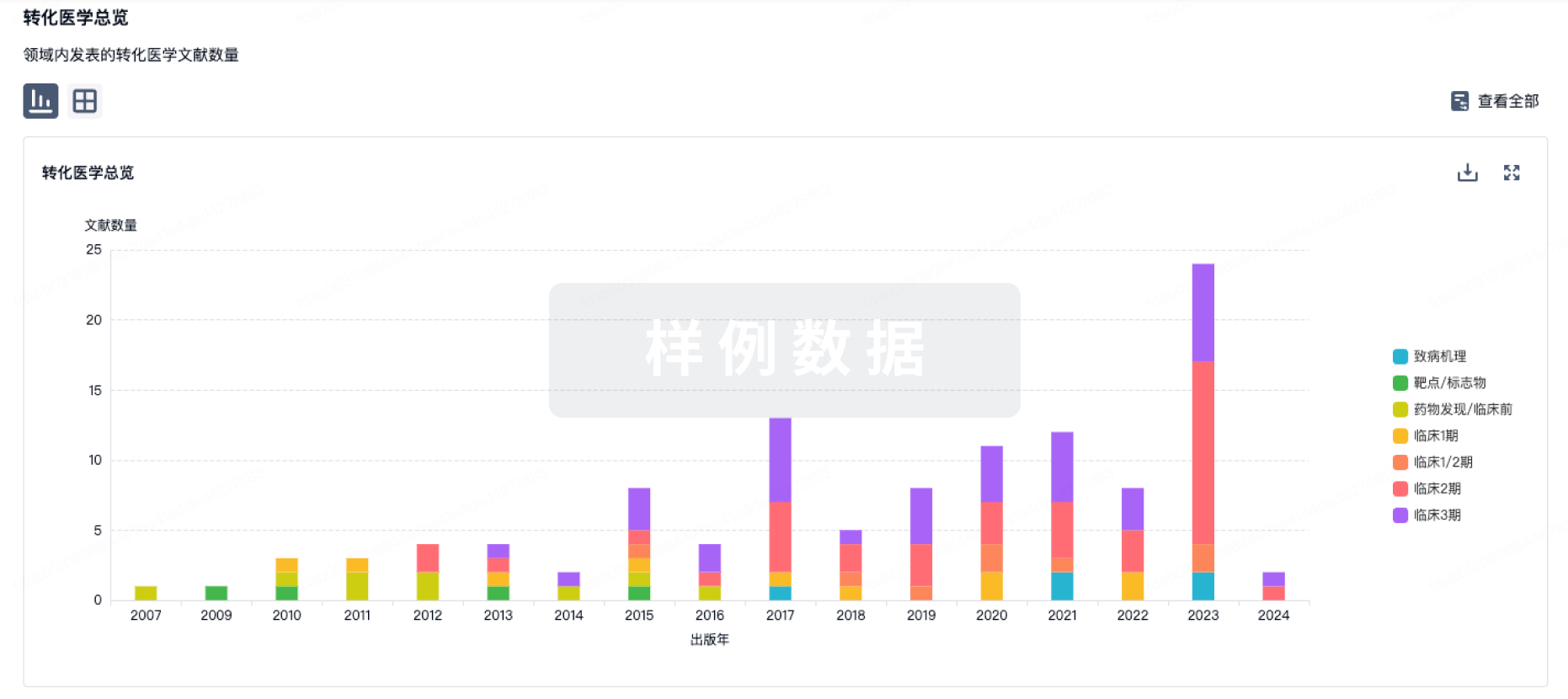
转化医学
使用我们的转化医学数据加速您的研究。
登录
或
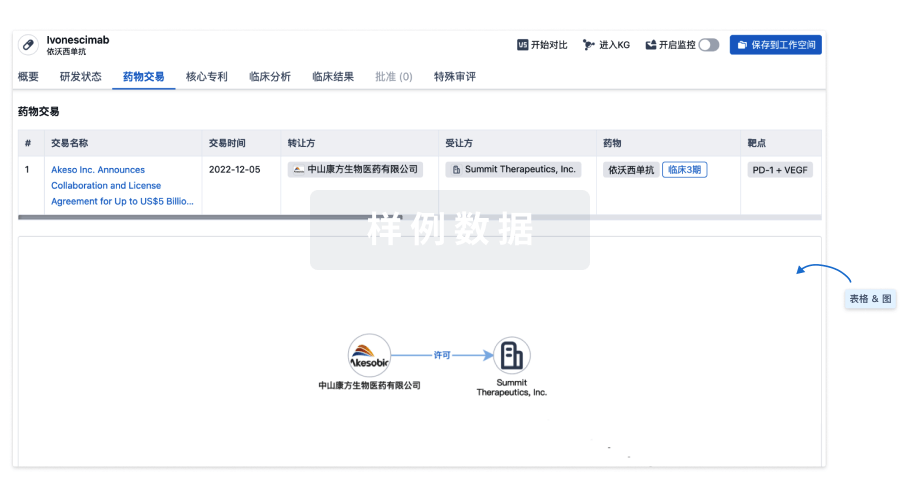
药物交易
使用我们的药物交易数据加速您的研究。
登录
或
核心专利
使用我们的核心专利数据促进您的研究。
登录
或
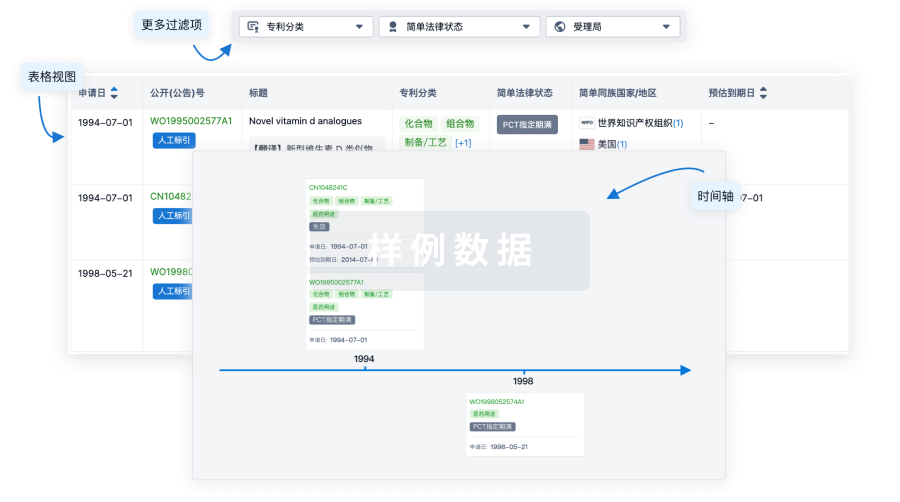
临床分析
紧跟全球注册中心的最新临床试验。
登录
或
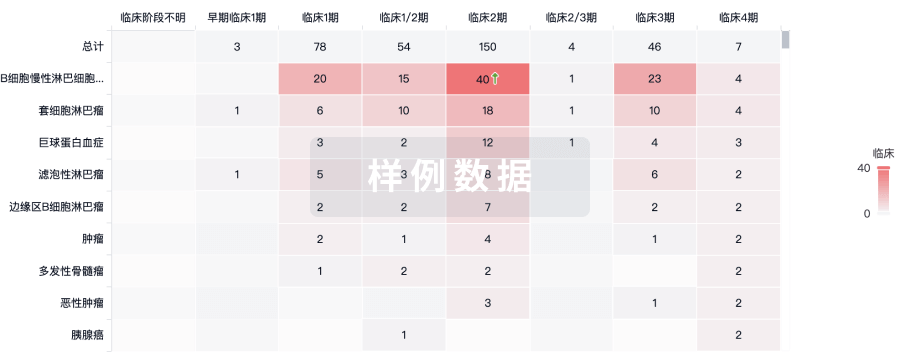
批准
利用最新的监管批准信息加速您的研究。
登录
或
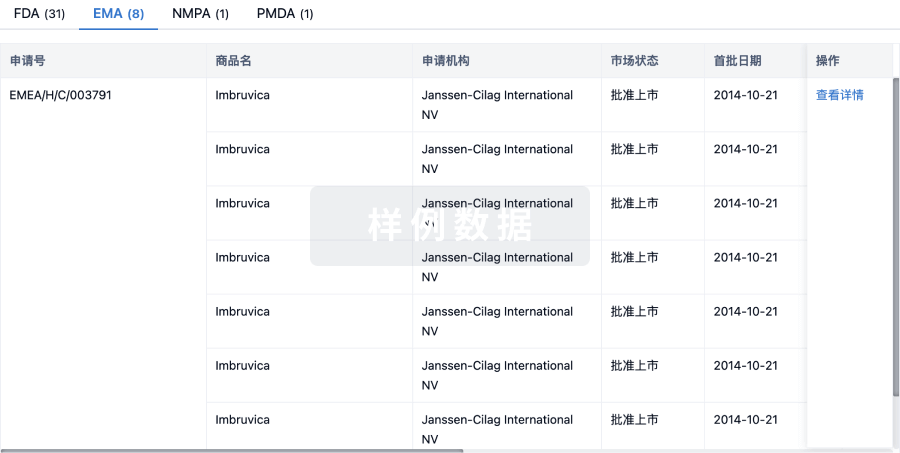
生物类似药
生物类似药在不同国家/地区的竞争态势。请注意临床1/2期并入临床2期,临床2/3期并入临床3期
登录
或
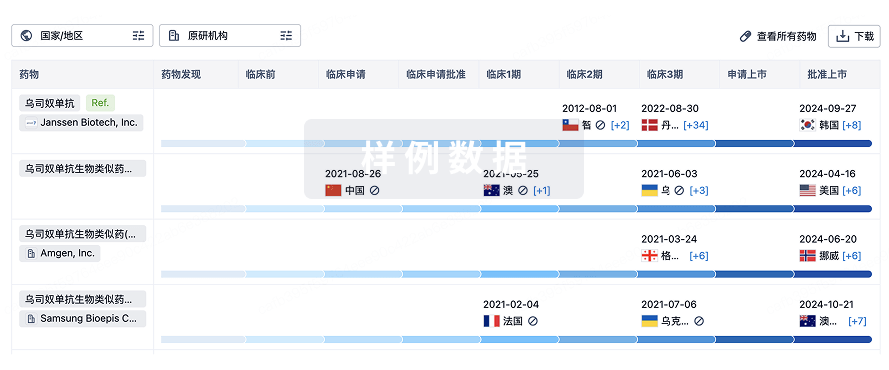
特殊审评
只需点击几下即可了解关键药物信息。
登录
或
提出任何生物医药研究问题
让每一步生物医药决策都精准制胜
基于十亿级生物数据与全球情报的精准 AI,赋能早期药物发现
立即开始免费试用!
智慧芽新药情报库是智慧芽专为生命科学人士构建的基于AI的创新药情报平台,助您全方位提升您的研发与决策效率。
立即接入生物医药数据包
智慧芽新药库数据也通过智慧芽开放平台,以MCP或API服务形式对外开放。立即使用我们的MCP服务定制您的LLM智能体。
生物序列数据库
生物药研发创新
免费使用
化学结构数据库
小分子化药研发创新
免费使用