预约演示
更新于:2026-03-04

Zhejiang Cancer Hospital
更新于:2026-03-04
概览
标签
肿瘤
消化系统疾病
内分泌与代谢疾病
ADC
小分子化药
细胞疗法
疾病领域得分
一眼洞穿机构专注的疾病领域

技术平台
公司药物应用最多的技术
靶点
公司最常开发的靶点
关联
靶点 |
作用机制 |
在研机构 |
原研机构 |
在研适应症 |
非在研适应症 |
最高研发阶段 |
首次获批国家/地区 |
首次获批日期 |
靶点 |
作用机制 |
在研机构 |
原研机构 |
在研适应症 |
非在研适应症 |
最高研发阶段 |
首次获批国家/地区 |
首次获批日期 |
靶点 |
作用机制 |
在研机构 |
原研机构 |
在研适应症 |
非在研适应症 |
最高研发阶段 |
首次获批国家/地区 |
首次获批日期 |
ChiCTR2600119589
A randomized, open label, controlled multicenter clinical study comparing the safety and efficacy of hydromorphone sustained-release tablets and hydrocodone sustained-release tablets in the treatment of elderly cancer pain patients in China
NCT07343479
A Clinical Study of Sac-TMT for Injection Combined With Third-Generation Epidermal Growth Factor Receptor Tyrosine Kinase Inhibitor (EGFR-TKI) ± Radiotherapy in Subjects With EGFR-Mutated Non-Squamous Non-Small Cell Lung Cancer and Brain Metastasis Who Have Failed Prior EGFR-TKI Treatment
ChiCTR2600119770
The effect of the oropharyngeal airway on gastric insufflflation after mask ventilation following the induction of anaesthesia
100 项与 浙江省肿瘤医院 相关的临床结果
登录后查看更多信息
登录后查看更多信息
2026-12-31INTERNATIONAL JOURNAL OF HYPERTHERMIA
2024 International expert consensus on ultrasound-guided thermal ablation for secondary and tertiary hyperparathyroidism
Article
作者: Yu, Jian-Jun ; Yu, Ming-An ; Zhuo, Li ; Russell, Jonathon ; Yadav, Ajit ; Zhao, Zhen-Long ; Kuo, Jennifer H. ; Leong, Sum ; Tufano, Ralph P. ; Wei, Ying ; Qian, Lin-Xue ; Lu, Man ; Su, Hong-Hui ; Ghazi, Hossam Arafa ; Russell, Marika ; Chou, Yi-Hong ; Randolph, Gregory W. ; Xu, Shu-Hang ; He, Jun-Feng ; Fukunari, Nobuhiro ; Patel, Kaustubh ; Che, Ying ; Kandil, Emad ; Cicco, Rafael De ; Mauri, Giovanni ; Xu, Dong ; Yu, Song-Yuan ; Niu, Yun ; Zhang, Ya-Jun ; Dung, Le Thanh ; Çekiç, Bülent ; Amabile, Gerardo ; Abdelhamid, Amr H. ; Cheng, Kai-Lun ; Wu, Song-Song ; Dong, Gang ; Lin, Wei-Che ; Liang, Lei ; Zhou, Jian-Qiao ; Wang, Shu-Rong ; Janssen, Ingo ; Fan, Bo-Qiang
Treatments for secondary and tertiary hyperparathyroidism (SHPT/THPT) remain significant challenges in patients with end-stage renal disease. Thermal ablation (TA) has emerged as a minimally invasive, safe, and effective alternative to surgical resection (SR). However, technical variations and a lack of standardization have limited its widespread adoption. To address these challenges, an international expert panel developed consensus recommendations using a modified Delphi method, integrated with a systematic literature review. As a result, sixteen recommendations were formulated, addressing diagnosis, preoperative preparation, technical procedures, postoperative management, follow-up strategies, efficacy assessment, and complications associated with TA for SHPT/THPT. These recommendations aim to promote standardized treatment protocols, improve procedural safety, and provide evidence-based guidance for clinical practice and future research in ultrasound-guided TA for SHPT/THPT management.
2026-03-01HEAD AND NECK-JOURNAL FOR THE SCIENCES AND SPECIALTIES OF THE HEAD AND NECK
Proton Therapy for Paranasal Sinus Cancer: Clinical Outcomes and Patterns of Failure
Article
作者: Sherman, Eric J. ; Wong, Winston ; Ho, Alan L. ; Ganly, Ian ; Cracchiolo, Jennifer R. ; Shamseddine, Achraf ; McBride, Sean M. ; Gelblum, Daphna Y. ; Riaz, Nadeem ; Dunn, Lara A. ; Cohen, Marc A. ; Treechairusame, Teeradon ; Wong, Richard J. ; Lee, Nancy Y. ; Cao, Caineng
ABSTRACT:
Purpose:
To evaluate the clinical outcomes and patterns of failure in patients with paranasal sinus cancer treated by proton therapy during 2013–2022.
Methods and Materials:
This retrospective study included 88 patients with newly diagnosed nonmetastatic paranasal sinus cancer treated by proton therapy at a tertiary academic cancer center from August 2013 to November 2022. Fifteen patients were treated by three‐dimensional conformal proton technique (
3DCPT
) and 73 patients were treated by intensity modulated proton therapy (
IMPT
). The main outcomes were the long‐term toxicity, patterns of failure and survival outcomes, including cumulative incidence of local or regional failures (
LRF
) and overall survival (
OS
).
Results:
The median (interquartile range [
IQR
]) follow‐up time for the overall group was 57.3 (38.5–82.6) months. Acute grade 3 radiation dermatitis and late grade 3 nasal congestion occurred significantly more frequently in the
3DCPT
group compared to the
IMPT
group (20.0% vs. 4.1%,
p
= 0.008; 33.3% vs. 5.6%,
p
= 0.004, respectively). By the last follow‐up, 33 patients had developed treatment failures. A total of 21 patients (23.9%) developed local failures, 14 were considered in‐field failure; 4 were marginal; 3 were out‐of‐field failure. The 5y‐cumulative incidence of
LRF
and
OS
rate of the overall group were 25% [95% confidence interval (
CI
), 16–35] and 79.4% (70.2–89.8), respectively. There were no statistically significant differences following
3DCPT
and
IMPT
in cumulative incidence of
LRF
and
OS
.
Conclusions:
Proton therapy yielded excellent therapeutic outcomes in the management of paranasal sinus cancer.
IMPT
holds significant potential in enhancing the therapeutic ratio in paranasal sinus cancer and warrants further exploration in clinical settings.
2026-03-01GUT
Hypothesis-generating evaluation of multi-armoured oncolytic HSV-1 (VG161) in intrahepatic cholangiocarcinoma: pooled insights from multicentre studies
Article
作者: Zhao, Qingwei ; Zhang, Wei ; Tu, Chuntian ; Wei, Guyue ; Huang, Hongwei ; Yang, Zifan ; Sun, Xiaoli ; Li, Xiang ; Lin, Danni ; Xia, Linghao ; Zhai, Zhenglong ; Wu, Tengjie ; Zhang, Hongchao ; Zhao, Zeda ; Shi, Guoming ; Hu, Wendi ; Song, Wei ; Zhou, Hangyu ; Chen, Wei ; Wang, Youlei ; Hu, Xingjiang ; Xie, Longshen ; Liang, Tingbo ; Bai, Xueli ; Jin, Xinyan ; Zhang, Xiaozhen ; Guo, Sida ; Zhang, Zhewei ; Shi, Xueyan ; Zhang, Yuntao ; Shen, Yinan ; Zhang, Xiaoyu ; Lan, Peilin ; Li, Jiaxin ; Tan, Qian ; Li, Enliang ; Zhou, Zhuojun ; Jia, William ; Li, Jichen ; Jiang, Tao ; Ye, Yufu ; Liang, Xingmei ; Kai, Jiejing ; Zhao, Ronghua ; Wang, Lei ; Ding, Jun ; Li, Yuwei ; Chen, Yiwen ; Fang, Tian ; Chen, Siyuan ; Shou, Zhanyi ; Wei, Fang ; Wang, Zijun
Background:
Intrahepatic cholangiocarcinoma (ICC) is a highly aggressive malignancy with limited treatment options and poor prognosis, especially for patients who failed standard therapies.
Objective:
To explore the safety, efficacy and immunological mechanisms of the novel edition of oncolytic virus vaccination, VG161, a multiarmed oncolytic herpes simplex virus-1 expressing interleukin (IL)-12, IL-15 and a programmed death-ligand 1 antagonist, in patients with advanced ICC.
Design:
This pooled analysis integrates data from two multicentre clinical studies: a Phase I dose-escalation study and a Phase IIa exploratory study. 24 patients with advanced ICC received ultrasound-guided intratumoral injections of VG161. Multiomics analyses were performed on longitudinal tumour biopsies to evaluate immune modulation.
Results:
The oncolytic virus therapy VG161 was well tolerated and showed encouraging antitumour activity, including improved overall survival versus second-line FOLFOX chemotherapy, even though most patients received VG161 as third-line or later therapy. Notably, patients previously treated with immune checkpoint inhibitors (CPIs) experienced enhanced benefit. Multiomics profiling of longitudinal biopsies revealed significant remodelling of the immunosuppressive tumour microenvironment, with proliferated infiltration of antigen-presenting cells, CD8
+
T cell activation and M2-like macrophage depletion. Single-cell and spatial transcriptomics identified epithelial and macrophage subpopulations (Epi-C2 and Macro-C1QC) as potential biomarkers of response and resistance.
Conclusion:
These early-phase findings suggest that VG161 elicits meaningful immune activation in ICC and supports further investigation. By inducing both direct oncolysis and multilayered immune activation, VG161 shows clinical benefit in a heavily pretreated population and holds promise for integration with CPI-based regimens. Validation in larger trials is warranted.
100 项与 浙江省肿瘤医院 相关的药物交易
登录后查看更多信息
100 项与 浙江省肿瘤医院 相关的转化医学
登录后查看更多信息
组织架构
使用我们的机构树数据加速您的研究。
登录
或
管线布局
2026年10月20日管线快照
管线布局中药物为当前组织机构及其子机构作为药物机构进行统计,早期临床1期并入临床1期,临床1/2期并入临床2期,临床2/3期并入临床3期
药物发现
3
7
临床前
早期临床1期
1
1
其他
登录后查看更多信息
当前项目
登录后查看更多信息
药物交易
使用我们的药物交易数据加速您的研究。
登录
或
转化医学
使用我们的转化医学数据加速您的研究。
登录
或
营收
使用 Synapse 探索超过 36 万个组织的财务状况。
登录
或
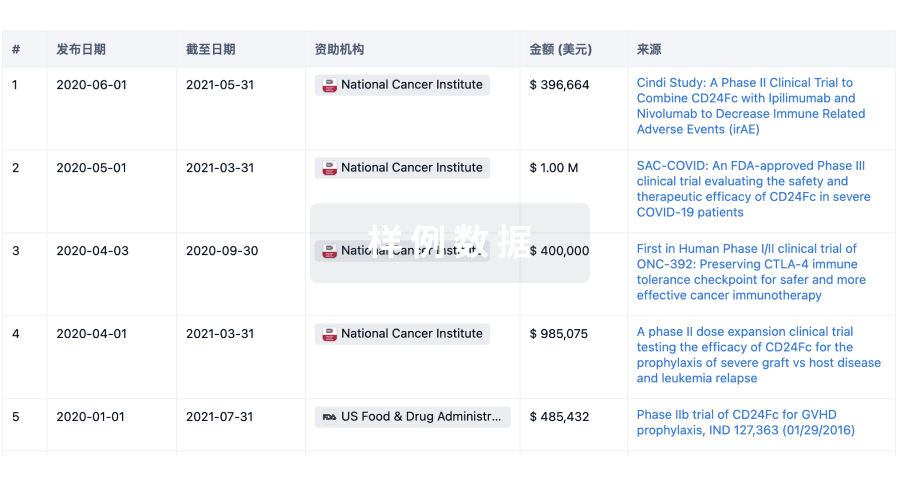
科研基金(NIH)
访问超过 200 万项资助和基金信息,以提升您的研究之旅。
登录
或
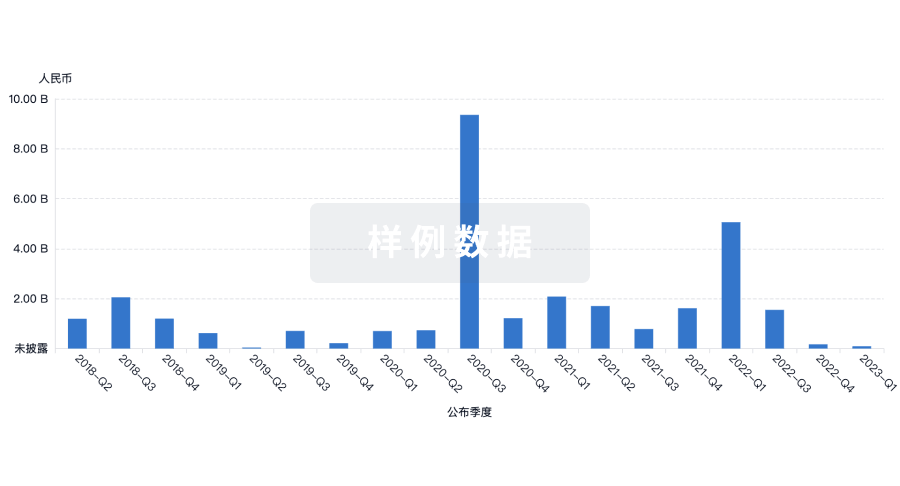
投资
深入了解从初创企业到成熟企业的最新公司投资动态。
登录
或
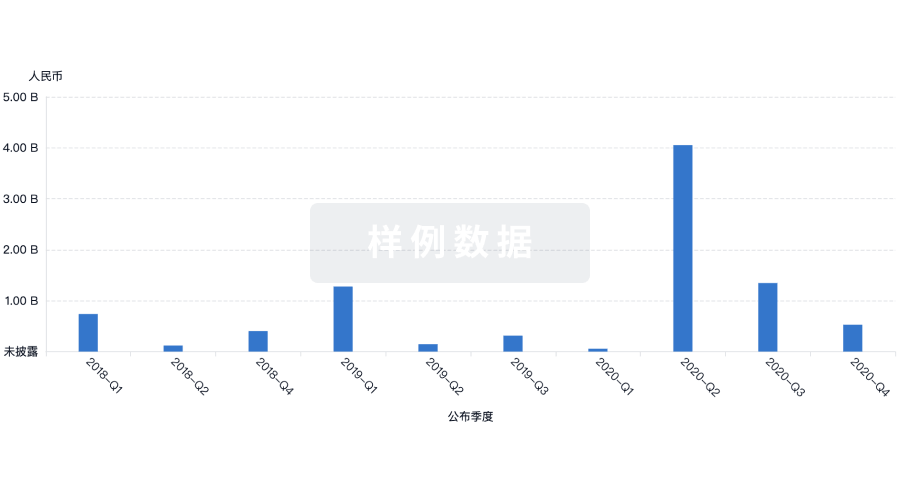
融资
发掘融资趋势以验证和推进您的投资机会。
登录
或
提出任何生物医药研究问题
让每一步生物医药决策都精准制胜
基于十亿级生物数据与全球情报的精准 AI,赋能早期药物发现
立即开始免费试用!
智慧芽新药情报库是智慧芽专为生命科学人士构建的基于AI的创新药情报平台,助您全方位提升您的研发与决策效率。
立即接入生物医药数据包
智慧芽新药库数据也通过智慧芽开放平台,以MCP或API服务形式对外开放。立即使用我们的MCP服务定制您的LLM智能体。
生物序列数据库
生物药研发创新
免费使用
化学结构数据库
小分子化药研发创新
免费使用