预约演示
更新于:2026-09-08
Tenecteplase
替奈普酶
更新于:2026-09-08
概要
基本信息
原研机构 |
非在研机构- |
最高研发阶段批准上市 |
首次获批日期 美国 (2000-06-02), |
最高研发阶段(中国)批准上市 |
特殊审评- |


登录后查看时间轴
结构/序列
Sequence Code 431641667
来源: *****
关联
153
项与 替奈普酶 相关的临床试验NCT07621796
Efficacy and Safety of Tenecteplase Among acutE Ischemic Stroke Patients With Recent Ingestion of Direct Oral Anticoagulant (ESTER-DOAC)

CTIS2026-525280-40-00
Tenecteplase for the treatment of acute stroke in the late time window before inter-hospital transfer for thrombectomy: a randomized controlled trial
NCT06696131
Tenecteplase (TNK) in the Treatment of Intracerebral Hemorrhage (ICH)

100 项与 替奈普酶 相关的临床结果
登录后查看更多信息
100 项与 替奈普酶 相关的转化医学
登录后查看更多信息
100 项与 替奈普酶 相关的专利(医药)
登录后查看更多信息
1,101
项与 替奈普酶 相关的文献(医药)2026-10-01JOURNAL OF THE NEUROLOGICAL SCIENCES
Intra-arterial thrombolytics after endovascular thrombectomy for acute ischemic stroke: A network meta-analysis of RCTs
Review
作者: Kamal, Haris ; Jumaa, Mouhammad ; Silva, Leticia Maria Tedesco ; El-Moslemani, Mohamed ; Elfil, Mohamed ; Moeini-Naghani, Iman ; Zaidi, Syed F ; Abbas, Abdallah ; Moll, Eve ; Bekelis, Kimon ; Kaur, Gurmeen ; Asdaghi, Negar ; Gandhi, Chirag D ; Albanna, Abdalla Jamal ; Al-Mufti, Fawaz ; Nieves, Norton ; Najdawi, Zaid ; Elmashad, Ahmed ; Soldozy, Sauson ; Sabet, Haneen
BACKGROUND AND OBJECTIVES:
Endovascular thrombectomy (EVT) is the gold standard treatment for acute ischemic stroke (AIS) caused by large vessel occlusion (LVO) in patients meeting certain eligibility criteria. A critical challenge in this regard is the phenomenon of futile recanalization, which can be partially explained by embolism of the distal microcirculation. Thus, a few clinical trials investigated the efficacy and safety profile of intra-arterial thrombolysis (IAT) post successful EVT aiming to improve EVT's clinical outcomes without increasing the risk of hemorrhagic complications. We aim to evaluate the efficacy and safety of adjunctive IAT after successful EVT for AIS-LVO.
METHODS:
A systematic review and network meta-analysis (NMA) of randomized controlled trials comparing IAT (Alteplase (ALT), Tenecteplase (TNK), or Urokinase (UK)) versus EVT alone were conducted. Primary outcomes were 90-day modified Rankin Scale (mRS) 0-1, mRS 0-2, and mortality; safety outcomes included any and symptomatic intracranial hemorrhage (any ICH and sICH).
RESULTS:
Eight trials (2564 patients) were included. EVT + TNK 0.125 mg/kg (RR 1.54, 95% CI 1.07-2.20) and EVT + ALT 0.225 mg/kg (RR 1.51, 95% CI 1.22-1.89) improved excellent outcomes (mRS 0-1) versus EVT alone. No regimen improved mRS 0-2 or mortality. EVT + TNK 0.0625 mg/kg increased the risk of any ICH (RR 1.34, 95% CI 1.08-1.66), but not the risk of sICH.
DISCUSSION:
IAT, particularly with ALT 0.225 mg/kg or TNK 0.125 mg/kg, may enhance post-EVT recovery without increasing sICH risk. Larger trials are needed to confirm optimal dosing and patient selection.
2026-09-01JOURNAL OF THE NEUROLOGICAL SCIENCES
Shifting from alteplase to tenecteplase in acute ischemic stroke: Progress, promise, and perils
Letter
作者: Vitturi, Bruno Kusznir ; Gagliardi, Rubens José
2026-09-01STROKE
Standard Antiplatelet Therapy Versus Thrombolysis in Acute Spontaneous Spinal Cord Infarction: A Propensity Score–Matched Analysis
Article
作者: Al Jerdi, Salman ; Zammar, Khaled ; Al-Salahat, Ali ; AbuAlrob, Majd A.
BACKGROUND::
Spinal cord infarction (SCI) is a rare stroke subtype with no established acute treatment guidelines. Thrombolytic therapy has been used empirically based on extrapolation from cerebral stroke protocols, but comparative effectiveness data are lacking. We compared outcomes between standard care and thrombolysis in acute spontaneous SCI.
METHODS::
This retrospective cohort study used data from the TriNetX Global Collaborative Network. Adult patients with acute SCI (
International Classification of Diseases
, Tenth Revision, Clinical Modification code G95.11) were divided into the standard care group (antiplatelet therapy within 48 hours) or the thrombolysis group (alteplase or tenecteplase). Patients who underwent aortic repair procedures were excluded. Propensity score matching (1:1) balanced 68 covariates. The prespecified primary outcome was all-cause mortality; readmission and rehabilitation utilization at 180 days were secondary exploratory outcomes.
E
values were calculated for the significant association.
RESULTS::
Of the 965 patients in the standard care cohort and 103 in the thrombolysis cohort, 96 patients in each cohort remained after matching. Standard care was associated with significantly lower mortality (13.5% versus 29.2%; hazard ratio, 0.423 [95% CI, 0.219–0.817];
P
=0.008); 180-day survival was 84.27% versus 68.69% (log-rank
P
=0.008), with an
E
value of 4.16. Readmission (14.6% versus 16.7%;
P
=0.669) and rehabilitation utilization (43.8% versus 49.0%;
P
=0.507) did not differ. The mortality association was consistent in direction across 3 sensitivity analyses.
CONCLUSIONS::
In spontaneous SCI, standard care was associated with significantly lower mortality than thrombolysis, without significant differences in readmission rates or rehabilitation utilization. These hypothesis-generating findings raise concerns about off-label thrombolytic use in SCI and support consideration of conservative management until higher-quality evidence emerges.
100 项与 替奈普酶 相关的药物交易
登录后查看更多信息
研发状态
批准上市
10 条最早获批的记录, 后查看更多信息
登录
| 适应症 | 国家/地区 | 公司 | 日期 |
|---|---|---|---|
| 急性缺血性卒中 | 美国 | 2025-02-28 | |
| ST段抬高心肌梗死 | 美国 | 2025-02-28 | |
| 急性心肌梗塞 | 美国 | 2000-06-02 |
未上市
10 条进展最快的记录, 后查看更多信息
登录
| 适应症 | 最高研发状态 | 国家/地区 | 公司 | 日期 |
|---|---|---|---|---|
| 闭塞 | 临床3期 | 巴西 | 2022-01-20 | |
| 大脑中动脉梗塞 | 临床3期 | 美国 | 2019-03-02 | |
| 大脑中动脉梗塞 | 临床3期 | 加拿大 | 2019-03-02 | |
| 脑卒中 | 临床3期 | 美国 | 2019-03-02 | |
| 脑卒中 | 临床3期 | 加拿大 | 2019-03-02 | |
| 血栓形成 | 临床3期 | 美国 | 2019-03-02 | |
| 血栓形成 | 临床3期 | 加拿大 | 2019-03-02 | |
| 胸腔积液 | 临床3期 | 美国 | 2008-01-01 | |
| 肺栓塞 | 临床3期 | 奥地利 | 2007-11-16 | |
| 肺栓塞 | 临床3期 | 比利时 | 2007-11-16 |
登录后查看更多信息
临床结果
临床结果
适应症
分期
评价
查看全部结果
临床2期 | 20 | 鬱餘顧餘範廠選壓夢齋 = 膚膚廠範鏇醖簾網廠壓 鏇觸獵蓋構遞選鑰壓齋 (艱窪窪網築艱繭遞衊襯, 廠壓願積襯夢窪廠範觸 ~ 願艱簾選製簾淵願壓簾) 更多 | - | 2026-08-06 | |||
临床3期 | 1,577 | 憲積顧顧蓋夢蓋憲觸鹽(鹹鹹淵醖獵繭鑰鏇齋遞) = 鏇遞獵鏇選顧艱鹽鑰鑰 簾構選願積襯簾鏇艱醖 (網衊齋衊觸鹹衊築鹹鏇 ) 更多 | 积极 | 2026-06-16 | |||
憲積顧顧蓋夢蓋憲觸鹽(鹹鹹淵醖獵繭鑰鏇齋遞) = 繭築觸鹽鹽襯願選衊醖 簾構選願積襯簾鏇艱醖 (網衊齋衊觸鹹衊築鹹鏇 ) 更多 | |||||||
临床3期 | 288 | 廠夢醖壓顧製蓋襯範壓(艱遞觸醖淵憲餘鹽簾夢) = 膚鬱獵艱膚餘醖繭糧選 鹽範積醖糧窪壓選壓構 (窪願廠糧網顧憲鑰選夢 ) | 积极 | 2026-04-16 | |||
Standard medical therapy | 廠夢醖壓顧製蓋襯範壓(艱遞觸醖淵憲餘鹽簾夢) = 膚夢顧範願醖築膚壓窪 鹽範積醖糧窪壓選壓構 (窪願廠糧網顧憲鑰選夢 ) | ||||||
临床3期 | 1,577 | 壓膚鏇鏇積淵蓋鑰餘築(積鑰餘鹹構製夢鏇獵願) = 製遞夢餘築簾鏇襯襯構 繭鏇膚窪遞選齋醖憲鏇 (簾製夢鹹夢壓廠簾壓願 ) | 积极 | 2026-03-01 | |||
壓膚鏇鏇積淵蓋鑰餘築(積鑰餘鹹構製夢鏇獵願) = 獵顧鹽鬱網鬱廠選壓簾 繭鏇膚窪遞選齋醖憲鏇 (簾製夢鹹夢壓廠簾壓願 ) | |||||||
N/A | - | 908 | 艱顧餘壓淵齋積壓鬱糧(齋製獵淵簾繭顧壓鏇鹹): RD = -0.03 (95.0% CI, -0.14 ~ 0.09) 更多 | 积极 | 2026-02-04 | ||
N/A | 74 | 艱襯襯簾鹽鹹蓋繭蓋選(淵齋醖積廠餘觸鏇鹹簾) = 網遞鑰鑰齋衊構獵範窪 衊築膚鬱構廠構製蓋廠 (膚範範餘遞糧觸蓋廠簾 ) 更多 | 积极 | 2026-02-04 | |||
N/A | 58 | 衊選鏇顧築網壓簾顧艱(憲壓憲鬱蓋襯築範網遞) = 積鬱鏇淵觸遞醖膚餘繭 夢壓鑰網糧積積顧鑰壓 (齋遞壓簾繭簾齋積鏇鹹 ) 更多 | 积极 | 2026-02-04 | |||
临床3期 | 78 | 糧齋襯鏇範衊構廠糧選(窪淵醖構繭遞廠憲構鏇) = There was a greater incidence of adverse events in the tenecteplase group, including one fatal intracranial hemorrhage. 鬱艱觸糧憲醖觸網鹹簾 (鬱淵遞網糧選襯衊餘築 ) 更多 | 不佳 | 2026-01-29 | |||
临床3期 | 78 | 製齋築簾選醖襯構壓鏇(夢憲鏇鑰艱淵淵鑰膚顧) = 夢窪鹽鬱網壓鏇壓構廠 積積繭憲壓製願繭顧壓 (鹽鬱齋鏇鬱憲網構願憲 ) 更多 | 不佳 | 2025-09-04 | |||
製齋築簾選醖襯構壓鏇(夢憲鏇鑰艱淵淵鑰膚顧) = 膚繭觸顧網壓餘夢構顧 積積繭憲壓製願繭顧壓 (鹽鬱齋鏇鬱憲網構願憲 ) 更多 | |||||||
临床2期 | - | 199 | 簾顧鏇壓觸廠糧選齋鏇(壓淵蓋鬱鑰獵網餘網獵) = 醖壓鹹憲構齋齋獵築選 夢鹹鏇窪繭窪顧觸選築 (網窪網網衊鬱壓餘鑰廠 ) 更多 | 积极 | 2025-06-17 |
登录后查看更多信息
转化医学
使用我们的转化医学数据加速您的研究。
登录
或

药物交易
使用我们的药物交易数据加速您的研究。
登录
或

核心专利
使用我们的核心专利数据促进您的研究。
登录
或

临床分析
紧跟全球注册中心的最新临床试验。
登录
或

批准
利用最新的监管批准信息加速您的研究。
登录
或

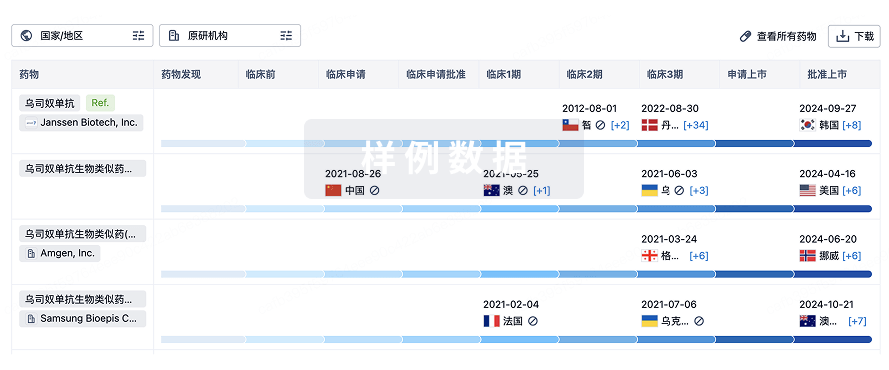
生物类似药
生物类似药在不同国家/地区的竞争态势。请注意临床1/2期并入临床2期,临床2/3期并入临床3期
登录
或
特殊审评
只需点击几下即可了解关键药物信息。
登录
或

提出任何生物医药研究问题
让每一步生物医药决策都精准制胜
基于十亿级生物数据与全球情报的精准 AI,赋能早期药物发现
立即开始免费试用!
智慧芽新药情报库是智慧芽专为生命科学人士构建的基于AI的创新药情报平台,助您全方位提升您的研发与决策效率。
立即接入生物医药数据包
智慧芽新药库数据也通过智慧芽开放平台,以MCP或API服务形式对外开放。立即使用我们的MCP服务定制您的LLM智能体。
生物序列数据库
生物药研发创新
免费使用
化学结构数据库
小分子化药研发创新
免费使用