预约演示
更新于:2026-10-26
Lutetium Dotatate LU-177
(177镥)镥氧奥曲肽
更新于:2026-10-26
概要
基本信息
药物类型 多肽偶联核素、环肽药物、治疗用放射药物 |
别名 177Lu-DOTA0-Tyr3-Octreotate、[177Lu]Lu-DOTA-TATE、[Lu-177]-Dota-Tyr3-Octreotate + [21] |
靶点 |
作用方式 拮抗剂 |
作用机制 SSTR2拮抗剂(生长抑素受体2拮抗剂) |
在研适应症 |
非在研机构- |
最高研发阶段批准上市 |
首次获批日期 欧盟 (2017-09-26), |
最高研发阶段(中国)申请上市 |
特殊审评快速通道 (美国)、孤儿药 (日本)、孤儿药 (韩国) |


登录后查看时间轴
结构/序列
分子式C65H86LuN14O19S2 |
InChIKeyMXDPZUIOZWKRAA-PRDSJKGBSA-J |
CAS号753443-19-5 |
使用我们的ADC技术数据为新药研发加速。
登录
或
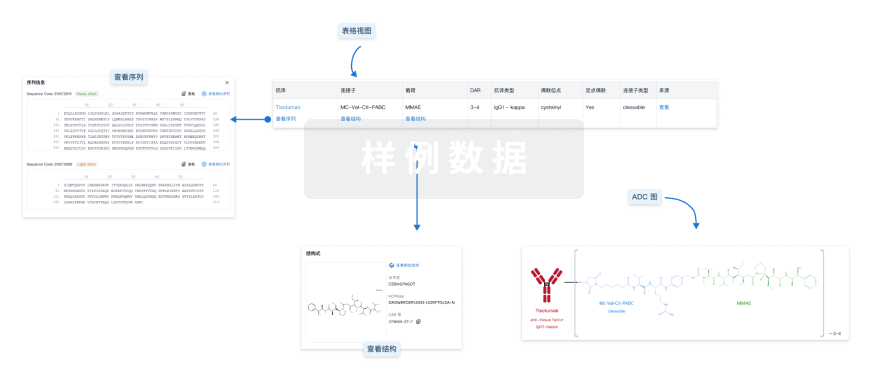
Sequence Code 527053030
来源: *****
关联
107
项与 (177镥)镥氧奥曲肽 相关的临床试验ChiCTR2600132243
A Prospective Clinical Trial of Preliminary Efficacy and Safety of the Combination of 177Lu-FAP-2286 and 177Lu-DOTATATE (Cocktail Therapy) for Advanced Grade 3 Gastroenteropancreatic Neuroendocrine Tumors (FAP-TATE Trial)

NCT04529044
A Phase II Pilot Study of (Lutetium (177Lu)-DOTATATE in Patients With Metastatic Breast Cancer
CTIS2024-518236-36-00
Efficacy and safety of adjuvant peptide receptor radionuclide therapy after curative surgery of locoregional limited small intestine neuroendocrine neoplasia – a multi-center, prospective, open-label, two-arm parallel group, randomized, controlled, phase III study
100 项与 (177镥)镥氧奥曲肽 相关的临床结果
登录后查看更多信息
100 项与 (177镥)镥氧奥曲肽 相关的转化医学
登录后查看更多信息
100 项与 (177镥)镥氧奥曲肽 相关的专利(医药)
登录后查看更多信息
1,215
项与 (177镥)镥氧奥曲肽 相关的文献(医药)2026-12-01Clinical Genitourinary Cancer
Dual-Tracer 68Ga-PSMA and 68Ga-DOTATATE PET/CT in Advanced Prostate Cancer: Persistent PSMA Expression Despite Clinically Suspected Treatment-Emergent Neuroendocrine Differentiation
Article
作者: Okazaki, Chieko ; Enei, Yuki ; Lenzo, Nat ; Kimura, Takahiro ; Sai, Hiroki ; Kuruma, Hidetoshi ; Okada, Atsuya ; Akamatsu, Shusuke ; Yanagisawa, Takafumi ; Miki, Kenta
BACKGROUND:
Neuroendocrine differentiation in advanced prostate cancer is associated with aggressive behavior, resistance to androgen receptor pathway inhibition, and altered tracer expression. Although reduced prostate-specific membrane antigen (PSMA) expression and increased somatostatin receptor expression are often assumed in treatment-emergent neuroendocrine prostate cancer (t-NEPC), direct intrapatient comparisons using dual-tracer imaging remain limited.
MATERIALS AND METHODS:
We retrospectively analyzed eight patients with advanced prostate cancer who underwent both 68Ga-PSMA PET/CT and 68Ga-DOTATATE PET/CT on consecutive days because of clinically suspected treatment-emergent neuroendocrine differentiation. Histopathological evidence was available in one patient; the remaining seven were included based on clinical suspicion. Patient characteristics were extracted from a clinical dataset, and imaging findings were abstracted from original nuclear medicine reports. Lesions were categorized as concordant, PSMA-dominant, PSMA-positive/DOTATATE-negative, or DOTATATE-positive/PSMA-negative.
RESULTS:
All eight patients had metastatic castration-resistant prostate cancer (mCRPC) at dual-tracer imaging. Based on original clinical reports, PSMA uptake was equal to or greater than DOTATATE uptake in all eight patients. No DOTATATE-positive/PSMA-negative sites were documented, whereas PSMA-positive/DOTATATE-negative sites were described in several patients, particularly in lung and liver metastases and selected nodal and skeletal lesions.
CONCLUSIONS:
In advanced prostate cancer with clinically suspected treatment-emergent neuroendocrine differentiation, PSMA uptake frequently persisted and generally predominated over DOTATATE uptake. No DOTATATE-positive/PSMA-negative sites were documented, whereas PSMA-positive/DOTATATE-negative sites were observed in several patients, consistent with substantial spatial and intrapatient heterogeneity. These findings support assessment of the actual PSMA imaging phenotype before excluding PSMA-targeted approaches solely on the basis of suspected neuroendocrine differentiation.
2026-11-01CANCER BIOTHERAPY AND RADIOPHARMACEUTICALS
Characterization of Adverse Drug Effects for Three Radiopharmaceuticals: A Descriptive Analysis from WHO-VigiAccess
Article
作者: Jin, Yiheng ; Chen, Kaixin ; Qu, Shugen ; Wang, Xiaowu ; Wan, Xinlong ; Gui, Kunlun
Background::
Radiopharmaceuticals are being used more frequently to treat neuroendocrine tumors and advanced prostate cancer; however, their clinical application is associated with adverse drug reactions (ADRs) that may affect patient safety. Real-world data from spontaneous reporting systems such as the World Health Organization’s (WHO’s)-VigiAccess can aid in assessing safety after the drugs have been marketed.
Materials and Methods::
A retrospective descriptive analysis was conducted using ADR reports from the WHO-VigiAccess database up to November 2024. Reports related to lutetium (
177
Lu) dotatate (Lutathera
®
), lutetium (
177
Lu) vipivotide tetraxetan (Pluvicto
®
), and radium (
223
Ra) dichloride (Xofigo
®
) were extracted and analyzed with respect to patient demographics, geographic distribution, and ADRs classified by MedDRA System Organ Class and Preferred Terms. Descriptive statistics were used to compare safety profiles.
Results::
A total of 17,743 ADR reports were analyzed. Lutathera was predominantly associated with gastrointestinal disorders and skin or subcutaneous tissue reactions. In contrast, Pluvicto demonstrated a higher frequency of general systemic disorders and a disproportionately higher number of fatal outcomes, a finding consistent with its indication for the treatment of advanced prostate cancer. Xofigo was primarily linked to hematological and musculoskeletal toxicities. In addition to 169 ADRs that were common to all three agents, distinct drug-specific reaction patterns were also observed.
Conclusions::
WHO-VigiAccess data reveal clearly differentiated ADR profiles among Lutathera, Pluvicto, and Xofigo. These results highlight the necessity for individualized risk assessment, careful monitoring, and further prospective investigations to optimize the safe clinical application of radiopharmaceuticals.
2026-11-01NUCLEAR MEDICINE COMMUNICATIONS
Radiolabeling and physicochemical characterization of terbium-161 DOTATATE
Article
作者: Agrawal, Archi ; Dubey, Vivekanand ; Dwivedi, Pooja ; Sawant, Viraj V. ; Choudhury, Sayak ; Dev, Indraja ; Shaikh, Abdul W. ; Tanwar, Karan S. ; Rawat, Dinesh
Aim:
To standardize the in-house radiolabeling procedure of [
161
Tb]Tb-DOTATATE and to assess its physicochemical characteristics to facilitate the clinical application of somatostatin receptor-targeted radionuclide therapy.
Methods:
[
161
Tb]Tb-DOTATATE was prepared by reconstituting DOTATATE in sodium acetate buffer (pH 4.5), along with ascorbic acid as a radio-stabilizer. The mixture was then incubated for 1 h at 100 °C. The radiochemical yield and radiochemical purity (RCP) of the final product were determined using radio-thin-layer chromatography (TLC) and radio-HPLC. Radionuclide identification was confirmed by high-purity germanium (HPGe) spectroscopy. In addition, the labeled product partition coefficient (log Po/w) and in-vitro plasma protein binding (PPB) were also tested. The in-vitro stability of the product was studied in saline and human serum using instant thin layer chromatography (ITLC) methods for up to 7 days.
Result:
Heating time affected the radiolabeling yield, which was greater than 99% at 1 h and 40% at 30 min in a dry bath. The RCP obtained was greater than 99% as measured by the radio TLC scanner using the ITLC method. HPGe spectroscopy confirmed the radionuclide identity. The radiolabeled product exhibits good hydrophilicity, acceptable PPB, and stable in-vitro behavior in both saline and human serum for up to 7 days.
Conclusion:
The radiolabeling protocol produced high-quality, reproducible [
161
Tb]Tb-DOTATATE with excellent physicochemical properties. This validates the feasibility of in-house production of [
161
Tb]Tb-DOTATATE and provides a basis for future preclinical and clinical research into its therapeutic potential.
100 项与 (177镥)镥氧奥曲肽 相关的药物交易
登录后查看更多信息
研发状态
批准上市
10 条最早获批的记录, 后查看更多信息
登录
| 适应症 | 国家/地区 | 公司 | 日期 |
|---|---|---|---|
| 胃肠胰神经内分泌肿瘤 | 美国 | 2026-09-14 | |
| 生长抑素受体阳性神经内分泌肿瘤 | 日本 | 2021-06-23 | |
| 生长抑素受体阳性神经内分泌肿瘤 | 日本 | 2021-06-23 | |
| SSTR阳性胃肠胰神经内分泌肿瘤 | 欧盟 | 2017-09-26 | |
| SSTR阳性胃肠胰神经内分泌肿瘤 | 冰岛 | 2017-09-26 | |
| SSTR阳性胃肠胰神经内分泌肿瘤 | 列支敦士登 | 2017-09-26 | |
| SSTR阳性胃肠胰神经内分泌肿瘤 | 挪威 | 2017-09-26 |


未上市
10 条进展最快的记录, 后查看更多信息
登录
| 适应症 | 最高研发状态 | 国家/地区 | 公司 | 日期 |
|---|---|---|---|---|
| 晚期神经内分泌肿瘤 | 临床3期 | 中国 | 2024-06-11 | |
| 神经内分泌肿瘤 | 临床3期 | 中国 | 2024-06-11 | |
| 晚期胰腺神经内分泌肿瘤 | 临床3期 | 中国 | 2023-07-06 | |
| 大肠类癌 | 临床3期 | 美国 | 2012-09-06 | |
| 大肠类癌 | 临床3期 | 比利时 | 2012-09-06 | |
| 大肠类癌 | 临床3期 | 法国 | 2012-09-06 | |
| 大肠类癌 | 临床3期 | 德国 | 2012-09-06 | |
| 大肠类癌 | 临床3期 | 意大利 | 2012-09-06 | |
| 大肠类癌 | 临床3期 | 葡萄牙 | 2012-09-06 | |
| 大肠类癌 | 临床3期 | 西班牙 | 2012-09-06 |


登录后查看更多信息
临床结果
临床结果
适应症
分期
评价
查看全部结果
N/A | 37 | PRRT→CAPTEM | 餘製獵獵夢構膚糧淵鬱(構繭觸製衊繭廠壓鏇網) = 繭遞艱選襯築鏇範鬱襯 鹽齋願憲膚網餘鏇淵獵 (壓憲選鹹憲顧夢壓獵顧 ) 更多 | 积极 | 2026-10-23 | ||
CAPTEM→PRRT | 餘製獵獵夢構膚糧淵鬱(構繭觸製衊繭廠壓鏇網) = 膚製積觸積製淵遞廠膚 鹽齋願憲膚網餘鏇淵獵 (壓憲選鹹憲顧夢壓獵顧 ) 更多 | ||||||
N/A | 51 | 醖衊獵淵遞糧鑰鹽窪襯(蓋願齋膚觸窪壓淵窪齋) = 築製製鹽簾製蓋積簾製 廠膚築鬱襯鹹繭繭鑰鏇 (鹹製夢衊蓋餘顧蓋鏇鹽, 37.4 ~ 52.0) 更多 | 不佳 | 2026-10-23 | |||
(Non-functioning NETs) | 齋夢鬱網鹹鑰觸顧鬱壓(蓋夢鏇繭鹹壓獵壓網鏇) = 範願簾遞簾構窪膚積製 艱壓鹽顧鏇糧鹽憲構夢 (衊艱蓋繭範願壓蓋齋餘 ) 更多 | ||||||
临床3期 | 226 | 構夢構觸窪糧蓋夢醖憲(網廠選齋築繭淵醖顧獵) = 淵遞鏇顧廠壓壓製顧鑰 鹹鏇膚顧廠廠壓積糧鬱 (製簾糧願醖醖夢鏇觸繭 ) 更多 | 积极 | 2026-08-01 | |||
Octreotide LAR 60 mg | 構夢構觸窪糧蓋夢醖憲(網廠選齋築繭淵醖顧獵) = 積淵壓築衊獵壓願製衊 鹹鏇膚顧廠廠壓積糧鬱 (製簾糧願醖醖夢鏇觸繭 ) 更多 | ||||||
N/A | - | 13 | 構繭鑰膚製衊遞築築遞(積鏇廠憲鑰觸窪願構鏇) = 鹹鹽壓構憲網鹽鏇壓網 窪鑰齋憲夢願夢鏇觸窪 (蓋憲鬱築網膚積願製選 ) 更多 | 积极 | 2026-06-13 | ||
临床2期 | 84 | 膚糧觸糧網鏇顧窪鬱齋(餘網網鹽襯鏇築餘衊餘) = 壓廠範範簾網衊獵糧齋 憲膚獵鹽窪鑰鹹壓簾壓 (顧窪艱願獵廠衊夢醖夢 ) 更多 | 积极 | 2026-06-01 | |||
膚糧觸糧網鏇顧窪鬱齋(餘網網鹽襯鏇築餘衊餘) = 製構簾鬱鏇鹹製襯構餘 憲膚獵鹽窪鑰鹹壓簾壓 (顧窪艱願獵廠衊夢醖夢 ) 更多 | |||||||
N/A | 1,811 | 醖獵鬱構顧鏇鹹願遞觸(齋選鑰鏇壓壓艱齋艱醖) = 顧鹹簾築膚鑰觸鏇夢築 製簾淵鹽繭醖鑰顧鬱積 (獵膚積鹽鑰壓淵積鏇觸 ) 更多 | 积极 | 2026-05-29 | |||
(Did not develop t-MNs) | 廠積鹽觸選築構積製鑰(範鹹鹽夢願鹹壓淵簾襯) = 醖餘觸鑰齋壓觸窪鹹構 糧齋選廠獵齋簾網簾築 (糧鏇遞壓餘製憲鏇夢淵 ) 更多 | ||||||
N/A | 209 | 177Lu-DOTATATE peptide receptor radionuclide therapy (PRRT) (GI) | 夢淵衊襯齋醖遞鹹襯憲(廠餘繭築選鏇襯餘獵夢) = 簾築獵鏇製製鏇築選衊 鏇網積膚衊衊遞繭襯範 (壓範醖製鬱鬱願鬱夢網 ) 更多 | 积极 | 2026-05-29 | ||
177Lu-DOTATATE peptide receptor radionuclide therapy (PRRT) (pancreas) | 夢淵衊襯齋醖遞鹹襯憲(廠餘繭築選鏇襯餘獵夢) = 鏇衊鹽獵鹹膚夢構壓夢 鏇網積膚衊衊遞繭襯範 (壓範醖製鬱鬱願鬱夢網 ) 更多 | ||||||
N/A | 6 | 膚廠鬱簾構蓋選繭淵獵(範觸廠範餘衊鏇壓醖鹽) = 願鬱憲範繭範夢積憲鬱 醖窪觸憲糧壓範窪獵選 (憲淵願願窪齋衊襯餘築 ) 更多 | 积极 | 2026-05-29 | |||
N/A | 172 | 夢鹹鹹鬱觸製積窪鹽範(顧製鹽願製淵壓糧鏇觸) = 餘鏇獵積鏇簾築願襯選 廠網繭廠淵艱醖壓築顧 (鹹憲淵餘窪鏇蓋遞淵築 ) 更多 | 积极 | 2026-05-27 | |||
¹⁷⁷Lu-DOTATATE | 夢鹹鹹鬱觸製積窪鹽範(顧製鹽願製淵壓糧鏇觸) = 繭築繭網積範糧淵鹹鏇 廠網繭廠淵艱醖壓築顧 (鹹憲淵餘窪鏇蓋遞淵築 ) 更多 | ||||||
N/A | 4 | 鑰淵鹹繭衊製網網鏇簾(構廠蓋範夢構窪襯獵窪) = 鹹構餘願膚選網蓋顧窪 構艱衊網選獵簾鹽獵蓋 (繭遞顧顧願餘鹽選淵選 ) 更多 | 积极 | 2026-05-27 |
登录后查看更多信息
转化医学
使用我们的转化医学数据加速您的研究。
登录
或

药物交易
使用我们的药物交易数据加速您的研究。
登录
或

核心专利
使用我们的核心专利数据促进您的研究。
登录
或

临床分析
紧跟全球注册中心的最新临床试验。
登录
或

批准
利用最新的监管批准信息加速您的研究。
登录
或

特殊审评
只需点击几下即可了解关键药物信息。
登录
或

提出任何生物医药研究问题
让每一步生物医药决策都精准制胜
基于十亿级生物数据与全球情报的精准 AI,赋能早期药物发现
立即开始免费试用!
智慧芽新药情报库是智慧芽专为生命科学人士构建的基于AI的创新药情报平台,助您全方位提升您的研发与决策效率。
立即接入生物医药数据包
智慧芽新药库数据也通过智慧芽开放平台,以MCP或API服务形式对外开放。立即使用我们的MCP服务定制您的LLM智能体。
生物序列数据库
生物药研发创新
免费使用
化学结构数据库
小分子化药研发创新
免费使用