预约演示
更新于:2026-11-04

Fuzhou University
更新于:2026-11-04
概览
标签
肿瘤
消化系统疾病
呼吸系统疾病
小分子化药
化学药
合成多肽
疾病领域得分
一眼洞穿机构专注的疾病领域

暂无数据
技术平台
公司药物应用最多的技术
暂无数据
靶点
公司最常开发的靶点
暂无数据
| 排名前五的药物类型 | 数量 |
|---|---|
| 小分子化药 | 4 |
| 化学药 | 3 |
| 合成多肽 | 1 |
| 蛋白水解靶向嵌合体(PROTAC) | 1 |
| 融合蛋白 | 1 |
关联
11
项与 福州大学 相关的药物
157
项与 福州大学 相关的临床试验ChiCTR2600132991
Study on Epidemiological Characteristics of Respiratory Pathogen Infections in Patients with Acute Respiratory Tract Infections in Fuzhou Area
开始日期2026-11-01 |
申办/合作机构 |
ChiCTR2600133882
LDCT-AIAdvanced quantitative analysis and multi-dimensional data integration: Research on the construction of sMGGNs malignant risk stratification model and its application in individualized monitoring and early warning
开始日期2026-11-01 |
申办/合作机构 |
ChiCTR2600134471
Diagnostic Value of Endothelial Activation and Stress Index in Diabetic Retinopathy
开始日期2026-11-01 |
申办/合作机构 |
100 项与 福州大学 相关的临床结果
登录后查看更多信息
0 项与 福州大学 相关的专利(医药)
登录后查看更多信息
12,134
项与 福州大学 相关的文献(医药)2027-03-01·JOURNAL OF COLLOID AND INTERFACE SCIENCE
Trace ionic liquid enables homogeneous electrochemical reactions for stable interfaces and durable cycling in quasi-solid-state batteries
Article
作者: Fu, Chuankai ; Yang, Peixia ; Bi, Sihai ; Li, Yan ; Li, Yaqiang ; Ma, Yulin ; Zhang, Yehao ; Wang, Hanzhang ; Xu, Jiayi ; Ma, Xingchen ; Zhao, Haoquan ; Li, Ruopeng
Sulfide-based quasi-solid-state batteries (QSSBs) are severely limited by heterogeneous electrochemical reactions and interfacial chemo-mechanical instability within composite cathodes, which lead to contact degradation, sluggish reaction kinetics, and rapid capacity decay during cycling. Herein, a trace amount of an imidazolium-based ionic liquid (IL) additive, composed of 1 M lithium bis(trifluoromethanesulfonyl)imide (LiTFSI) dissolved in 1-butyl-3-methylimidazolium bis(trifluoromethanesulfonyl)imide ([BMIM][TFSI]) (denoted as MI14), is introduced as a multifunctional interfacial modifier to regulate both cathode microstructure and interfacial chemical evolution. Owing to its superior wetting capability, the trace IL redistributes along interparticle boundaries during composite cathode fabrication, thereby mitigating localized strain accumulation and mechanical deformation. Consequently, interparticle contact continuity is improved, promoting a more uniform ionic-flux distribution within the electrode architecture. Meanwhile, localized electrochemical decomposition of the IL induces the in situ formation of a robust LiF-rich cathode-electrolyte interphase (CEI), which suppresses parasitic interfacial reactions and stabilizes interfacial Li+ transport. Multiscale characterizations combined with finite-element simulations reveal that the synergistic structural and chemical regulation sustains continuous ionic percolation pathways and preserves interfacial integrity throughout prolonged cycling. Consequently, Li-In|Li6PS5Cl|LiNi0.8Co0.1Mn0.1O2 cells achieve 80% capacity retention after 1750 cycles at 1C and deliver a high discharge capacity of 92 mAh g-1 at 5C under 25 MPa. This work demonstrates an effective trace-additive strategy for mitigating coupled chemo-mechanical degradation in sulfide-based QSSBs.
2027-03-01·TALANTA
Molecularly imprinted dual-mode sensing of emerging contaminants in complex water matrices: A review
Review
作者: Wang, Zhiyun ; Zhang, Yihao ; Wang, Danni ; Li, Xiaoyan ; Zhao, Wangzhiqian ; Niu, Jia ; Li, Wen ; Chen, Xiaochen ; Liu, Xianhua
Emerging and priority organic contaminants, including per- and polyfluoroalkyl substances (PFAS), pharmaceuticals and personal care products, endocrine-disrupting compounds, pesticides, and phenolic pollutants, are often present in natural and engineered water systems at trace or ultratrace levels. Their detection is affected by matrix components, including natural organic matter, inorganic ions, suspended particles, structurally related compounds, and background optical or electrochemical signals. These interferences hinder conventional single-mode sensors from providing stable and reliable responses in real water samples. Molecularly imprinted polymers (MIPs), with tailor-made recognition sites, chemical robustness, and compatibility with enrichment and sensing interfaces, provide a platform for improving selectivity in complex matrices. When integrated with dual-mode readout, MIP-based sensors can improve analytical reliability through signal cross-validation, internal correction, or coupled amplification. This review summarizes recent advances in molecularly imprinted dual-mode sensors for water pollutant detection, emphasizing their adaptation to complex water matrices. After outlining research trends through bibliometric analysis, we discuss MIP-based pretreatment and recognition interfaces, recognition-induced signal transduction, and the synergistic logic of representative dual-mode systems. The applications of these systems to PFAS, phenolic and halogenated phenolic compounds, pesticides and herbicides, and antibiotics are compared in terms of analytical demands, real-sample validation, signal division, and application boundaries. Finally, we discuss challenges related to interfacial antifouling, long-term recognition stability, dual-signal cross-talk, standardized evaluation, green preparation, portable devices, and intelligent data analysis. This perspective highlights reliability-oriented evaluation as a central criterion for developing MIP-based dual-mode sensors in complex water matrices, with particular attention to pollutant-specific recognition chemistry, matrix-induced signal bias, and regulatory-oriented validation.
2027-03-01·TALANTA
Heterojunction-induced interface barrier modulation in ZnO@Zn-HHTP for dopamine detection
Article
作者: Lin, Zhenyu ; Chen, Zhonghui ; Huang, Chuanhui ; Weng, Zhanglin ; Qiu, Bin ; Xie, Zhijie ; Lin, Cuiying
Rational modulation of interfacial charge-transfer processes is critical for advancing the performance of electrochemical sensors, yet precise control of heterojunction-induced potential barriers for selective molecular recognition remains challenging. Herein, we report a ZnO@Zn-2,3,6,7,10,11-hexahydroxytriphenylene (HHTP) core-shell heterostructure that enables highly selective detection of dopamine (DA) via analyte-responsive modulation of an interfacial potential barrier. The heterostructure is synthesized through an in-situ conversion strategy, transforming a ZIF-8 shell on ZnO nanorods into Zn-HHTP while preserving the core-shell architecture. The resulting ZnO/Zn-HHTP interface forms a well-defined n-p heterojunction with a built-in potential barrier that governs charge-transfer kinetics. Positively charged DA induces interfacial charge redistribution at the negatively charged Zn-HHTP surface, lowering the barrier height and facilitating electron transfer, thereby amplifying the electrochemical signal. In contrast, common interferents induce negligible response, as they are unable to modulate the interfacial potential barrier and do not undergo effective electrochemical reaction at the characteristic redox potential of dopamine, thereby enabling selective detection. The sensor displays a wide linear range (50 nM-300 μM) and a low detection limit of 16.7 nM, which demonstrates reliable performance in the detection of target in human urine samples. This work highlights interfacial barrier modulation as an effective strategy for designing high-performance electrochemical sensors based on conductive MOF-semiconductor heterostructures.
139
项与 福州大学 相关的新闻(医药)2026-11-02
01 大会背景
为促进我国糖生物工程领域的合作交流,加快国内糖科学和糖工程的发展,由中国生物工程学会糖生物工程专业委员会、中国生物工程学会中药生物技术专业委员会、中国生化制药工业协会糖类药物分会、北京中科合生糖生物科技有限公司、synbio深波联合主办,中国科学院过程工程研究所生物药制备与递送全国重点实验室、湖北中医药大学中药资源与中药复方教育部重点实验室承办的“第十一届全国糖科学与糖工程学术会议暨产业论坛(2026Glyco-China 中国糖工程与合成生物学产业成果转化大会)”定于2026年11月6日至8日在北京市中关村展示中心-会议中心举行。本次会议将邀请国内外糖化学、糖生物学及糖工程等领域知名的专家、学者和业界人士等,围绕“糖科学与糖工程产业”,共同研讨糖基化修饰与调控机制、糖医学与免疫、糖类功能发掘与生物制造、糖质合成与糖类药物、糖结构解析与时空组学等相关领域的最新研究进展和成果,诚邀广大年轻学者踊跃参与糖科学青年学者论坛,分享前沿成果,交流学术思想。大会期间还将发布第六届张树政糖科学奖评选结果,敬请期待!
热忱欢迎国内外糖科学和糖工程领域的各位专家、学者、业界人士、研究生等踊跃投稿、到会交流!
注:因会议中心地理位置特殊,本次会议不统一安排住宿及往返接送服务。各位参会代表可根据自身行程提前预订酒店(可参照文中住宿推荐),并合理规划交通出行,确保按时参会。
02 会议基本信息
会议名称
第十一届全国糖科学与糖工程学术会议暨产业论坛
(产业论坛:2026Glyco-China 中国糖工程与合成生物学产业成果转化大会)
会议时间
2026年11月6—8日(11月5日报到)
会议地点
北京市中关村展示中心-会议中心
签到处开放时间
2026年11月5-6日,08:30-18:30
03 会议组织架构
主办单位
中国生物工程学会糖生物工程专业委员会
中国生物工程学会中药生物技术专业委员会
中国生化制药工业协会糖类药物分会
北京中科合生糖生物科技有限公司
药融圈&synbio深波(享融智云(上海)信息科技有限公司)
承办单位
中国科学院过程工程研究所生物药制备与递送全国重点实验室
湖北中医药大学中药资源与中药复方教育部重点实验室
北京糖芯智研科技有限责任公司
协办单位
世界华人医师协会糖医学专业委员会
山东大学国家糖工程技术研究中心
大会主席:
高晓冬、丁侃、王凤山、邢新会、杜昱光
大会执行主席
高晓冬
04 会议日程
05 会议日程
全体大会(开幕式)
11月6日上午 颐和厅A101(一楼)
>>>>
08:30-08:50
开幕式领导发言致辞
>>>>
08:50-09:10
张树政糖科学奖颁奖仪式
>>>>
09:10-09:30
《中国糖科学与糖工程发展路线图(2026-2035)》发布仪式
>>>>
09:30-09:45
茶歇
>>>>
09:45-10:15
特邀报告1:细胞外囊泡规模化制备及应用
张玉奎(院士) 中国科学院
>>>>
10:15-10:45
特邀报告2:糖生物工程及产业转化的前后20年
杜昱光 中国科学院过程工程研究所
>>>>
10:45-11:15
张树政科技成就奖报告
产业论坛(一):生物医药产业创新
11月6日下午 颐和厅A101(一楼)
主持人:
王倬 中国科学院过程工程研究所生化交叉研究部 副主任/副研究员
王语婧 中国科学院过程工程研究所 助理研究员
>>>>
13:30-13:50
糖基X生物制造与糖医学应用转化中试平台
焦思明 中国科学院过程工程研究所糖生物工程团队 产业转化负责人、北京中科合生糖生物科技有限公司 创始合伙人/CEO、北京糖芯智研科技有限责任公司 CEO
>>>>
13:50-15:20
《血管糖萼与国民亚健康白皮书》发布仪式
中国生物工程学会、中国科学院过程工程研究所生物药制备与递送全国重点实验室、北京中科合生糖生物科技有限公司
血管糖萼修复:亚健康状态的功能性干预
张毓宸 北京中科合生糖生物科技有限公司 副总/科学事业部负责人
The Endothelial Glycocalyx: A Frontier in Cardiovascular Medicine and Beyond
Chen Chen Calroy Health Sciences, LLC Chief Scientific Officer
血管微生理系统
刘肖 北京航空航天大学生物与医学工程学院 教授
血管内皮糖萼力学生物学
康红艳 北京航空航天大学 副教授
>>>>
15:20-15:40
茶歇
>>>>
15:40-16:00
基于iFXase选择性抑制剂的抗凝血药物发现:从FuCS到DSS
李中军 北京大学 教授
>>>>
16:00-16:20
以环聚糖为母核的奥美克松®(阿更葡糖钠)创新药研发之路
漆又毛 杭州奥默医药股份有限公司 董事长/院士工作站站长/首席科学家
>>>>
16:20-16:40
壳聚糖生物医药制剂的剂型设计与应用探索
吴颉 中国科学院过程工程研究所 研究员
>>>>
16:40-17:00
SynBioAgents-Glyco: 糖链生物合成数字大脑系统
胡黔楠 武汉大学人工智能学院 教授
>>>>
17:00-17:20
L-岩藻糖的高效生物合成及其医学应用研究进展
吴金勇 中国科学院合肥物质科学研究院等离子体物理研究所 副研究员
>>>>
17:20-17:40
载药透明质酸纳米凝胶
张卫奇 中国医学科学院基础医学研究所 副研究员/疑难重症及罕见病全国重点实验室PI
>>>>
17:40-18:00
糖类产品的创新合成与应用
吴结缘 武汉糖智药业有限公司 研发经理
青年科技奖/青年论坛
11月6日下午 圆明厅B201(二楼)/万春厅A102(一楼)
>>>>
13:30-14:30
圆明厅B201(二楼)
张树政青年科技奖报告+茶歇
>>>>
14:30-17:00
青年论坛 会场1 万春厅A102(一楼)
主持人:刘宇博
▶酶膜技术用于人参活性糖质的高效提取、富集与定向转化
原野 东北师范大学
▶酒精通过上调α2,6-唾液酸基转移酶ST6GAL1表达促进食管鳞癌有氧糖酵解的机制研究
简玉立 汕头大学
▶哈氏噬纤维菌T9SS底物蛋白的糖基化及关键糖基转移酶的筛选
王辛禹 山东大学
▶面向细胞因子精准O-糖基化修饰的GalNAc-T工具酶开发与应用
许之珏 上海交通大学
▶T9SS底物蛋白的糖基化修饰以及新型糖基转移酶的鉴定
杨晟 山东大学
▶Time-resolved multiomics profiling reveals the role of chromatin O-GlcNAc modification in shaping the senescence-associated transcriptional program
张娜娜 东北大学
▶肿瘤来源的O-GlcNAc修饰重编程转录因子识别DNA的偏好性调控肿瘤微环境
吴金澎 西北大学
▶天然产物糖基化关键酶的高通量功能表征与催化多样性研究
白雪 上海交通大学
▶特异性作用于硫酸软骨素/硫酸皮肤素中4-O-硫酸化N-乙酰半乳糖胺结构的硫酸软骨素酶A的发现与表征
王文爽 山东大学
▶食药用真菌多糖生物合成强化
张琦 南京工业大学
▶中药多糖介导的小分子自组装与功能调控:从藏当归活性多糖到“药辅合一”复合体系
刘文娟 陕西中医药大学
▶基于常规 H&E 数字化病理切片表征肝细胞癌转录组衍生糖基化特征
兰涛 昆明医科大学第一附属医院
▶血管内皮糖萼力学生物学
康红艳 北京航空航天大学
▶高值化黄原胶的生物制造及其护肤功效研究
金红 大连工业大学
▶高精度N-糖蛋白质组图谱揭示组织特异性糖链、功能关联及微异质性规律
吴咏琪 汕头大学医学院第一附属医院
>>>>
14:30-17:00
青年论坛 会场2 圆明厅B201(二楼)
主持人:王宁
▶功能性寡糖的定制合成与糖蛋白精准合成路径重构的探索
黄笛 南开大学
▶磷酸二羟丙酮调控T细胞耗竭非经典功能的化学解析
王丽霞 中国医学科学院药物研究所
▶三乙基硅烷和杂环碱辅助的酸碱催化实现高立体选择性α-糖基化
李彤 天津商业大学
▶新型糖疫苗研究
吴选俊 山东大学
▶结构明确的蠕虫聚糖—卵清蛋白缀合物揭示表位依赖的树突状细胞摄取
晁强 江苏省血吸虫病防治研究所
▶基于GAG特异性酶法标记的细胞表面“糖RNA-GAG-RBP”纳米簇复合物的原位解析
王婷婷 复旦大学
▶沉默GLT25D1通过抑制胶原O-糖基化减轻肝纤维化
王子腾 首都医科大学附属北京地坛医院
▶硫酸化糖链的化学酶促合成与生物活性研究
许倬嘉 中国科学院上海药物研究所
▶Glycosyl Aziridine Carbamates as Versatile Donors for Catalytically Activated Glycosylation
杨梅芳 上海中医药大学
▶槲叶RG-I型果胶多糖QDP-4的结构解析及其抗草酸钙肾结石作用机制研究
张清竹 沈阳药科大学
▶酶法合成H-类非天然糖探针及效能评价
满毅 南京大学
▶糖工程策略实现CRISPR-Cas9跨靶点与细胞选择性抑制
李昺之 南京师范大学
▶基于离子淌度质谱的植物糖链结构解析策略研究
朱凯 浙江大学
▶糖链特征解析:揭示糖原贮积病 Ia 型和 Ib 型的 N-糖基化异常
肖瑞祺 昆明医科大学第一附属医院
产业论坛(二):健康食品产业创新
11月7日上午 颐和厅A101(一楼)
主持人:
李伟 四川盈嘉合生科技有限公司 研发创新中心总经理/CTO/高级科学家
>>>>
09:00-09:25
合成生物制造新食品原料的安全性评价
张维春柏 国家食品安全风险评估中心 助理研究员
>>>>
09:25-09:50
从母乳低聚糖到精准营养-合成生物学驱动健康食品产业创新与成果转化
刘振云 苏州一兮生物技术有限公司 总经理/CEO
>>>>
09:50-10:15
天然甜味剂的生物制造及产业化
李伟 四川盈嘉合生科技有限公司 研发创新中心总经理/CTO/高级科学家
>>>>
10:15-10:20
以转化平台,赋能糖工程与合成生物学创新转化
陈健佳 SIMBAY星北 市场负责人
>>>>
10:20-10:30
茶歇
>>>>
10:30-10:55
N-乙酰神经氨酸的绿色生物制造与应用
陈振 清华大学 副教授
>>>>
10:55-11:20
高一致性多联不锈钢小试发酵罐——解锁高通量平行发酵新标杆
徐罗生 信安诺医药科技(上海)有限公司 技术总监
>>>>
11:20-11:45
从原料到终端:健康食品功能性原料全链条风险管控与产业创新实践
史浩 珠海朗健生物科技有限公司 应用研发总监
>>>>
11:45-12:10
天然产物生物合成途径解析及合成生物学研究
王彩霞 中国中医科学院中药研究所生物技术中心 副主任、道地药材品质保障与资源持续利用全国重点实验室青年PI
糖类功能发掘与生物制造(一)
11月7日上午 万春厅A102(一楼)
召集人:
房俊强 山东大学
王倬 中国科学院过程工程研究所
>>>>
09:00-09:20
keynote报告:功能多糖研发与应用
凌沛学 山东大学
>>>>
09:20-09:40
keynote报告:糖蛋白与蛋白聚糖在医药中的应用前景
金城 北京国科星联科技有限公司
>>>>
09:40-09:55
天然糖类分子抗血栓的活性与机制研究
吴明一 中国科学院昆明植物研究所
>>>>
09:55-10:10
计算机辅助酶工程驱动复杂HMOs的酶法多克级合成及NEC功能评价
吴志刚 河北科技大学
>>>>
10:10-10:30
茶歇
>>>>
10:30-10:45
ATP Independent Deamination and Degradation of Chitin
Josef Voglmeir 南京农业大学
>>>>
10:45-11:00
新型非还原端外切型透明质酸裂解酶的方向选择机制及其在HA链计数和数均分子量测定中的应用
李福川 山东大学
>>>>
11:00-11:15
海洋生物来源类肝素抗凝新药制备、结构解析、抗凝活性及成药性评价
赵龙岩 广西中医药大学
>>>>
11:15-11:30
绿藻来源硫酸化阿拉伯半乳聚糖结构解析、抗凝血构效关系及机制研究
王晶 中国科学院海洋研究所
>>>>
11:30-11:45
褐藻酸寡糖抗炎活性及其机制研究
许青松 大连民族大学
糖质合成与糖类药物(一)
1月7日上午 静宜厅A103(一楼)
召集人:
叶新山 北京大学
熊德彩 北京大学(王晓磊 兰州大学 代)
>>>>
09:00-09:20
keynote报告:催化糖苷化反应
万谦 华中科技大学
>>>>
09:20-09:40
keynote报告:糖脂类疫苗佐剂研究
王晓磊 兰州大学
>>>>
09:40-09:55
糖聚合物的精准合成策略及其在选择性器官靶向中的应用
蔡超 中国海洋大学
>>>>
09:55-10:10
细菌寡糖和糖缀物绿色合成及功能研究
张庆举 江西师范大学
>>>>
10:10-10:30
茶歇
>>>>
10:30-10:45
寡糖基转移酶催化人源复合型N-糖肽的合成研究
王宁 中国科学院过程工程研究所
>>>>
10:45-11:00
肺炎链球菌16F血清型CPS寡糖库的构建
李微 中国药科大学
>>>>
11:00-11:15
右旋糖酐硫酸酯的构效关系研究和新药发现
李忠堂 北京大学
>>>>
11:15-11:30
中药川芎多糖合成及抗胰腺癌功能探究
秦贤进 中国药科大学
糖医学与免疫(一)
11月7日上午 静明厅A105(一楼)
召集人:
章晓联 武汉大学
王嵬 汕头大学
>>>>
08:30-08:50
keynote报告:中医糖生物学与中药糖工程
刘洪涛 湖北中医药大学
>>>>
08:50-09:10
keynote报告:糖蛋白质组学技术从鉴定到应用和功能研究
陆豪杰 复旦大学
>>>>
09:10-09:25
葡聚糖WGP联合BCG调控细胞糖原代谢的机制研究
刘敏 武汉大学
>>>>
09:25-09:40
IgG岩藻糖基化修饰参与衰老过程中脂肪组织功能障碍
王友信 华北理工大学
>>>>
09:40-10:00
茶歇
>>>>
10:00-10:20
keynote报告:疾病相关的糖质生物合成和靶向干预
于洪军 华中科技大学
>>>>
10:20-10:35
多糖调节免疫的活性和机制研究
程海荣 东北师范大学
>>>>
10:35-10:50
从糖受体识别到跨宿主传播:流感病毒的适应性演化
宋豪 首都医科大学附属北京地坛医院
>>>>
10:50:11:05
GlycoSEQ平台上小鼠IgG N-聚糖图谱的建立
许跃强 北京百洋唐科技术有限公司
>>>>
11:05-11:20
糖-受体相互作用结合点击化学反应用于肿瘤的靶向治疗
张英 西北大学
糖基化修饰与调控(一)
11月7日上午 圆明厅B201(二楼)
召集人:
张延 上海交通大学
张嘉宁 大连理工大学
>>>>
09:00-09:20
keynote报告:TRPM4的糖基化和钠过载死亡
钟清 上海交通大学
>>>>
09:20-09:40
keynote报告:热应激通过上调FUT8表达促进食管鳞状细胞癌发生的分子机制
李文哲 汕头大学
>>>>
09:40-09:55
糖质精准亲和标记、化学酶法标记、代谢标记工具开发及功能探索
戴鹏 北京大学
>>>>
09:55-10:10
基于质谱图库的完整糖肽算法开发及应用
邵文广 上海交通大学
>>>>
10:10-10:30
茶歇
>>>>
10:30-10:45
糖表观遗传学:从O-GlcNAcylation到细胞核内N-glycosylation
唐秀晓 中山大学
>>>>
10:45-11:00
糖基化修饰调控肝癌免疫微环境的新机制
聂桓 哈尔滨工业大学
>>>>
11:00-11:15
O-GlcNAc修饰是肿瘤细胞增殖的 “营养检验点”
王杨 东北师范大学
>>>>
11:15-11:30
Glycoproteins serve as the sugar-chain fuel for GlycoRNA
柳艺石 江南大学
>>>>
11:30-11:45
PI3K signaling-mediated BAP1 O-GlcNAcylation promotes breast cancer malignancy by dual regulation of OGT stability and FOXM1 condensation
朱强 浙江大学
产业论坛(三):美妆医美产业创新
11月7日下午 颐和厅A101(一楼)
主持人:
李明轩 武汉中科光谷绿色生物技术有限公司 首席研发官
>>>>
13:30-14:00
糖链功能挖掘与合成生物制造:医美ECM生物材料从基础研究走向临床转化
王瑞妍 华熙生物科技股份有限公司 副总裁/副研究员
>>>>
14:00-14:30
精准营养下燕窝酸内服外敷的抗衰功效验证
李明轩 武汉中科光谷绿色生物技术有限公司 首席研发官
>>>>
14:30-15:00
基于壳聚糖的生物材料研发与产业创新
常菁 中国海洋大学 教授
>>>>
15:00-15:15
茶歇
>>>>
15:15-15:45
功能糖与皮肤屏障健康
王倬 中国科学院过程工程研究所生化交叉研究部 副主任/副研究员
>>>>
15:45-16:15
妆食同源原料银耳多糖制备技术创新升级及应用
康传利 福瑞达合成生物学与生物制造研究院 主任、山东焦点福瑞达生物股份有限公司 副总经理/正高级工程师
>>>>
16:15-16:45
可溶性微针-无痛透皮递送解决方案
康跃军 西南大学材料与能源学院 教授
糖类功能发掘与生物制造(二)
11月7日下午 万春厅A102(一楼)
召集人:
康振 江南大学
生举正 山东大学
>>>>
13:30-13:50
keynote报告:自免疫疾病治疗糖胺聚糖新药创制研究
邢新会 清华大学
>>>>
13:50-14:10
keynote报告:甜菊糖苷糖链的酶法编辑:转糖基化、糖基化和去糖基化
肖敏 山东大学
>>>>
14:10-14:25
新型寡糖及糖苷类化合物的酶法合成及其功能评价
杨建刚(代孙媛霞) 中国科学院天津工业生物技术研究所
>>>>
14:25-14:40
Synthetic Immunology: Developing endogenous antibodies for cancer immunotherapy
吴志猛 江南大学
>>>>
14:40-14:55
食用菌发酵β-葡聚糖的合成与分支化结构调控
崔凤杰 江苏大学
>>>>
14:55-15:15
茶歇
>>>>
15:15-15:30
合成生物驱动糖胺聚糖精准制造:从透明质酸到硫酸化糖链的功能与转化
王瑞妍 华熙生物科技股份有限公司
>>>>
15:30-15:45
甘露聚糖及其寡糖的生物合成
金鹏 浙江农林大学
>>>>
15:45-16:00
糖自动合成驱动创新药物研究
姚文龙 中国医学科学院北京协和医学院
>>>>
16:00-16:15
合成生物学驱动功能糖的绿色生物制造
李子杰 江南大学
>>>>
16:15-16:30
海洋功能寡糖绿色制造专用工具酶库的构建及应用
朱本伟 南京工业大学
>>>>
16:30-16:45
海参糖胺聚糖的酶法合成及其抗凝血作用机制研究
李荣锋 中国科学院海洋研究所
>>>>
16:45-17:00
Natural Sulfated
Oligosaccharide Microarrays: Construction and Application in Probing
Protein–Glycan Interactions
刘玉霞 西北大学
糖质合成与糖类药物(二)
11月7日下午 静宜厅A103(一楼)
召集人:
刘震 南京大学
戴鹏 北京大学
>>>>
13:30-13:50
keynote报告:聚糖合成赋能的药物发现
叶新山 北京大学
>>>>
13:50-14:10
keynote报告:糖-蛋白质相互作用赋能新一代靶向药物设计
王鹏 南方科技大学
>>>>
14:10-14:25
抑郁的补体免疫机制及其靶向治疗探索
丛启飞 苏州大学
>>>>
14:25-14:40
复杂聚糖的固相合成研究
朱蕴韬 江南大学
>>>>
14:40-14:55
生物药糖基化评价与肿瘤相关糖基化功能研究
任士芳 复旦大学
>>>>
14:55-15:15
茶歇
>>>>
15:15-15:30
O-糖基化Notch1受体糖蛋白EGF12结构域的高效合成
李天路 山东大学
>>>>
15:30-15:45
基于糖基碳酸酰胺给体的氧/氮苷化研究
徐春发 福州大学
>>>>
15:45-16:00
Amide Activation Enables Orthogonal Glycosylation
陶厚朝 上海中医药大学
>>>>
16:00-16:15
整合计算化学赋能糖基药物载体的筛选与理性设计
孙兆玺 深圳理工大学
>>>>
16:15-16:30
岩藻糖化硫酸软骨素寡糖的化学合成及其活性先导化合物的发现与评价
李春霞 中国海洋大学
>>>>
16:30-16:45
Discovery and molecular mechanisms of novel glycoside hydrolases from human gut microbiota in degrading polysaccharides
李美霞 中国科学院上海药物研究所
>>>>
16:45-17:00
Switchable Synthesis of O- and C-Glycosides Enabled by Palladium-Catalyzed Chemodivergent Glycosylation
姚辉 三峡大学
糖结构解析与时空组学(一)
11月7日下午 静明厅A105(一楼)
召集人:
孙士生 西北大学
毛洋 中山大学
>>>>
13:30-13:50
keynote报告:基于分子印迹纳米材料的糖质密码解析
刘震 南京大学
>>>>
13:50-14:10
keynote报告:基于Glycobond X策略的乳寡糖精细序列结构分析及其进化分化
王仲孚 西北大学
>>>>
14:10-14:25
肝素和硫酸乙酰肝素在不同肝病中的功能特异性研究
迟连利 山东大学
>>>>
14:25-14:40
Age-associated Glycoproteome Remodeling Impairs B-cell Antigen Presentation through CD74 Hypermannosylation
曹纬倩 复旦大学
>>>>
14:40-14:55
化学标记驱动的蛋白质糖基化定量解码与功能解析
刘嘉琳 国家蛋白质科学中心(北京)
>>>>
14:55-15:15
茶歇
>>>>
15:15-15:30
糖基化蛋白质组全景式分析新技术
秦洪强 大连理工大学
>>>>
15:30-15:45
pGlyco4:新一代完整糖肽定性定量引擎研究进展
曾文锋 西湖大学
>>>>
15:45-16:00
微量蛋白质及其糖基化修饰的深度解析方法开发和应用
杨刚龙 中国科学院过程工程研究所
>>>>
16:00-16:15
人工智能驱动的糖蛋白质组质谱分析
杨奕 浙江大学
>>>>
16:15-16:30
纳米孔糖测序:从单分子结构识别到复杂糖链解析
夏冰清 中国科学院上海药物研究所
>>>>
16:30-16:45
膨胀显微成像与动态信号记录技术解析糖质等生物分子时空状态
孙德恩 北京大学
>>>>
16:45-17:00
人抗糖抗体谱的多平台解析与应用
贾天伟 浙江大学医学院附属第一医院
糖基化修饰与调控(二)
11月7日下午 圆明厅B201(二楼)
召集人:
李静 首都师范大学
易文 浙江大学(王彦庄 深圳湾实验室 代)
>>>>
13:30-13:50
keynote报告:糖基化修饰与骨髓微环境
关锋 西北大学
>>>>
13:50-14:10
keynote报告:SUMO-mediated nuclear import of OGT facilitates nuclear OGT orphanquality control by UBR5
李静 首都师范大学
>>>>
14:10-14:25
Golgi Structure Formation Directs Glycosylation Quality Control
王彦庄 深圳湾实验室
>>>>
14:25-14:40
转录因子 Sp1 在肝癌细胞铁死亡中的调控机制
吴传芳 四川大学
>>>>
14:40-14:55
化学糖生物学案例研究
谢然 南京大学
>>>>
14:55-15:15
茶歇
>>>>
15:15-15:30
化学标记辅助的O-GlcNAc糖基化组学解析与功能研究
郝熠 山东大学
>>>>
15:30-15:45
糖免疫检查点的发现及化学干预
洪森炼 北京大学
>>>>
15:45-16:00
糖质标记解码活体中细胞间隙连接网络
唐麒 北京大学
>>>>
16:00-16:15
病毒PDZ结合基序通过SNX27内吞循环调控O-GlcNAcylation与病毒包装
张磊亮 山东第一医科大学
>>>>
16:15-16:30
唾液酸化修饰在动脉瘤中的作用研究
张蕾 中国药科大学
>>>>
16:30-16:45
β-amino acid polymers anchor chondrocyte-surface glycans to drive adhesion-coupled homeostasis for cartilage regeneration
陈奕姗 浙江大学
>>>>
16:45-17:00
KRAS 依赖糖基化调控网络介导胰腺导管腺癌恶性进展与治疗抵抗的机制研究
王圣钧 康复大学
>>>>
17:00-17:15
糖萼功能化的仿生纳米药物靶向治疗感染性疾病
艾相昭 上海交通大学
>>>>
17:15-17:30
蛋白质糖基化密码的发现、机制研究与应用
谭忠平 中国医学科学院北京协和医学院
糖类功能发掘与生物制造(三)
11月8日上午 万春厅A102(一楼)
召集人:
孙琳 东北师范大学
尹恒 中国科学院大连化学物理研究所
>>>>
08:30-08:50
keynote报告:糖复合物在自噬相关代谢疾病中的应用
范玉莹 东北师范大学
>>>>
08:50-09:10
keynote报告:纤维寡糖调控植物免疫功能发掘及其受体鉴定
孙广正 南京农业大学
>>>>
09:10-09:25
基于多糖活性结构的中药质量控制新策略
王辉俊 上海中医药大学
>>>>
09:25-09:40
基于多糖纳米凝胶的肿瘤药物递送与策略优化
张卫奇 中国医学科学院基础医学研究所
>>>>
09:40-09:55
燕窝消化物可溶与不溶组分对溃疡性结肠炎的改善作用及肠道菌群调控机制
吴剑荣 江南大学
>>>>
09:55-10:10
微藻多糖及其功能材料构建和活性评价
王培培 上海海洋大学
>>>>
10:10-10:25
茶歇
糖质合成与糖类药物(三)
11月8日上午 静宜厅A103(一楼)
召集人:
钮大文 北京大学
尹健 江南大学
>>>>
08:30-08:50
keynote报告:新型糖苷化方法的研究
孙建松 江南大学
>>>>
08:50-09:10
keynote报告:糖类金属化修饰:从精准构建到生物功能
朱峰 上海交通大学
>>>>
09:10-09:25
热促进的"封端—糖苷化"策略直接由天然糖合成 C-芳基糖苷
胡祥国 江西师范大学
>>>>
09:25-09:40
基于固相合成策略的细菌糖疫苗开发
刘强 中国科学院上海药物研究所
>>>>
09:40-09:55
糖环双官能化策略驱动的活性分子发现
马小锋 中国科学院成都生物研究所
>>>>
09:55-10:10
细菌表面寡糖的制备及免疫评价
丁飞青 中山大学
>>>>
10:10-10:25
茶歇
糖结构解析与时空组学(二)
11月8日上午 静明厅A105(一楼)
召集人:
任士芳 复旦大学
杨刚龙 中国科学院过程工程研究所
>>>>
08:30-08:50
keynote报告:纳米孔糖链分析
卿光焱 中国科学院大连化学物理研究所
>>>>
08:50-09:10
keynote报告:高灵敏度单细胞蛋白组和糖基化分析新技术研究
秦伟捷 国家蛋白质科学中心(北京)
>>>>
09:10-09:25
基于质谱和深度学习的糖结构解析及应用
田志新 同济大学
>>>>
09:25-09:40
痕量样品高灵敏糖组分析方法研究
魏娟 上海交通大学
>>>>
09:40-09:55
基于生物质谱的糖蛋白质组新技术开发及其在神经退行性疾病中的应用研究
方盼 中国科学院上海有机化学研究所
>>>>
09:55-10:10
活性寡糖的制备及结构分析
孙琳 东北师范大学
>>>>
10:10-10:25
茶歇
糖医学与免疫(二)
11月8日上午 圆明厅B201(二楼)
召集人:
江建海 复旦大学
关锋 西北大学
>>>>
08:30-08:50
keynote报告:O-GlcNAc糖基化修饰在肿瘤免疫逃逸中的调控作用及机制研究
吴李鸣 浙江大学医学院附属第四医院
>>>>
08:50-09:10
keynote报告:染色质O-GlcNAc糖基化的标记与多维功能解析
刘宇博 东北大学
>>>>
09:10-09:25
解码膀胱癌的“糖密码”:唾液酸修饰调控与免疫微环境重塑
周小满 江南大学
>>>>
09:25-09:40
Landscape of the PBMC Glycoproteome in NSCLC Immunotherapy and Its Association with Response and Resistance
邹霞 上海交通大学
>>>>
09:40-09:55
基于自然人群队列探究上消化道肿瘤癌前病变特征性N-糖基化及其潜在作用机制
刘思 福建医科大学
>>>>
09:55-10:10
β葡聚糖抗体抑制肿瘤发生发展的作用与分子机制
戴慧 北京大学
>>>>
10:10-10:25
茶歇
特邀报告及闭幕式
11月8日上午 颐和厅A101(一楼)
>>>>
10:25-10:50
特邀报告1:Functions of glycoprotein N-glycosylation and their regulatory mechanisms in cancer and neuroinflammation
顾建国 日本东北医科药科大学
>>>>
10:50-11:15
特邀报告2:内质网定位GALNT18介导肺表面活性蛋白SPC成熟的机制
张延 上海交通大学
>>>>
11:15-11:45
闭幕式
06 注册及缴费
1. 注册费用标准
可通过银行转账进行缴费,学生凭有效学生证注册;会议为注册缴费者提供会议期间的午餐、茶歇及会议材料等,交通差旅费和住宿费自理。
本会议为收费制会议,请参照代表类型缴费,并进行注册报名,工作人员依次通过审核。
请务必在备注注明姓名及糖科学会议注册费。
缴费收款码
申请中国生物工程学会会员,请扫码注册。
2. 注册方式
扫描下方小程序码进行参会报名注册。
注册报名码
3. 会议发票
会议结束后,由中国生物工程学会统一开具增值税电子普通发票,发票内容为"会议费",并发送至参会代表注册的邮箱中。发票一经开具不予退换,请参会代表务必将发票抬头、纳税人识别号等信息核实准确。
07 赞助及企业产品展示
本次会议诚邀相关企业、厂商参会交流合作,具体参会方式请咨询:王欢,13148373136(微信同号)。
08 住宿推荐
*以上酒店房间价格供参考,以酒店实际报价为准
09 交通指南
京内交通
1. 自驾 / 打车请导航至:中关村国家自主创新示范区展示交易中心(5号门)(注:如您自驾前往,请从中关村国家自主创新示范区展示交易中心(5号门)进入地上停车场。)
2. 公交地铁:
公交:至万泉河桥东(公交站),再步行约1.2公里;至西苑(公交站),再步行约950米;至海淀公园(公交站),再步行约550米
地铁:至万泉河桥(地铁站),再步行约1公里;至西苑(地铁站),再步行约1.1公里
入京交通
1. 北京首都国际机场
距离:约35公里,车程约46分钟
地铁:首都机场线——三元桥(站内换乘10号线外环)——苏州街(站内换乘16号线)——万泉河桥(A西北出口);时间:约1小时20分钟
2. 北京大兴国际机场
距离:约65公里,车程约1小时3分钟
地铁:北京大兴国际机场线——草桥(站内换乘10号线内环)——苏州街(站内换乘16号线)——万泉河桥(A西北口);时间:约1小时22分钟
3. 北京西站
距离:约16公里,车程约21分钟
地铁:北京西站(9号线)——国家图书馆(出站换乘16号线,需重新安检刷卡)——万泉河桥(A西北口);时间:约48分钟
4. 北京站
距离:约24公里,车程约41分钟
地铁:北京站(2号线内环)——西直门(站内换乘4号线大兴线)——西苑(C1东南口);时间:约1小时6分钟
5. 北京丰台站
距离:约20公里,车程约26分钟
地铁:丰台站(16号线)——万泉河桥(A西北口);时间:约50分钟
6. 北京南站
距离:约24公里,车程约33分钟
地铁:北京南站(4号大兴线)——西苑(C1东南口);时间:约1小时
7. 北京北站
距离:约11公里,乘车约16分钟
地铁:西直门(4号大兴线)——西苑(C1东南口);时间:约43分钟
8. 北京东站
距离:约27公里,车程约39分钟
地铁:大望路(1号线八通线)——西单(站内换乘4号线大兴线)——西苑(C1东南口);时间:约1小时28分钟
9. 北京朝阳站
距离:约23公里,车程约30分钟
地铁:朝阳站(3号线)——团结湖(站内换乘10号线外环)——苏州街(站内换乘16号线)—万泉河桥(A西北口);时间:约1小时15分钟
10 联系方式
会议咨询:王 倬 13552052922
注册报名:黄一帆 19910632132
招商赞助:王 欢 13148373136
路演报名:焦思明 13811304569
会务统筹:杨瑞芳 16665707386
酒店预订:陈芝燕 15700093071
交通安排:郭洋阳 13295819355
2026-11-02
欢迎来到“生命科学与技术”系列公众号,我们每日分享生命科学与技术前沿动态、课题项目、会议报告、招聘招生等信息,欢迎点击公众号链接关注我们!
本次分享的内容如下:
会议报告|2026年11月6日|北京|第十一届全国糖科学与糖工程学术会议暨产业论坛▼会议报告简介:第十一届全国糖科学与糖工程学术会议暨产业论坛(2026Glyco-China中国糖工程与合成生物学产业成果转化大会)将于2026年11月6日至8日在北京市中关村展示中心-会议中心举行,11月5日报到,注册处开放时间为11月5日至6日08:30至18:30。会议由中国生物工程学会糖生物工程专业委员会、中国生物工程学会中药生物技术专业委员会、中国生化制药工业协会糖类药物分会、北京中科合生糖生物科技有限公司、药融圈&synbio深波联合主办,中国科学院过程工程研究所生物药制备与递送全国重点实验室、湖北中医药大学中药资源与中药复方教育部重点实验室、北京糖芯智研科技有限责任公司承办,世界华人医师协会糖医学专业委员会、山东大学国家糖工程技术研究中心协办。大会主席为高晓冬、丁侃、王凤山、邢新会、杜昱光,大会执行主席为高晓冬。会议围绕糖科学与糖工程产业,设全体大会、生物医药产业创新论坛、健康食品产业创新论坛、美妆医美产业创新论坛、糖类功能发掘与生物制造、糖质合成与糖类药物、糖基化修饰与调控、糖结构解析与时空组学、糖医学与免疫等分会场及糖科学青年学者论坛,期间将举行张树政糖科学奖颁奖仪式并发布《中国糖科学与糖工程发展路线图(2026-2035)》。因会议中心地理位置特殊,本次会议不统一安排住宿及往返接送服务。主要报告人:张玉奎,中国科学院,特邀报告:细胞外囊泡规模化制备及应用。杜昱光,中国科学院过程工程研究所,特邀报告:糖生物工程及产业转化的前后20年。焦思明,中国科学院过程工程研究所糖生物工程团队,糖基X生物制造与糖医学应用转化中试平台。张毓宸,北京中科合生糖生物科技有限公司,血管糖萼修复:亚健康状态的功能性干预。Chen Chen,Calroy Health Sciences, LLC,The Endothelial Glycocalyx: A Frontier in Cardiovascular Medicine and Beyond。刘肖,北京航空航天大学生物与医学工程学院,血管微生理系统。康红艳,北京航空航天大学,血管内皮糖萼力学生物学。李中军,北京大学,基于iFXase选择性抑制剂的抗凝血药物发现:从FuCS到DSS。漆又毛,杭州奥默医药股份有限公司,以环聚糖为母核的奥美克松(阿更葡糖钠)创新药研发之路。吴颉,中国科学院过程工程研究所,壳聚糖生物医药制剂的剂型设计与应用探索。胡黔楠,武汉大学人工智能学院,SynBioAgents-Glyco:糖链生物合成数字大脑系统。吴金勇,中国科学院合肥物质科学研究院等离子体物理研究所,L-岩藻糖的高效生物合成及其医学应用研究进展。张卫奇,中国医学科学院基础医学研究所,载药透明质酸纳米凝胶。吴结缘,武汉糖智药业有限公司,糖类产品的创新合成与应用。原野,东北师范大学,酶膜技术用于人参活性糖质的高效提取、富集与定向转化。简玉立,汕头大学,酒精通过上调α2,6-唾液酸基转移酶ST6GAL1表达促进食管鳞癌有氧糖酵解的机制研究。王辛禹,山东大学,哈氏噬纤维菌T9SS底物蛋白的糖基化及关键糖基转移酶的筛选。许之珏,上海交通大学,面向细胞因子精准O-糖基化修饰的GalNAc-T工具酶开发与应用。杨晟,山东大学,T9SS底物蛋白的糖基化修饰以及新型糖基转移酶的鉴定。张娜娜,东北大学,Time-resolved multiomics profiling reveals the role of chromatin O-GlcNAc modification in shaping the senescence-associated transcriptional program。吴金澎,西北大学,肿瘤来源的O-GlcNAc修饰重编程转录因子识别DNA的偏好性调控肿瘤微环境。白雪,上海交通大学,天然产物糖基化关键酶的高通量功能表征与催化多样性研究。王文爽,山东大学,特异性作用于硫酸软骨素/硫酸皮肤素中4-O-硫酸化N-乙酰半乳糖胺结构的硫酸软骨素酶A的发现与表征。张琦,南京工业大学,食药用真菌多糖生物合成强化。刘文娟,陕西中医药大学,中药多糖介导的小分子自组装与功能调控:从藏当归活性多糖到“药辅合一”复合体系。兰涛,昆明医科大学第一附属医院,基于常规H&E数字化病理切片表征肝细胞癌转录组衍生糖基化特征。金红,大连工业大学,高值化黄原胶的生物制造及其护肤功效研究。吴咏琪,汕头大学医学院第一附属医院,高精度N-糖蛋白质组图谱揭示组织特异性糖链、功能关联及微异质性规律。黄笛,南开大学,功能性寡糖的定制合成与糖蛋白精准合成路径重构的探索。王丽霞,中国医学科学院药物研究所,磷酸二羟丙酮调控T细胞耗竭非经典功能的化学解析。李彤,天津商业大学,三乙基硅烷和杂环碱辅助的酸碱催化实现高立体选择性α-糖基化。吴选俊,山东大学,新型糖疫苗研究。晁强,江苏省血吸虫病防治研究所,结构明确的蠕虫聚糖—卵清蛋白缀合物揭示表位依赖的树突状细胞摄取。王婷婷,复旦大学,基于GAG特异性酶法标记的细胞表面“糖RNA-GAG-RBP”纳米簇复合物的原位解析。王子腾,首都医科大学附属北京地坛医院,沉默GLT25D1通过抑制胶原O-糖基化减轻肝纤维化。许倬嘉,中国科学院上海药物研究所,硫酸化糖链的化学酶促合成与生物活性研究。杨梅芳,上海中医药大学,Glycosyl Aziridine Carbamates as Versatile Donors for Catalytically Activated Glycosylation。张清竹,沈阳药科大学,槲叶RG-I型果胶多糖QDP-4的结构解析及其抗草酸钙肾结石作用机制研究。满毅,南京大学,酶法合成H-类非天然糖探针及效能评价。李昺之,南京师范大学,糖工程策略实现CRISPR-Cas9跨靶点与细胞选择性抑制。朱凯,浙江大学,基于离子淌度质谱的植物糖链结构解析策略研究。肖瑞祺,昆明医科大学第一附属医院,糖链特征解析:揭示糖原贮积病Ia型和Ib型的N-糖基化异常。张维春柏,国家食品安全风险评估中心,合成生物制造新食品原料的安全性评价。刘振云,苏州一兮生物技术有限公司,从母乳低聚糖到精准营养-合成生物学驱动健康食品产业创新与成果转化。李伟,四川盈嘉合生科技有限公司,天然甜味剂的生物制造及产业化。陈振,清华大学,N-乙酰神经氨酸的绿色生物制造与应用。徐罗生,信安诺医药科技(上海)有限公司,高一致性多联不锈钢小试发酵罐——解锁高通量平行发酵新标杆。史浩,珠海朗健生物科技有限公司,从原料到终端:健康食品功能性原料全链条风险管控与产业创新实践。王彩霞,中国中医科学院中药研究所生物技术中心,天然产物生物合成途径解析及合成生物学研究。凌沛学,山东大学,功能多糖研发与应用。金城,北京国科星联科技有限公司,糖蛋白与蛋白聚糖在医药中的应用前景。吴明一,中国科学院昆明植物研究所,天然糖类分子抗血栓的活性与机制研究。吴志刚,河北科技大学,计算机辅助酶工程驱动复杂HMOs的酶法多克级合成及NEC功能评价。Josef Voglmeir,南京农业大学,ATP Independent Deamination and Degradation of Chitin。李福川,山东大学,新型非还原端外切型透明质酸裂解酶的方向选择机制及其在HA链计数和数均分子量测定中的应用。赵龙岩,广西中医药大学,海洋生物来源类肝素抗凝新药制备、结构解析、抗凝活性及成药性评价。王晶,中国科学院海洋研究所,绿藻来源硫酸化阿拉伯半乳聚糖结构解析、抗凝血构效关系及机制研究。许青松,大连民族大学,褐藻酸寡糖抗炎活性及其机制研究。万谦,华中科技大学,催化糖苷化反应。王晓磊,兰州大学,糖脂类疫苗佐剂研究。蔡超,中国海洋大学,糖聚合物的精准合成策略及其在选择性器官靶向中的应用。张庆举,江西师范大学,细菌寡糖和糖缀物绿色合成及功能研究。王宁,中国科学院过程工程研究所,寡糖基转移酶催化人源复合型N-糖肽的合成研究。李微,中国药科大学,肺炎链球菌16F血清型CPS寡糖库的构建。李忠堂,北京大学,右旋糖酐硫酸酯的构效关系研究和新药发现。秦贤进,中国药科大学,中药川芎多糖合成及抗胰腺癌功能探究。刘洪涛,湖北中医药大学,中医糖生物学与中药糖工程。陆豪杰,复旦大学,糖蛋白质组学技术从鉴定到应用和功能研究。刘敏,武汉大学,葡聚糖WGP联合BCG调控细胞糖原代谢的机制研究。王友信,华北理工大学,IgG岩藻糖基化修饰参与衰老过程中脂肪组织功能障碍。于洪军,华中科技大学,疾病相关的糖质生物合成和靶向干预。程海荣,东北师范大学,多糖调节免疫的活性和机制研究。宋豪,首都医科大学附属北京地坛医院,从糖受体识别到跨宿主传播:流感病毒的适应性演化。许跃强,北京百洋唐科技术有限公司,GlycoSEQ平台上小鼠IgG N-聚糖图谱的建立。张英,西北大学,糖-受体相互作用结合点击化学反应用于肿瘤的靶向治疗。钟清,上海交通大学,TRPM4的糖基化和钠过载死亡。李文哲,汕头大学,热应激通过上调FUT8表达促进食管鳞状细胞癌发生的分子机制。戴鹏,北京大学,糖质精准亲和标记、化学酶法标记、代谢标记工具开发及功能探索。邵文广,上海交通大学,基于质谱图库的完整糖肽算法开发及应用。唐秀晓,中山大学,糖表观遗传学:从O-GlcNAcylation到细胞核内N-glycosylation。聂桓,哈尔滨工业大学,糖基化修饰调控肝癌免疫微环境的新机制。王杨,东北师范大学,O-GlcNAc修饰是肿瘤细胞增殖的“营养检验点”。柳艺石,江南大学,Glycoproteins serve as the sugar-chain fuel for GlycoRNA。朱强,浙江大学,PI3K signaling-mediated BAP1 O-GlcNAcylation promotes breast cancer malignancy by dual regulation of OGT stability and FOXM1 condensation。王瑞妍,华熙生物科技股份有限公司,糖链功能挖掘与合成生物制造:医美ECM生物材料从基础研究走向临床转化。李明轩,武汉中科光谷绿色生物技术有限公司,精准营养下燕窝酸内服外敷的抗衰功效验证。常菁,中国海洋大学,基于壳聚糖的生物材料研发与产业创新。王倬,中国科学院过程工程研究所,功能糖与皮肤屏障健康。康传利,福瑞达合成生物学与生物制造研究院,妆食同源原料银耳多糖制备技术创新升级及应用。康跃军,西南大学材料与能源学院,可溶性微针-无痛透皮递送解决方案。邢新会,清华大学,自免疫疾病治疗糖胺聚糖新药创制研究。肖敏,山东大学,甜菊糖苷糖链的酶法编辑:转糖基化、糖基化和去糖基化。杨建刚,中国科学院天津工业生物技术研究所,新型寡糖及糖苷类化合物的酶法合成及其功能评价。吴志猛,江南大学,Synthetic Immunology: Developing endogenous antibodies for cancer immunotherapy。崔凤杰,江苏大学,食用菌发酵β-葡聚糖的合成与分支化结构调控。金鹏,浙江农林大学,甘露聚糖及其寡糖的生物合成。姚文龙,中国医学科学院北京协和医学院,糖自动合成驱动创新药物研究。李子杰,江南大学,合成生物学驱动功能糖的绿色生物制造。朱本伟,南京工业大学,海洋功能寡糖绿色制造专用工具酶库的构建及应用。李荣锋,中国科学院海洋研究所,海参糖胺聚糖的酶法合成及其抗凝血作用机制研究。刘玉霞,西北大学,Natural Sulfated Oligosaccharide Microarrays: Construction and Application in Probing Protein–Glycan Interactions。叶新山,北京大学,聚糖合成赋能的药物发现。王鹏,南方科技大学,糖-蛋白质相互作用赋能新一代靶向药物设计。丛启飞,苏州大学,抑郁的补体免疫机制及其靶向治疗探索。朱蕴韬,江南大学,复杂聚糖的固相合成研究。任士芳,复旦大学,生物药糖基化评价与肿瘤相关糖基化功能研究。李天路,山东大学,O-糖基化Notch1受体糖蛋白EGF12结构域的高效合成。徐春发,福州大学,基于糖基碳酸酰胺给体的氧/氮苷化研究。陶厚朝,上海中医药大学,Amide Activation Enables Orthogonal Glycosylation。孙兆玺,深圳理工大学,整合计算化学赋能糖基药物载体的筛选与理性设计。李春霞,中国海洋大学,岩藻糖化硫酸软骨素寡糖的化学合成及其活性先导化合物的发现与评价。李美霞,中国科学院上海药物研究所,Discovery and molecular mechanisms of novel glycoside hydrolases from human gut microbiota in degrading polysaccharides。姚辉,三峡大学,Switchable Synthesis of O- and C-Glycosides Enabled by Palladium-Catalyzed Chemodivergent Glycosylation。刘震,南京大学,基于分子印迹纳米材料的糖质密码解析。王仲孚,西北大学,基于Glycobond X策略的乳寡糖精细序列结构分析及其进化分化。迟连利,山东大学,肝素和硫酸乙酰肝素在不同肝病中的功能特异性研究。曹纬倩,复旦大学,Age-associated Glycoproteome Remodeling Impairs B-cell Antigen Presentation through CD74 Hypermannosylation。刘嘉琳,国家蛋白质科学中心(北京),化学标记驱动的蛋白质糖基化定量解码与功能解析。秦洪强,大连理工大学,糖基化蛋白质组全景式分析新技术。曾文锋,西湖大学,pGlyco4:新一代完整糖肽定性定量引擎研究进展。杨刚龙,中国科学院过程工程研究所,微量蛋白质及其糖基化修饰的深度解析方法开发和应用。杨奕,浙江大学,人工智能驱动的糖蛋白质组质谱分析。夏冰清,中国科学院上海药物研究所,纳米孔糖测序:从单分子结构识别到复杂糖链解析。孙德恩,北京大学,膨胀显微成像与动态信号记录技术解析糖质等生物分子时空状态。贾天伟,浙江大学医学院附属第一医院,人抗糖抗体谱的多平台解析与应用。关锋,西北大学,糖基化修饰与骨髓微环境。李静,首都师范大学,SUMO-mediated nuclear import of OGT facilitates nuclear OGT orphanquality control by UBR5。王彦庄,深圳湾实验室,Golgi Structure Formation Directs Glycosylation Quality Control。吴传芳,四川大学,转录因子Sp1在肝癌细胞铁死亡中的调控机制。谢然,南京大学,化学糖生物学案例研究。郝熠,山东大学,化学标记辅助的O-GlcNAc糖基化组学解析与功能研究。洪森炼,北京大学,糖免疫检查点的发现及化学干预。唐麒,北京大学,糖质标记解码活体中细胞间隙连接网络。张磊亮,山东第一医科大学,病毒PDZ结合基序通过SNX27内吞循环调控O-GlcNAcylation与病毒包装。张蕾,中国药科大学,唾液酸化修饰在动脉瘤中的作用研究。陈奕姗,浙江大学,β-amino acid polymers anchor chondrocyte-surface glycans to drive adhesion-coupled homeostasis for cartilage regeneration。王圣钧,康复大学,KRAS依赖糖基化调控网络介导胰腺导管腺癌恶性进展与治疗抵抗的机制研究。艾相昭,上海交通大学,糖萼功能化的仿生纳米药物靶向治疗感染性疾病。谭忠平,中国医学科学院北京协和医学院,蛋白质糖基化密码的发现、机制研究与应用。范玉莹,东北师范大学,糖复合物在自噬相关代谢疾病中的应用。孙广正,南京农业大学,纤维寡糖调控植物免疫功能发掘及其受体鉴定。王辉俊,上海中医药大学,基于多糖活性结构的中药质量控制新策略。吴剑荣,江南大学,燕窝消化物可溶与不溶组分对溃疡性结肠炎的改善作用及肠道菌群调控机制。王培培,上海海洋大学,微藻多糖及其功能材料构建和活性评价。孙建松,江南大学,新型糖苷化方法的研究。朱峰,上海交通大学,糖类金属化修饰:从精准构建到生物功能。胡祥国,江西师范大学,热促进的“封端—糖苷化”策略直接由天然糖合成C-芳基糖苷。刘强,中国科学院上海药物研究所,基于固相合成策略的细菌糖疫苗开发。马小锋,中国科学院成都生物研究所,糖环双官能化策略驱动的活性分子发现。丁飞青,中山大学,细菌表面寡糖的制备及免疫评价。卿光焱,中国科学院大连化学物理研究所,纳米孔糖链分析。秦伟捷,国家蛋白质科学中心(北京),高灵敏度单细胞蛋白组和糖基化分析新技术研究。田志新,同济大学,基于质谱和深度学习的糖结构解析及应用。魏娟,上海交通大学,痕量样品高灵敏糖组分析方法研究。方盼,中国科学院上海有机化学研究所,基于生物质谱的糖蛋白质组新技术开发及其在神经退行性疾病中的应用研究。孙琳,东北师范大学,活性寡糖的制备及结构分析。吴李鸣,浙江大学医学院附属第四医院,O-GlcNAc糖基化修饰在肿瘤免疫逃逸中的调控作用及机制研究。刘宇博,东北大学,染色质O-GlcNAc糖基化的标记与多维功能解析。周小满,江南大学,解码膀胱癌的“糖密码”:唾液酸修饰调控与免疫微环境重塑。邹霞,上海交通大学,Landscape of the PBMC Glycoproteome in NSCLC Immunotherapy and Its Association with Response and Resistance。刘思,福建医科大学,基于自然人群队列探究上消化道肿瘤癌前病变特征性N-糖基化及其潜在作用机制。戴慧,北京大学,β葡聚糖抗体抑制肿瘤发生发展的作用与分子机制。顾建国,日本东北医科药科大学,Functions of glycoprotein N-glycosylation and their regulatory mechanisms in cancer and neuroinflammation。张延,上海交通大学,内质网定位GALNT18介导肺表面活性蛋白SPC成熟的机制。报告人持续更新,更多报告人信息请查看会议最新通知。参加方式:可通过银行转账进行缴费,学生凭有效学生证注册,会议为注册缴费者提供会议期间的午餐、茶歇及会议材料等,交通差旅费和住宿费自理,缴费请务必在备注注明姓名及糖科学会议注册费。注册方式为扫描会议通知中的小程序码进行参会报名注册,会议结束后由中国生物工程学会统一开具增值税电子普通发票,发票内容为“会议费”,发送至参会代表注册邮箱,发票一经开具不予退换。会议招商赞助联系人王欢13148373136(微信同号),会议咨询王倬13552052922,注册报名黄一帆19910632132,路演报名焦思明13811304569,会务统筹杨瑞芳16665707386,酒店预订陈芝燕15700093071,交通安排郭洋阳13295819355。公众号推文链接:https://mp.weixin.qq.com/s/N6Huyx1IUuvH22aVHxFsMA更多信息请查看官网通知。
本次分享到此结束,感谢收看,下期再见!
欢迎点击公众号链接关注我们!
注:本平台发布图文仅用于学术分享与知识科普,如有侵权,请联系后台删除。图文内容仅供参考,部分图文可能含有AI生成内容,在撰写或编辑过程中可能存在不足,如发现错误或存在不妥,请查看原文,或联系后台更改。投稿合作等请联系后台或 Email:yanjiudongtai@yeah.net
推荐阅读:
植物合成生物学
课题项目信息:
生命科学|课题项目
植物科学|课题项目
合成生物|课题项目
会议报告信息:
生命科学|会议报告
植物科学|会议报告
合成生物|会议报告
招聘招生信息:
生命科学|招聘招生
植物科学|招聘招生
合成生物|招聘招生
2026-11-01
AI4S日报|虚拟细胞自写动力学+催化剂闭环+量子纠错破局+AI育种
关键词:自写动力学的虚拟细胞 · 催化剂闭环发现 · 量子纠错盈亏平衡 · 物理感知基准 · 基因组选择 · 可追溯闭环
本期关键词里最值得玩味的是"自己写公式"。过去一年 AI4S 的主线是"模型能生成什么",而今天这批工作几乎都在追问另一件事:当实验数据带来了现有模型表达不了的约束,谁去把约束翻译成新的数学。北京大学与 UC Irvine 的 CellCompass 让科学智能体在四个真实单细胞研究里自己设计新的动力学公式——代谢 RNA 标记进来,它就写一个 PulseBridge;克隆条形码进来,它就写一个 LineageBridge;配对蛋白数据进来,它就写一个 ProteinBridge。扰动之心把虚拟细胞做成可裁剪到 300M、可扩展到 50B 的弹性参数世界模型,明确宣告从"筛靶点"转向"推演状态"。化学侧的佐证同样清晰:JACS 那篇乙醇合成催化剂工作用 24 轮闭环、测了 555 个催化剂、拿到 2477 个数据点,最终找出含 Yb、Re、Cd 这些"不在传统元素池里"的多元素配方;量子侧,中科大离子阱把逻辑比特相干时间做到 42 毫秒,优于最佳物理比特的 29.4 毫秒,第一次让纠错真正"划算"。物理侧,《Nature Communications》的热导率基准揭出一个尴尬事实:一些模型靠误差抵消给出了正确数字,却把原子振动描述错了。共同的转向是:AI4S 正在从"生成候选"退回到"为自己的结果负责"——听起来像退步,其实是更难的一步,因为要写出现在不存在的公式,就必须真的理解背后的机制。
一、生命科学与数字孪生:从生成式虚拟细胞到"能自己写公式"的动力学引擎
CellCompass:智能体替虚拟细胞写新公式,四组真实数据各配一套动力学
关键词:CellCompass · 可扩展动力学引擎 · DynBench100 · PulseBridge · LineageBridge · ProteinBridge
如果说上一轮虚拟细胞的主线是"更大的预训练模型",那么 CellCompass 代表的是另一条路:模型不一定要更大,但必须能按需生长。这项由北京大学周沛劼、UC Irvine 的 Qing Nie 等人完成的 bioRxiv 预印本(DOI 10.64898/2026.10.23.761350,版本日期 2026-10-27),把科学智能体与一个可扩展的动力学引擎耦合起来,引擎内置动力学最优输运、非平衡最优输运正则化、薛定谔桥与流匹配等一整套可复用公式。
核心逻辑非常清晰:当已有公式足够刻画所需生物学关系时,系统直接复用;当实验测量引入了新的设计要求,系统就自己实现并改进新公式。这一点决定了它的定位——它不是又一个统一预训练的细胞大模型,而是一个围绕具体问题决定"该不该换模型"甚至"该不该造新模型"的系统。配套基准 DynBench100 含 100 个隐藏真实动力学的模拟单细胞时序场景(20 简单、40 中等、25 困难、15 对抗),覆盖六类动力学任务:变化速度、增长驱动基因、留出时间点的群体分布、细胞命运、扰动响应与基因调控网络。智能体只看得到数据与任务,看不到模拟器的真实方程。
成绩单需要连同弱项一起读。使用 GPT-5.5 high 配置时 CellCompass 总分 0.712,同配置下 Codex 为 0.632、Biomni 为 0.610;换 MiMo-v2.5-pro 后系统得分 0.667。在 20 个选定场景上各重复三次(共 60 次运行)的双侧配对 Wilcoxon 符号秩检验,经 Holm 校正后 P<0.001。最能说明"引擎"价值的消融实验是:同样用 GPT-5.5 高推理设置与相同逐次预算,在 40 个中等复杂度场景中,完整系统平均分 0.736,移除动力学引擎后降到 0.672,且在 35 个场景中占优。但增长驱动基因识别始终是最弱项,相关得分仅约 0.26–0.28——模型能画漂亮轨迹,却还答不好"轨迹背后的生物学问题"。
四个真实研究展示了引擎如何被"逼"出新公式。EMT 案例里系统选择了复用而非创新:面对 4 种癌细胞系、3 种刺激、5 个时间点共 34,994 个细胞,它沿用速度–生长流匹配(VGFM)分别重建 12 种条件下的变化,证明判断旧模型够用,本身就是智能体的任务。药物响应案例里,Well-TEMP-seq 区分新生与既有 RNA,CellCompass 因此设计 PulseBridge,先修正标记操作带来的基线偏移,再让新生 RNA 约束细胞配对与中间路径;经七轮方案试验,留出的 2,400 个方向上脉冲–对照可辨识性误差 PCIE 降至 0.680,相对 WFR-FM 降低 31.1%,群体分布的 Wasserstein-1 距离从 0.308 降至 0.301。注意这里的 31.1% 是特定方向误差的相对下降,不是药效预测准确率提高 31.1%。造血谱系案例中,新设计的 LineageBridge 让克隆证据同时参与细胞连接与分支权重分配,1,728 个早期细胞上的克隆命运一致性指标从最强动力学基线的 0.277 升至 0.427,相对提高 54%,而完全不用克隆信息的 VGFM 仅 0.036。蛋白读出案例中,ProteinBridge 分别学习 RNA 轨迹与 RNA→蛋白的读出映射,最终表面蛋白分布误差 0.0222,比最强基线 CRUFM 的 0.0256 降低 13.2%,RNA–蛋白交叉协方差误差也从 0.525 降到 0.467。
三个新方案的开发耗时分别是 5.3、21.5、28.2 小时,最后一个经历 70 轮试验。这个数字既说明了工程价值,也划出了边界:自动审查能降低实现风险,却不能替代数学与生物学专家的复核,更不能替代前瞻性湿实验验证。模型给出的虚拟扰动(压低适应程序、抬高 THBS1/TUBB1 等)是候选线索,不是已验证的因果驱动因素。
来源 Sources
English summary: CellCompass, a bioRxiv preprint by Peijie Zhou of Peking University with Qing Nie of UC Irvine and colleagues, takes a different route from the current fashion for ever-larger single-cell foundation models. It couples a scientific agent with an extensible dynamics engine pre-loaded with dynamical optimal transport, regularized nonequilibrium optimal transport, Schrodinger bridges and flow matching. The governing logic is explicit: when existing formulas already capture the biological relation at hand, the system reuses them; when a new measurement introduces a new design requirement, the system implements and improves a new formula on its own. The accompanying DynBench100 benchmark holds 100 simulated single-cell time-course scenarios with hidden ground-truth dynamics across four difficulty tiers and six task families, and the agent never sees the simulator's true equations. With a GPT-5.5 high configuration CellCompass scores 0.712 overall against 0.632 for Codex and 0.610 for Biomni; swapping in MiMo-v2.5-pro gives 0.667. Repeated three times on twenty selected scenarios, the paired Wilcoxon signed-rank test with Holm correction yields P below 0.001. The ablation is the most telling: with the same underlying model, reasoning setting and per-turn budget, the full system averages 0.736 across forty medium scenarios against 0.672 with the dynamics engine removed, winning in thirty-five of them. The weak spot is honest to state — growth-driver gene identification remains hard, scoring only about 0.26 to 0.28. Four real datasets show how the engine is forced to invent. The EMT case reuses an existing velocity-growth flow-matching model across 34,994 cells, showing that judging whether an old model suffices is itself part of the agent's job. The drug-response case introduces PulseBridge for metabolic RNA labelling, cutting pulse-control identifiability error to 0.680, a 31.1 percent relative reduction against the WFR-FM reference — a reduction in a specific directional error, not a 31.1 percent gain in efficacy-prediction accuracy. The lineage-tracing case introduces LineageBridge, lifting clonal fate concordance from 0.277 to 0.427, a 54 percent relative improvement, while the clone-blind baseline sits at 0.036. The protein readout case introduces ProteinBridge, reducing surface-protein distribution error to 0.0222 from 0.0256, a 13.2 percent drop, and cutting RNA-protein cross-covariance error from 0.525 to 0.467. Development cost for the three new formulations was 5.3, 21.5 and 28.2 hours, the last requiring seventy trials. That figure marks both the engineering value and the boundary: automated review lowers implementation risk but cannot substitute for expert mathematical and biological review, nor for prospective wet-lab validation. The virtual perturbations the model proposes are candidate leads, not validated causal drivers.
来源 Sources
▸ bioRxiv(CellCompass 预印本原文与 DynBench100 基准)
https://www.biorxiv.org/content/10.64898/2026.10.23.761350v1
▸ 论文精读·BioAIDesign(CellCompass 四案例详解与消融数据)
http://mp.weixin.qq.com/s?__biz=MzY4MjE2NTA5Ng==&mid=2247486507&idx=1&sn=503b5045d90c6eb2a7fee3fa9371648f&chksm=f230511bf8470ed2cf0a7e598afdcec3aad718c692432a26975c09818750bd0c35e376e22222
扰动之心 AlphaCell 1.0 Pro:几何世界模型把虚拟细胞做成"可裁剪、可扩展"的弹性算力
关键词:AlphaCell 1.0 Pro · 几何世界模型 · PerturbSeek · 参数弹性 · 状态推演 · 国产 GPU 适配
如果说 CellCompass 讲的是"模型如何随问题生长",那么扰动之心讲的是"同一套模型如何按算力条件伸缩"。2026 年 10 月 29 日,国内 AI for Science 新锐企业扰动之心(PerturbMind AI)宣布完成数千万元天使轮及天使+轮融资,由清松资本领投,同杨基金及多家药企跟投,正式走出隐匿模式。公司 2025 年 4 月成立于上海,创始人兼 CEO 啜国晖博士毕业于同济大学数字生命智能体实验室。
技术核心是几何世界模型驱动的下一代 AIDD 范式。10 月 30 日发布的 AlphaCell 1.0 Pro 是 AlphaCell 1.0 Preview 的升级版,标准参数量为 1B,但具备参数量弹性调整能力:向下可裁剪至 300M 的轻量化版本 AlphaCell 1.0 Flash,满足医院、科研机构与中小型药企的轻量化与私有化部署需求;向上可扩展至 50B 参数的超大规模版本 AlphaCell 1.0 Mega,为大型跨国药企提供复杂场景下的系统级扰动轨迹推演能力。公司将其命名为 PerturbSeek 数字生命世界模型生态系统。
最值得注意的是概念的重心位移:从"靶点筛选"转向"状态推演"——学习生命系统在干预条件下的动态变化,推演疾病状态迁移与药物干预后的系统反应,进而支撑复杂疾病机制解析、新靶点发现与新型模态药物研发。商业模式相应分为端侧服务订阅、私有化部署与药物研发管线共建三条线。报道还提到两点值得独立留意:该公司自述与罗氏、阿斯利康、药明康德等建立合作,并与国内头部芯片公司签约实现全栈适配国产 GPU;其 AlphaCell 相关预印本今年 3 月 5 日已在 bioRxiv 发布(团队在融资稿中同时回顾了该论文)。需要说明的是,融资金额为"数千万元"区间,具体数额与估值未披露;公司自述的合作关系属机构口径,本期未逐一独立核实。
来源 Sources
English summary: Where CellCompass addresses how a model grows with its problem, PerturbMind AI addresses how one model stretches to fit available compute. On 29 October 2026 the Shanghai-based AI-for-science startup PerturbMind, founded in April 2025 by CEO Guohui Zuo, who earned his doctorate at Tongji University's Laboratory of Digital Life Agents, announced a several-tens-of-millions-yuan angel plus angel-plus round led by Qingsong Capital with Tongyang Fund and several pharmaceutical companies following, formally emerging from stealth mode. The technical core is a next-generation AIDD paradigm driven by geometric world models. AlphaCell 1.0 Pro, released on 30 October as the upgraded successor to the AlphaCell 1.0 Preview, carries a standard parameter count of one billion but is elastic in scale: it trims down to a 300-million-parameter AlphaCell 1.0 Flash for hospitals, research institutes and small-to-mid-size pharmaceutical companies needing lightweight on-premise deployment, and scales up to a 50-billion-parameter AlphaCell 1.0 Mega giving multinationals system-level perturbation-trajectory inference for complex scenarios. The surrounding ecosystem is called PerturbSeek. The conceptual shift is what matters most here — from target screening to state inference, learning how living systems move under intervention, extrapolating disease-state transitions and post-intervention system responses, and thereby supporting complex disease mechanism analysis, novel target discovery and new modality drug development. The business model splits into endpoint service subscription, on-premise deployment and co-development of discovery pipelines. The report also notes two items worth tracking separately: the company's own stated collaborations with Roche, AstraZeneca and WuXi AppTec, and a full-stack adaptation agreement with a domestic Chinese chip company for domestic GPU deployment; related AlphaCell preprint work was posted on bioRxiv on 5 March. Two caveats are warranted: the financing is reported only as a several-tens-of-millions-yuan range with neither exact figure nor valuation disclosed, and the partnership claims are institutional self-reporting that this issue did not independently verify.
来源 Sources
▸ 智东西(扰动之心融资、AlphaCell 1.0 Pro 参数弹性与 PerturbSeek 生态)
https://www.163.com/dy/article/LAH7H3R7051180F7.html
▸ 虚拟细胞每日研究进展 2026-10-30(PerturbMind 事件条目与国产 GPU 适配说明)
http://mp.weixin.qq.com/s?__biz=MzAwMTgzNzY3MQ==&mid=2247485407&idx=1&sn=df42bd914b8b6fef6f522169d1f3a007&chksm=9b5ce01d3e43baa4229f72b67dd339f5fd7dcdf33d040ce1bc2d02c66352a3ce4b7e239145ae
虚拟细胞每日进展的三条暗线:Cascade 免疫扰动数据集、CellCompass 与 ALLOX
关键词:Cascade · Nomic Bio · 1 亿细胞免疫扰动 · ALLOX · 变构位点 · 数据集基建
把 10 月 29 日到 30 日两天的公开信息放在一起看,虚拟细胞上游正在发生一件可能比任何单个模型都更重要的事:数据基建开始以"数据集"而非"论文"为单位被规划。
Parse Biosciences × Nomic Bio 在 10 月 29 日官宣 "Cascade":1 亿细胞免疫多模态扰动数据集,包含 1 亿条单细胞 RNA-seq 与逾 1.1 万个蛋白分泌组 profile,覆盖逾 15 万种细胞因子/药物单独与组合扰动条件并含多时间点。GSK、辉瑞、赛诺菲、Graph Therapeutics、Turbine 已作为创始伙伴承诺加入。数据由 Parse 的 GigaLab 与 Nomic 的 Omini 1000 平台生成。双方称其意在"填补免疫扰动数据缺口、服务虚拟细胞建模"。必须标注的边界:这是规划口径,首批数据交付时间未披露,实际可用规模仍待观察。
另一条线是变构靶点。巴塞罗那 ALLOX 于 10 月 29 日完成 1,050 万美元种子轮,由 Asabys(Sabadell Asabys II 基金)领投,CDTI(SICC Innvierte)与加泰罗尼亚金融研究所(ICF)跟投,平台以高通量生物物理实验数据结合 AI 预测变构位点等治疗热点,面向 PPI 与转录因子这类难成药靶点。同期产业侧还有几则值得留意的动向:晶泰科技自研 pan-TRK 抑制剂 KQTD-126 获 FDA 临床试验许可(IND),面向肠易激综合征与炎症性肠病相关慢性肠道疼痛,临床前研究显示 pan-TRK 抑制活性 IC₅₀<1 nM、肠道组织与血液暴露量比值超 1000:1(均为公司口径);Flagship Pioneering 合并三家生物技术平台成立 Etcelera;原字节 Protenix 核心成员团队开源生物分子结构模型 Mol-1 并公开 39 页技术报告,面向抗体、分子胶与多肽等任务。
日程上,VCC 2026(Arc Institute 虚拟细胞挑战赛)终测提交 11 月 5 日截止,11 月下旬公布获奖者;NeurIPS Virtual Embryo Challenge 测试期进行中,12 月 2 日截止。这两个日期构成了未来一个半月虚拟细胞领域最硬的时间表。
来源 Sources
English summary: Reading the public record for 29 and 30 October together, something arguably more consequential than any single model is happening in the virtual-cell upstream: data infrastructure is now being planned in units of datasets rather than papers. On 29 October Parse Biosciences and Nomic Bio announced Cascade, a 100-million-cell immune multimodal perturbation dataset comprising 100 million single-cell RNA-seq profiles and more than 11,000 protein secretome profiles, covering over 150,000 cytokine and drug conditions singly and in combination across multiple time points. GSK, Pfizer, Sanofi, Graph Therapeutics and Turbine have committed as founding partners. The data was generated on Parse's GigaLab and Nomic's Omini 1000 platforms. The caveat must be stated plainly: this is a planning figure, no first-delivery date has been disclosed, and actual usable scale remains to be seen. The second thread is allosteric targets. Barcelona-based ALLOX closed a 10.5-million-dollar seed round on 29 October led by Asabys through the Sabadell Asabys II fund, with CDTI via SICC Innvierte and the Catalan Institute of Finance following; its platform pairs high-throughput biophysical experimental data with AI-predicted allosteric hotspots, targeting the hard-to-drug classes such as protein-protein interactions and transcription factors. Other industry moves: XtalPi's self-developed pan-TRK inhibitor KQTD-126 received FDA clearance to proceed to clinical testing, aimed at chronic intestinal pain in irritable bowel syndrome and inflammatory bowel disease, with company-reported preclinical pan-TRK inhibitory potency of IC50 below 1 nanomolar and an intestinal-tissue to blood exposure ratio exceeding 1000 to 1; Flagship Pioneering merged three biotechnology platforms into Etcelera; and the core former-Protenix team open-sourced the biomolecular structure model Mol-1 with a 39-page technical report covering antibodies, molecular glues and peptides. On the calendar, VCC 2026 final-test submissions close 5 November with winners announced in late November, and the NeurIPS Virtual Embryo Challenge test phase closes 2 December. Those two dates form the hardest timetable the virtual-cell field will work to for the next six weeks.
来源 Sources
▸ 虚拟细胞每日研究进展 2026-10-30(Cascade 数据集、ALLOX 融资、KQTD-126、Etcelera、Mol-1 与赛事日程)
http://mp.weixin.qq.com/s?__biz=MzAwMTgzNzY3MQ==&mid=2247485407&idx=1&sn=df42bd914b8b6fef6f522169d1f3a007&chksm=9b5ce01d3e43baa4229f72b67dd339f5fd7dcdf33d040ce1bc2d02c66352a3ce4b7e239145ae
▸ AI 制药日报 2026-10-29(Mol-1 开源与 39 页技术报告)
http://mp.weixin.qq.com/s?__biz=MzY4MjQ4ODI0Ng==&mid=2247483734&idx=1&sn=30fc6d7fadea99b4ab2e3edd839bbb8b&chksm=f22ee257d2c758e1ef795e6a3180db70d3d3ad58d388a2b1addbd1430f1f35ade7ecc3db3a43
Tahoe-100M 与 scBaseCount:亿级药物扰动图谱和 5 亿细胞仓库,把"训练数据"这件事做成了基础设施
关键词:Tahoe-100M · scBaseCount · 5.02 亿细胞 · 27 物种 · AI 策展 · 单细胞扰动表型
Tahoe-100M(发表于《Cell》)是目前公开口径最大的单细胞药物扰动图谱之一。依托 Parse Biosciences 的组合条形码高通量单细胞 RNA 测序技术,最终得到超过 1 亿条高质量单细胞转录组数据,覆盖 50 株肿瘤细胞系、379 种小分子药物及约 1100 组药物—剂量条件,每个细胞-药物-剂量条件的中位数可达 1,287 个细胞——充足的数量保障了对亚群异质性的分辨能力。
研究最漂亮的部分不是规模而是表型的可分辨性。团队建立了一套多维度定量表型框架,从细胞生存、细胞周期阻滞、转录组整体偏移、Gini 系数、转录异质性、Augur 扰动分类得分等角度刻画药物反应。结果显示,不同作用机制药物展现出高度特征化的"表型指纹",而且这一指纹在 CDK 抑制剂家族内部也不统一:Palbociclib 主要诱导 G1 期阻滞,Dinaciclib 造成强烈 G2/M 阻滞,而 Abemaciclib 随剂量变化出现周期偏好的转换——同为 CDK4/6 抑制剂,多药理学效应会带来截然不同的细胞结局,这是单纯依靠靶点注释无法预判的。
以 KRAS G12C 抑制剂 Adagrasib 为例,单细胞分辨率捕捉到细胞群体的命运分叉:一部分细胞走向炎症相关细胞死亡程序,另一部分亚群激活内质网应激与未折叠蛋白反应(UPR),维持增殖相关转录程序,形成具备适应性存活特征的细胞亚群。这种"群体二分"现象完全被批量测序的平均化效应掩盖——这正是理解 KRAS 抑制剂非遗传耐药机制的关键线索。进一步地,团队用相似网络融合整合六大表型指标,不依赖预先靶点注释直接按细胞应答特征聚类,得到四大药物应答集群;结果显示聚类结果并不完全匹配已知作用机制,不少靶点完全不同的药物能诱导趋同的细胞表型,提示细胞层面存在保守的应答收敛节点。分子表型层面,研究用 Vision 通路打分系统把单细胞转录组聚合为通路特征,挖掘出药物未被报道的脱靶效应:原注释为 ATR 抑制剂的 Elimusertib,其转录组指纹高度靠拢 MEK 抑制剂,后续蛋白免疫印迹证实其确实显著抑制 ERK 磷酸化,证明其主要分子效应来自 MEK 抑制;无偏筛选还识别出一批可上调 MHC-I 抗原呈递通路的化合物(含 TAK-901),为肿瘤免疫联合治疗提供候选方向。
另一条基建线是 scBaseCount(同样发表于《Cell》),被称为目前最大的公开单细胞 RNA-seq 仓库,包含超过 5.02 亿个细胞、覆盖 27 个生物体与 75 种组织。它要解决的是一个具体而普遍的瓶颈:NCBI 的 Sequence Read Archive(SRA)因用户元数据混乱、未标准化以及原始数据处理成本高昂而被严重低估使用。团队的解法是分层 AI 智能体 + 自动化高通量流水线:AI 智能体自主发现、标注并统一重处理 SRA 中的全部 10× Genomics 数据集,形成一个持续自动更新的资源。更关键的是价值验证——机器学习模型对混合软件版本带来的批次效应高度敏感,而在 scBaseCount 的统一数据景观上训练细胞状态基础模型可显著提升精度,使其能够区分细微而复杂的生物学表型、疾病突变与药物扰动。这是本期最值得记住的判断:数据基建不再是"论文的附属品",而是虚拟细胞能力上限的直接决定项。
来源 Sources
English summary: Tahoe-100M, published in Cell, is among the largest public single-cell drug-perturbation atlases by stated scale. Built on Parse Biosciences combinatorial-barcoding high-throughput single-cell RNA sequencing, it yields more than 100 million high-quality single-cell transcriptomes spanning 50 cancer cell lines, 379 small molecules and roughly 1,100 drug-dose combinations, with a median of 1,287 cells per cell-drug-dose condition, enough to resolve subpopulation heterogeneity. The most valuable result is not the scale but the resolvability of phenotype. A multi-dimensional quantitative framework captures drug response through cell survival, cell-cycle arrest, transcriptome-wide shifts, the Gini coefficient, transcriptional heterogeneity and Augur perturbation-classification scores, showing that mechanistically distinct drugs leave highly characteristic phenotype fingerprints, and that these fingerprints are not uniform even within one inhibitor family: Palbociclib mainly induces G1 arrest, Dinaciclib causes strong G2/M arrest, and Abemaciclib switches its phase preference with dose, meaning that even among CDK4/6 inhibitors, polypharmacology produces radically different cellular outcomes that target annotation alone cannot predict. Taking the KRAS G12C inhibitor Adagrasib as a case study, single-cell resolution captures a fate bifurcation in the cell population, with one arm entering inflammation-linked cell-death programmes while another activates endoplasmic-reticulum stress and the unfolded-protein response while retaining proliferation-associated transcription, forming an adaptively surviving subpopulation. This population bifurcation is entirely masked by the averaging of bulk sequencing, which is precisely the clue needed to understand non-genetic resistance to KRAS inhibitors. Similarity-network fusion then integrates the six phenotypic metrics and clusters all compounds by response signature without relying on prior target annotation, yielding four drug-response clusters that do not fully match known mechanisms, with many mechanistically unrelated drugs converging on convergent response nodes. At the molecular level, Vision pathway scoring aggregates single-cell transcriptomes into pathway features and uncovers unreported off-target effects: Elimusertib, annotated as an ATR inhibitor, shows a transcriptional fingerprint closely matching MEK inhibitors, and immunoblotting confirms it genuinely suppresses ERK phosphorylation, establishing MEK inhibition as its principal mechanism. Unbiased screening also identifies compounds including TAK-901 that upregulate MHC-I antigen presentation, pointing toward candidate directions for immuno-oncology combinations. The second infrastructure thread is scBaseCount, also in Cell, described as the largest public single-cell RNA-seq repository with more than 502 million cells across 27 organisms and 75 tissues. It targets a specific and widespread bottleneck: the Sequence Read Archive is badly underused because user metadata is chaotic and unstandardised and raw processing is costly. The answer is a hierarchical AI agent plus automated high-throughput pipelines that autonomously discovers, annotates and uniformly reprocesses every 10x Genomics dataset in the archive, producing a continuously self-updating resource. The value is then demonstrated rather than asserted: machine-learning models are highly sensitive to batch effects from mixed software versions, and training cell-state foundation models on scBaseCount's unified data landscape markedly improves precision, allowing separation of subtle biological phenotypes, disease mutations and drug perturbations. The judgement worth carrying forward is that data infrastructure is no longer an appendage of papers but a direct determinant of the ceiling on virtual-cell capability.
来源 Sources
▸ 网易科技(Cell | Tahoe-100M 亿级单细胞图谱解码药物扰动表型)
https://www.163.com/dy/article/LA817K620532BT7X.html
▸ Science Mission(scBaseCount:AI 策展的单细胞数据仓库与批次效应消除)
http://sciencemission.com/AI-curated-single-cell-data
从"生成"到"治理":Frontiers 综述与全球产业图景给出的三条边界
关键词:TwAIns · 数字孪生 · 五个嵌套尺度 · 验证是限制因素 · 世界模型格局 · New Approach Methodologies
数字孪生在生命科学里的热度已经不是新鲜事,但具体做到哪一步、哪些环节还纯属口号,需要有人冷静地划一遍。Frontiers in Artificial Intelligence 发表的 TwAIns 综述给出了目前最系统的答案,其立场开门见山:数字孪生不会仅凭"聪明"赢得科学与监管的信任,它需要下一代验证方法、共识可信度标准与全生命周期治理,而这不是算力问题。
文章追踪了五个嵌套尺度:细胞层的 AI 虚拟细胞、体外过程与类器官孪生、物理信息驱动的器官孪生、精准医疗的个体虚拟人体孪生,以及暴露组与虚拟对照组的群体孪生。作者在每一层都追问同一个问题:这个孪生今天真正替代了什么,什么还只是 aspiration——并明确拒绝推销"没有人造出来的完整人体副本"。一个重要的判断是:孪生最可能的路线,是取代动物实验,推动 New Approach Methodologies 的落地,这也是该领域最现实的价值出口。
产业侧的图景描绘由 SteeraMed 的行业生态分析给出,把 2026 年的"世界模型"叙事拆成四条并行技术路线:虚拟细胞(代表系统包括多个学术团队的细胞过程仿真与 CZI 的虚拟人类细胞,优势是从分子层面理解细胞过程、可模拟基因敲除与药物处理,局限在于因果发现本身是欠定问题、扰动数据覆盖有限、跨尺度推理仍是挑战、缺乏系统性评估框架);医学具身世界模型(代表系统 MedOS,斯坦福/普林斯顿/NVIDIA,通用医疗具身世界模型,双系统架构复刻医生认知,局限是聚焦手术与操作场景、更偏"具身智能"而非"生物世界模型");因果发现平台(基因调控网络推断、药物-靶点因果分析,优势是提供因果解释而非统计关联,局限同样在于因果发现欠定、从因果图到干预方案的转化路径不清晰);以及数字孪生(为每个个体构建生理副本)。
这份图谱最诚实的地方,是它把每条路线的局限写得和优势一样清楚,并给出了一个分级框架。值得注意的是,它把"评估框架缺失"列为全领域共性短板——这与 CellCompass 的 DynBench100、EnzyArena 这类基准的出现恰好互为镜像:基准正在补上评估这一课。而另一份来自 Life Sciences AI Handbook 的"虚拟生物体"评估则给出了更严格的证据分级,把能力分为"已演示""理论可行""超出当前能力"三档,并明确列出证据升级的清单:在实验跑之前做出前瞻性预测、留出基因型/品系/性别/发育阶段/环境、用生物体层面的终点而非仅分子中间体、跨发育或响应轨迹的时间序列验证、独立实验室或田间验证、与拟替代实验的直接对照、与决策挂钩的误差容忍度、分布漂移下的校准不确定性、公开基准任务与朴素基线。反过来说,当一个主张只在单一菌株、单一实验室、单一发育阶段、单一环境、单一终点或单一回顾性切分上成立时,这个主张就应当被降级。
来源 Sources
English summary: A Frontiers in Artificial Intelligence review titled TwAIns gives the most systematic current answer to where biological digital twins actually stand and which parts remain aspiration, opening from the position that a twin will not earn scientific and regulatory trust on cleverness alone but needs next-generation validation, agreed credibility standards and lifecycle governance, and that this is the work ahead rather than more compute. The review traces five nested scales: the cellular AI Virtual Cell, the in vitro process and organoid twin, the physics-informed organ twin, the individual Virtual Human Twin of precision medicine, and the population twin of the exposome and virtual control groups, asking at each level what the twin genuinely replaces today and what remains aspiration, and explicitly refusing to sell a lifetime replica of a human that nobody has yet built. Its central judgement is that the most plausible route is replacing animal experiments and advancing New Approach Methodologies. An industry landscape analysis from SteeraMed maps the 2026 world-model narrative onto four parallel routes. Virtual cells simulate cellular processes and integrate multi-omics, with the advantage of understanding cell processes at molecular resolution and simulating genetic knockouts and drug treatments, but with causal discovery underdetermined, perturbation coverage limited, cross-scale inference still unsolved and no systematic evaluation framework. Medical embodied world models such as MedOS reproduce physician cognition in a dual fast-and-slow-thought architecture but concentrate on surgical and procedural settings and are better described as embodied intelligence than biological world models. Causal-discovery platforms infer regulatory networks and drug-target causality, offering causal explanation rather than statistical association, yet face underdetermination and an unclear path from causal graph to intervention design. The digital-twin route builds a physiological replica per individual. The landscape is candid about limitations and supplies a tiering framework, listing the absence of systematic evaluation frameworks as a field-wide shortfall, which mirrors the arrival of benchmarks such as DynBench100 and EnzyArena from the opposite direction. The Life Sciences AI Handbook applies a stricter evidence tiering for virtual organisms, separating demonstrated capability, theoretical capability and beyond-current-capability, and listing what evidence would upgrade a claim: prospective prediction before the organism experiment runs; held-out genotypes, strains, sexes, developmental stages or environments; organism-level endpoints rather than molecular intermediates only; time-course validation across development or response trajectories; independent laboratory or field validation; direct comparison against the assay proposed for replacement; error tolerance linked to the decision; calibrated uncertainty under distribution shift; and public benchmark tasks with simple baselines. Read inversely, a claim resting on a single strain, laboratory, developmental stage, environmental condition, endpoint or retrospective split should be downgraded.
今日观察:本期生命科学板块有三条暗线合流。第一,虚拟细胞正在从"生成"转向"治理"。 CellCompass 的意义不在于又一个更大的模型,而在于它敢承认"旧模型够用"也是一种能力,并在实验引入新约束时自己写出此前不存在的动力学公式;PerturbMind 的参数弹性(300M—50B)说明算力条件正在被当作一等设计变量;Cascade 的 1 亿细胞免疫扰动数据集与 scBaseCount 的 5.02 亿细胞仓库,则说明上游数据基建正在成为能力上限的直接决定项。第二,"正确"与"可解释"正在被分开计价。 Tahoe-100M 揭示的 CDK 抑制剂家族内部表型差异、Adagrasib 下的群体命运二分、以及 Elimusertib 被发现实为 MEK 抑制而非 ATR 抑制——这些都不是"模型更准了",而是模型开始说出人类原本不知道的东西;而 Frontiers 综述与 Life Sciences AI Handbook 的证据分级清单则同时提醒:任何一条主张都要被"在实验跑之前做出前瞻性预测"这一条卡住。第三,边界正在被更清楚地画出来。 CellCompass 的 0.26–0.28 弱项、三套新公式 5.3/21.5/28.2 小时的开发成本、ALLOX 与晶泰的机构自述口径、Cascade 的"规划口径"、扰动之心融资额仅披露到"数千万元"区间——本期没有一条报道可以只报喜。这一点恰恰是成熟领域该有的样子:能被证伪的结果比正确的结果更值钱。
来源 Sources
▸ Frontiers in Artificial Intelligence(TwAIns:AI 改造生物数字孪生,验证是限制因素)
https://www.frontiersin.org/journals/artificial-intelligence/articles/10.3389/frai.2026.1965597/full
▸ SteeraMed 行业生态分析(2026 年生物医学世界模型四条技术路线与分级)
https://deepome.com/docs/steeramed/industry-landscape
▸ Life Sciences AI Handbook(虚拟生物体证据分级与证据升级清单)
https://lifesciencesaihandbook.com/organisms/virtual-organisms.html
二、化学与材料:把"试错"改写成"闭环",把"算得出来"改成"做得出来"
JACS 乙醇合成催化剂:24 轮闭环、555 个催化剂、2477 个数据点,以及一个"越界"的元素池
关键词:JACS · 闭环催化发现 · 多元素催化剂 · CO2 加氢制乙醇 · 2477 数据点 · XAS/AP-XPS/DRIFTS
如果要给化学侧的 AI4S 找一个"硬证据",这篇 10 月刊于《美国化学会杂志》的乙醇合成催化剂工作大概是目前最有说服力的一个。它的核心不是某个新模型,而是一次真正意义上的闭环发现:机器学习预测 + 实验验证交替进行,24 轮迭代,从 58 个催化剂、274 个数据点(反应温度 240—400°C)的初始数据集起步,最终测试了 555 个催化剂、积累了 2,477 个数据点,并由此发现超过 50 个活性更优的催化剂。
最引人注目的是它主动越过了传统元素池。研究团队明确表示,这个 ML 方法"超越了传统的元素框架,纳入了此前从未被研究过的元素"——最终胜出的多元素配方为 Pd(0.8)-Au(0.3)/K(2.5)-Sr(1)-Fe(20)-Zn(4)-Cd(2)-Yb(1)-Re(1)/CeO₂(25%)-ZrO₂(括号内为质量百分比)。也就是说,镱(Yb)、铼(Re)、镉(Cd)这些通常不会出现在催化剂配方里的元素,被机器学习放进了候选名单。该催化剂在 360°C、4 MPa、12 L gcat⁻¹ h⁻¹、H₂/CO₂=3/1 条件下,取得乙醇时空收率 8.2 mmol gcat⁻¹ h⁻¹,CO₂ 转化率 57.6%,乙醇选择性 23.2%。
方法论层面同样重要:作者强调"机器学习在催化剂发现中的能力与真正新颖催化剂的发现范例此前仍然有限"——也就是说在这篇工作之前,ML 在催化领域更多是筛选加速器,而非发现器。这篇工作的定位因此是把 ML 从"筛选"推进到"发现"。机理解析依靠 X 射线吸收光谱(XAS)、常压 X 射线光电子能谱(AP-XPS)与漫反射傅里叶变换红外光谱(DRIFTS) 等原位/操作条件表征,逐一厘清各构成元素在提升乙醇合成效率中的关键作用。必须标注的边界:所有选择性、收率数据均为实验室尺度结论,尚未涉及中试放大、寿命与工业经济性;"越界元素"的机制解释建立在操作条件表征上,仍需更多独立实验复现。
来源 Sources
English summary: A JACS paper on machine-learning-assisted discovery of high-performance ethanol synthesis catalysts via CO2 hydrogenation is among the most convincing hard evidence for AI4S on the chemistry side, and its strength lies not in a new model but in a genuine closed-loop discovery: machine-learning prediction alternated with experimental validation over 24 iterations, starting from a 58-catalyst, 274-data-point dataset at reaction temperatures of 240 to 400 degrees Celsius and ending with 555 catalysts tested and 2,477 data points accumulated, from which more than 50 catalysts with superior activity emerged. The most striking feature is that the approach deliberately stepped outside the traditional element pool. The team describes an ML approach that goes beyond the traditional element pool, incorporating elements not previously studied, and the winning multi-element formulation is Pd(0.8)-Au(0.3)/K(2.5)-Sr(1)-Fe(20)-Zn(4)-Cd(2)-Yb(1)-Re(1)/CeO2(25%)-ZrO2 with weight percentages in parentheses — meaning ytterbium, rhenium and cadmium, elements that would not normally appear in a catalyst recipe, were placed on the candidate list by the model. The catalyst delivers an ethanol space-time yield of 8.2 mmol per gram catalyst per hour with a CO2 conversion of 57.6 percent and ethanol selectivity of 23.2 percent at 360 degrees Celsius, 4 MPa, 12 litres per gram catalyst per hour and an H2 to CO2 ratio of 3 to 1. The methodological point matters as much as the result: the authors note that the capability of ML in catalyst discovery and the examples of truly novel catalysts found have remained limited, meaning that before this work ML in catalysis was chiefly an accelerator for screening. The paper positions itself explicitly as pushing ML from screening toward discovery. Mechanistic assignment relies on in situ and operando characterisation — X-ray absorption spectroscopy, ambient-pressure X-ray photoelectron spectroscopy and diffuse reflectance infrared Fourier transform spectroscopy — to isolate the critical role of each constituent element in improving ethanol synthesis efficiency. The boundaries must be stated: all selectivity and yield figures are laboratory-scale, with no pilot-scale amplification, lifetime or industrial economics addressed, and the mechanistic explanation of the out-of-pool elements rests on operando characterisation that still requires independent replication.
来源 Sources
▸ JACS 论文条目(MTMT 收录:24 轮闭环、555 催化剂、2477 数据点与多元素配方)
https://m2.mtmt.hu/api/publication/37429381
Fe-N-C 氧还原催化剂:158 个模型的 DFT+机器学习,把"轴向配位"和"面内掺杂"分开算了一笔账
关键词:Fe-N-C · 氧还原反应 ORR · 轴向配位 · 面内掺杂 · DFT+机器学习 · 无铂催化剂
无铂催化剂的核心痛点是活性与稳定性难以兼得,而根因在于两类改性位点此前从未被分开定量评估。福州大学袁珮教授、吴清宸副教授联合中国科学技术大学葛君杰教授等人在中国工程院《Engineering》分刊 ENGINEERING Energy 发表的这项研究,正是补上了这块拼图。
问题的设定很清晰。杂原子取代是目前优化 Fe-N-C 单原子催化剂的常用手段,但杂原子既可能取代 Fe–N–C 平面内的 C/N 原子(面内掺杂),也可能作为轴向配体配位到 Fe 中心(轴向配位),而此前研究大多只单独采用其中一种改性方式;对于两类位点如何分别并协同影响 Fe 中心电子结构和含氧中间体吸附,此前缺乏系统的定量认识,这正是难以制备"电池级"催化剂的原因。
研究团队的解法是构建 158 个杂原子改性的 Fe-N-C 模型,结合密度泛函理论(DFT)与机器学习方法,系统研究面内掺杂与轴向配位对催化剂稳定性与 ORR 活性的影响。结论出人意料且相当有用:轴向配体对 ORR 性能的调控作用总体强于面内掺杂,并据此筛选出以氟轴向修饰为共同特征的若干种候选高性能催化剂。这条结论的价值在于——它把一条"两条路都要走"的模糊经验,压缩成了一条有方向性的设计原则:如果只能改一处,先改轴向。这对后续无铂燃料电池催化剂的定向设计提供了理论方法上的直接抓手。
更值得注意的是"为什么"被追到了机理层面。 团队以含 FeN₄ 活性中心的模型为基础,选用 13 种常见非金属杂原子,设置 6 个非等效面内取代位点与 1 个 Fe 轴向配位位点,搭建 158 组单修饰催化剂模型,明确了轴向配体的调控效果明显强于面内掺杂原子;随后搭建随机森林高精度预测模型,借助 SISSO 算法推导出可定量预测稳定性与催化活性的计算公式,并给出两组可解释的定量描述符——催化剂热力学稳定性主要受轴向配体原子的电子亲和性与近 Fe 中心面内位点的原子半径影响;ORR 活性则主要由轴向配体的 p 电子数和电负性主导。电子结构分析进一步解释了这个机制:吸电子能力较强的轴向配体通过沿 z 方向与 Fe 的 dz² 轨道相互作用、抽取 Fe 中心电子密度,从而弱化 *OH 吸附;面内掺杂则调节面内取向 d 轨道与局域自旋状态,对吸附强度做精细修正。
最终一步是双修饰的组合预测与验证:团队对 864 组"面内杂原子 + 轴向杂原子"双修饰结构开展性能预测,筛选出 6 种结构稳定、催化活性更优的催化剂,全部经 DFT 计算验证,大幅减少了筛选的计算工作量——而这 6 种候选全部以 F 为轴向配体,与前面的机理判断完全自洽。边界需要标注:筛选结果仍是计算层面的候选,其真实 ORR 活性与长期稳定性仍需电化学实验验证;158 个模型覆盖的杂原子与位点组合空间相对完整化学空间仍然有限。
来源 Sources
English summary: The central obstacle in noble-metal-free catalysis is that activity and stability are hard to achieve together, and the root cause is that two classes of modification site had never been quantified separately. In this study in the China Academy of Engineering's ENGINEERING Energy, a team led by Professor Yuan Pei and Associate Professor Wu Qingchen of Fuzhou University with Professor Ge Junjie of the University of Science and Technology of China addresses precisely that gap. The problem statement is clean. Heteroatom substitution is the standard route to improving Fe-N-C single-atom catalysts, but a heteroatom may either substitute a carbon or nitrogen atom in the Fe-N-C plane, or coordinate as an axial ligand to the iron centre, and prior work has mostly adopted only one of these two routes; how the two site types separately and synergistically affect the iron electronic structure and oxygenated intermediate adsorption has lacked systematic quantitative understanding, which is precisely why battery-grade catalysts are hard to prepare. The answer is 158 heteroatom-modified Fe-N-C models studied with density functional theory combined with machine learning, systematically examining how in-plane doping and axial coordination affect stability and ORR activity. The conclusion is both unexpected and immediately useful: axial ligands exert a stronger overall regulatory effect on ORR performance than in-plane doping, and screening accordingly surfaced several candidate high-performance catalysts sharing fluorine axial modification as a common feature. The value of that finding lies in compressing a vague experience of pursuing both routes into a directional design principle — if only one site can be changed, change the axial one first — giving a concrete theoretical handle for targeted design of noble-metal-free fuel-cell catalysts. The boundaries must be stated as well: the screened results remain computational candidates whose real ORR activity and long-term stability still require electrochemical validation, and the 158-model space of heteroatom and site combinations remains small relative to the full chemical space.
来源 Sources
▸ 中国科学报·科学网(《工程·能源》Fe-N-C 催化剂轴向配位与面内掺杂的 DFT+机器学习研究)
https://news.sciencenet.cn/htmlpaper/2026/10/2026102720115368157109.shtm
中科大单原子催化剂平台:日合成 1000+ 样品、200 多种材料、年产超 1000 吨生产线
关键词:单原子催化剂 · AI 高通量筛选 · 贝叶斯优化 · 自动化实验闭环 · LLM 文献挖掘 · 产业落地
如果说催化剂研究里最难的是"算得准",那么中科大吴宇恩教授团队展示的是"做得出来,而且做得成规模"。10 月 27 日,吴宇恩教授在中国科学院上海硅酸盐研究所"State Key Laboratory of High Performance Ceramics"作学术报告,系统介绍了 AI 驱动的单原子催化剂精准设计与应用探索。
技术路线是四层递进的:自上而下的合成策略实现了高金属载量、配位结构均一的单原子催化剂的可控制备,实现对活性中心金属-金属键、配位数等原子结构的精准调控;在此基础上建立 AI 驱动的单原子材料高通量筛选平台,实现日合成样品超 1,000 个;然后通过大语言模型文献知识挖掘 + 机器学习预测 + 可解释分析 + 贝叶斯优化 + 自动化实验闭环这一完整链条,从海量知识和有限的真实数据中提取材料设计规律,实现原子级材料的定向筛选与快速优化;最后解决了大规模制备中均一性的问题,面向不同工业应用场景开发出多达 200 多种单原子催化剂,建立了单原子催化剂大数据库与年产超 1,000 吨的生产线。
最值得产业界注意的是农业方向的一个具体成果:研发的单原子铜制剂大幅度减少农药金属残留(>90%),同时有效避免了高铜所带来的药害和混配性问题,改变了高端无机农药被国外(如杜邦等)产品垄断的局面,施药面积突破 1,000 万亩。相关单原子催化材料系列产品已应用于能源、催化、农业、医疗等领域,与美的、中国化学工程集团、天邦等企业形成紧密合作关系。吴宇恩本人为教育部长江特聘教授,2005—2014 年在清华大学获学士与博士学位,2014 年加入中科大任特任副教授,长期专注于单原子与团簇催化剂的理性设计及精细调控。
这份报告的价值恰恰在于它把 AI4S 的三个层级同时摆了出来:算法层的 LLM 文献挖掘与贝叶斯优化、工程层的日合成千样品高通量平台、产业层的千吨产线与千万亩施药。"日合成超 1000 个样品"这个数字,是本期所有报道里最不像论文、最像工厂的一个指标——而它恰恰说明了为什么闭环能力才是瓶颈。
来源 Sources
English summary: Where the hardest problem in catalyst research is getting the computation right, the team of Professor Wu Yu'en at the University of Science and Technology of China demonstrates getting it made, and made at scale. On 27 October, Wu delivered an academic lecture at the State Key Laboratory of High Performance Ceramics at the Shanghai Institute of Ceramics, Chinese Academy of Sciences, on AI-driven precision design and application exploration of single-atom catalysts. The technical route proceeds in four ascending layers. A top-down synthesis strategy achieves controllable preparation of single-atom catalysts with high metal loading and uniform coordination structure, enabling precise control of the metal-metal bonds and coordination numbers of active centres. On that foundation, an AI-driven high-throughput screening platform for single-atom materials achieves more than 1,000 samples synthesised per day. The full chain then runs large-language-model literature knowledge mining, machine-learning prediction, interpretable analysis, Bayesian optimisation and automated experimental loops, extracting materials design regularities from vast knowledge and limited real data to achieve directional screening and rapid optimisation at the atomic level. Finally the team solved the uniformity problem in large-scale preparation, developing more than 200 kinds of single-atom catalysts for different industrial application scenarios and establishing both a large single-atom catalyst database and a production line exceeding 1,000 tonnes per year. The result most worth the industry's attention is in agriculture: the single-atom copper formulation sharply reduces pesticide metal residues by more than 90 percent while effectively avoiding the phytotoxicity and formulation-compatibility problems of high-copper use, breaking the foreign monopoly of high-end inorganic pesticides held by companies such as DuPont, with treated area exceeding 10 million mu. The resulting product family has been applied in energy, catalysis, agriculture and medicine, with close collaboration including Midea, China Chemical Engineering Group and Tianbang. The report's value lies in presenting all three levels of AI4S simultaneously — algorithmic (LLM literature mining and Bayesian optimisation), engineering (a platform synthesising over a thousand samples daily) and industrial (a thousand-tonne line and ten-million-mu application). That figure of more than 1,000 samples synthesised per day is the least paper-like and most factory-like number in this issue, and it is precisely the one that explains why closed-loop capability is the binding constraint.
来源 Sources
▸ 中国科学院上海硅酸盐研究所(AI 驱动的单原子催化剂精准设计与应用探索报告)
https://www.sic.cas.cn/xwzx/xshd/202610/t20261027_8298772.html
从"事后筛选"到"事前排序":可解释自主电催化与"用 2018 年前的文献预测 2020 年的催化剂"
关键词:化学注入决策强盗模型 · 可解释自主实验 · 12 维搜索空间 · 析氢催化剂 HER · 历史文献预测 · 图神经网络
发表于《Nature Communications》的一项工作,解决的是一个具体而常见的痛点:自主实验往往依赖难以解释的黑箱模型。研究团队把可解释的决策人工智能与全自动电化学平台相结合,在电催化析氢反应中对 12 维空间进行可解释自主探索。其核心是化学注入的决策强盗模型(chemistry-infused bandit):在人提出的化学启发假设指导下建立该模型,以反映合成条件与电催化活性在探索到的最优区域附近的局部二次近似关系。
这项工作的两个结果值得分别记住。第一,它发现了此前未报道、地壳丰度高的电催化剂,其性能至少与基于铂的催化剂相当——这是把"自主实验"从演示推向发现的证据。第二,也是更重要的一点:随着自主研究的进行,该强盗模型还揭示了由模型推导出的假设,阐明了合成条件如何影响已识别局部最优点附近的电催化剂性能——这是黑箱模型无法实现的。 换句话说,这个模型不只找答案,还给出"为什么这条附近是最好的"这一层解释。研究者明确指出,将化学启发假设融入决策强盗模型具有普适性,可应用于任何化学问题,并为自主研究提供了一个框架,推动超越简单优化的催化剂设计原则生成。
另一条独立而醒目的证据来自"只用 2018 年前的文献,AI 提前两年预测出 2020 年才被合成的催化剂"。一个跨国研究团队证明,AI 可以仅从 2017 年及以前发表的同行评议论文、专利与会议摘要中学习,定位高效产氢催化剂。做法是用图神经网络捕捉组成、结构与已报道催化活性之间的关系,然后给未测试化合物打分;系统单独挑出了一个当时文献中不存在的钼基催化剂,两年后,独立实验团队宣布同一个钼配合物表现出异常高的析氢周转频率,验证了模型的预测。研究者的表述相当克制:该方法不替代实验室验证,而是一个把数百万候选化合物削减到可行短名单的高通量筛选工具;同时指出仅依赖 2018 年前的公开数据可避免近期高关注度发现给机器学习带来的偏置。下一步计划是把训练语料扩展到 CO₂ 还原、固氮等邻近领域的更早记录,并在模型中嵌入不确定性量化,给科学家一个置信度度量。
来源 Sources
English summary: A paper in Nature Communications addresses a pain point that is common but often left unstated: autonomous experiments tend to rely on hard-to-interpret black-box models. The team combines interpretable decision-making AI with a fully automated electrochemical platform to conduct an interpretable autonomous exploration of a twelve-dimensional space for electrocatalytic hydrogen evolution. The core is a chemistry-infused bandit model built under human-supplied chemical hypotheses, reflecting the local quadratic approximation between synthesis conditions and electrocatalytic activity near the optimum region already explored. Two results deserve separate emphasis. First, the approach discovered previously unreported electrocatalysts with high crustal abundance whose performance is at least comparable to platinum-based catalysts, evidence that pushes autonomous experimentation from demonstration toward discovery. Second and more important, as the autonomous campaign proceeded the bandit model also surfaced model-derived hypotheses explaining how synthesis conditions affect catalyst performance near the identified local optimum — something a black box cannot deliver. The model therefore does not only return an answer but supplies a layer of explanation for why that neighbourhood is best. The authors note explicitly that infusing chemical hypotheses into decision bandits generalises to any chemistry problem and provides a framework for autonomous research that pushes catalyst-design principle generation beyond simple optimisation. A second and independent line of evidence is the striking case of AI predicting a catalyst two years ahead using only pre-2018 literature: a multinational team showed that a graph neural network trained solely on peer-reviewed papers, patents and conference abstracts published no later than 2017 could locate high-efficiency hydrogen-evolution catalysts, singling out a molybdenum-based catalyst absent from the literature, which two years later was independently reported to show remarkably high turnover frequencies for hydrogen evolution. The researchers are notably restrained, describing the method as a high-throughput screening instrument that trims millions of candidates to a feasible shortlist rather than a replacement for laboratory verification, and pointing out that relying only on pre-2018 public data avoids bias injected by recent high-profile findings. Next steps are to widen the training corpus to earlier records in adjacent areas such as CO2 reduction and nitrogen fixation and to embed uncertainty quantification so that scientists receive a confidence measure per forecast.
来源 Sources
▸ 生物通(《Nature Communications》化学注入决策强盗模型的可解释自主电催化析氢催化剂发现)
https://www.ebiotrade.com/newsf/2026-10/20261025060815189.htm
▸ 科学网·中国科学报(高通量工作流程强化多相催化:漏斗式分级筛选的三重缺陷与四条未来路径)
https://paper.sciencenet.cn/htmlpaper/2026/10/20261023103523818156912.shtm
▸ TechRadar News(图神经网络仅用 2018 年前文献预测钼基析氢催化剂)
https://techradarnews.com/article/ai-forecasts-new-hydrogen-catalyst-using-only-pre-2018-literature-study-finds
分子语言模型遇上金属酶:MatterGen 审计揭示生成模型的"分布偏差"问题
关键词:MatterGen · 分布偏差审计 · 氧化物结构 · 金属酶生成 · 组成合规率 · 生成式材料模型
生成式材料模型正在快速进入实验室,但一个基础问题长期被忽略:模型生成的候选,在化学上到底站不站得住? 一项针对 MatterGen 的审计预印本给出了让人不安的答案。研究团队检查了 44,688 个氧化物结构,发现整体组成合规率为 73.27%;而在含钴的请求中,71.27% 的生成结构根本不含钴。
这个数字的意义不在于"MatterGen 不够好",而在于它揭示了一类系统性的、可能被集体忽略的失败模式:当模型被要求生成含某种元素的材料时,它可能生成大量"看起来非常像合理材料、但把关键元素丢掉了"的结构。这类失败不会被常规的稳定性筛选、能量筛选或结构可视化发现——因为丢掉一个元素后的结构往往依然是几何上完美的晶体结构。它只能通过专门设计的组成合规率审计才暴露出来。
同一批工作里还有一项针对生成式上下文学习能力的有趣发现:团队称,少量同功能序列的提示就能引导生成相似功能的序列,这是一个训练时并未预期的现象。从化学合成角度看,这意味着功能相似性本身可能是一种可迁移的"条件"——如果成立,那么"给几个能干的例子"这条最朴素的提示工程思路,在酶序列生成上可能是有效的。
还有一条来自计算与实验结合的工作值得留意:预印本报告发现了 3 个 LasB 抑制剂,新抑制剂的 IC₅₀ 为 22—53 nM,并报告了良好的代谢与血浆稳定性。此外,AdaptiveFlow 在《Nature Biotechnology》发表开源平台,通过自适应筛选降低数百亿条目对接的开销;RASSCCoL 则在《Nature Communications》报告了一个辅助结合口袋设计的计算方法,单 CPU 核心流程约 30 分钟。这些工作合起来指向同一件事:生成式模型的下一个战场不在"生成更多",而在"证明生成的每一个都成立"。
来源 Sources
English summary: Generative materials models are entering laboratories quickly, but a foundational question has long been neglected: do the candidates a model generates actually hold up chemically? An audit of MatterGen gives an unsettling answer. The team examined 44,688 oxide structures and found an overall composition compliance rate of 73.27 percent, while among cobalt-containing requests 71.27 percent of generated structures contained no cobalt at all. The significance is not that MatterGen is poor but that it exposes a class of systematic failure mode that can be collectively overlooked: when asked for a material containing a particular element, a model may emit many structures that look like perfectly plausible materials while silently dropping that element. Such failures will not be caught by routine stability filtering, energy filtering or structural visualisation, because a structure missing one element often remains a geometrically perfect crystal. It surfaces only through a purpose-built composition-compliance audit. Alongside this, another work reports an unexpected finding about generative in-context learning: the team says a small number of prompts with similar function can guide generation of sequences with similar function, a behaviour not anticipated during training. Read from a synthetic-chemistry angle, this suggests functional similarity may itself act as a transferable conditioning signal, and that the plainest prompting idea — supplying a few capable examples — might work for enzyme sequence generation. A further computation-plus-experiment preprint reports three newly found LasB inhibitors with IC50 values of 22 to 53 nanomolar and good metabolic and plasma stability. AdaptiveFlow was published in Nature Biotechnology as an open-source platform that reduces docking overhead across tens of billions of entries through adaptive filtering, and RASSCCoL reports in Nature Communications a computational method supporting binding-pocket design with a single-CPU-core workflow of about 30 minutes. Taken together these point to the same conclusion: the next battlefield for generative models is not generating more but proving that every generated candidate holds.
今日观察:化学与材料板块今天的主角不是模型,是闭环的深度与审计的严格。第一,ML 在催化领域终于从"筛选器"升级为"发现器"。 JACS 那篇工作用 24 轮、555 个催化剂、2477 个数据点换来一个含 Yb/Re/Cd 的多元素配方,并且敢于主动越过传统元素池——这是本期最硬的一条证据。第二,可解释性开始进入自动化的核心,而不是附加项。 化学注入决策强盗模型在 12 维空间里自主探索析氢催化剂,不仅发现了地壳丰度高的新催化剂(性能至少与铂基相当),还把"为什么这条附近最好"的假设推导了出来——这是黑箱模型做不到的;而高通量催化那篇综述更直接:漏斗式分级筛选依靠短时单一活性指标逐层淘汰超 95% 样品,极易错失高压长时活化后才显现的潜力材料,这正是"事前排序"必须比"事后筛选"更严的原因。第三,"生成"与"成立"之间的账开始有人算了。 MatterGen 审计的 73.27% 组成合规率、以及含钴请求中 71.27% 结构丢钴,是本期最值得警惕的数字——这类失败不会被常规筛选发现。第四,方向性原则开始出现。 Fe-N-C 研究的"轴向配位总体强于面内掺杂"如果站得住,就意味着设计不必两面兼顾;吴宇恩团队的"日合成 1000+ 样品"则说明工程规模已经是研究能力的组成部分。而在这一切之下,唯一无法压缩的变量是物理与时间:JACS 那 24 轮迭代里,最耗时的从来不是训练,而是把样品做出来、测出来、再送回去。
来源 Sources
▸ 智药邦(AI 制药月报 2026 年 10 月:MatterGen 审计、AdaptiveFlow、LasB 抑制剂与 RASSCCoL)
http://mp.weixin.qq.com/s?__biz=MzY4MjQ4ODI0Ng==&mid=2247483778&idx=1&sn=b89e311d367a8659458c8c3d8fb36f27&chksm=f2bea54e334ead6b13c39fd43bbd051c999f89c044b96dc02955ca4700668fd3d695dd60e5e3
三、物理与量子:算得准只是入场券,算得"对"才是下一关
热导率基准:103 种晶体揭穿"蒙对"——正确数字不等于正确物理
关键词:热导率基准 · 物理感知模型 · 误差抵消 · 原子振动 · Matbench Discovery · 103 种晶体
这是本期最值得所有做 AI4S 的人读一遍的报告。哥伦比亚大学应用物理助理教授 Michele Simoncelli 与剑桥大学的 Balázs Póta(第一作者)、Paramvir Ahlawat、Gábor Csányi 共同 developed 的这项基准,发表于 《Nature Communications》,检验的是一个几乎所有材料人都默认过的问题:机器学习势函数预测热导率时,是不是真的学对了物理?
问题的物理起点是:隔热、耐极端高温、热膨胀这类宏观性质,起源于原子与电子在平衡态下如何相互作用、如何响应扰动。原子尺度约为一百亿分之一米量级,一小块材料就包含数量极其庞大的相互作用部件;而量子力学下粒子既不是经典质点也不是简单波函数,其状态在被观测前只能概率描述。理论上这一切由薛定谔方程决定,但其解给出的微观力必须再被转换为工程上关心的宏观性质——这正是计算材料学的核心难题。
机器学习原子间势(MLIP)绕开了每次求解薛定谔方程的开销,训练后可以快约 1,000 倍,正是这一加速催生了材料发现的爆发。但速度不等于正确。Póta 指出的关键盲区是:以往模型主要按能量来比较,而力的误差——它决定原子的动力学行为——恰恰在预测材料如何响应温度与机械扰动时暴露出来。一个模型可以在标准测试中拿满分,却在问题从静态稳定性转向动态行为时露出隐藏缺陷。
团队的诊断结论相当锋利:看似适合能量预测的模型,往往会扭曲热振动的影响——那些极小、极快、极短命的量子振动,对热导率与热膨胀至关重要。Simoncelli 给出的标准定义值得抄下来:当一个模型是因为正确描述了材料的原子物理(即原子振动)而给出宏观性质预测时,才可称为"物理感知"(physics-aware)。换言之,存在这样一些情况:ML 模型给出了看似合理的预测,但是出于错误的原因。
为了量化这个差距,团队从两年前开始动手,对 100 多种晶体材料比较多个当时可用的模型与量子力学计算在热导率上的表现,测试覆盖 103 种化学与结构多样的晶体,并已加入 Matbench Discovery 排行榜。最关键的发现是:一些机器学习模型通过误差抵消给出了准确的热导率结果,但其原子振动描述是错的。研究者的表述很克制:这暴露的正是"为何结构相近的材料,AI 模型预测的热导率会不同"。对整个 AI4S 领域,这篇工作的意义远超材料学——它给出了一条可以立即套用的自检标准:你预测对了,是否只是因为两个错误恰好抵消?
来源 Sources
English summary: This is the report in this issue that everyone working on AI for science should read. A benchmark developed by Michele Simoncelli, assistant professor of applied physics at Columbia Engineering, with first author Balázs Póta, Paramvir Ahlawat and Gábor Csányi of the University of Cambridge, published in Nature Communications, interrogates an assumption nearly every materials practitioner has taken for granted: when a machine-learning potential predicts thermal conductivity, has it actually learned the physics? The physical starting point is that insulation, resistance to extreme heat and thermal expansion all originate in how atoms and electrons interact at equilibrium and respond to perturbations. Atoms are roughly one ten-billionth of a metre across, so a modest chunk of material contains an enormous number of interacting parts, and quantum mechanics makes matters worse since particles behave neither as classical points nor as simple waves and their states are probabilistic until observed. In principle the behaviour follows from the Schrodinger equation, whose solutions give microscopic forces that must then be converted into the macroscopic properties engineers care about — the central problem of computational materials science. Machine-learning interatomic potentials sidestep repeated Schrodinger solves and run roughly a thousand times faster, and that speedup fuelled an explosion in materials discovery. But speed is not correctness. The key blind spot Póta identifies is that models have mainly been compared on energy, whereas errors in forces, which govern atomic dynamics, surface exactly when the question shifts from static stability to response to thermal and mechanical perturbation: a model can ace the standard tests and still carry hidden defects. The diagnosis is sharp: models that look well suited to energy-based prediction tend to distort the small effects of thermal vibrations, which are critical to thermal conductivity and expansion. Simoncelli offers a definition worth copying verbatim — a model can be called physics-aware when it predicts macroscopic properties as a consequence of correctly describing the materials' atomistic physics, namely their atomic vibrations — and notes there are cases where ML models give apparently sensible predictions for the wrong reasons. The team began benchmarking about two years ago, comparing several then-available models against quantum calculations for thermal conductivity across more than a hundred crystalline materials, and the benchmark covers 103 chemically and structurally diverse crystals and has been added to the Matbench Discovery leaderboard. The most consequential finding is that some machine-learning models produce accurate thermal conductivity through error cancellation while describing atomic vibrations incorrectly. The stated implication is that this explains why AI models predict different thermal conductivities for similar materials. The significance reaches well beyond materials science: it supplies an immediately applicable self-check — if your prediction is right, is it only because two errors happened to cancel?
来源 Sources
▸ CIVL(哥伦比亚与剑桥团队发表晶体热流 AI 模型检验基准,103 种晶体)
https://civl.com/news/story/columbia-and-cambridge-researchers-publish-benchmark-testing-ai-models-on-crysta-cf59c91a
▸ Tech News AM(MIT 晶体结构与文本多模态模型用于材料检索)
https://tech.news.am/en/news/8017
中科大离子阱量子纠错:逻辑比特 42 毫秒首次超过最佳物理比特,纠错终于"划算"了
关键词:量子纠错 · 离子阱 · 盈亏平衡点 · 逻辑比特 42 毫秒 · Nature Physics · 容错量子计算
量子纠错在过去三十年一直是"必须先亏损才能赚"的技术——多消耗物理比特去编码一个逻辑比特,如果纠错后的逻辑比特比最好的物理比特还差,这套方案在工程上就没有意义。中国科学技术大学的一项工作首次把这个账算正了。
根据《量子日报》整理的公开信息,中国科大自旋磁共振实验室团队在离子阱平台上,通过耗散工程实现自动纠错,让逻辑比特的相干时间首次超过了盈亏平衡点。具体数字是:在实验室环境噪声下,重复自动纠错后逻辑比特相干时间约 42 毫秒,优于最佳物理比特的 29.4 毫秒,也优于未纠错逻辑比特的 24.7 毫秒;而在施加可控低频磁场噪声时,纠错后逻辑比特相干时间达到最佳物理比特的 11.9 倍。论文于 10 月 23 日发表于《自然·物理》(Nature Physics)。
这组数字的分量需要说清楚。42 毫秒 > 29.4 毫秒,意味着纠错所付出的额外编码开销,第一次被纠错所买回的相干时间成功反超——纠错从"必要之恶"变成了"有利可图"。而 11.9 倍这个数字则说明:在有针对性的噪声环境下,纠错的收益可以放大到接近一个数量级,因为错误被抑制后,逻辑比特能活得更久,而存活更久意味着能积累更多纠错轮次。这是纠错码理论里的经典正反馈,在实验上首次被完整演示。
这项成果的产业含义同样直接。减少量子纠错的编码资源与控制开销,是发展离子阱容错量子计算的前提条件。半导体路线、超导路线、中性原子路线都在竞逐,竞争维度正在从"物理比特数量"转向"逻辑比特质量"——这是一次评价标准的位移。
不过边界必须说清楚:42 毫秒是在实验室环境噪声与特定可控噪声条件下测得的结果,距离通用容错量子计算所需的逻辑比特错误率(通常需低于 10⁻³ 量级并配套足够的逻辑门保真度)仍有相当距离;"相干时间超过物理比特"是必要条件,不是充分条件。从行业节奏看,量子产业整体处于"高研发投入、业绩兑现前夜"阶段——国盾量子三季报显示研发投入占比仍超过 52%,收入短期波动,"订单先行、利润后置"的特征明显。
来源 Sources
English summary: Quantum error correction has for three decades been a technology that had to lose money before it could make money: spending extra physical qubits to encode one logical qubit is pointless in engineering terms if the corrected logical qubit still performs worse than the best physical qubit. A result from the University of Science and Technology of China finally makes that arithmetic work. According to the Quantum Daily digest of public reporting, the USTC spin-magnetic-resonance laboratory achieved automatic error correction on an ion-trap platform using dissipative engineering, for the first time pushing logical-qubit coherence past the break-even point. The numbers are specific: under laboratory environmental noise, repeated automatic correction yields a logical-qubit coherence time of about 42 milliseconds, better than the best physical qubit at 29.4 milliseconds and better than the uncorrected logical qubit at 24.7 milliseconds; and under controlled low-frequency magnetic noise, the corrected logical qubit reaches 11.9 times the coherence of the best physical qubit. The paper appeared in Nature Physics on 23 October. The significance of 42 exceeding 29.4 deserves emphasis: the extra encoding overhead consumed by error correction is for the first time successfully outweighed by the coherence time error correction buys back, turning error correction from a necessary evil into a profitable proposition. The 11.9-fold figure shows the return can approach an order of magnitude under targeted noise, because suppressed errors let the logical qubit live longer, and a longer-lived logical qubit accumulates more correction rounds — classic positive feedback from error-correcting code theory, demonstrated end to end. The industrial implications are direct, since reducing the encoding resource and control overhead of quantum error correction is a precondition for fault-tolerant quantum computing in ion traps. As superconducting, neutral-atom and other routes compete, the contest metric is shifting from the number of physical qubits to the quality of logical qubits, a displacement of the evaluation standard. The boundaries must be stated: 42 milliseconds was measured under laboratory environmental noise and specific controlled-noise conditions, still far from the logical error rates required for general fault-tolerant quantum computing, and coherence exceeding physical qubits is a necessary rather than a sufficient condition. The wider sector remains in a high-investment, pre-delivery phase, with R&D still above 52 percent of revenue at leading vendors and revenue fluctuating — orders first, profit later.
来源 Sources
▸ 科普头条·量子日报(中科大离子阱量子纠错首超盈亏平衡点,Nature Physics)
https://quantage.top/?p=4574
通用哈密顿量与对称性微调:物理先验正在成为 AI4S 的"省算力"来源
关键词:UniTB · 通用哈密顿量 · E(3) 等变 · 物理结构先验 · 0.48 meV · 对称性低秩微调
如果说热导率基准是"打假",那么这一组工作就是"立规矩"——物理先验不再是模型的负担,而是模型的加速器。
UniTB 来自清华 Mingkang Liu 等人,题为 Physical structure as an organizing principle for universal Hamiltonian learning(arXiv:2610.36135,10 月 26 日提交),提出一个通用 E(3) 等变哈密顿量表示框架,把植根于密度泛函紧束缚理论(DFTB)的物理先验与深度学习结合。要解决的问题很实际:DFT 给出材料的电子结构,但成本限制了超大超胞计算与材料筛选;机器学习哈密顿量绕过了自洽循环,却通常是体系专属的——而通用模型必须能跨化学成分泛化、保持下游性质物理、同时在大体系上保持低成本。
UniTB 的做法有三点值得记:其网络修正一个先验哈密顿量,通过由先验路由的混合专家(mixture-of-experts)实现跨化学泛化,并采用类似自洽电荷紧束缚的电荷平衡头;一个投影模块把先验带来的能带位移限制在界内,抑制虚假态、保持下游性质物理;论文还提供了最快的 SO(2) 张量积 GPU 内核。变体 UniTB-Flash 用双中心表以 O(N) 代价组装先验,而网格版本为 O(N log N)。训练数据是 29,242 个晶体,在覆盖 68 种元素的非磁性测试晶体上达到 0.48 meV 的矩阵元误差;在没有非晶训练数据的情况下,两个模型对非晶 Ge-Sb-Te 的 DFT 光学与电导表现一致。UniTB 与 UniTB-Flash 一起为五个工业相关应用领域筛选了 16,195 个晶体。
同一方向还有一份更"工程"的工作:基于对称性的参数高效低秩微调(arXiv:2610.29634,10 月 27 日)用于大规模晶格热导率的高通量计算。做法是在同晶型化合物数据集上对 MatterSim 1M 这一通用机器学习原子间势做微调,引入基于低秩适配(LoRA)的对称性少样本微调策略(SBFS-FT)。测试覆盖半 Heusler 化合物(空间群 216)、空间群 225 的材料与尖晶石(空间群 227):经 SBFS-FT 微调后,晶格热导率计算相对参考结果的平均绝对相对差比未微调的 MatterSim 1M 小 2—3 倍,精度接近逐个化合物单独微调的水平,而为 100 个化合物的数据集生成可用势的计算时间大幅降低(约 5—7 倍加速)。"同晶型可迁移"这个结论本身就很有价值——它意味着未来的高通量筛选不必为每个结构重新训练。
来源 Sources
English summary: If the thermal-conductivity benchmark is the debunking, this pair of papers is the rule-setting — physical priors are no longer a burden on models but a source of computational savings. UniTB, by Mingkang Liu and colleagues at Tsinghua University, titled Physical structure as an organizing principle for universal Hamiltonian learning and submitted on 26 October as arXiv:2610.36135, introduces a universal E(3)-equivariant Hamiltonian representation framework combining physical priors rooted in density-functional tight-binding theory with deep learning. The problem is practical: DFT gives electronic structure but its cost limits large-supercell calculations and screening, and machine-learned Hamiltonians bypass the self-consistent cycle yet are usually system-specific, whereas universal models must generalise across chemistry, keep downstream properties physical and stay inexpensive for large cells. Three features stand out: the network corrects a prior Hamiltonian, generalising across chemistry through a mixture of experts routed by that prior plus a charge-equilibration head as in self-consistent-charge tight binding; a projection module bounds band shifts from the prior, suppressing spurious states and keeping downstream properties physical; and the paper provides the fastest SO(2) tensor-product GPU kernels for the network. The variant UniTB-Flash assembles its prior from two-centre tables at O(N) cost for N atoms against O(N log N) on a grid. Trained on 29,242 crystals it reaches a 0.48 meV matrix-element error on nonmagnetic test crystals spanning 68 elements, and without amorphous training data both models agree with DFT optics and conductivity of amorphous Ge-Sb-Te; together they screen 16,195 crystals across five application domains of industrial relevance. A more engineering-flavoured companion piece applies symmetry-based parameter-efficient low-rank fine-tuning to high-throughput lattice thermal-conductivity calculation, fine-tuning the MatterSim 1M universal machine-learned interatomic potential with a low-rank-adaptation-based symmetry-based few-shot strategy across shared-symmetry datasets. Tested on half-Heusler compounds in space group 216, materials in space group 225 and spinels in space group 227, the fine-tuned potential reduces the mean absolute relative difference against reference results by a factor of two to three relative to unfine-tuned MatterSim 1M, matches accuracy comparable to per-compound fine-tuning, and cuts the computation needed to generate a usable potential for a hundred-compound dataset by roughly five- to seven-fold. That transferability across shared symmetry is valuable in itself, since it means future high-throughput screening need not retrain for every structure.
来源 Sources
▸ arXiv:2610.36135(UniTB:物理结构作为通用哈密顿学习的组织原则)
https://arxiv.org/abs/2610.36135
▸ arXiv:2610.29634(基于对称性的参数高效低秩微调用于晶格热导率高通量计算)
https://arxiv.science/abs/2610.29634
量子智能体与"白泽"平台:让 AI 走进量子实验室,而不是只让 AI 谈量子
关键词:QuantumMatterExplorer · DMRG · 自主智能体 · 相图绘制 · 白泽 · 原子量子计算实验平台
QuantumMatterExplorer 是一个自主智能体,由 Institute for Theoretical Physics 的 Jannes Nys、Andrew Jreissaty 与 Juan Carrasquilla 提出(arXiv:2610.32001)。它的做法是把大语言模型与密度矩阵重整化群(DMRG)结合,并用精确对角化做交叉校验,让智能体自己规划实验、动态调整数据采集策略。
成绩是:在 8 小时算力预算内完成了受挫双线性-双二次自旋-1 链的相图绘制,识别出 Néel、Haldane 与二聚化(dimerized)相以及非公度关联,结果与既有数据大体一致。与标准数值方法需要预设协议不同,它允许根据涌现出的信息自适应地分配计算。但作者的表述非常清醒:当前能力集中于识别已知相,而非独立预测——"识别预期行为"是它的强项,"独立提出新的理论预言"仍超出其范围。它目前是一个高级模式识别工具,而非能预测全新现象的模型。
另一条线把智能体直接放进了实验室。量智开物(北京)科技有限公司推出国内首个智能体原子量子计算实验平台"白泽",主攻方向是自主运维——这是原子量子实验真正的痛点:实验室温度、磁场、电流、激光频率的细微波动就会直接干扰实验结果,前一天调试完毕的参数到第二天就可能漂移,导致实验推倒重来。平台的能力包括两段实测演示:目标驱动执行——科研人员下达自然语言指令,"白泽"自动拆解任务、规划流程、调用仪器开展测量、依据反馈迭代调参、闭环完成整套实验;故障自主处置——系统指标下滑时,读取实验图像、比对海量历史记录与专家知识库定位故障并自动纠偏,完整留存全部操作日志,全程无需人员介入。
研发团队从今年 4 月的概念演示到 9 月落地 1.0 版本,仅用 5 个月。研发总监张韬点出了新旧平台的本质差异:传统平台依靠脚本仅能完成简单参数调度,无法代替科研人员开展科学判断;过去实验闭环必须人员值守,人离开实验就中断。团队的解法是三重训练:筛选海量实验日志供 AI 学习、演示真实实验操作、搭建专属专家知识库。这个案例的价值在于它把"AI for Science"里最容易被忽略的一环摆到了台面上:数据与算法之外,真正卡住量子实验室的是"没人值守时设备会不会漂"。
来源 Sources
English summary: QuantumMatterExplorer is an autonomous agent proposed by Jannes Nys, Andrew Jreissaty and Juan Carrasquilla at the Institute for Theoretical Physics, arXiv:2610.32001. It combines a large language model with density-matrix renormalization group calculations cross-checked against exact diagonalization, letting the agent plan experiments and refine data-collection strategies. Its achievement is mapping the phase diagram of a frustrated bilinear-biquadratic spin-1 chain within an eight-hour compute budget, identifying Néel, Haldane and dimerized phases alongside incommensurate correlations, broadly consistent with existing data. Unlike standard numerical methods requiring pre-defined protocols, it allows computation to be allocated adaptively as information emerges. The authors are clear about the limits: current capability emphasises known phases rather than independent prediction, making it an advanced pattern-recognition tool rather than a model able to predict entirely novel phenomena. A second line puts agents directly into the laboratory. Beijing-based QuantThink has released what it describes as China's first agentic atomic quantum-computing experimental platform, Baize, targeting autonomous operations, which is the real pain point in atomic quantum experiments: minute variations in laboratory temperature, magnetic field, current and laser frequency directly disturb results, so parameters tuned one day may drift the next and experiments must restart. Two demonstrated capabilities matter here. Goal-driven execution lets a researcher issue a natural-language instruction and have the system decompose the task, plan the procedure, drive instruments to make measurements, iterate on parameters from feedback and close the loop on the whole experiment. Autonomous fault handling kicks in when metrics degrade: the system reads experimental images, compares against large volumes of historical records and an expert knowledge base to localise the fault, corrects it automatically, retains the full operation log, and requires no human intervention. The team went from a conceptual demo in April to version 1.0 in September, five months. R&D director Zhang Tao identifies the real difference: traditional platforms rely on scripts for simple parameter scheduling and cannot make scientific judgements on a researcher's behalf, and closed loops previously required someone on site, so leaving meant the experiment stopped. The answer is triple training — filtering vast experimental logs for the AI to learn, demonstrating real operations, and building a dedicated expert knowledge base. The case is valuable because it foregrounds the most easily neglected link in AI for science: beyond data and algorithms, what actually stalls a quantum laboratory is whether equipment drifts when nobody is watching.
来源 Sources
▸ Quantum Zeitgeist(QuantumMatterExplorer 自主智能体绘制量子多体相图)
https://quantumzeitgeist.com/ai-agent-maps-complex-material-states/
▸ 今日头条·海淀融媒(量智开物"白泽"智能体原子量子计算实验平台发布)
https://www.toutiao.com/article/7702290353587618358
从"机器会算"到"机器知不知道自己在算对":MIT 晶体-文本多模态与山东大学 AI 热电材料
关键词:晶体结构-文本多模态 · 对比学习 · 固态电解质筛选 · TransOpt 3.0 · 热电逆向设计 · 物理 AI
有一类工作专门处理一个容易被忽略的问题:大语言模型读的是文献文本,而固体材料的性质主要由原子的三维排布与键合性质决定,因此模型可能忽略关键结构特征,更常建议来自文献中代表性更强的晶群。这个缺口由 MIT 的工作补上:团队建立了一个将原子结构的几何形态与自然语言相连接的多模态模型。训练数据不只是已发表的文本,而是专门编写的晶体详细描述,涵盖材料的化学成分与结构、性质、加工特性以及可能的应用领域;训练采用对比学习,把结构与语义上都接近的样本配对,学习建立三维几何与文本描述之间的对应关系。
关键对照实验是:用"材料描述"训练的模型,比只用科学文献文本训练的模型,更有效地把晶体几何特征与文本信息关联起来,也更准确地预测材料可能的用途。测试中,团队要求模型寻找适合作为锂离子电池固态电解质的材料,最promising的选项中有此前已被独立识别为潜在候选的材料——说明模型既能利用文本中明确陈述的信息,也能利用与三维结构相关的模式。团队还测试了用自然语言查询描述所需性质来寻找晶体材料的能力,在测试中表现优于对照基线。MIT 教授 Ju Li 的判断值得记住:原子结构是材料科学的根基,理解它才能推断材料性质与性能。开发者的长期愿景是让这项技术成为材料科学中的 AlphaFold,但同时明确表示这并不意味着 AI 已能独立保证材料的可用性,所提出的候选仍需进一步科学验证。
另一侧,山东大学物理学院的一份报告把 AI 用在热电材料上,路径很完整:基于 MatHub-3d 数据库构建覆盖 130 种半哈斯勒化合物的标准化机器学习原子间势数据库 HH130,预训练通用力场 MACE-HH-v1.0,用于研究复杂缺陷体系的热输运;进而拓展到镧系 LnNiSb 系列化合物,开发专用机器学习势函数,揭示化学压力驱动的相变机制及其对晶格热导率的调控规律。在电输运方面,团队借助基于 DeepSeek 的 AI 智能体辅助开发了新一代电输运计算程序 TransOpt 3.0,在玻尔兹曼输运方程框架下首次引入电子-声子重正化效应,突破了传统刚性能带近似的局限,并在 GPU 架构上实现显著性能提升。在逆向设计方面,依托 MatHub-3d 的结构与成分多样性,构建了热电材料逆向设计框架,集成晶体扩散变体自编码器、多层级机器学习筛选与自动化高通量计算,通过对功率因子的潜在空间优化,成功预测了多种此前未见报道的新型热电化合物。这两项工作合起来回答了一个关键问题:AI 在材料研究里到底扮演什么角色?答案是——它把"扫描组合空间"这件事做得又快又便宜,而真正的发现仍然发生在把物理塞进模型的那一步。
来源 Sources
English summary: A category of work addresses a problem easily overlooked: large language models read textual literature, whereas the properties of solid materials are determined mainly by the three-dimensional arrangement of atoms and the nature of the bonds between them, so models may miss important structural features and more often propose materials from crystal groups better represented in the literature. A MIT team closes that gap with a multimodal model linking the geometry of atomic structures with natural language. Training data goes beyond published text to purpose-written detailed descriptions of crystals covering chemical composition and structure, properties, processing characteristics and possible application areas, and training uses contrastive learning that matches examples close in both structural and semantic terms, learning correspondences between three-dimensional crystal geometry and textual description. The decisive comparison is that a model trained on prepared material descriptions links geometric features to textual information more effectively and predicts likely material use more accurately than one trained only on scientific publications. Asked to find materials suitable as solid electrolytes for lithium-ion batteries, the most promising options included materials previously identified independently as candidates, showing the model exploits both explicit statements in text and patterns tied to three-dimensional structure; in natural-language property queries the model also outperformed its baseline. MIT professor Ju Li's framing is worth keeping: atomic structure is the foundation of materials science, and only by understanding it can properties and performance be inferred. The developers hope such a tool becomes for materials science what AlphaFold became for biology, while stating plainly that this does not mean AI can independently guarantee a suitable material and that proposed candidates still require scientific validation. On the other side, a report from the School of Physics at Shandong University applies AI to thermoelectrics along a complete path: building the standardised machine-learning interatomic-potential database HH130 covering 130 half-Heusler compounds from MatHub-3d, pretraining the general-purpose force field MACE-HH-v1.0 for thermal transport in complex defective systems, extending to lanthanide LnNiSb compounds with dedicated potentials that reveal chemically-pressure-driven phase-transition mechanisms and their regulation of lattice thermal conductivity; on the electrical side, assisting with an AI agent based on DeepSeek to develop TransOpt 3.0, which for the first time introduces electron-phonon renormalisation into the Boltzmann transport framework, breaking the limits of rigid-band approximations and delivering significant GPU performance gains; and on inverse design, integrating a crystal diffusion variational autoencoder, multi-level machine-learning screening and automated high-throughput computation to optimise the latent space of power factor and successfully predict multiple novel thermoelectric compounds not previously reported. Together these two answer a key question — what role does AI actually play in materials research? It makes scanning the combinatorial space fast and cheap, while discovery still happens where physics is put into the model.
今日观察:物理板块今天有一个罕见的组合——"打假"与"立规矩"同时发生。第一,"算得对"这件事第一次被严肃地当成了问题。 热导率基准用 103 种晶体证明:正确数字可能只是两个错误恰好抵消,Simoncelli 那句"物理感知"的定义应当成为本期所有材料模型的验收标准。第二,物理先验正在从负担变成加速器。 UniTB 用 DFTB 先验 + 混合专家 + 能带投影做到 0.48 meV 与 O(N) 组装,SBFS-FT 用对称性少样本微调把 100 个化合物的势生成加速 5—7 倍——"同晶型可迁移"意味着高通量筛选不必逐个重训。第三,纠错这笔账终于算正了。 42 毫秒超过 29.4 毫秒,11.9 倍的噪声下增益——纠错从"必要之恶"变成"有利可图",而评价标准也随之从物理比特数量转向逻辑比特质量。第四,智能体开始进入实验室而非只谈实验室。 QuantumMatterExplorer 8 小时画完相图,量智开物"白泽"把原子量子实验做成无人值守——两者都诚实地承认了边界:前者是识别已知相的高级模式识别工具,后者要解的是"没人值守时设备会不会漂"这个最朴素也最卡脖子的现实问题。 而 MIT 的晶体-文本多模态与山东大学的 AI 热电给出的答案是同一个:AI 负责把组合空间扫得又快又便宜,发现发生在把物理塞进模型的那一步。
来源 Sources
▸ Tech News AM(MIT 晶体结构与文本多模态模型用于电池材料检索)
https://tech.news.am/en/news/8017
▸ 山东大学物理学院(AI 赋能下的热电材料研究:HH130、MACE-HH-v1.0、TransOpt 3.0 与逆向设计)
https://www.phy.sdu.edu.cn/info/1062/8610.htm
四、农学与生物制造:AI 必须长在地里、算在成本上
杨凌农高会:全球首款无花果大模型"智果"与"苏武智慧养羊大模型",把 AI 送到田埂上
关键词:第33届杨凌农高会 · 智果无花果大模型 · 苏武智慧养羊大模型 · 奶山羊三维扫描数据集 · 体尺自动测量 · 全自动果蔬嫁接机
10 月 25 日至 29 日,第 33 届中国杨凌农业高新科技成果博览会与 2026 上合组织农业博览会同步在杨凌举行,50 多个国家和地区的 2,000 余家企业齐聚中国唯一的农业高新技术产业示范区。本届主题是"新质生产力·农业新未来"。真正值得看的是技术落地的形态——AI 大模型、农业机器人、智慧农机同时出现在展台上,而且都是可用的原型,不是概念。
全球首款无花果大模型"智果" 由西北农林科技大学阮俊虎教授团队联合研发,首发即打破特色林果种植对老农户经验的依赖:农户借助语音、图片、文字随时咨询,即可获得栽培管护、病虫害识别等专业指导,相当于把一位常驻田间的"数字农技员"请进果园。
"苏武智慧养羊大模型 V1.0" 来自西北农林科技大学信息工程学院王美丽教授团队,面向肉羊、奶山羊及种羊选育等生产场景,集成羊只个体与品种识别、行为分析、三维表型测定、育种辅助等功能。目前已在陕西、江苏、甘肃等地 7 家企业和科研机构试点应用:品种识别效率提升至 90% 以上,人工巡检投入减少约 60%,育种模块日均可辅助评估约 200 只种羊。该成果入选陕西省首批"人工智能+"典型案例。
与它配套的一项底层工作值得单独强调:团队联合清华大学、南方科技大学构建了全国首个面向萨能奶山羊的专用三维扫描数据集,采集 55 只奶山羊数据、搭建约 3,200 个三维扫描模型,6 项体尺指标自动测量平均误差仅 1.9 厘米,实现了仅凭单张图像就能完成羊体三维重建与体尺测量的技术突破。这才是"AI 育种"真正的门槛所在——不是模型多大,而是有没有专属于自己的、表型标注准确的数据底座。 55 只羊、3,200 个模型、1.9 厘米误差,这三个数字比任何参数量都更能说明问题。
硬件侧同样有实打实的成果:全自动果蔬嫁接机利用机器视觉与 AI 技术,自动完成取苗、切割、贴接、包扎,并实现成品苗自动扦插整盘输出,种苗嫁接全程无人作业。中国一拖、潍柴雷沃等把大型耕作设备直接开进农田现场演示。本届展会还在杨凌及周边市县布局 30 多个集中展示点,并联动西农等科研院所,把良种选育、绿色生态种养等成果搬到田间地头;50 项"四新"成果集中亮相,含 10 项重大成果与 40 项优秀成果。
来源 Sources
English summary: From 25 to 29 October the 33rd China Yangling Agricultural High-Tech Results Expo and the 2026 SCO Agricultural Expo ran together in Yangling, drawing more than 2,000 enterprises from over 50 countries and regions around China's only agricultural high-technology industrial demonstration zone, under the theme new quality productive forces and the agricultural future. What matters is the form the technology took: AI foundation models, agricultural robots and smart machinery appeared on the stands simultaneously, and as working prototypes rather than concepts. The world's first fig foundation model, Zhiguo, was jointly developed by the team of Professor Ruan Junhu at Northwest A&F University, breaking the dependence of specialty fruit cultivation on old farmers' intuition, letting growers consult by voice, image or text at any time for cultivation guidance and pest and disease identification, effectively placing a resident digital agronomist in the orchard. The Suwu Smart Sheep Farming Foundation Model V1.0 comes from the team of Professor Wang Meili at the College of Information Engineering, Northwest A&F University, serving meat-sheep, dairy-goat and breeding-ram production with individual and breed recognition, behaviour analysis, three-dimensional phenotyping and breeding assistance; it is piloting at seven enterprises and research institutions across Shaanxi, Jiangsu and Gansu, raising breed-recognition efficiency above 90 percent, cutting manual inspection effort by roughly 60 percent, and letting the breeding module assess about 200 breeding rams per day, and it has been selected among Shaanxi's first batch of typical artificial-intelligence-plus cases. The underlying work deserves separate emphasis: with Tsinghua University and the Southern University of Science and Technology the team built China's first dedicated 3D scanning dataset for Saanen dairy goats, collecting data on 55 goats, building roughly 3,200 3D scanning models and reaching a mean automatic measurement error of just 1.9 centimetres across six body-size indicators, so that full 3D reconstruction and morphometry from a single image becomes possible. That is the real threshold for AI breeding: not model size but whether a species-specific, accurately phenotyped data foundation exists — 55 goats, 3,200 models and a 1.9-centimetre error say more than any parameter count. On the hardware side a fully automatic fruit-and-vegetable grafting machine uses machine vision and AI to perform taking seedlings, cutting, joining, wrapping and automatic whole-tray insertion of finished seedlings, achieving unattended grafting end to end. The fair also placed more than 30 demonstration sites in the field around Yangling with research institutes, and presented 50 new-results outputs including 10 major and 40 excellent achievements spanning germplasm innovation, watershed ecological value conversion, grain-energy integration and new cultivar breeding.
来源 Sources
▸ 陕西网(农高会闭幕:智果无花果大模型、苏武智慧养羊大模型、全自动果蔬嫁接机与 50 项四新成果)
https://www.ishaanxi.com/c/2026/1030/3837053.shtml
▸ 陕西日报·群众新闻网(第33届杨凌农高会:苏武智慧养羊大模型指标与全国首个萨能奶山羊三维扫描数据集)
https://www.sxdaily.com.cn/2026-10/25/content_20166890.html
概念验证为育种装上加速器:黑龙江"龙玉芯1号"液相芯片与全基因组选择的田间检验
关键词:概念验证中心 · 全基因组选择 · 龙玉芯1号液相芯片 · 杂种优势类群预测 90% · 抗倒性鉴定 · 技术—市场—合规
如果说杨凌农高会展的是"AI 能做什么",那么黑龙江农科院的这条线展示的是"AI 怎么变成能买、能种、能推广的东西"。
依托黑龙江省农科院,黑龙江省作物全基因组选择生物育种概念验证中心系统开展了玉米全基因组选择概念验证与转移示范活动,围绕"种质—基因—表型"技术链条,在寒地玉米液相育种芯片、全基因组选择模型、抗逆性鉴定装备三方面取得阶段性进展。该中心是 2025 年通过省科技厅备案的首批概念验证中心,2026 年在省科技厅与省农科院支持下,以"基因型—表型—模型"三要素与"技术—市场—合规"三维构建验证矩阵,推进选育加速与降本增效。
最值得学的是它的组织方法:没有把单项技术零敲碎打,而是把五项概念验证与转移示范任务串成"芯片—模型—田间—转化"一条链整体推进。作为底层支撑,中心整合寒地玉米重测序、固相芯片分型及耐低温位点,构建了"龙玉芯1号"液相芯片,并获发明专利授权;在芯片数据基础上构建全基因组选择预测模型与机器学习判别方法,杂种优势类群预测精度达 90% 以上,并搭建高通量数据库分析与预测平台;针对寒地玉米倒伏风险,推进抗倒性鉴定设备及技术验证,为抗逆性状量化评价提供装备支撑;再通过品种(组合)鉴选和数据积累,把模型预测放到田间检验;最后以液相芯片等成果探索专利转移示范场景。
这条链条的完整性正是它的价值所在:芯片解决"分型成本",模型解决"预测精度",装备解决"抗逆量化",田间解决"检验",专利转移解决"变现"。任何一个环节单独拿出来都不新鲜,难的是把它们串成一条可考核、可转化、可复制的路径。与会代表围绕基因分型成本、技术应用切入点、全基因组选择模型与软件操作展开讨论,企业界的反馈很直接:"过去认为生物育种、分子育种可望而不可及、无从下手。通过概念验证新的试验示范和牵引,终于找到了传统育种技术提档升级和加快育种进程的门道。"
来源 Sources
English summary: Where the Yangling expo showed what AI can do, this line from the Heilongjiang Academy of Agricultural Sciences shows how AI becomes something that can be bought, planted and extended. Relying on the Heilongjiang Academy, the Heilongjiang Province Concept Validation Centre for Whole-Genome Selection Crop Breeding organised a maize whole-genome-selection concept-validation and technology-transfer demonstration, making staged progress along the germplasm-gene-phenotype chain in three areas: a cold-region maize liquid-phase breeding chip, whole-genome-selection models, and stress-resistance identification equipment. The centre was among the first concept validation centres filed with the provincial science and technology department in 2025, and in 2026 built a validation matrix around genotype, phenotype and model on one axis and technology, market and compliance on the other. Its organisational method is the part worth learning: rather than attacking single technologies in isolation, it strings five concept-validation and transfer tasks into one chain of chip, model, field and translation. As the substrate, the centre integrates cold-region maize resequencing, solid-phase chip genotyping and low-temperature tolerance loci to build the Longyu-1 liquid-phase chip, now granted a invention patent; on the basis of chip data it constructs whole-genome-selection prediction models and machine-learning discrimination methods with heterotic-group prediction accuracy above 90 percent, and stands up a high-throughput database analysis and prediction platform; targeting cold-region maize lodging risk it advances anti-lodging identification equipment and its technical validation to support quantitative evaluation of stress-resistance traits; then through variety and combination appraisal and data accumulation it places model predictions in the field; and finally explores patent-transfer demonstration scenarios with the liquid-phase chip and related outputs. The value lies in the completeness of this chain: the chip addresses genotyping cost, the model addresses prediction accuracy, the equipment addresses quantitative stress assessment, the field addresses verification, and patent transfer addresses commercialisation. No single link is novel on its own, and what is hard is stringing them into an accountable, transferable, reproducible path. Delegates discussed genotyping cost, the entry point for technology application, and the operation of whole-genome-selection models and software, with industry feedback that biotechnology and molecular breeding had long seemed unattainable and that concept validation finally provided a door for traditional breeding to upgrade and accelerate.
来源 Sources
▸ 中国农业农村信息网(黑龙江玉米全基因组选择概念验证与转移示范:龙玉芯1号液相芯片与 90% 杂优预测精度)
https://www.agri.cn/zx/xxlb/hlj/202610/t20261027_8879287.htm
奇稷农场与"会种地的"水肥智能体:从监测到决策到作业的完整闭环
关键词:奇稷农场 · 奇稷大模型水肥智能体 · 农情智能感知 · 无人农机协同 · 动态灌溉预测 · 北京顺义
北京的顺义区李遂镇葛代子村金鑫农业园里,奇稷农场正在做一件在农业 AI 里最不"性感"但最要紧的事:把智慧农业的每一环都在同一块田里跑通。10 月 19 日,由北京市农林科学院主办的奇稷农场现场观摩会集中展示了农情智能感知、智能决策、无人农机协同作业与农业机器人等技术成果,农业农村部、北京市农业农村局、顺义区有关政府部门、北京市农林科学院等单位有关负责人及企业代表等 50 余人参加。
奇稷农场智慧管控平台展示了智能感知、智能决策、智能作业三层功能。据介绍,平台整合气象、土壤墒情、虫情、作物长势和卫星遥感等多源数据,实现农田环境与作物生长信息的综合监测;依托奇稷大模型水肥智能体,融合农艺模型与人工智能算法,生成水肥管理方案和动态灌溉预测方案;同时支持地块档案管理、无人农机路径规划、作业指令下发和作业状态回溯,为大田生产管理提供数据支撑。
静态装备展区则集中亮相土壤环境感知、智能灌溉、精准作业、农机监测、北斗导航等系列装备,完整呈现了从信息感知、智能决策到精准作业的技术链条。田间演示环节最有说服力:无人驾驶拖拉机开展小麦播种施肥作业,灌溉机器人进行自主喷灌(并支持水溶肥施用,满足灌溉、施肥等作业需求),现场还展示了无人联合收获机等装备。
奇稷农场依托北京市农林科学院技术成果,推进品种优选、高效栽培、智能农机和精准管理协同配套,通过农情监测、模型决策和智能装备作业,探索小麦、玉米等作物耕种管收全程少人化生产模式。这条线与杨凌的模型侧、黑龙江的芯片侧构成一个完整图景:模型、装备、主体三者必须在同一块地里对上账,否则任何一端的突破都停在展台上。 观摩会的定位也很务实——搭建科研机构、技术企业与农业生产主体交流对接的平台,让科技成果与大田生产需求真正对接。
来源 Sources
English summary: At the JinXin agricultural park in Gedaizi village, Lishui town, Shunyi district, Beijing, QiJi farm is doing the least glamorous and most essential thing in agricultural AI: running every link of smart agriculture on one field. On 19 October a field observation event hosted by the Beijing Academy of Agriculture and Forestry Sciences showcased results in crop-condition intelligent sensing, intelligent decision-making, coordinated unmanned farm machinery and agricultural robotics, attended by more than fifty representatives from the Ministry of Agriculture and Rural Affairs, the Beijing municipal agriculture bureau, Shunyi district authorities, the academy and participating enterprises. The QiJi smart management platform demonstrated three layers: intelligent sensing, intelligent decision-making and intelligent operation. It integrates multi-source data including weather, soil moisture, pest conditions, crop growth and satellite remote sensing to provide comprehensive monitoring of field environment and crop development; it relies on the QiJi foundation-model water-and-fertiliser agent, which fuses agronomic models with AI algorithms to generate water and fertiliser management schemes and dynamic irrigation forecasts; and it supports plot archive management, unmanned machinery path planning, work-order dispatch and operational status traceability. The static equipment exhibition brought out soil sensing, smart irrigation, precision operations, machinery monitoring and Beidou navigation, presenting the full chain from sensing through decision to execution. The field demonstrations were the most persuasive: an autonomous tractor performing wheat sowing and fertilisation, and an irrigation robot spraying autonomously while supporting water-soluble fertiliser, with unmanned combine harvesters also shown. QiJi farm builds on Beijing Academy of Agriculture and Forestry Sciences results to coordinate superior cultivar selection, efficient cultivation, smart machinery and precision management, and through crop monitoring, model-driven decisions and intelligent equipment explores a production model with minimal human labour across sowing, care and harvest for wheat and maize. This line, the model side at Yangling and the chip side in Heilongjiang form a complete picture: model, equipment and producer must reconcile their accounts on the same field, otherwise breakthroughs at either end stall on the exhibition stand.
来源 Sources
▸ 中国农业农村信息网(智耕良田:奇稷农场智慧管控平台、奇稷大模型水肥智能体与无人农机协同作业)
https://www.agri.cn/zx/xxlb/bj/202610/t20261026_8878845.htm
AI 进合成生物的深水区:酶设计让研发周期缩短约 80%,但"大结果"还没来
关键词:AI 酶设计 · 合成生物 · 乳果糖 · 活性提升 5 倍 · 周期缩短 80% · 资本回归
10 月 14 日,诺贝尔化学奖得主 David Baker 团队连发两篇《自然》,宣布 AI 能从头设计蛋白酶;9 月以来,Claude、Gemini 4 接连宣称具备发现、设计新酶的能力。AI4S 的水温确实在沸腾——但以酶为关键工具的昔日顶流"合成生物",能否复制 AI 制药的升温路径,借由 AI 证明自己、重获资本青睐?
36 氪的观察给出了这一轮行业最真实的温度计。回望上一周期,一位投资人的感慨是:"直至今年,大多数企业都没从坑里爬出来。包括当年顶尖 VC 投的一批公司,甚至估值倒挂。" 五年前合成生物也曾风头无两,此后随着一批企业倒在中试和商业化环节,资本退潮,"以生物造万物"变得模糊而遥远。但今年有回暖,一位受访者明确指出:"今年肯定是有回暖的,但不是回到 2021 年的状态,主要基于 AI 和'十五五'政策驱动。" 投资标准也随之具体化:既要菌株、代谢通路设计、关键酶的研发能力,又要放大生产经验,还要选品市场规模够大——被称为"六边形战士"标准。10 月 12 日至 13 日举行的 2026 生物制造大赛前沿技术赛道复赛中,AI 含量普遍升高;今年获数亿元级融资的微元合成、天鹜科技、利德健康无一例外将部分募资投向 AI。
最实在的数字来自酶设计。以欣贝莱的乳果糖项目为例,CTO 刘华涛介绍,团队通过 AI 计算平台从三万多条酶序列中筛选、锁定了一百条进行合成,湿实验验证后其中约二十条序列表现出催化活性;随后通过理性设计,AI 根据每轮实验数据继续设计突变体。多轮迭代后,表现最好的突变体活性提高至原来的约 5 倍,稳定性提升约 3 倍。AI 介入后,用时 3 个月,实现了野生型酶到工业酶的转变。 刘华涛的总结是:"对比盲筛,AI 能使研发周期缩短大约 80%。"
这段路径的完整形态值得记录:三万条序列 → 一百条合成 → 约二十条有活性 → 理性设计突变体 → 活性 5 倍、稳定性 3 倍 → 3 个月完成野生型到工业酶。AI 在这里扮演的不是"神谕",而是"漏斗"和"迭代加速器"——它把三万条变成一百条、把半年变成三个月,但真正的工业酶仍然要靠湿实验那一百条与二十条来定义。这也解释了为什么资本态度在回暖但不敢回到 2021:AI 压缩的是筛选成本,不是中试与商业化风险。 而"AI 含量的提升"本身就是一个值得警惕的信号——当融资故事开始依赖"我们也有 AI"时,AI 反而正在从差异化能力退化为入场券。
来源 Sources
English summary: On 14 October Nobel chemistry laureate David Baker's team published two Nature papers announcing that AI can design proteases de novo, and since September both Claude and Gemini 4 have claimed the ability to discover and design new enzymes. The water is genuinely warming for AI for science — but whether synthetic biology, the former leader whose key tool is the enzyme, can replicate the AI-pharma warming curve and prove itself to win capital back is a different question. An observation piece from 36Kr offers the most reliable thermometer for the current cycle. Looking back, one investor notes that until this year most companies had still not climbed out of the hole, including several once backed by top venture firms, some even with inverted valuations. Synthetic biology was once the talk of the town five years ago, but after a wave of failures at pilot and commercial scale, capital retreated and the phrase about building anything with biology became vague and distant. There is recovery this year, though, and one respondent is explicit: there is definitely a recovery but not a return to the 2021 situation, driven mainly by AI and the fifteenth five-year policy. Investment criteria have become concrete too: strain and metabolic pathway design, key-enzyme development capability, scale-up production experience and a sufficiently large market for chosen products, a hexagonal-warrior standard. At the 2026 biomanufacturing competition finals for frontier technology tracks held on 12 and 13 October, AI content was broadly elevated, and this year's several-hundred-million-yuan financings including Microelement Synthesis, Tianhu Technology and Lead Health all directed part of their proceeds toward AI. The most grounded numbers come from enzyme design. At Xinbeilei's lactulose project, CTO Liu Huatao explains that the team used an AI computation platform to screen and lock in one hundred sequences for synthesis from more than thirty thousand enzyme sequences, and after wet-lab validation about twenty showed catalytic activity; rational design then let AI propose mutants from each round of experimental data, and after iterative rounds the best mutant showed activity raised about fivefold and stability improved about threefold. With AI involved, three months sufficed to convert a wild-type enzyme into an industrial one, and Liu's summary is that AI can shorten the development cycle by roughly 80 percent against blind screening. The full shape of this path is worth recording: thirty thousand sequences to one hundred synthesised to roughly twenty active to rational mutants to fivefold activity and threefold stability to three months from wild type to industrial enzyme. AI here plays not oracle but funnel and iteration accelerator, cutting thirty thousand to one hundred and six months to three, while the industrial enzyme is still defined by those hundred and twenty wet-lab results. That also explains why capital is warming without returning to 2021: AI compresses screening cost, not pilot and commercial risk. The rising AI content is itself a warning sign — when financing narratives start depending on we also have AI, AI is regressing from differentiating capability to entry ticket.
今日观察:农学板块今天最诚实的结论藏在对比里。第一,AI 农业的成果正在从"模型指标"转向"生产指标"。 杨凌给的是品种识别 90%、巡检投入减 60%、日评 200 只种羊、体尺误差 1.9 厘米;黑龙江给的是杂种优势类群预测精度 90% 以上、芯片拿到发明专利授权、模型进田间检验;奇稷农场给的是无人拖拉机播种施肥、灌溉机器人自主喷灌;欣贝莱给的是三万条→一百条→二十条→活性 5 倍→3 个月。这些数字有一个共同特征:它们全都不是关于模型的。第二,"从论文原理到可应用技术"的中间隔着一条"概念验证"鸿沟,而黑龙江的做法值得复制——不敲碎单项技术,而是把"芯片—模型—田间—转化"串成一条链整体推进,并同时用"技术—市场—合规"三维做验收。第三,数据的物种特异性仍然是硬约束。 全国首个萨能奶山羊三维扫描数据集只有 55 只羊、3,200 个模型,但就是这 3,200 个模型让单张图像重建体尺成为可能——AI 育种的天花板不在算法,在有没有人愿意认真标数据。第四,资本回暖但不敢回到 2021,这个分寸感是准确的。 AI 压缩的是筛选成本,不是中试和商业化风险;而当融资故事开始依赖"我们也有 AI"时,AI 正在从差异化能力退化为入场券。
来源 Sources
▸ 网易科技·36 氪(AI 进入细胞工厂:合成生物的 AI 含量、资本回暖与欣贝莱 AI 酶设计实践)
https://www.163.com/dy/article/LAGSE2LC05568W0A.html
五、基础方法与工具链:让 AI 进得去,也出得来
从"能设计"到"能交付":光控开关蛋白、AMARO v2.0 与 48 个 RNA 体系的构象数据集
关键词:光控构象开关 · 视黄醛发色团 · AMARO v2.0 · 粗粒化神经网络势 · mdRNAcat · REST2 构象数据集
本节挑了三件"工具级"的工作,它们的共同点是都在扩展 AI4S 的可达范围,而不是提出更花哨的方法。
第一件是光控构象开关蛋白。研究团队通过计算从头设计出可结合视黄醛发色团的光响应蛋白,并设计出与视黄醛异构化偶联的构象开关运动,使蛋白-多肽相互作用在光照下结合增强逾 30 倍。所设计的异二聚体可调节波长、灵敏度和特异性,并被用于调控细胞内蛋白-蛋白相互作用与细胞信号受体;实时光激活 NMR 显示其确实发生了明确的光激活构象变化。这项工作的意义在于它给出了一个"光开关"的通用范式——不需要重新设计蛋白,只要把构象开关装进去,就能获得可控的调控能力。 边界同样清楚:结果为预印本摘要报告,应用前景属作者表述,尚未经过独立的第三方功能验证。
第二件是 AMARO v2.0(arXiv:2610.37606),一个面向生物分子复合物动力学的统一粗粒化神经网络势。它的核心设计是:保留全部重原子并隐式处理溶剂,用氢感知珠类型与总电荷条件化统一表示蛋白、类药分子及其复合物。在覆盖 11 个靶点的 262 个复合物中,该势保留了多数配体姿态,但HIF2A 三元复合物出现四级结构重取向。这条记录之所以值得单独提出来,是因为它示范了一个诚实的负面结果的价值:粗粒化势能跑得很快,但在多体复合物的高阶构象重排上仍有明确的失效边界——而正因为它被测出来了,下一代模型知道该往哪里修。
第三件来自多模态大模型在 RNA 三维结构预测上的进展。DuetRNA(香港中文大学团队)为每个核苷酸建立碱基与核糖两个耦合的局部坐标系,在同一流匹配过程中同时输出序列与三维重原子坐标,相关预印本与代码已公开。"双坐标系"这个设计很聪明——RNA 的序列信息主要编码在碱基侧,而构象信息更多由核糖侧的骨架决定,把两者分开建模再耦合,比直接在高维空间里硬学要省数据得多。配套的数据基建同样重要:mdRNAcat 发布 48 个 RNA 体系的 REST2 分子动力学构象数据集(arXiv:2610.35204),为这类模型提供了可训练、可验证的公共基准。
这三件事合起来指向一个朴素的判断:AI4S 的进步越来越取决于"有没有趁手的工具",而不是"有没有更大的模型"。
来源 Sources
English summary: Three tool-level works share a property — they extend the reachable range of AI for science rather than proposing flashier methods. The first is a light-controlled conformational switch protein, designed computationally from scratch to bind a retinal chromophore, with a conformational switch motion coupled to retinal isomerisation that enhances protein-peptide binding more than thirty-fold under illumination. The designed heterodimer can tune wavelength, sensitivity and specificity, and is used to regulate intracellular protein-protein interactions and signalling receptors, with real-time photo-activated NMR confirming a clear light-induced conformational change. The significance is a generalisable optogenetic paradigm: rather than redesigning a protein, install a conformational switch and gain controllable regulation. The boundary is equally clear, since the result is a preprint abstract report with application prospects asserted by the authors and not yet independently functionally validated. The second is AMARO v2.0, a unified coarse-grained neural-network potential for biomolecular complex dynamics, which keeps all heavy atoms, handles solvent implicitly, and represents proteins, drug-like molecules and their complexes uniformly through hydrogen-aware bead types conditioned on total charge. Across 262 complexes covering eleven targets it preserves most ligand poses, though the HIF2A ternary complex shows fourth-order structural reorientation. This record earns separate mention for the value of an honest negative result: coarse-grained potentials are fast but still have clear failure boundaries on higher-order conformational rearrangement in multi-body complexes, and precisely because that was measured, the next generation of models knows where to repair. The third concerns progress on multimodal large models for RNA three-dimensional structure prediction. DuetRNA, from a Chinese University of Hong Kong team, establishes two coupled local coordinate systems per nucleotide, one for base and one for ribose, and outputs sequence and three-dimensional heavy-atom coordinates simultaneously within a single flow-matching process, with preprint and code released. The dual-coordinate design is clever because RNA sequence information is encoded mainly on the base side while conformational information is driven more by the ribose backbone, so modelling and coupling the two separately demands less data than learning directly in high-dimensional space. The accompanying infrastructure matters too: mdRNAcat publishes a REST2 molecular-dynamics conformational dataset covering 48 RNA systems. Together these suggest an increasingly plain judgement: progress in AI for science depends more on whether usable tools exist than on whether models are larger.
来源 Sources
▸ arXiv:2610.37606(AMARO v2.0:面向生物分子复合物动力学的统一粗粒化神经网络势)
https://arxiv.org/abs/2610.37606
▸ arXiv:2610.35204(mdRNAcat:48 个 RNA 体系的 REST2 分子动力学构象数据集)
https://arxiv.org/abs/2610.35204
▸ AI 制药日报 2026-10-29(DuetRNA:碱基与核糖双坐标系联合设计 RNA 序列与三维结构)
http://mp.weixin.qq.com/s?__biz=MzY4MjQ4ODI0Ng==&mid=2247483734&idx=1&sn=30fc6d7fadea99b4ab2e3edd839bbb8b&chksm=f22ee257d2c758e1ef795e6a3180db70d3d3ad58d388a2b1addbd1430f1f35ade7ecc3db3a43
模型自己会写代码,也会写错:光激活论文的"待办清单"与一个必须说清的对照实验
关键词:ResiDPO · EnhancedMPNN · LigandMPNN 微调 · 可设计性偏好 · 湿实验检验 · 对照实验设计
在蛋白质设计领域,"设计得出来"和"做出来能用"之间的距离从来是最大的坑。最近两周有两项工作分别踩在这条路的两个端点上。
ResiDPO 是悉尼科技大学、华盛顿大学、伊利诺伊大学厄巴纳-香槟分校与浙江大学研究者在 arXiv 提出的残基级可设计性偏好优化方法,用它微调 LigandMPNN 得到 EnhancedMPNN。方法路径很清晰:LigandMPNN 原本只看结构与配体,但不知道"这个位置是否真的可设计";ResiDPO 把残基级的可设计性偏好作为额外的优化目标引入,再去微调序列生成模型。这是把"能不能设计"这件事从排序阶段前移到了生成阶段。 此前 Molecular Transformer 的工作也走的是"把力学数据作为额外约束加入生成"的类似路线。
另一端是湿实验的诚实检验。一项关于 Claude 蛋白设计接受湿实验检验的工作报告:211 个设计中有 17 个显示与蝎毒素结合,数据已公开。但结合能力不等于中和能力——这一句限定必须跟着数字一起出现。同样值得记的是 Pythia-1 的工作:面向 22 个难靶点报告单轮设计的结果;以及 BioEmu2——微软公开预览模型,连接结构与动力学,覆盖平衡系综与动力学等构象行为,代码和权重采用 MIT 许可发布。
而在酶工程评测上,EnzyArena 基准按实验批次分组、在匹配条件下测定 kcat、Km 或 kcat/Km,系统评测覆盖蛋白-配体结合亲和力预测、蛋白稳定性预测、零样本适应度预测和酶动力学参数预测四类策略的 20 个模型。"按实验批次分组、在匹配条件下测定"这个设计细节值得特别注意——它直接针对了机器学习酶工程中一个长期存在的陷阱:批次效应会把不同实验条件下测得的数据混在一起,让模型学到不存在的规律。这与本期生命科学板块 scBaseCount 要解决的"批次效应"问题、以及材料板块 MatterGen 审计要解决的"组成不合规"问题,在本质上是同一件事:数据监督的严格程度,决定了模型学到的是规律还是噪声。
另一个同期信号来自供应链:原字节跳动 Protenix 核心成员肖文之团队推出生物分子基础模型 Mol-1 并公开 39 页技术报告,在抗体、分子胶与多肽等任务上提升结构预测能力,并公布了 MolBench-AB 的评测结果。
本期最后一条值得单独标注的边界,来自一篇活细胞自驱动实验室的预印本:它的核心观点是——先修正测量模型,再谈选择启发式。这句话可能是本期全部报道里最重要的一句方法论警告:一个自动化系统在错误理解的测量上做再聪明的选择,也只是在错的方向上走得更远。AI4S 正在越来越多地自动化"决策",但"测量是否被正确理解"这个问题,在所有自动化方案里都排在第一位。
来源 Sources
English summary: Three tool-level works share a property — they extend the reachable range of AI for science rather than proposing flashier methods. The first is a light-controlled conformational switch protein, designed computationally from scratch to bind a retinal chromophore, with a conformational switch motion coupled to retinal isomerisation that enhances protein-peptide binding more than thirty-fold under illumination. The designed heterodimer can tune wavelength, sensitivity and specificity, and is used to regulate intracellular protein-protein interactions and signalling receptors, with real-time photo-activated NMR confirming a clear light-induced conformational change. The significance is a generalisable optogenetic paradigm: rather than redesigning a protein, install a conformational switch and gain controllable regulation. The boundary is equally clear, since the result is a preprint abstract report with application prospects asserted by the authors and not yet independently functionally validated. The second is AMARO v2.0, a unified coarse-grained neural-network potential for biomolecular complex dynamics, which keeps all heavy atoms, handles solvent implicitly, and represents proteins, drug-like molecules and their complexes uniformly through hydrogen-aware bead types conditioned on total charge. Across 262 complexes covering eleven targets it preserves most ligand poses, though the HIF2A ternary complex shows fourth-order structural reorientation. This record earns separate mention for the value of an honest negative result: coarse-grained potentials are fast but still have clear failure boundaries on higher-order conformational rearrangement in multi-body complexes, and precisely because that was measured, the next generation of models knows where to repair. The third concerns progress on multimodal large models for RNA three-dimensional structure prediction. DuetRNA, from a Chinese University of Hong Kong team, establishes two coupled local coordinate systems per nucleotide, one for base and one for ribose, and outputs sequence and three-dimensional heavy-atom coordinates simultaneously within a single flow-matching process, with preprint and code released. The dual-coordinate design is clever because RNA sequence information is encoded mainly on the base side while conformational information is driven more by the ribose backbone, so modelling and coupling the two separately demands less data than learning directly in high-dimensional space. The accompanying infrastructure matters too: mdRNAcat publishes a REST2 molecular-dynamics conformational dataset covering 48 RNA systems. Together these suggest an increasingly plain judgement: progress in AI for science depends more on whether usable tools exist than on whether models are larger. Two further works anchor the other end of the protein-design path. ResiDPO, proposed by teams at the University of Sydney, the University of Washington, the University of Illinois Urbana-Champaign and Zhejiang University, introduces residue-level designability preference optimisation, and fine-tuning LigandMPNN with it yields EnhancedMPNN. The logic is clear: LigandMPNN sees structure and ligand but does not know whether a position is genuinely designable, and ResiDPO moves that question from the ranking stage into the generation stage. At the wet-lab end, one study reports that of 211 designs, 17 show binding to a scorpion toxin, with data released — but binding is not neutralisation, a qualifier that must travel with the number. Also worth recording: Pythia-1 reports single-round design results across twenty-two hard targets; and BioEmu2, a Microsoft public preview model connecting structure and dynamics across equilibrium ensembles and kinetic behaviour, ships code and weights under an MIT licence. On enzyme engineering evaluation, the EnzyArena benchmark groups by experimental batch, measures kcat, Km or kcat/Km under matched conditions, and evaluates twenty models across four strategy families covering binding-affinity prediction, stability prediction, zero-shot fitness prediction and enzyme-kinetics parameter prediction. That grouping-and-matching design detail deserves attention because it targets a long-standing trap in machine-learning enzyme engineering, where batch effects mix data from different conditions and let models learn regularities that do not exist. This is substantively the same issue as the batch effects scBaseCount addresses in the life-science section and the composition non-compliance the MatterGen audit exposes in materials: how strictly data is supervised determines whether a model learns a law or noise. A final methodological warning comes from a preprint on self-driving live-cell laboratories whose central claim is to correct the measurement model before discussing selection heuristics. That may be the single most important methodological sentence in this issue: an automated system making cleverer decisions on a misread measurement only travels faster in the wrong direction. AI4S is automating decisions ever more aggressively, but whether the measurement has been correctly understood ranks first in every automated scheme.
来源 Sources
▸ AI 制药日报 2026-10-29(ResiDPO/EnhancedMPNN、Claude 蛋白设计湿实验 211 选 17、EnzyArena、BioEmu2、DuetRNA、Pythia-1)
http://mp.weixin.qq.com/s?__biz=MzY4MjQ4ODI0Ng==&mid=2247483734&idx=1&sn=30fc6d7fadea99b4ab2e3edd839bbb8b&chksm=f22ee257d2c758e1ef795e6a3180db70d3d3ad58d388a2b1addbd1430f1f35ade7ecc3db3a43
▸ bioRxiv(从头设计光控构象开关蛋白:光照下结合增强逾 30 倍)
https://www.biorxiv.org/content/10.64898/2026.10.26.761880v1
▸ bioRxiv(活细胞自驱动实验室:先修正测量模型再谈选择启发式)
https://www.biorxiv.org/content/10.64898/2026.10.27.762131v1
六、跨学科观察:约束、审计与可交付,正在成为 AI4S 的新标准
关键词:约束内嵌 · 分布审计 · 证据分级 · 可交付性 · 物理感知 · 测量优先
把今天这二十余条报道放在一起,会看到五条暗线正在合流,而它们指向的结论相当一致。
第一,"生成"与"成立"之间的账,开始有人认真算了。 MatterGen 审计的 73.27% 组成合规率与含钴请求中 71.27% 结构丢钴,EnzyArena 坚持"按实验批次分组、在匹配条件下测定",MatterGen 之外还有 Fe-N-C 的"轴向强于面内"这种把定性经验变成定量结论的尝试。这些工作的共同点是:它们不再问"模型能不能生成",而问"生成的东西在化学上站不站得住"。 而答案是并不总是站得住——73% 的合规率意味着四分之一的生成结构是废品,而这类废品在稳定性筛选、能量筛选与结构可视化里全都看不出来,因为丢掉一个元素后的结构往往依然是几何上完美的晶体。
第二,"物理感知"正在成为可操作的验收标准,而不是一句口号。 Simoncelli 的定义——当一个模型是因为正确描述了材料的原子物理(即原子振动)而给出宏观性质预测时,才可称为 physics-aware——是可以立即拿去用的;而《Nature Communications》那 103 种晶体的结果则给出了反面教材:一些模型靠误差抵消给出了正确数字。 这条标准的普适性远超材料学:在生物领域对应的是"合成可行性进排序函数",在农学领域对应的是"分型成本与合规进方案",在量子领域对应的是"逻辑错误率而非物理比特数"。 UniTB 用 DFTB 先验换来的 0.48 meV、SBFS-FT 用对称性换来的 5—7 倍加速,都属于同一逻辑:先验不是负担,是杠杆。
第三,"可追溯"正在从方法学偏好变成准入资格。 CellCompass 敢公开自己最弱的 0.26–0.28 分项,MatterGen 审计敢公布 73.27% 这个数字,EnzyArena 敢把批次分组规则写进评测协议,热导率基准敢把模型纳入 Matbench Discovery 排行榜并接受公开比较。这与"多发布一点正面结果"的行业惯性是相反的。 而 Frontiers 综述与 Life Sciences AI Handbook 的证据分级清单给出了配套的验收条款:前瞻性预测、留出基因型与环境、生物体层面终点、时间序列验证、独立实验室复现、与拟替代实验的直接对照、与决策挂钩的误差容忍度、分布漂移下的校准不确定性、公开基准与朴素基线——当一个主张只在单一菌株、单一实验室、单一发育阶段、单一环境、单一终点或单一回顾性切分上成立时,它就该被降级。
第四,"测量优先"这句话,越来越多地出现在自动化方案的第一行。 活细胞自驱动实验室那篇预印本说:先修正测量模型,再谈选择启发式。量智开物"白泽"解决的是没人值守时设备会不会漂;EnzyArena 解决的是不同批次的数据能不能混;scBaseCount 解决的是软件版本混杂会不会制造假批次效应;MatterGen 审计解决的是生成的化学式对不对。这四件事的本质完全相同:都是在自动化决策之前,先把"输入是否可信"这件事钉死。 一个自动化系统如果读错了尺子,跑得越快偏得越远——这是本期全部报道里最值得贴在墙上的一句提醒。
第五,AI4S 的重心正在从"生成更多"移向"能交付"。 欣贝莱的 3 个月与 5 倍活性、龙玉芯1号芯片的专利授权、Cascade 与 scBaseCount 的数据集交付、量子纠错的 42 毫秒、逻辑比特质量成为新的评价指标——这些成果的共同特征是它们都有一个明确的"交付形态":一个可以拿去申报的专利、一个可以卖的产品、一个可以写进合同的性能指标。 相比之下,那些还在刷基准分数的工作缺少这个形态。而这恰恰解释了为什么本期值得关注的不是参数量最大的那个模型,而是那些把成果压成一个可验收数字的工作:CellCompass 的 0.712 与它的 0.26 弱项、Fe-N-C 的"轴向优先"原则、scBaseCount 的 5.02 亿细胞、萨能奶山羊 1.9 厘米的体尺误差、以及 42 毫秒对 29.4 毫秒。
把这五条合起来,本期或许可以提炼出一个更朴素的判断:AI4S 的下一阶段,不是让模型生成更多,而是让生成的东西能被验证、能被溯源、能被交付到下一个环节手里。 谁能先把数据、模型、实验与验证真正闭成一条每一步都能被追问的链,谁就掌握了下一阶段的定义权。
来源 Sources
English editorial note: Read together, the two dozen-plus reports in this issue converge on five shared undercurrents pointing at one conclusion. First, the ledger between generation and validity is now being audited by someone. MatterGen's 73.27 percent composition compliance rate and the 71.27 percent of cobalt-requested structures containing no cobalt; EnzyArena insisting on grouping by experimental batch and measuring under matched conditions; and Fe-N-C converting a qualitative experience into a quantitative directional finding — all of these stop asking whether a model can generate and start asking whether what it generates holds up chemically. The answer is often no. A 73 percent compliance rate means a quarter of generated structures are waste, and such waste is invisible to stability filtering, energy filtering and structural visualisation, because a structure missing one element often remains a geometrically perfect crystal. Second, physics-aware is becoming an operable acceptance criterion rather than a slogan. Simoncelli's definition — that a model can be called physics-aware when it predicts macroscopic properties as a consequence of correctly describing the atomistic physics, namely atomic vibrations — is directly usable, and the 103-crystal result supplies the counterexample, with some models producing correct numbers through error cancellation. The standard generalises far beyond materials: in biology it means synthetic feasibility inside the ranking function, in agriculture it means genotyping cost and compliance inside the scheme, and in quantum it means logical error rate rather than physical qubit count. Third, traceability is shifting from methodological preference to entry qualification. CellCompass publishes its weakest subscore of 0.26 to 0.28, the MatterGen audit publishes 73.27 percent, EnzyArena writes batch-grouping rules into its evaluation protocol, and the thermal-conductivity benchmark enters Matbench Discovery and accepts open comparison. The Frontiers review and the Life Sciences AI Handbook evidence ladder supply matching acceptance clauses: prospective prediction before the experiment runs, held-out genotypes and environments, organism-level endpoints, time-course validation, independent replication, direct comparison against the assay proposed for replacement, decision-linked error tolerance, calibrated uncertainty under distribution shift, and public benchmarks with simple baselines. When a claim rests on a single strain, laboratory, stage, environment, endpoint or retrospective split, it should be downgraded. Fourth, measurement first is appearing at the top of automated schemes. The live-cell self-driving laboratory preprint says to correct the measurement model before discussing selection heuristics; Baize targets whether equipment drifts when nobody is watching; EnzyArena targets whether data from different batches can be pooled; scBaseCount targets whether mixed software versions manufacture spurious batch effects; and the MatterGen audit targets whether generated chemistry is right. All four are the same thing: pinning down whether the inputs are trustworthy before automating any decision. An automated system reading a faulty ruler only travels faster in the wrong direction. Fifth, the centre of gravity in AI4S is shifting from generating more to being deliverable. Three months and fivefold activity at Xinbeilei, a granted patent on the Longyu-1 chip, delivery of datasets, 42 milliseconds of logical coherence with logical-bit quality becoming the new metric — each has a concrete delivery form: a patent to file, a product to sell, a performance number to put in a contract. Work still optimising benchmark scores lacks that form, which is why what deserves attention this issue is not the model with the most parameters but the work that compresses its result into an acceptance number — CellCompass at 0.712 alongside its 0.26 weak spot, the axial-first principle for Fe-N-C, 502 million cells in scBaseCount, a 1.9-centimetre morphometry error for dairy goats, and 42 milliseconds against 29.4. The plain conclusion: the next phase of AI4S is not about making models generate more, but about making what they generate verifiable, traceable and deliverable to the next stage of the workflow. Whoever first closes data, model, experiment and verification into a chain where every step can be interrogated holds the definitional power of the next phase.
来源 Sources
▸ 中国科学报·科学网(Fe-N-C 催化剂的 DFT+机器学习定量拆解与轴向配位结论)
https://news.sciencenet.cn/htmlpaper/2026/10/2026102720115368157109.shtm
▸ Nature Communications 热导率基准报道(103 种晶体、误差抵消与物理感知标准)
https://civl.com/news/story/columbia-and-cambridge-researchers-publish-benchmark-testing-ai-models-on-crysta-cf59c91a
▸ bioRxiv(CellCompass 预印本与 DynBench100 基准)
https://www.biorxiv.org/content/10.64898/2026.10.23.761350v1
▸ 中国农业农村信息网(黑龙江玉米全基因组选择概念验证:龙玉芯1号液相芯片获发明专利授权)
https://www.agri.cn/zx/xxlb/hlj/202610/t20261027_8879287.htm
▸ 科普头条·量子日报(中科大离子阱量子纠错首超盈亏平衡点)
https://quantage.top/?p=4574
▸ Frontiers in Artificial Intelligence(TwAIns:数字孪生的五个嵌套尺度与验证治理主张)
https://www.frontiersin.org/journals/artificial-intelligence/articles/10.3389/frai.2026.1965597/full
来源总览 Sources
来源 Sources
▸ 智东西(扰动之心融资、AlphaCell 1.0 Pro 参数弹性与 PerturbSeek 生态)
https://www.163.com/dy/article/LAH7H3R7051180F7.html
▸ bioRxiv(CellCompass 预印本原文与 DynBench100 基准)
https://www.biorxiv.org/content/10.64898/2026.10.23.761350v1
▸ 论文精读·BioAIDesign(CellCompass 四案例详解与消融数据)
http://mp.weixin.qq.com/s?__biz=MzY4MjE2NTA5Ng==&mid=2247486507&idx=1&sn=503b5045d90c6eb2a7fee3fa9371648f&chksm=f230511bf8470ed2cf0a7e598afdcec3aad718c692432a26975c09818750bd0c35e376e22222
▸ 虚拟细胞每日研究进展 2026-10-30(Cascade 数据集、ALLOX 融资、KQTD-126、Etcelera、Mol-1 与赛事日程)
http://mp.weixin.qq.com/s?__biz=MzAwMTgzNzY3MQ==&mid=2247485407&idx=1&sn=df42bd914b8b6fef6f522169d1f3a007&chksm=9b5ce01d3e43baa4229f72b67dd339f5fd7dcdf33d040ce1bc2d02c66352a3ce4b7e239145ae
▸ 网易科技(Cell | Tahoe-100M 亿级单细胞图谱解码药物扰动表型)
https://www.163.com/dy/article/LA817K620532BT7X.html
▸ Science Mission(scBaseCount:AI 策展的单细胞数据仓库与批次效应消除)
http://sciencemission.com/AI-curated-single-cell-data
▸ Frontiers in Artificial Intelligence(TwAIns:AI 改造生物数字孪生,验证是限制因素)
https://www.frontiersin.org/journals/artificial-intelligence/articles/10.3389/frai.2026.1965597/full
▸ SteeraMed 行业生态分析(2026 年生物医学世界模型四条技术路线与分级)
https://deepome.com/docs/steeramed/industry-landscape
▸ Life Sciences AI Handbook(虚拟生物体证据分级与证据升级清单)
https://lifesciencesaihandbook.com/organisms/virtual-organisms.html
▸ JACS 论文条目(MTMT 收录:24 轮闭环、555 催化剂、2477 数据点与多元素配方)
https://m2.mtmt.hu/api/publication/37429381
▸ 中国科学报·科学网(《工程·能源》Fe-N-C 催化剂轴向配位与面内掺杂的 DFT+机器学习研究)
https://news.sciencenet.cn/htmlpaper/2026/10/2026102720115368157109.shtm
▸ 中国科学院上海硅酸盐研究所(AI 驱动的单原子催化剂精准设计与应用探索报告)
https://www.sic.cas.cn/xwzx/xshd/202610/t20261027_8298772.html
▸ 生物通(《Nature Communications》化学注入决策强盗模型的可解释自主电催化析氢催化剂发现)
https://www.ebiotrade.com/newsf/2026-10/20261025060815189.htm
▸ 科学网·中国科学报(高通量工作流程强化多相催化:漏斗式分级筛选的三重缺陷与四条未来路径)
https://paper.sciencenet.cn/htmlpaper/2026/10/20261023103523818156912.shtm
▸ TechRadar News(图神经网络仅用 2018 年前文献预测钼基析氢催化剂)
https://techradarnews.com/article/ai-forecasts-new-hydrogen-catalyst-using-only-pre-2018-literature-study-finds
▸ 智药邦(AI 制药月报 2026 年 10 月:MatterGen 审计、AdaptiveFlow、LasB 抑制剂与 RASSCCoL)
http://mp.weixin.qq.com/s?__biz=MzY4MjQ4ODI0Ng==&mid=2247483778&idx=1&sn=b89e311d367a8659458c8c3d8fb36f27&chksm=f2bea54e334ead6b13c39fd43bbd051c999f89c044b96dc02955ca4700668fd3d695dd60e5e3
▸ CIVL(哥伦比亚与剑桥团队发表晶体热流 AI 模型检验基准,103 种晶体)
https://civl.com/news/story/columbia-and-cambridge-researchers-publish-benchmark-testing-ai-models-on-crysta-cf59c91a
▸ Tech News AM(MIT 晶体结构与文本多模态模型用于电池材料检索)
https://tech.news.am/en/news/8017
▸ 科普头条·量子日报(中科大离子阱量子纠错首超盈亏平衡点,Nature Physics)
https://quantage.top/?p=4574
▸ arXiv:2610.36135(UniTB:物理结构作为通用哈密顿学习的组织原则)
https://arxiv.org/abs/2610.36135
▸ arXiv:2610.29634(基于对称性的参数高效低秩微调用于晶格热导率高通量计算)
https://arxiv.science/abs/2610.29634
▸ Quantum Zeitgeist(QuantumMatterExplorer 自主智能体绘制量子多体相图)
https://quantumzeitgeist.com/ai-agent-maps-complex-material-states/
▸ 今日头条·海淀融媒(量智开物"白泽"智能体原子量子计算实验平台发布)
https://www.toutiao.com/article/7702290353587618358
▸ 山东大学物理学院(AI 赋能下的热电材料研究:HH130、MACE-HH-v1.0、TransOpt 3.0 与逆向设计)
https://www.phy.sdu.edu.cn/info/1062/8610.htm
▸ 陕西网(农高会闭幕:智果无花果大模型、苏武智慧养羊大模型、全自动果蔬嫁接机与 50 项四新成果)
https://www.ishaanxi.com/c/2026/1030/3837053.shtml
▸ 陕西日报·群众新闻网(第33届杨凌农高会:苏武智慧养羊大模型指标与全国首个萨能奶山羊三维扫描数据集)
https://www.sxdaily.com.cn/2026-10/25/content_20166890.html
▸ 中国农业农村信息网(黑龙江玉米全基因组选择概念验证与转移示范:龙玉芯1号液相芯片与 90% 杂优预测精度)
https://www.agri.cn/zx/xxlb/hlj/202610/t20261027_8879287.htm
▸ 中国农业农村信息网(智耕良田:奇稷农场智慧管控平台、奇稷大模型水肥智能体与无人农机协同作业)
https://www.agri.cn/zx/xxlb/bj/202610/t20261026_8878845.htm
▸ 网易科技·36 氪(AI 进入细胞工厂:合成生物的 AI 含量、资本回暖与欣贝莱 AI 酶设计实践)
https://www.163.com/dy/article/LAGSE2LC05568W0A.html
▸ AI 制药日报 2026-10-29(ResiDPO/EnhancedMPNN、Claude 蛋白设计湿实验 211 选 17、EnzyArena、BioEmu2、DuetRNA、Pythia-1)
http://mp.weixin.qq.com/s?__biz=MzY4MjQ4ODI0Ng==&mid=2247483734&idx=1&sn=30fc6d7fadea99b4ab2e3edd839bbb8b&chksm=f22ee257d2c758e1ef795e6a3180db70d3d3ad58d388a2b1addbd1430f1f35ade7ecc3db3a43
▸ bioRxiv(从头设计光控构象开关蛋白:光照下结合增强逾 30 倍)
https://www.biorxiv.org/content/10.64898/2026.10.26.761880v1
▸ bioRxiv(活细胞自驱动实验室:先修正测量模型再谈选择启发式)
https://www.biorxiv.org/content/10.64898/2026.10.27.762131v1
▸ arXiv:2610.37606(AMARO v2.0:面向生物分子复合物动力学的统一粗粒化神经网络势)
https://arxiv.org/abs/2610.37606
▸ arXiv:2610.35204(mdRNAcat:48 个 RNA 体系的 REST2 分子动力学构象数据集)
https://arxiv.org/abs/2610.35204
100 项与 福州大学 相关的药物交易
登录后查看更多信息
100 项与 福州大学 相关的转化医学
登录后查看更多信息
组织架构
使用我们的机构树数据加速您的研究。
登录
或
管线布局
2026年11月11日管线快照
管线布局中药物为当前组织机构及其子机构作为药物机构进行统计,早期临床1期并入临床1期,临床1/2期并入临床2期,临床2/3期并入临床3期
药物发现
2
8
临床前
临床2期
1
3
其他
登录后查看更多信息
当前项目
| 药物(靶点) | 适应症 | 全球最高研发状态 |
|---|---|---|
福大赛因 ( caspase 3 ) | 食管癌 更多 | 临床2期 |
LAC-HSA ( Phosphatidylserine ) | 肿瘤 更多 | 临床前 |
LMT/Adpgk + Poly(I:C)vaccine(Fuzhou University) | 结肠癌 更多 | 临床前 |
PcA-PFO@FLPs | 实体瘤 更多 | 临床前 |
Dye 11(Fuzhou University) | 肿瘤 更多 | 临床前 |
登录后查看更多信息
药物交易
使用我们的药物交易数据加速您的研究。
登录
或
转化医学
使用我们的转化医学数据加速您的研究。
登录
或
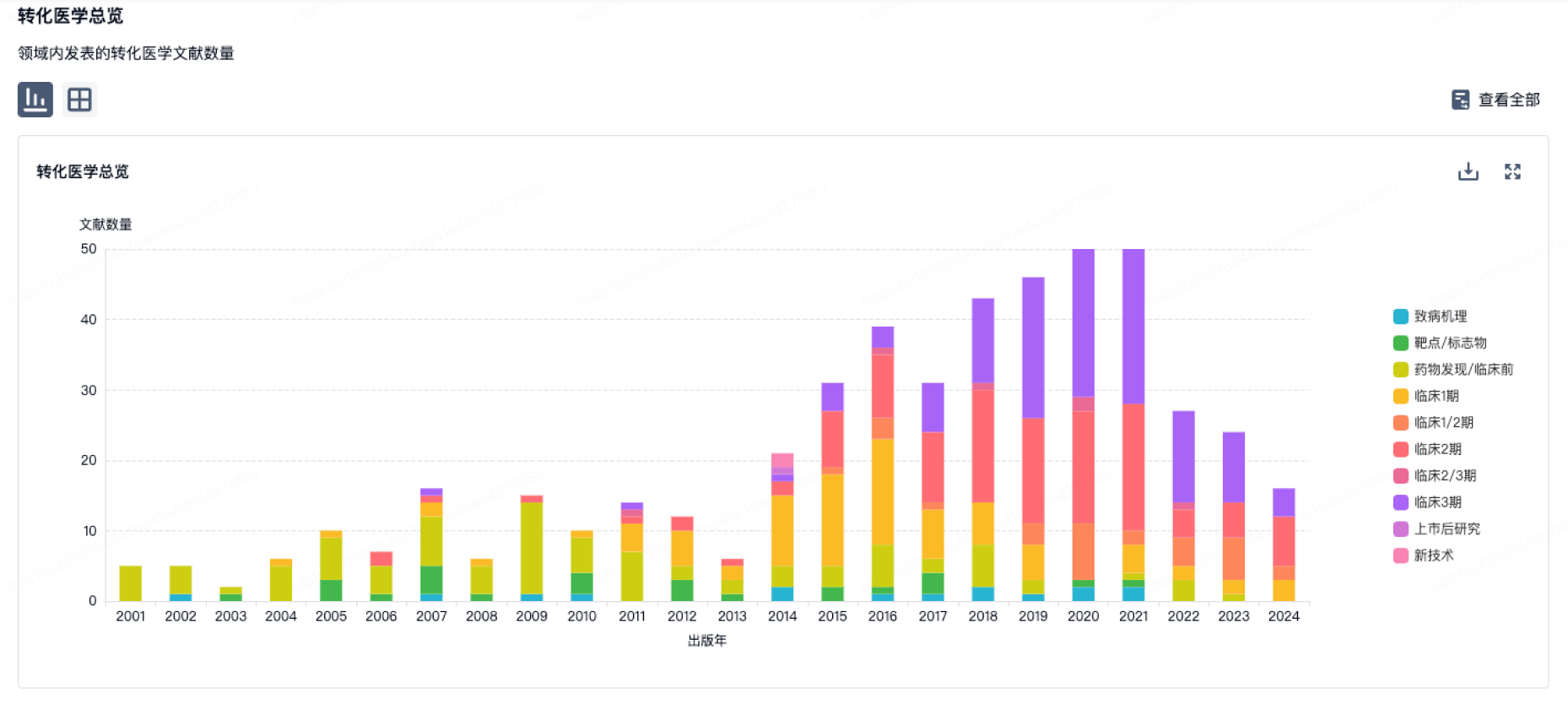
营收
使用 Synapse 探索超过 36 万个组织的财务状况。
登录
或
科研基金(NIH)
访问超过 200 万项资助和基金信息,以提升您的研究之旅。
登录
或
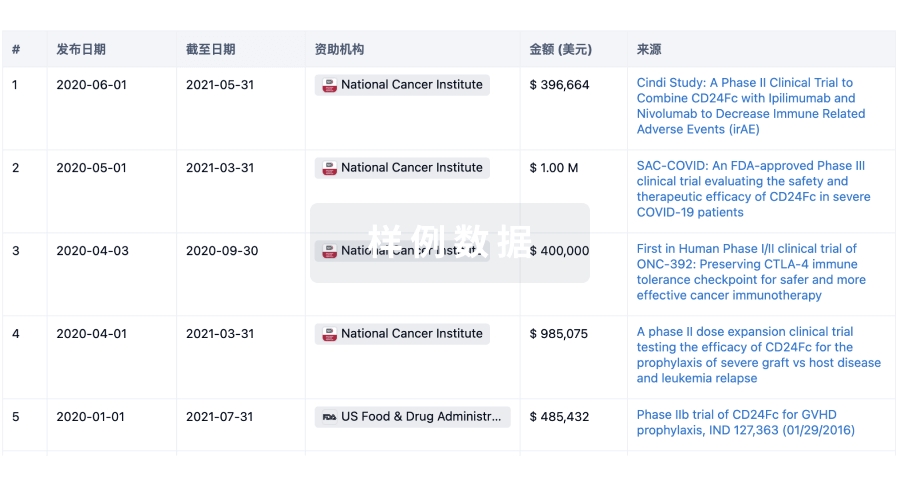
投资
深入了解从初创企业到成熟企业的最新公司投资动态。
登录
或
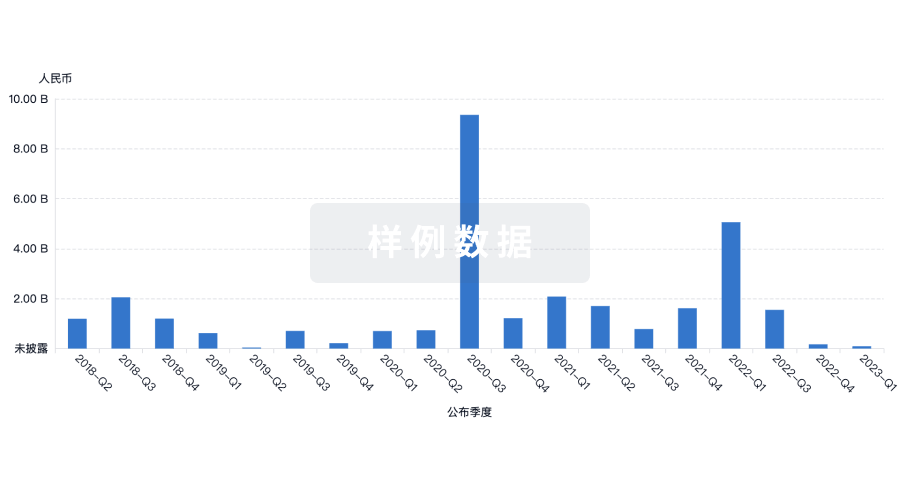
融资
发掘融资趋势以验证和推进您的投资机会。
登录
或
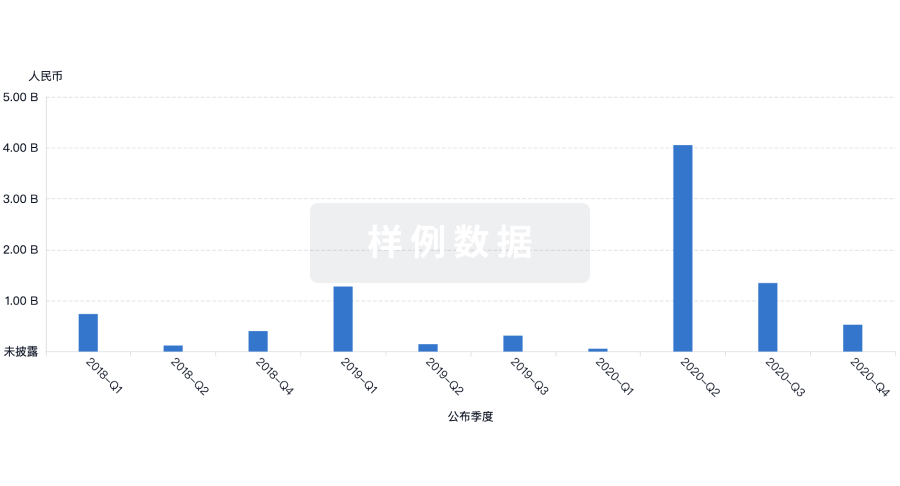
提出任何生物医药研究问题
让每一步生物医药决策都精准制胜
基于十亿级生物数据与全球情报的精准 AI,赋能早期药物发现
立即开始免费试用!
智慧芽新药情报库是智慧芽专为生命科学人士构建的基于AI的创新药情报平台,助您全方位提升您的研发与决策效率。
立即接入生物医药数据包
智慧芽新药库数据也通过智慧芽开放平台,以MCP或API服务形式对外开放。立即使用我们的MCP服务定制您的LLM智能体。
生物序列数据库
生物药研发创新
免费使用
化学结构数据库
小分子化药研发创新
免费使用